ARTICLE · 1219857
高中必修三英语重点知识点突破|Unit 1-5 词汇+句型+语法+易错点
高中必修三英语重点知识点突破
人教版(2019 版)· 5 个单元 · -ing 形式 + 省略 + 不定式 + 情态动词
还没关注?点上方蓝字「好好学习哟」,新一册整理好直接推给你
本文速览
① 五讲全覆盖 Unit 1-5,按课本顺序排好
② 音标逐词标 每单元 20+ 个核心词,带音标、词性和教材释义
③ 学完就能测 每单元 3 道小练习配参考答案,当场知道哪里没掌握
④ 期中期末直接拿去复习 非谓语与省略是必修阶段收官难点,照着单元顺序过一遍
高中必修三是必修阶段的收官册:非谓语动词(-ing 形式、不定式)和省略集中出现,最后用情态动词复习与过去将来时收尾。这几块是语法填空和短文改错的主力考点,也是写作里句式升级的关键。
下面按单元把核心词汇、重点句型、语法难点、易错点一次讲清楚,每讲配一个口诀和 3 道小练习。家长可以直接收藏,学生复习照着过一遍。
写在前面:这一册到底学什么
高中必修三是必修阶段的收官册:非谓语动词(-ing 形式、不定式)和省略集中出现,最后用情态动词与过去将来时收尾。这几块是高考语法填空和短文改错的主力考点,也是读后续写里句式升级的关键。
下面按单元把核心词汇、重点句型、语法难点、易错点一次讲清楚,每讲配一个口诀和 3 道小练习。
(一)Unit 1Festivals and Celebrations
节日与庆典
本讲重点:-ing 形式作定语和表语——「令人……的」用 -ing,人的感受用 -ed
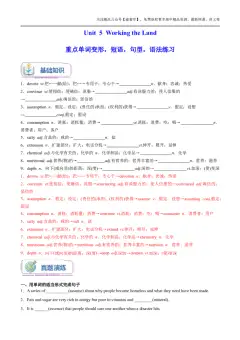
📌 核心词汇
拓展短语:set off 出发;引爆 · after all 毕竟 · dress up 装扮 · except for 除……之外 · go off 爆炸 · in memory of 纪念
💬 重点句型
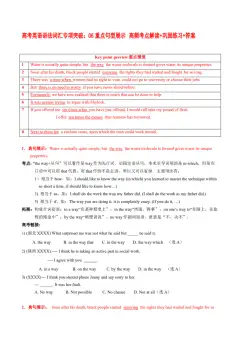
Festivals are celebrated all around the world. 世界各地都庆祝节日。
They have a wide range of origins, such as the seasons of the year, religions, famous figures, and important events. 节日起源广泛,比如季节、宗教、名人和重大事件。
However, no matter how different they may seem, all over the world, the spirit of sharing joy, gratitude, love, or peace is common in all festivals. 然而,无论它们看起来多么不同,分享快乐、感恩、爱与和平的精神在所有节日里都是共通的。
Of all the traditional festivals, the harvest festival can be found in almost every culture. 在所有传统节日中,丰收节几乎在每种文化中都能找到。
People celebrate to show that they are grateful for the year's supply of food. 人们庆祝以表达他们对一年粮食供应的感恩。
These lanterns are amazing. 这些灯笼太美了。
During the Mid-Autumn Festival in China, families gather to admire the shining moon and enjoy delicious mooncakes. 在中国中秋节,家家户户聚在一起赏明月、吃月饼。
Families celebrating the Chinese New Year can enjoy exciting dragon dances and carnivals together. 庆祝农历新年的家庭可以一起欣赏精彩的舞龙和嘉年华。
🔍 语法难点
-ing 形式作定语:表示"正在……的"或"令人……的",单个词放在名词前,短语放在名词后。
-ing 形式作表语:放在 be / look / seem 等系动词后,说明主语的性质或特征。
The lanterns are amazing. / The festival is exciting. / The news is surprising.
-ing 与 -ed 的分工:
-ing 作定语与定语从句的互换:Families celebrating the festival = Families who celebrate the festival.
⚠️ 易错点
1. 修饰人用 -ed,修饰物用 -ing:The excited children / the exciting news。
2. -ing 作定语表示主动、进行;过去分词作定语表示被动、完成:the shining moon(月亮在发光)vs the lit candle(蜡烛被点亮)。
3. -ing 短语作定语要后置:the girl standing there(× the standing there girl)。
4. be grateful to sb for sth(因某事感激某人):I'm grateful to you for your help.
5. range from … to …(从……到……不等),主语是整体、谓语与主语一致:Prices range from 10 to 50 yuan.
6. set off 多义:出发(set off for Beijing)/ 引爆(set off fireworks)/ 引起(set off an alarm)。
7. congratulate sb on sth / congratulations to sb on sth,介词用 on。
🎵 记忆口诀
-ing 作定语、表语都好使,主动、进行、令人……; 修饰人用 -ed,修饰事物用 -ing; 短语作定语放后面,等于定语从句来替换。
✏️ 小练习
1. The ________ news made all of us ________. A. exciting; excited B. excited; exciting C. exciting; exciting
2. Families ________ the Spring Festival can enjoy dragon dances. A. celebrate B. celebrating C. celebrated
3. We are grateful ________ you ________ your kind help. A. to; for B. for; to C. with; for
(二)Unit 2Morals and Virtues
道德与美德
本讲重点:-ing 形式作宾语补足语和状语——作状语时,句子主语就是它的执行者
📌 核心词汇
拓展短语:in tears 流着泪 · in despair 绝望地 · a great deal of 大量 · trip over 被绊倒 · carry sb through 帮某人渡过难关
💬 重点句型
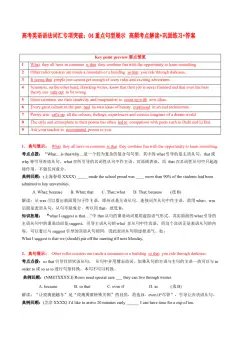
"Life is precious. … To a person nothing is more precious than their life, and if they entrust me with that life, how could I refuse that trust, saying I'm cold, hungry, or tired?" "生命是宝贵的……对一个人来说,没有什么比生命更宝贵;如果他们把生命托付给我,我怎么能说我又冷又饿又累而拒绝这份信任呢?"
At age 18, instead of following the traditional path of marriage like the majority of girls, she chose to work and study. 18 岁时,她没有像大多数女孩那样走传统的婚姻之路,而是选择工作和读书。
"Why should girls learn so much? Finding a good husband should be their final goal!" her brother complained, thinking of the high tuition fees. "女孩子学那么多干什么?找个好丈夫才是她们的归宿!"哥哥想到高昂的学费,抱怨道。
She responded, "I'd rather stay single to study all my life!" 她回答:"我宁愿终身不嫁也要读书!"
Thinking of all the people still in need of help, Dr Lin opened a private clinic. 想到还有许多需要帮助的人,林医生开了一家私人诊所。
The new People's Republic of China saw Dr Lin Qiaozhi playing a key role. 新的中华人民共和国见证了林巧稚发挥关键作用。
🔍 语法难点
-ing 形式作宾语补足语:常见于 see / hear / watch / notice / feel / find / keep / leave + 宾语 + doing,强调"正在做"或动作片段。
saw Dr Lin playing a key role;heard someone knocking at the door;I saw her whispering something into his ear.
-ing 形式作状语:逻辑主语是句子主语,两者是主动关系,可表示时间、原因、伴随、结果、条件。
完成式 having done:表示动作发生在谓语动作之前:Having finished the work, he went home.
-ing 与过去分词作状语的区别:-ing 表主动(Thinking of ...),过去分词表被动(Moved by ...)。
⚠️ 易错点
1. 作状语时主语必须一致且为主动关系:× Walking in the street, a car hit him → Walking in the street, he was hit by a car.
2. see sb do 与 see sb doing 不同:see him cross the road(看见全过程)/ see him crossing the road(看见正在过)。
3. 动作先于谓语发生要用 having done:× Finishing the work, he sat down → Having finished the work, he sat down.
4. complain to sb about/of sth(向某人抱怨某事),介词别用错。
5. the majority of + 复数名词作主语时,谓语用复数;the majority 单独作主语时,谓语单复数均可(强调整体用单数)。
6. respond to(对……作出反应)/ response to(对……的反应)后面都接 to。
7. would rather do (than do):I'd rather stay single (than marry).
🎵 记忆口诀
-ing 作宾补,看见听见正在做; -ing 作状语,主语一致主动行; 先后动作用 having done,被动要用过去分词。
✏️ 小练习
1. ________ of the people in need, Dr Lin opened a private clinic. A. Thinking B. Thought C. To think
2. I saw her ________ something into his ear. A. whisper B. whispering C. whispered
3. ________ finished his homework, he went out to play. A. Having B. Have C. Having been
(三)Unit 3Diverse Cultures
多元文化
本讲重点:省略——省掉重复、留下意思,状语从句省略要「主语一致 + 含 be」
📌 核心词汇
拓展短语:head to 朝……前进 · bring about 导致 · apart from 除……外 · to name but a few 仅举几例 · earn a living 谋生 · (at) first hand 第一手
💬 重点句型
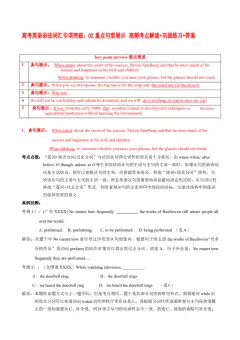
Today was my first day back in San Francisco after camping in the Redwood Forest and visiting the wine country of Napa Valley. 今天是我露营红木林、游览纳帕谷酒乡之后回到旧金山的第一天。
I have to admit that it definitely feels good to be back in the city again. 我得承认,再次回到这座城市的感觉确实很好。
And what a city—a city that was able to rebuild itself after the earthquake that occurred in 1906. 多么了不起的城市——一座在 1906 年地震后能自我重建的城市。
This district used to be a poor area of town, but is now a centre for art, music, and food. 这个区过去是城里的贫民区,如今却是艺术、音乐和美食的中心。
I walked around looking at the street art for a few hours. 我四处走了走,看了几个小时的街头艺术。
There are so many beautiful old buildings—many sitting on top of big hills, offering great views of the city, the ocean, and the Golden Gate Bridge. 有那么多漂亮的老建筑——许多坐落在大山顶上,可以饱览城市、大海和金门大桥的美景。
Sounds great, thanks! 听起来不错,谢谢!(省略了 It)
🔍 语法难点
省略的原则:避免重复,又不影响理解。常见四种情形:
状语从句省略是考试重点:when / while / if / unless / though / as if 等后面可直接跟 doing(主动)或 done(被动)。
When (he was) asked about it, he said nothing.
If (it is) possible, I'll come tomorrow.
不定式省略时符号 to 一般保留:—Would you like to join us? —Yes, I'd love to.
定语从句中关系代词作宾语可省:the book (that) I bought;宾语从句的 that 常可省:I think (that) he is right.
⚠️ 易错点
1. 状语从句省略的两个条件缺一不可:从句主语与主句一致 + 从句谓语含 be。若主语不一致不能省:× When walking in the park, a dog barked at me → When I was walking in the park, a dog barked at me.
2. 省略后分词形式看主动被动:主动用 -ing(While reading),被动用 -ed(When asked)。
3. 不定式的省略要保留 to:I'd like to.(× I'd like.)
4. used to do(过去常常)与 be used to doing(习惯于):This district used to be poor. / I am used to living here.
5. occur(发生)没有被动语态:The earthquake occurred in 1906.(× was occurred)
6. admit doing sth(承认做过),不接不定式:He admitted taking the money.
7. a series of + 复数名词作主语时,谓语通常用单数:A series of accidents has happened.
🎵 记忆口诀
省略省的是重复,从句省略两条件; 主语相同又有 be,去掉留下 doing、done; 不定式省要留 to,used to 与 be used to 别混。
✏️ 小练习
1. When ________ about his future plan, he kept silent. A. asking B. asked C. to ask
2. —Would you like to come with us? —Yes, I'd love ________. A. to B. to come C. /
3. The earthquake which ________ in 1906 destroyed much of the city. A. occurred B. was occurred C. had occurred
(四)Unit 4Space Exploration
太空探索
本讲重点:不定式作定语和状语——「the first … to do」与「in order to / so as to」
📌 核心词汇
拓展短语:on board 在飞船上 · in the hope of 抱着……的希望 · so as to 为了 · figure out 弄明白 · result in 导致 · run out 用完
💬 重点句型
"Are we alone? What's out there?" People have always looked up at the stars and wondered about space. "我们是孤独的吗?外面有什么?"人们总是仰望星空,对太空充满好奇。
Today, scientists design vehicles to carry astronauts into space to make important discoveries. 如今,科学家设计飞行器把宇航员送入太空去做出重要发现。
Before the mid-20th century, most people felt travelling into space was only a dream that could never come true. 20 世纪中叶以前,多数人觉得进入太空只是一个永远无法实现的梦。
However, scientists were determined to realise that dream. 然而,科学家们决心实现那个梦想。
On 4 October 1957, the Sputnik 1 satellite was launched by the USSR and successfully orbited around Earth. 1957 年 10 月 4 日,苏联发射了"旅伴一号"卫星并成功绕地球飞行。
On 12 April 1961, Yuri Gagarin became the first person in the world to go into space. 1961 年 4 月 12 日,尤里·加加林成为世界上第一个进入太空的人。
In space, astronauts collect all dirty water so as to recycle it for later use. 在太空,宇航员收集所有脏水以便日后循环利用。
You must be intelligent enough to get a related college degree. 你必须足够聪明,才能拿到相关的大学学位。
🔍 语法难点
不定式作定语:放在名词后,与名词存在逻辑上的"动宾"或"主谓"关系。
不定式作状语:主要表示目的、结果与原因。
in order to 可放句首,so as to 不放句首:In order to catch the train, he got up early.
否定形式:in order not to do / so as not to do。
⚠️ 易错点
1. 不定式作定语时,若动词不及物要带上介词:a room to live in;a pen to write with。
2. so as to 不能放句首,句首用 in order to 或 to do。
3. too … to do(太……而不能)与 enough to do(足够……可以)结构别写反:too young to go / old enough to go。
4. lack 既可作名词也可作动词:a lack of water(名词)/ lack water(及物动词,不加 of)。
5. result in(导致)与 result from(由……引起)方向相反:The accident resulted in 3 deaths. / 3 deaths resulted from the accident.
6. carry on (with) sth / carry on doing(继续做),carry out(执行)。
7. figure out(弄明白)是"动词 + 副词"短语,代词宾语放中间:figure it out。
🎵 记忆口诀
不定式作定语跟名词,序数词后 it's 最常见; 不及物要带介词,too … to 与 enough to 别写反; 目的状语 in order to,so as to 不站句首。
✏️ 小练习
1. Yuri Gagarin became the first person in the world ________ into space. A. go B. to go C. going
2. He got up early ________ catch the first bus. A. so as to B. so as not to C. in order not to
3. There is no room for us ________. A. to live B. to live in C. living
(五)Unit 5The Value of Money
金钱的价值
本讲重点:情态动词归纳 + 过去将来时 would do——「从过去看将来」
📌 核心词汇
拓展短语:make a bet 打赌 · as a matter of fact 事实上 · by accident 偶然 · in return 作为回报 · on the basis of 根据 · in case 以防万一
💬 重点句型
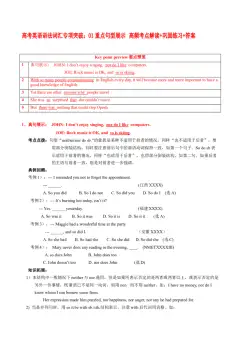
Narrator: Two rich brothers, Roderick and Oliver, have made a bet. 旁白:罗德里克和奥利弗这对富家兄弟打了个赌。
Oliver believes that with a million-pound bank note a man could live a month in London. 奥利弗相信,有了百万英镑钞票,一个人能在伦敦生活一个月。
Roderick: Young man, would you step inside a moment, please? 罗德里克:年轻人,请进来一下好吗?
May we ask what you're doing in this country and what your plans are? 我们可以问一下你在这个国家做什么、有什么打算吗?
While this situation may seem unusual, it can sometimes happen to travellers. 虽然这种情况看起来不寻常,但它有时确实会发生在旅行者身上。
First, and most importantly, you must stay calm. 首先,也是最重要的,你必须保持冷静。
You would do well to check with some local charities. 你最好去一些当地慈善机构问问。
He was about to open the door when the phone rang. 他正要开门,电话铃响了。
🔍 语法难点
情态动词六大功能归纳:
过去将来时:从过去某一时刻看将要发生的动作,常见于宾语从句和叙述性文体。
would do 与 used to do 的区别:used to 可表示过去的状态(There used to be a tree),would 只表示过去反复的动作,不表状态。
⚠️ 易错点
1. be about to do 不与 tomorrow、next week 等具体时间状语连用:× He was about to leave tomorrow。
2. would 表过去习惯时不表状态:He would walk by the river(可以);He would be short(不行,要用 used to be)。
3. ought to 的否定是 ought not to / oughtn't to,疑问把 ought 提前。
4. dare 两种用法:情态动词 dare do(否定 didn't dare? 作情态时 dare not do);实义动词 dare to do(否定 don't dare to do)。
5. in return(作为回报)与 in turn(依次;反过来)不同。
6. in case(以防)后接句子;in case of 后接名词:in case it rains / in case of rain。
7. hesitate to do sth(犹豫做某事);without hesitation(毫不犹豫)。
8. must 提问的否定回答用 needn't / don't have to(不必),不用 mustn't(禁止)。
🎵 记忆口诀
过去将来 would do,打算用 was going to; 正要去做 about to,不和将来时间凑; must 提问否答 needn't,ought to 否定 not to 后。
✏️ 小练习
1. He said he ________ come to see me the next day. A. will B. would C. is going to
2. I was about ________ out when it began to rain. A. to go B. going C. go
3. —Must I finish it now? —No, you ________. A. mustn't B. needn't C. can't
参考答案
Unit 1:1. A 2. B 3. A
Unit 2:1. A 2. B 3. A
Unit 3:1. B 2. A 3. A
Unit 4:1. B 2. A 3. B
Unit 5:1. B 2. A 3. B
这篇能帮你省多少事
① 整册一次过 5 个单元的词汇、句型、语法、易错点,按课本顺序排好
② 音标逐词标 核心词全部带音标和词性,自己就能读
③ 学完就能测 每单元 3 道小练习配参考答案,当场知道哪里没掌握
④ 期中期末直接拿去复习 -ing 形式、不定式、省略,必修阶段最后三块硬骨头
想打印出来,加我领
在线看免费。想打印成册随身带、写作业用,就领一份高中必修三知识点可打印电子版——词汇、句型、语法、易错点都在里面,A4 排版,直接打。
怎么领
1. 长按下面的码,加我微信
2. 发一句「高中必修三」
3. 我把高中必修三的电子版发给你,一般当天回

长按识别 · 加我领高中必修三
说「高中必修三」就行,也可以报别的年级
其他年级
· 其他年级的知识点,按同样的「词汇 + 句型 + 语法 + 易错点」方式整理中
· 小学、初中各册知识点突破已发布,可在公众号历史消息中查看
关注「好好学习哟」
这个号只发一件事:中小学英语教材同步资料——各册重点知识点、词汇表、可打印版,整理好就发,不发别的。
怎么关注
1. 点文章最上方的蓝色字「好好学习哟」
2. 进去点「关注」,后面高中选择性必修、其他年级同步整理好,会直接推到你微信
3. 已经关注的话,顺手点个「在看」,同年级的家长也容易刷到
高中必修三的知识点就整理到这儿,下次见。
个人整理的学习资料,仅供家庭自学使用