ARTICLE · 1279358
英语四级阅读理解历年真题(4)
英语四级阅读理解历年真题(4)
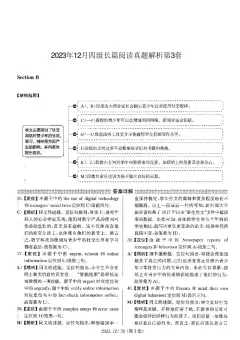
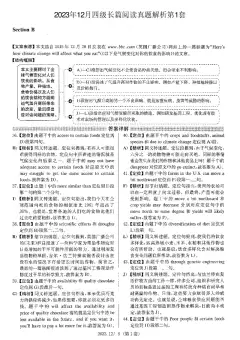
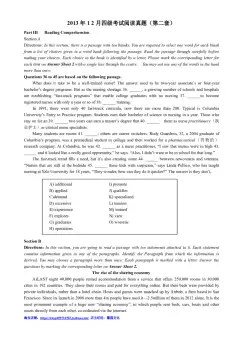
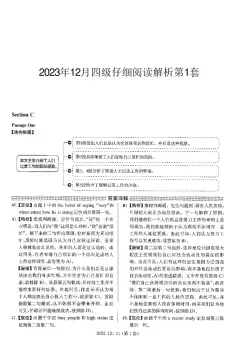
来源:2023年12月英语四级第1套仔细阅读 Passage One,主题为职场中的 “忙碌文化” 及其对员工福祉的影响。
阅读原文
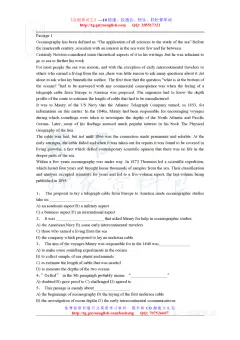
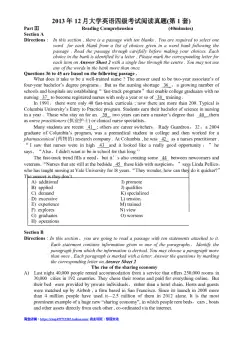
One of my bad habits is saying “busy” when people ask me how I’m doing. Sometimes it’s because I actually am busy, but other times it’s because that’s what I think I’m supposed to say. That’s what important people say. That’s what people who get promoted say. But working long hours doesn’t drive better results. Never taking a vacation won’t lead to a promotion. So why are we so proud to talk about how busy we are all the time? In 2016, researchers from Columbia, Harvard, and Georgetown conducted a study to figure it out. They found busy people are perceived to be of high status, and interestingly, these status attributions are heavily influenced by our own beliefs about social mobility. In other words, the more we believe that one has the opportunity for success based on hard work, the more we tend to think that people who skip leisure and work all the time are of higher standing. That’s why we feel like we have to appear busy, and there’s a real perception that if someone is knee-deep in meetings, emails, and stress, then they’re probably a big deal. This culture of busyness is making it hard for employees to find work-life balance. According to a recent study, one in five highly engaged employees is at risk of burnout. Personally, I’m going to stop saying “busy” when people ask me how I am. It sounds self-righteous and sets the wrong tone. Phrases like “I have limited access to email” and “I’ll respond as soon as I get back” sound like you’re being held against your will from working as opposed to making the most of your time off. That’s why we recently launched the Out of Office Email Generator, a free tool you can use before your next long weekend or trip. You can share loud and proud that you won’t be checking email until you’re back. Managers need to think twice about emailing their teams on the weekend and talking about how busy they are. Leaders should take time off themselves and encourage employees to do the same.
题目
46. What is a reason for the author to be in the habit of saying “busy” when asked how he is doing?
A) He just follows successful people’s example.
B) He is actually proud to be fully occupied.
C) He thinks everyone should be devoted to work.
D) He believes busyness ensures accomplishments.
47. Why do we tend to think that busy people are of high status?
A) Our status can be attributed to our social mobility.
B) We hold the belief that hard work leads to success.
C) Our own opportunity for success never comes easily.
D) We find few people of high status have time for leisure.
48. What do we learn about the culture of busyness from a recent study?
A) It places employees in endless meetings, emails and stress.
B) It compels some 20% of employees to appear always busy.
C) It distorts many employees’ belief of what a satisfying life is.
D) It does much harm to many busy employees’ well-being.
49. What do such utterances as “I have limited access to email” sound like according to the author?
A) One is too busy to check all emails in time.
B) One is opposed to the prevailing work culture.
C) One is forced by circumstances to stop working.
D) One is simply enjoying their time off work.
50. Why did the author and his colleagues launch the Out of Office Email Generator?
A) To enable busy employees to spend less time checking emails.
B) To ensure employees as well as employers truly have time off.
C) To stop managers from talking about how busy their teams usually are.
D) To encourage both employers and employees to answer emails promptly.
答案与解析
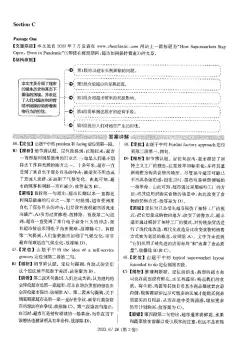
46. A
细节理解题。作者说他说 “busy” 是因为 “That’s what important people say. That’s what people who get promoted say”,即他在效仿成功人士的说法。A 项 “He just follows successful people’s example” 正确。
47. B
细节理解题。定位到 “the more we believe that one has the opportunity for success based on hard work, the more we tend to think that people who skip leisure and work all the time are of higher standing”。我们倾向于认为忙碌者地位高,是因为我们相信努力工作是成功之路。B 项正确。
48. D
细节理解题。原文说 “one in five highly engaged employees is at risk of burnout”。“burnout”(精疲力竭)说明忙碌文化对员工的身心健康造成伤害。D 项 “It does much harm to many busy employees’ well-being” 概括准确。
49. C
细节理解题。作者说这类话 “sound like you’re being held against your will from working”,即听起来像是你被迫不能工作。C 项 “One is forced by circumstances to stop working” 与原文一致。
50. B
推理判断题。作者推出 Out of Office Email Generator,是为了让员工可以 “share loud and proud that you won’t be checking email until you’re back”,并呼吁 “Managers… Leaders should take time off themselves and encourage employees to do the same”。其核心目的是确保雇主和员工都能真正获得休息时间。B 项正确。