文档文本内容
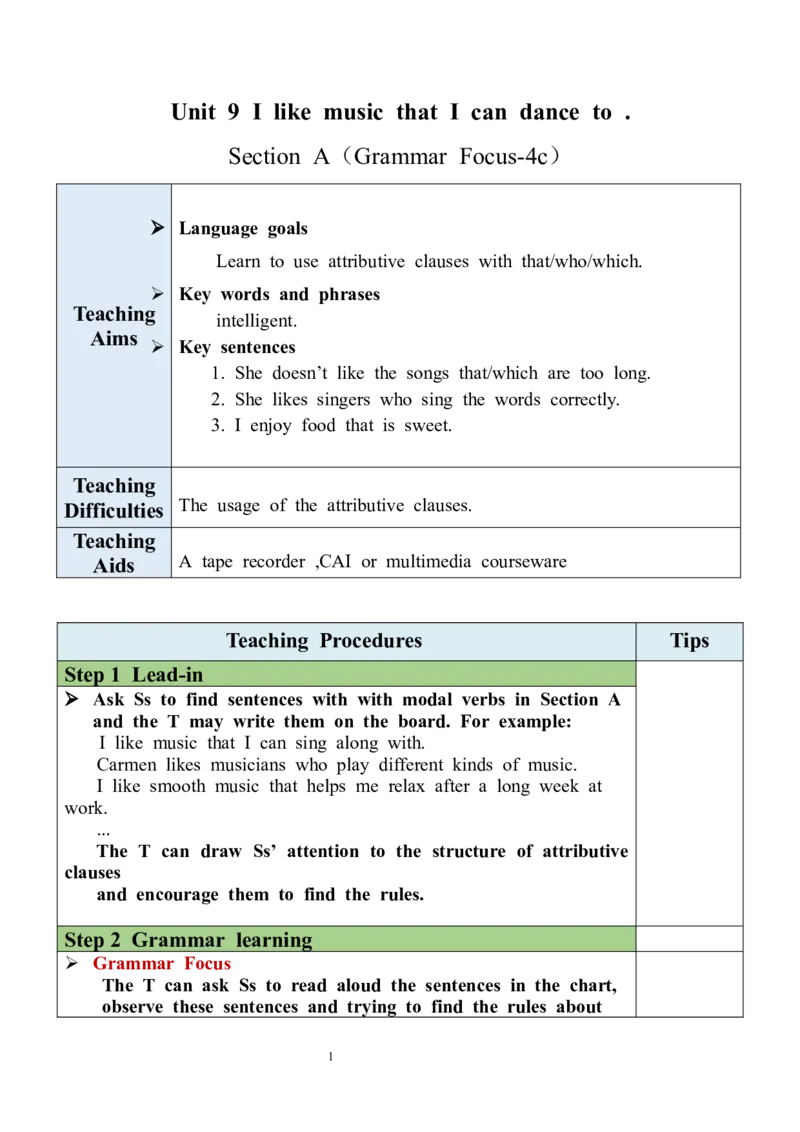
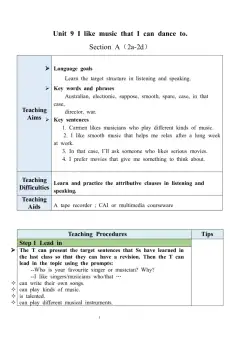
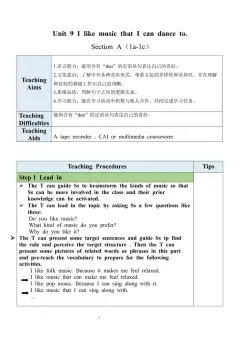
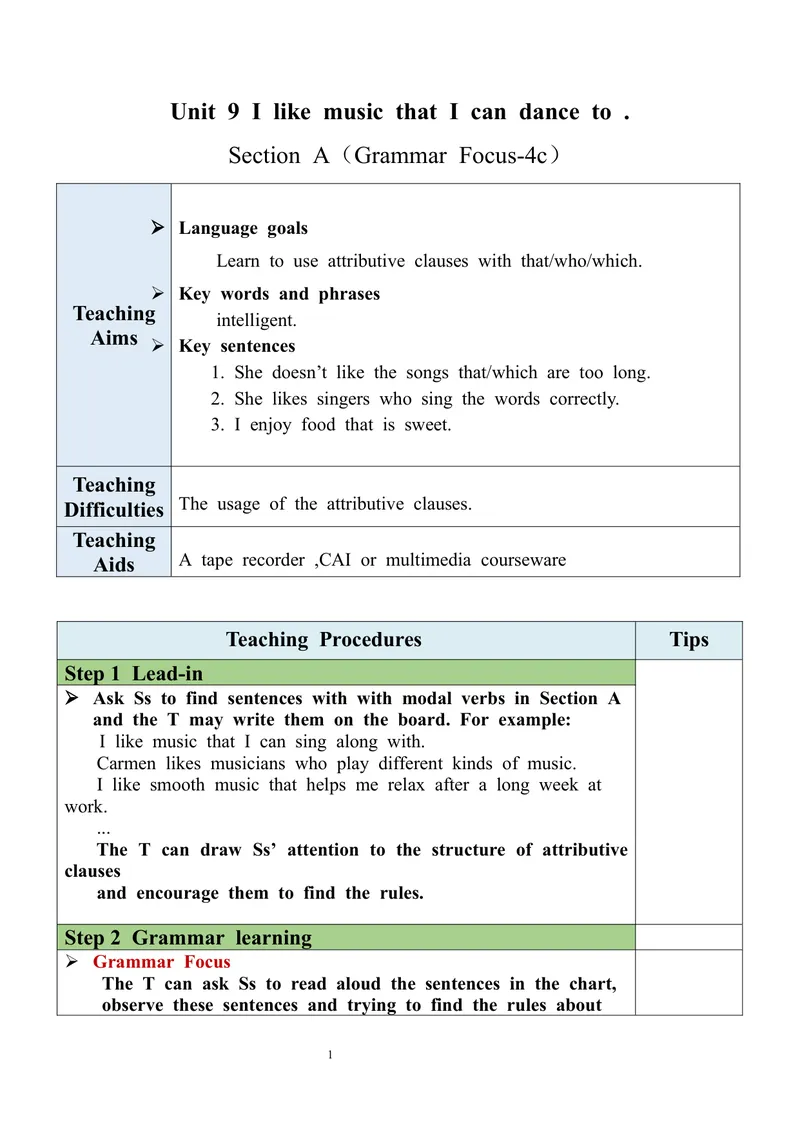
Unit 9 I like music that I can dance to .
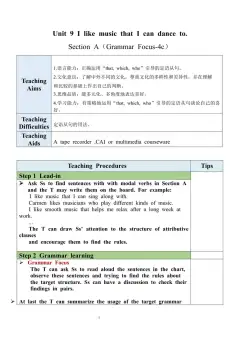
Section A(Grammar Focus-4c)
Language goals
Learn to use attributive clauses with that/who/which.
Key words and phrases
Teaching
intelligent.
Aims
Key sentences
1. She doesn’t like the songs that/which are too long.
2. She likes singers who sing the words correctly.
3. I enjoy food that is sweet.
Teaching
The usage of the attributive clauses.
Difficulties
Teaching
Aids A tape recorder ,CAI or multimedia courseware
Teaching Procedures Tips
Step 1 Lead-in
Ask Ss to find sentences with with modal verbs in Section A
and the T may write them on the board. For example:
I like music that I can sing along with.
Carmen likes musicians who play different kinds of music.
I like smooth music that helps me relax after a long week at
work.
...
The T can draw Ss’ attention to the structure of attributive
clauses
and encourage them to find the rules.
Step 2 Grammar learning
Grammar Focus
The T can ask Ss to read aloud the sentences in the chart,
observe these sentences and trying to find the rules about
1the target structure. Ss can have a discussion to check their
findings in pairs.
At last the T can summarize the usage of the target grammar
structure from several aspects. Ask Ss to make sentences with
attributive clauses as much as possible.
Step 3 Presentation & Practice
4a
Ask Ss tor read the adjectives in the chart to consolidate
the pronunciation and meaning of these words. Then ask Ss
to finish the task in 4a quickly. The T can invite Ss to read
aloud the sentences they made to check their answers as
well as their pronunciation and intonation.
Suggested Answers:
1. I like clothes that/which are comfortable.
2. He loves food that/which is sweet.
3. She prefers singers who/that are intelligent.
4. They love movies that/which are interesting.
After Ss finish the task, the T can encourage them to
express their opinions about the food, clothes and teachers
they like. Remind them to use the attributive clauses
correctly.
4b
Ask Ss to look through the passage in 4b to grasp the main
idea. Then Ss finish the task in 4b individually and talk
with their partners to check answers. At last the T can
present the correct answer.
Answers:
1. It’s the kind of music that/which you can dance to.
2. It’s a CD that/which you can take to a party.
3. She likes musicians who write their own lyrics.
4. She doesn’t like the songs that/which are too long.
5. She likes singers who sing the words clearly.
4c
The activity is to reinforce the target language for
expressing preferences. The T may want to review the use of
the relative pronouns that,who and which with Ss before they
start on the activity.
Ask Ss to read the dialog of 4c in chorus. Then the T can
make Ss to make conversations according to the sentences in
4a in pairs. The T can make assessments while Ss are
2talking.
Step 4 Summary & Homework
Summary The T can encourage Ss to summarize the key points The
of this class to help Ss consolidate the knowledge. homework
Homework: can vary
Preview the new words and phrases in Section B(1a-1e). with the
Do the exercises in students’ book. specific
conditions.
The teacher can invites several groups of students to perform the dialogue
and guides other students to ask questions about the contents reported by
Teaching
each group. This not only enables students to form a good habit of listening
Reflection
to other students' speeches and taking down key information, but also
trains students to use the target language in the natural speech.
3