2024-2025 高三英语一轮复习通关必备
必考语法知识点速记精练
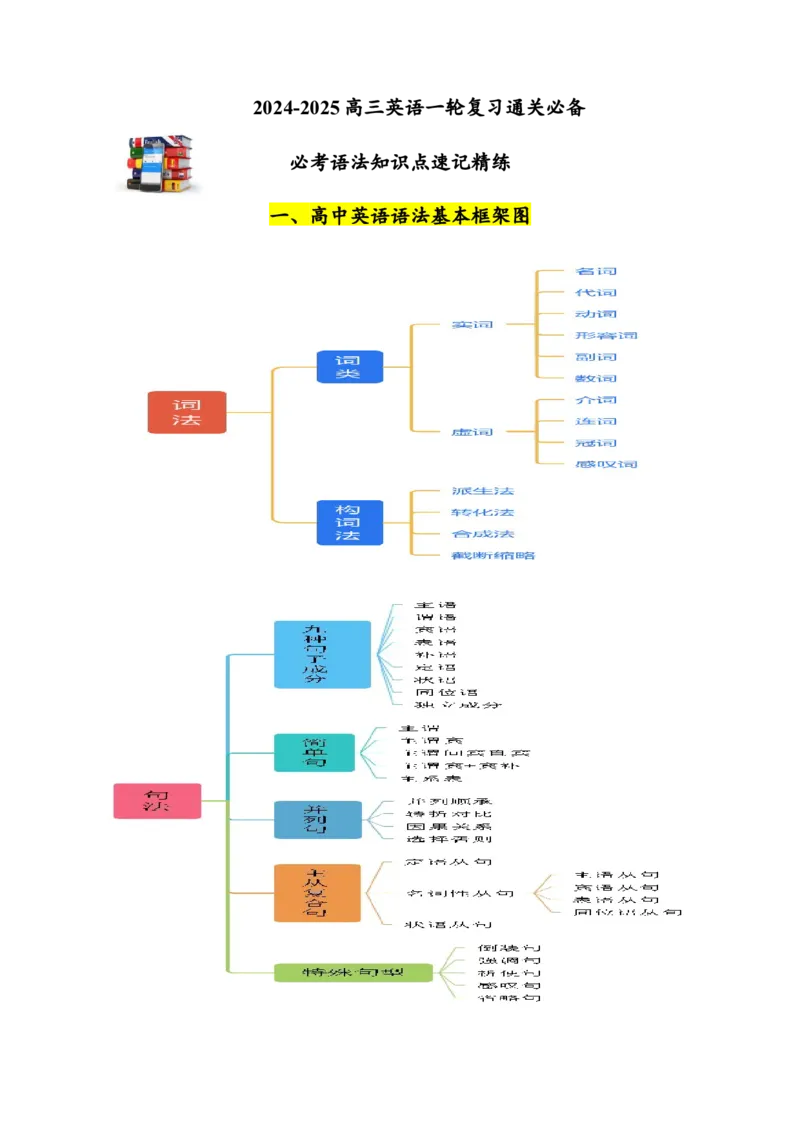
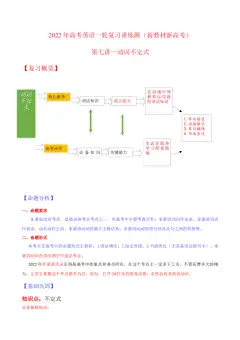
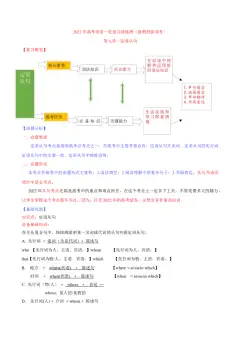
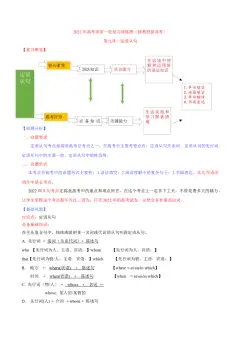
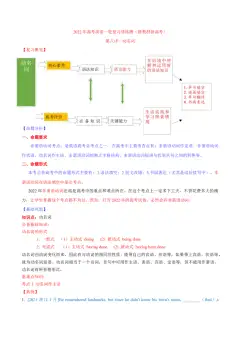
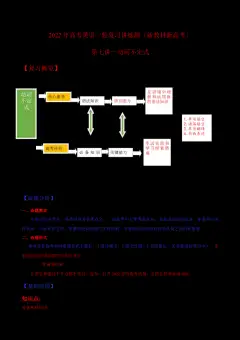
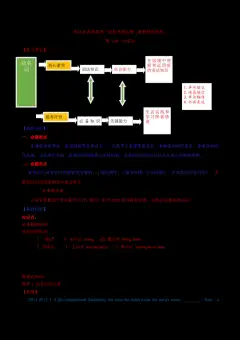
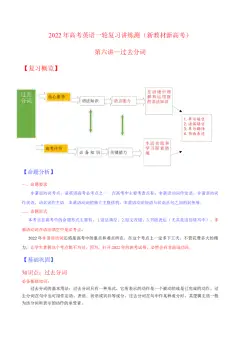
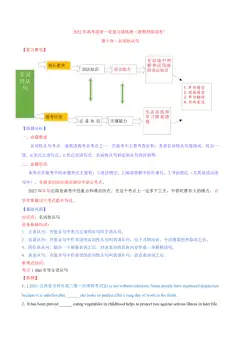
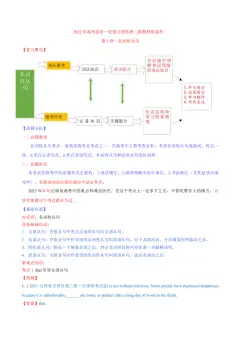
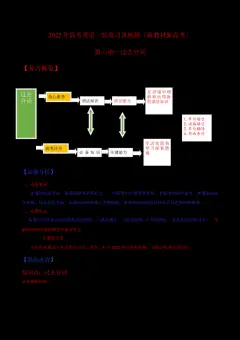
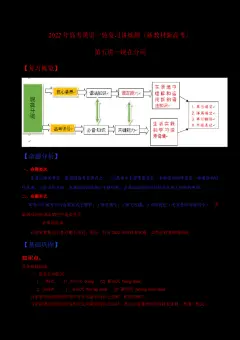
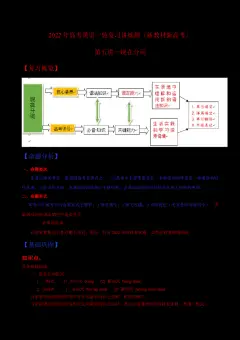
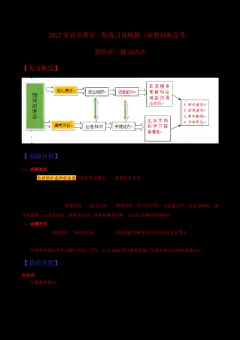
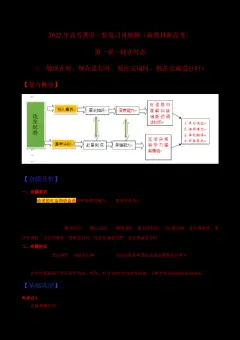
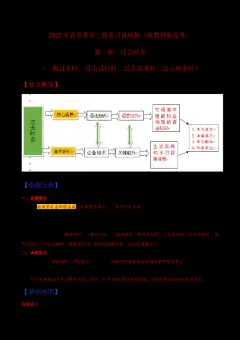
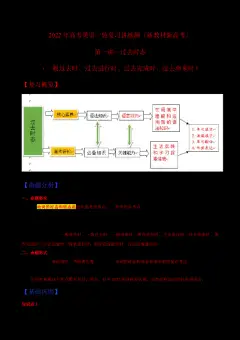
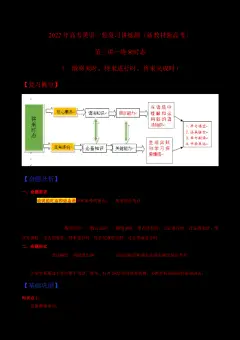
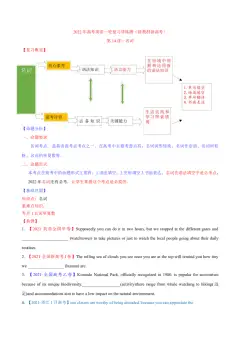
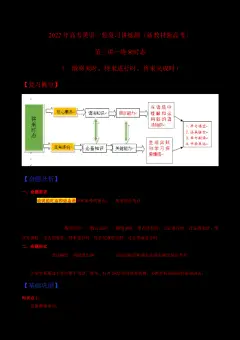
一、高中英语语法基本框架图二、必考语法知识点速记精炼
名词
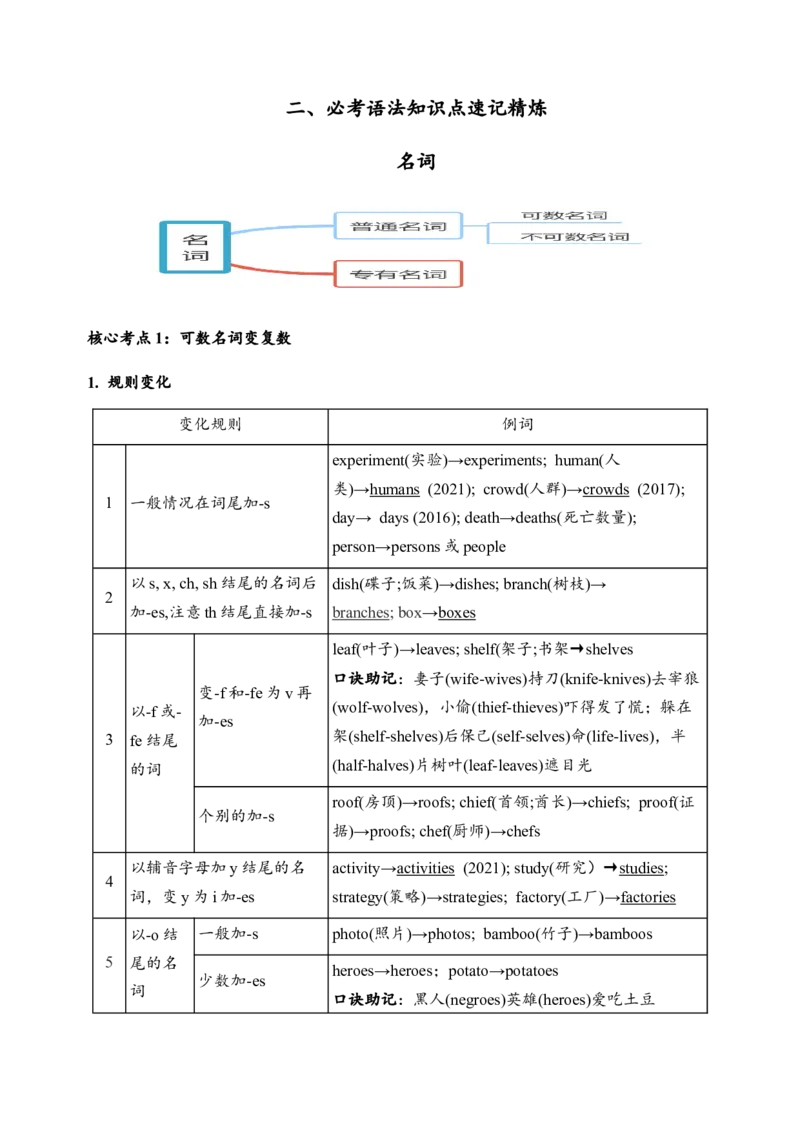
核心考点1:可数名词变复数
1. 规则变化
变化规则 例词
experiment(实验)→experiments; human(人
类)→humans (2021); crowd(人群)→crowds (2017);
1 一般情况在词尾加-s
day→ days (2016); death→deaths(死亡数量);
person→persons或people
以s, x, ch, sh结尾的名词后 dish(碟子;饭菜)→dishes; branch(树枝)→
2
加-es,注意th结尾直接加-s branches; box→boxes
leaf(叶子)→leaves; shelf(架子;书架→shelves
口诀助记:妻子(wife-wives)持刀(knife-knives)去宰狼
变-f和-fe为v再
以-f或-
(wolf-wolves),小偷(thief-thieves)吓得发了慌;躲在
加-es
3 fe结尾
架(shelf-shelves)后保己(self-selves)命(life-lives),半
的词
(half-halves)片树叶(leaf-leaves)遮目光
roof(房顶)→roofs; chief(首领;酋长)→chiefs; proof(证
个别的加-s
据)→proofs; chef(厨师)→chefs
以辅音字母加y结尾的名 activity→activities (2021); study(研究)→studies;
4
词,变y为i加-es strategy(策略)→strategies; factory(工厂)→factories
以-o结 一般加-s photo(照片)→photos; bamboo(竹子)→bamboos
5 尾的名
heroes→heroes;potato→potatoes
少数加-es
词
口诀助记:黑人(negroes)英雄(heroes)爱吃土豆(potatoes)西红柿(tomatoes)和芒果(mangoes)
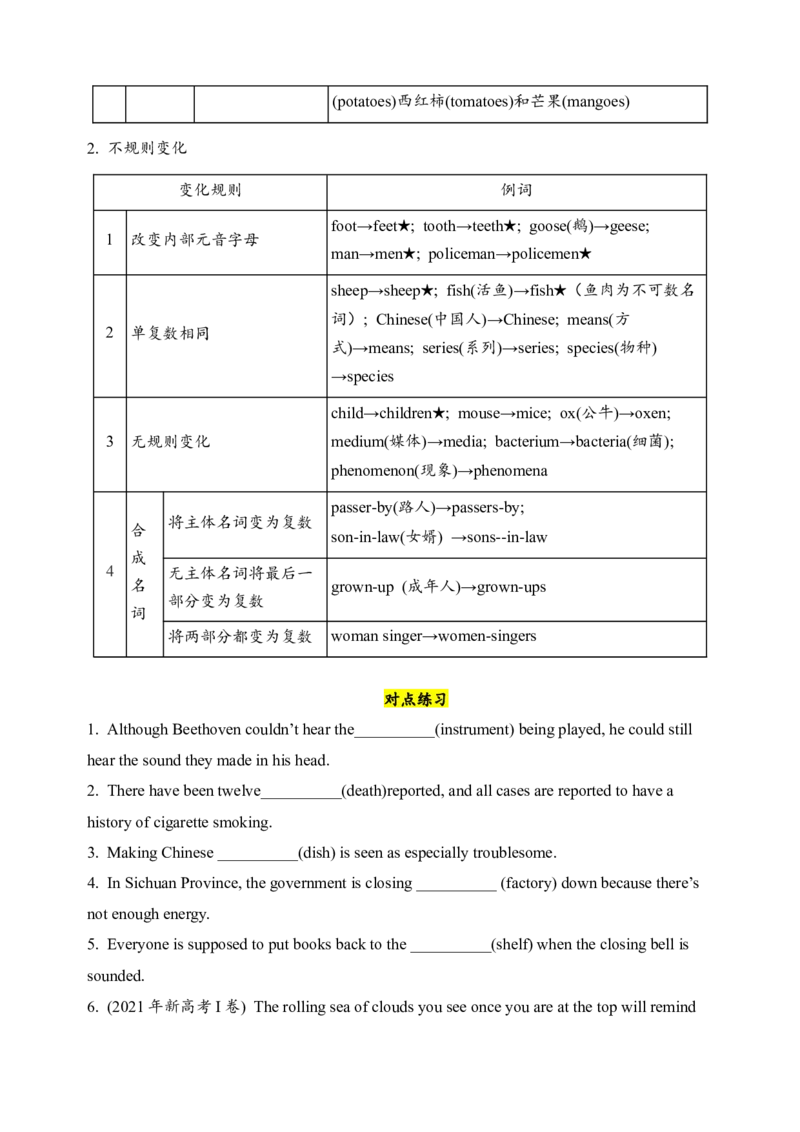
2. 不规则变化
变化规则 例词
foot→feet★; tooth→teeth★; goose(鹅)→geese;
1 改变内部元音字母
man→men★; policeman→policemen★
sheep→sheep★; fish(活鱼)→fish★(鱼肉为不可数名
词); Chinese(中国人)→Chinese; means(方
2 单复数相同
式)→means; series(系列)→series; species(物种)
→species
child→children★; mouse→mice; ox(公牛)→oxen;
3 无规则变化 medium(媒体)→media; bacterium→bacteria(细菌);
phenomenon(现象)→phenomena
passer-by(路人)→passers-by;
将主体名词变为复数
合
son-in-law(女婿) →sons--in-law
成
4 无主体名词将最后一
名 grown-up (成年人)→grown-ups
部分变为复数
词
将两部分都变为复数 woman singer→women-singers
对点练习
1. Although Beethoven couldn’t hear the__________(instrument) being played, he could still
hear the sound they made in his head.
2. There have been twelve__________(death)reported, and all cases are reported to have a
history of cigarette smoking.
3. Making Chinese __________(dish) is seen as especially troublesome.
4. In Sichuan Province, the government is closing __________ (factory) down because there’s
not enough energy.
5. Everyone is supposed to put books back to the __________(shelf) when the closing bell is
sounded.
6. (2021年新高考I卷) The rolling sea of clouds you see once you are at the top will remindyou how tiny we_________(human) are.
7. (2021全国甲卷)Supposedly you can do it in two hours, but we stopped at the different gates
and __________ (watchtower) to fake pictures...
8. (2024全国乙卷)But for all its ancient buildings, Beijing is also a place that/which
welcomes the fast-paced development of modern life, with 21st-century
architectural__________(wonder) standing side by side with historical buildings of the past.
9. (2024浙江1月首考)Who knows, perhaps some of the more forward-looking__________
(one) may yet come out with a whole range of “just for you” pack sizes with special offers as
well.
10. (2024九省联考)Now, most people reach for__________(keyboard) faster than they pick up
pens.
Key: 1. instruments(n.乐器;仪器) 2. deaths(n. 死亡数量) 3. dishes(n. 饭菜;碟盘) 4.
factories(n.工厂) 5. shelves(n. 架子;书架) 6. humans(n. 人类) 7.watchtowers(n.瞭望塔)8.
wanders(n.奇迹;奇观) 9. ones 10. keyboards(n.键盘)
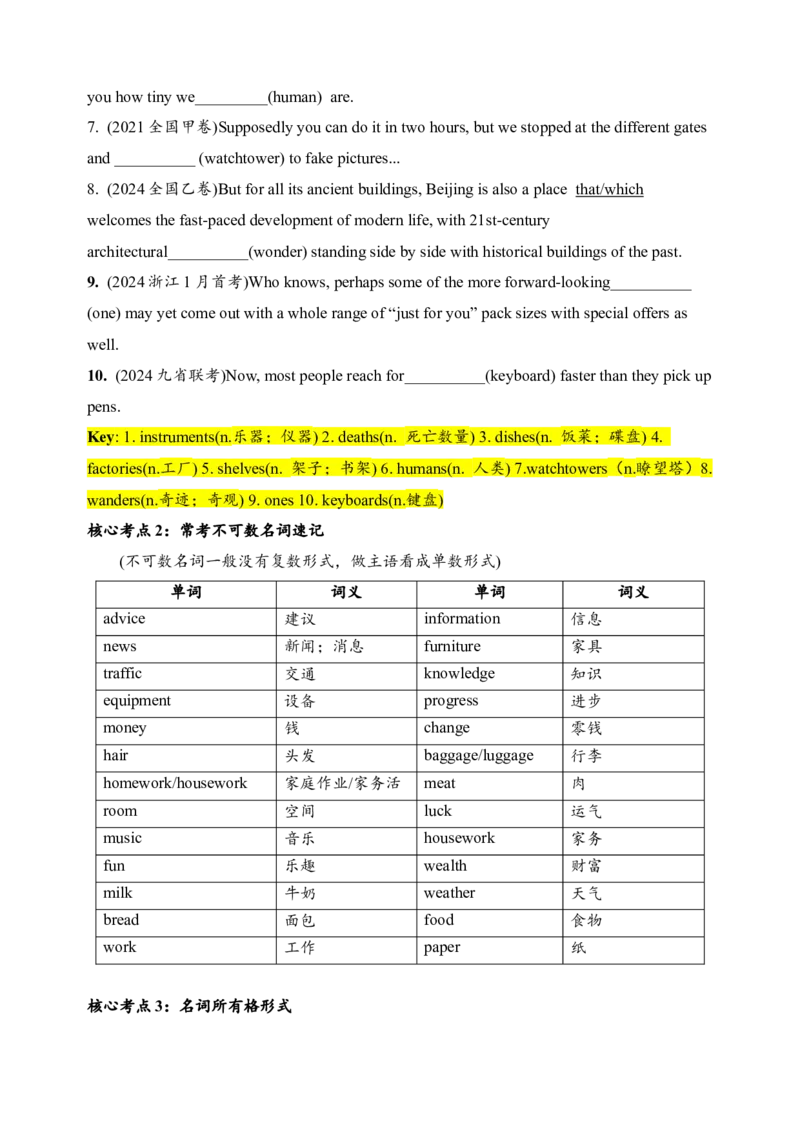
核心考点2:常考不可数名词速记
(不可数名词一般没有复数形式,做主语看成单数形式)
单词 词义 单词 词义
advice 建议 information 信息
news 新闻;消息 furniture 家具
traffic 交通 knowledge 知识
equipment 设备 progress 进步
money 钱 change 零钱
hair 头发 baggage/luggage 行李
homework/housework 家庭作业/家务活 meat 肉
room 空间 luck 运气
music 音乐 housework 家务
fun 乐趣 wealth 财富
milk 牛奶 weather 天气
bread 面包 food 食物
work 工作 paper 纸
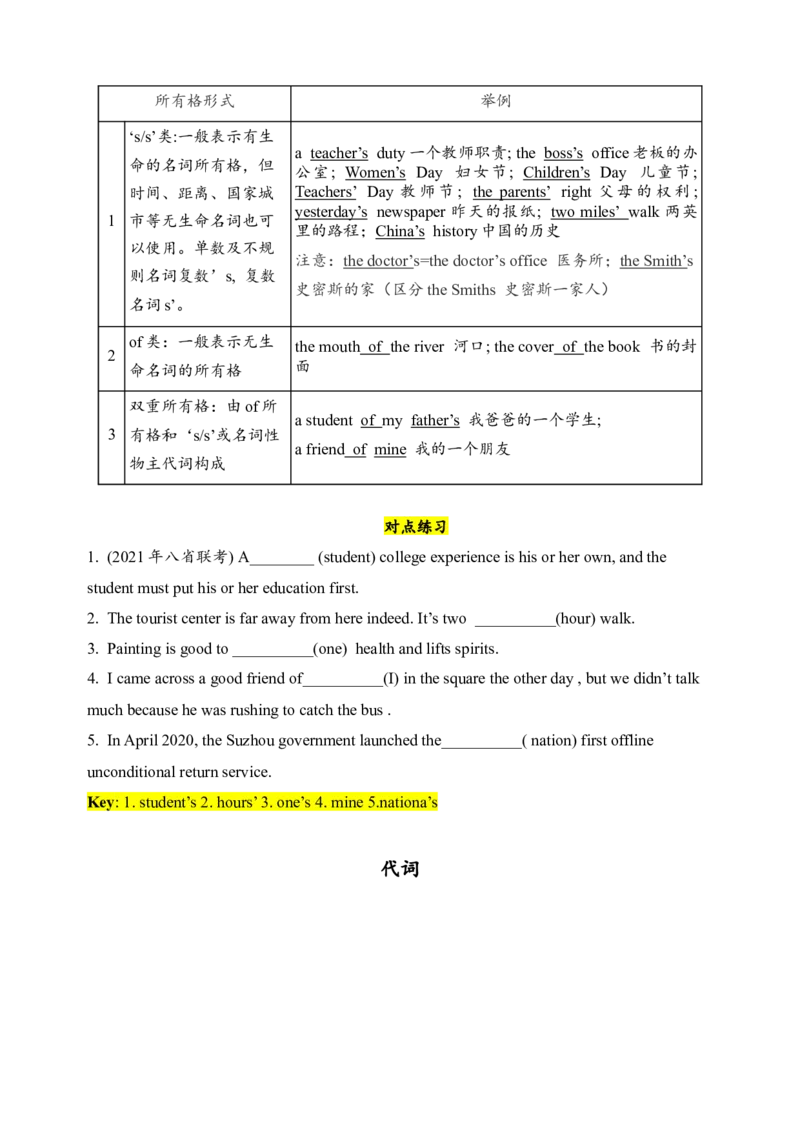
核心考点3:名词所有格形式所有格形式 举例
‘s/s’类:一般表示有生
a teacher’s duty一个教师职责; the boss’s office老板的办
命的名词所有格,但
公室; Women’s Day 妇女节; Children’s Day 儿童节;
时间、距离、国家城 Teachers’ Day 教师节; the parents’ right 父母的权利;
yesterday’s newspaper 昨天的报纸; two miles’ walk 两英
1 市等无生命名词也可
里的路程;China’s history中国的历史
以使用。单数及不规
注意:the doctor’s=the doctor’s office 医务所;the Smith’s
则名词复数’s, 复数
史密斯的家(区分the Smiths 史密斯一家人)
名词s’。
of类:一般表示无生
the mouth of the river 河口; the cover of the book 书的封
2
面
命名词的所有格
双重所有格:由of所
a student of my father’s 我爸爸的一个学生;
3 有格和‘s/s’或名词性
a friend of mine 我的一个朋友
物主代词构成
对点练习
1. (2021年八省联考) A________ (student) college experience is his or her own, and the
student must put his or her education first.
2. The tourist center is far away from here indeed. It’s two __________(hour) walk.
3. Painting is good to __________(one) health and lifts spirits.
4. I came across a good friend of__________(I) in the square the other day , but we didn’t talk
much because he was rushing to catch the bus .
5. In April 2020, the Suzhou government launched the__________( nation) first offline
unconditional return service.
Key: 1. student’s 2. hours’ 3. one’s 4. mine 5.nationa’s
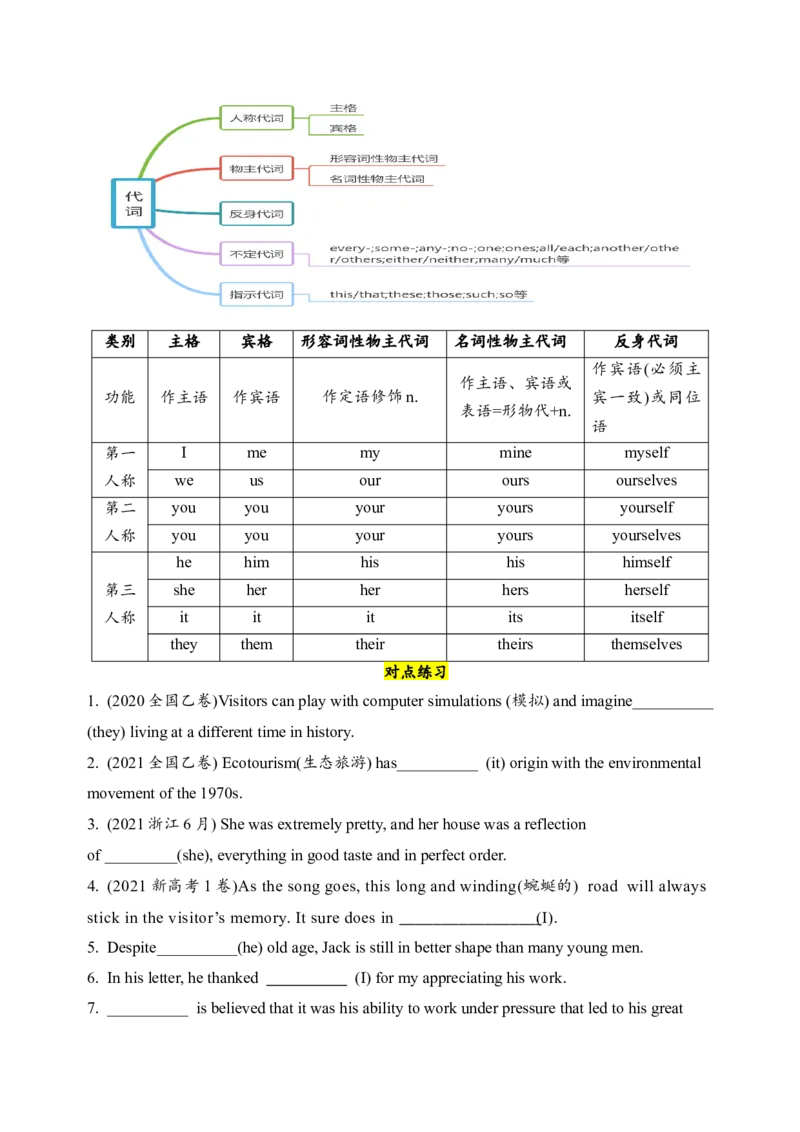
代词类别 主格 宾格 形容词性物主代词 名词性物主代词 反身代词
作宾语(必须主
作主语、宾语或
功能 作主语 作宾语 作定语修饰n. 宾一致)或同位
表语=形物代+n.
语
第一 I me my mine myself
人称 we us our ours ourselves
第二 you you your yours yourself
人称 you you your yours yourselves
he him his his himself
第三 she her her hers herself
人称 it it it its itself
they them their theirs themselves
对点练习
1. (2020全国乙卷)Visitors can play with computer simulations (模拟) and imagine__________
(they) living at a different time in history.
2. (2021全国乙卷) Ecotourism(生态旅游) has__________ (it) origin with the environmental
movement of the 1970s.
3. (2021浙江6月) She was extremely pretty, and her house was a reflection
of _________(she), everything in good taste and in perfect order.
4. (2021新高考1卷)As the song goes, this long and winding(蜿蜒的) road will always
stick in the visitor’s memory. It sure does in ( I).
5. Despite__________(he) old age, Jack is still in better shape than many young men.
6. In his letter, he thanked (I) for my appreciating his work.
7. __________ is believed that it was his ability to work under pressure that led to his greatsuccess.
8. Online shopping websites and social media apps have made__________easier for the public
to spend more on gifts.
9. You’d better take down the number that Jim told you just now in case you forget__________.
10. A study shows the students who are engaged in after-school activities are happier than
__________who are not.
11. The weather in Beijing in winter is colder than __________ of Shanghai.
Key: 1. themselves 2. its 3. herself 4. mine(=my memory) 5. his 6. me 7. It(形式主语) 8. it(形
式宾语) 9. it(代指the number) 10. that(指代同类不同物的单数名词或不可数名词, 此处指
weather)
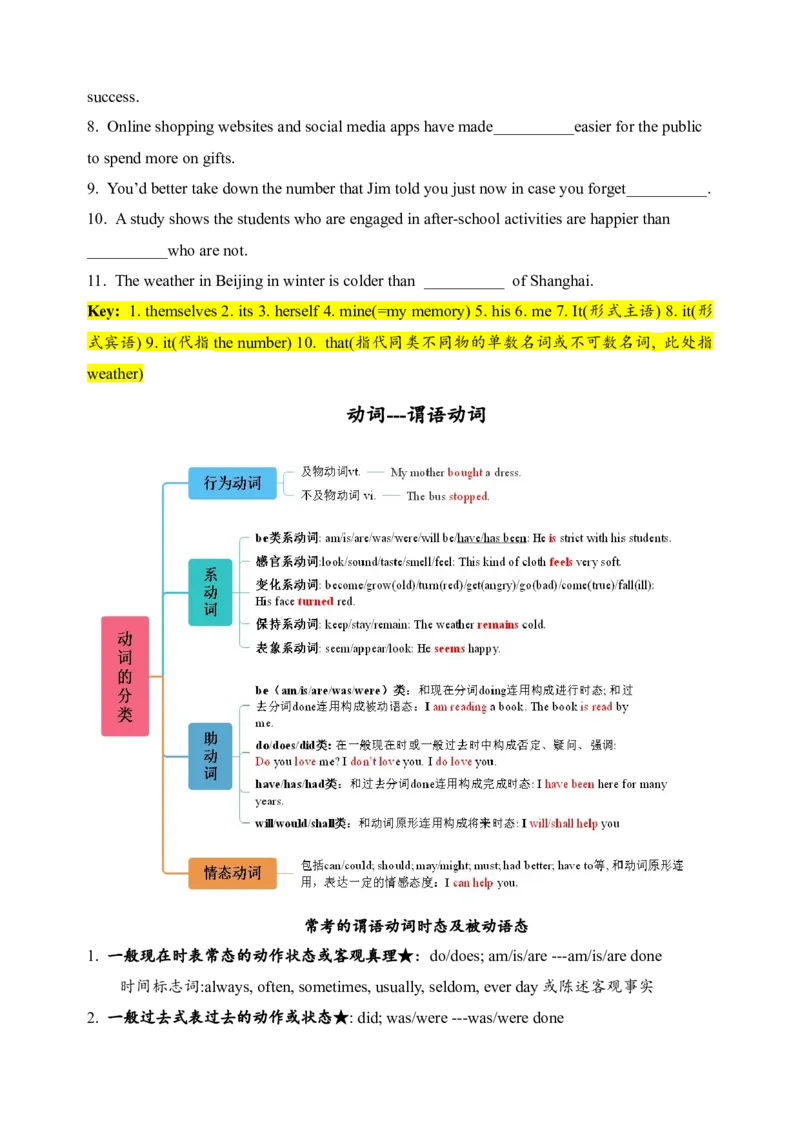
动词---谓语动词
常考的谓语动词时态及被动语态
1. 一般现在时表常态的动作状态或客观真理★:do/does; am/is/are ---am/is/are done
时间标志词:always, often, sometimes, usually, seldom, ever day或陈述客观事实
2. 一般过去式表过去的动作或状态★: did; was/were ---was/were done时间标志词:yesterday, last..., ...ago, the other day(前几天), in 2021, then(那时),
previously(以前)等
3. 一般将来时表将来的动作或状态:will do;will be---will be done
4. 现在进行时表现在正在进行的动作,现在进行时有时也可表将来:am/is/are doing---
am/is/are being done
时间标志词:now, currently(目前)
5. 过去进行时表示过去正在进行的动作:was/were doing---was/were being done
6. 现在完成时表示动作已完成或过去的动作持续到现在★:have/has done; have/has been
---have/has been done
时间标志词:since+时间点;for+时间段;recently/lately (最近);in recent
months/years…/ so far/up to now/till now/by now(到目前为止); in/over/during the
last/past…(在过去的…里)
7. 过去完成时表示过去某时之前动作就已完成,强调动作发生在“过去的过去”:had
done;had been---had been done
时间标志词:...before;by+过去的时间(截止到...前);before/by the time+从句
8. 现在完成进行时强调过去的动作延续到现在并且还会继续下去,译为一直在做...
:have/has been doing
9. 含有情态动词★:情态动词can;could/must/should/may;might/will;would +do
---情态动词could/must/should/may;might/will;would/had better +be done
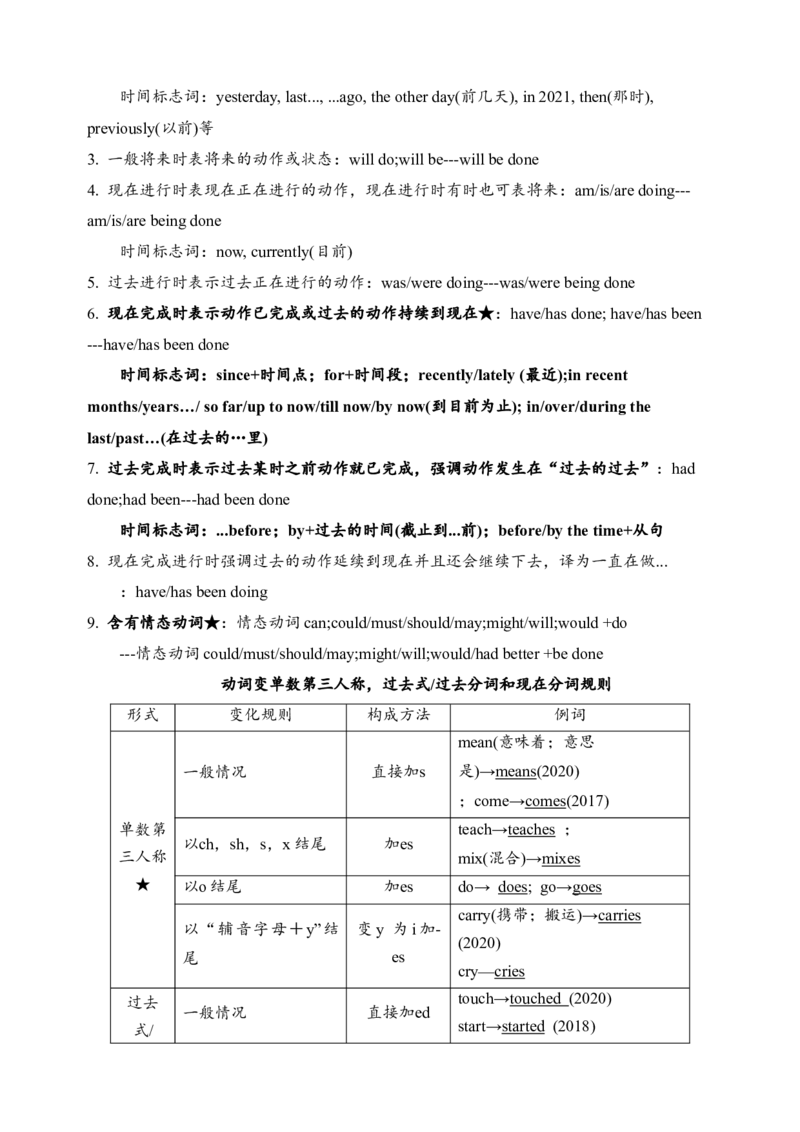
动词变单数第三人称,过去式/过去分词和现在分词规则
形式 变化规则 构成方法 例词
mean(意味着;意思
一般情况 直接加s 是)→means(2020)
;come→comes(2017)
单数第 teach→teaches ;
以ch,sh,s,x结尾 加es
三人称 mix(混合)→mixes
★ 以o结尾 加es do→ does; go→goes
carry(携带;搬运)→carries
以“辅音字母+y”结 变y 为i加-
(2020)
尾 es
cry—cries
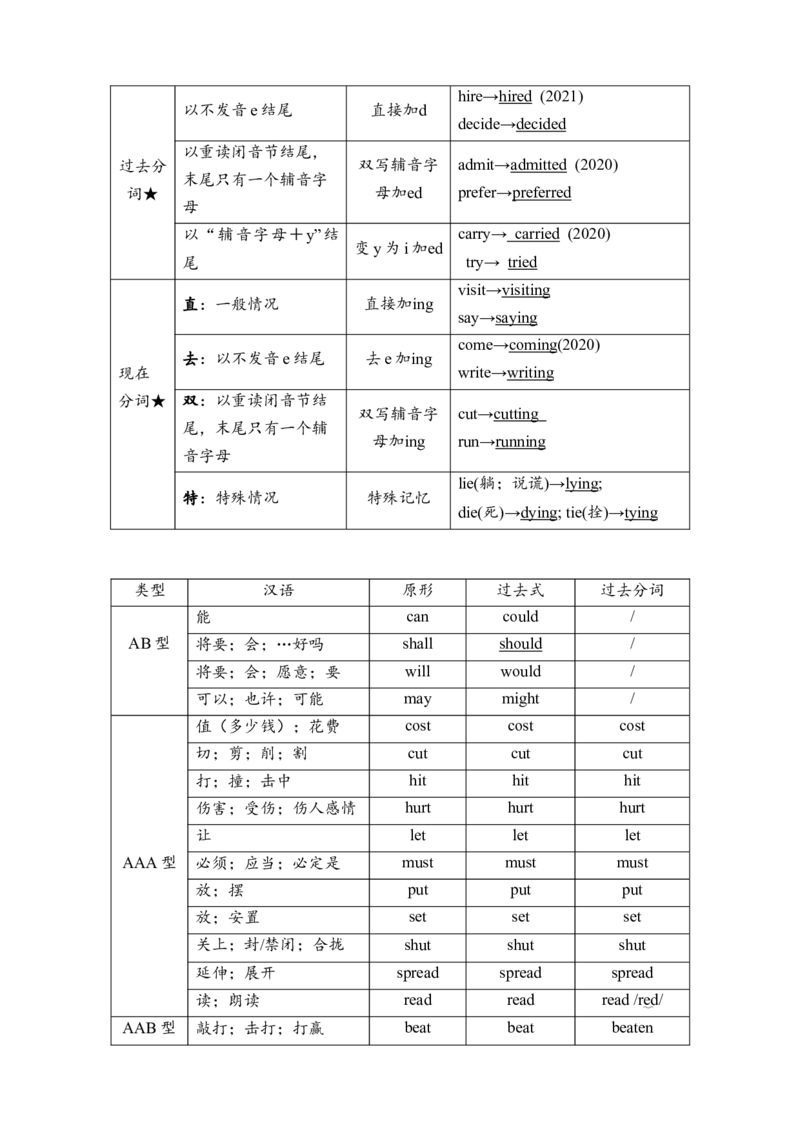
过去 touch→touched (2020)
一般情况 直接加ed
式/ start→started (2018)hire→hired (2021)
以不发音e结尾 直接加d
decide→decided
以重读闭音节结尾,
过去分 双写辅音字 admit→admitted (2020)
末尾只有一个辅音字
词★ 母加ed prefer→preferred
母
以“辅音字母+y”结 carry→ carried (2020)
变y为i加ed
尾 try→ tried
visit→visiting
直:一般情况 直接加ing
say→saying
come→coming(2020)
去:以不发音e结尾 去e加ing
现在 write→writing
分词★ 双:以重读闭音节结
双写辅音字 cut→cutting
尾,末尾只有一个辅
母加ing run→running
音字母
lie(躺;说谎)→lying;
特:特殊情况 特殊记忆
die(死)→dying; tie(拴)→tying
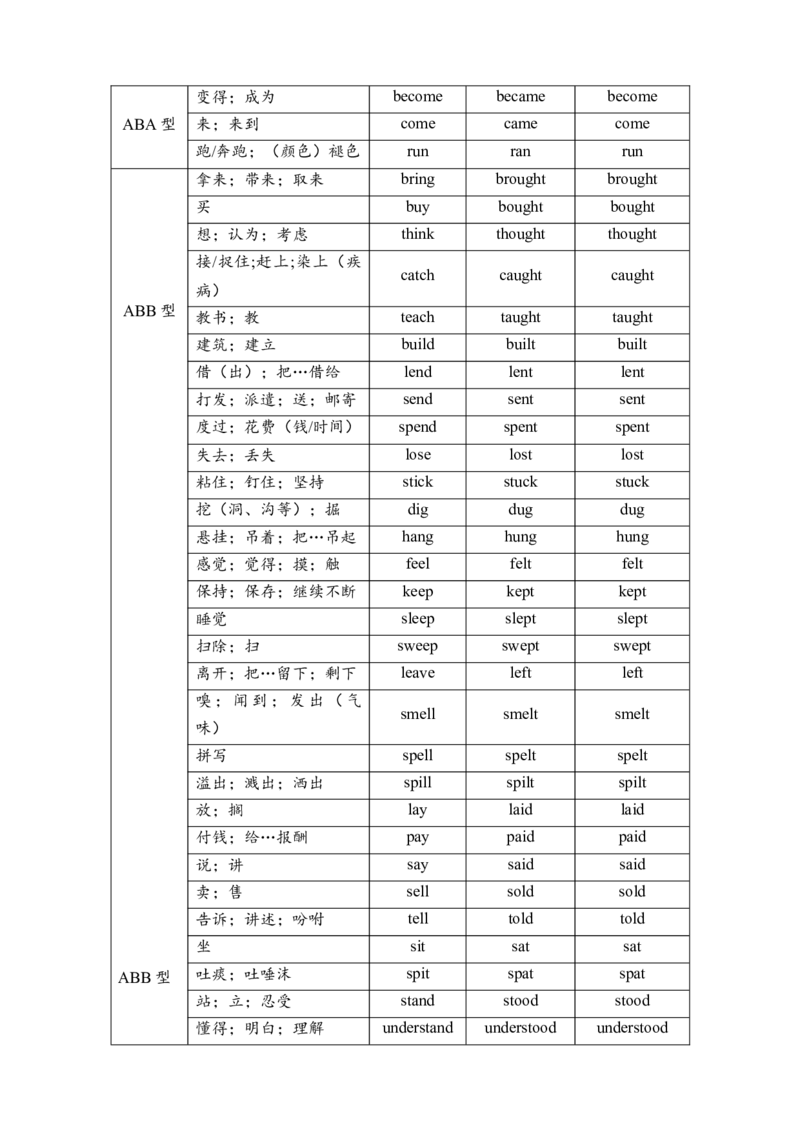
类型 汉语 原形 过去式 过去分词
能 can could /
AB型 将要;会;…好吗 shall should /
将要;会;愿意;要 will would /
可以;也许;可能 may might /
值(多少钱);花费 cost cost cost
切;剪;削;割 cut cut cut
打;撞;击中 hit hit hit
伤害;受伤;伤人感情 hurt hurt hurt
让 let let let
AAA型 必须;应当;必定是 must must must
放;摆 put put put
放;安置 set set set
关上;封/禁闭;合拢 shut shut shut
延伸;展开 spread spread spread
读;朗读 read read read /red/
AAB型 敲打;击打;打赢 beat beat beaten变得;成为 become became become
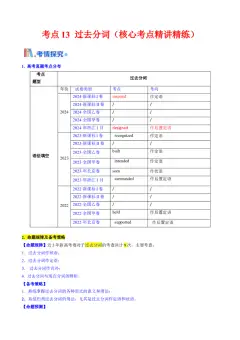
ABA型 来;来到 come came come
跑/奔跑;(颜色)褪色 run ran run
拿来;带来;取来 bring brought brought
买 buy bought bought
想;认为;考虑 think thought thought
接/捉住;赶上;染上(疾
catch caught caught
病)
ABB型
教书;教 teach taught taught
建筑;建立 build built built
借(出);把…借给 lend lent lent
打发;派遣;送;邮寄 send sent sent
度过;花费(钱/时间) spend spent spent
失去;丢失 lose lost lost
粘住;钉住;坚持 stick stuck stuck
挖(洞、沟等);掘 dig dug dug
悬挂;吊着;把…吊起 hang hung hung
感觉;觉得;摸;触 feel felt felt
保持;保存;继续不断 keep kept kept
睡觉 sleep slept slept
扫除;扫 sweep swept swept
离开;把…留下;剩下 leave left left
嗅;闻到;发出(气
smell smelt smelt
味)
拼写 spell spelt spelt
溢出;溅出;洒出 spill spilt spilt
放;搁 lay laid laid
付钱;给…报酬 pay paid paid
说;讲 say said said
卖;售 sell sold sold
告诉;讲述;吩咐 tell told told
坐 sit sat sat
ABB型 吐痰;吐唾沫 spit spat spat
站;立;忍受 stand stood stood
懂得;明白;理解 understand understood understood燃烧/着火;使烧焦/晒
burn burnt burnt
黑
学;学习;学会 learn learnt learnt
意思是;意指 mean meant meant
糟蹋;损坏;溺爱 spoil spoilt spoilt
梦;梦想 dream dreamt dreamt
喂(养);饲(养) feed fed fed
遇见;见到 meet met met
领导;带领 lead led led
成为;得到;具有;达
get got got
到
发光;照耀;杰出;擦
shine shone shone
亮
获胜;赢得 win won won
有;吃/喝;进行/经受 have / has had had
制造;做;使得 make made made
听见;听说;得知 hear heard heard
打架/仗;与…打仗 fight fought fought
找到;发现;感到 find found found
拿/抱;握住;举行 hold held held
是 be was/were been
开始;着手 begin began begun
喝;饮 drink drank drunk
(钟/铃)响;打电话 ring rang rung
唱;唱歌 sing sang sung
下沉;沉没 sink sank sunk
游泳;游 swim swam swum
吹;刮风;吹气 blow blew blown
(鸟/飞机)飞;(人乘
ABC型
飞机)飞行;(旗子) fly flew flown
飘动
生长;发育;种植;变
grow grew grown
得
知道;了解;认识;懂
know knew known
得投;掷;扔 throw threw thrown
绘画;拉;拖;提取
draw drew drawn
(金钱)
给…看;出示;显示 show showed shown
打破;损坏;撕开 break broke broken
偷;窃取 steal stole stolen
选择 choose chose chosen
忘记;忘掉 forget forgot forgotten
结冰 freeze froze frozen
说;讲;谈话;发言 speak spoke spoken
醒;醒来;叫醒 wake woke woken
驾驶;开(车);驱赶 drive drove driven
吃 eat ate eaten
落(下);降落; 倒 fall fell fallen
给;递给;付出;给予 give gave given
把…藏起来;隐藏 hide hid hidden
骑(马/自行车);乘车 ride rode ridden
上升;上涨 rise rose risen
拿;服(药);乘坐;
take took taken
花费
弄错 mistake mistook mistaken
(使)动摇;震动 shake shook shaken
写;书写;写作;著述 write wrote written
是 am / is was been
是 are were been
做;干 do did done
去;走;变得;通往 go went gone
躺;卧;平放;位于 lie lay lain
看见/到;领会;拜会 see saw seen
ABC型 穿;戴 wear wore worn
对点练习
1. (2024浙江1月首考)Over the last two years, some supermarkets __________(start) sellingchicken or salad in packs designed with two halves containing separate portions (份).
2. (2024九省联考) Fountain pens__________(use) in schools long ago and have been
regaining popularity lately because they are refillable.
3. (2021全国高考甲卷)The Xi’an City Wall__________ (build) originally to protect the
city in the Tang dynasty and has now been completely restored (修复).
4. (2021浙江卷)After Lincoln was elected President of the US in 1861, they rented the house
and ___________ (sell)most of their furniture.
5. (2020全国卷II) This is why decorating with plants, fruits and flowers __________
(carry) special significance.
6. (2020年全国Ⅲ卷) The artist was sure he would__________(choose).
7. (2020浙江卷)By about 6000 BC, people __________ (discover)the best crops to grow
and animals to raise.
8. (2019·全国 II卷) I love coming here and seeing my family and all the friends I _________
(make) over the years.
9. (2018全国Ⅱ卷) Since 2011, the country __________(grow) more corn than rice.
10. (2016全国Ⅱ卷)Leaving the less important things until tomorrow_______(be) often
acceptable.
11. There ________(be) a dramatic rise in the number of extreme weather events over the past
20 years.
12. Single-use plastic bags are used at most a few times before they__________ (throw) away.
13. However, greater attention should__________(place)on longevity(长寿).
14. The expression YYDS, literally meaning “eternal God”,__________( illustrate) one’s
feeling when they find something or someone godlike, awesome and exceptional.
15. Pierre Coubertin, a French man,__________ (found) the International Olympic
Committee(IOC) in 1894.
Key: 1. has started(时标:over the last two years) 2. were used(时标: long ago) 3. was built
(in the Tang dynasty) 4. sold (并列句) 5. carries(表语从句谓语动词主语decorating with
plants, fruits and flowers 动名词看成单数) 6. be chosen(情态动词的被动语态) 7. had
discovered(时标:by about 6000 BC) 8. have made(定语从句谓语动词 时标:over the
years) 9.has grown(时标:since 2011) 10. is(Leaving the less important things until
tomorrow动名词做主语) 11. has been(there be 的完成时态there have/has been 时标:over the past 20 years) 12. are thrown(状语从句谓动) 13. be placed(情态动词的被动语态)
14. illustrates 15. founded(时标:in1894)
动词---非谓语动词
非谓语动词是指不作谓语动词的动词形式。
非谓语动词法则:一个英语句子在没有连词连接的情况下有且只有一个谓语动词,如果
句子已经有了一个谓语动词,那么其他动词只能以非谓语的形式出现,在句中作除谓语
以外的其他成分。
动名词作主语 Learning Chinese is very important for Tom.
动名词作宾语 Tom enjoys learning Chinese.
动名词/现在分词作表语 Tom’s hobby is learning Chinese, for learning
Chinese is exciting for Tom.
现在分词作定语 The boy reading an interesting Chinese book
in the reading room is Tom.
现在分词作状语 Reading a Chinese book, Tom was very
doing:现在 interested.
分词表主动
现在分词作宾语补足语 I saw Tom reading a Chinese book.
进行/动名
现在分词的完成形式 Having learnt Chinese for so many years, Tom
词相当于名
is able to speak fluent English.
词
having done 作状语强调
该动作先于谓语动词动
作前发生
作主语 To learn Chinese well is Tom’s dream.=It is
Tom’s dream to learn English well.
作宾语 Tom wants to learn English well.
作表语 Tom’s goal is to learn English well.
作定语 Tom has the ability to learn English well and he
also has a plan to study in China.
作状语 To learn English well, Tom works hard.=Tom
works hard to learn English well.不定式to
do:表目的
作宾语补足语 Tom’s father inspires him to learn English well.
或将来
不定式to do的被动形式 Learning Chinese so well enables Tom to be
to be done作宾语补足语 invited to China as an exchange student.
作定语 The boy inspired by his father is Tom.
过 去 分 词 作状语 Inspired by his father, Tom tries his best to learn
done: 表 被 Chinese well.
动或完成
作宾语补足语 We find Tom inspired by his father a lot.
作表语 Tom is very interested in learning Chinese.
对点练习
1. The manager was satisfied to see many new products _________(develop) after great effort.
2. There is a note pinned to the door_________(say)when the shop will open again.
3. But unlike her school friends, 16-year-old Sarah is not spending half-term _________(rest).
4. _________ (strengthen)the connection with young people, the event included a number of
public promotional activities on social media, _________(invite) twenty-nine tea professionals
from around the world to have thirty-six hours of uninterrupted live broadcasts.
5. Jane moved aimlessly down the tree-lined street, not _________(know) where she was
heading.
6. And when he saw the mists(薄雾) rising from the river and the soft clouds ____________
(surround) the mountain tops, he was reduced to tears.
7. When ___________(face) with difficult situations in their lives, many people find them too
challenging and give up.
When ___________(face) difficult situations in their lives, many people find them too
challenging and give up.
8. ___________(see) from the top of the mountain, our city looks beautiful.
___________(see) from the top of the mountain, I find our city very beautiful.
9. He hurried to the hall, ___________(follow) by two guards.
10. ___________(complete) in 611, the China’s Grand Canal grow more and more important
throughout China over the next 500 rears. In addition to___________(move) rice around China,
it was also an important waterway.
11. Oranges make great gifts and you see them many times ___________ (decorate) with red
envelopes and messages of good fortune12. It is possible _________ (walk) or bike the entire 14 kilometers.
13. The next morning he hired a boat and set out _______ (find) the well-known painter.
14. They are easy _________ (care) for and make great presents.
15. She is _________(satisfy) with the online education though she hasn’t had a traditional
school experience.
16. The company aims_________(promote) bike culture as a lifestyle choice.
17. China is the first developing country _________(host) the Olympic Games in modern
Olympic history.
18. Children may have greater ability _________(figure) out things than scientists.
19. In college, there are so many good chances for you _________(meet) your expectations.
20. Cooking benefits people in many ways and enables them_________(connect) with one
another.
Key 1. developed(过去分词作宾语补足语) 2.saying(过去分词作后置定语) 3. resting(spend
时间 doing sth) 4. To strenghthen(过去分词表目的);inviting(现在分词作状语) 5.
knowing(现在分词作状语) 6. surrounding(现在分词作宾语补足语) 7. facing(现在分词作状
语);faced(过去分词作状语 be faced with 面对) 8.seen(过去分词作状语);seeing(现在分
词作状语) 9. followed(过去分词作状语) 10. Completed(过去分词作状语);moving(in
addition to doing sth to为介词) 11. decorated(过去分词做状语) 12. to walk(it为形式主语to
do不定式为真正主语) 13. to find(set out to do sth 开始着手做某事) 14. to care (be +adj.+to
do) 15. satisfied(be satisfied with 对...满意/满足) 16. to promote(aim to do 旨在做某事) 17. to
host(名词前有序数词修饰的n.后一般用to do不定式作后置定语) 18. to figure(the ability to
do 做某事的能力to do不定式作后置定语) 19. to meet(chance to do sth做某事的机会 to do
不定式作后置定语) 20. to connect(enable sb to do sth 使某人能够做某事)
形容词和副词
核心考点1:形容词变副词规则
类 别 例 词
undoubted→undoubtedly毋庸置疑地(2021)
一般直接加ly extreme→extremely极其地 (2020)
regular→regularly有规律地
以辅音字母+y结尾的形容词, 变
happy→happily 高兴地
y为i再加lyeasy→ easily容易地(2019)
特例:shy→shyly害羞地(直接加ly)
terrible→terribly 可怕地;极度地
词尾为ble/le的形容词, 去掉e再 gentle→ gently 轻轻地 (2020)
加y 特例:whole—wholly完全地;整体地(双写
l)
词尾为ue的形容词, 去掉e再加-
true→ truly 真实地
ly
real→ really 真实地(2017)
词尾为l的形容词加-ly; 词尾为ll official→ officially正式地(2016)
的形容词直接加y full→ fully 充分地;完全地
dull→dully 迟钝地;单调地
basic→basically 主要地,基本上
词尾为ic的形容词加ally scientific→ scientifically科学地
specific →specifically 特定地
核心考点2:形容词/副词变比较级和最高级
1. 规则变化
例词
构成
原级 比较级 最高级
long longer longest
一般单音节词后面直接加-
great greater greatest
er,est
hard harder hardest
以不发音的e结尾的单音节 fine finer finest
词加r和st large larger largest
重读辅元辅结尾,先双写词 fat fatter fattest
尾的辅音字母后再加er和est thin thinner thinnest
easy easier easiest
以“辅音字母+y”结尾的
happy happier happiest
词,先把y变为i再加er和est
early earlier earliest
careful more careful most careful
多音节(>或=三个音节)和部
popular more popular most popular
分双音节的形容词或副词都
efficiently more efficiently more efficientlyinteresting more interesting most interesting
在前面加more和most concerned more concerned most concerned
2.不规则变化
原级 比较级 最高级
good, well better best
bad, ill worse worst
many, much more most
little less least
farther更远的/地(具体概念) farthest 最远的/地
far
further更进一步的/地★(抽象概念) furthest在最大程度上/地
old older/elder(年长的) oldest/eldest
注意:下列表示“最高程度”或“绝对状态”的形容词和副词没有比较级和最高级,
如:favourite;perfect;excellent;wrong;right;unique;extreme等。
对点练习
1. Landing on the moon’s far side is ___________ (extreme) challenging.
2. This is___________ (particular)true in the US. The second reason is that people are
living longer.
3. When the children are walking or cycling to school on dark mornings, car drivers can
___________ (easy) see them.
4. A taste for meat is ________(actual) behind the change.
5. In any unsafe situation, ___________(simple) press the button and a highly-trained agent will
get you the help you need.
6. We are _________(full) aware of the dangers.
7. ___________(basic), what we need from you is financial support.
8. My dog ate my homework, and my computer crashed. Even ___________ (bad), I got
sick that night.
It was by far the ___________ (bad) speech he had ever made.
9. The amazing thing about the spring is that the colder the temperature gets, the
___________(hot) the spring!
10. When the house was built, it was much ___________ (small) than it is today.Key: 1. extremely 2. particularly 3. easily 4. actually 5. simply 6. fully 7. Basically
8. worse ;worst 9. hottest 10. smaller
数词
核心考点1:基数词变序数词规则
规律 单词
four →fourth,six→sixth, seven→seventh,
ten→tenth, eleven→eleventh,
一般后加th
thirteen→thirteenth,fourteen→fourteenth,
hundred→hundredth,
1.2.3特殊记 one→first,two→second,tree→third
eight→eighth,nine→ninth,five→fifth,
8去t, 9去e, ve要用f替
twelve→twelfth
twenty→twentieth,thirty→thirtieth,
几十ty要变tie
forty→fortieth,fifty→fiftieth
twenty-one→twenty-first,thirty-five→thirty-
若是遇到几十几只变个位就可以
fifth
核心考点2:基数词和序数词其它重要考点
1. 注意区分:two thousand students 两千学生
thousands of students 数以千计的学生
2. 序数词前一般用定冠词the修饰;
3. 注意短语:in one’s+整十数的复数表示在某人几十多岁,如in one’s thirties 在某人
30多岁
4. 分数的表达 one fourth/ a quarter 1/4; one/a third 1/3; one/a half 1/2; two thirds 2/3
five eighths/five in eight /five out of eight 5/8:
对点练习
1. In the summer holiday following my ________ (eighteen) birthday, I took driving lessons.
2. Then, when I was in the ________(five) grade, I wanted to be a teacher because I liked my
English teacher so much.
3. We had a ceremony on the lawn(草坪) of Central High for the ________(forty) anniversary
(周年纪念日).
4. Though in her _________ (seventy), she still worked 8 hours a day in the pet shop.5. ________ (million) of the people in the mountain areas are finally off poverty(贫穷).
Key: 1. eighteenth 2. fifth 3. fortieth 4. seventies 5. Millions
冠词
1. ___________ friend of his, Wu Fan, volunteered to be his companion during the trip.
2. While you’re in China, Mount Huangshan is___________ must to visit!
3. ____________ Lincolns enlarged the house to a full two stories in 1856 to meet the needs of
their growing family.
4. The plum trees(梅树) are ___________first to flower even as the snow is melting(融
化).
5. Everybody wears ___________ same style of clothes.
6. Hawai is ___________ unique and unpredictable(不可预测的) place.
7. “They have been well received so far,” said Feng Juan, ___________ engineer from
the company which makes the machines.
8. Then, with___________rise of science, changes began.
Key: 1. A 2. a 3. The(the+姓氏复数表...一家人) 4. the(序数词前一般用定冠词修饰) 5.
the(the same..相同的...) 6.a 7. an 8. the(with the rise of 随着...的崛起)
介词常考的介词搭
1. at nine o’clock/dawn/dusk/noon/night 在9点钟/黎明/傍晚/正午/晚上
2. at the age of 6 在六岁时 3. at the same time 同时
4. at most/least 最多/至少
5. on Sunday/July 1st/a cold winter night /the following day在周日/七月一日/一个寒冷的冬
日晚上/第二天
6. in August/spring/2020/the twenty-first century 在8月/春季/2020年/21世纪
7. in the morning/afternoon/evening 在早上/下午/晚上
8. at a high price 以低价 9. on one’s own=by oneself 独自
10. in this way 以这种方法 11. show respect for sb 尊敬某人
12. with these words 说完这些话 13. at this news 听到这个消息
14. buy sth for sb 为某人买某物 15. bring sth with sb 随身携带某物
16. can’t open the door without knowing the password 不知道密码不能打开门
17. at low/high spirits 情绪低落/高涨 18. drive at a high speed 以高速行驶
19. wait for a while 等一会 20. on the Internet 在互联网上
21. have an effect on sth 对...有影响 22. be grateful to sb for sth 因某事感激某人
23. apologize to sb for sth 因某事向某人道
对点练习
1. He flew 4, 700 kilometers ___________ Xi’an to Kashgar on Sept. 20.
2. May 21st this year marks the first International Tea Day, which was named officially
___________ the United Nations on November 27th, 2019.
3. It was not widely accepted as a travel concept __________ the late 1980s.
4. It is estimated(据估计) that the output will increase __________ 15 %.5. While riding his bike home ___________a cold night,he came across a sad-looking elderly
woman wandering the streets by herself.
6. Oranges: Orange trees are more ___________ decoration; they are a symbol of good
fortune and wealth.
7. The artist was finally humbled (谦卑) by the greatest artist _________ earth, Mother
Nature.
8. Museums must compete ___________ people’s spare time and money with other
amusements.
9. Instead, being grateful ___________ small things every day is a much better way to improve
well-being.
10. After school she plans to take a year off to model full-time before going to university to get
a degree ___________ engineering or architecture.
Key: 1. from (from...to从...到...)2. by(be named by 被...命名) 3. until(not...until直到...才) 4.
by 5. on 6. than(more than 不止;超出) 7. on (on earth 在世界上/人世间)8. for(compete with
sb for sth 与某人竞争某物) 9. for(be grateful to sb for sth 因某事感激某人) 10. in(get a
degree in...获得...学位)
连词
并列连词及三大从句连词用法表
and, not only...but also(不但...而且), neither...nor(既不...也不),
both...and, be doing sth/about to do sth when(正在做/将要做...这
并列关系
时突然)
并列
转折关系 but, yet, while(然而),not...but(不是...而是)
连词
选择关系 or, either...or(要么...要么)
因果关系 so(因此); for(因为)
先行词人 who/that( 主 语 ) ; who/that/
whom/省略(宾语);whose(定语,表
关系代词 非限定性定语
所属关系);介词+which(物)/
从句:有逗号
(在从句中 whom(人)
隔开;从句不
作成分)
定语 先行词物 that/which( 主 语 或 宾 语 ) ; 用 that ;
从句 whose(定语,表所属关系) which 可以指
代前面整句话
关系副词 先行词为时间用when=介词+which;先行词为地
点用 where=介词+which; 先行词为 reason 用
(从句完整
why =for which
不缺成分)名 词 性 无实义,不作句子成分,后跟一个完整的句子,宾语从句中可
that
从句 以省略
(主语从 意为“是否”,不作句子成分,后跟一个完整的句子,宾语从
whether/if
句 、 宾 句两者皆可用,主语从句、表语从句、同位语从句只用whether
语 从
连接代词 作句子成分:who, whose, which, what
句 、 表
语 从
特殊 疑问
句 、 同 连接副词 不作句子成分:when, where, why, how
词
位 语 从
句)
when(当),while(当,只和延续性动词连用), as(当;随着),
before(在...之前), after(在...之后), till/till(直到...), once(一旦),
时间状语 since( 自 从 ), as soon as/the moment/the minute/the
second/immediately(一...就), every time(每次), the first time(第
一次)
地点状语 where, wherever(无论什么地方)
原因状语 because, since(=now that 既然,由于), as, for
目的状语 so that(以便于;为了),in order that, in case/for fear(以免;以防)
状语 结果状语 so...that/such ...that (如此...以至于), so that(结果)
从句 条件状语 if, unless(除非), as long as=so long as (只要)
although, though, while, as ( 虽 然 ), even if/though( 即
让步状语
使),whatever(= no matter what), whenever(=no matter when)...
方式状语 as(像), as if/though(好像)
比较状语 than(比), as...as(和...一样), not as/so...as(不如)
对点练习
连词---并列连词
1. I found the contact information of the company________ emailed its president.
2. My bike was old and shaky ______ did the job.
3. But the river wasn’t changed in a few days ________even a few months.
4. There were many people waiting at the bus stop, __________some of them looked
very anxious and disappointed.
连词---定语从句连词
1. When you sleep, your brain sorts through everything __________ happened during the
day,trying to link new experiences to old memories.
2. But Sarah, ___________has taken part in shows along with top models, wants to prove that
she has brains as well as beauty.3. Maybe you leave a habit ________is driving your family crazy.
4. I will be on vacation for two weeks, during __________ I plan to visit several European
countries.
5. We all like our English teacher, from __________ we have learned a lot.
6. The students benefiting most from college are those__________ are totally engaged(参与)in
academic life.
7. Self-driving is an area _______China and the rest of the world are on the same starting line.
8. My eldest son, _______ work takes him all over the world, is in New York at the moment.
9. The little problems ______ we meet in our daily lives may be inspirations for great
inventions.
10. Their child is at the stage__________ she can say individual words but not full sentences.
11. Wedding is an occasion __________ bride is the most beautiful.
连词---名词性从句连词
1. Cobb, for her party, started to ask conference organizers who invited her to speak
______ she could do so remotely.
2. This is _________ my father has taught me—to always face difficulties and hope for the best.
3. _________ impressed me most was that they never lose heart.
4. It is reported _________ thousands of people come to Confucius Temple to have a visit every
year.
5. I have a firm belief __________ we should never shy away from difficult situations.
6. There is evidence__________ cars have a harmful effect on the environment.
连词---状语从句连词
1. Over time, ____________the population grew, people began cutting food into small pieces so
it would cook more quickly.
2. ____________ they're expensive, they last forever and never go out of style.
3. We all need to get involved in saving energy ________ it’s at work, at home, or at school.
4. On our way to the house, it was raining _______ hard that we couldn't help wondering how
long it would take to get there.
Key:
并列连词1. and 2. but 3. or 4. and
定语从句连词 1. that(先行词为不定代词关系代词一般用 that) 2. who 3. that/which 4.which(介词+which) 5. whom(介词+whom) 6. who(先行词为 those 那些人关系代词一般用
who) 7. where 8. whose 9. that/which 10. where 11. when
名词性从句连词1. whether/if(引导宾语从句) 2. what(引导表语从句) 3.what(引导主语从句)
4. that(it形式主语 that引导主语从句) 5. that(同位语从句) 6. that(同位语从句)
状 语 从 句 连 词 1. when/over( 当 、 随 着 ) 2. Although/Though/While( 尽 管 ) 3.
whether(whether...or无论...还是) 4. so(so...that如此...以至于)
词性变化
动词或形容词变名词
1.able—ability 能力 2.absent—absence 缺席
3.accept—acceptance 接受 4.accurate—accuracy 精确; 准确
5.achieve —achievement 成就;实现 6.admit —admission 承认;允许进入
7.admire—admiration 钦佩;羡慕 8.appear —appearance 出现;外貌
9.approve—approval 批准;同意;赞成 10.argue—argument (去e+ment) 争论;辩论
11.arrange —arrangement 安排 12.arrive—arrival到达
13.assume—assumption 假定;承担 14.attract—attraction 有吸引力的人或物;景
点
15.aware—awareness 意识 16.begin— beginning 开始
17.behave—behavior 行为 18.believe— belief 信念;相信
19.compete— competition 竞赛;比赛 20.concentrate—concentration 专注;浓度
21.conclude—conclusion 结论;结束 22.construct—construction 建造;修建
23.confident—confidence 信心 24.contribute—contribution 贡献;捐献;投
稿
25.choose—choice 选择 26.curious—curiosity 好奇心
27.dead—death 死亡 28.decide —decision 决定
29.deep— depth 深度 30.describe —description 描述
31.deliver—delivery 传送;分娩;演讲 32.depart—departure 分离;离开
33.develop—development 发展;开发 34.different—difference 不同点;差异
35.difficult—difficulty 困难 36.discover—discovery 发现
37.discuss—discussion 讨论 38.divide—division 分开;分割
39.donate —donation 捐赠(物) 40.educate—education 教育
41.efficient—efficiency 效率 42.equip— equipment 设备43.excite—excitement 兴奋 44.exist—existence 存在
45.explain —explanation 解释(中间去i) 46.fail—failure 失败
47.fluent—fluency 流利(度) 48.frequent—frequency 频率
49.free—freedom 自由 50.guide — guidance 指导
51.generous—generosity 慷慨(中间去u) 52.grow—growth 成长
53.graduate—graduation 毕业 54.happy—happiness 快乐
55.high—height高度 56.honest—honesty 诚实
57.impress —impression 印象 58.improve—improvement 提高;改善
59.instruct—instruction 教导;说明书(复) 60.introduce—introduction介绍;引进
61.invite—invitation 邀请 65.inspire—inspiration 激励;灵感
67.lazy—laziness 懒惰 68.laugh—laughter 笑(声)
69. long— length 长度 70.lonely—loneliness 孤独
71.marry—marriage 婚姻 72.mix—mixture 混合物
73.operate—operation 操作;手术 74.patient—patience 耐心
75. perform —performance 表演;表现 76. permit — permission 允许;许可
77. pollute —pollution 污染(物) 78. prefer —preference 偏爱
79. prepare — preparation 准备 80. pronounce — pronunciation 发音
81. private— privacy 隐私 82.recover—recovery 恢复
83.respond—response 反应 84. responsible—responsibility 责任;职责
85.satisfy —satisfaction 满足 86.safe—safety 安全
87.secure—security 安全 88.select —selection 挑选
89. short—shortage 缺少;短缺 90. silent—silence 沉默
91. strong—strength 力量;优势 92. solve— solution 解决方法;溶液
93. succeed—success 成功 94. suffer—suffering 苦难;遭受
95. survive—survival 幸存 96. treat —treatment 治疗;对待
97.weak—weakness 弱点 98.wise—wisdom 智慧
99.understand—understanding 理解 100.various—variety 种类;多样性
动词或名词变形容词
1.access—accessible 可获得的;可到达的 2.anxiety— anxious 焦虑的
3.adventure—adventurous 冒险的 4.admire—admirable令人羡慕/钦佩的
5.afford—affordable 负担的起的;买得起的 6.ambition—ambitious 有野心的;雄心的7.attract—attractive 有吸引力的 8.benefit —beneficial 有益的
9.beauty—beautiful 美丽的 10.caution—cautious 谨慎的;小心的
11.cost—costly 昂贵的 12.comfort—comfortable 舒适的
13.confidence —confident 自信的 14.convenience —convenient 方便/便利的
15.courage —courageous 勇敢的 16.curiosity—curious 好奇的
17.culture—cultural 文化的 18.day—daily 日常的
19.danger—dangerous 危险的 20.dead—deadly 致命的
21.difference — different 不同的 22.economy—economic 经济的
23.effect —effective 有效的;高效的 24.energy —energetic 精力充沛的
25. expense—expensive 昂贵的 26. experience—experienced 经验丰富的
27.finance—financial 经济的 28.fortune —fortunate 幸运的
29.guilt —guilty 内疚的;有罪的 30.harm—harmful 有害的
31.health—healthy 健康的 32.hunger —hungry 饥饿的(中间去e)
33.harmony —harmonious 和谐的 34.impress — impressive 令人印象深刻的
35.independence —independent 独立的;自主的 36.industry—industrial 工业的;产业的
37.instruct—instructive 富有教育意义的 38.knowledge—knowledgeable 博学的
39.meaning—meaningful 有意义的 40. mercy—merciful 仁慈的
41. nature —natural 自然的 42.nation—national 国家的;民族的
43.origin—original 最初的;原创的 44.peace—peaceful 平静的;和平的
45. practice — practical 实用的;实用的 46.profession— professional 专业的
47. power —powerful 强大的 48.poison— poisonous 有毒的
49. reason —reasonable 合理的 50.rely—reliable 可靠的;可信赖的
51.religion—religious 宗教的 52.salt —salty 咸的
53.science—scientific 科学地的 54. season—seasonal 季节的
55. skill —skilled 熟练的 56. shame —shamed(感到羞耻的)/shameful(羞耻
的)
57. success —successful 成功的 58.suit—suitable 合适的
59.taste—tasty美味的 60.tradition— traditional 传统的
61. wealth — wealthy 富有的 62. worth —worthy 值得的
63.wood—wooden 木头的;木制的 64.value—valuable 有价值
65.vary vi./variety n.— various 各种各样的 66.violence — violent 暴力的名词或形容词变动词
1. able—enable 使能够 2. apology—apologize 道歉
3. broad —broaden 拓宽;加宽 4. courage— encourage 鼓励
5. deep—deepen加深 6. large— enlarge 扩大
7. length— lengthen 延长 8. rich— enrich 丰富
9.strength—strengthen 加强;增强 10.short—shorten 缩短
11.sharp—sharpen 使锋利/敏锐 12.threat— threaten 威胁
13. weak—weaken 使虚弱 14. worse— worsen 使变坏;恶化
变人或职业的名词
1.act—actor 男演员/actress 女演员 2.account— accountant 会计
3.art—artist 艺术家 4.assist—assistant助理;助手
5.Africa—African 非洲人(的) 6.beg—beggar乞丐
7.educate—educator 教育者;教育家 8.employ—employer 雇主/employee 雇员
9.invent—inventor 发明者;发明家
10.interview—interviewer 采访者;面试者/interviewee 被采访者;被面试者
11.library—librarian 图书管理员 12.lie—liar 说谎者;骗子
13.music—musician 音乐家 14.novel—novelist 小说家
15.strange—stranger 陌生人 16.science—scientist 科学家
17.tour—tourist 游客 18.use—user 使用者
名词、动词或形容词变反义词
1.able—unable不能够的 2.advantage—disadvantage劣势
3.appear—disappear 消失 4.convenient—inconvenience不便
5.fair—unfair不公平 6.fortunate—unfortunate不幸的
7.hopeful—hopeless 绝望的 8.legal—illegal 非法的
9.polite—impolite 不礼貌的 10.patient—impatient不耐心的
11.tasty—tasteless 无味的 12.trust—distrust不信任
13.understand— misunderstand误解 14.useful—useless无用的
15.usual—unusual 不寻常的
对点练习
1. China has a ___________ (responsible)to work with other countries to promote the healthy
development of the tea industry.2. When the answer, was no, she, declined(拒绝) the ___________ (invite).
3. Chinese New Year is a ___________ (celebrate) marking the end of the winter season and the
beginning of spring.
4. Filled with ___________ (curious), the artist packed his bags and left.
5. Leading to a ___________ (believe) that populations are increasing.
6. When they were free from work, they invited us to local events and let us know of an
interesting___________ (compete)to watch, together with the story behind it.
7. A warm drink of milk before bed has long been the best ___________(choose) for those
wanting a good night's sleep.
8. And at that moment, I made the___________ (decide): I will develop and follow a personal
growth plan for my life.
9. The___________ (major)of the story takes place in n a specific part of the house
10. Thomas Edison, the famous ___________(invent), once said “I've not failed.”
11. The study surveyed 500 families and found that the main psychological problems people
suffered were___________(lonely) and ___________(anxious).
12. People who are far-sighted have difficulty in reading a book unless they hold it at an arm’s
___________(long).
13. Suddenly you see a glow (暗淡的光)in the___________(distant). As you approach, it
becomes___________ (big) and stranger.
14. I told him how ___________ (harm) plastic could be to the environment and asked
him to consider using more eco-friendly options.
15. Running is cheap, easy and it's always___________(energy).
16. Cao believes this will make the hiking trip even more ___________ (meaning) .
17. School uniforms are___________(tradition) in Britain, but some schools are starting to get
rid of them.
18. Undoubtedly, the theater has contributed to the area’s development and ___________
(economy) growth.
19. And she said ___________(society) media companies must also take more responsibility.
20. To avoid knee pain, you can run on soft surfaces, do exercises ___________(strength) your
leg muscles(肌肉), avoid hills and get good running shoes.
21. It will ___________(rich) our mind and show colleges we are diverse students.Key: 1. responsibility(n. 责任) 2. invitation(n.邀请) 3. celebration(n.庆祝(活动))4. curiosity(n. 好奇心) 5.
belief(n. 信念;信仰;认为) 6. competition (n. 比赛;竞争) 7. choice 8. decision 9. majority 10.
inventor(n. 发明家;创始人) 11. loneliness(n. 孤独); anxiety(n.焦虑) 12. length(n.长度) 13. distance;
bigger 14. harmful 15. energetic(adj.精力充沛的) 16. meaningful(有意义的) 17. traditional 18. economic(经
济的) 19. social(经济的) 20. strengthen(vt. 加强; 增强) 21. enrich(vt.丰富)