新高考一轮复习专题:听力
编辑者:Raython
目录
一:认识听力 1
二:听力考察分析 2
三:听力命题规律 3
四:听力命题要点 3
五:听力考场高分 3
六:听力按点分析 4
七:听力发音技巧 5
八:听力的泛精听 6
九:听力的提高建议 7
十:听力试题案例 7
一:认识听力
Ⅰ.了解什么是听力
在高考中高考听力是整套高考英语试卷中最简单的部分是拿分点。听力常作为一种考试题型,目的在于考
察应试者对英语语言的把握,考察考生对英语日常交流的理解能力;通常有听对话选择答案、听句子默写
关键字词几种形式。
听力都在试卷的开头,听力分值为30分答题时间一般在20分钟左右。
听力分为俩部分,第一小节共5道题每小题1.5分满分7.5分,第二小节15小题每小题1.5分满分22.5分。
Ⅱ.考纲要求
要求考生能听懂有关日常生活中所熟悉话题的简短独白和对话。
A.理解主旨要求 B.获取事实性的具体信息 C.对所听内容进行简单的判断 D.理解说话者的意图,观点和态
度
二:听力考察分析 1.典型题型分析
1.场景方向题 2.推理判断题 3.观点态度题 4.人物身份关系题 5.行为判断题 6.时间数字题 7.因果关系题
8.主旨要义题
2.考察能力分析
1).理解对话或独白的主旨大意
2).获取对话或独白中的具体信息
3).推断对话发生的背景,地点及对话者之间的关系
4).理会对话的观点,态度及意图
3.选材特点分析
1).内容“贴近时代、贴近生活、贴近学生”,减少非语言因素对于考查效果的影响。
2).信息量足。听力材料内容丰富,能为考生检测提供充分的信息。
3).不含生词。与阅读要求不同,一般不含生词。但人名、 地名等专有名词仍可能出现,这一点与实际交
际中的情况也是一致的。
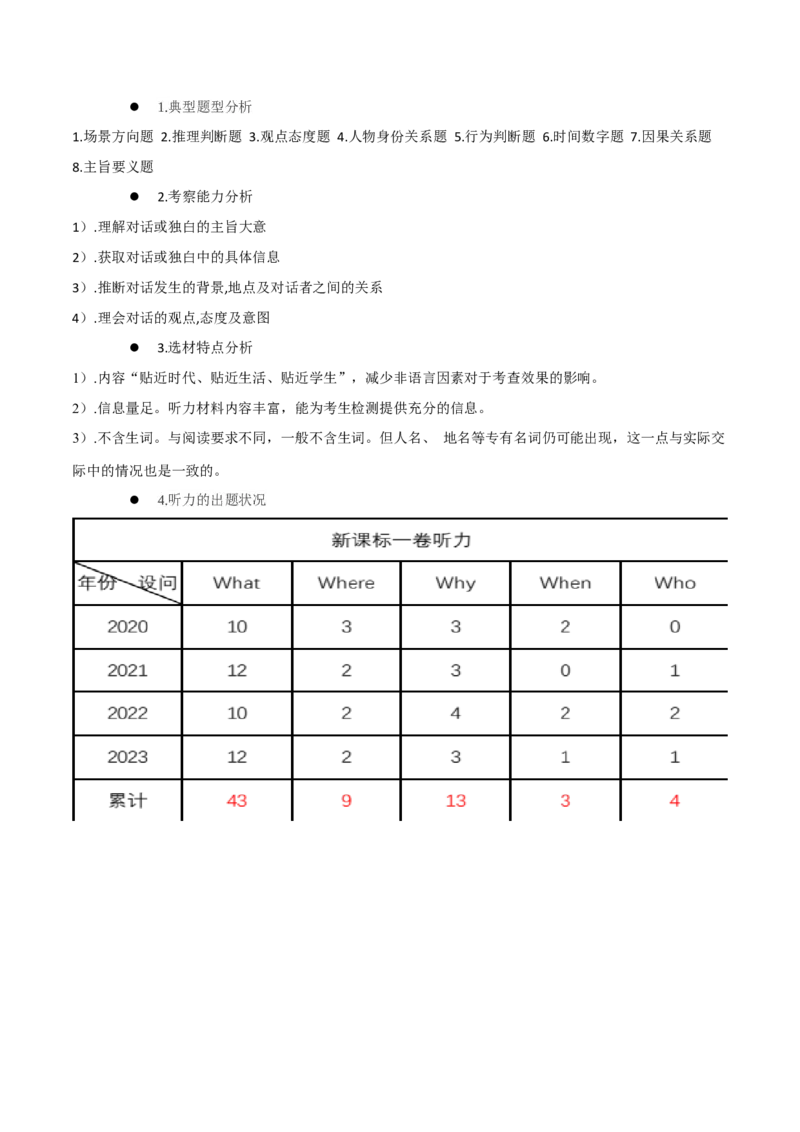
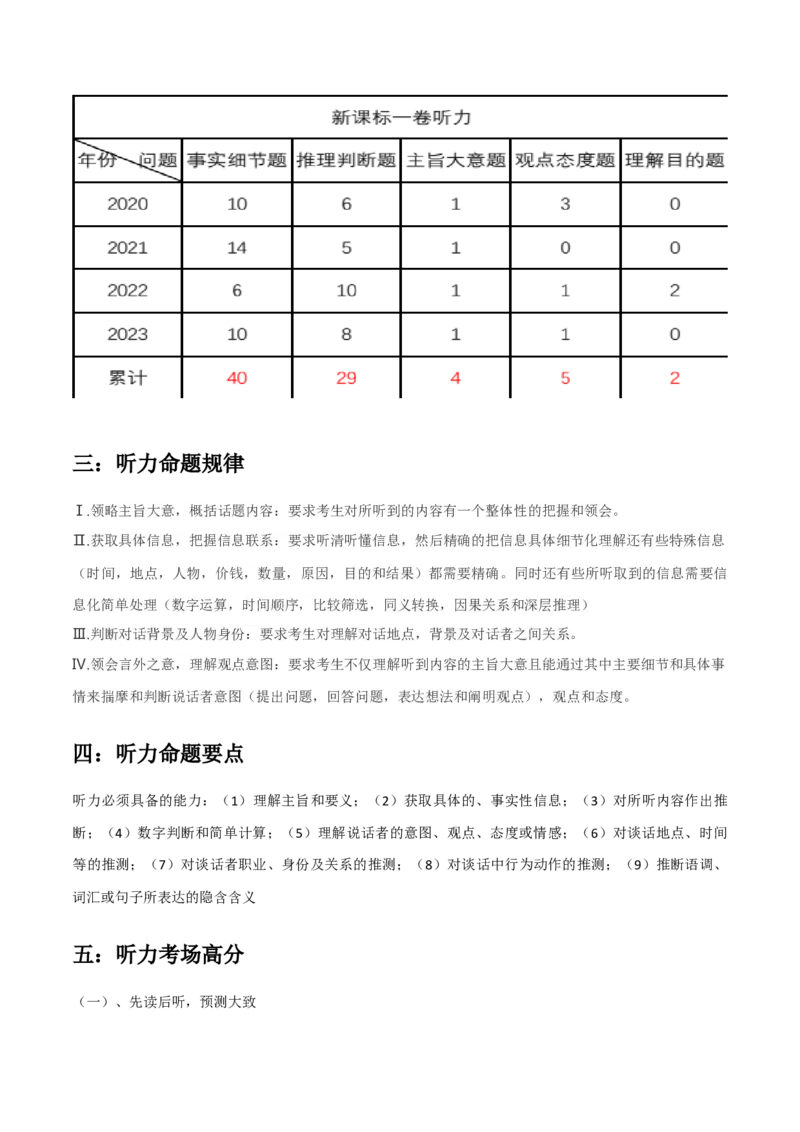
4.听力的出题状况三:听力命题规律
Ⅰ.领略主旨大意,概括话题内容:要求考生对所听到的内容有一个整体性的把握和领会。
Ⅱ.获取具体信息,把握信息联系:要求听清听懂信息,然后精确的把信息具体细节化理解还有些特殊信息
(时间,地点,人物,价钱,数量,原因,目的和结果)都需要精确。同时还有些所听取到的信息需要信
息化简单处理(数字运算,时间顺序,比较筛选,同义转换,因果关系和深层推理)
Ⅲ.判断对话背景及人物身份:要求考生对理解对话地点,背景及对话者之间关系。
Ⅳ.领会言外之意,理解观点意图:要求考生不仅理解听到内容的主旨大意且能通过其中主要细节和具体事
情来揣摩和判断说话者意图(提出问题,回答问题,表达想法和阐明观点),观点和态度。
四:听力命题要点
听力必须具备的能力:(1)理解主旨和要义;(2)获取具体的、事实性信息;(3)对所听内容作出推
断;(4)数字判断和简单计算;(5)理解说话者的意图、观点、态度或情感;(6)对谈话地点、时间
等的推测;(7)对谈话者职业、身份及关系的推测;(8)对谈话中行为动作的推测;(9)推断语调、
词汇或句子所表达的隐含含义
五:听力考场高分
(一)、先读后听,预测大致1.在放听力前一般有5min给学生浏览题目,这时需快速扫读题干和选项。
2.联系题干和选项,在放听力前一般有5min给学生浏览题目,这时需快速扫读题干和选项。(人物或场
所等并预测出谈话的大致内容。)
(二)、简便记录,便于辨别
1. 记完笔记要提纲,达到记忆效果来方便推断和答题
2. 听的时候记录要怎么简便怎么来,但是只要记重要环节(如:人物、事件、时间、地点、原因、方式、
程度、数字、选择等重要的信息)
(三)、运用排除,快速答题
1.根据自己所听到的感觉和已知道理排除不太肯能的选项。
例如:1、文中完全没有提及的选项 2、与文中所描述完全相反的选项 3、不符合所常识逻辑的选择
(四)、抓关键词,击破考点
1.通过听力前5min的粗略判断然后再所听到的关键词快速判断双方对话的关系和场景。答题时候就可以集
中注意力在对话者身上。
(五)、抓住主旨,重首尾句
1.解答主旨题型时候要着眼于句首,解答细节问题就要着眼于中间部分
2.若文中中间部分主要是细节或者是作者为了证实自己的观点进行进一步证明。
3.一般首句或者首段出文处的中心大意或者是对所阐述内容进行概括有时结尾会点题一次。
六:听力按点分析
Ⅰ:推理判断
这个题型考点一般集中于过去时、现在时和未来时的方面。所以答题时候要注意以下几点:
1) 根据设问的题干来确定所听到的重点
2) 若题目中问到某方干什么时候特别注意某方干了什么
3) 根据选项来抓住关键词(动词和动词短语)
Ⅱ:数字
听力题的数字题型一般主要是:电话号码、时间、日期、年龄、价格、运算、人数(口/名)等
通常出现来数字题型就要注意!一般是要简单的计算。
1) 设问方式:When….? (At)What time…? What day…? How long…? How much…? How old…? How
soon…? How many…? How often…?等等
2) 听清数字及它们之间的关系。
3) 注意数的引起的变化的动词,数字间的加减关系。4) 注意-teen or -ty的区别
5) 注意千位以上读法的辨别
6) 注意国外对价格、年代、世纪的习惯表达且注意口头和书面的差异
7) 街道、房间、汽车等号码的习惯表达方式
8) 注意倍数之间的意义表达
9) 对于辨别数字类题型应当边听边记。
10)细心默读选项给出的数字
Ⅲ:地点
地点题型一般分为确定地点和猜测地点
1) 设问方式:Where…? Which place…?
2) 确定地点:原文中必会提到该地点,这时应注意听清介词后的场所
3) 猜测地点:虽然有些词语并未明确表示事件发生的地点,但是暗示了事件发生的地点或说话
的地点。最好抓住对话中的关连词汇。
Ⅳ:人物及关系
人物及关系题一般主要考察谈话一方所从事的职业或考察判断对话者的关系
1)观察对话者之间的内容、语气、行为及态度就能辨别出对话者的身份关系,重点是说话的语气一般就
能判断双方关系
2)注意地点状语,它有时候就暗示了答案
3)熟悉职业和身份的关键词及双方见面第一句话的话术
Ⅴ:方案与实施
方案与实施题一般是问做什么
1) 不同人物不同事,人名/性别要重视
2) 如果碰到转折词一般前面误导后面正解
3) 注意动作发生的时间顺序
七:听力发音技巧
一、连读和吞音
连读和吞音是语速较快时的一种自然现象。考研英语听力中出现的是一些比较容易识别或稍加注意就能够
识别的连读。
吞音难度较大,一般不会涉及很多,主要是口语中/p/、/t/在重音/s/之后的爆破等。考生平时除了做专项训练,自己也应该进行一些朗读、会话训练,体会发音中的这些自然过程。
二、语气、语调和重音
俗话说“听话听音”,英语也不例外。在英语听力,特别是会话中,语气和语调起着很重要的作用,很多
时候只有通过它们才能准确判断说话人的意图和态度,而且其中常常含有隐义。例如:I must admit I have
learned much from the lectures given by Dr.Smith.What did I tell you?
回答者得意的语气语调表明其对于自己的建议获得认可而感到自豪,如果听不出这弦外之音,那就真的不
知所云了:难道自己说过什么都忘了,还要问别人?
重音也很重要,某些情况下,对重音的捕捉会直接影响到对句意的判断。例如下面这两个句子,发音一样,
但重音落在不同的音节上,句意完全不同,例如:
I haven’t seen my parents' for years!
I haven’t seen my parents for' years!
三、美式英语及其发音
现在的考生在中学阶段主要学的是标准英式发音。美式发音和英式发音的区别虽然很不明确,但还是有一
些规律可循的,例如,英式读法中r 不发音(如arm,poor等),美式读法却要发音。
解决这个问题除需要系统了解外,主要靠平时多听多说,养成耳朵的适应性。需要注意的是,英式英语和
美式英语之间在用词上也有区别。例如秋天,英式英语常用autumn,美式英语则多使用fall。
八:听力的泛精听
1、泛听
在练习听力之初,我们可以以多听为主。除了课堂教学,我还努力通过“潜移默化式”英语学习法。
2、精听
有了泛听的基础,我们就要进一步考虑如何提升听力的`质量。在精听时,要首先熟悉听力材料中的生词,对
有此难句可以反复听:而泛听则首先着眼于量大,只求掌握大意,不必了解每个细节,精听遍数不限,直到完全听
懂为止,泛听的遍数由由材料难度和自己的程度来决定,得一般不要超过三遍否则就失去了泛听的意义,泛听
时,不宜中间打断,要一气呵成, 精听则可在句子之间或困难之处停下机器,倒带重听。兴泛不精,会养成似是
而非,不求甚解的习惯,反之,则见树不见林,抓不住大意。所以这两种训练哪一种也不应偏废。
3、注意听力技巧
很多同学在做听力的时候,经常会想要听清每一个单词。然而在听力练习中,这样的习惯会让孩子在错过
一个单词后,后面的内容会全部来不及听
起初孩子们很不适应这样的听力练习方式,一般会出现两种情况:一是遇到不理解的听不出来的单词,一直在纠结怎么写;二是听到关键词马上开始写,而导致后面的内容完全没有听到。
所以针对这样的情况,遇到一时不理解的单词不要停下来思索,而要坚持继续听,以防止错过更多的信息。
另外,我们在听到会的单词后,可以在线上先写出该单词的首字母,提醒自己。在完全听完录音后,在逐
一补全。
九:听力的提高建议
首先对于听力有效提高我们应该首先第一步找一套真题来测试一下自己水平。测试好水平之后我们应该多
做几篇听力来练习磨耳朵(例案1),这里需要注意注重听力材料的多样性,尽量多听各种语速和口音的
英语材料,这样可以适应高考听力中的不同语音和语调。可以通过听取来自不同国家和地区的英语材料来
增加自己的听力广度。第二我们在做题时候应该有预判性去看题目选项大致知道选项将要我们选什么(例
案2),第三我们应该在做题时候多多做笔记做重要的笔记这样可以方便回顾题目时候让我们有大致回忆
还有在听力材料中,经常会有一些关键词和信号词,它们可以帮助你理解主题和关系。通过关注这些词语,
可以更好地抓住重点信息,(例案3)。第四在我们熟练之后应该提高听力速度让我们在提高反应速度
(例案4),最后我们应该在每次所练习的习题上进行反思和分析(例案5)
1.增加听力练习:高考听力是一项需要长期积累和锻炼的技能。通过多做听力练习,例如听录音材料、英
语广播、英语电影或者纪录片,可以提高你的听力理解能力。
2 预测答案:在听完问题之后,尝试预测可能的答案。这样可以帮助你在听力材料中更加有针对性地寻找
相关信息,并提高回答问题的准确性。
3. 提高笔记技巧:在听高考听力时,尽量做好笔记。可以使用缩写、符号和关键词来记录主要信息。这样
可以帮助你更好地理解和回答问题。
4 提高听力速度:在练习听力时,可以逐渐提高听力速度。开始时可以选择较慢的语速,然后逐渐增加听
力材料的语速,以提高自己的听力反应速度。
5. 错误分析和反思:在练习中,如果有做错或者理解不清楚的地方,及时进行错误分析和反思。找出错误
的原因并加以改进,这样可以帮助你逐渐提高听力能力。十:听力试题案例
1. What will the speakers do next?
A. Check the map.
B. Leave the restaurant.
C. Park the car.
【答案】C
【解析】
【原文】M: We have to find a parking space. Let’s drive around the block one more time. Did you say the
restaurant has no off-street parking at all?
W: None. I checked it. Look, there is a space!
2. Where are the speakers?
A. At a bus stop. B. At home. C. At the airport.
【答案】B
【解析】
【原文】M: You have to go now, Judy, or you’ll miss your flight. It’s an hour’s drive to the airport.
W: I’m leaving. Don’t forget to water my flowers. Just a minute. Where is my ticket, Dad?
3.What did the speakers do last week?
A. They had a celebration dinner.
B. They went to see a newborn baby.
C. They sent a mail to their neighbors.
【答案】B【解析】
【原文】M: Laura, what’s in the mailbox?
W: It’s a thank-you note from our neighbour. They thank us for visiting them last week when the baby was born.
They also invite us to have dinner next Friday.
M: Are they back home now?
W: Should be.
4. Why does the man make the phone call?
A. To cancel a weekend trip.
B. To make an appointment.
C. To get some information.
【答案】C
【解析】
【原文】W: Good afternoon, Paper Museum.
M: Hello. Could you tell me your opening hours for Saturday?
W: Yeah. We’re open from ten in the morning to five in the afternoon.
M: Thanks.
5. What does the man probably want to do?
A. Do some exercise.
B. Get an extra key.
C. Order room service.
【答案】A
【解析】
【原文】M: Excuse me, where is the hotel gym, please?
W: It’s on the top floor. You can take the lift over there.
M: Do I have to pay extra?
W: No, sir, you just need to take your room key with you.
第二节(共15小题;每小题1.5分,满分22.5分)
听下面5段对话或独白。每段对话或独白后有几个小题,从题中所给的A、B、C三个选项中
选出最佳选项。听每段对话或独白前,你将有时间阅读各个小题,每小题5秒钟;听完后,
各小题将给出5秒钟的作答时间。每段对话或独白读两遍。
听下面一段较长对话,回答以下小题。6. Why does the woman come to the man?
A. To ask for permission.
B. To extend an invitation.
C. To express thanks.
7. When are the students going to the museum?
A. On Friday. B. On Saturday. C. On Sunday.
【答案】6. A 7. B
【解析】
【原文】W: Mr. Wilson, students from Class 2 want to visit the history museum. Will it be all right if I take them
there this weekend?
M: How about their revision test? Are they through with it?
W: Yes, they are.
M: In that case, you can go ahead. Try to finish it within one day, so that the students still have a whole day to rest
on Sunday.
W: All right. I’ll manage.
听下面一段较长对话,回答以下小题。
.
8 What are the speakers talking about?
A. Buying groceries.
B. Choosing gifts.
C. Seeing friends.
9. Who is Clara?
A. The man’s wife.
B. The man’s sister.
C. The man’s daughter.
10. How much did the man spend on the city passes?
A. $36. B. $50. C. $150.
【答案】8. B 9. C 10. C
【解析】
【原文】M: Hi, Linda. Fancy seeing you here. How long have you been shopping?
W: Almost an hour. I have a lot to buy. My daughter Melissa’s birthday is coming. I’m trying to get her a good gift,
but I don’t know what to choose. She seems to have everything she loves.M: Yeah, the same as Clara. We’ve already had bags of toys she’s no longer playing with. So this year, we didn’t
buy her material things. We gave her an experience gift.
W: What’s that?
M: A city pass, with which she can visit 12 different attractions, including the national history museum, the science
museum, the zoo, and more.
W: How much is it?
M: Fifty dollars per person, for a year-long pass. I bought three for the whole family.
W: So you can have a different outing every month for the entire year. What a great idea!
听下面一段较长对话,回答以下小题。
11. Why did Tracy bring dogs to the children?
A. To teach them to love animals.
B. To help them gain confidence.
C. To protect them from dangers.
12. What is Kevin’s concern about the dog?
A. They may misbehave.
B. They may get hurt.
C. They may carry diseases.
13. What will Helen do tomorrow morning?
A. Give a talk.
B. Meet the children.
C. Take some photos.
【答案】11. B 12. A 13. A
【解析】
【原文】M: Helen, busy doing anything?
W: Oh Kevin, I’m preparing a presentation for the city library. It’s about a girl named Tracy Woods.
M: What’s special about her?
W: It was an amazing story. She brought specially-trained dogs to special education schools and helped children to
build confidence. She believes that dogs can help children in ways we can’t. Dogs don’t judge, and they don’t care
who you are or what you look like.
M: But putting dogs into a school? Aren’t they going to mess up the school?
W: Don’t worry. All the dogs are assessed and trained properly. There are now 40 dogs working with children agedfrom 6 to 18.
M: I hope the children love them.
W: Of course they do. I’ve got some pictures. I’ll show them at my presentation tomorrow morning.
听下面一段较长对话,回答以下小题。
14. What is the man doing?
A. Attending a lecture.
B. Hosting a workshop.
C. Conducting an interview.
15. Why is Emily doing unpaid work in the new season of the show?
A. To follow the latest trend.
B. To help raise the crew's pay.
C. To support the post-production.
16. What enables Emily to try different things in her field?
A. Her college education.
B. Her teaching experience.
C. Her family tradition.
17. What does Emily think of her work at the Film Centre?
A. Boring. B. Rewarding. C. Demanding.
【答案】14. C 15. C 16. A 17. B
【解析】
【原文】M: Emily, thank you for taking time out of your busy schedule to answer a few questions.
W: It’s my pleasure.
M: People say you’re doing unpaid work in the new season of My Fair Lady. Is this what the show business has
become?
W: No, not really. All of my acting in the new season is unpaid. But the crew is paid. This is to raise money for the
post-production of the show.
M: I notice you’ve tried many different kinds of things: film, TV, and even theater.
W: Yeah, that’s how I was trained at university. I work on anything that excites me.
M: Tell us about the six months you recently spent at the workshop of the Film Center.
W: It was an unbelievable experience, teaching young actors and actresses, and working with some great acting
artists. It was also great to work in various labs, such as directors, writers and so on. It’s very helpful for makingyou a really well-rounded and active member of the film and television industry.
M: Thank you very much, Emily. We look forward to your new season.
听下面一段独白,回答以下小题。【此处可播放相关音频,请去附件查看】
18. Who is the speaker talking to?
A. Sports club members.
B. International tourists.
C. University students.
19. Where did Emma work for a rugby team?
A. In Manchester. B. In Dublin. C. In Vancouver.
.
20 What can be a challenge to Emma’s work?
A. Competition in the health care industry.
B. Discrimination against female scientists.
C. Influence of misinformation on the public.
【答案】18. A 19. B 20. C
【解析】
【原文】W: Hi, everyone. This is the monthly meeting of our club. We’ve been fortunate to have got good advice
from some famous athletes on how to improve our skills and build up our body. Today, we’ll hear something
different. We’re honored to have Emma Wilson here. Emma is a health expert and lecturer from UBC, the
University of British Columbia. Emma worked for a football team in Manchester, then for a very successful rugby
team in Dublin, and finally ended up working here in Vancouver. Emma says it’s challenging to be a health expert,
because people can be easily influenced by advertisements that lack scientific support. Also, people aren’t willing
to change their views about food and nutrition as there is so much confusing information online. It’s really
important to hear what experts say, and that’s why we’ve invited Emma here. She isn’t going to tell us about
everything we should eat. But, she will teach us to make better choices. Let’s welcome Emma Wilson.