文档文本内容
考点分析
解题技巧
语料总结
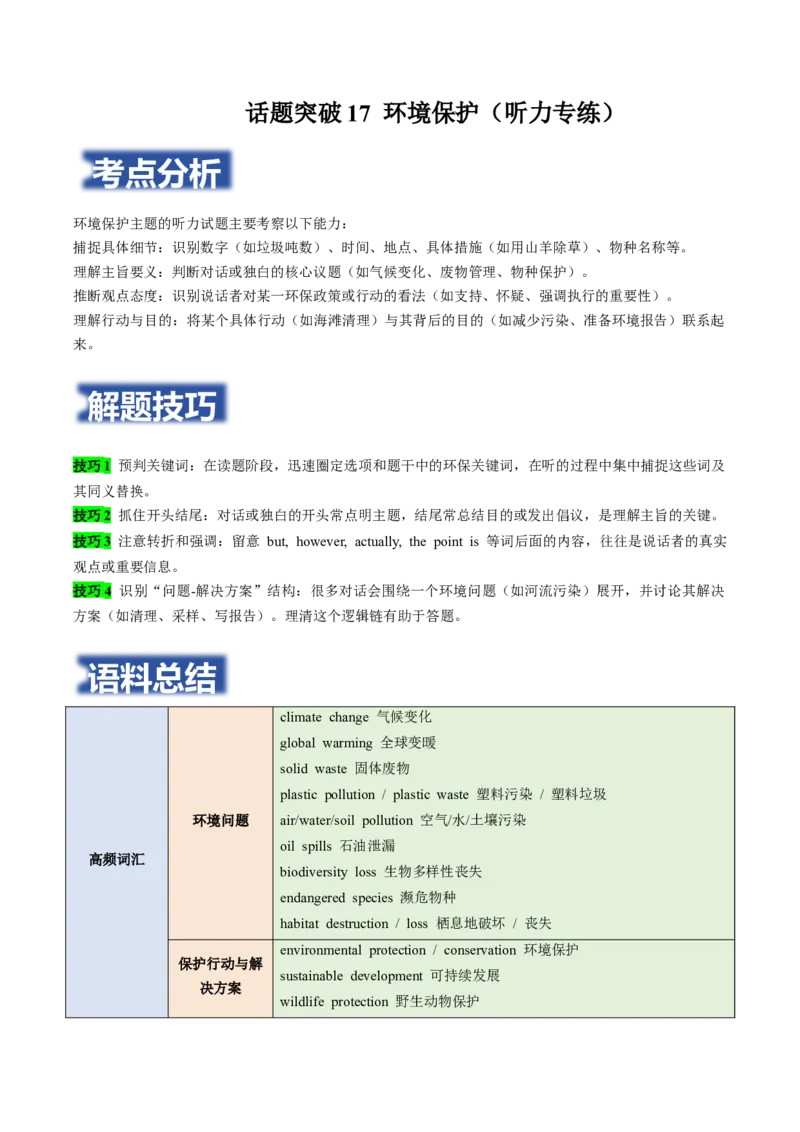
话题突破17 环境保护(听力专练)

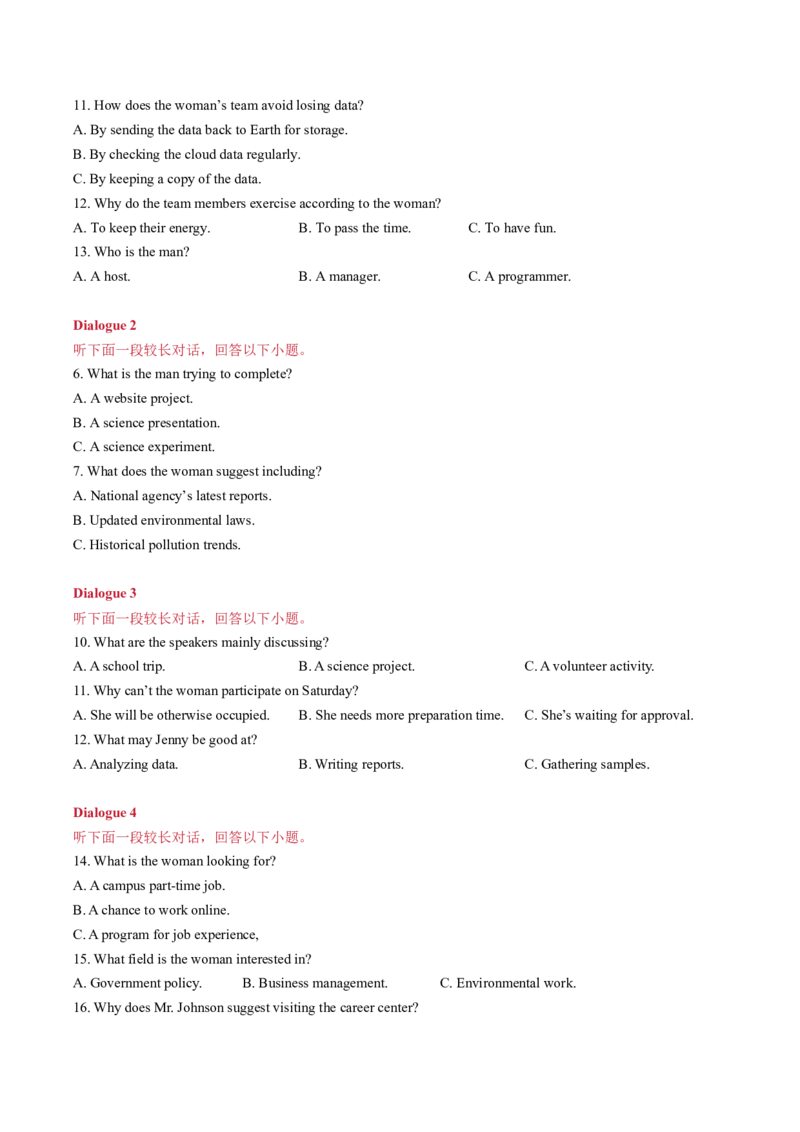
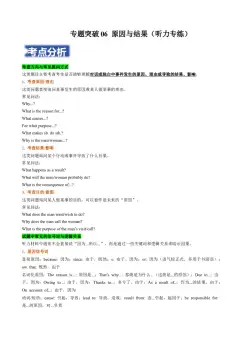
环境保护主题的听力试题主要考察以下能力:
捕捉具体细节:识别数字(如垃圾吨数)、时间、地点、具体措施(如用山羊除草)、物种名称等。
理解主旨要义:判断对话或独白的核心议题(如气候变化、废物管理、物种保护)。
推断观点态度:识别说话者对某一环保政策或行动的看法(如支持、怀疑、强调执行的重要性)。
理解行动与目的:将某个具体行动(如海滩清理)与其背后的目的(如减少污染、准备环境报告)联系起
来。
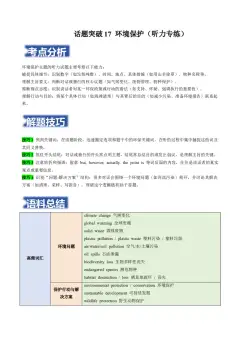
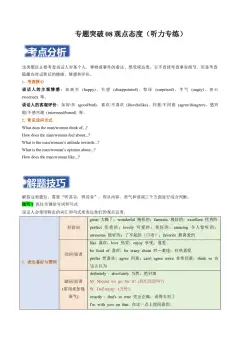
技巧1 预判关键词:在读题阶段,迅速圈定选项和题干中的环保关键词,在听的过程中集中捕捉这些词及
其同义替换。
技巧2 抓住开头结尾:对话或独白的开头常点明主题,结尾常总结目的或发出倡议,是理解主旨的关键。
技巧3 注意转折和强调:留意 but, however, actually, the point is 等词后面的内容,往往是说话者的真实
观点或重要信息。
技巧4 识别“问题-解决方案”结构:很多对话会围绕一个环境问题(如河流污染)展开,并讨论其解决
方案(如清理、采样、写报告)。理清这个逻辑链有助于答题。
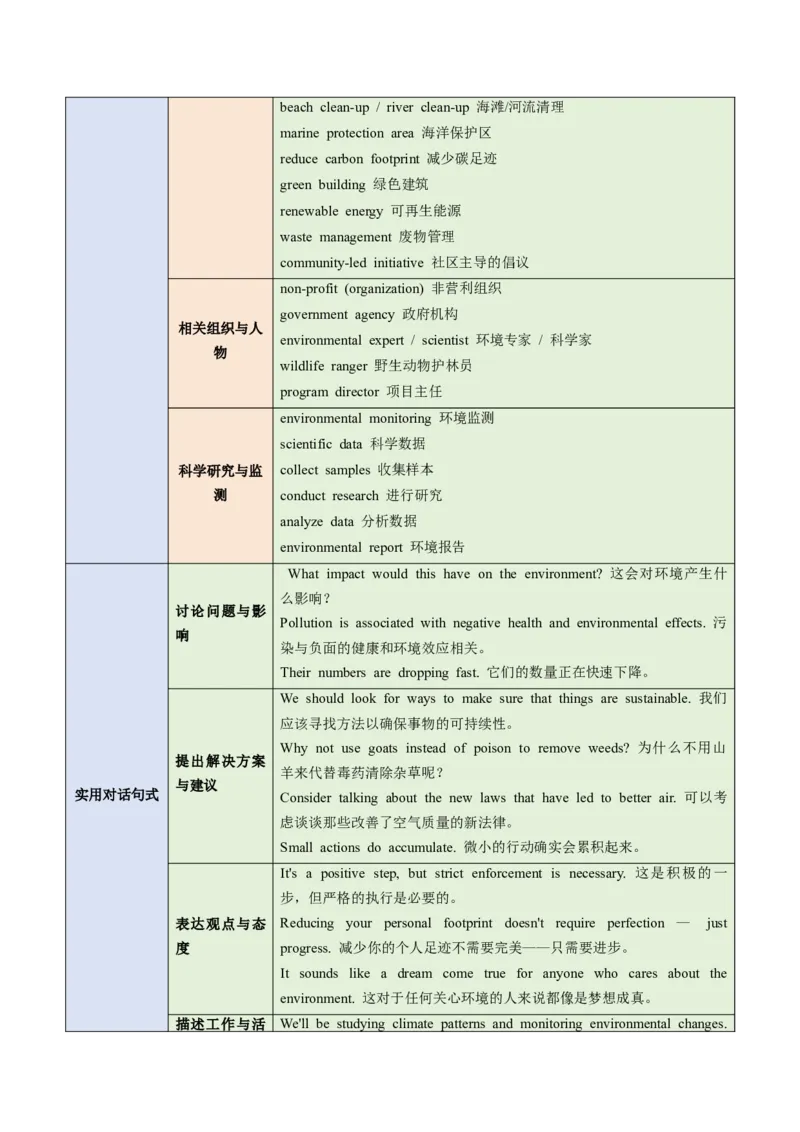
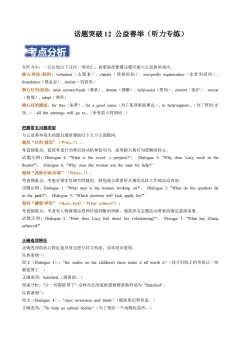
高频词汇
环境问题
climate change 气候变化
global warming 全球变暖
solid waste 固体废物
plastic pollution / plastic waste 塑料污染 / 塑料垃圾
air/water/soil pollution 空气/水/土壤污染
oil spills 石油泄漏
biodiversity loss 生物多样性丧失
endangered species 濒危物种
habitat destruction / loss 栖息地破坏 / 丧失
保护行动与解
决方案
environmental protection / conservation 环境保护
sustainable development 可持续发展
wildlife protection 野生动物保护
beach clean-up / river clean-up 海滩/河流清理
marine protection area 海洋保护区
reduce carbon footprint 减少碳足迹
green building 绿色建筑
renewable energy 可再生能源
waste management 废物管理
community-led initiative 社区主导的倡议
相关组织与人
物
non-profit (organization) 非营利组织
government agency 政府机构
environmental expert / scientist 环境专家 / 科学家
wildlife ranger 野生动物护林员
program director 项目主任
科学研究与监
测
environmental monitoring 环境监测
scientific data 科学数据
collect samples 收集样本
conduct research 进行研究
analyze data 分析数据
environmental report 环境报告
实用对话句式
讨论问题与影
响
 What impact would this have on the environment? 这会对环境产生什
么影响?
Pollution is associated with negative health and environmental effects. 污
染与负面的健康和环境效应相关。
Their numbers are dropping fast. 它们的数量正在快速下降。
提出解决方案
与建议
We should look for ways to make sure that things are sustainable. 我们
应该寻找方法以确保事物的可持续性。
Why not use goats instead of poison to remove weeds? 为什么不用山
羊来代替毒药清除杂草呢?
Consider talking about the new laws that have led to better air. 可以考
虑谈谈那些改善了空气质量的新法律。
Small actions do accumulate. 微小的行动确实会累积起来。
表达观点与态
度
It's a positive step, but strict enforcement is necessary. 这是积极的一
步,但严格的执行是必要的。
Reducing your personal footprint doesn't require perfection — just
progress. 减少你的个人足迹不需要完美——只需要进步。
It sounds like a dream come true for anyone who cares about the
environment. 这对于任何关心环境的人来说都像是梦想成真。
描述工作与活
We'll be studying climate patterns and monitoring environmental changes.
强化训练
动
我们将研究气候模式并监测环境变化。
We organize monthly beach clean-ups to keep the area litter-free. 我们
组织每月的海滩清理活动以保持该区域无垃圾。
I'm interested in things related to nature protection. 我对与自然保护相关
的事情感兴趣。


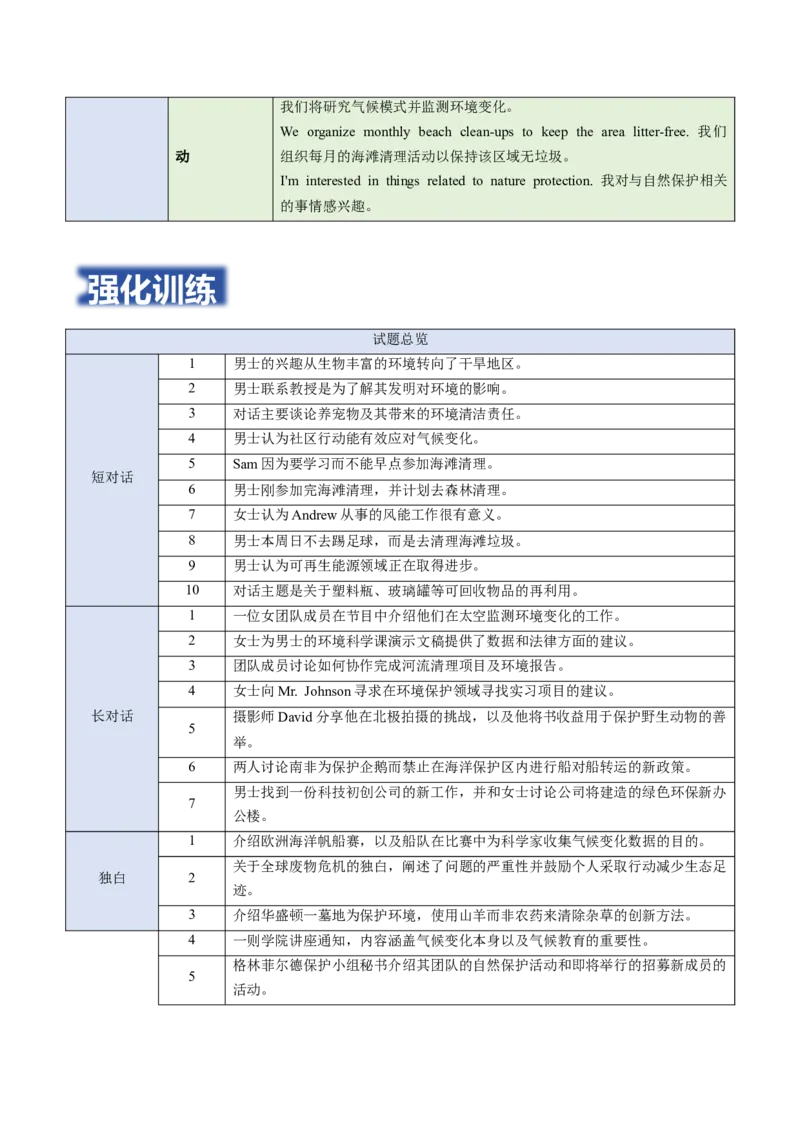
试题总览
短对话
1
男士的兴趣从生物丰富的环境转向了干旱地区。
2
男士联系教授是为了解其发明对环境的影响。
3
对话主要谈论养宠物及其带来的环境清洁责任。
4
男士认为社区行动能有效应对气候变化。
5
Sam 因为要学习而不能早点参加海滩清理。
6
男士刚参加完海滩清理,并计划去森林清理。
7
女士认为Andrew 从事的风能工作很有意义。
8
男士本周日不去踢足球,而是去清理海滩垃圾。
9
男士认为可再生能源领域正在取得进步。
10
对话主题是关于塑料瓶、玻璃罐等可回收物品的再利用。
长对话
1
一位女团队成员在节目中介绍他们在太空监测环境变化的工作。
2
女士为男士的环境科学课演示文稿提供了数据和法律方面的建议。
3
团队成员讨论如何协作完成河流清理项目及环境报告。
4
女士向Mr. Johnson 寻求在环境保护领域寻找实习项目的建议。
5
摄影师David 分享他在北极拍摄的挑战,以及他将书收益用于保护野生动物的善
举。
6
两人讨论南非为保护企鹅而禁止在海洋保护区内进行船对船转运的新政策。
7
男士找到一份科技初创公司的新工作,并和女士讨论公司将建造的绿色环保新办
公楼。
独白
1
介绍欧洲海洋帆船赛,以及船队在比赛中为科学家收集气候变化数据的目的。
2
关于全球废物危机的独白,阐述了问题的严重性并鼓励个人采取行动减少生态足
迹。
3
介绍华盛顿一墓地为保护环境,使用山羊而非农药来清除杂草的创新方法。
4
一则学院讲座通知,内容涵盖气候变化本身以及气候教育的重要性。
5
格林菲尔德保护小组秘书介绍其团队的自然保护活动和即将举行的招募新成员的
活动。
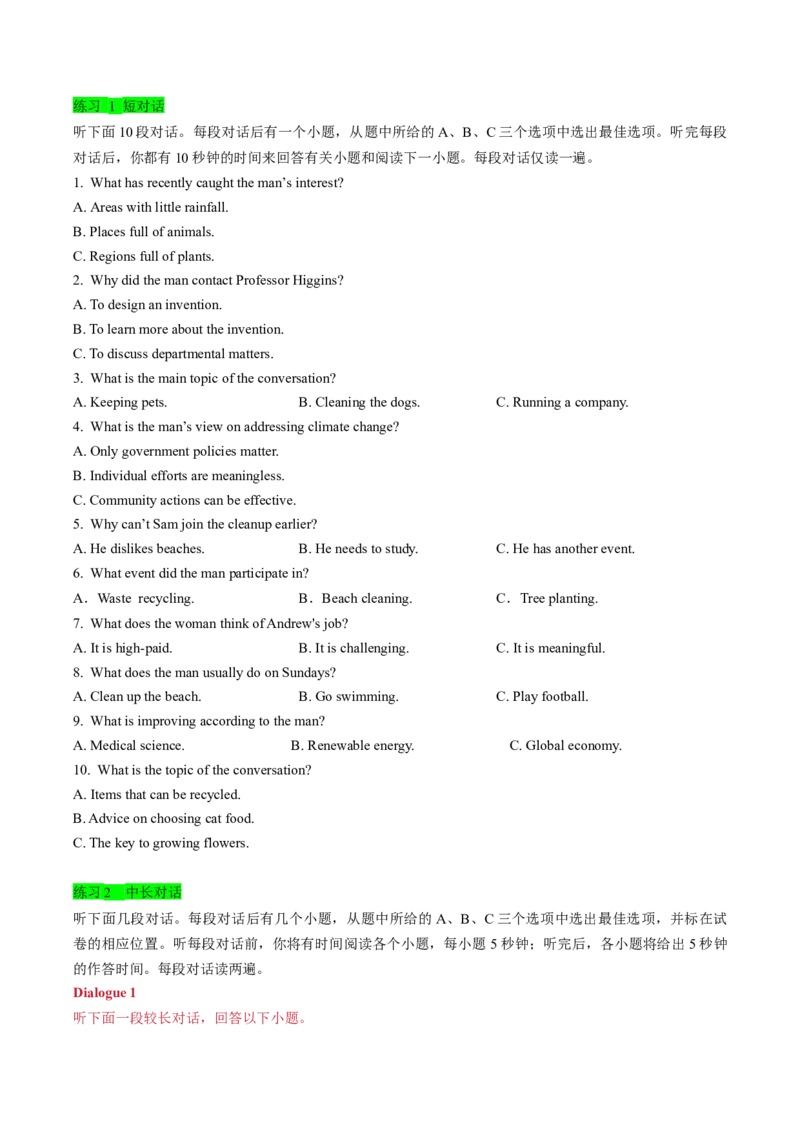
练习 1 短对话
听下面10 段对话。每段对话后有一个小题,从题中所给的A、B、C 三个选项中选出最佳选项。听完每段
对话后,你都有10 秒钟的时间来回答有关小题和阅读下一小题。每段对话仅读一遍。
1. What has recently caught the man’s interest?
A. Areas with little rainfall.
B. Places full of animals.
C. Regions full of plants.
2. Why did the man contact Professor Higgins?
A. To design an invention.
B. To learn more about the invention.
C. To discuss departmental matters.
3. What is the main topic of the conversation?
A. Keeping pets.
B. Cleaning the dogs.
C. Running a company.
4. What is the man’s view on addressing climate change?
A. Only government policies matter.
B. Individual efforts are meaningless.
C. Community actions can be effective.
5. Why can’t Sam join the cleanup earlier?
A. He dislikes beaches.
B. He needs to study.
C. He has another event.
6. What event did the man participate in?
A.Waste recycling.
B.Beach cleaning.
C.Tree planting.
7. What does the woman think of Andrew's job?
A. It is high-paid.
    B. It is challenging.
C. It is meaningful.
8. What does the man usually do on Sundays?
A. Clean up the beach.
B. Go swimming.
C. Play football.
9. What is improving according to the man?
A. Medical science.
B. Renewable energy.
C. Global economy.
10. What is the topic of the conversation?
A. Items that can be recycled.
B. Advice on choosing cat food.
C. The key to growing flowers.
练习2  中长对话
听下面几段对话。每段对话后有几个小题,从题中所给的A、B、C 三个选项中选出最佳选项,并标在试
卷的相应位置。听每段对话前,你将有时间阅读各个小题,每小题5 秒钟;听完后,各小题将给出5 秒钟
的作答时间。每段对话读两遍。
Dialogue 1
听下面一段较长对话,回答以下小题。
11. How does the woman’s team avoid losing data?
A. By sending the data back to Earth for storage.
B. By checking the cloud data regularly.
C. By keeping a copy of the data.
12. Why do the team members exercise according to the woman?
A. To keep their energy.
B. To pass the time.
C. To have fun.
13. Who is the man?
A. A host.
B. A manager.
C. A programmer.
Dialogue 2
听下面一段较长对话,回答以下小题。
6. What is the man trying to complete?
A. A website project.
B. A science presentation.
C. A science experiment.
7. What does the woman suggest including?
A. National agency’s latest reports.
B. Updated environmental laws.
C. Historical pollution trends.
Dialogue 3
听下面一段较长对话,回答以下小题。
10. What are the speakers mainly discussing?
A. A school trip.
B. A science project.
C. A volunteer activity.
11. Why can’t the woman participate on Saturday?
A. She will be otherwise occupied.
B. She needs more preparation time.
C. She’s waiting for approval.
12. What may Jenny be good at?
A. Analyzing data.
B. Writing reports.
C. Gathering samples.
Dialogue 4
听下面一段较长对话,回答以下小题。
14. What is the woman looking for?
A. A campus part-time job.
B. A chance to work online.
C. A program for job experience,
15. What field is the woman interested in?
A. Government policy.
B. Business management.
C. Environmental work.
16. Why does Mr. Johnson suggest visiting the career center?
A. To attend workshops.
B. To find listed programs.
C. To meet the club leaders.
17. What advice is given on the application process?
A. Building up contacts.
B. Volunteering at the centre.
C. Focusing less on coursework.
Dialogue 5
听下面一段较长对话,回答以下小题。
14. What was the main difficulty during David’s Arctic project?
A. Equipment failures.
B. Uncooperative animals.
C. Windy and rainy conditions.
15. What are David’s book profits used for?
A. Buying photography equipment.
B. Supporting wildlife education.
C. Protecting animals.
16. What helped David switch to wildlife photography?
A. His journalism degree.
B. His teaching experience.
C. His childhood love for nature.
17. What did David think of teaching at the camp?
A. Simple.
B. Rewarding.
C. Troublesome.
Dialogue 6
听下面一段较长对话,回答以下小题。
14. Where are ship-to-ship transfers banned?
A. In all ocean areas.
B. In marine protection areas.
C. In northern African's coasts.
15. Why is the ban issued?
A. To control and monitor sea ships.
B. To promote tourism and economy.
C. To prevent pollution and protect penguins.
16. What do we know about African penguins?
A. Their numbers decreases fast.
B. Most live in northern Africa.
C. They face no extinction risk.
17. What do experts think of the new policy?
A. It will make a big difference.
B. It's a waste of time and money.
C. It's effective with strict enforcement.
Dialogue 7
听下面一段较长对话,回答以下小题。
14. What is the company working on?
A. Green energy.
B. Urban planning.
C. Digital innovation.
15. What is the man's new job?
A. A tech developer.
B. A project manager.
C. A marketing director.
16. What does the woman think of the man?
A. Capable.                  B. Flexible.
C. Humorous.
17. What is special about the new office building?
A. It will be culture-rich.
B. It will be eco-friendly.
C. It will be artistic-looking.
练习 3 独白
Passage 1
听下面一段较长独白,回答以下小题。
17. Where did the race end?
A. In France.
B. In the US.
C. In Italy.
18. What achievement did Offshore Team Germany make?
A. Winning the VO65 class.
B. Winning the IMOCA class race.
C. Winning second place of the VO65 class.
19. What was life like on the boat?
A. No fresh food was served.
B. Phone calls were not allowed.
C. People couldn’t get enough sleep.
20. Why was data collected?
A. To provide information for the next race.
B. To help the teams perform better.
C. To help scientists do research.
Passage 2
听下面一段独白,回答以下小题。
18. What is the estimated amount of yearly solid waste by 2050?
A.2.1 billion tons.
B.3.8 billion tons.
C.4.9 billion tons.
19. What does the speaker say about the waste crisis?
A. It can be solved perfectly.
B. It is driven by economic growth.
C. It is linked to other environmental issues.
20. What does the speaker intend to do in the end?
A. Promote a new policy.
B. Encourage individual action.
C. Call for government attention.
Passage 3
听下面一段独白,回答以下小题。
17. Where is the cemetery located?
A. In a mountainous area.
B. Beside an animal reserve.
C. Near the Anacostia River.
18. Why do cemetery officials use goats to kill the weeds?
A. To develop local economy.
B. To protect the environment.
C. To reduce the cost.
19. Who is Mary Bowen?
A. A company owner.
B. A program director.
C. An environmental expert.
20. What is used to keep the goats from leaving the cemetery?
A. A wooden fence.B. An electronic fence.
C. A brick wall.
Passage 4
听下面一段独白,回答以下小题。
18. How long will Keith Shine’s lecture last?
A. 30 minutes.
B. 40 minutes.
C. 45 minutes.
19. Where does Dr. Johnson work?
A. At a college.
B. At a weather station.
C. At a research center.
20. What is the main topic of Dr. Johnson’s talk?
A. Major causes of climate change.
B. Importance of climate education.
C. Social response to climate change.
Passage 5
听下面一段较长独白,回答以下小题。
18. What is the regular activity of the group?
A. Guided walks.
B. Seaside tidy-ups.C. Identifying butterflies.
19. What is the group doing now?
A. Repairing a nearby wall.
B. Increasing wildlife variety.
C. Putting up bird nesting boxes.
20. What is the purpose of the speech?
A. To bring in new participants.
B. To launch a project.
C. To raise funds.