文档文本内容
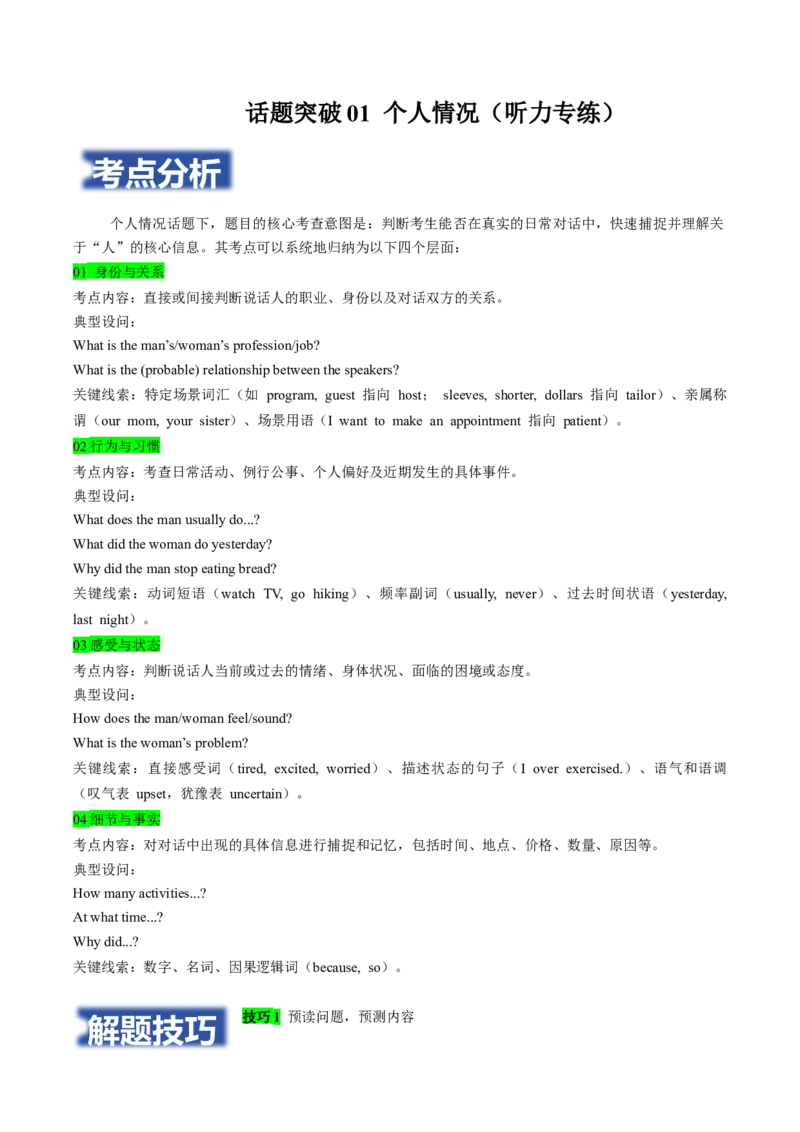
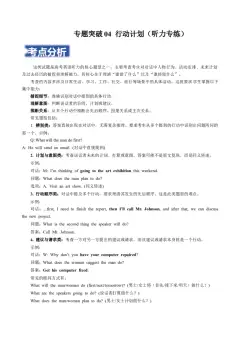
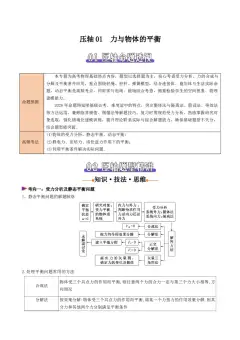
考点分析
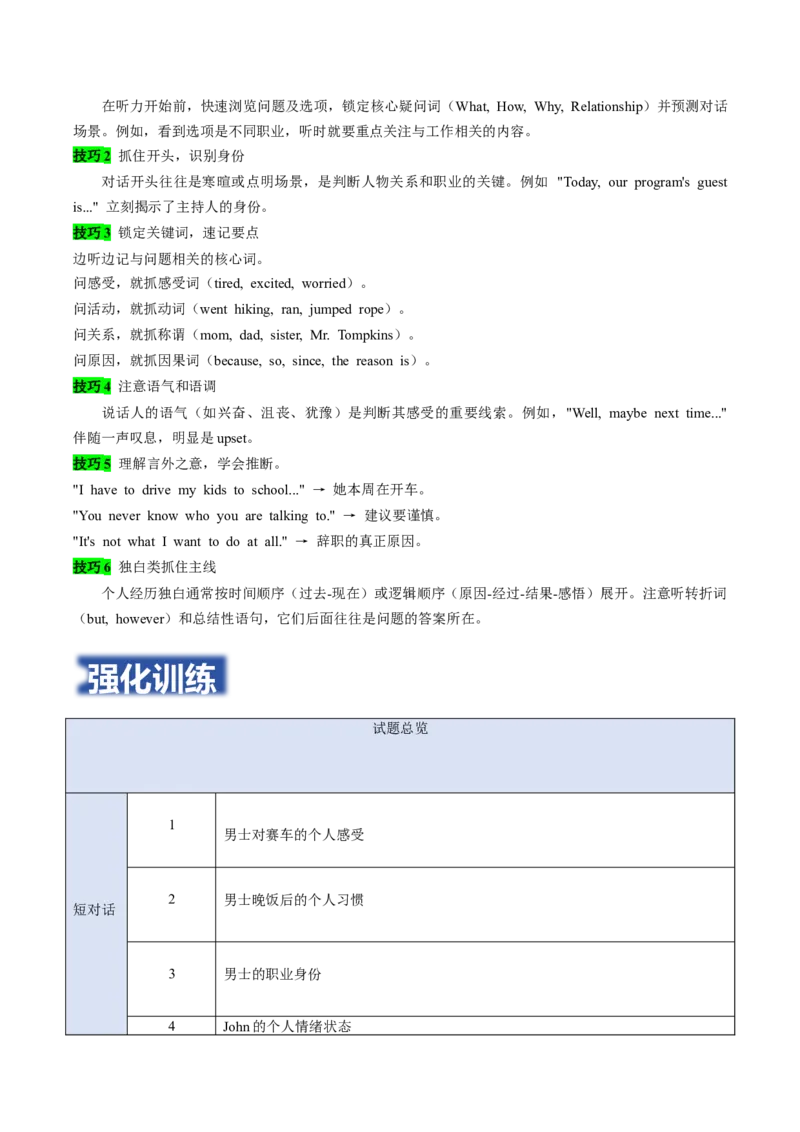
解题技巧
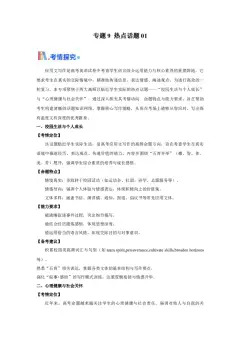
话题突破01 个人情况(听力专练)

     个人情况话题下,题目的核心考查意图是:判断考生能否在真实的日常对话中,快速捕捉并理解关
于“人”的核心信息。其考点可以系统地归纳为以下四个层面:
01 身份与关系
考点内容:直接或间接判断说话人的职业、身份以及对话双方的关系。
典型设问:
What is the man’s/woman’s profession/job?
What is the (probable) relationship between the speakers?
关键线索:特定场景词汇(如 program, guest 指向 host; sleeves, shorter, dollars 指向 tailor)、亲属称
谓(our mom, your sister)、场景用语(I want to make an appointment 指向 patient)。
02 行为与习惯
考点内容:考查日常活动、例行公事、个人偏好及近期发生的具体事件。
典型设问:
What does the man usually do...?
What did the woman do yesterday?
Why did the man stop eating bread?
关键线索:动词短语(watch TV, go hiking)、频率副词(usually, never)、过去时间状语(yesterday,
last night)。
03 感受与状态
考点内容:判断说话人当前或过去的情绪、身体状况、面临的困境或态度。
典型设问:
How does the man/woman feel/sound?
What is the woman’s problem?
关键线索:直接感受词(tired, excited, worried)、描述状态的句子(I over exercised.)、语气和语调
(叹气表 upset,犹豫表 uncertain)。
04 细节与事实
考点内容:对对话中出现的具体信息进行捕捉和记忆,包括时间、地点、价格、数量、原因等。
典型设问:
How many activities...?
At what time...?
Why did...?
关键线索:数字、名词、因果逻辑词(because, so)。
技巧1 预读问题,预测内容
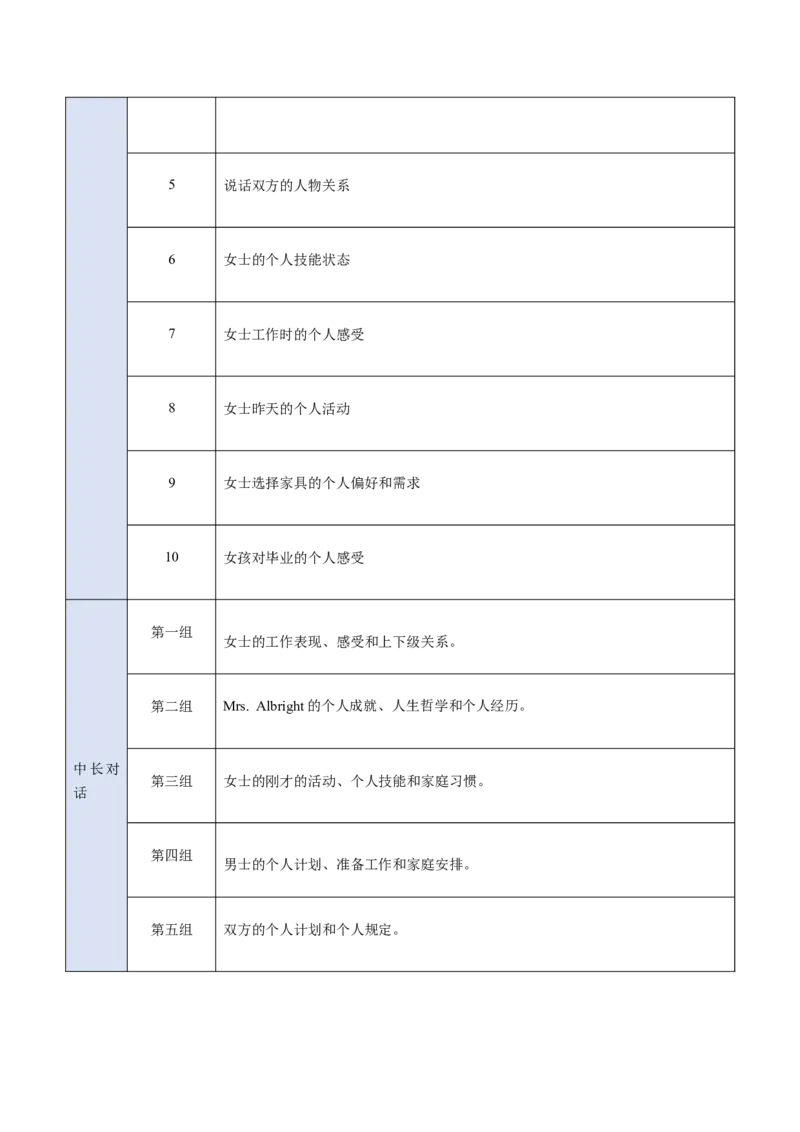
强化训练
在听力开始前,快速浏览问题及选项,锁定核心疑问词(What, How, Why, Relationship)并预测对话
场景。例如,看到选项是不同职业,听时就要重点关注与工作相关的内容。
技巧2 抓住开头,识别身份
对话开头往往是寒暄或点明场景,是判断人物关系和职业的关键。例如 "Today, our program's guest
is..." 立刻揭示了主持人的身份。
技巧3 锁定关键词,速记要点
边听边记与问题相关的核心词。
问感受,就抓感受词(tired, excited, worried)。
问活动,就抓动词(went hiking, ran, jumped rope)。
问关系,就抓称谓(mom, dad, sister, Mr. Tompkins)。
问原因,就抓因果词(because, so, since, the reason is)。
技巧4 注意语气和语调
说话人的语气(如兴奋、沮丧、犹豫)是判断其感受的重要线索。例如,"Well, maybe next time..."
伴随一声叹息,明显是upset。
技巧5 理解言外之意,学会推断。
"I have to drive my kids to school..." → 她本周在开车。
"You never know who you are talking to." → 建议要谨慎。
"It's not what I want to do at all." → 辞职的真正原因。
技巧6 独白类抓住主线
个人经历独白通常按时间顺序(过去-现在)或逻辑顺序(原因-经过-结果-感悟)展开。注意听转折词
(but, however)和总结性语句,它们后面往往是问题的答案所在。


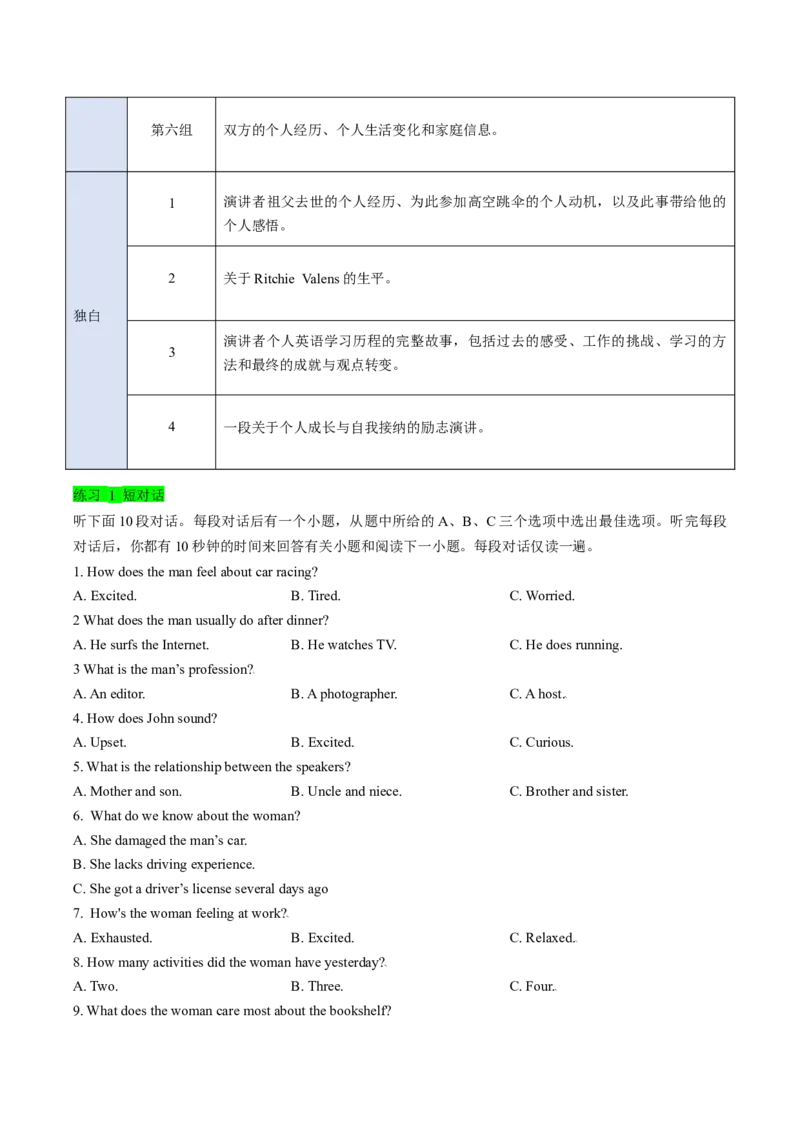
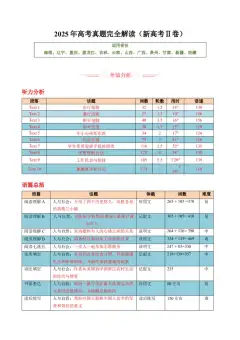
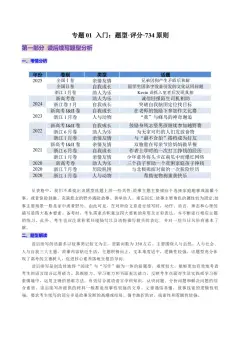
试题总览
短对话
1
男士对赛车的个人感受
2
男士晚饭后的个人习惯
3
男士的职业身份
4
John 的个人情绪状态
5
说话双方的人物关系
6
女士的个人技能状态
7
女士工作时的个人感受
8
女士昨天的个人活动
9
女士选择家具的个人偏好和需求
10
女孩对毕业的个人感受
中长对
话
第一组
女士的工作表现、感受和上下级关系。
第二组
Mrs. Albright 的个人成就、人生哲学和个人经历。
第三组
女士的刚才的活动、个人技能和家庭习惯。
第四组
男士的个人计划、准备工作和家庭安排。
第五组
双方的个人计划和个人规定。
第六组
双方的个人经历、个人生活变化和家庭信息。
独白
1
演讲者祖父去世的个人经历、为此参加高空跳伞的个人动机,以及此事带给他的
个人感悟。
2
关于Ritchie Valens 的生平。
3
演讲者个人英语学习历程的完整故事,包括过去的感受、工作的挑战、学习的方
法和最终的成就与观点转变。
4
一段关于个人成长与自我接纳的励志演讲。
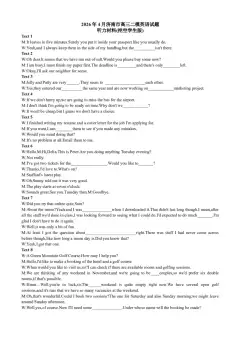
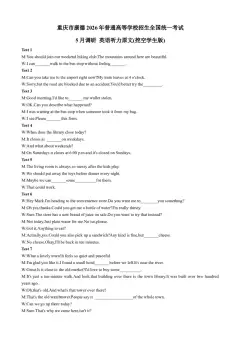
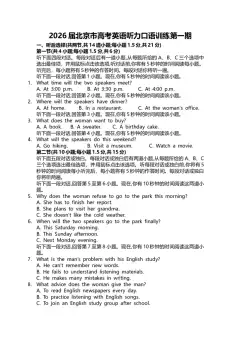
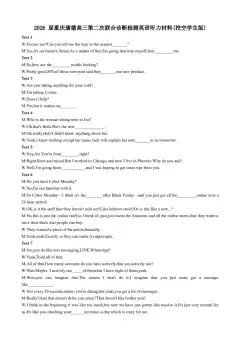
练习 1 短对话
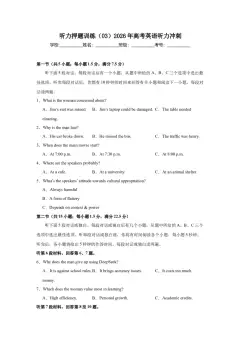
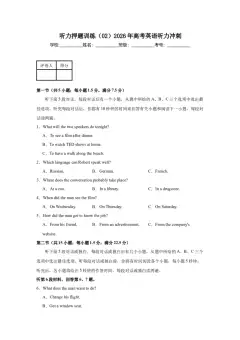
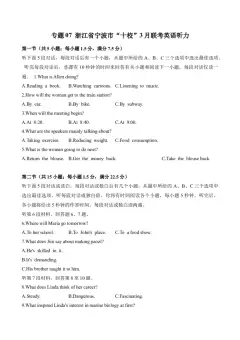
听下面10 段对话。每段对话后有一个小题,从题中所给的A、B、C 三个选项中选出最佳选项。听完每段
对话后,你都有10 秒钟的时间来回答有关小题和阅读下一小题。每段对话仅读一遍。
1. How does the man feel about car racing?
A. Excited.
B. Tired.
C. Worried.
2 What does the man usually do after dinner?
A. He surfs the Internet.
B. He watches TV.
C. He does running.
3 What is the man’s profession?
A. An editor.
B. A photographer.
C. A host.
4. How does John sound?
A. Upset.
B. Excited.
C. Curious.
5. What is the relationship between the speakers?
A. Mother and son.
B. Uncle and niece.
C. Brother and sister.
6. What do we know about the woman?
A. She damaged the man’s car.
B. She lacks driving experience.
C. She got a driver’s license several days ago
7. How's the woman feeling at work?
A. Exhausted.
B. Excited.
C. Relaxed.
8. How many activities did the woman have yesterday?
A. Two.
B. Three.
C. Four.
9. What does the woman care most about the bookshelf?
A. The door.
B. The size.
C. The height.
10. How does the girl feel about graduation?
A. Nervous.
B. Excited.
C. Afraid.
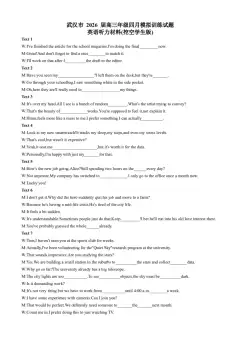
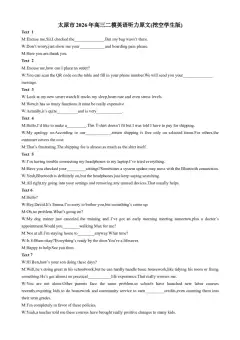
练习2  中长对话
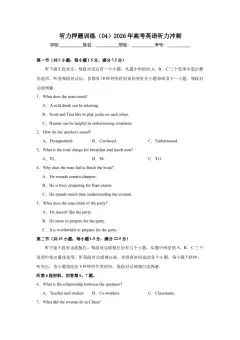
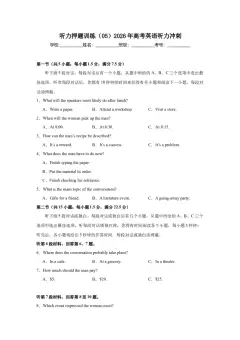
听下面6 段对话或独白。每段对话或独自后有几个小题,从题中所给的A、B、C 三个选项中选出最佳选项,
并标在试卷的相应位置。听每段对话或独白前,你将有时间阅读各个小题,每小题5 秒钟;听完后,各小
题将给出5 秒钟的作答时间。每段对话或独自读两遍。
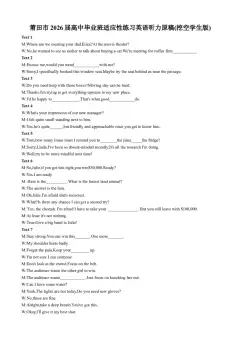
听下面一段较长对话,回答以下小题。
6. Why does the woman feel sorry?
A. Her group didn’t perform very well.
B. Her group didn’t finish the project on time.
C. Her group members didn’t get on well with each other.
7. Who might the man be?
A. The woman’s boss.
B. The woman’s professor.
C. The woman’s business partner.
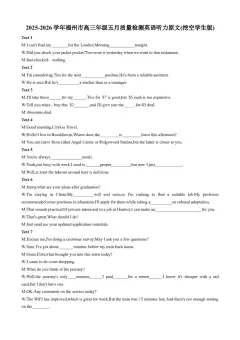
听下面一段较长对话, 回答以下小题。
13. How did Mrs. Albright feel about being interviewed at first?
A. Anxious.
B. Unhappy.
C. Touched.
14. What is special about Mrs. Albright?
A. She is a record holder.
B. She is both blind and deaf.
C. She was badly hurt in the war.
15. When was Mrs. Albright born?
A. In 1920.
B. In 1922.
C. In 1943.
16. Where did Mrs. Albright learn about the power of kindness?
A. From her husband’s experience.
B. From a book written by her sister.
C. From a saying of a famous author.
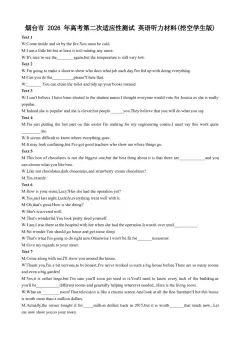
听下面一段较长对话,回答以下小题。
10. What did the woman just do?
A. She bought a dress.
B. She worked in the garden.
C. She helped her mother wash clothes.
11. What does the man say about the woman?
A. She has a talent for gardening.
B. Her fingers will turn green soon.
C. She knows a lot about the British royal family.
12. When does the woman probably help her mother?
A. Every morning.
B. Every afternoon.
C. Every evening.
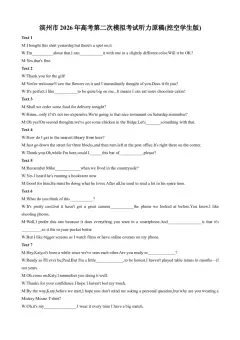
听下面一段较长对话,回答以下小题。
14. What did the man do yesterday?
A. He made a flight change.
B. He booked a ticket.
C. He studied.
15. Who will meet the man at the airport?
A. His aunt.
B. His parents.
C. The woman.
16. What does the woman remind the man to do?
A. Phone back.
B. Take photos.
C. Say goodbye.
听下面一段较长对话,回答以下小题。
10 How did the man get the information of the apartment?
A. On the Internet.
B. From a friend.
C. In a newspaper.
11 Why does the woman want to rent the apartment?
A. She is going to move to another city.
B. She is going to live with her parents.
C. She is going to further her study abroad.
12 What does the woman probably mind the man doing?
A. Keeping pets.
B. Watching TV.
C. Having visitors.
听下面一段较长对话,回答以下小题。
14. What are the speakers mainly talking about?
A. Culture in China.
B. Tourism in China.
C. Development in China.
15. Where does the conversation probably take place?
A. In a store.
B. In a train.
C. In a coffee shop.
16. When did the woman go to China last time?
A. Last winter.
B. Ten years ago.
C. Two years ago.
17. Who is Bob?
A. The woman’s son.
B. The woman’s husband.
C. The woman’s neighbor.
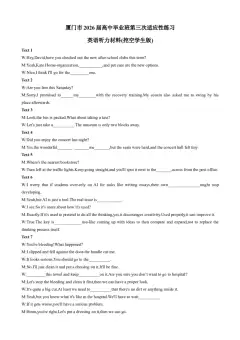
练习 3 独白
听下面一段独白,回答以下小题。
18. How did the speaker’s grandfather die?
A. Due to a disease.
B. During a charity event.
C. Because of a plane crash.
19. Why did the speaker decide to skydive?
A. To help some patients.
B. To have fun with friends.
C. To overcome a fear of heights.
20. What does the speaker think was the best aspect about the skydive?
A. Falling from 2,000 meters.
B. Hearing stories about Alzheimer’s.
C. Raising a large amount of money.
听下面一段较长独白,回答以下小题。
17. Where was Open Tchaikovsky Competition held in 1986?
A. In Moscow.
B. In Chelyabinsk.
C. In Berlin.
18. What does Maxim say about the competition he attended at 10?
A. It inspired many young musicians.
B. It was the music event of his dreams.
C. It was a life-changing experience.
19. Which kind of music are the young players required to play?
A. Rock music.
B. Pop music.
C. Classical music.
20. What does Maxim value most in young players’ performance?
A. Expressiveness.
B. Smoothness.
C. Completeness.
听下面一段较长独白,回答以下小题。
18. Why did the speaker learn English again when she started work?
A. She wanted to take a degree.
B. She was persuaded by a friend.
C. She had to speak to customers in English.
19. How did the speaker make progress in English?
A. Her colleagues helped her a lot.
B. She took English classes in her spare time.
C. Her English-speaking friend taught her privately.
20. What does the speaker think of English now?
A. It’s difficult.
B. It’s important.
C. It’s interesting.
听下面一段较长独白,回答以下小题。
18. What did Dr. Wilson teach the speaker?
A. How to get funds for the plastic arms.
B. How to use his feet in daily life.
C. How to get used to plastic arms.
19. What did the speaker think of his teacher in high school?
A. She cared more about his schoolwork.
B. She helped him to be more confident.
C. She had little sympathy for him.
20. Who is the speaker now probably?
A. A doctor.
B. A teacher.
C. A lawyer.