文档文本内容
考点分析
解题
话题突破02 购物消费(听力专练)

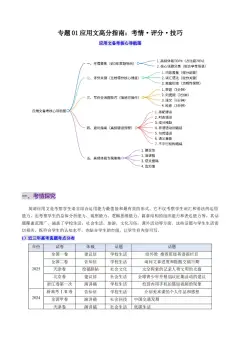
     这类对话或独白通常围绕一个核心的“消费行为”展开,其考点可以归纳为以下四个主要层面:
1. 核心信息 (What & How Much)
商品细节: 考察对商品名称、品牌、颜色、尺寸、材质、新旧程度等具体信息的捕捉。常见提问方式:
 What size/color/material does the man/woman want?
价格与支付: 考察对原价、折扣、优惠方式、最终成交价以及支付方式(现金、信用卡等)的计算和
理解。常见提问方式: How much will the woman pay? / How does the woman pay?
2. 场景与关系 (Where & Who)
地点判断: 判断对话发生的典型场景,如商场、餐厅、网上、家具店等。常见提问方式: Where does
the conversation take place?
人物关系: 判断对话双方的关系,如店员与顾客、夫妻、朋友等。常见提问方式: What’s the
probable relationship between the speakers?
3. 原因与偏好 (Why & Which)
决策原因: 考察消费者选择或放弃某件商品的原因,如价格太贵、颜色不搭、尺寸不合、材质不喜欢
等。常见提问方式: Why doesn’t the man want the first shirt?
偏好与选择: 考察最终决定购买哪个商品,以及做出该选择的理由。常见提问方式: Which shirt will
the man buy?
4. 建议与规则 (How-to)
消费建议: 在独白或较长的对话中,会出现关于如何明智消费的建议,如对比商品、警惕广告陷阱、
注意安全等。常见提问方式: What advice does the speaker give to online shoppers?
流程与规则: 了解购物平台的规定(如收费、保险)、交易流程或安全注意事项(如在公共场合交
易)。常见提问方式: What is the disadvantage of the big platforms? / What should be avoided?
技巧1 预读题目,预测内容
在听力开始前,快速浏览问题和选项,圈出关键词(如 size, color, how much, why, relationship)。
通过选项预判对话主题。例如,如果选项是A. $40 B. $32 C. $20,你就要立刻意识到这是一道与价
格和计算相关的题,听时要特别关注数字。
技巧2 抓住核心消费环节
买卖意向:听清楚是谁想买/卖什么。
商品属性:重点关注关于尺寸、颜色、款式的描述词。
价格谈判:注意 discount, sale, off, original price, special offer 等关键词。涉及计算时,要分清原价
语料积累
和折后价。
最终决定:注意听表示决定的句子,如 I’ll take it. / I'd like the green one.
技巧3 识别信号词和语气
转折信号词是关键: but, however, the problem is 后面往往跟着说话人的真实意图或拒绝的原因,
也是出题的高频区。例如:“It looks nice, but it's too expensive.” (考点:不买的原因)
建议信号词:you should, you’d better, why not, it’s best to 后面常接解题信息。
语气:通过语调判断说话人是喜欢 (Great!)、失望 (That's too bad.) 还是犹豫 (I'm not sure)。
技巧4 做好简单计算和推断
价格题往往不是直接给出答案,需要简单计算。例如:原价$100,打8 折 (20% off),现价就是$80。
关系推断题要结合场景和用语。店员常用 Can I help you?,夫妻之间会用 honey 并共同决策。
技巧5  独白题抓主旨和结构
对于消费建议类独白,开头第一句常点明主旨。听清结构,如 “ One thing...”, “Another
advice...”, “The most important thing...” 这些连接词引出的往往是题目的答案点。
核心词汇
人物与角色
卖方
shop assistant 店员;salesperson 销售员;clerk 职员;cashier 收银
员
买方
customer 顾客;shopper 购物者;client 客户
商品与属性
商品
item 一件商品;product 产品;goods 货物(总称);purchase 购
买的商品/购买行为
价格
price / cost 价格;discount 折扣;on sale 特价出售
a ...% off 打...折(如 20% off 是打8 折);special offer 特价优
惠
bargain 便宜货,超值商品;original / regular price 原价;reduced
price 降价后的价格
尺寸
size 尺寸;small/medium/large 小/中/大号
extra large (XL) 加大号;fit 合身;tight 紧;loose 松
材质
material 材质;cotton 棉;wool 羊毛;leather 皮革;metal 金属;
wood 木材
颜色
color 颜色
light / dark 浅色 / 深色
bright 亮色
场所与支付
场所
supermarket 超市
shopping mall 购物中心
grocery store 食品杂货店
online 在线
website / platform 网站 / 平台
支付
pay by cash / card 用现金/卡支付
credit card 信用卡
check 支票
mobile payment 移动支付
动作
try on 试穿;check out 结账;pack / wrap 打包/包装;return 退
货;exchange 换货;order 订购;deliver 配送
关键句式
顾客询问
How much is it/are they? 这个/这些多少钱?
What's the price? 价格是多少?
Is there a discount? 有折扣吗?
Do you have this in a larger size? 这个有大一码的吗?
What color is this available in? 这个有哪些颜色?
What's it made of? 这是什么材质的?
Can you help me? 能帮我一下吗?
What would you recommend? 你有什么推荐的吗?
店员回应
It's made of... 它是由...制成的。
We have it in red and blue. 我们有红色和蓝色的。
This is the latest model. 这是最新款。
It's ... dollars. 它是...美元。
It's on sale, 20% off. 这个在打折,打8 折。
That's the final price. 这是最低价了。
I can give you a 10% discount. 我可以给你打9 折。
Would you like to try it on? 您想试穿一下吗?
It looks good on you. 您穿上很好看。
How would you like to pay? 您想怎么支付?
决策与讨价还
价
I like it. 我喜欢它。
It's nice, but... 它很好,但是...(“但是”后面是重点)
It's too expensive. 太贵了。
The color doesn't suit me. 这个颜色不适合我。
It's a bit too tight/loose. 有点太紧/太松了。
I'll think about it. 我再考虑一下。(通常是“不买”的委婉说法)
I'll take it. 我买了。
I'd like the black one. 我想要黑色的。
That's not what I'm looking for. 这不是我想找的。
典型场景
实体店购物
M: (Assistant): Can I help you? 需要帮忙吗?
强化训练
W: (Customer): I'm just looking. 我只是看看。
W: Can I try this on? 我能试穿这个吗?
M: The fitting room is over there. 试衣间在那边。
W: It's comfortable, but the price is a bit high. 很舒服,但是价格有点
高。
M: It's good quality and we offer a discount today. 它的质量很好,而且我
们今天有折扣。
M: How would you like to pay? 您想如何付款?
W: By card, please. 刷卡。
线上购物与建
议(独白常
见)
Big platforms charge a fee, but they offer buyer protection. 大平台会收
费,但它们提供买家保护。
Always meet the buyer in a public place. 务必在公共场所与买家见面。
Don't give out your personal information easily. 不要轻易泄露你的个人信
息。
Be careful not to be fooled by advertisements. 小心不要被广告欺骗。
A 'bargain' isn't always cheaper. “特价商品”不一定更便宜。
Don't spend too much online. 不要在网上花费太多。(理性消费)
朋友/家人间讨
论购物
What do you think of this red tie? 你觉得这条红领带怎么样?
Does this dress look good on me? 我穿这条裙子好看吗?
It's too bright. 太亮了。
The blue one is more low-key. 蓝色的那个更低调。
Okay, it's up to you. 好吧,听你的。

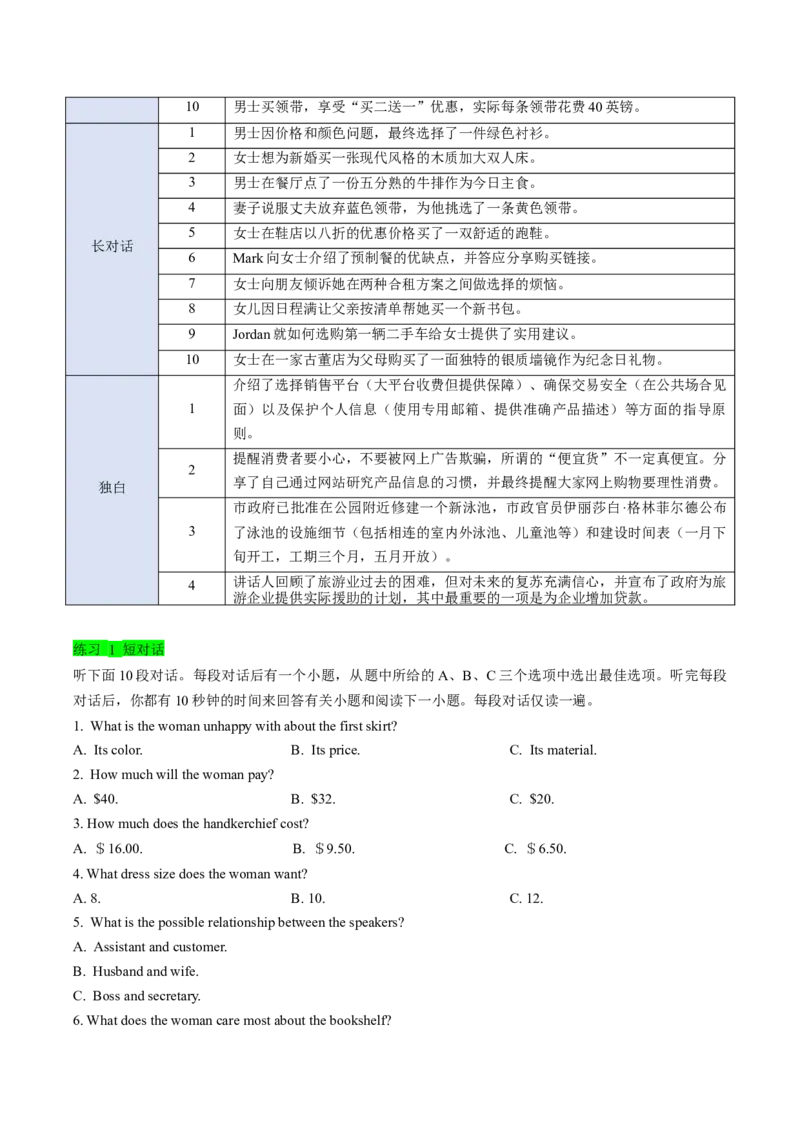
试题总览
短对话
1
女士嫌第一条裙子太贵,店员推荐了另一条更便宜但非纯棉的。
2
女士看中一个手包,最终以八折(32 美元)的价格买下。
3
女士买了一件毛衣和一条手帕,手帕的价格是6.5 美元。
4
女士在找12 码的裙子,店员恰好有货并推荐她试穿。
5
夫妻二人对话,丈夫订购了一台他们都喜欢的新电脑。
6
夫妻挑选书架,女士最关心的是高度,以便自己能够到顶部。
7
夫妻讨论做披萨,发现家里没有洋葱和土豆了。
8
对话发生在超市,两人分头去不同区域购物,半小时后收银台会合。
9
男士打算去买些面包,因为家里所剩不多了。
10
男士买领带,享受“买二送一”优惠,实际每条领带花费40 英镑。
长对话
1
男士因价格和颜色问题,最终选择了一件绿色衬衫。
2
女士想为新婚买一张现代风格的木质加大双人床。
3
男士在餐厅点了一份五分熟的牛排作为今日主食。
4
妻子说服丈夫放弃蓝色领带,为他挑选了一条黄色领带。
5
女士在鞋店以八折的优惠价格买了一双舒适的跑鞋。
6
Mark 向女士介绍了预制餐的优缺点,并答应分享购买链接。
7
女士向朋友倾诉她在两种合租方案之间做选择的烦恼。
8
女儿因日程满让父亲按清单帮她买一个新书包。
9
Jordan 就如何选购第一辆二手车给女士提供了实用建议。
10
女士在一家古董店为父母购买了一面独特的银质墙镜作为纪念日礼物。
独白
1
介绍了选择销售平台(大平台收费但提供保障)、确保交易安全(在公共场合见
面)以及保护个人信息(使用专用邮箱、提供准确产品描述)等方面的指导原
则。
2
提醒消费者要小心,不要被网上广告欺骗,所谓的“便宜货”不一定真便宜。分
享了自己通过网站研究产品信息的习惯,并最终提醒大家网上购物要理性消费。
3
市政府已批准在公园附近修建一个新泳池,市政官员伊丽莎白·格林菲尔德公布
了泳池的设施细节(包括相连的室内外泳池、儿童池等)和建设时间表(一月下
旬开工,工期三个月,五月开放)。
4
讲话人回顾了旅游业过去的困难,但对未来的复苏充满信心,并宣布了政府为旅
游企业提供实际援助的计划,其中最重要的一项是为企业增加贷款。
练习 1 短对话
听下面10 段对话。每段对话后有一个小题,从题中所给的A、B、C 三个选项中选出最佳选项。听完每段
对话后,你都有10 秒钟的时间来回答有关小题和阅读下一小题。每段对话仅读一遍。
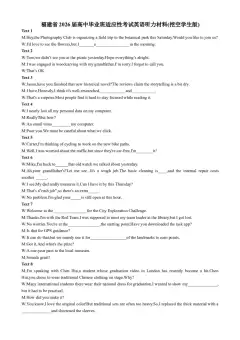
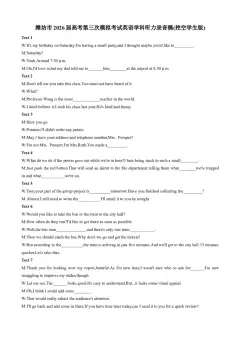
1. What is the woman unhappy with about the first skirt?
A. Its color.
B. Its price.
C. Its material.
2. How much will the woman pay?
A. $40.
B. $32.
C. $20.
3. How much does the handkerchief cost?
A. $16.00.
B. $9.50.
C. $6.50.
4. What dress size does the woman want?
A. 8.
B. 10.
C. 12.
5. What is the possible relationship between the speakers?
A. Assistant and customer.
B. Husband and wife.
C. Boss and secretary.
6. What does the woman care most about the bookshelf?
A. The door.
B. The size.
C. The height.
7. What do the speakers need to buy?
A. Bacon.
B. Tomatoes.
C. Potatoes.
8. Where does the conversation probably take place?
A. At a restaurant.
B. At a supermarket.
C. At home.
9. What might the man buy?
A. Steak.
B. Bread.
C. Salad.
10. How much does each tie actually cost the man?
A. 180 pounds.
B. 60 pounds.
C. 40 pounds.
练习2  中长对话
听下面6 段对话或独白。每段对话或独自后有几个小题,从题中所给的A、B、C 三个选项中选出最佳选项,
并标在试卷的相应位置。听每段对话或独白前,你将有时间阅读各个小题,每小题5 秒钟;听完后,各小
题将给出5 秒钟的作答时间。每段对话或独自读两遍。
Dialogue 1
听下面一段较长对话,回答以下小题。
6. What does the man say about the first shirt?
A. It is similar to one of his old shirts.
B. Its color doesn’t suit him.
C. Its price is too high.
7. Which shirt will the man buy?
A. The white one.
B. The green one.
C. The black one.
Dialogue 2
听下面一段较长对话,回答以下小题。
6. What is the probable relationship between the speakers?
A. Friends.
B. Husband and wife.
C. Salesman and customer.
7. What kind of bed does the woman want?
A. A metal king size with a classical look.
B. A wooden king size with a modern look.
C. A leather king size with a traditional look.
Dialogue 3
听下面一段较长对话,回答以下小题。
6. What does the woman bring the man?
A. A cup of milk.
B. A cup of coffee.
C. A glass of red wine.
7. What does the man order?
A. Pan-fried catfish.
B. Potatoes and salad.
C. A medium-rare steak.
Dialogue 4
听下面一段较长对话, 回答以下小题。
10. What is the probable relationship between the speakers?
A. Husband and wife.
B. Colleagues.
C. Salesperson and customer.
11. How much does the red tie cost now?
A. $50.
B. $100.
C. $200.
12. What color tie will the man take?
A. Red.
B. Blue.
C. Yellow.
Dialogue 5
听下面一段较长对话, 回答以下小题。
8. What was the original price of the running shoes?
A. $80.
B. $100.
C. $120.
9. How will the woman pay?
A. By check.
B. In cash.
C. By card.
Dialogue 6
听下面一段较长对话,回答以下小题。
11. What does Mark say about precooked meals?
A. They’re time-wasting to process.
B. They’re suitable for busy people.
C. Their instructions are hard to follow.
12. What is the main disadvantage of precooked meals?
A. High price.
B. Low nutrition.
C. Uncontrollable flavors.
13. What does Mark offer to do for the woman?
A. Send her Internet links.
B. Give her some cheaper options.
C. Accompany her to grocery stores.
Dialogue 7
听下面一段较长对话,回答以下小题。
10. What is the woman struggling with?
A. Choosing between two living arrangements.
B. Deciding whether to rent or buy a place.
C. Balancing work and social life.
11. How much will the woman spend monthly if living with friends?
A. About £420.
B. About £560.
C. About £750.
12. What does the man suggest the woman consider?
A. The size of the living space.
B. Her budget and personal happiness.
C. The distance from work.
Dialogue 8
听下面一段较长对话,回答以下小题。
10. Whose house is the girl going to on Sunday?
A. Susie’s.
B. Mary’s.
C. Jenny’s.
11. What will the girl probably do on Friday?
A. See a movie.
B. Go shopping.
C. Watch a basketball game.
12. Why does the girl want her father to buy a new backpack for her?
A. Her backpack is lost.
B. Her backpack is broken.
C. Her backpack is full of books.
Dialogue 9
听下面一段较长对话,回答以下小题。
8. What do the speakers discuss about cars at first?
A. The types.
B. The brands.
C. The prices.
9. What is the man’s advice on choosing a used car?
A. Buy insurance.
B. Do a thorough check.
C. Look for a reliable seller.
10. What does the woman think of the man’s advice?
A. Encouraging.
B. Surprising.
C. Satisfying.
Dialogue 10
听下面一段较长对话,回答以下小题。
13. What are the speakers mainly talking about?
A. Anniversary gifts.
B. Museum collections.
C. Home decorations.
14. How does the woman sound when checking out the desk?
A. Disappointed.
B. Surprised.
C. Confused.
15. What does the man say about the silver wall mirror?
A. It’s delicate.
B. It’s regular.
C. It’s brand-new.
16. How much will the woman pay for the silver wall mirror?
A. $650.
B. $700.
C. $800.
练习3 独白
Passage 1
听下面一段独白,回答以下小题。
17.What is the speaker mainly discussing?
A.The benefits of selling online.
B.The potential risks of selling online.
C.The dos and don’ts about selling online.
18.What is the disadvantage of the big platforms?
A.They don’t offer insurance to the seller.
B.They charge a fee for advertising.
C.They can’t be accessed easily.
19.What should be avoided?
A.Selling things of great value online.
B.Meeting the buyer at a private place.
C.Using a separate e-mail for selling online.
20.How will the seller be banned from the website?
A.By providing false descriptions of products.
B.By selling products at a high price.
C.By offering personal information.
Passage 2
听下面一段独白,回答以下小题。
18.What advice does the speaker give online shoppers?
A.Compare before buying cheaper items.
B.Try not to watch advertisements.
C.Be careful not to be cheated.
19.What does the speaker usually do about shopping online?
A.She seeks useful information about products.
B.She goes to the physical shops in advance.
C.She tries to look for lots of bargains.
20.What does the speaker remind people to do in the end?
A.Reduce time of surfing the Internet.
B.Choose a physical shop.
C.Spend wisely online.
Passage 3
听下面一段独白,回答以下小题。
18.What can we learn about the new public swimming pool?
A.There will be lifeguards to ensure safety.
B.It will be built near the city park.
C.The indoor and outdoor pools are separated.
19.What is Elizabeth Greenfield?
A.An official.
B.A hostess.

C.A reporter.
20.When will the construction be finished?
A.In January.
B.In April.
C.In May.
Passage 4
听下面一段独白,回答以下小题。
17.When is the talk probably taking place?
A.In the late spring.
B.In mid-summer.
C.In the early winter.
18.What does the speaker think will happen?
A.Decrease of tourists.
B.Recovery of the country.
C.Slowdown in economic growth.
19.Who is likely the speaker?
A.A tour guide.
B.A hotel owner.
C.A government leader.
20.What is the most important for tourism businesses according to the speaker?
A.Hiring new workers.
B.Increasing borrowing.       C.Raising investment in
advertising.