文档文本内容
考点分析
话题突破18 旅游观光(听力专练)

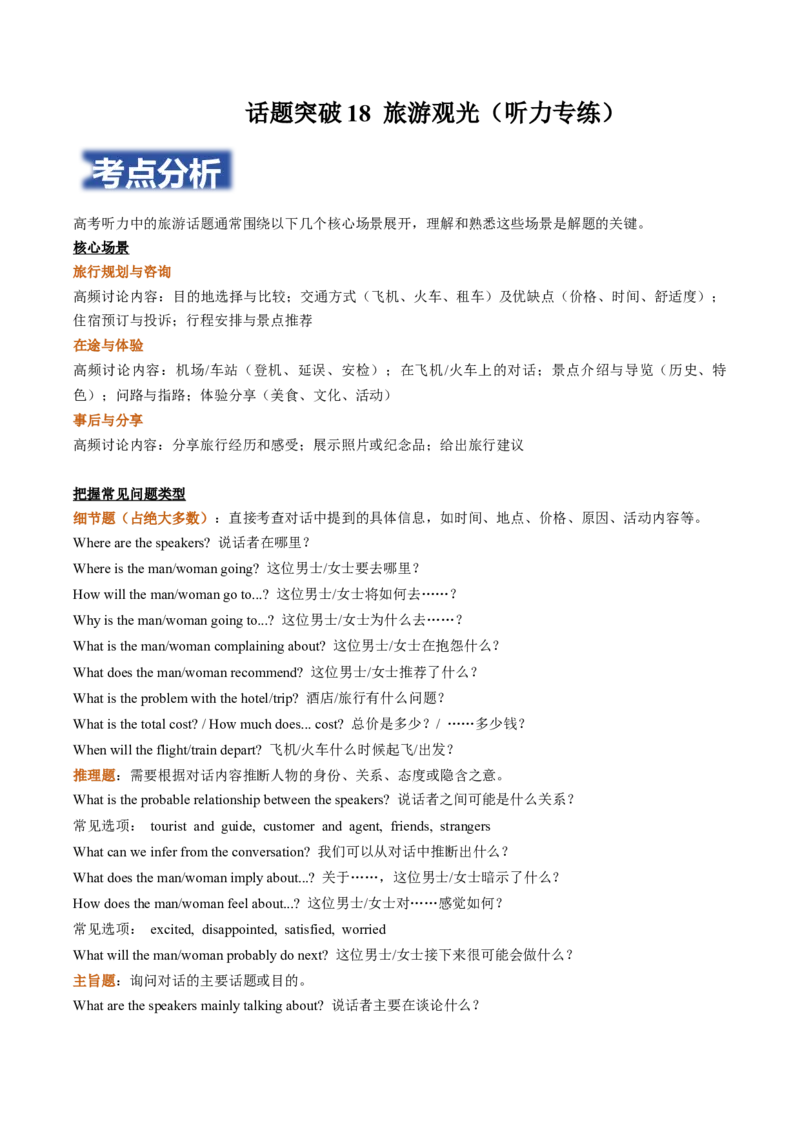
高考听力中的旅游话题通常围绕以下几个核心场景展开,理解和熟悉这些场景是解题的关键。
核心场景
旅行规划与咨询

高频讨论内容:目的地选择与比较;交通方式(飞机、火车、租车)及优缺点(价格、时间、舒适度);
住宿预订与投诉;行程安排与景点推荐
在途与体验
高频讨论内容:机场/车站(登机、延误、安检);在飞机/火车上的对话;景点介绍与导览(历史、特
色);问路与指路;体验分享(美食、文化、活动)
事后与分享
高频讨论内容:分享旅行经历和感受;展示照片或纪念品;给出旅行建议
把握常见问题类型
细节题(占绝大多数):直接考查对话中提到的具体信息,如时间、地点、价格、原因、活动内容等。
Where are the speakers? 说话者在哪里?
Where is the man/woman going? 这位男士/女士要去哪里?
How will the man/woman go to...? 这位男士/女士将如何去……?
Why is the man/woman going to...? 这位男士/女士为什么去……?
What is the man/woman complaining about? 这位男士/女士在抱怨什么?
What does the man/woman recommend? 这位男士/女士推荐了什么?
What is the problem with the hotel/trip? 酒店/旅行有什么问题?
What is the total cost? / How much does... cost? 总价是多少?/ ……多少钱?
When will the flight/train depart? 飞机/火车什么时候起飞/出发?
推理题:需要根据对话内容推断人物的身份、关系、态度或隐含之意。
What is the probable relationship between the speakers? 说话者之间可能是什么关系?
常见选项: tourist and guide, customer and agent, friends, strangers
What can we infer from the conversation? 我们可以从对话中推断出什么?
What does the man/woman imply about...? 关于……,这位男士/女士暗示了什么?
How does the man/woman feel about...? 这位男士/女士对……感觉如何?
常见选项: excited, disappointed, satisfied, worried
What will the man/woman probably do next? 这位男士/女士接下来很可能会做什么?
主旨题:询问对话的主要话题或目的。
What are the speakers mainly talking about? 说话者主要在谈论什么?
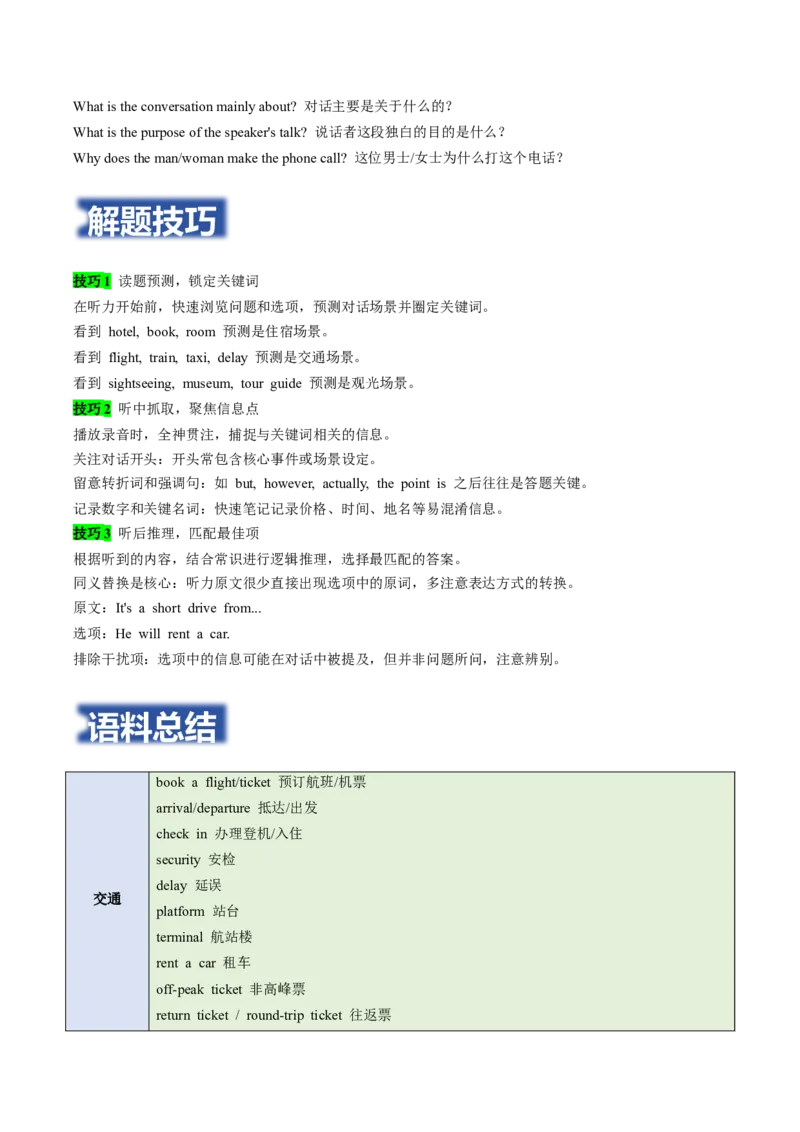
解题技巧
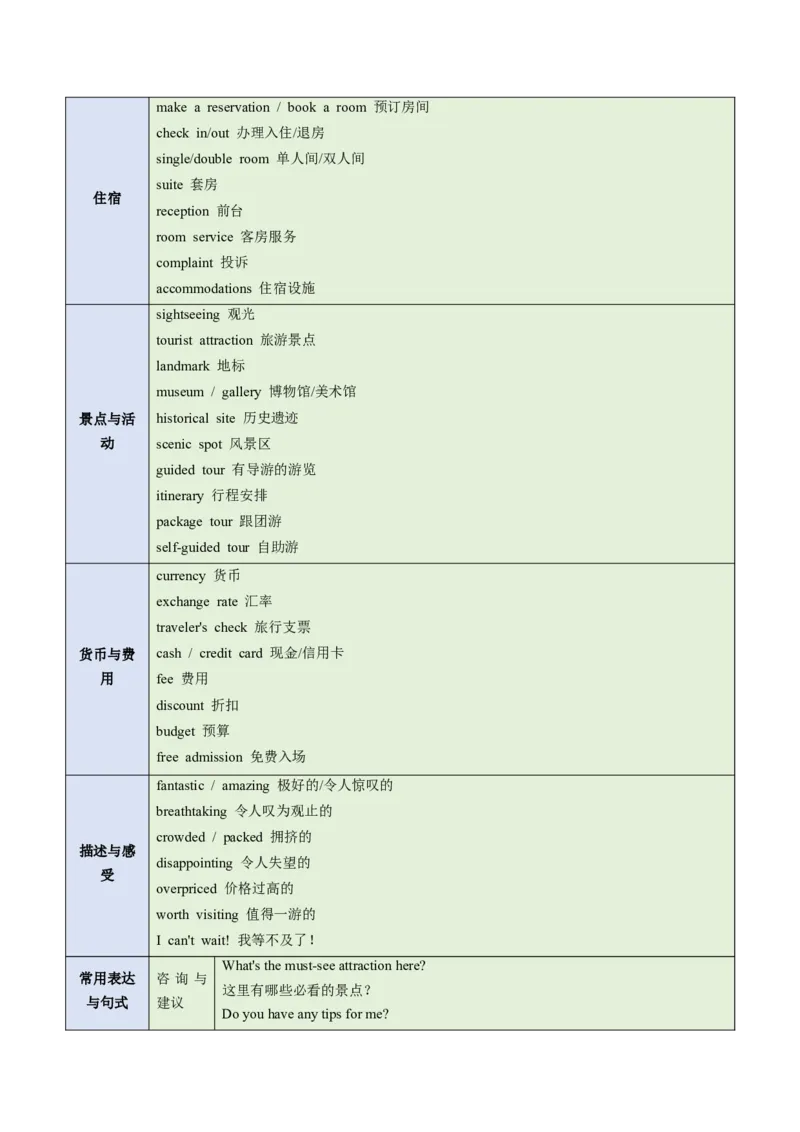
语料总结
What is the conversation mainly about? 对话主要是关于什么的?
What is the purpose of the speaker's talk? 说话者这段独白的目的是什么?
Why does the man/woman make the phone call? 这位男士/女士为什么打这个电话?
技巧1 读题预测,锁定关键词
在听力开始前,快速浏览问题和选项,预测对话场景并圈定关键词。
看到 hotel, book, room 预测是住宿场景。
看到 flight, train, taxi, delay 预测是交通场景。
看到 sightseeing, museum, tour guide 预测是观光场景。
技巧2 听中抓取,聚焦信息点
播放录音时,全神贯注,捕捉与关键词相关的信息。
关注对话开头:开头常包含核心事件或场景设定。
留意转折词和强调句:如 but, however, actually, the point is 之后往往是答题关键。
记录数字和关键名词:快速笔记记录价格、时间、地名等易混淆信息。
技巧3 听后推理,匹配最佳项
根据听到的内容,结合常识进行逻辑推理,选择最匹配的答案。
同义替换是核心:听力原文很少直接出现选项中的原词,多注意表达方式的转换。
原文:It's a short drive from...
选项:He will rent a car.
排除干扰项:选项中的信息可能在对话中被提及,但并非问题所问,注意辨别。
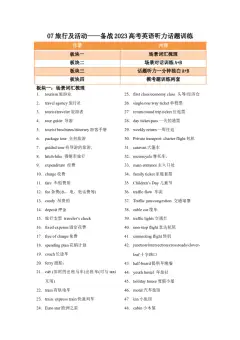
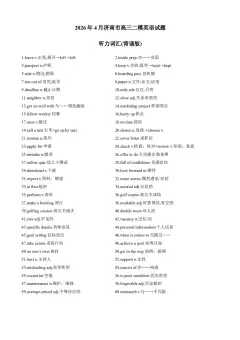
交通
book a flight/ticket 预订航班/机票
arrival/departure 抵达/出发
check in 办理登机/入住
security 安检
delay 延误
platform 站台
terminal 航站楼
rent a car 租车
off-peak ticket 非高峰票
return ticket / round-trip ticket 往返票
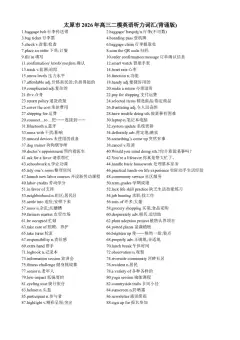
住宿
make a reservation / book a room 预订房间
check in/out 办理入住/退房
single/double room 单人间/双人间
suite 套房
reception 前台
room service 客房服务
complaint 投诉
accommodations 住宿设施
景点与活
动
sightseeing 观光
tourist attraction 旅游景点
landmark 地标
museum / gallery 博物馆/美术馆
historical site 历史遗迹
scenic spot 风景区
guided tour 有导游的游览
itinerary 行程安排
package tour 跟团游
self-guided tour 自助游
货币与费
用
currency 货币
exchange rate 汇率
traveler's check 旅行支票
cash / credit card 现金/信用卡
fee 费用
discount 折扣
budget 预算
free admission 免费入场
描述与感
受
fantastic / amazing 极好的/令人惊叹的
breathtaking 令人叹为观止的
crowded / packed 拥挤的
disappointing 令人失望的
overpriced 价格过高的
worth visiting 值得一游的
I can't wait! 我等不及了!
常用表达
与句式
咨询与
建议
What's the must-see attraction here?
这里有哪些必看的景点?
Do you have any tips for me?
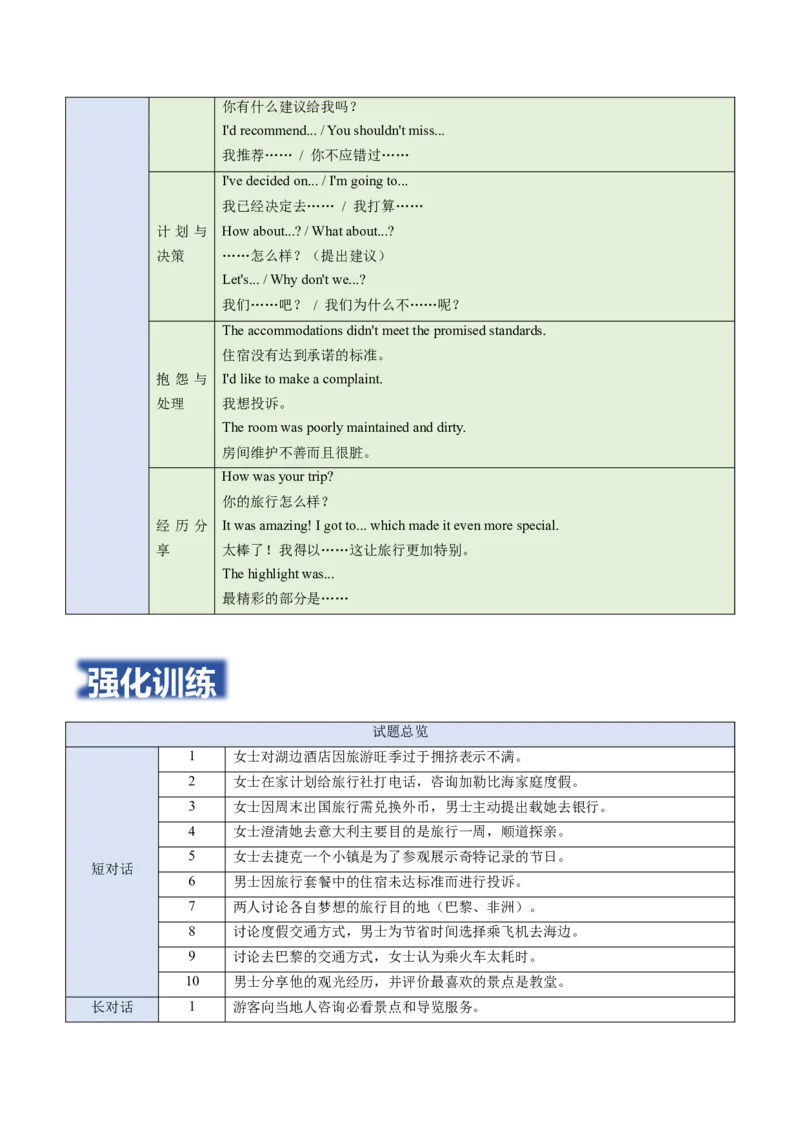
强化训练
你有什么建议给我吗?
I'd recommend... / You shouldn't miss...
我推荐…… / 你不应错过……
计划与
决策
I've decided on... / I'm going to...
我已经决定去…… / 我打算……
How about...? / What about...?
……怎么样?(提出建议)
Let's... / Why don't we...?
我们……吧? / 我们为什么不……呢?
抱怨与
处理
The accommodations didn't meet the promised standards.
住宿没有达到承诺的标准。
I'd like to make a complaint.
我想投诉。
The room was poorly maintained and dirty.
房间维护不善而且很脏。
经历分
享
How was your trip?
你的旅行怎么样?
It was amazing! I got to... which made it even more special.
太棒了!我得以……这让旅行更加特别。
The highlight was...
最精彩的部分是……


试题总览
短对话
1
女士对湖边酒店因旅游旺季过于拥挤表示不满。
2
女士在家计划给旅行社打电话,咨询加勒比海家庭度假。
3
女士因周末出国旅行需兑换外币,男士主动提出载她去银行。
4
女士澄清她去意大利主要目的是旅行一周,顺道探亲。
5
女士去捷克一个小镇是为了参观展示奇特记录的节日。
6
男士因旅行套餐中的住宿未达标准而进行投诉。
7
两人讨论各自梦想的旅行目的地(巴黎、非洲)。
8
讨论度假交通方式,男士为节省时间选择乘飞机去海边。
9
讨论去巴黎的交通方式,女士认为乘火车太耗时。
10
男士分享他的观光经历,并评价最喜欢的景点是教堂。
长对话
1
游客向当地人咨询必看景点和导览服务。
2
两人在飞机上,对即将开始的意大利之旅充满期待,讨论风景、美食并与旅行社
有约。
3
旅客因当日火车票太贵,决定改租车出行。
4
男士在内华达租车,准备自驾去加州开会。
5
老同学偶遇,女士在旅行社工作,两人相约喝咖啡叙旧。
6
讨论假期目的地选择(新加坡)和使用航空里程兑换机票的注意事项。
7
分享澳大利亚旅行经历,并为朋友的澳洲之行提供实用建议(电话卡、饮食、交
通)。
独白
1
介绍一个在南非的野生动物体验志愿者项目的工作内容和时间安排。
2
一个旅游指南节目,为家庭游客提供在新加坡省钱的实用贴士。
3
分享在埃及开罗游学,沉浸式体验当地文化和语言的经历与挑战。
4
导游在罗马浴场遗址为游客进行现场导览,介绍各个景点的历史和特点。
5
动物园内的广播,通知游客下午各场动物表演和导览活动的时间与内容。
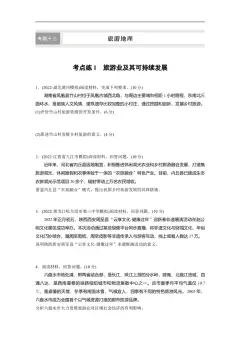
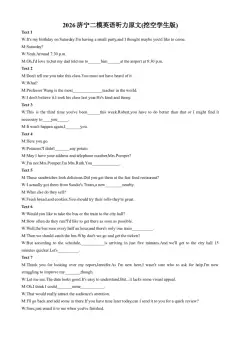
练习 1 短对话
听下面10 段对话。每段对话后有一个小题,从题中所给的A、B、C 三个选项中选出最佳选项。听完每段
对话后,你都有10 秒钟的时间来回答有关小题和阅读下一小题。每段对话仅读一遍。
1. What made the woman dissatisfied with the hotel?
A. It was too crowded.
B. It provided few dishes.
C. It was too far from the lake.
2. Where are most probably the speakers?
A. At a travel agency.
B. At a phone store.
C. At home.
3. What does the man offer to do?
A. Exchange some money.
B. Drive the woman to the bank.
C. Take a trip with the woman.
4. How will Crystal spend most of her time in Italy?
A. Dealing with her work.
B. Traveling around.
C. Visiting her sister.
5. Why is Jennifer going to the town?
A. She wants to visit someone.
B. She is curious about its festival.
C. She has something to show there.
6. What is the man doing?
A. Booking accommodations.
B. Sending a package.
C. Making a complaint.
7. What are the speakers mainly talking about?
A. Popular tourist spots.
B. Dream destinations.
C. Efficient transport.
8. How does the man want to travel?
A. By plane.
B. By car.
C. By train.
9. What does the woman think of traveling by train?
A. Time-consuming.
B. Affordable.
C. Tiring.
10. Which place attracted the man most?
A. The church.
B. The art gallery.
C. The botanical garden.
练习2  中长对话
听下面几段对话。每段对话后有几个小题,从题中所给的A、B、C 三个选项中选出最佳选项,并标在试
卷的相应位置。听每段对话前,你将有时间阅读各个小题,每小题5 秒钟;听完后,各小题将给出5 秒钟
的作答时间。每段对话读两遍。
Dialogue 1
听下面一段较长对话,回答以下小题。
6. What will the woman probably do first?
A. Visit an art gallery.
B. See a famous statue.
C. Explore a botanical garden.
7. What is the relationship between the speakers?
A. Strangers.
B. Tour guide and visitor.
C. Travel companions.
Dialogue 2
听下面一段较长对话,回答以下小题。
6. Where are the speakers?
A. In a car.
B. On a plane.
C. On a train.
7. What are the speakers going to do?
A. Make a travel plan.
B. Chair a meeting.
C. Go on holiday.
Dialogue 3
听下面一段较长对话,回答以下小题。
6. How much is the off-peak ticket?
A. £85.
B. £65.
C. £20.
7. How will the woman go to Kettering?
A. By car.
B. By train.
C. By plane.
Dialogue 4
听下面一段较长对话,回答以下小题。
14. Why will the man go to California?
A. For sightseeing.
B. For a wedding.
C. For a meeting.
15. Where are the speakers?
A. In Texas.
B. In Nevada.
C. In Alaska.
16. How much does the man need to pay?
A. $300.
B. $320.
C. $340.
17. How will the man pay?
A. By check.
B. By bank card.
C. In cash.
Dialogue 5
听下面一段较长对话,回答以下小题。
10. What is the probable relationship between the speakers?
A. Former schoolmates.
B. Business partners.
C. Colleagues.
11. Where does Mary work now?
A. In a school.
B. In a restaurant.
C. In a travel agency.
12. What will the speakers do next?
A. Take a trip.
B. Have a drink.
C. Attend a meeting.
Dialogue 6
听下面一段较长对话,回答以下小题。
11. Which country will the man visit?
A. Japan. B. Korea.C. Singapore.
12. How does the man plan to get air tickets?
A. By paying 3,000 pounds for them.
B. By exchanging his air miles for tickets.
C. By asking the travel agency to buy them.
13. How does the woman sound at last?
A. Satisfied.
B. Concerned. C. Annoyed.
Dialogue 7
听下面一段较长对话,回答以下小题。
14. What made Mike’s trip to Australia special?
A. Planning a road trip with May.
B. Celebrating his mom’s birthday.
C. Trying Tim Tams for the first time.
15. What advice does Mike give May on her phone using in Australia?
A. Buy a SIM card at the airport.
B. Rent a phone in Australia upon arrival.
C. Purchase a SIM card online in advance.
16. Why does Mike suggest May bring instant noodles to Australia?
A. Because instant noodles are lighter to carry.
B. Because she might not be used to Western food.
C. Because Chinese restaurants there are too crowded.
17. What does Mike emphasize about driving in Australia?
A. It’s different driving direction.
B. Strict observance of speed limits.
C. Advance planning of family routes.
练习 3 独白
Passage 1
听下面一段较长独白,回答以下小题。
18. How long does the morning part run each day?
A. Two hours.
B. Three hours.
C. Five hours.
19. Which activity is the most popular?
A. Planting trees.
B. Recording animals.
C. Looking after elephants.
20. What is the speaker probably doing?
A. Giving a lecture.
B. Introducing a program.
C. Looking for volunteers.
Passage 2
听下面一段独白,回答以下小题。
18. What is The HoneyKids Asia?
A. A program.
B. A magazine.
C. A company.
19. Who is The HoneyKids Asia intended for?
A. Tourists.
B. Guides.
C. Singaporeans.
20. What can The HoneyKids Asia do for you?
A. Babysit kids.
B. Save money.
C. Open bank accounts.
Passage 3
听下面一段独白,回答以下小题。
18. Why did the speaker learn Arabic?
A. She wanted to study in Cairo.
B. She was inspired by her teacher.
C. She became interested in the culture.
19. What is the biggest challenge for the speaker?
A. Suffering from culture shock.
B. Finding a hotel and accommodation.
C. Mastering written and spoken Arabic.
20. What excites the speaker most?
A. Being invited to a local meal.
B. Shopping at a local market.
C. Getting to know the locals.
Passage 4
听下面一段独白,回答以下小题。
17. Where is the coatroom?
A. Behind the reception.
B. Next to the bathroom.
C. Opposite the ticket office.
18. What is special about the Great Bath?
A. It’s very imaginative.
B. It’s the deepest.
C. It’s the largest.
19. What is in the center of the site?
A. The bath.
B. The spring.
C. The temple.
20. What do we know about the temple?
A. It was poorly preserved.
B. It was built a century ago.
C. It is the only Roman temple in Britain.
Passage 5
听下面一段独白,回答以下小题。
18. Where is the speaker?
A. In a park.
B. In a zoo.
C. In a museum.
19. Which animals can people see in the first show?
A. Monkeys.
B. Birds.
C. Tigers.
20. What do we know about the last show?
A. It’s free.
B. It’s a guided tour.
C. It’s beside a shop.