ARTICLE · 1194422
高考英语阅读训练|2026-10-16:① 中国老年助餐 ② 邓宁-克鲁格效应 ③ 数字时代的注意力管理(七选五)
高考英语阅读理解 · 每日训练
日期:2026-10-16(星期五) · 今日话题:中国时事民生(社区养老) + 社会心理(元认知) + 自我管理(注意力)
Passage 1 · 新闻报道(中国时事·非科技)Passage 2 · 议论文(外刊 D 篇)七选五 · 5 空对标新课标 I 卷 C / D 篇 + 七选五
Passage 1中国老年助餐:一餐热饭如何撬动社区养老
体裁:新闻报道(中国时事·非科技) 词数:约 393 难度:★★★☆(对标 C 篇中难偏上)
原文(先做后看解析;仅真超纲词就近标注,猜词目标词加粗,其余请语境自猜)
In neighbourhoods across China, a modest sight is reshaping how cities care for their oldest residents: at noon, a tidy canteen fills with elderly neighbours sharing a hot, low-priced meal. What began as a way to solve "the hardest meal of the day" has grown into something larger. Backed by the neighbourhood committee and run with the help of local catering firms, these community meal sites are becoming the front desk of a wider embedded(嵌入式的) eldercare system — a place where a bowl of rice opens the door to company and care.
The scale is now national. By the end of June 2026, China had built 82,000 elderly meal sites, serving more than four million seniors every day, according to the Ministry of Civil Affairs. The push started with a 2023 action plan from eleven ministries that aimed to widen coverage by the end of 2026, and central-government funds of 600 million yuan in 2024–2025 helped local trials take root. In Wuhan alone, 845 such sites now serve over 10,000 people daily; in one Qingyi community canteen, up to 200 diners eat at once, each meal discounted by two yuan.
The clever part is not the cooking but the linking. Because staff see the same faces daily, they notice who has not come, who has just left hospital, who lives alone. In Tianjin, where 1,906 neighbourhood canteens run on a market model, a two-yuan delivery fee sends hot food — and a quick welfare check — to the homebound. One 87-year-old who cannot climb stairs now gets his medicine fetched by the very volunteers who bring his lunch. Trust built over a meal turns a canteen into a lever that connects seniors to home care, nursing visits and even domestic help, revealing needs no questionnaire would catch.
Sustainability is the hard test. Rather than run canteens as charities, cities use "space for service" — offering free venues and small subsidies while letting firms earn through wider business, from group meals to ready-to-cook boxes. Revenues flow back to keep prices low. Some places add a "time-credit" scheme, where volunteers bank hours they can later spend on their own care; Hai Kou has even set up a scoring system that closes weak sites. Looking ahead, the 15th Five-Year Plan arranges one billion yuan in central support for the service. From a single hot meal a whole web of ageing support is being woven, holding a community together.
题目(Q1–Q4)
What is the main achievement of China's elderly-meal program as described in the passage?A. It has single-handedly solved most problems of an ageing society.B. It mainly aims to help catering firms earn larger profits from seniors.C. It has grown from a meal service into a broad community-based eldercare network.D. It leaves the whole task to charities without any public support. What can be inferred about why a simple meal works as a lever for wider care?A. Daily contact builds trust and reveals deeper needs, turning a canteen into a care hub.B. The food is so cheap that seniors have no real choice but to eat there.C. Central government pays the full cost, so local governments need do nothing.D. Trained nurses are employed mainly to prepare the dishes each day. The word "lever" in Paragraph 3 is closest in meaning to ______.A. a rule that forbids private businesses from joining the serviceB. a device that locks a door firmly in placeC. a tax collected to fund public welfare directlyD. a means that sets a larger change in motion What is the author's main purpose in writing this passage?A. To argue that families should no longer cook for the elderly at home.B. To show how a small daily service can grow into a community care system.C. To compare Chinese and foreign ways of feeding older people.D. To criticise catering firms for chasing profit from seniors.
逐题解析
Q1 答案:C
正确原因:跨段综合细节题。第1段"front desk of a wider embedded eldercare system"、第3段"lever that connects seniors to home care, nursing visits"与第4段"a whole web of ageing support is being woven"共同说明项目已从"一顿饭"长成"社区养老网络",对应 C。
干扰项:A 夸大("single-handedly solved most problems"无据);B 歪曲目的(文段强调惠民而非企业盈利,且企业是"微利反哺");D 与第4段"space for service / 政府小补贴+企业市场化"相反(事实错位)。
Q2 答案:A ★踮脚
正确原因:推理判断题(推一步)。第3段"staff see the same faces daily / notice who... / Trust built over a meal turns a canteen into a lever that connects seniors to home care"可推知"日常接触建立信任、暴露深层需求,使食堂成为养老枢纽",原文无原句,需在"信任—需求—链接"链条上向前走一步。
干扰项:B 误读补贴为强制("no real choice"无据,2元是优惠非胁迫);C 与"中央600万/十亿是部分支持、地方仍需作为"矛盾;D 无中生有(未说护士主厨)。
Q3 答案:D
正确原因:词义猜测题。上下文"Trust built over a meal turns a canteen into a lever that connects seniors to ... care, nursing visits"中,与"撬动/链接更宽服务"并列的应是"引发更大改变的手段/支点",锁定 D(set a larger change in motion)。
干扰项:A 禁止民企、B 锁门装置、C 征税均与"食堂变养老前台、悄悄撬动服务"语境无关(无中生有)。
Q4 答案:B
正确原因:写作目的/主旨题。全文主线"一顿热饭→日常接触建信任→链接护理家政→可持续运营→织成养老网",B 全面概括作者意图;A/C/D 均只取局部或歪曲(A"不再做饭"、C"中外对比"、D"批评企业"文中均无)。
干扰项:A 极端歪曲("no longer cook"无据);C 以偏概全(未做中外对比);D 无中生有(未批评企业)。
语篇分析
体裁:新闻报道(现象引入—规模数据—机制揭示—可持续运营—意义升华 结构)。
结构骨架:第1段引入(社区食堂=嵌入式养老"前台");第2段规模(8.2万家/日均400万/2023方案/中央6亿/武汉845);第3段机制(日常接触建信任→食堂变杠杆链接护理家政);第4段可持续(场地换服务/时间积分/海口退出机制/十五五10亿→织成养老网)。
难度提示:Q2 为踮脚推理题,需从"same faces daily / notice / trust built over a meal / lever"推"日常接触建立信任=养老枢纽",不可在原文找原句;长难句如 "Trust built over a meal turns a canteen into a lever that connects seniors to home care, nursing visits and even domestic help" 含定语从句与并列宾语。
核心词汇(8–12 个,含派生词构词法)
词组 / 固定搭配
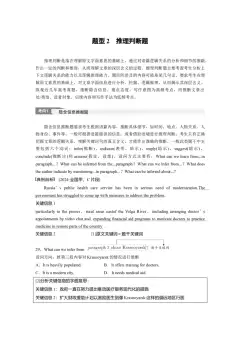
reshape how ... 重塑……的方式the front desk of 的"前台"/入口take root 扎根,落地run on a market model 按市场化模式运营turn ... into a lever 把……变成撬动手段flow back to 回流到hold a community together 把社区凝聚在一起
阅读知识点
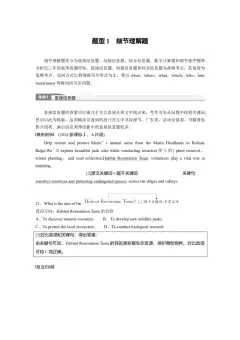
① 细节理解题——"跨段综合定位"法:Q1 的正确项 C 不在任何一句原话里,而需合并第1段"养老前台"、第3段"杠杆链接护理"与第4段"织成养老网"三处证据,凡只盯一段的选项(A/B/D)必错。
② 推理判断题——"推一步"法(踮脚题):Q2 不能选原文原词,而要从"same faces / notice / trust built over a meal / lever"推出"日常接触建立信任=养老枢纽",答案 A 是对行为背后动因的推断,需在原文证据上向前走一步。
练习建议:做 Q2 时先在文中圈出 same faces、notice、trust、lever 四个词,再问自己"为什么一顿饭能撬动养老"——答案自然落在"信任与深层需求"。
Passage 2邓宁-克鲁格效应:为什么越无能的人越自信
体裁:议论文(外刊·社会心理) 词数:约 450 难度:★★★★☆(对标 D 篇外刊高难)
原文(先做后看解析;仅真超纲词就近标注,其余请语境自猜)
We like to trust our own judgement of how good we are at things — at grammar, at reading a room, at telling a joke. Yet a famous line of research suggests the least skilled among us are often the most confident, while the truly able quietly doubt themselves. In 1999, Cornell psychologists Justin Kruger and David Dunning published a paper, later honoured with an Ig Nobel, showing that people who perform worst at a task not only do poorly but badly misjudge how poorly they did. In plain terms they named it the problem of being "unskilled and unaware of it."
The experiment was elegant. Volunteers first took tests of humour, grammar and logical reasoning — the jokes beforehand rated by professional comedians. Then each person estimated their own rank. The pattern was striking: those in the bottom quarter of performance placed themselves near the 67th percentile(百分位), convinced they were above average, while the top scorers marked themselves only slightly above. In other words, the weakest judges were the weakest at judging; the strongest slightly sold themselves short. The same gap showed up across all three skills, not merely in taste.
Why? Dunning and Kruger's key insight is that assessing a skill draws on the very same mental tools the skill itself requires. To know you are bad at logic, you need logical sense; to hear that your joke fell flat, you need a feel for humour. The incompetent thus suffer what the authors called a "double deficit": they lack the ability, and they lack the tool to see the lack. In a later test, training the poor performers in reasoning improved their self-ratings — evidence that competence, not mere feedback, is what sharpens self-awareness. This is a problem of metacognition(元认知): thinking about one's own thinking.
The effect reaches far beyond the lab. Hunters with the least knowledge of firearms hold the most inflated view of what they know; doctors with the weakest patient-interviewing skills are the least likely to spot their own gap. In each case, a narrow skill and a blind spot arrive together. What looks like arrogance is often simply a mind that cannot see its own edge — and so mistakes its centre for the summit.
The lesson is humbling for everyone, not only the unskilled. Because the bias hides in plain sight, none of us can safely assume we are the exception. The useful move is to ask, before we boast, what standard we are measuring against — and to treat quiet doubt, in ourselves and in others, as a sign of genuine skill rather than weakness. Noticing the gap between what we can do and what we think we can is the first step toward closing it.
题目(Q5–Q8)
What did Kruger and Dunning's 1999 study find about self-judgement?A. The poorest performers rated themselves far above average, while top performers slightly underestimated.B. Nearly everyone scored about the same and judged themselves with fair accuracy.C. Training made the weak learners more overconfident than before.D. Professional comedians performed worst at rating how funny the jokes were. What can be inferred about why incompetence breeds overconfidence?A. The brain naturally rewards wrong answers with quiet praise.B. Society teaches the unskilled to hide their weakness in public.C. Judging one's skill needs the same ability one lacks, a "double deficit."D. Strong performers pretend to be weak so as to seem modest. What is the author's attitude toward the Dunning–Kruger effect?A. Amused mockery aimed at the foolish and unskilled.B. Balanced analysis that sees it as a blind spot humbling to anyone who reflects.C. Total dismissal of it as a meaningless lab trick.D. Urgent warning that it threatens public safety directly. Which of the following is given as a real-life example of the effect?A. Students who study harder after a single poor grade.B. Skilled chefs who refuse to taste their own cooking.C. Careful drivers who rarely err on the road.D. Hunters with the least gun knowledge hold the most inflated view of it.
逐题解析
Q5 答案:A
正确原因:细节理解题。第2段"those in the bottom quarter ... placed themselves near the 67th percentile ... while the top scorers marked themselves only slightly above"直接说明"最差者自评远高于平均、最强者略低估",对应 A。
干扰项:B 与"末位自评67%、最强略低估"的显著差异矛盾;C 与第3段"训练差生后自评改善"相反(事实错位);D 与"笑话由专业喜剧演员先评分"的实验设定不符(无中生有)。
Q6 答案:C ★踮脚
正确原因:推理判断题(推一步)。第3段"assessing a skill draws on the very same mental tools the skill itself requires ... they lack the ability, and they lack the tool to see the lack"可推一步:评估技能需要与该技能相同的元认知能力,无能者"既无能又无看清无能的工具",即双重缺陷,原文无原句。
干扰项:A 无中生有("大脑奖励错误"无据);B 无中生有(未说社会教导隐藏);D 歪曲(末段说强者"quietly doubt",非"假装弱以显谦")。
Q7 答案:B
正确原因:态度/主旨题。末段"humbling for everyone ... none of us can safely assume we are the exception / treat quiet doubt ... as a sign of genuine skill"表明作者以"平衡分析、视其为人人共有的盲点"的态度看待该效应,既非嘲笑也非否定,对应 B。
干扰项:A "嘲笑"与全文分析式、末段"humbling for everyone"语气相反;C "彻底否定"与全文用力论证矛盾;D "威胁公共安全"无中生有(过度引申)。
Q8 答案:D
正确原因:细节理解题。第4段"Hunters with the least knowledge of firearms hold the most inflated view of what they know"直接对应 D(枪支知识最少的猎人自评最膨胀)。
干扰项:A/B/C 均非文中例子(A 是"纠错"行为、B/C 与"越无能越自信"机制不符,属无中生有)。
语篇分析
体裁:议论文(提出效应—实验证据—机制解释—现实印证—普遍启示 结构)。
结构骨架:第1段提出(越无能越自信;1999 Kruger & Dunning, Ig Nobel);第2段实验(幽默/语法/逻辑三测;末位自评67%、最强略低估);第3段机制(评估技能需同一能力→双重缺陷;训练改善自评;元认知);第4段现实(猎人枪支知识、医生问诊技巧两例);第5段启示(人人共有盲点、谦卑、以"安静的自疑"为真才标志)。
难度提示:Q6 为踮脚推理题,需从第3段"same mental tools / double deficit"推"评估无能需同一能力→故看不见",跨句综合;长难句如 "To know you are bad at logic, you need logical sense; to hear that your joke fell flat, you need a feel for humour" 含平行不定式与条件。
核心词汇(8–12 个,含派生词构词法)
词组 / 固定搭配
in plain terms 通俗地说place oneself near the 67th percentile 把自己放在第67百分位sell oneself short 低估自己draw on 运用,依赖suffer a double deficit 遭受双重缺陷spot one's gap 察觉自身不足the first step toward 通往……的第一步
阅读知识点
① 态度/主旨题——"首尾段定位+语气词"法:Q7 抓首段"unskilled and unaware"与末段"humbling for everyone / none of us can safely assume we are the exception",可知作者既非嘲笑(A)也非否定(C),而是平衡分析、视其为人人盲点,B 为最佳;含极端全盘否定(C "total dismissal")的选项偏离"分析"语气。
② 推理题——"从句群到段落主旨推一步"法(踮脚题):Q6 把第3段"same mental tools / lack the tool to see the lack"综合推成"评估技能需同一能力→双重缺陷致看不见",属跨句综合推断,需通读整段再归纳。
练习建议:做议论文推理题,先用笔在第3段划出所有"能力/工具"表述,再找它们的共同上位概念——往往就是正确答案。
七选五数字时代的注意力管理:把专注力练回来
体裁:说明/指导(人与自我·自我管理) 词数:约 311 难度:★★★☆(逻辑衔接·步骤递进)
原文(从 A–G 中选出 5 个句子填入 1–5 空,有 2 项多余)
In an age of endless feeds and pings, attention has become the scarcest resource we own — and the one most fiercely competed for. Apps, news sites and even our own devices are built by teams whose quiet job is to keep us scrolling, tapping and coming back for one more look. Staying focused is no longer a matter of willpower alone; it is a skill we can design for, a habit we build rather than a gift we wait for. (1)______
The first move is to notice, not to fight. Most of us blame a weak mind for wandering thoughts while ignoring the design behind the distraction. Before changing anything, spend two days writing down, without judgement, when your focus slips and what pulled it away. (2)______
Next, cut the interruptions you can control. Every app wants a slice of your awareness, and each alert is built to pull you back from whatever you were doing. Turn off the badges, the banners and the buzz that do not serve your real work, and let only the people who truly matter reach you at once. (3)______
Then protect your deepest thinking. Shallow tasks swell to fill any space, yet the work of value needs sustained quiet. Block a window each day for the single task that matters most, and treat that hour as an appointment you would not cancel for a stranger. (4)______
Finally, practise doing one thing at a time. Switching feels fast but splits attention into thinner streams, so that nothing gets your full self. When you read, read; when you talk, listen; close the other tabs and let the one thing in front of you hold your whole mind. (5)______
Over weeks, these small structures do their quiet work, and focus returns — not as a gift, but as a habit you have built, a muscle trained through ordinary days.
题目(七选五,1–5)
A. Begin by mapping where your attention actually leaks — which apps, moments and moods pull you off task. B. Each chime trains your brain to expect a break, so silence the pings that fragment your day. C. Guard a daily block of calm, uninterrupted time for the work that matters most, as you would a meeting you would not miss. D. Do one thing at a time on purpose; the cost of switching is larger than the tasks suggest. E. Attention is like a muscle: it grows with use and fades with constant distraction, so train it as you would a body. F. Many believe focus is a gift some are born with and others simply lack. G. The most productive people rarely feel distracted because they have learned to shape their surroundings.
逐题解析
空 (1) 答案:E
正确依据:空前引入"专注是可设计的技能",E(注意力如肌肉,越练越强、越分心越弱)以比喻给出总原则,承上"skill we can design for"并启下四个步骤,且 "train it" 与全文"练习/习惯"基调复现。
干扰项:F 讲"专注是天赋"属错误观念、会打断"步骤"脉络;G 讲"高效者不分心"属结论性断言,不宜放在步骤总起处。
空 (2) 答案:A
正确依据:空前"first move is to notice"(先觉察),A(先描摹注意力从哪些 app/时刻/情绪漏走)正是"如何觉察"的具体化,且 "leaks / pull you off task" 回指上句 "wandering thoughts / distraction"。
干扰项:B 讲关通知(属步骤2);C 讲深度时间(步骤3);E 已用于(1);F、G 为多余项。
空 (3) 答案:B
正确依据:空前"cut the interruptions / each alert is built to pull you back"(削减可控干扰),B(每声提示音训练大脑等待打断,故关掉碎片化的提示)中 "chime / pings / fragment" 与空后 "each alert" 直接复现,顺势收束"减干扰"一步。
干扰项:D 讲单任务(步骤4);A 已用于(2);F、G 为多余项(逻辑/态度不符)。
空 (4) 答案:C
正确依据:空前"protect your deepest thinking / needs sustained quiet"(保护深度思考),C(守住每日一段安静不被打断的时间,如重要会议般不取消)中 "calm, uninterrupted time / work that matters most" 与 "deepest thinking / sustained quiet" 直接呼应。
干扰项:D 讲单任务(步骤5);B 已用于(3);F、G 为多余项。
空 (5) 答案:D
正确依据:空前"practise doing one thing at a time / Switching ... splits attention"(一次一件事),D(刻意一次只做一件,切换代价比看上去大)中 "one thing at a time / cost of switching" 与空前句直接复现,收束最后一步。
干扰项:A、B、C 均已填入前文;E 已用于(1);F、G 为多余项。
语篇分析
体裁:说明/指导类(问题引入—分步建议—收束 结构)。
结构骨架:引入(注意力是被争夺的稀缺资源→专注是可设计的技能)→ 原则(E) → 步骤1 觉察注意力漏洞(A) → 步骤2 关掉碎片提示(B) → 步骤3 守住深度时间(C) → 步骤4 一次一件事(D) → 收束(专注成习惯)。五空呈"总原则—分步递进—收束"逻辑。
难度提示:踮脚点在(1)——需识别空前"skill we can design for"已铺开"专注可练",再判 E 为总起比喻;长难句如 "Staying focused is no longer a matter of willpower alone; it is a skill we can design for" 含并列表语从句。
核心词汇(5–8 个,含派生词构词法)
词组 / 固定搭配
compete for 争夺a matter of 一件……的事blame A for B 把 B 归咎于 Apull ... back 把……拉回guard a block of time 守住一段(时间)on purpose 刻意地do one's quiet work 默默发挥作用
阅读知识点
① 七选五——"指代与复现"衔接法:正确项常与上下文有显性衔接词。如(3)选 B,因空前 "each alert is built to pull you back" 复现 B 的 "chime / pings / fragment";(5)选 D,因空前 "one thing at a time / Switching" 复现 D 的 "one thing at a time / cost of switching"。做题先找空前后句的名词/代词复现。
② 七选五——"总—分—总"结构法:本文先以 E 给总原则(专注如肌肉可练),再分四步 A→B→C→D,最后收束。凡打乱顺序(如把结论性 G 提前、把"天赋误解"F 插入)都会破坏"从总起到分步"的脉络。
练习建议:先通读抓"总—分—总"骨架,把 7 选项按"原则/步骤/干扰"分堆,再逐空匹配衔接词,最后用多余项反向验证。