ARTICLE · 1349235
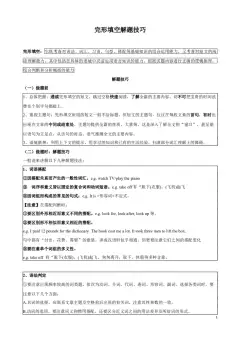
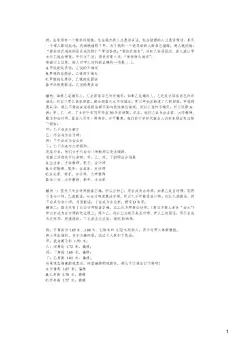
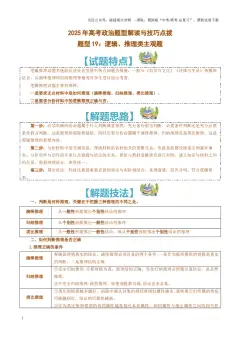
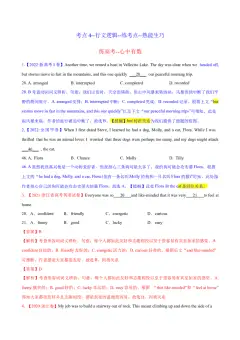
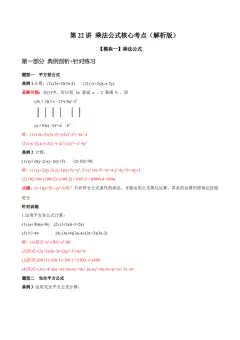
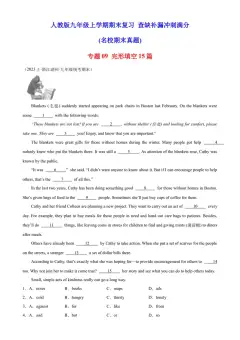
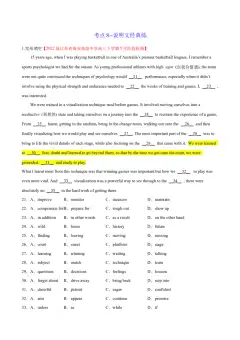
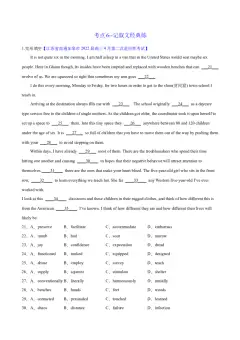
初中英语完形填空满分公式!配套解题思路,看懂逻辑,正确率快速提升!

1. 看到 than → 直接选【比较级】
公式:A + be动词/动词 + 比较级 + than + B
例句:
Tom is taller than Mike.(汤姆比迈克高。)
This book is more interesting than that one.(这本书比那本有趣。)
She runs faster than me.(她跑得比我快。)
注意:多音节形容词/副词前加 more,如 more beautiful、more carefully。
2. 看到 one of → 直接选【最高级 + the + 名词复数】
公式:one of + the + 最高级 + 名词复数
例句:
The Yellow River is one of the longest rivers in China.(黄河是中国最长的河流之一。)
He is one of the best students in our class.(他是我们班最好的学生之一。)
Beijing is one of the oldest cities in the world.(北京是世界上最古老的城市之一。)
注意:one of 后面的名词必须用复数,谓语动词用单数(因为主语是 one)。
3. 看到 one(两者中的一个)→ 直接选【the other】
公式:one…the other…(两者中一个……另一个……)
例句:
I have two pens. One is red, the other is blue.(我有两支笔,一支红的,另一支蓝的。)
He has two sons. One is a doctor, the other is a teacher.(他有两个儿子,一个是医生,另一个是老师。)
注意:只有两者时用the other;三者及以上用 another。
4. 看到 Some → 直接选【others】
公式:some…others…(一些……另一些……,并非全部)
例句:
Some students are reading, others are writing.(一些学生在读书,另一些在写字。)
There are many people in the park. Some are walking, others are dancing.(公园里有很多人,一些在散步,另一些在跳舞。)
辨析:
some…the others… 表示”一些……其余全部……“(有范围)
some…others… 表示”一些……另一些……“(无范围,泛指)
5. 看到 why not → 直接选【动词原形】
公式:Why not + 动词原形 + …? = Why don’t you + 动词原形 + …?
例句:
Why not go with us?(为什么不和我们一起去?)
Why not ask the teacher?(为什么不问老师?)
Why not take a rest?(为什么不休息一下?)
注意:Why not 后面必须跟动词原形,相当于提出建议。
6. 看到 enjoy / keep / finish / practice / mind → 直接选【doing】
公式:enjoy/keep/finish/practice/mind + doing sth
例句:
I enjoy reading books before bed.(我喜欢睡前读书。)
He keeps running every morning.(他每天早上坚持跑步。)
She finished doing her homework at 9.(她九点完成了作业。)
You should practice speaking English every day.(你应该每天练习说英语。)
Would you mind opening the window?(你介意打开窗户吗?)
口诀:喜欢(enjoy)坚持(keep)完成(finish)练习(practice)介意(mind),后面都跟 doing。
7. 看到 want / plan / decide / hope / would like → 直接选【to do】
公式:want/plan/decide/hope/would like + to do sth
例句:
I want to go home early.(我想早点回家。)
She plans to visit her grandma next week.(她计划下周去看望奶奶。)
He decided to study harder.(他决定更努力学习。)
They hope to see you soon.(他们希望很快见到你。)
I would like to drink some water.(我想喝点水。)
注意:这些动词后面都跟动词不定式to do。
8. 看到 So / such → 直接选【that】
公式:
so + 形容词/副词 + that…(如此……以至于……)
such + (a/an) + 形容词 + 名词 + that…
例句:
He is so tall that he can reach the shelf.(他如此高,能够到架子。)
It is such a nice day that we go to the park.(天气如此好,我们去了公园。)
She spoke so quickly that I couldn’t follow her.(她说得太快了,我跟不上。)
It is such an interesting book that I read it twice.(这本书如此有趣,我读了两遍。)
辨析:
so + 形容词 + a/an + 名词 = such + a/an + 形容词 + 名词
so good a boy = such a good boy
9. 看到 can / will / have to / may / must / should → 直接选【动词原形】
公式:情态动词+ 动词原形
例句:
She can swim very well.(她游泳游得很好。)
We will go to the park tomorrow.(我们明天去公园。)
He has to finish his homework first.(他必须先完成作业。)
You mustn’t play on the road.(你不能在路上玩。)
It may rain later.(晚些时候可能下雨。)
注意:情态动词后面永远跟动词原形,不管主语是谁。
10. 看到 last / yesterday / ago / just now / in 2020 → 直接选【一般过去时】
公式:主语+ 动词过去式 + …
例句:
I went to the park last Sunday.(我上周日去了公园。)
He was born ten years ago.(他十年前出生。)
She finished her homework yesterday.(她昨天完成了作业。)
They moved to Beijing in 2020.(他们2020年搬到了北京。)
常见过去时间标志词:yesterday、last week/month/year、…ago、just now、in + 过去年份、once、long long ago。
11. 看到 in / at / of / by / for / about / without 等介词 → 直接选【doing】
公式:介词+ doing sth
例句:
He is good at swimming.(他擅长游泳。)
Thank you for helping me.(谢谢你帮我。)
She is interested in painting.(她对画画感兴趣。)
He goes to school by bus.(他乘公交上学。)
I’m looking forward to seeing you.(我期待见到你。)
He left without saying goodbye.(他没说再见就走了。)
注意:to 既可以是不定式符号(后跟动词原形),也可以是介词(后跟 doing)。如 look forward to doing、be used to doing、pay attention to doing。
12. 看到 hundreds / thousands / millions → 直接选【of】
公式:hundreds of / thousands of / millions of + 名词复数
例句:
There are hundreds of people in the park.(公园里有成百上千人。)
Thousands of visitors come here every year.(每年成千上万的游客来这里。)
The city has millions of people.(这座城市有几百万人口。)
注意:
具体数字+ hundred/thousand/million:不加 s、不加 of(如 two hundred、five thousand)
模糊数量:加s、加 of(如 hundreds of、thousands of)
13. 看到 spend → 直接选【doing / on】
公式:
spend time (in) doing sth(花时间做某事)
spend money on sth(花钱买某物)
例句:
I spent two hours doing my homework.(我花了两小时做作业。)
She spent 100 yuan on the book.(她花了100元买这本书。)
14. 看到 It takes sb → 直接选【to do】
公式:It takes sb some time to do sth(做某事花了某人多长时间)
例句:
It takes me half an hour to go to school.(我上学要花半小时。)
It took him three days to finish the work.(他花了三天完成这项工作。)
15. 看到 used to → 直接选【动词原形】(过去常常)
公式:used to do sth(过去常常做某事,现在不做了)
例句:
He used to smoke, but now he doesn’t.(他过去抽烟,但现在不抽了。)
There used to be a cinema here.(这里过去有家电影院。)
辨析:be used to doing sth = 习惯于做某事(to 是介词,后跟 doing)
16. 看到 make / let / have → 直接选【动词原形】(使役动词)
公式:make/let/have sb do sth(让某人做某事)
例句:
The teacher made us clean the classroom.(老师让我们打扫教室。)
Let me help you.(让我帮你。)
注意:变成被动语态时to 要还原:sb be made to do sth。
17. 看到 not only… but also… → 就近原则
公式:not only + A + but also + B,谓语动词与 B 保持一致
例句:
Not only you but also he is wrong.(不仅你错了,他也错了。)
18. 看到 either…or… / neither…nor… → 就近原则
公式:either/neither + A + or/nor + B,谓语动词与 B 保持一致
例句:
Either you or he is going to the meeting.(要么你要么他去开会。)
【速记口诀】
than 比,one of 最;
one the other,some others;
why not 原形,情态后原形;
enjoy keep 加 doing,want plan 加 to do;
so such 配 that,介词后面加 doing;
过去时间用过去,hundreds thousands 配 of。
觉得这篇文章对您有帮助,点亮【在看】 ,让更多人看到