1
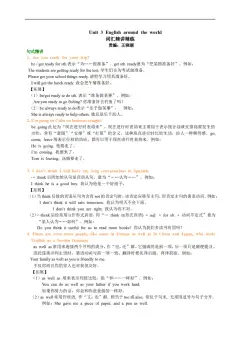
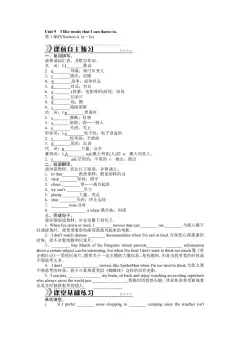
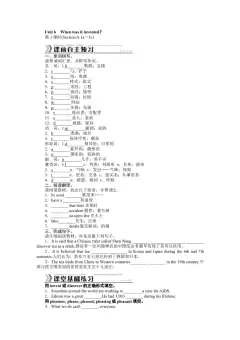
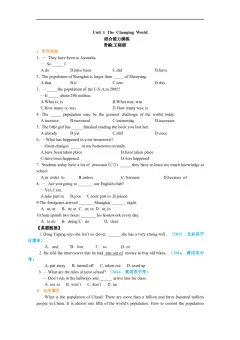
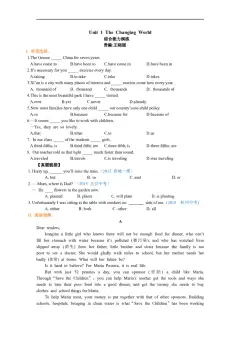
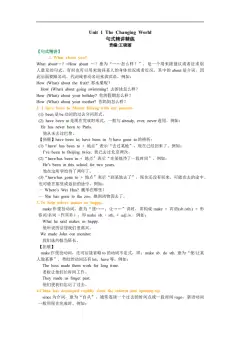
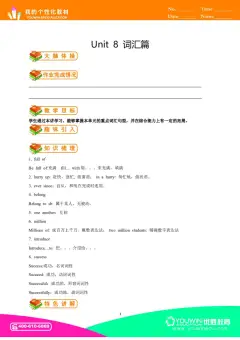
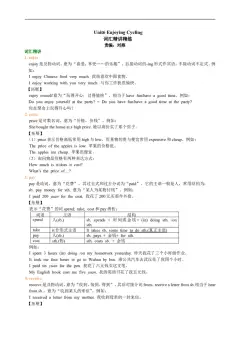
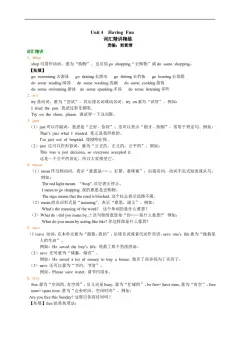
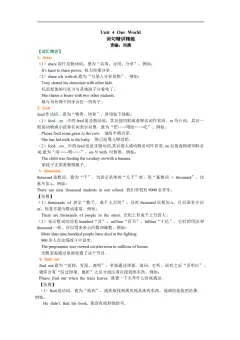
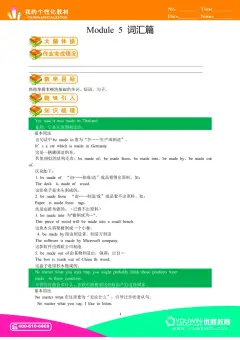
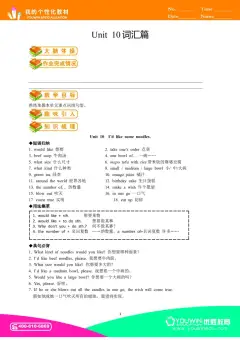
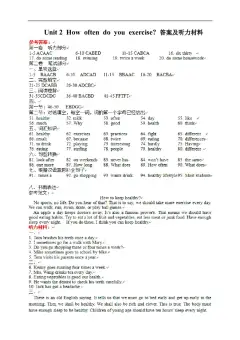
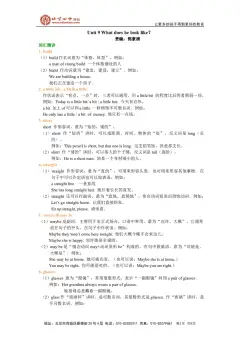
第3 讲:Unit 2 词汇篇
__________________________________________________________________________________
__________________________________________________________________________________
短语归纳
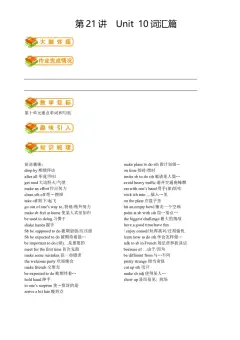
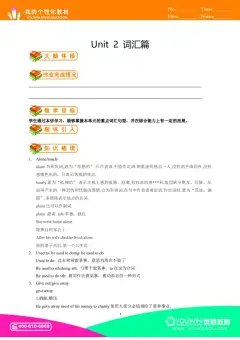
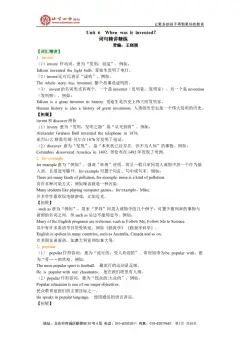
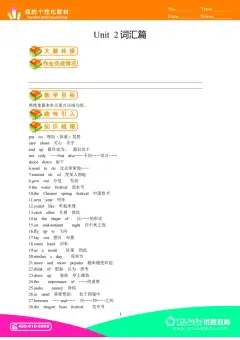
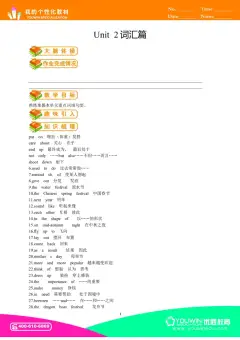
1. since then 从那以后
2. have a three-day holiday 有三天的假期
3. public holiday 公众假日
4. have one day off 有一天的休息时间
5. all kinds of 各种各样的
6. take a vacation
spend a vacation 度假
介词短语:on / for vacation
He is going to take a vacation to Beijing. = He is going to Beijing on / for vacation.
7. have a picnic 去野餐
They are going to have a picnic in the park.
8. have fun = have g good / great time = enjoy oneself 玩得开心;过得愉快
have fun doing sth. 高兴做某事
9. play music 演奏音乐
10. go somewhere interesting 去有趣的地方
11. as soon as… 一…就… 引导时间状语从句(主将从现)
I will call you as soon as I get there.
2
12. make short speeches 做简短的演讲
13. give thanks for 为某事/某物而感谢 I gave thanks for your help.
give thanks to sb. 向某人表示感谢 They gave thanks to me.
14. teach sb. how to do sth. 教某人如何做某事 Tom taught me how to ride a bike.
15. grow corn 种植玉米
16. lay the table 摆设餐桌
17. tell a story tell stories 讲故事 tell a lie 撒谎 tell a joke 讲笑话
18. as well 也,位于肯定句句末。
She likes swimming. I like swimming as well.
19. plenty of 大量的,充足的,后接可数名词复数或不可数名词。
20. make much progress 取得很大的进步
make progress in (doing) sth. 在(做)某事方面取得进步
21. get back 回来 = come back, go back, return
22. think about 考虑;思考
You always think about eating. 你总是想着吃。
23.make a plan for 为......制定计划
Let’s make a plan for the party.
24. wake sb. up 叫醒某人 get out of bed 起床
25. fall asleep 睡着
26. in different ways 以不同的方式
People celebrate Spring Festival in different ways.
27. count down 倒数
I always count down the days until the end of the term.
28. depend on 依靠,依赖 ;取决于
We can’t depend on our parents.
Your success depends on whether you work hard or not.你的成功取决于你是否努力工作。
depend on sb. to do sth. 指望某人做某事
We shouldn’t depend on him to finish the work.
29. get together 聚会
30.apart from 除......以外(还有), 相当于besides。
Apart from the cost, it will take a lot of time. 除了花费外,它还需要许多时间。
重点句型和语法
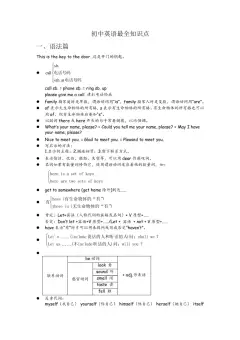
1.have+一段时间+off 放多长时间的假
2.复合不定代词/复合不定副词+形容词
2.have fun doing sth 做某事很开心
3.4.enjoy oneself 玩得开心
5.watch sb. do/doing sth 观看某人做/正在做某事
6.teach sb. how to do sth 教某人如何做某事
3
7.It's better to do sth.最好做某事
8.Don't you ...?(否定疑问句)难道你.......吗?
9.spend...doing...花费......做........
1. A lot of green trees on each side of the street.
A. develop
B. increase
C. plant
D. grow
2.We are planning to go for a picnic this weekend, but it the weather.
A. keeps on
B. puts on
C. depends on
3. John didn’t give up looking for a job he got an offer from a German company.
A. until
B. since
C. because
D. if
4.—How old is Mary?
— . We had a special party for her birthday yesterday.
A. Twenty; twentyth
B. Twenty; twentieth
C. Twenties; twentieth
5.—Have you decided to the beach?
—Not yet. It depends on the weather.
A. whom to go
B. where to go
C. when to go
D. why to go
解析:
1. 选D。考查动词辨析。句意: 许多绿树生长在街道的两边。grow 意为“生长”。故选D。
2. 选C。考查动词短语辨析。keep on 继续; put on 穿上, 上演; depend on 依靠, 依赖。句意: 我们正
计划这个周末去野餐, 但这取决于天气。故选C。
3.选A。考查连词辨析。句意: 约翰没有放弃找工作直到他从一家德国的公司找到了一份。until 表
示“直到”, 符合题意。故选A。
4.选B。考查数词用法。表示年龄多少岁用基数词; 20 岁生日用序数词twentieth, 故选B。
5. 选C。考查动词不定式的用法。decide to do sth. 决定做某事。句意: ——你决定何时去海滩了吗?
—还没有, 这要取决于天气。说明什么时候去还没有决定, 因此用疑问词when+不定式结构。故选
C。
基础演练
Ⅰ. 单词拼写
1. 季节; 节期(n. ) ______________
2. 旗; 旗帜(n. )
______________
3. eight(num. )→
________________(序数词)
4. nine(num. )→
________________(序数词)
4
5. twelve(num. )→ ________________(序数词)
6. twenty(num. )→ ________________(序数词)
Ⅱ. 短语互译
1. 三天的假期 a __________ holiday
2. 休假 day________
3. 各种各样的
__________ __________ of
4. 去度假
take __________ ________
5. the start of ______________
6. play music ______________
Ⅲ. 句型填词
1. 10 月1 日是中国的国庆节, 不是吗, 玲玲?
The First of October is China’s National Day, __________ __________ , Lingling?
2. 从那时起, 人们就庆祝国庆节。
People __________ __________ the National Day __________ then.
3. 我父母和我打算去山东省拜访一些朋友, 并将待在那里直到假期结束。
My parents and I __________ __________ _ _________ visit some friends in Shandong Province and
__________ __________ there __________ the end of the holiday.
4. 当我们和我们的朋友们待在一起时, 我们会在青岛度过一天。
__________ we’re __________ with our friends, we’re __________ __________ spend one day in
Qingdao.
5. 并且假期一开始, 我的家人就总是去一些有趣的地方。
And my family always go __________ __________ __________ __________ __________ the holiday
begins.
IV.. 用所给词的适当形式填空
1. The university __________ (found)100 years ago.
2. Lin Feng __________ (study)very hard since he came to our school.
3. I watched my uncle __________ (get)into a taxi just now.
4. I was doing my homework while my mother __________ (do)the cleaning.
5. We __________ (leave)for Shanghai as soon as we get tickets.
V.. 单项选择
1. We are hoping to ______at the end of July.
A. have vacation B. take vacation
C. have vacations D. take a vacation
2. I’ll have ______next week.
A. one-day off B. one day off
C. one day’s off D. one-day’s off
3. I’d like to go ______for my holiday.
5
A. somewhere exciting B. exciting somewhere
C. excited somewhere
D. somewhere excited
4. The Smiths came to Shanghai in 2008, they __________ there for six years since then.
A. live B. lived C. have lived D. will live
5. —What is the date today?
—It is ______.
A. Sunday
B. August nine
C. the first of May D. October fifth
答案:
I.1. season 2. flag 3. eighth 4. Ninth 5. twelfth 6. Twentieth
II. 1. three-day 2. off 3. all kinds 4. a vacation 5. ……之初 6. 演奏音乐
III.1. isn’t it 2. have celebrated, since 3. are going to; will stay; until
4. While; staying; going to 5 somewhere interesting as soon as
IV. 1. was founded 2. has studied 3. get 4. was doing 5. will leave/are leaving
V.D B A C D
巩固提高
Ⅰ. 用所给词的适当形式填空(10 分)
1. Enjoy __________(you), boys and girls.
2. I saw mother cooking as soon as I __________(get)back home.
3. Shall we go __________(skate)this weekend?
4. The boring speech makes the little boy fall __________(sleep).
5. Mid-Autumn Day is a __________(tradition)festival in China.
Ⅱ. 单项选择(10 分)
1. It’s selfish(自私的) ______him ______the cakes with others.
A. for; to share
B. for; not share
C. of; to not share
D. of; not to share
2. I’m thinking about ______a digital camera.
A. get
B. got
C. getting
D. to get
3. ______was Li Ming ______met me at the railway station yesterday.
A. It; /
B. He; who
C. He; /
D. It; who
4.—I will have an English test tomorrow.
— ______.
A. Good luck
B. Congratulations
C. Have a good time
D. It’s up to you
5.—It’s too late. I have to go now.
—Oh, it’s raining outside. Don’t leave ______it stops.
A. since
B. until
C. while
6
The doctor would like to meet her ______8: 00 and 9: 00 tomorrow morning.
A. at
B. during
C. between
D. among
2. The story happened ______the 19th century.
A. in
B. at
C. on
D. of
3. —We often have ______homework on weekends.
—Yes, I find homework ______boring.
A. too much; much too
B. too much; too much
C. much too; much too
D. much too; too much
4. Mrs Brown came into the room, with a lovely dog ______her.
A. following
B. follow
C. to follow
D. followed
5. —Would you like to tell me ______?
—Sure. Practice makes perfect.
A. how can I study English well
B. why do I learn English well
C. how I can study English well
D. why I learn English well
Ⅲ. 完成句子(10 分)
1. 除了机会, 我们的成功还取决于什么?
__________ __________chances, what does our success __________ __________?
2. 世界上的人们用不同的方式庆祝新年。
People all over the world celebrate the New Year _______ __________ __________.
3. 我们聚在一起, 谈论去哪里度假。
We _________ ________to talk about where to _________ _________ __________.
4. 我们希望在这个学期末取得进步。
We hope to __________ __________at the __________ __________this term.
5. 我已经用了半个小时等公共汽车了。
I have __________half an hour __________ __________the bus.
Ⅳ. 同义句转换(10 分)
1. School will end in ten minutes.
School will __________ __________in ten minutes.
2. At first, we made a plan to decide where we would go.
At first, we made a plan to decide __________ __________ __________.
3. There are lots of fish in the sea.
There are __________ __________fish in the sea.
4. Perhaps there will be a new hospital here, too.
Perhaps there will be a new hospital here __________ __________.
5. People buy food in a place called“Market”!
People __________ __________food in a place called“Market”!
7
Ⅰ. 1. yourselves 2. got 3. skating 4. asleep 5. traditional
Ⅱ. 1~5. DCDAB AAAAC
Ⅲ. 1. Apart from; depend on 2. in different ways
3. got together; take a vacation
4. make progress; end of 5. spent; waiting for
IV.DBAA
Ⅰ. 用所给词的适当形式填空
1. It rained on the day we arrived, but the __________(follow)day was sunny.
2. At the sight I was frightened and fell off the bike, with all the books __________(lie)on the ground.
3. The dancer fell down while she __________(spin)on the stage. 【 : 】
4. My sister can’t help __________(clean)the house because she’s busy making a cake. 【 】
5. There is nothing __________(eat)in the fridge. Let’s buy some. 【 】
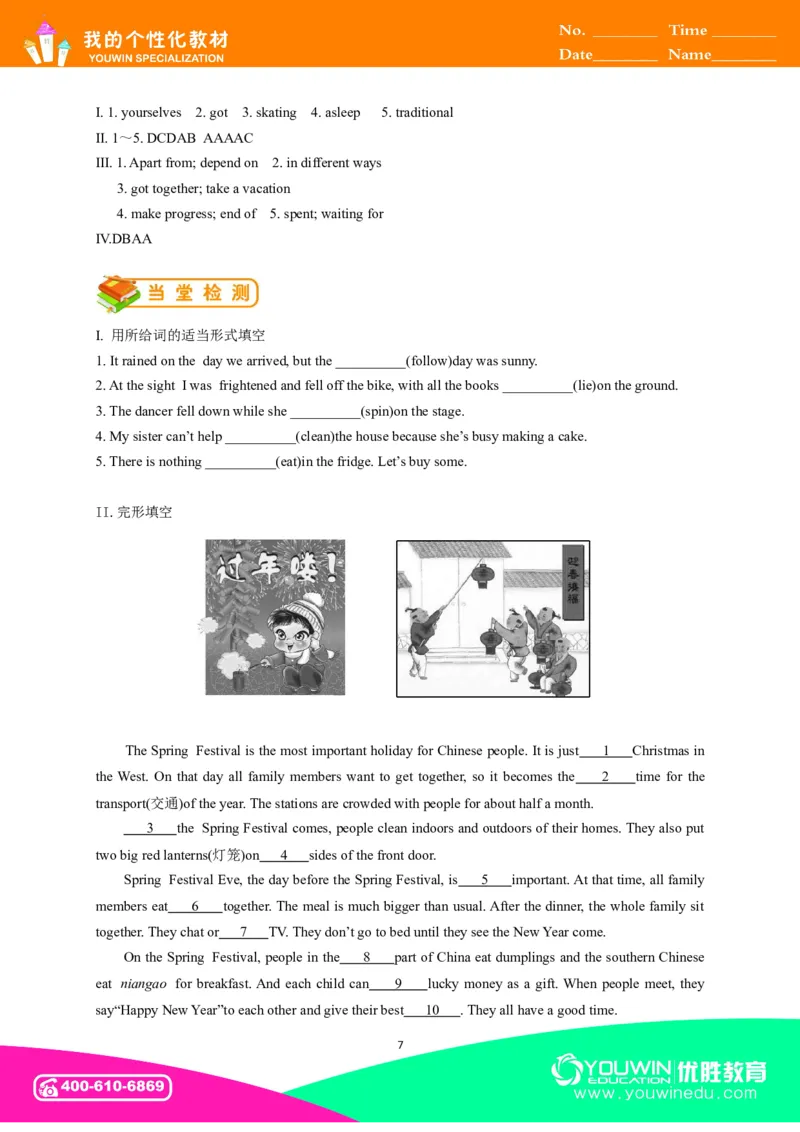
II.完形填空
The Spring Festival is the most important holiday for Chinese people. It is just 1 Christmas in
the West. On that day all family members want to get together, so it becomes the 2 time for the
transport(交通)of the year. The stations are crowded with people for about half a month.
3 the Spring Festival comes, people clean indoors and outdoors of their homes. They also put
two big red lanterns(灯笼)on 4 sides of the front door.
Spring Festival Eve, the day before the Spring Festival, is 5 important. At that time, all family
members eat 6 together. The meal is much bigger than usual. After the dinner, the whole family sit
together. They chat or 7 TV. They don’t go to bed until they see the New Year come.
On the Spring Festival, people in the 8 part of China eat dumplings and the southern Chinese
eat niangao for breakfast. And each child can 9 lucky money as a gift. When people meet, they
say“Happy New Year”to each other and give their best 10 . They all have a good time. 【 】
8
1. A. as well as B. for example
C. the same as
D. different from
2. A. best
B. worst
C. busiest
D. least
3. A. Since
B. Until
C. After
D. Before
4. A. both
B. all
C. whole
D. other
5. A. even
B. also
C. yet
D. still
6. A. dinner
B. lunch
C. meal
D. breakfast
7. A. see
B. watch
C. look at
D. listen to
8. A. rich
B. poor
C. northern
D. western
9. A. give
B. get
C. use
D. pay
10. A. luck
B. view
C. hopes
D. Wishes
答案:I.1. following 2. lying 3. was spinning 4. (to)clean 5. to eat
II.1~5. CCDAB 6~10. ABCBD
_________________________________________________________________________________
_________________________________________________________________________________
I.单项选择
1.The doctor would like to meet her ______8: 00 and 9: 00 tomorrow morning.
A. at
B. during
C. between
D. among
2. The story happened ______the 19th century.
A. in
B. at
C. on
D. of
3. —We often have ______homework on weekends.
—Yes, I find homework ______boring.
A. too much; much too
B. too much; too much
C. much too; much too
D. much too; too much
4. Mrs Brown came into the room, with a lovely dog ______her.
A. following
B. Follow
C. to follow
D. followed
5. —Would you like to tell me ______?
—Sure. Practice makes perfect.
A. how can I study English well
B. why do I learn English well
C. how I can study English well
D. why I learn English well
6. (2014-2015 九年级第一次月考)You should not put the glass _________ the table. It may fall down
and break!
A. on the edge of
B. in the middle of C. at the bottom of
D. on the top of
9
7._(2014-2015 九年级第一次月考)_____ anyone _______ TV last night?
A. Were; watching
B. Was; looking
C. Was; watch
D. Did; watch
8.(2014-2015 九年级第一次月考) –Would you like to visit the Great Wall with us? –Sorry, I _______
it twice.
A. visited
B. visit
C. have visited
D. are visiting
9.(2014-2015 九年级第一次月考).He wrote a diary _________ some events that happened in the dance
club.
A. about
B. of
C. at
D. with
10.(2014-2015 九年级第一次月考)—May I speak to Kate, please?
–Sorry, she’s _______ Egypt.
A. gone in
B. been in
C. gone to
D. been to
II.词汇运用
(A)根据句意及首字母或汉语提示完成单词
1. There is a big star and four smaller stars in our national f .
2. There are four s in a year: spring, summer, autumn and winter.
3. Tree Planting Day comes on the t of March.
4. The singer was standing (在……之中)his fans.
5. This is his (第四)time to help me out of trouble.
(B)用所给词的适当形式填空
6. My uncle (teach)in this school since he was twenty years old.
7. Which of the (follow)is NOT true about Thanksgiving?
8. I was just leaving when someone (knock)at the door.
9. It’s silly of you (copy)others’homework.
10. We started as soon as she (arrive)in Sanya.
III. 完成句子
1. 我们只可以休一天假吗?
Shall we have only_______ _______ _______?
2. 水上乐园是旅游度假的好地方。
Watertown is a great place to_______ _______ _______.
3. 请你摆好餐桌准备吃晚饭好吗?
Will you please_______ _______ _______ for dinner?
4. 我们有充足的时间; 用不着太急促。
We’ve got_______ _______ time; there’s no need to rush.
5. 王先生不喜欢在公共场合发表讲话。
Mr Wang does not like to_______ _______ in public.
Ⅳ. 阅读理解
10
A
Family Pictures
1 We visited Grandma last week.
She went to her bedroom.
She brought down old books of pictures.
We looked at the old pictures.
2 We sat at the kitchen table.
A mother, a grandmother, and a daughter
looked at photos of mothers,
grandmothers, and daughters.
3 We turned the yellow pages of the books.
The pictures were old.
They had men, women,
and children I don’t remember.
4 We listened to Grandma talk. “There’s
little Bonita,” she said. “She had long,
curly, brown hair and big brown eyes.”
Granma touched the page.
5 We listened to stories about aunts,
uncles, cousins, mothers, fathers, sons
and daughters. I don’t remember them.
But from the stories I know them.
1. Which word is repeated at the beginning of each stanza (诗节)?21 5
A. Books. B. Grandma. C. Remember. D. We.
2. Where does Grandma keep her books of photos?
A. In her bedroom. B. In the kitchen. C. On the table. D. On the sofa.
3. In which stanza does Grandma describe Bonita?
A. Stanza 2. B. Stanza 3. C. Stanza 4. D. Stanza
4. Where does this poem take place?
A. At the author's home. B. At a school. C. At Grandma's home. D. At a library.
5. What is the writer's message in this poem?
A. Visiting Grandma is boring. B. Stories help you know people.
C. Photos are useless. D. Grandmothers don't like to tell stories.
B
Once upon a time, there was a spider with the name Anansi. He knew that he was very clever but he
also knew he wasn't wise(英明的). He didn't like this, but he did not know what to do. One day he had an
idea. He went around the village with a basket and asked each person to give him some of their wisdom( 智
慧). The people laughed at Anansi because they knew that he needed wisdom the most. So each person put
a bit in his basket and wished him good luck.
Soon his basket was full, but Anansi was worried that his neighbors might be jealous(嫉妒 ) of his
wisdom and take it from him. He decided to hide it at the top of a tall tree. When he had tied the basket to
the front part of his body, he tried to climb the tree, but it was too difficult. He tried again and again with
out success.4
Then his youngest son walked by. "What are you doing, father?" he asked and Anansi told him." Why
11
don't you carry the basket on your back instead?" his son said.7
Anansi put the basket on his back and climbed the tree easily, but he wasn't happy. "I walked all over
the village and collected so much wisdom that I am the wisest person ever, but my baby son is still wiser
than me. Take back your wisdom!" he said. And he threw the basket of wisdom into the air and went home.
And that's how wisdom went all over the world.
6. Anansi went around the village because_______.
A. he knew he was very clever B. he wanted to show his good luck
C. he hoped to meet his son D. he thought he wasn't wise enough
7. Anansi wanted to get his wisdom from_______. 【 :21· · ·5】
A. his son B. his father C. the villagers D. the neighbors
8. The underlined word "it" in Paragraph 2 refers to (指的是)_______. 6
A. the tree B. the basket C. the luck D. the wisdom
9. The passage above is_______.
A. a report B. a story C. an advertisement D. a diary
10. The best title for the passage would be_______.
A. Anansi's wisdom
B. The wisdom of Anansi's son
C. Anansi and his son D. Anansi and the villagers
C
C
Where did that number come from?
Eleven and Twelve
The reason behind the change in number naming is that eleven comes from the German term ainlif,
which translates to “one left”. Twelve follows the same rule. It comes from twalif—“two left”. Why teen is
used instead of lif for 13 through 19? There is something sadly lost in history.
911 for US Emergency (急救) Calls
Early phones didn’t use phone numbers—the operator had to connect your call by hand—and this led
to the need for an emergency code (信号). But later phone numbers became popular, that changed. In 1967,
911 was chosen as the nationwide emergency call because it was easy to remember and could be quickly
dialed (拨) on the phone.
26.2 Miles in a Marathon (马拉松)
The story began with an ancient Greek soldier carrying message from a battlefield (战场) in Marathon
to Athens. The modern marathon was born as a flagship event in the first Olympic Games, in 1896, with a
distance (距离) of about 25 miles (40 km), as long as the distance from Marathon to Athens. But race
organizers for the 1908 Olympic Games in London wanted to add something special. The race began at
Windsor Castle and ended at White City Stadium, with runners finishing only after passing the royal (皇室
的) box. The distance was 26.2 miles (42.1 km). And since 1924 this distance has been kept in marathon.
28 Days in February
12
Before using the Gregorian calendar that we use today, one of the first Roman calendars had only 304
days and ten months (March through December), with six months of 30 days and four of 31 days. The
second king of Rome improved the old calendar. He added 50 days for January and February. To make the
new months longer, he took one day from each of the 30-day months, making 56 days to divide between
January and February (or 28 days each). Later January was given one more day to add up to 355 days a
year, but February still had 28 days. That’s how it became the shortest month and it stayed that way ever
since.
48. Which language do eleven and twelve come from?
A. English.
B. German.
C. French.
D. Russian.
49. When was the number 911 chosen for US emergency calls?
A. In 1896.
B. In 1908.
C. In 1924.
D. In 1967.
50. The marathon distance was made longer at London Olympic Games because ______.
A. the British was a little weak in maths
B. the British didn’t like the Greek story
C. the British loved the royal family very much
D. the British wanted to make the race different
51. How many days were there in each month after the king improved the old calendar?
A. 28, 29 or 31.
B. 28, 30 or 31.
C. 28, 29 or 30.
D. 29, 30 or 31.
V. 书面表达
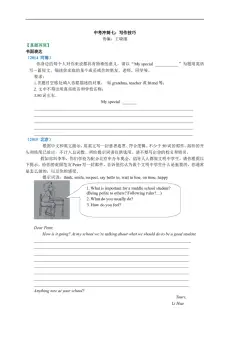
假设父亲节即将来临, 请你借此机会给你父亲写封信, 和他谈谈心里话。
要点: 1. 父亲辛勤工作, 让我受到更好的教育, 过上好的生活。
2. 父亲对我学习严格要求, 但在我考试失利时, 又经常鼓励我不要放弃。
3. 表达对父亲的感谢和祝福。
要求: 短文内容应包括所有提示要点, 不要逐字逐句翻译, 可适当发挥, 语言流畅。
短文词数90 个左右, 短文中不得出现与考生本人相关的真实人名、校名、地址等。
Dear Father,
答案:
I.CAAAC ADCAC
II.1. flag 2. seasons 3. twelfth 4. among 5. fourth 6. has taught 7. following 8. knocked 9. to copy
10. arrived
III.1. one day off 2. take a vacation 3. lay the table 4.plenty of 5. make speeches
13
IV.DACCB DCDBA BDDA
V. 书面表达
Dear Father,
Father’s Day is coming. I want to say thank you on this special day. You are the man that I admire
most in this world but I don’t know how to express my thanks most of the time.
I want to thank you for working so hard. Because of your great effort, our family lead a happy life and
I receive a better education. I understand that you are strict with me in my study because you want me to be
better than before. I appreciate your kind encouragement when I fail in my exams.
I wish you could always be healthy and happy. I will try my best to be a man that you have always
wished.
Yours,
Li Hua
课程顾问签字: 教学主管签字: