1
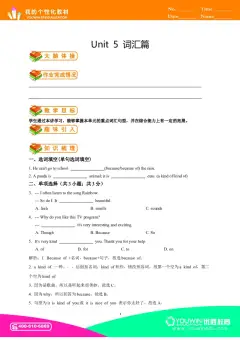
Unit 1 词汇篇
__________________________________________________________________________________
__________________________________________________________________________________
学生通过本讲学习,能够掌握本单元的重点词汇句型,并在综合能力上有一定的拓展。
1.
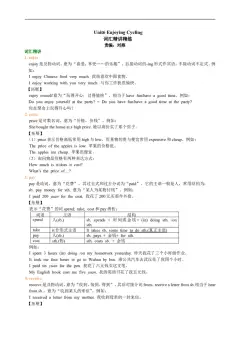
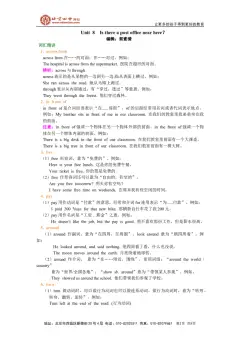
matter 的用法
(1)名词:事情,问题 What’s the matter? =what’s wrong (with you)? =what’s the trouble
怎么啦?出什么事啦?
    (2)动词:有重大影响,有重要性 如:What does it matter?
2.
疾病的表达法
have a cold/a fever/ a toothache/ a stomachache
3.
take 的固定搭配
take one’s temperature/ take breaks/ take risks/take some medicine/take off/ take care of/take
away
4.
surprise 的用法
1.
做名词:to one’s surprise 使。。。惊讶的,出乎。。。意料
2.
做动词:surprise sb 使某人吃惊
3.
做形容词:surprising, surprised 的用法
5.
get 的用法
get off 下车/get on 上车/get into 陷入,参与
6.
be used to sth/doing sth 习惯于做某事
be used to do sth 被用作去做某事
used to do sth 习惯于做某事
7.
out of 的固定搭配
look out of 向。。。外看/ get out of 从。。。出来/ run out of 用光
2
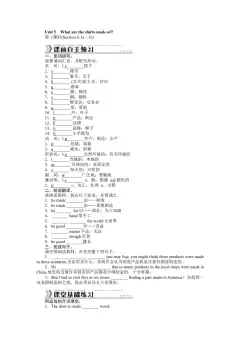
1. --- I'm afraid no one will agree with you.  --- I don't think it

   .
A.
 matters
B.
 minds
C.
 works
D.
 takes
2. --- You'd better hurry. We'll be late for the plane.
--- Don't worry. The plane will          in two hours.
A.
 take out
B.
 take away
C.
 take off
3. --- Why not tell her the good news right now? --- Oh, no. I want to

    her.
A.
 surprise
B.
 call
C.
 find
D.
 help
4. As soon as he

    the bus, the poor man realized he had left his wallet on it.
A.
 got on
B.
 got off
C.
 got to
D.
 got in
5. Her mother is used to

    a rest after lunch.
A.
 has
B.
 have
C.
 had
D.
 having
基础演练
1.
---What’s wrong ______you?
---I fell off the bike and hurt my leg.
A. of
B. with
C. for
D. by
2.
Tom and Jenny enjoyed _________playing computer games.
A. himself
B. herself
C. ourselves
D. themselves
3.  Sally became interested ___________science and wanted to be a scientist.
   A. for
B. in
C. through
D. at
4. ---I had a __________.
---You’d better go to see a dentist.
   A. headache
B. fever
C. cold
D. toothache
5. I didn’t _________my temperature, but I knew I had a fever.
A. give
B. set
C. take
D. show
6. They agreed __________to a picnic on a sunny day.
 A. went
B. going
C. to go
D. go
7. They are used to _________classical music and it made them feel relaxed.
  A. listen
B. listen to
C. listening
D. listening to
8. ---______________
3
  ---I have a fever.
 A. How are you doing?
B. Are you all right?
C. What’s the matter with you?
D. Do you have a fever?
9.  We will go camping if it _________tomorrow.
A. won’t rain   B. doesn’t rain
C. isn’t raining   D. didn’t rain
10. --- I had a bad cold.
    ---_________________.
  A. That sounds great
B. Good idea
C. Thank you
D. I’m sorry to hear that
11. —Oh, dear! Where is my mobile phone?
—There is one in the lost and found box. Is it____________?
A. you              B. your              C. yours          D. mine
12. Nelson Mandela was born ______________ South Africa_________________18th July, 1918.
A. in, in              B. in, on               C. on, on         D. on, in
13. This bed is too hard. I feel very ______________in it.
A. warm          B. interesting           C. comfortable     D. uncomfortable
14. We have a big house ____________ two living rooms and four bedrooms
A. by            B. with          C. at              D. without
15. There are about two __________ students in the newly built school.
A. thousand        B. thousands            C. thousand of        D. thousands of
(11-15 为北京市西城区初一期末考试题)
巩固提高
一、单项选择
1. He was badly ill, but he kept on ______until 2:00 a.m.
A. work
B. working
C. worked
D. to work
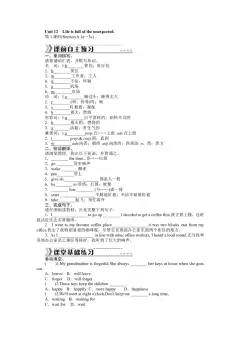
2. My pocket money ____________, so I wanted to find a part-time job to get more money.
A. ran out
B. went out
C. got out
D. ran away
3. Do you know the man _______is talking with the teacher?
 A. which
B. whose
C. who
D. whom
4. If you don’t _______, your dream can come true one day.
A. give away          B. give up       C. give out
D. give off
5. The problem is _______difficult that nobody can work it out.
A. such
B. very
C. so
D. pretty
4
6. David made a ________that he was going to study abroad.
A. mistake
B. decision
C. sentence
D. advice
7. There are so many people on the bus. I don’t think I can ______it.
A. get out
B. get away
C. get on
D. get together
8. The doctor advised my father to _______smoking.
 A. get up
B .stay up
C .put up
D. give up
9. ——What kind of person do you prefer to make friends with?
——I choose my friends on their characters and how we_______.
 A. get in
B. get up
C. get on
D. get off
10. When your money_________, please come to me for help.
A. runs out
B. is run out of   C. runs out of
D. was run out of
二、根据汉语意思翻译句子。每空一词
1.昨天晚上你量体温了吗?
Did you _____   _______   _________last night?
2.令我们惊讶的是,他今天早上迟到了。
_______   __________   __________________, she was late this morning.
3.没有人想陷入困境。
Nobody wants to ____________   _____________   _________________.
4. 他跌倒了,伤到了膝盖。
He ______________   ________________and hurt the knee.
5.由于你的帮助,我考试及格了。
__________   _________ your help. I passed the exam.
6.刚才我看到莉萨正在过马路。
Just now I ________ Lisa__________ across the street.
7.如果明天下雨,我们会呆在家里
We __________   __________at home__________ it rains tomorrow.
8.你最好不要冒险。
You’d better not _________   ____________.
9.我在一次事故中被切断了手指。
I had my finger ______________ _________________ in an accident.
10. 我妈妈总是为我做决定。
My mother always ____________   ____________ for me.
5
一、单项选择
 1. Don't

    while the bus is moving, or you may hurt yourself and even someone
outside.
A.
 get to
B.
 get up
C.
 get off
D.
 get in
 2. Anna

    the bus and found John sitting next to the driver.
A.
 got on
B.
 gets off
C.
 got off
D.
 gets on
 3. --- Can I take a short

   ? My bike is

   .
--- Okay. Stop riding and have a rest.
A.
 break; broke
B.
 broke; broken
C.
 break; broken
D.
 broke; breaks
 4. The man was hurt. We must send him to the hospital right away.
A. at first    B. at last    C. at once    D. at times
 5. --- What's             wrong with you?  --- I had

    fever.
A.
 the; /
B.
 /; the
C.
 /; a
D.
 a; /
6. I want to see the

    boy in hospital.
A.
 ill
B.
 sick
C.
 angry
D.
 happy
 7. Mary is used to

    a T-shirt and jeans.
A.
 wear
B.
 put on
C.
 wearing
D.
 putting on
 8. My grandparents are used to

    early in the morning.
A.
 get up
B.
 getting up
C.
 gets up
D.
 got up
 9. Some people waste too much water. They don't believe that it can               some day.
A.
 keep out
B.
 run out
C.
 be run out
D.
 run out of
 10. Dad, smoking is bad for your health. You'd better

   .
A.
 give up it
B.
 give it up
C.
 give it back
D.
 give back it
二、适当形式填空(单句适当形式)
11. You can take a deep

   (breathe) when you're nervous.
12. We enjoyed

   (our) at Mary's birthday party yesterday.
13. Everyone should realize the

   (important) of saving water.
14. Her

   (decide) to give up English made us very surprised.
15. Could you pass the

   (knife) to me? We need them to make pumpkin lanterns.
三、翻译(根据中文提示完成句子)
16. 当你们的测试时间结束时,你们必须立刻交卷。
When you


    your test time, you have to hand
in your test papers at once.
17. 妈妈刚刚从那卷布上剪下一米。
Mother


    a metre of cloth from the roll just now.
18. 刚才乘客们一个接一个地从公共汽车里出来。
6
The passengers


    the bus one by one just now.
19. 杰克很小的时候就喜欢冒险。
Jack enjoyed


    when he was young.
20. 那位老人现在习惯了住在城里。
The old man


    in the city.
21. 使他惊讶的是他们都同意和他一起去。


   , they all agreed to go with him.
22. 使我们感到吃惊的是他在比赛中获得了一枚金牌。


   , he won a gold medal in the match.
23. 我可以在下一站下车吗?
Can I


    the bus at the next stop?
24. 你怎么啦? 我胃疼。
“What's


    you?” “I have


   .”
25. 当你感到发烧时,你可以测量一下你的体温。
When you have a fever, you can

    your

   .
_________________________________________________________________________________
_________________________________________________________________________________
一、单项选择(共10 小题;共10.0 分)
 1. --- What's wrong?
--- My bike is broken. What

    I do?
A.
 will
B.
 must
C.
 should
D.
 may
 2. You'll soon get used to

    in the countryside.
A.
 lived
B.
 living
C.
 live
D.
 lives
 3. You

    put on your warm clothes when you go out. It's so cold outside.
A.
 should
B.
 shall
C.
 may
D.
 can
 4. Getting up late means

    for another hour for the bus.
A.
 wait
B.
 waiting
C.
 to wait
D.
 waited
 5. We can't go ahead any more, we have

    the gas(汽油).
A.
 run after
B.
 run back
C.
 run out of
D.
 run out
 6. --- Did you make the kite

   , kids?
--- No, our uncle

    it for us.
A.
 itself; is making
B.
 yourselves; made
7
C.
 yourself; made
D.
 themselves; makes
 7. You have

    today. You

    have a good rest.
A.
 cold; may
B.
 cool; shouldn't
C.
 a cold; should
D.
 a cool; can
 8. People, especially women and children, should learn to protect

    from all kinds of danger.
A.
 them
B.
 they
C.
 their
D.
 themselves
 9. She was lucky enough to

    the dangerous building finally.
A.
 get out of
B.
 get up
C.
 get off
D.
 get on
10. ---

   ? --- Not bad.
A.
 What's it going
B.
 How's it going
C.
 Where's it going
D.
 How it is going
二、单词拼写(根据中文提示拼写单词)(共5 小题;共5.0 分)
11. Her mother has a bad

   (胃痛). She must see a doctor soon.
12. There is a(n)

   (生病的) cat lying at the corner of the street.
13. Parents should let their children make their own

   (决定).
14. I want to know how to

   (控制) the machine.
15. Not everybody understood what the speaker

   (意思).
三、翻译(根据中文提示完成句子)(共5 小题;共5.0 分)
16. 令大家吃惊的是,这次谈话改变了李文的生活。


   , this conversation changed Li Wen's life.
17. 现在他习惯了在国外生活。
Now he


    living abroad.
18. 你认为富人是因为冒险才变富的吗?
Do you think the rich are rich because they


   ?
19. 这男孩太小, 不能自己穿衣服一。
The boy is

    young to get


    .
20. Kate 现在习惯了这份枯燥的工作了。
Kate


    the boring work.
四、完形填空(共10 小题;共15.0 分)
    It was a Saturday afternoon. Mr. Green was reading a newspaper. Suddenly he heard his wife

21

    in the next room. He hurried to her and asked, "What happened to you, my dear?"
    "Oh, dear!" his wife cried out, "My head hurts!      22

    a doctor. Hurry up!" Their two children
were both    23

    at that moment and something was wrong with the telephone. Mr. Green  24

    go to
a hospital himself. Bad luck! All the hospitals in the town were     25     that day. Mr. Green didn't
know      26

   . Just then his friend, Mr. Brown, saw him and asked. "What is      27     ?"
    Mr. Green told him everything. The man said. "Why not turn to      28

   ? He can help you."
    Mr. Green remembered his friend, Mr. Black was a good doctor. He hurried to Mr. Black's.
8
    When he got there, Mr. and Mrs. Black were having their     29

    meal. The doctor asked Mr.
Green to drink with him. He was happy and sat      30    . After that they began to chat. And when
Mrs. Black asked, "How is you wife?" "She is fine, thanks…" Mr. Green stopped at once—he remembered
his wife was waiting for a doctor at home.
21.
A.
 crying
B.
 laughing
C.
 whispering
D.
 singing
22.
A.
 Look for
B.
 Wait for
C.
 Send for
D.
 Ask for
23.
A.
 in
B.
 out
C.
 up
D.
 down
24.
A.
 should
B.
 could
C.
 had to
D.
 was able lo
25.
A.
 expensive
B.
 open
C.
 free
D.
 closed
26.
A.
 when to go
B.
 how to do
C.
 where to go
D.
 what to deal with
27.
A.
 the matter
B.
 the wrong
C.
 trouble
D.
 problem
28.
A.
 Mr. Brown
B.
 Mr. Black
C.
 Mr. Green
D.
 Mrs. Green
29.
A.
 lunch
B.
 supper
C.
 morning
D.
 evening
30.
A.
 in bed
B.
 on floor
C.
 at the table
D.
 at home
五、阅读理解(共8 小题;共16.0 分)
A
    Dana Cummings was in his thirties before he first went surfing. But, even more interesting is that
Dana Cummings chose to learn the sport after losing a leg in a car accident. Now, nine years later, he helps
other disabled(伤残的) people learn how to ride the waves in AmpSurf.
    On the coast of Maine, he is working with 27-year-old Matthew Fish, who is partly blind. Cummings
takes hold of Fish and leads him into the ocean. The surfboard floats next to them. Fish lies on the
surfboard. He tries to stand up on it. After a few attempts(尝试) he is up and riding all the way back to
land. "That was exciting," Fish says.
    A car accident in 2002 took Dana Cummings' leg. He says the crash changed him more than just
physically. "Losing my leg made me realize how precious(珍贵的) life is. Get off the couch and start
living. I do more things now than I ever did before. Next week I am going to compete in a contest in
Hawaii," Dana says.
    One year later Dana Cummings formed AmpSurf. AmpSurf is a group where volunteers hold surfing
classes and events for people with all kinds of disabilities. Recently, AmpSurf took its training programs to
the East Coast. Eleven students attended the class in Maine. They came from all over the northeastern
United States.
    Dana Cummings thinks AmpSurf can change the way a disabled person thinks. "Most people with
disabilities consider himself or herself unlucky and useless, but we want them to see what they can do.
Who cares you lose your leg or you are blind, whatever? Have fun. Just enjoy life. Take the most advantage
of it you can," Dana says.
31. Matthew Fish thinks learning to ride the waves is

   .
A.
 boring
B.
 easy
C.
 interesting
D.
 difficult
9
32. When did Dana Cummings set up AmpSurf according to the text?
A.
 In 2002.
B.
 In 2003.
C.
 In 2008.
D.
 In 2011.
33. According to Dana Cummings, AmpSurf can

   .
A.
 ease the physical pain of the disabled
B.
 help the disabled learn to get used to their life
C.
 change the attitude of the disabled towards life
D.
 make the disabled pay more attention to their disabilities
B
A Road Accident
    It was raining heavily as I was walking up the hill towards the station at six o'clock on a Saturday
morning. At this early hour there wasn't much traffic and there weren't many people in sight (看得见). Just
as I was crossing the road near the top of the hill, a car came round the corner. It was travelling very fast
and the driver was having difficulty in controlling it. It hit a lamp post and turned over.
    At once I ran to the car to help the driver, but he was unconscious(失去知觉的) and there was a lot of
blood on his face. A young woman hurried into the station and phoned for an ambulance while I took care
of the driver. A number of other people gathered(聚集) round the car, but there wasn't a great deal we could
do. A policeman arrived a few minutes later and asked me a lot of questions about the accident. Shortly
afterwards the man came round, and he was groaning(呻吟) when the ambulance arrived at high speed and
took him away to hospital.
    On Monday morning I went to the hospital to ask about the man. They told me that his injuries were
not serious after all and that he was quickly getting over the effects(影响) of the accident.
34. Where did the accident happen?
A.
 On the top of the hill.
B.
 Near the top of the hill.
C.
 Towards the school.
D.
 Near the hospital.
35. What happened to the driver?
A.
 He couldn't control the car.
B.
 His car hit a lamp post.
C.
 His car turned over.
D.
 A, B and C.
36. Who hurried to the station to ask for an ambulance?
A.
 The writer.
B.
 A policeman.
C.
 Some people.
D.
 A young woman.
37. What did the policeman do?
A.
 He took the driver away.
B.
 He sent the driver to the hospital.
C.
 He asked a lot of questions.
D.
 He phoned for an ambulance.
38. The driver wasn't dead, was he?
A.
 Yes, he wasn't.
B.
 No, he was.
C.
 Yes, he was.
D.
 No, he wasn't.
课程顾问签字:                        教学主管签字:
10