 夜雨聆风
夜雨聆风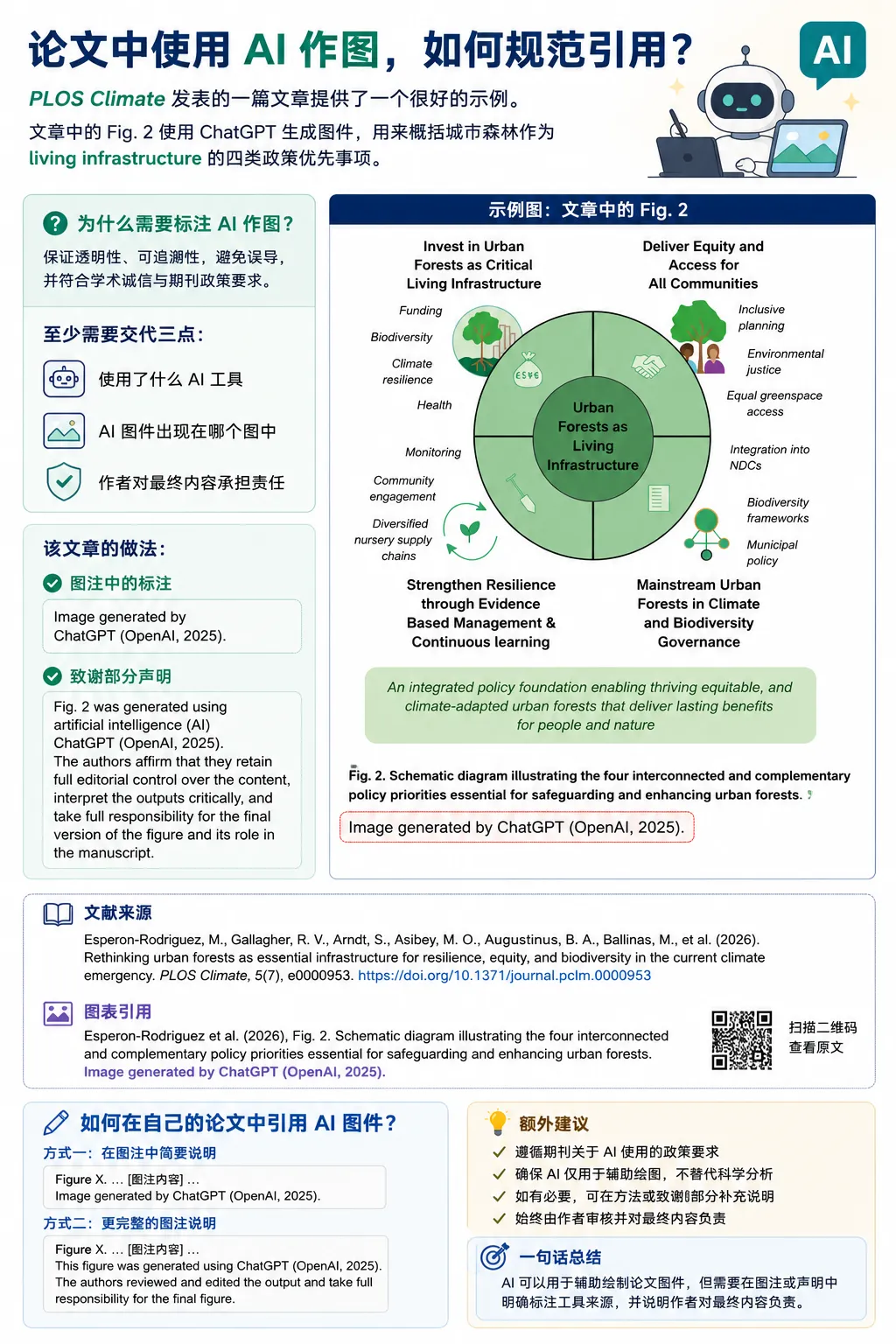
最近 PLOS Climate 发表的一篇城市森林政策文章(上个推文),提供了一个比较规范的示例。文章中的 Fig. 2 使用 ChatGPT 生成,用于概括城市森林作为 living infrastructure 的四类政策优先事项:基础设施投资、公平可及性、气候与生物多样性治理整合,以及基于证据的适应性管理。
🖼️ 图注中的标注方式为:
Image generated by ChatGPT (OpenAI, 2025).
也就是说,AI 生成图件不应被默认省略,而应在图注中清楚说明工具名称、开发机构和年份。
更完整的声明还出现在文章致谢部分:
Fig. 2 was generated using artificial intelligence (AI) ChatGPT (OpenAI, 2025). The authors affirm that they retain full editorial control over the content, interpret the outputs critically, and take full responsibility for the final version of the figure and its role in the manuscript.
✅ 这个案例说明,AI 作图至少需要交代三点:1️⃣ 使用了什么 AI 工具2️⃣ AI 图件出现在哪个图中3️⃣ 作者对最终图件内容承担责任
📚 文献来源:Esperon-Rodriguez, M., Gallagher, R. V., Arndt, S., Asibey, M. O., Augustinus, B. A., Ballinas, M., et al. (2026). Rethinking urban forests as essential infrastructure for resilience, equity, and biodiversity in the current climate emergency. PLOS Climate, 5(7), e0000953. https://doi.org/10.1371/journal.pclm.0000953
🖼️ 图表引用:Esperon-Rodriguez et al. (2026), Fig. 2. Schematic diagram illustrating the four interconnected and complementary policy priorities essential for safeguarding and enhancing urban forests. Image generated by ChatGPT (OpenAI, 2025).
💬 一句话总结AI 可以用于辅助绘制论文图件,但需要在图注或声明中明确标注工具来源,并说明作者对最终内容负责。

