文档文本内容
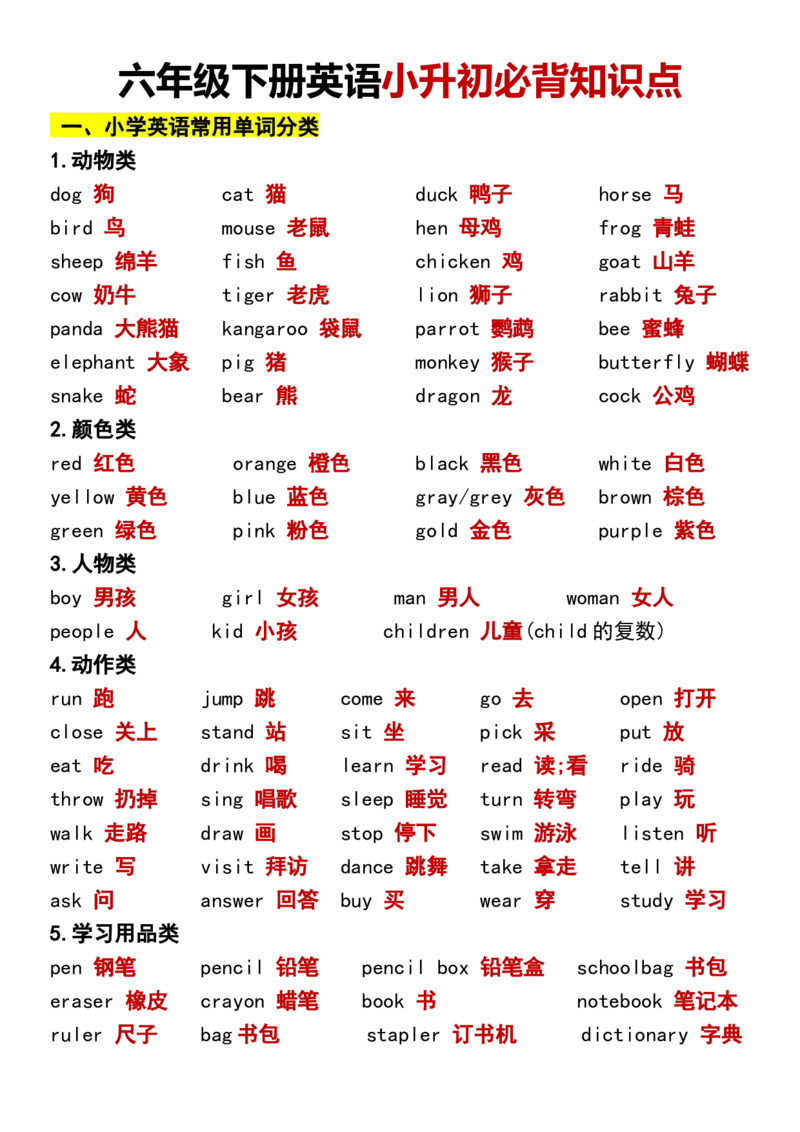
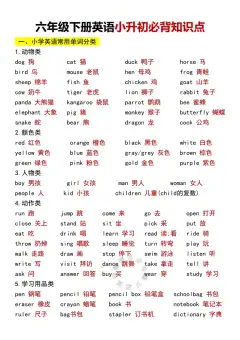
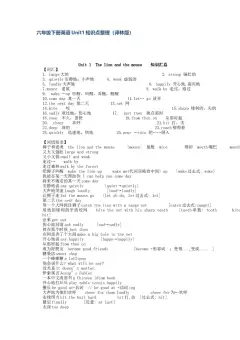
六年级下册英语小升初必背知识点
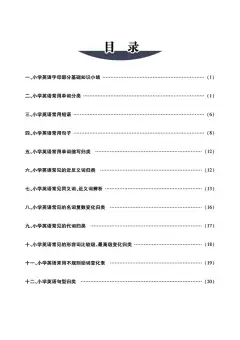
一、小学英语常用单词分类
1.动物类
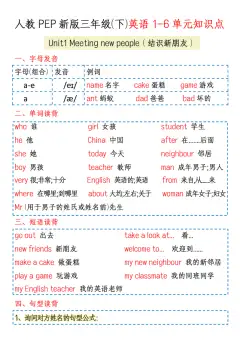
dog 狗 cat 猫 duck 鸭子 horse 马
bird 鸟 mouse 老鼠 hen 母鸡 frog 青蛙
sheep 绵羊 fish 鱼 chicken 鸡 goat 山羊
cow 奶牛 tiger 老虎 lion 狮子 rabbit 兔子
panda 大熊猫 kangaroo 袋鼠 parrot 鹦鹉 bee 蜜蜂
elephant 大象 pig 猪 monkey 猴子 butterfly 蝴蝶
snake 蛇 bear 熊 dragon 龙 cock 公鸡
2.颜色类
red 红色 orange 橙色 black 黑色 white 白色
yellow 黄色 blue 蓝色 gray/grey 灰色 brown 棕色
green 绿色 pink 粉色 gold 金色 purple 紫色
3.人物类
boy 男孩 girl 女孩 man 男人 woman 女人
people 人 kid 小孩 children 儿童(child 的复数)
4.动作类
run 跑 jump 跳 come 来 go 去 open 打开
close 关上 stand 站 sit 坐 pick 采 put 放
eat 吃 drink 喝 learn 学习 read 读;看 ride 骑
throw 扔掉 sing 唱歌 sleep 睡觉 turn 转弯 play 玩
walk 走路 draw 画 stop 停下 swim 游泳 listen 听
write 写 visit 拜访 dance 跳舞 take 拿走 tell 讲
ask 问 answer 回答 buy 买 wear 穿 study 学习
5.学习用品类
pen 钢笔 pencil 铅笔 pencil box 铅笔盒 schoolbag 书包
eraser 橡皮 crayon 蜡笔 book 书 notebook 笔记本
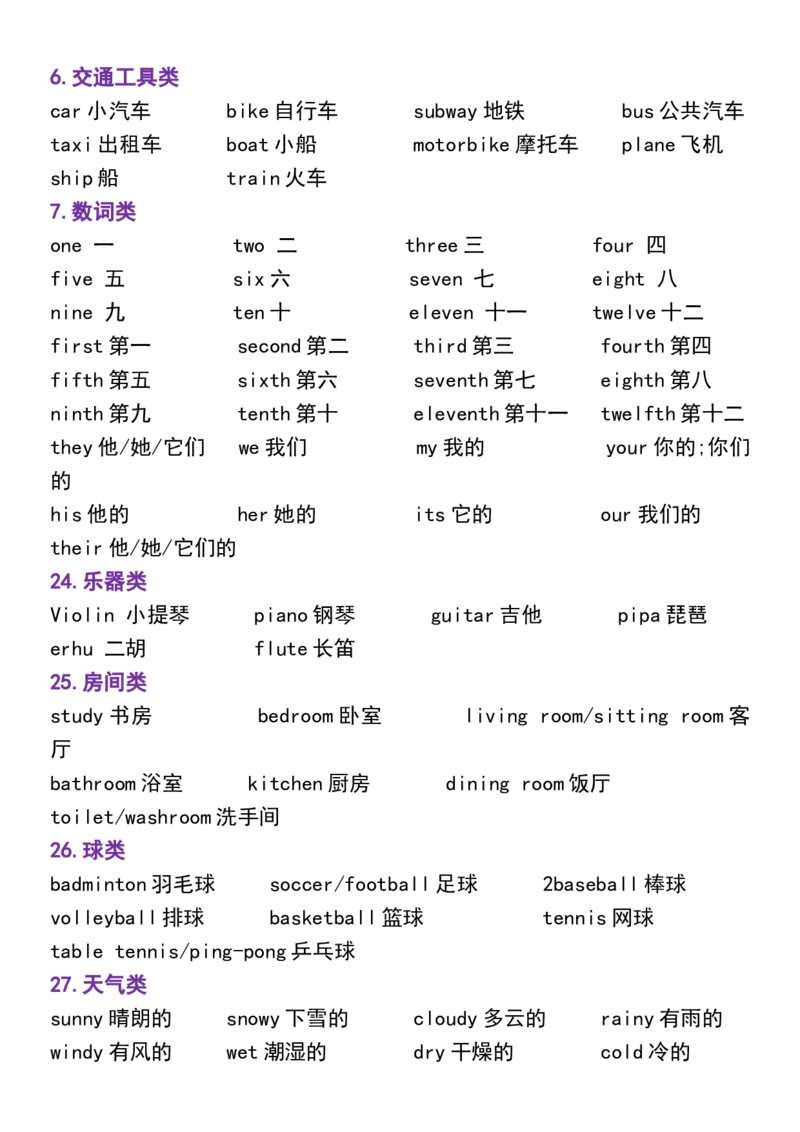
ruler 尺子 bag 书包 stapler 订书机 dictionary 字典6.交通工具类
car 小汽车 bike 自行车 subway 地铁 bus 公共汽车
taxi 出租车 boat 小船 motorbike 摩托车 plane 飞机
ship 船 train 火车
7.数词类
one 一 two 二 three 三 four 四
five 五 six 六 seven 七 eight 八
nine 九 ten 十 eleven 十一 twelve 十二
first 第一 second 第二 third 第三 fourth 第四
fifth 第五 sixth 第六 seventh 第七 eighth 第八
ninth 第九 tenth 第十 eleventh 第十一 twelfth 第十二
they 他/她/它们 we 我们 my 我的 your 你的;你们
的
his 他的 her 她的 its 它的 our 我们的
their 他/她/它们的
24.乐器类
Violin 小提琴 piano 钢琴 guitar 吉他 pipa 琵琶
erhu 二胡 flute 长笛
25.房间类
study 书房 bedroom 卧室 living room/sitting room 客
厅
bathroom 浴室 kitchen 厨房 dining room 饭厅
toilet/washroom 洗手间
26.球类
badminton 羽毛球 soccer/football 足球 2baseball 棒球
volleyball 排球 basketball 篮球 tennis 网球
table tennis/ping-pong 乒乓球
27.天气类
sunny 晴朗的 snowy 下雪的 cloudy 多云的 rainy 有雨的
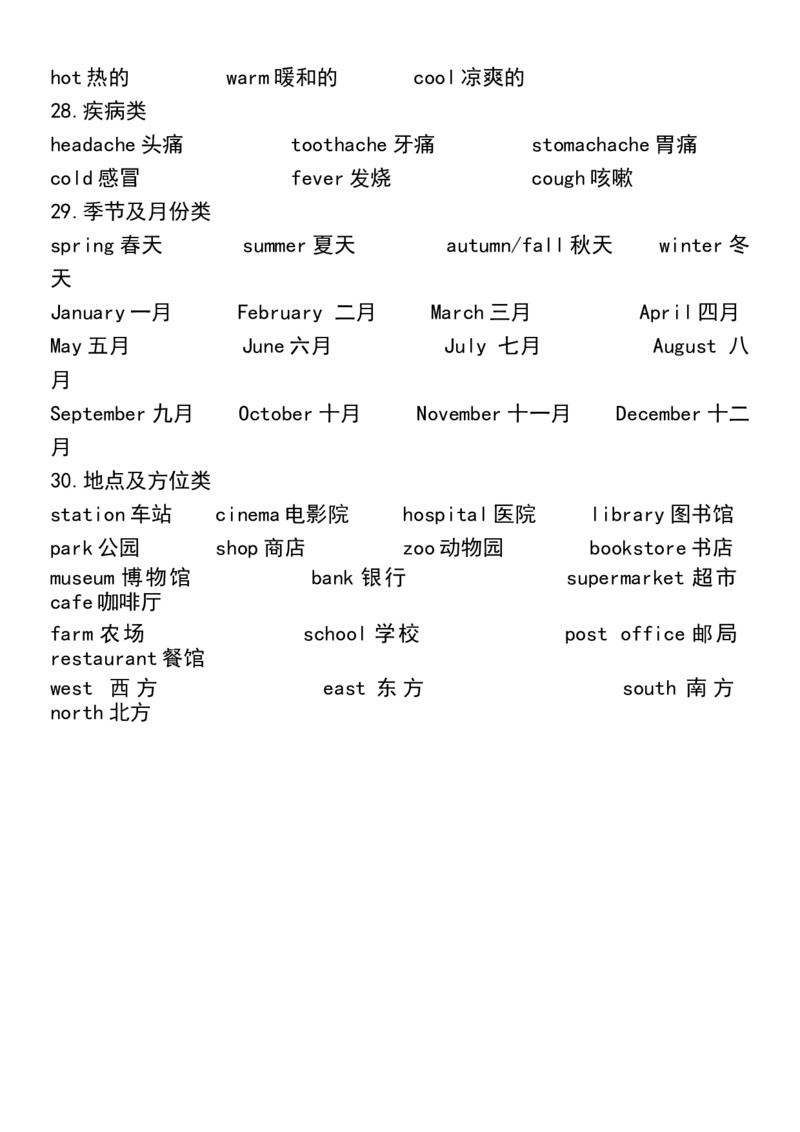
windy 有风的 wet 潮湿的 dry 干燥的 cold 冷的hot 热的 warm 暖和的 cool 凉爽的
28.疾病类
headache 头痛 toothache 牙痛 stomachache 胃痛
cold 感冒 fever 发烧 cough 咳嗽
29.季节及月份类
spring 春天 summer 夏天 autumn/fall 秋天 winter 冬
天
January 一月 February 二月 March 三月 April 四月
May 五月 June 六月 July 七月 August 八
月
September 九月 October 十月 November 十一月 December 十二
月
30.地点及方位类
station 车站 cinema 电影院 hospital 医院 library 图书馆
park 公园 shop 商店 zoo 动物园 bookstore 书店
museum 博物馆 bank 银行 supermarket 超市
cafe 咖啡厅
farm 农场 school 学校 post office 邮局
restaurant 餐馆
west 西 方 east 东 方 south 南 方
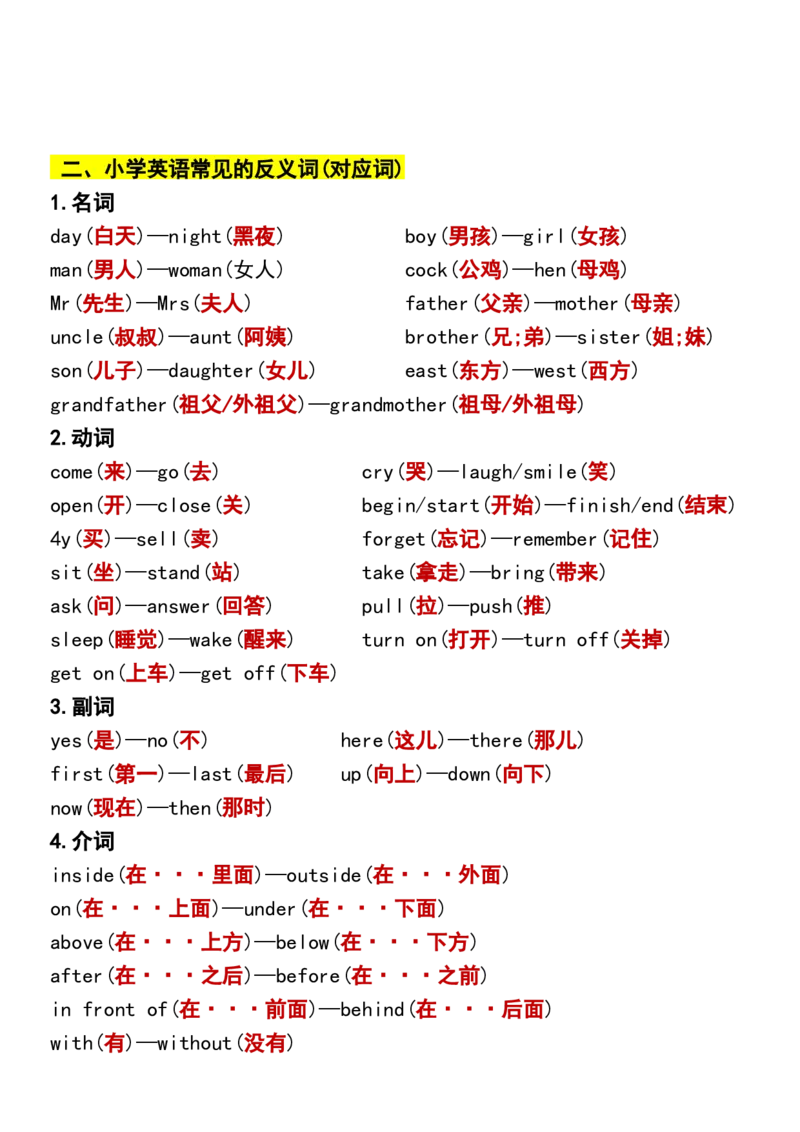
north 北方二、小学英语常见的反义词(对应词)
1.名词
day(白天)—night(黑夜) boy(男孩)—girl(女孩)
man(男人)—woman(女人) cock(公鸡)—hen(母鸡)
Mr(先生)—Mrs(夫人) father(父亲)—mother(母亲)
uncle(叔叔)—aunt(阿姨) brother(兄;弟)—sister(姐;妹)
son(儿子)—daughter(女儿) east(东方)—west(西方)
grandfather(祖父/外祖父)—grandmother(祖母/外祖母)
2.动词
come(来)—go(去) cry(哭)—laugh/smile(笑)
open(开)—close(关) begin/start(开始)—finish/end(结束)
4y(买)—sell(卖) forget(忘记)—remember(记住)
sit(坐)—stand(站) take(拿走)—bring(带来)
ask(问)—answer(回答) pull(拉)—push(推)
sleep(睡觉)—wake(醒来) turn on(打开)—turn off(关掉)
get on(上车)—get off(下车)
3.副词
yes(是)—no(不) here(这儿)—there(那儿)
first(第一)—last(最后) up(向上)—down(向下)
now(现在)—then(那时)
4.介词
inside(在···里面)—outside(在···外面)
on(在···上面)—under(在···下面)
above(在···上方)—below(在···下方)
after(在···之后)—before(在···之前)
in front of(在···前面)—behind(在···后面)
with(有)—without(没有)5.形容词
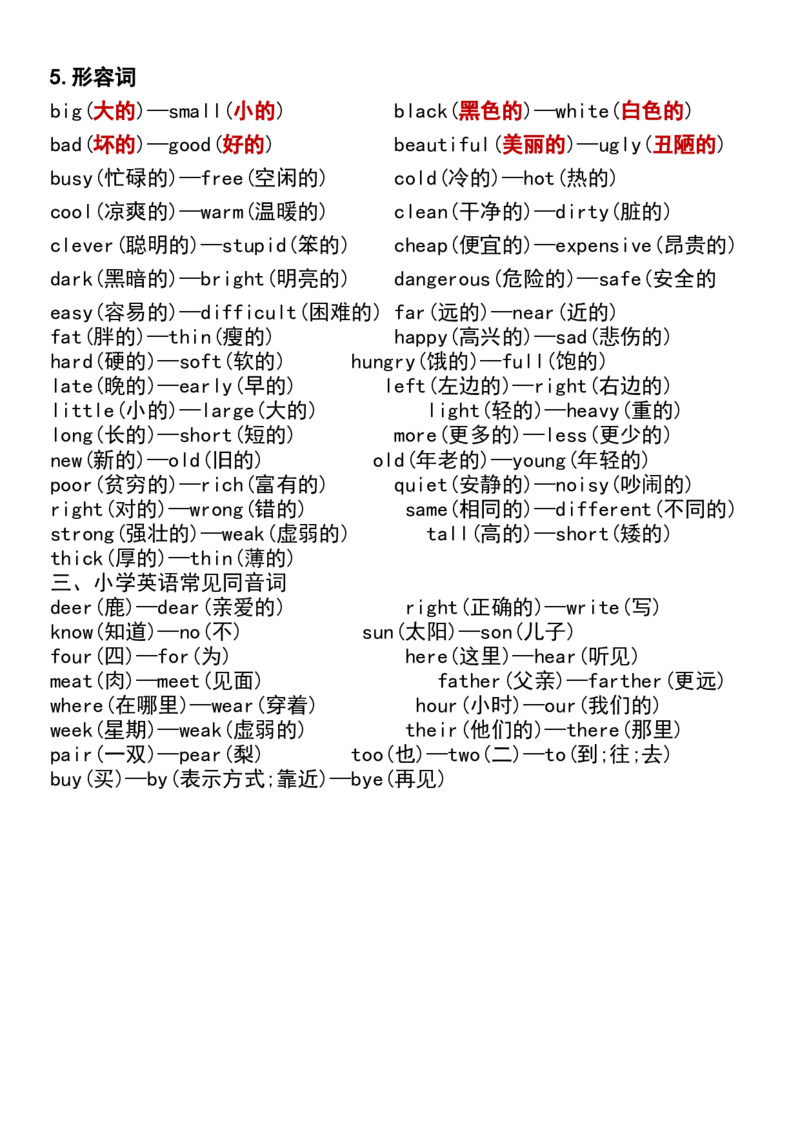
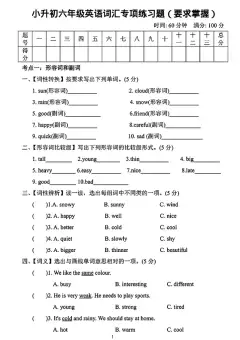
big(大的)—small(小的) black(黑色的)—white(白色的)
bad(坏的)—good(好的) beautiful(美丽的)—ugly(丑陋的)
busy(忙碌的)—free(空闲的) cold(冷的)—hot(热的)
cool(凉爽的)—warm(温暖的) clean(干净的)—dirty(脏的)
clever(聪明的)—stupid(笨的) cheap(便宜的)—expensive(昂贵的)
dark(黑暗的)—bright(明亮的) dangerous(危险的)—safe(安全的
easy(容易的)—difficult(困难的) far(远的)—near(近的)
fat(胖的)—thin(瘦的) happy(高兴的)—sad(悲伤的)
hard(硬的)—soft(软的) hungry(饿的)—full(饱的)
late(晚的)—early(早的) left(左边的)—right(右边的)
little(小的)—large(大的) light(轻的)—heavy(重的)
long(长的)—short(短的) more(更多的)—less(更少的)
new(新的)—old(旧的) old(年老的)—young(年轻的)
poor(贫穷的)—rich(富有的) quiet(安静的)—noisy(吵闹的)
right(对的)—wrong(错的) same(相同的)—different(不同的)
strong(强壮的)—weak(虚弱的) tall(高的)—short(矮的)
thick(厚的)—thin(薄的)
三、小学英语常见同音词
deer(鹿)—dear(亲爱的) right(正确的)—write(写)
know(知道)—no(不) sun(太阳)—son(儿子)
four(四)—for(为) here(这里)—hear(听见)
meat(肉)—meet(见面) father(父亲)—farther(更远)
where(在哪里)—wear(穿着) hour(小时)—our(我们的)
week(星期)—weak(虚弱的) their(他们的)—there(那里)
pair(一双)—pear(梨) too(也)—two(二)—to(到;往;去)
buy(买)—by(表示方式;靠近)—bye(再见)四、小学英语常用短语
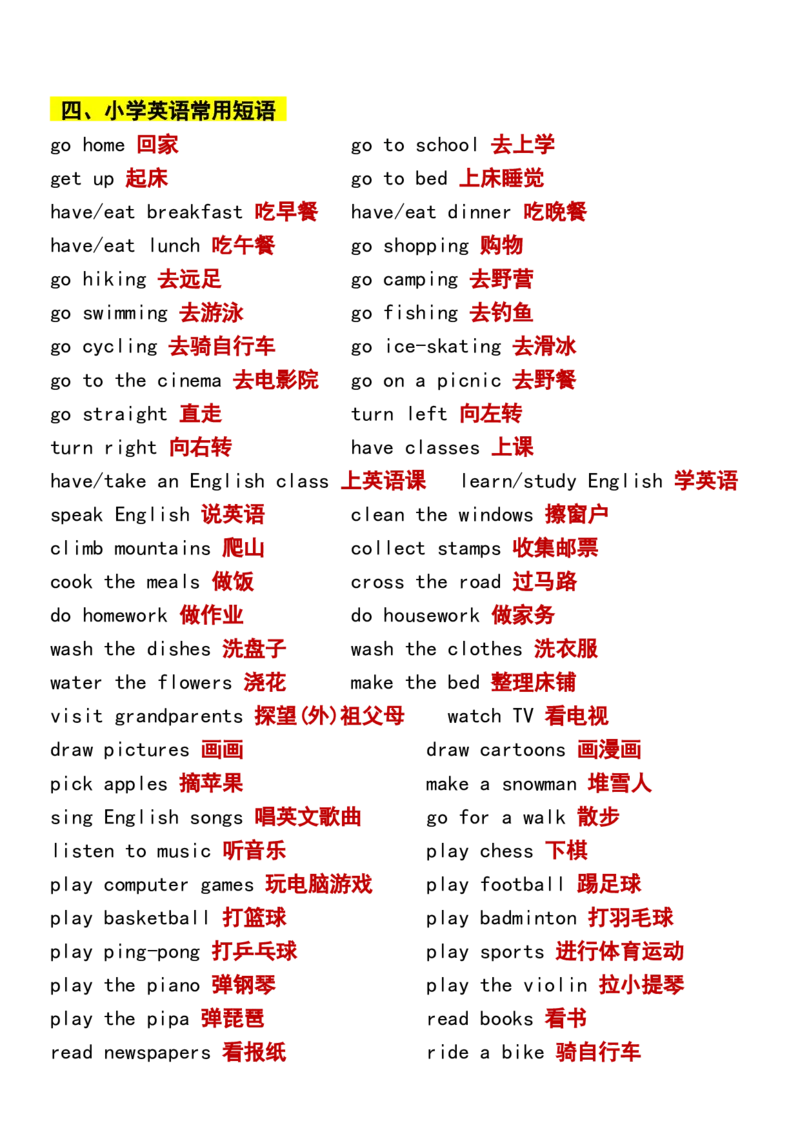
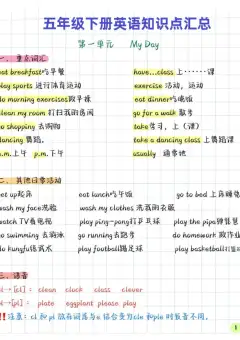
go home 回家 go to school 去上学
get up 起床 go to bed 上床睡觉
have/eat breakfast 吃早餐 have/eat dinner 吃晚餐
have/eat lunch 吃午餐 go shopping 购物
go hiking 去远足 go camping 去野营
go swimming 去游泳 go fishing 去钓鱼
go cycling 去骑自行车 go ice-skating 去滑冰
go to the cinema 去电影院 go on a picnic 去野餐
go straight 直走 turn left 向左转
turn right 向右转 have classes 上课
have/take an English class 上英语课 learn/study English 学英语
speak English 说英语 clean the windows 擦窗户
climb mountains 爬山 collect stamps 收集邮票
cook the meals 做饭 cross the road 过马路
do homework 做作业 do housework 做家务
wash the dishes 洗盘子 wash the clothes 洗衣服
water the flowers 浇花 make the bed 整理床铺
visit grandparents 探望(外)祖父母 watch TV 看电视
draw pictures 画画 draw cartoons 画漫画
pick apples 摘苹果 make a snowman 堆雪人
sing English songs 唱英文歌曲 go for a walk 散步
listen to music 听音乐 play chess 下棋
play computer games 玩电脑游戏 play football 踢足球
play basketball 打篮球 play badminton 打羽毛球
play ping-pong 打乒乓球 play sports 进行体育运动
play the piano 弹钢琴 play the violin 拉小提琴
play the pipa 弹琵琶 read books 看书
read newspapers 看报纸 ride a bike 骑自行车ride a horse 骑马 iron the clothes 熨衣服
fly a kite 放风筝 do morning exercises 做早操
drink coffee 喝咖啡 do kung fu 练武术
see a film 看电影 see a doctor 看病
have a cold 感冒 wear warm clothes 穿暖和的衣服
take a deep breath 深深吸一口气 count to ten 数到十
do word puzzles 猜字谜 sweep the floor 扫地
take a shower 洗淋浴 take a trip 去旅行
take pictures/photos 拍照 come in 进来
slow down 慢下来 look/watch out 小心;留神
talk quietly 小声说话 take turns 按顺序来
keep to the right 靠右 keep your desk clean 保持你的书桌干净
have a try 试一试 sit down 坐下
up 站起来 stay at home 待在家里
by bike 骑自行车 by bus 坐公共汽车
on foot 步行 the day before yesterday 前天
next week 下周 last weekend 上周末
last night 昨晚 this morning 今天早上
on the first floor 在一楼 teachers’office 教师办公室
computer room 计算机房 art room 美术教室
music class 音乐课 comic book 连环画册
word book 单词书 dining hall 饭厅
science museum 科学博物馆 in front of 在···前面
五、小学英语常用单词缩写归类
1. be 动词和助动词缩写
I am=I'm he is=he's you are=you're
I have=I've she is=she's I will=I'll
you have=you've it is=it's it will =it'll
2.否定缩写
are not=aren't has not=hasn't have not=haven'tdo not=don't does not=doesn't did not=didn't
3.月份缩写
January=Jan. February=Feb. March=Mar.
April=Apr. May=May June=Jun.
July=Jul. August=Aug. September=Sept.
October=Oct. November=Nov. December=Dec.
4.星期缩写
Sunday=Sun. Monday=Mon. Tuesday=Tue.
Wednesday=Wed. Thursday=Thur. Friday=Fri.
Saturday=Sat.
5.其他
let us=let's there is=there's number=No.
六、小学英语常见近义词辨析
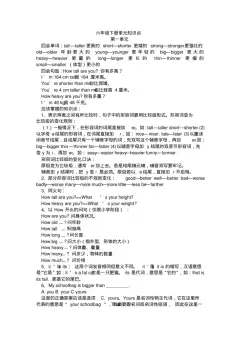
1. look, see, watch, read(看,看见)
look 指提醒别人,引起注意的“看”。
如:Look!She is there.看!她在那儿。
look 后不能直接接宾语,必须和 at 连用才能接宾语,表示提醒别人看某
物。
如:Look at that man.看那个男士。
see 强调看的结果。
如:You can see a girl on the playground.你能看到操场上有个女孩。
watch 表示注视、观看、仔细地观察。
如:Do you like watching TV?你喜欢看电视吗?
read 指“阅读”。
如:I like reading books.我喜欢读书。
lass 指较深的玻璃杯,用来装水、牛奶等。
如:a glass of water 一杯水
24. family, home, house(家)
family 特指家庭成员,家人。
如:There are four people in my family.我家有四口人。home 指家庭共同生活的地方,有时也指出生的城市或国家。
如:He left home at 8 o'clock yesterday.他昨天八点钟离开家。
house 指宅院、房子,着重于房屋的概念。
如:Where is your house?你的房子在哪儿?
七、小学英语常用句型1.打招呼、问候、介绍:
(1) Hello/Hi,I'm... 你好,我是……
(2)—Nice to meet you. 见到你很高兴。
—Nice to meet you, too. 见到你也很高兴。
(3) Good morning/afternoon/evening. 上午/下午/晚上好。
(4)—How are you? 你好吗?
—I'm fine, thank you./Very well, thanks. 我很好,谢谢你。
(5) This/He/She is… 这/他/她是……
2.问答姓名:
—What's your/his/her name? 你/他/她叫什么名字?
—My/His/Her name is... 我/他/她叫⋯⋯
3.问答年龄:
—How old is/are...? ……多大?
—…(years old) ……岁。
4.问答来自哪里:
—Where are you from? 你来自哪里?
—I'm from.... 我来自……
★[提示]be from=come from
5.问答人物身份:
(1) —Who is he/she/that man/that woman?
他/她/那个男人/那个女人是谁?
—He/She is… 他/她是……
(2)—Is he/she/this…? 他/她/这是……吗?
—Yes, he/she/it is. 是的。(—No, he/she/it isn't.不是。)
6.问答事物名称:
(1) —What's this/that? 这/那是什么?
—It's a/an… 它是……
(2) —What are these/those? 这些/那些是什么?
—They're… 它们是……
(3)——Is this/that…?这/那是……吗?—Yes, it is./No, it isn't.是的/不是。
(4)—Are these/those/they...?这些/那些/它们是······吗?
—Yes, they are./No, they aren't.是的/不是。
7.比较:
两者之间:
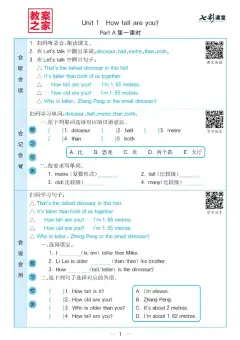
(1) You are taller than me.你比我高。
(2) She is younger than both of us.她比我俩小。
[提示]than 是比较级的标志词。
三者或三者以上:
He is the tallest boy in his class.他是他班里最高的男孩。
[提示]形容词最高级前面要加定冠词 the。
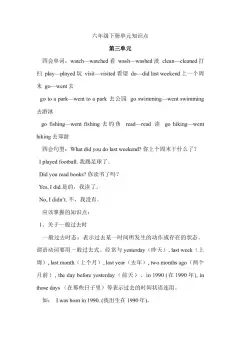
41.问答过去是否去过哪里:
(1)—Where did you go last Sunday?上周日你去了哪里?
—I went to the zoo.我去动物园了。
(2)—Did she go to Beijing?她去北京了吗?
—Yes, she did./No, she didn't.是的,她去了。/不,她没有去。
42.问答过去某段时间的状态:
—How was your holiday?你假期过得怎么样?
—It was good, thank you.很好,谢谢。
八、小学英语常见的名词复数变化归类
1.改 y 为 i,再加-es 的单词。
story— stories( 故 事 ) family— families( 家 庭 )
library—libraries(图书馆)
party— parties( 聚 会 ) country— countries( 国 家 )
city—cities(城市)
lady— ladies( 女 士 ) baby— babies( 婴 儿 )
dictionary—dictionaries(字典)
2.词尾加-es 的单词。
bus— buses( 公 共 汽 车 ) class— classes( 班 级 )
watch—watches(手表)
beach— beaches( 海 滩 ) peach— peaches( 桃 子 )
match—matches(比赛)box—boxes(盒子) fox—foxes(狐狸) brush
—brushes(刷子)
dish— dishes( 碗 碟 ) tomato— tomatoes( 西 红 柿 )
potato—potatoes(土豆)
3.改 f, fe 为 v,再加-es 的单词。
wife—wives(妻子) knife—knives(小刀) wolf
—wolves(狼)
leaf— leaves( 树 叶 ) shelf— shelves( 书 架 )
thief—thieves(小偷)
4.不规则变化的几种情况。
(1)元音字母发生变化。
man—men(男人) woman—women(妇女) tooth—
teeth(牙齿)
foot—feet(脚) goose—geese(鹅) mouse—
mice(老鼠)
policeman— policemen( 男 警 察 ) policewoman—
policewomen(女警察)
(2)词尾发生变化。
child—children(小孩) ox—oxen(公牛)
(3)单、复数形式相同。
fish—fish(鱼) sheep—sheep(绵羊) deer—
deer(鹿)
Chinese—Chinese(中国人)