ARTICLE · 1169631
大学英语三级考试语法复习要点(1)
一、动词的时态和语态
1. 动词的时态
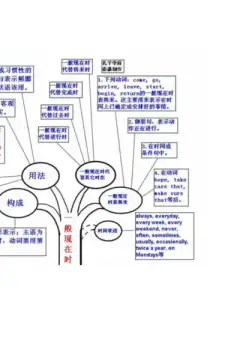
1.1一般现在时
1.1.1在下列从句中,主句如用一般将来时,从句用一般现在时代替一般将来时
1)由when, until, the moment, as soon as, after,the next time和 if, unless, in case, whether, as long as,once, however,provided that, supposing 等连词引导的时间状语和条件状语从句中。
e.g. If she doesn’t tell him the truth now,he’ll simply keep on asking her until she does.
He will call you up themoment he finishes the work.
You won’t pass the examunless you study harder.
2)在定语从句中,如,Be quick, or the train will have left by the time we get to the station
3)名词性的wh-, that- 从句中, 如:They willbe thankful for whatever help you offerhim.
4)让步状语从句(从句用一般现在时,主句用一般将来时):
e.g. Whether the weather is good or bad,…
No matter whether you agree or not…
However carefully you drive…
1.1.2表示客观事实和真理的句子任何时候都用一般现在时。
e.g. Inthe past many people didn’t believe that the earth is round.
1.1.3在某些常用的句中表示在一个具体的现在时间所发生的动作或存在的状态。
e.g. Here he comes.
There goes the bell.
1.2一般过去时
1) 当提及过去存在的人或物时,即使句中没有表明过去的时间状语,该句的谓语动词也应该用一般过去时。
e.g. Dickens was a great Englishwriter.
When did you write the story?
2) 在表示时间或条件的状语从句中代替过去将来时。
e.g. They said they would let us know if they heard any news about him.
I decided to go to thelibrary as soon as I finishedwhat I was doing.
1.3 一般将来时:表示将来打算进行或期待发生的动作或存在的状态。表示将来的谓语结构有:
shall/will do
be going to do
be about to do : 表示动作“正要”,“刚要”发生,不与表示将来的时间状语连用。
be to do :表示按“日程”将要发生的动作,或用来征询意见。
be doing (come, go, arrive, drive, fly, leave, start,plan )
will be doing: 常表示预计即将发生或势必发生的动作,它含有已经安排好的意思。
e.g. We must hurry. The film is about to start.
George is arriving on the four o’clocktrain this afternoon.
There is to be a test at the end of this term.
Are we to go now?
Don’t worry. I expect I’ll be seeing him tomorrow. ThenI can tell him about it.
试比较:I will beseeing him about it tomorrow.
I’ll see him about it tomorrow. (末事先安排好)
1.4现在进行时
该时态可以同频度副词,如:always, forever, constantly连用,带有情感色彩,如赞扬或厌烦等。
e.g. He isalways asking the same question.
试比较:He isalways coming late.
He always comes late.
1.5现在完成时
1) 在含有the first/ second time/superlative degree +n 句型中,通常用现在完成时
e.g. This is the first time they havetraveled by air.
This is the most interesting novel I have ever read.
2) 由连词since 引出状语从句时,主句一般都用现在完成时,有时用现在完成进行时,从句用一般过去时。
句型:S+have/hasV-ed2/been V-ing since s +V-ed1
e.g. I havenot heard from her since we graduatedfrom university.
He has been working in this schoolsince he came here.
3) 用于时间状语从句或条件状语从句表示将来完成的动作。
e.g. I will return your book on Monday if I have read it..
I will let you know after I have talked with him.
The students will go home as soon as they have finished the exams.
Check it out when you have finishedit.
4) 现在完成时经常与不确定的过去时间状语连用,如:already, just, yet, before, recently, lately等;也可同表示频度的时间状语连用,如:often, ever, never, twice, 等;还可同表示一段时间的状语连用,如:for, since, in(for) the last/past tenyears, these ten days, up to now, so far等。
5)go, come, return, buy, become, join, borrow等瞬间动词不能和表示延续的时间状语连用。要表示有关的意思时应该用have的完成时或be 的完成时。
e.g.They have been back for more than a month.
不能说:They havecome back for more than a month.
He has had the bike for two years.
不能说:Hehas bought the bike for two years.
1.6现在完成进行时
强调一个动作从过去开始一直持续到现在,没有中断过,并将继续下去。
e.g.He has been doing his homework all the morning but hasn’t finished it yet.
1.7过去完成时
这是一个相对的时态,只有与过去时或过去某个动作相比较时才能用。
1)在含有when, before, after, until, as soon as 等引起的时间状语的主从句中,若主从句谓语均表过去的动作,则动作在先的用过去完成时。
e.g. When I had finished my homework, I went out for a walk.
They had left before Ireturned.
2)在含有hardly, scarcely, barely, nosooner 等词的主从复合句中,从句谓语一般用过去完成时,主句用一般过去时。
e.g. No sooner had I arrivedat the school than the bell rang.
Hardly hadhe finishedhis speech when the audience started cheering.
3) 含有by the end of + 过去时间的介词短语的句子中,谓语动词应用过去完成时。
e.g.She had finished her design bythe end of last month.
4) 有些动词,如intend,hope, plan, mean, think等的过去完成时表示过去未曾实现的希望、打算或意图。
e.g. I hadhoped that she would answer my letter.
She had intended to go to the cinema last night, but she wasbusy then.
1.8过去完成进行时
表示过去某时或某动作之前的动作或状态一直持续到过去某个时候,没有中断过。
e.g.He had been working in the office for two years before she got a raise.
1.9将来完成时:表示将来某时之前已完成的动作。
e.g.By the end of this month, we surely willhave found a satisfactory solution to the problem.
The conference will have lasteda fullweek by the time it ends.
2. 被动语态
在不知道或没有必要说明动作的执行者是谁时,或者为了突出或强调动作承受者时,就用被动语态。
e.g.My bike was stolenlast night.
The plan has been made.
结构:be+V-ed2
2.1各种时态的被动语态
主动语态 | 被动语态 | |
一般现在时 | V(s) | is/am/are+V-ed2 |
一般过去时 | V-ed1 | was/were+V-ed2 |
一般将来时 | shall/will+V | shall/will+be+V-ed2 |
现在完成时 | have/has+V-ed2 | have/has+been+V-ed2 |
过去完成时 | had +V-ed2 | had+been V-ed2 |
现在进行时 | Is/am/are+V-ing | is/am/are+being+V-ed2 |
过去进行时 | was/were+V-ing | was/were+being+V-ed2 |
2.2含有情态动词的被动语态结构:情态动词+be+V-ed2
e.g.All that can be done has been done.
The work must be done atonce.
3.时态的呼应
在主从复合句中,主要是在宾语从句中,时态常受主句谓语动词时态的影响,从句的时态要做一些必要的调整,这种现象叫时态的呼应。关于主、从句时态的呼应,应注意以下两点:
1)如果主句的谓语动词是现在时或将来时,宾语从句的谓语动词可以是各种时态。
e.g. I don’tapprove of what he did.
Will you tell us how you managed to overcome thedifficulties?
2) 如果主句的谓语动词是过去时态,从句应该用相应的过去时态,但如果从句表示一个客观真理,则从句用一般现在时。
e.g. that the teacher was in the classroom..
that the teacher was talking with the students.
She told me that the teacher had been in theclassroom for half an hour.
that she was born in 1980.
that the teacher would leave the classroom soon.
that the earth goes round the sun.
4. 情态动词+完成体
1)情态动词为现在时,表示对过去事情的推测,把握性大。
must + have + V-ed2 一定已经(把握性大的推测)
can + have+V-ed2 可能已经(把握性较弱)
may + have + V-ed2 也许已经(把握性最弱)
cannot + have + V-ed2 一定没有(否定推测)
2)情态动词”may,can”的过去时,表示对过去事情的推测,可能性小点;或表示本来可以完成或发生而实际并末完成或发生的事情。
could+ have + V-ed2 表示可能已经或本来可以完成,但事实上并没有实现的事情。
might+have + V-ed2 表示也许已经,或者对本来也许发生而实际并未发生的事情表示“感叹”或“遗憾”,并含有“劝告”、“责备”的语气。
should/ought to +have +V-ed2 本来应该做而实际并未做
should not/oughtn’t to haveV-ed2 本来不应该做而实际做了的
needn’t have +V-ed2 表示本来不必要做的事情已经做了。
didn’t need + toV 表示没有必要做,实际上也没有做。
e.g. You can’t have seen her in the officelast Friday; she’s been out of town for two weeks.
With all this work on hand,he shouldn’thave gone to the cinema lastnight
You needn’t have done allthose calculations! We have a computer to do that sort of thing.
He may/might have heard thenews yesterday.
The dictionary hasdisappeared. Who could have taken it?
二、非谓语动词
非谓语动词包括不定式、动名词、和分词三种形式,它们的功能如下:
主语 | 表语 | 宾语 | 宾补 | 定语 | 状语 | 否定式 | 逻辑主语 | |
不定式 | 4 | 4 | 4 | 4 | 4 | 4 | not+ toV | for/of sb. |
分词 | 4 | 4 | 4 | 4 | not+V--ing/V-ed | |||
动名词 | 4 | 4 | 4 | 4 | not+V-ing | sb’s |
1.不定式。表示未来的、具体的、一次性的行为。
1.1作主语
句型:To V is+adj/n.
It is +adj/n+.to V
e.g. Itis important (hard, easy, necessary) forsb to do sth.
It iskind (foolish, nice, wise, unwise, clever, silly, wrong, right, stupid,careless, considerate, rude, impolite, naughty) of you to do sth.
It is a pity (a shame, an honour, apleasure) to do sth.
It takes/took sb. some time to do sth.
To talk with himis a great pleasure.
Itis a great pleasure to talk with him.
Itis necessary for us to learn Englishwell.
It is very thoughtful of you to have arranged all this.
1.2作表语, 表示具体的、将来的动作。
句型:S+系动词+toV
e.g. His job today is to clean the room.
The best way to do in the present situation is wait and see.(当主语部分含有do 的某种形式时,to 可省)
试比较:Her wish is tobecome a teacher.
I am to go on with the work.
1.3作宾语。
句型:S + Vt + to V
1) 下列动词后只能用不定式作宾语:hope, wish, expect, want,offer, promise, refuse, decide, pretend, afford, agree, attempt, fail, intend,learn, manage, plan
e.g. We expect to organize a youth club.
He promised to come back on time.
2) 在 show, tell, teach, know, find out, decide, wonder,advise, discuss等动词后,常用一个带wh-words的不定式作宾语/宾补,构成V+wh-words+to V…
e.g. Show me how to do it.
Idon’tknow where to put it.
3)若作宾语的不定式有补足语时,先用先行词it作形式宾语而将正直的宾语不定式后移置补足语之后。
句型:S + Vt (think,consider, find, make) + it + O.C(adj/ n) + to do
e.g. I find it difficult tofollow the professor for I haven’t prepared for the class.
Wethinkit necessary to learn English well.
I find ita pleasure to talk with you.
1.4 作宾补。
1)不定式在句中作宾补时,可带不定式符号to ,也可不带。下列动词:see,watch, notice, observe, hear, feel, listen to, look at, make, have, let 等后的不定式作宾补时,to必须省去。
句型:Vt + O + to V Vt + O + V
e.g. He wanted you to call him back at noon.
The coach made the players practise every day.
I don’t notice you enter.
但这种句子变为被动语态时,“to”必须还原。
e.g.The players weremade to practise every day.
2)be said/ be reported/be known/be thought/be believed/ seem/ happen/ appear/prove等常以to V 或tobe 作主补。
e.g. He is said to be from a poor peasant family.
He is said to have gone abroad.
3) 下列句型中不定式不带”to”
hadbetter +V/ would rather +V…than..+ V/ do…except/but +V/ had rather +V/
cannot but +V
e.g. He said he would do anything exceptcook.
He can do nothing but wait.
1.5作定语。不定式作定语一般放在被修饰词后,表示一个将来的动作。
句型:n.+ to V
1)不定式与其所修饰的词之间往往有动宾关系。如果该不定式是不及物动词,其后应有必要的介词。
e.g. I have a lot of questions to ask.
Robert has a large family tosupport
Give me a sheet of paper to write on.
There is nothing to worryabout.
试比较:Do you have anything to be taken to your son?
Do you have anything to do?
2)有些名词后常跟不定式作定语。此类常见名词有:way, right, chance, ambition, ability,attempt, promise, tendency, wish, desire, decision等。
e.g. His attempt to solve the problem turned out to be a failure.
Is that the best way to solve the problem?
3)only, last, next 以及形容词最高级和序数词修饰名词时,常用不定式。
e.g. He is always the first one to cometo school.
I don’t think he is the best man to do the job.
1.6不定式作状语
1) 不定式后置表示原因,不定式说明产生该形容词表示的情绪的原因,不定式修饰某些形容词表示范围、情况,这类形容词有:clever, comfortable, difficult, easy,foolish, right, wrong等。
句型: be + adj/V-ed2 + to V
e.g. The question is difficult to answer.
Alice is easyto get along with. (不定式与主语是动宾关系,不定式是不及物动词时,要带介词,介词后不能再带宾语)
2) 不定式后置表示结果。不定式修饰动词、形容词和副词表示结果时后置,常用下列句型:
adj/adv.+ enough + to V
so + adj/adv. + as to + V
such +(adj) + n. + as to V
too + adj /adv + to V
only + to V(意想不到的结果)
e.g. Would you be kind enough to open the window?
The rain was so heavy as to make our picnic impossible.
I was too excited to go tosleeplast night.
We arrived at the station only to find the train hadleft.
3) 不定式前置表示目的(应用逗号隔开),常用下列句型:
ToV/ In order to V, S + V
e.g. To become a teacher in a university, it is necessary to have at least amaster’s degree.
In order to catch up with the advanced nations, we must make still great efforts.
4)不定式后置表示目的,常用下列句型:
S + V…to V/in order to V/ soas to V
e.g. He got up early to/in order to/so as to read English for a while in themorning.
1.7不定式的否定式。
句型:not to V
e.g. I’m going to start now in order not to miss the beginning.
Take care not to catch a cold.
1.8不定式的时态
一般体 | to do |
进行体 | to be doing |
完成体 | to have done |
1) 一般体:不定式表示的动作与谓语的动作是同时发生的,或是在其后发生的。
e.g. He is said to leave tomorrow.
The students are learning to sing an English song.
2)进行体:不定式表示的动作与谓语动词的动作是同时发生的,而且正在进行着。
e.g. The teacher seems to be getting along quite wellwith the students.
He is said to be writing aletter now.
3)完成体:表示不定式的动作发生在谓语动作之前。若用在intended, hoped, meant, planned,should/would like, expected, hoped, promised, wanted等词后,表示过去没有实现的愿望、期待或计划等。
e.g.He is said to have come here yesterday.
Iam sorry tohave kept you waiting.
Iwould like to have gone withher, but I was too busy then.
1.9不定式的语态
一般体 | to be done |
完成体 | to have been done |
当不定式的逻辑主语与不定式的动词动作有被动关系时,常用不定式的被动语态。
to be translated into English next year.
e.g. This book isreported
to have been translated into English last year.
The next thing to be done is to make a plan.
He is said to have been sent abroad.
2. 分词
分词有两种:现在分词和过去分词。它们兼有动词、形容词和副词的特征。
构成:现在分词由动词原形+ing构成,过去分词由动词原形+ed构成。
区别:现在分词表示主动、正在进行的意思;过去分词表示被动、完成的意思。
试比较:I heard someone opening the door .
I heard the door opened.
China is a developing country.
Japan is a developed country.
2.1 作表语。现在分词作表语说明主语所具有的特征或性质;过去分词作表语说明主语所处的状态。
句型:S + 系动词 + V-ing/V-ed2
e.g. The lecture was boring.
His students were bored.
2.2 作宾补。现在分词作宾补,表示和宾语之间是主动关系,而且动作正在进行;过去分词作宾补,与宾语之间是被动关系,表示已完成的动作。常用分词作宾补的动词有:see, hear, notice, look at, watch, find, smell, feel,keep, set, have, make, leave, start等。
句型:S + Vt +O + V-ing/V-ed2
e.g. I saw two men planting trees.
I found trees planted in lines.
He was surprised to find hisroom thoroughly cleaned.
He was surprised to find someonecleaning the room.
试比较:have/has /get+ sth done
have/has+ sb + do sth(经常)./doing sth..(正在进行或让某人连续较长时间地做某事)
e.g.He has the letter typed.
He had his leg brokenin an accident.
His father has his son write a composition every week.
His father has his son writing a composition now.
现在分词和不定式都可以作宾补,现在分词强调动作正在进行,不定式表示动作已完成,指事情发生的全过程。
句型:see/watch/hear sb.do sth./doing sth.
e.g.Do you hear anyone knocking at the door?
Yes, I do. I heard him knock threes times.
I saw him get off the bus and go away.
I sawhim coming slowly to me.
2.3作定语。
1)单个分词作定语一般前置,在意思上相当于一个定语从句。分词与其修饰语之间是主动关系时用现在分词,是被动关系时则用过去分词。
句型:V-ing/V-ed2+ n
e.g. I am reading a very interesting book.
Must all the written exercisesbe done?
单个过去分词作定语,有时也可放在被修饰词之后。
e.g. The guests invited are all here.
The experience gainedwill be of greatvalue.
2) 分词短语作定语时放在它所修饰的名词之后,功能相当于定语从句。
句型:n. + V-ing phrase / n. + V-ed2 phrase
e.g. The problem bothering us(=whichis bothering) is the lack of money.
They lived in a room facing(=that faced) the south.
These are goods imported from Japan (=that wereimported from Japan).
Is this the book recommended by our teacher?
2.4作状语。分词作状语表示原因、条件、时间、让步、伴随情况、结果等。
2.4.1 分词作状语放句首时常表示:原因、条件、时间或让步,放在句末常表示伴随或结果。现在分词作状语有主动意思,过去分词作状语有被动意思。分词作状语多用在书面语中,口语中多用状语从句。
句型:V-ing, S + V +O + 其他成分, S+V+O+…,V-ing
V-ed2, S + V + O + 其他成分, S+V+O+…,V-ed2
e.g. Whencompared with the size of the whole earth, the highest mountain doesnot seem high at all. (表示时间)
Hearingthe news, we jumpedwith joy.
Don’t read while eating. (表示时间,放后面需加连词)
Not knowing how to do it, he went to his father for help.(表示原因)
Being short of manpower, we’ll try to finish the work in time.=Though we are short of manpower .(表示让步)
They stood there for anhour, watching the game.(表示伴随)
All of us returned home exhausted.(表示伴随)
It rained for two weeks onend, completely ruining our holiday.(表示结果)
Given the opportunity, he might have become a good writer.(表示条件)
Given more time, we can do it better.(表示条件)
2.4.2分词作状语时,它的逻辑上的主语一般应与句子的主语一致,若与句子的主语不一致时,分词应有自己的逻辑主语,构成分词的独立结构,独立结构有时可以用with,without引导。
句型:N.+ V-ing, S+V+O 其他成分
N+V-ed2, S+V+O+其他成分
With +n.+V-ing/V-ed2,…
e.g. Hiswork finished, he went straight home..(时间)
All things considered, the planned trip will have to be calledoff.(条件)
It being Sunday today, we can have a good rest.(原因)
Weather permitting, we will go mountainclimbing tomorrow.(条件)
Sometimes many people spokeat once, with nobody stopping them. (伴随)
With the test finished, we began to analyze the result.(时间)
2.4.3分词作状语与不定式作状语的区别
1)表语后一般用不定式作状语,不用分词作状语。
e.g. He was excited to hear the news.
2)分词一般作方式、伴随、时间、条件、让步、程度、原因等状语;不定式一般只作目的、结果、原因等,不能作时间、让步、程度、伴随和方式状语。不定式作原因状语,一般放在句末,分词作原因状语,一般放在句首。
e.g. They felt sorry to hear the news.
Being too excited, he could notsay a word.
2.5分词的否定式。在分词前加not.
e.g. Nothaving been there, I don’t know the place.
2.6分词的时态和语态
现在分词有时态和语态的变化,而过去分词则无形式变化。当现在分词所表示的动作发生在谓语动词所表示的动作之前,用现在分词的完成时,在句中主要作状语,表示时间、原因。在表示一个被动动作时,如果这个动作正在进行或与谓语动词所表示的动作同时进行,这时现在分词要用被动态的一般式。如果一个被动动作发生在谓语动作之前,用分词的完成被动式。现在分词的时态与语态的变化构成:
主动式 | 被动式 | |
一般体 | doing | being done |
完成体 | having done | having been done |
e.g. Havingbeen given such a good chance,he planned to learn more.
Having been told many times,he still didn’t know how to do it.
Having finished his work, he went home.
The computerworks very fast, handling data atthe speed of light.
The building being built now isour lab.
The problem beingdiscussed is of great importance.
3. 动名词
3.1. 作主语,置于句首或用it 作为形式主语,把真正的主语置于句末,表示一个一般性的动作。
e.g.Reading aloud isvery important in learning English.
在use, good, pity, worth,worthwhile, tiring, useless等名词或形容词作表语时,常用it作形式主语,把动名词后置,构成Itis no use /no good / useless / worthwhile / dangerous + V-ing, 或There be + no + V-ing
e.g. Itis no use buying books without reading them.
There is no joking about such matters.
3.2动名词和不定式在句中作主语的区别
1) 动名词表示抽象的一般性行为,通常不与特定的动作执行者联系在一起;不定式表示具体的一次性行为,常与特定的执行者联系在一起。
e.g.Living in this big cityhas its disadvantage.(指一般情况,对许多人而言)
To live in this big city is what Mr.Black hopes for.(对布莱克而言)
2) 在句型“主+系+表”中,若表语为不定式,主语应用不定式;表语用动名词,主语也应用动名词。
e.g. Tosee is to believe.
Seeing is believing.
3.3.作宾语。
1)只能用动名词作宾语的动词有:avoid, enjoy, consider, endure, finish, mind, practise,postpone, risk, suggest, advise, propose, allow, permit, anticipate, encourage,admit, appreciate, delay, escape, excuse, keep, mention, miss, prevent, quit, recall, recommend, resent, resist,tolerate, understand, fancy, deny , imagine, favor, reject, cannot help, putoff, give up, look forward to等。
e.g. I can’t understand your readingthe boring novel.
You should practise speaking English more.
He avoided giving me a definite answer
如果宾语带有补足语时,通常用先行词it 作形式宾语,把动名词放在句末。
句型:S + Vt + it + no use/no good./a pleasure+ V-ing
I thought it no use arguingwith him.
2) 在动词need, want, require, deserve等词后面可用动名词的主动形式,或不定式的被动形式作宾语,表示被动含义。
句型: sth need/require/want/deserve + V-ing/ to be V-ed2
e.g. The new instrument doesn’t want cleaning/to be cleaned.
The matter needslooking into/to be looked into.
3)有些动词后既可接不定式,也可接动名词,意思不同,注意辨别。如:stop to do sth/stop doingsth., remember to do sth/remember doingsth, forget to do sth/forget doingsth, regret to do sth/regret doing sth, try to do sth/ try doing sth, mean to do sth/ mean doing sth. , go on to dosth/ go on doing sth
e.g. I regret to tell you about it.
I regret telling you about it.
Don’t forget to give my regardsto them.
Ishall never forget hearing him playChopin.
He tried using another method.
Success means working hard.
Ididn’t mean to make you angry.
4)在like, dislike, hate, prefer,love等词后用不定式,表示具体的特定的行为,用动名词表示一般的抽象的行为,习惯、爱好。
e.g. I likereading books, but I don’t liketo read this book.
5)在advise, allow, encourage, permit等词后面,用动名词作宾语,用不定式作宾补。
句型:allow/advise/encourage/permit + V-ing/ sb to V.
e.g. Mr. Smith doesn’t permit goingto sleep in class.
Mr. Smith doesn’t permit his students to sleep in class.
6)在介词后用动名词作宾语。如:be busy doing sth , spend time doing sth, lose no timedoing sth, have trouble/difficulty/problem doing sth. There be no need/no pointin doing sth, insist on doing, feel like doing sth. be worth doing等。
e.g. There is no point in looking up every new word.
Theyare busy preparing for the exam.
Iam sorry for giving you so muchtrouble.
3.4作表语。不定式和动名词作表语说明主语的具体内容,主表可以颠倒。不定式常表示具体的一次性的动作,而动名词表示一般情况。分词作表语表示主语的性质、特征。
句型:S + be + V-ing
e.g. Hishobby is collecting stamps.
试比较:My job today is toteach the use of….
My job is teaching English.
The situation is encouraging.
Her job was washing clothes.
She was washing clothes.
3.5作定语。不定式、分词和动名词都可以作定语,但位置不同,不定式作定语表示未来的行为,放在修饰词后面,和修饰的名词有动宾关系;分词作定语表示所修饰的名词发出的动作,有逻辑上的主谓关系;动名词作定语放在修饰语前,表示它所修饰的名词的作用和用途。
e.g. a sleepingcar the house to be built
a sleeping child the house being built
the house built
3.6动名词的逻辑主语。物主代词和名词所有格都可以作动名词的逻辑主语,构成动名词的复合结构。(作主语时,逻辑主语只用所有格,若作宾语,逻辑主语也可用宾格,当逻辑主语为无生命的名词时,只作宾格)
e.g. Theircoming to help was a great encouragement to us.
I would appreciate your keeping it a secret.
The old man looked forwardto his daughter’s coming.
I don’t mind HsiaoLi/him going.
Is there any hope of HsiaoLin’s group winning the redbanner?
3.7动名词的否定形式
动名词的否定形式只需在其前加“not ”
e.g. John regretted not having worked harder.
3.8动名词的时态和语态
主动形式 | 被动形式 | |
一般体 | doing | being done |
完成体 | having done | having been done |
1) 动名词的一般体
通常表示一般性动作,即不是明确地在过去、现在、将来发生的动作,或是表示与谓语所表示的动作同时发生的动作。
e.g. He took a great delight in helpingothers.
2)动名词的完成体。表示动名词的动作发生在谓语动词的动作之前。
e.g. I regretted not having taken your advice.
The students’ having done thework so well made us very happy.
3) 动名词的被动语态
当动名词的逻辑主语为动名词动作的承受者时,动名词用被动形式。
e.g. I appreciate being invited to your party.
Hedislikes being interruptedin his speech.
She is afraid of being leftalone.
如果动名词的动作发生在谓语动作之前,有时需要用动名词的完成被动形式。
e.g. I don’t remember having ever been given a chance to try this method.
谢谢观看