ARTICLE · 1369301
2006年专八真题超详解析|逐题精讲+考点拆解,错题彻底吃透!
👋 各位冲刺专八的英专 er 们看过来!
刷真题最忌讳 “只对答案、不究逻辑”:错题不知道错在哪,正确选项找不到依据,刷完一套又一套,分数始终没起色😮💨。把每道题吃透、把每个考点摸透,才是真题的正确打开方式。
今天为大家奉上2006年专八真题全套详细解析,覆盖听力、阅读、改错、翻译、写作全题型。从题干定位到选项辨析,从干扰项排雷到考点溯源,逐字逐句讲清答题思路,帮你从 “刷过题” 变成 “吃透题”,把旧题的备考价值拉满✨!
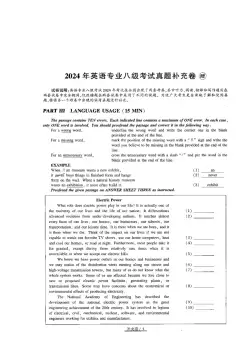
2006 年英语专业八级真题全解
听力 · 阅读 · 人文知识 · 改错 · 翻译 · 写作一站式精讲
📚 这份资料把 2006 年专八真题的答案速查、听力原文、阅读详解、人文知识、改错精讲、翻译范文与写作范本一次整理齐全,适合考前自测、复盘错题和积累核心考点词汇,建议先做题再对照解析。
✦───────✦───────✦
一、答案速查表
选择题(1—40)
1 C | 2 D | 3 A | 4 D | 5 A | 6 D | 7 C |
8 B | 9 C | 10 A | 11 B | 12 A | 13 A | 14 C |
15 D | 16 C | 17 D | 18 B | 19 A | 20 C | 21 B |
22 A | 23 B | 24 D | 25 B | 26 D | 27 C | 28 B |
29 A | 30 B | 31 B | 32 C | 33 A | 34 D | 35 A |
36 D | 37 B | 38 D | 39 B | 40 D |
PART I Section A 填空(1—10)
1. the author
2. other works
3. literary trends
4. grammar, diction, image
5. cultural codes
6. cultural
7. the reader
8. social
9. reader competency
10. social structure, traditions of writing, influences
PART IV 改错(1—10)
1. 将 agreeing 改为agreed
2. 将 way 改为 ways
3. 将 in 改为 at
4. 将 enables 改为enable
5. 将 the other English speakers 中的 the 去掉
6. 将 old 改为 older
7. 将 seen 改为understood
8. 将 take 后的it 去掉
9. 将 or 改为 and
10.在 most 之前加the
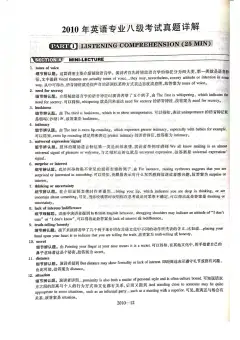
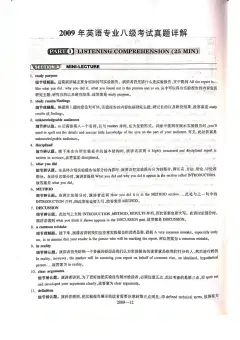
二、PART I 听力理解详解
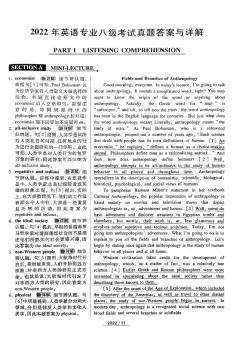
SECTION AMini-Lecture
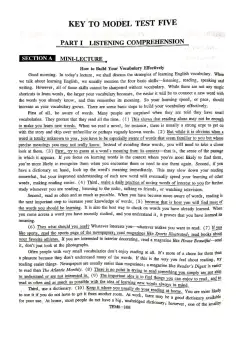
讲座原文
Good morning. In today's lecture, we shall discuss what meaning is in literary works. When we read novels, poems etc., we invariably ask ourselves a question, that is what does the writer mean here. In other words, we are interested in finding out the meaning. But meaning is a difficult issue in literature. How do we know what a work of literature is supposed to mean? Or what its real meaning is? I'd like to discuss three ways to explain what meaning is.
1. Meaning is what is intended by the author.
2. Meaning is created by and contained in the text itself. And
3. Meaning is created by the reader.
Now let's take a look at the first approach, that is meaning is what is intended by the author. Does a work of literature mean what the author intended to mean? And if so, how can we tell? If all the evidence we have is the text itself and nothing else, we can only guess what ideas the author had according to our understanding of literature and the world. In order to have a better idea of what one particular author means in one of his works, I suggest that you do the following.
First, go to the library and read other works by the same author. Second, get to know something about what sort of meaning seem to be common in literary works in that particular tradition and at that time. In other words, we need to find out what the literary trends were in those days.And last, get to know what were the cultural values and symbols of the time. I guess you can understand the author's meaning much more clearly after you do the related background research.
Now let's move on to the second approach to meaning, that is meaning is created by and contained in the text itself. Does the meaning exist in the text? Some scholars argue that the formal properties of the text like grammar, diction, uses of image and so on, and so forth, contain and produce the meaning so that any educated or competent reader will inevitably come to more or less the same interpretation as any other. As far as I am concerned, the meaning is not only to be found in the literary traditions and grammatical conventions of meaning, but also in the cultural codes which have been handed down from generation to generation. So when we and other readers including the author as well are set to come up with similar interpretations, that kind of agreement could be created by common traditions and conventions of usage, practice and interpretation. In other words, we have some kind of shared basis for the same interpretation. But that does not mean that readers agree on the meaning all the time. In different time periods, with different cultural perspectives, including class, belief and world view, readers—I mean, competent readers—can arrive at different interpretations of texts. So meaning in the text is determined by how readers see it. It is not contained in the text in a fixed way.
Now, the third approach to meaning, that is, meaning is created by the reader. Does the meaning then exist in the reader's response? In a sense, this is inescapable. Meaning exists only in so far as it means to someone. And literary works are written in order to evoke sets of responses in the reader. This leads us to consider three essential issues. The first is, meaning is social, that is language and conventions work only a shared meaning and our way of viewing the world can exist only shared or sharable. Similarly, when we read a text, we are participating in social or cultural meaning. So response to a piece of literary work is not merely an individual thing, but is part of culture and history. Second, meaning is contextual. If you change the context, you often change the meaning. And last, meaning requires reader competency.Texts constructed as literature have their own ways of expressions, or sometimes we say styles. And the more we know of them, the more we can understand the text. Consequently, there is, in regard to the question of meaning, the matter of reader competency, as it is called, the experience and knowledge of comprehending literary texts. Your professors might insist that you practice and improve competency in reading, and they might also insist that you interpret meaning in the context of the whole work. But you may have to learn other competencies too. For instance, in reading Mark Rutland's The Untouchables, you might have to learn what social structure of India was like at that time, what traditions of writing were in practice in India in the early 1930s, what political, cultural and personal influences Mark Rutland came under when constructing the imaginative world of the short novel.
OK! You may see that this idea that meaning requires competency in reading, in fact, brings us back to the historically situated understanding of an author and his works as we mentioned earlier in this lecture. To different conventions and ways of reading and writing, and to the point, that meaning requires a negotiation between cultural meanings across time, culture, class etc. As readers, you have in fact acquired a good deal of competency already, but you should require more. The essential point of this lecture, is that meaning in literature is a phenomenon that is not easily located, that meaning is historical, social and derived from the traditions of reading and thinking, and understanding of the world that you are educated about.
Thank you for your attention.
逐题解析
1.【the author】细节题。演讲中明确提到“Meaning is what is intended by the author; Meaning is created by and contained in the text itself; Meaning is created by the reader.”这是从第一方面解释文学作品的意义,所以答案是the author。
2.【other works】细节题。演讲人在介绍意义第一方面时提到三点,其中第一点明确提到“First, go to the library and read other works by the same author”,也就是应当去图书馆阅读作者的其他作品,所以答案是 other works。
3.【literary trends】细节推理题。演讲人在第二点指出“get to know something about what sort of meaning seem to be common in literary works in that particular tradition and at that time. In other words, we need to find out what the literary trends were in those days.”就是说要了解当时的文学思潮,因此答案是 literary trends。
4.【grammar / diction / image】细节题。演讲人在阐释第二方面时提到两种观点,第一种是学者的观点“the formal properties of the text like grammar, diction, uses of image and so on, contain and produce the meaning”,因此答案是 grammar, diction, image。
5.【cultural codes】细节题。第二种是演讲人的观点,认为文学作品的含义由三个因素共同决定,分别是“literary traditions, grammatical conventions of meaning, cultural codes”。由此可见,答案是 cultural codes。
6.【cultural】细节题。演讲人明确提到“In different time periods, with different cultural perspectives, including class, belief and world view, readers—I mean, competent readers—can arrive at different interpretations of texts”,意思是不同时期、不同文化视角的读者会对文本有不同的阐释,所以答案是 cultural。
7.【the reader】细节题。第三方面,“meaning is created by the reader”可知文学作品的含义是由读者创造的,所以答案应当是 the reader。
8.【social】细节题。第三方面的第一点提到“The first is, meaning is social”,含义具有社会性这一特点,所以答案是social。
9.【reader competency】细节题。第三方面的第三点谈到“And last, meaning requires reader competency”,意思是理解文学作品含义读者需具备一定的能力,所以答案是 reader competency。
10.【social structure / traditions of writing / influences】细节理解题。演讲人以一部印度小说为例“you might have to learn what social structure of India was like at that time, what traditions of writing were in practice in India in the early 1930s, what political, cultural and personal influences Mark Rutland came under when constructing the imaginative world of the short novel.”说明要理解原著不仅需要阅读能力,还需要了解相关背景知识以加深对作品的了解,所以答案应为 social structure / traditions of writing / influences。
SECTION BInterview
对话原文
Interviewer: Well, I see from your resume, Miss Green, that you studied at the university college. How did you find there?
Miss Green: I had a great time. The teaching there was good and I made a lot of friends. The psychology department was a great place to be.
Interviewer: How come you chose psychology?
Miss Green: Well, at first I didn't have any clear idea of what I wanted to do after university. I guess I've just always been interested in people and the way they act. I wanted to know why people think and act the way they do. It's a fascination area.
Interviewer: And what was the course like?
Miss Green: Good. The teachers were all really nice and they had the special approach to teaching. You know they didn't just give us lectures and tell us to read books like they might do in some more traditional places. The whole course was based on the problem-solving approach. You know they described a particular situation to us and we discuss what might happen. And after that we do some reading and see if it confirmed our own idea. That's what I likes best—the really practical orientation of the course. I learnt very well with that style. So for me, it was just great.
Interviewer: I see from your resume that you graduated about four years ago and after that...let me see...
Miss Green: I got a job with the Department of Employment. It was only a temporary thing for about five months. I was a researcher in the department. We design a survey, go out to the factories, and ask all the questions to the workers and the management, then go back to the office, analyze all the data and produce a report. It was quite intersting and I guessed the psychology course at college helped me a lot.
Interviewer: And after that you worked for three years in an Advertising Agency. That must be a bit of change from the Department of Employment, wasn't it?
Miss Green: Well, not really. I supposed the office furnishings were a bit more sophisticated, but the work was quite similar. I was basically still doing the same thing, designing questionnaires, going out, asking questions and writing reports. The only difference was that this time I wasn't asking people about their work. I was asking them what kind of shampoo they bought and if they preferred brand X to brand Y. Then I make up a report and the agency would use the information in the advertising campaigns. I enjoyed my work a lot.
Interviewer: So why did you decide to leave?
Miss Green: Three years is a long time to be asking people those sorts of questions about shampoo and drinks. No. Seriously, after two years I was in charge of the research department of the agency and I had one assistant researcher. I guess after two years of doing that, I suppose I felt, you know, I can do this well. And now I want to do something else that's a little different. And there was nowhere for me to go inside the company. It just wasn't challenging for me any more and because I needed a challenge, I decided to move on. When I heard about the position of senior researcher here, I thought that's exactly what I want the chance to combine my management skills and my research interests working in a much larger department with more varied work.
Interviewer: And you felt that the job description and our advertisement would offer you the kind of challenge you're looking for?
Miss Green: Exactly. Yes. As I said, management in a larger organization and research combined. Also to be honest with you, I heard about the job before it was advertised. A friend of mine, who works here, Mark Austen, told me a few weeks ago that you were looking for someone to take over the job. He described the position to me in quite a bit of detail. And I thought, “Well, that's exactly what I'm looking for.” So really I'd written my letter of application before the job was even advertised.
Interviewer: I should tell you that with the present cutbacks, we've only got one full-time administer assistant in the section. How would you feel about doing your own word processing, photo copying, that sort of thing?
Miss Green: Oh, I'm used to that.I've done all my own word processing for ages. It's the only way to write really, isn't it? I can type well about 60 words a minute. I did a secretarial course after I left school, so I learnt typing in short hand. Then a few years later, I bought a PC and I learnt how to do word processing, too.
Interviewer: Well, that's handy. Now in the position you've applied for, you'd have five to six assistant researchers responsible to you. That's considerably more responsibility than you've had before. So you're obviously ambitious. And as you said, you like chanllenge. I was wondering what you see yourself doing in, say, five or ten years on the track.
Miss Green: Oh, that's a difficult question. Let me try to answer your question in this way. I'm particularly interested in experimental design and also in teaching. I'd like to continue the organization and planning site of research, but do some teaching, too. I know that you have lectures here who do just that sort of thing, some particular worker and some undergraduate and postgraduate teaching. So that's what I really be aiming for, to be a lecturer here as well.
Interviewer: Well, that is certainly a career path that we'd encourage you to follow. But of course it might be necessary to upgrade your present qualifications first. I see from your resume that you've enrolled in an M. A. in experimental psychology. Could you tell me a bit about the courses you're planning to take?
逐题解析
1.【C】推理题。格林女士在回忆自己的大学生活时提到“I had a great time. The teaching there was good and I made a lot of friends. The psychology department was a great place to be”,可见她大学期间过得十分愉快。所以选项 C 为答案。
2.【D】细节题。由句子“design a survey, go out to the factories, and ask all the questions to the workers and the management, then go back to the office, analyze all the data and produce a report”可知,格林女士在就业部门上班时要设计问卷、进行调查、分析问卷,只有选项 D 未被提及,所以 D 为答案。
3.【A】细节题。句子“The only difference was that this time I wasn't asking people about their work. I was asking them what kind of shampoo they bought and if they preferred brand X to brand Y”表明,格林女士认为就业部门调查就业情况,而广告部门调查产品使用情况,这是他们的主要区别。所以选项 A 为答案。
4.【D】推理题。从原文“And there was nowhere for me to go inside the company. It just wasn't challenging for me any more and because I needed a challenge, I decided to move on”可看出,格林女士表示想找一份有广阔发展空间、接受更具有挑战性的工作,因此选项 D 为答案。
5.【A】推理题。在句子“Oh, I'm used to that…I did a secretarial course after I left school, so I learnt typing in short hand”中,格林女士被问到工作压力大能否胜任时,她答道她已习惯了在压力之下工作,并且能够胜任,由此可见选项 A 为答案。
SECTION CNews Broadcast
News Item 1(for question 6 and 7)
A man stole a small aircraft at gunpoint Sunday and flew it over downtown Frankfurt, circling skyscrapers and threatening to crash into the European Central Bank. He landed safely after about two hours and was arrested.
The man told a television station he wanted to call attention to Judith Resnik, a U. S. astronaut killed in the 1986 post-launch explosion of the space shuttle Challenger.Military jets chased the stolen, two-seat motorized glider as the man began circling slowly above Frankfurt's banking district. Thousands of people were evacuated from the main railway station, two opera house and several skyscrapers. Police identified the man as a 31-year-old German student from Darmstadt, a city about 25 miles south of Frankfurt. In radio contact with air traffic controllers, the man threatened to crash into the European Central Bank headquarters unless he was allowed the TV interview as well as a call to Baltimore. He later said he wanted to commit suicide by plunging the plane into the Maine River. It was unclear if the man was forced to land or talked down. Air traffic controllers and a police psychologist had been in contact with him.
6.【D】推理题。从句子“The man told a television station he wanted to call attention to Judith Resnik, a U. S. astronaut killed in the 1986 post-launch explosion of the space shuttle Challenger”可知,偷飞机的男子被逮捕后,对电视台说他的目的是唤起人们对宇航员 Judith Resnik 的注意,纪念这位遇难的宇航员,所以选项 D 正确。
7.【C】细节题。根据新闻内容“In radio contact with air traffic controllers, the man threatened to crash into the European Central Bank headquarters unless he was allowed the TV interview as well as a call to Baltimore”可知,选项 A 中该男子应当来自 Darmstadt,选项B 中 helicopter 应是glider,选项 D 中应是“crash into the European Central Bank headquarters”。所以只有选项 C 符合题意。
News Item 2(for question 8)
Shanghai plans to build a vast underground network of malls, restaurants and parking lots to make up for a lack of space above ground according to a recent government report.
The development will cover 600,000 square meters, the equivalent of 120 soccer fields, spread across four underground floors, the city government reported on its website. The city is accepting bids from builders. Shanghai has about 20 million people, plus factories, office towers and high-rise apartments, crowded into a small triangular territory near the mouth of the Yangzi River. The plans called for the project due to be finished by 2006 to expand existing facilities scattered along Shanghai subway system. The project will need advanced technology to supply fresh air and ensure safety.
But the biggest concern is the stability of the soil under the city. Shanghai is sinking by 1.5 centimeters a year. Lands subsidence has been aggravated by over-pumping of underground water and the construction of thousands of high-rise buildings. Shanghai's foundations are built on soft soil. So building multi-storey spaces underground would be like digging holes in the piece of bean curd, the government report says. The difficulties are easy to see.
8.【B】主旨题。新闻第一句话就概括了新闻大意,说明这项计划是建立一个包括商城、饭店、停车场等组成的地下网络,因此选项 B 是答案。
News Item 3(for questions 9 and 10)
A credit card that only works with when it hears its owner's voice has been developed by US scientists. Researchers hope that the device, which comes with a built-in voice recognition chip and microphone will be a weapon in the battle against credit card fraud.Even if thieves know a card's password and personal identification number, they will still have to copy the owner's voice accurately. The trial card was created by scientists at B Card in California, US. The first version is 3 times as thick as a normal credit card, but researchers believe smaller chips will allow the card to slim down to a more conventional size. The card is apparently the first to put a voice recognition chip, a microphone speaker and battery into a credit card. To use the card, the owner first presses a button and hears the prompt: say your password. If the password is correct and spoken by the right person, the card emits an identification signal which is processed by a computer connected to the Internet. Researchers hope to get the card to handle ten transactions per day for two years before its nonreplaceable battery runs out.
9.【C】细节题。这种信用卡和传统的信用卡的区别是它有一个内置的语音识别芯片,可以防范信用卡诈骗,所以 C 为答案。
10.【A】细节题。新问世的信用卡的内部构造包括“a voice recognition chip, a microphone speaker and battery”,由此可见选项 A 没有被提及。所以选 A。
三、PART II 阅读理解详解
TEXT A
文章结构分析
作者评论了《改革中的大学》一书,探讨了大学的未来发展趋势、网络在高等教育中发挥的积极和消极作用,以及大学教师的角色转变等问题。
核心词汇精华
franchise | v. 给予特权 | uniformity | n. 同样,一致 |
charismatic | adj. 有超凡魅力的 | alternative | adj. 两者择一的,另类的 |
customize | v. 定做 | practitioner | n. 开业者(尤指医生,律师) |
答题详解思路
11.【答案】B态度题。文章第二段和第三段分别谈到许多网络大学的优点和存在的弊端。由此可见,作者客观地陈述了利弊两方面,不偏不倚,所以答案是 B。
12.【答案】A细节题。文章第三段主要讨论网络大学的弊端,由句子“throwing thousands of career academics out of work”可排除选项 B,由句子“enforcing a rigidly standardized curriculum”可排除选项 C,而从 a few superstar teacher 可排除选项 D,选项 A 在文章中没有提到,所以 A 是答案。
13.【答案】A细节题。第五段首句提到“the fundamental mission of university education”,第二句指出“instead of receiving primarily technical training and building their individual careers”,由此可见传统大学的基本目标在于“学习知识,培养职业技能”,所以选项 A 为答案。
14.【答案】C推断题。文章第六段第一句提到“instead of giving lectures and conducting independent research”,可知选项 A 不符合题意;第二句提到未来的大学老师授课内容将会发生巨大变化,他们要整合世界各地大学的优秀课程,然后进行传授,由此可排除选项 B,同时也可以看出这对大学老师提出了更高的要求,符合选项 C 的意思;第三句提到未来的大学老师要和其他专业的学生接触,而不仅仅是管理本专业的学生,因此选项 D 不符合。所以答案为 C。
15.【答案】D文体题。本文主要是介绍一本书的内容,应该为说明文(exposition),也就是阐述一个主题的文章类型。
TEXT B
文章结构分析
本文讲述了主人公 Ray 重回故里的见闻和感想,描写了小镇多年来并无太大变化,以及他对童年往事的回忆。
核心词汇精华
clutter | n. 杂乱;喧闹 | intersection | n. 十字路口,交叉点 |
grimace | v. 扮鬼脸 | romp | v. 嬉闹,玩耍 |
adjoining | adj. 毗邻的 | sentry | n. 哨兵,警卫 |
boarded-up | adj. 被封锁的 |
答题详解思路
16.【答案】C推断题。文章首段提到两种人:一种是童年快快乐乐向往家乡的人;另一种则相反,很不情愿回到家乡的人。根据最后一句“After Ray Atlee had been in Clanton (his hometown) for fifteen minutes he was anxious to get out”可知,Ray 就是因童年的不愉快而不愿回家乡的第二类人。因此 C 为答案。
17.【答案】D细节题。选项 A,lifeless 出现在第六段首句“The square was as lifeless as the streets leading to it”;第四段中“This deep in Bible country, it was still an unwritten rule in the town that little was done on Sundays except go to church”和第五段提到的各种教堂“There were the churches—Baptist, Methodist and Presbyterian”,所以选项 B,religious 和选项C,traditional 合适。此外第六段还提到小镇人口不少却没有像样的店铺,人们仍然去城里购物,也说明当地的人们传统守旧,与选项 C 意思相符。选项 D 文章中没有提到,因此为答案。
18.【答案】B推断题。从第一段可以看出 Ray 不希望回家,第七段提到“He parked and walked to his mother's grave, something he hadn't done in years.”由此可以得知 Ray 跟父母的感情很淡漠,选项 B 正确。
19.【答案】A推断题。可用排除法。第八段中句子“receiving instruction on exactly how his father would be laid to rest”说明父亲对时间要求严格,与选项 B 相符;由“sipping bad instant tea”说明父亲生活节俭,与选项 C 相符;由“Many orders were about to be given, many decrees and directions”说明父亲对子女要求严格,符合选项 D。选项 A 在文中没有被提到,所以答案为 A。
TEXT C
文章结构分析
生活在印度边境的帕坦部落由于内部种族矛盾常年战争,19 世纪英国殖民者的到来在给当地人民带来先进武器的同时也激化了当地的矛盾,使得这一地区的局势变得更加复杂。
核心词汇精华
theologian | n. 神学家 | vendetta | n. 世仇,宿怨 |
unmitigated | adj. 未缓和的 | crawl | v./n. 爬行,匍匐前进 |
corridors | n. 走廊,通道 | harmonize | v. 使调和,使一致 |
fabulous | adj. 极好的,巨大的 | brilliancy | n. 光辉,出色 |
答题详解思路
20.【答案】C词义题。本题考查 debts 在文章中的意思,根据前文“…the Pathan tribes are always engaged in private or public war…Every family cultivates its vendetta; every clan, its feud. The numerous tribes and combinations of tribes all have their accounts to settle with one another”可知,帕坦部落总是在进行着私下或公开的战争,各个部落和家族之间怨怨相报。根据文义,debts 应该指部落之间仇杀的血债,所以选项 C 为答案。
21.【答案】B细节题。文章第一段提到“Valley walls rise steeply, snow-fed torrents, his valleys …are fertile enough to yeild with little labor…”指出了印度边境的地理特征,分别对应选项 C、A、D,第一段结尾提到“a sparse population”意为“人口稀少”,与选项 B 意思相反,所以选项 B 为答案。
22.【答案】A细节题。第二段段首提到 19 世纪英国人给印度带来两种新事物:步枪和英国政府,并指出“The firs was an enormous luxury and blessing; the second, an unmitigated nuisance.”所以选项 A 为答案,即帕坦人欢迎步枪,而对英国政府是抵制和反对的。
23.【答案】B推断题。可用排除法。文章最后一句话“a whole series of quarrels took their origin from this source”说明修路引起了一系列纷争,可排除选项 A;句子“They sought to ensure the safety of these roads by threats, by forts and by subsidies”,可见英国人为了保证公路安全采取措施,但没有减少补贴,排除选项 C;“All along the road people were expected to keep quie, not to shoot one another”意为英国人想要当地人停止暴力、保持良好的秩序,但实际上又引发了新的矛盾,排除选项 D。B 选项为答案,即英国殖民者采取的种种措施客观上阻止了部落间的矛盾。
24.【答案】D主旨题。本文主要内容是讲述印度边境的帕坦部落,他们因内部种族矛盾和后来的民族战争冲突不断,因此选项 D 符合;选项 B、C 片面,选项 A 不准确。
TEXT D
文章结构分析
本文讲述了博物馆 museum 一词的词义演变过程和博物馆的发展历程,即从最初指代献给缪斯女神的任何东西,发展到缪斯神殿,再到现代意义上陈列收藏品的博物馆。
核心词汇精华
consecrate | v. 奉献,奉为神圣 | monastery | n. 修道院 |
antiquarian | n. 古文物家,古董商 | disband | vt. 解散 |
exotic | adj. 奇异的,外国情调的 | antiquity | n. 太古,古代 |
emulation | n. 竞争,效仿 | asylum | n. 庇护,政治避难 |
答题详解思路
25.【答案】B词义题。从文章第一句话就可以概括出全文的主旨。文章讲述了 museum 一词含义的演变过程并介绍了博物馆的发展历程。slippery 的意思是不可琢磨的,所以选项 B 为答案。
26.【答案】D细节题。第一段第二句提到“It first meant (in Greek) anything consecrated to the Muses: a hill, a shrine, a garden, a festival or even a textbook”,可知 museum 指代山脉或事物的意思出自希腊语。所以选项 D 为答案。
27.【答案】C词义题。refined 意为“精细的”,本句话的意思是随着教会、修道院和商人大量收藏珍稀物品,使得仿造者的仿造技术也越来越高,所以选项 C 为答案。
28.【答案】B推断题。第四段提到“the paintings and sculptures were not “collected” either, but “site-specific”, and were considered an integral part both of the fabric of the buildings and of the way of life which went on inside them”,可知 15 世纪的绘画和雕塑作品是和建筑不可分割的。所以选项 B 为答案。
29.【答案】A细节题。最后一段阐述了现代博物馆的形成过程,由第二句可知古文物学家为了保护皇室和教会的藏品而建立的陈列馆,防止藏品在革命运动和工业化过程中遭到破坏。所以选项 A 正确。
30.【答案】B主旨题。考查对文章大意的把握。文章主要介绍了 museum 一词意义的变化过程以及博物馆的发展变迁,所以选项 B 为答案。
四、PART III 人文知识
31.【B】本题考查美国历史知识。美国南北战争(1862—1865)期间的总统是反对奴隶制的总统亚伯拉罕·林肯,他于 1861 年当选总统,1862 年颁布了《解放奴隶宣言》。
32.【C】本题考查新西兰地理知识。新西兰首都是 Wellington。
33.【A】本题考查澳大利亚历史知识。澳大利亚最早的居民是土著居民(Aborigines)。
34.【D】本题考查英国政治常识。英国首相是内阁(the Cabinet)的领袖。
35.【A】本题考查英美文学常识。T. S. Eliot 是20 世纪美国著名诗人。
36.【D】本题考查英美文学知识。For Whom the Bell Tolls(《丧钟为谁鸣》)是美国著名作家欧内斯特·海明威(1899—1961)的代表作。
37.【B】本题考查英美文学知识。Sonnet(十四行诗)是一种抒发感情的诗歌。
38.【D】本题考查语言学知识。semantics(语义学)与 pragmatics(语用学)的区别在于:语义学研究的是句子和语言本身的意义,而语用学研究的是一定交际环境(context)中的话语的意义。
39.【B】本题考查语言学知识。这几个同义词是部分同义词,kid 用于非正式文体,child 用于一般文体,offspring 用于正式文体。
40.【B】本题考查语言学知识。是瑞士语言学家 Saussure(索绪尔)将 parole(言语)和 language(语言)进行区分开来的。
五、PART IV 改错详解
21.【将agreeing 改成agreed】本题考查非谓语动词用法。“agreed conventions”意思为约定的“习俗,惯例”。
22.【将way 改成ways】语篇理解题。从句子意思可知 way 与 conventions 意思相对,way 本身是可数名词,所以应当用复数形式 ways。
23.【将in 改成at】本题考查短语搭配。“at one's disposal”是固定搭配,意思是“可供某人使用”。
24.【将enables 改成enable】语法题。引导词 which 的先行词是“grammatical rules”,因此从句的谓语动词应当采用复数形式 enable。
25.【将the 去掉】本题考查定冠词用法。此处“说英语的人”并非特指而是泛指,所以应当去掉 the。
26.【将old 改成older】语篇理解题。句子是说人的词汇量随着年龄的增长而丰富。而 grow old 意为“变老”,grow older 才是“年龄增长”。
27.【将seen 改成understood】词义理解题。本句话的意思是一个人的表达方式被另一个人理解,see 可以表示“理解”,但不能与 means 搭配使用,所以应当改为 understood。
28.【将take 后的it 删去】语法题。在句型“take…for granted”中,当宾语为从句时常用 it 作形式宾语。但是在本句中宾语是名词短语“the two most common forms of transmission”,因此不需要形式宾语 it。
29.【将or 改成and】本题考查连词用法。or 表示选择其一,and 表示并列;而人与人之间的交流主要通过语言来实现,口语和书写是两种最基本的交流形式,因此应当用 and 连接。
30.【在most 前面加上the】语法题。此句的意思是书写和口语是人类最重要成就的一部分,应该用最高级 most striking 表示,所以应当加上 the。
六、PART V 翻译真题
SECTION A汉译英(参考译文)
Since ancient times Chinese people have never considered human beings to be superior to every other species. As is reflected in Chinese philosophy, literature and art, human beings take up an appropriate position among all living creatures in the natural world, absolutely not the ruler dominating the world. Therefore, our depression is less than that of westerners on the whole, for the intensity of it grows with the expansion of one's desire and ambition. As people in an agricultural society enjoy much less than those in an industrial society, they have fewer desires or wishes either. In addition, ancient Chinese always regarded it as their major philosophy of life that one should not be confined to material pursuits, or be driven by material things.
SECTION B英译汉(参考译文)
我所能奉献的唯有热血、辛劳、泪水和汗水。我们面临的将是一场极其严酷的考验,将是旷日持久的斗争和苦难。
若要问我们的政策是什么?我会回答:在海上,陆地和空中作战,竭尽我们的全力,竭尽上帝所赐予我们的全部力量去作战,与人类罪行史上穷凶极恶的暴政作战,这就是我们的政策。
若要问我们的目标是什么?我可以用一个词来回答,那就是胜利,不惜一切代价,去夺取胜利;不惧一切恐怖,去夺取胜利。——没有胜利就没有生存。
我们务必意识到这一点:没有胜利就没有大英帝国,没有胜利就没有大英帝国所象征的一切;没有胜利就没有千百年来的渴望和冲动。人类应向自己的目标迈进。
七、PART VI 写作
【写作提示】
这个话题是关于抱负的,文章可以分为三部分:第一部分引出话题,指出作者对于 Epstein 观点的看法;第二部分是阐明自己为什么这样认为;第三部分是总结段,再次强调自己的观点。
【参考范文】
Ambition
In Joseph Epstein's idea, our decisions and choices create our life and then our ambition forms our destiny. I think that these punch lines are the precise explanations on the relation between ambition and destiny. What is ambition? It is your dream, your hope and your impetus for progress. Ambition is the master of your actions and the company of your soul, even possibly the ruler of your destiny.
For an individual, ambitions arm people with perseverance, courage and resolution. Looking back to the history, it's easy to find that almost all the famous people in the world have a strong mind and a clear goal. For example, a legendary French general Napoleon ever said that a soldier with no intention of becoming a general is not a good one. This saying is the best evidence to show that one's destiny is closely related with their ambition. Without ambitions, people will lose the navigation light for their life. On the contrary, once a common but ambitious person makes resolution to realize a goal, he will be endowed with a kind of superpower which could help him over great difficulty on his progressive roads and provide him with the constant energy. For example, with the lofty ideal to fight for freedom and protect their mother land, Red Army soldiers experienced all kinds of hardships and dangers, overcame the toughest difficulty and made the final success of the Long March. Their ambition is their belief of Marxism. Ambitions decide one's actions, thoughts and power, which are the source of marvels.
For the humanity, ambitions are the brightest torches to lighten the road of mankind's civilization. Without the passion, dream and ideal, how can human beings made so many great achievements in the long history? So to speak, to some extent ambitions also shape a nation's destiny. The national spirit is usually merged into its social ambition which is the endless momentum for its progress. And thus a nation with great ambitions is more likely to obtain success and glory than that without ambitions. The ambition is the progressive drive of humanity.
All in all, it's unexaggerated to claim that ambitions not only descript the blueprint of an individual's prospect but also influence, even decide a nation's future. We should teach our children to be ambitious, persistent and honestfrom their childhood. Only these precious characters can ensure a prosperous country in the future.
(401 words)
【范文点评与注解】
这个话题离学生可能远了一些,不过题目给出了Epstein 的观点,所以考生要针对这个观点表达出自己的看法。
第一段作者指出自己认为Epstein 的话详细解释了抱负和命运的关系,并对抱负给出了自己的理解。
第二段作者阐述了抱负对于个人的意义:它让人坚持不懈,给予人们勇气和决心。作者以拿破仑的例子和红军长征的例子论证了抱负对于个人的重要性,这一段主要是通过讲道理进行论证的。
第三段作者认为抱负是引领人类文明的火炬,并详细阐述了抱负对于人类的重要性。
第四段是总结段,重申抱负的重要性,并且呼吁我们要从小培养孩子有抱负,只有这样才能有更加美好的未来。
重点词汇注解
punch lines(故事、戏剧、笑话等中的)妙语
perseverancen. 坚持不懈
legendaryadj. 传奇的
with no intention of doing sth.做某事的打算
be endowed with赋予……(天资、美德等)
loftyadj. 高尚的
marveln. 奇迹
make great achievements取得重大成就
so to speak可以说
to some extent在某种程度上
all in all总的来说
unexaggeratedadj. 未夸张的
blueprintn. 蓝图
八、核心考点词汇数据报告(表一)
动词
考查点 | 对应词义 | 题号 |
cherish | 珍惜 | 1 |
analyze | 解释 | 2 |
leave | 离开 | 4 |
react | 反应 | 5 |
circle | 盘旋 | 6 |
promote | 促进 | 8 |
combine | 结合 | 13 |
judge | 判断 | 14 |
supervise | 监督 | 14 |
belong | 属于 | 15 |
describe | 描述 | 17 |
mean | 意味着 | 20 |
welcome | 欢迎 | 22 |
lessen | 减少 | 23 |
campaign | 参加活动 | 24 |
resent | 怨恨 | 24 |
add | 增加 | 25 |
originate | 来自于,来源 | 26 |
donate | 捐赠 | 28 |
stimulate | 刺激 | 29 |
raise | 筹集 | 29 |
distinguish | 区别,区分 | 38 |
diction | 用语,措辞 | I-A-4 |
名词
考查点 | 对应词义 | 题号 |
code | 代码 | I-A-5 |
survey | 调查 | 2 |
agency | 机构 | 3 |
workload | 工作负担 | 5 |
subsidence | 下沉 | 8 |
switch | 开关 | 10 |
publicity | 公开 | 12 |
mission | 任务 | 13 |
narration | 叙述 | 15 |
exposition | 阐述 | 15 |
impression | 印象 | 16 |
形容词和副词
考查点 | 对应词义 | 题号 |
literary | 文学的 | I-A-3 |
social | 社会的 | I-A-8 |
demanding | 苛刻的 | 4 |
reluctant | 勉强的 | 5 |
advanced | 先进的 | 8 |
conventional | 常见的 | 9 |
critical | 批评的 | 11 |
potential | 潜在的 | 12 |
urgent | 紧急的 | 16 |
religious | 严谨的 | 17 |
remote | 疏离的 | 18 |
punctual | 准时的 | 19 |
fertile | 肥沃的 | 21 |
suitable | 合适的,恰当的 | 24 |
slippery | 不稳定的 | 25 |
skillful | 有技巧的,熟练的 | 27 |
royal | 高贵的,荣耀的 | 29 |
essentially | 本质上 | 38 |
stylistic | 体裁上的 | 39 |
短语和习惯用法
考查点 | 对应词义 | 题号 |
lie in | 在于 | 3 |
long for | 渴望 | 4 |
plan to | 打算做…… | 8 |
it is said | 据说 | 10 |
be in favor of | 喜欢,支持 | 11 |
judge from | 以……为依据判断 | 14 |
belong to | 属于 | 15 |
take care of | 照顾,照料 | 16 |
be inferred from | 由……得出 | 19 |
put an end to | 终结,结束 | 23 |
add to | 增加,增进 | 25 |
originate from | 发源于 | 26 |
come into | 成为 | 29 |
✦───────✦───────✦
【英语专业八级】【2006 真题】【真题解析】【备考干货】【核心词汇】
💡 解析正确打开方式 建议先闭卷模考完整套真题,再对照解析逐题复盘;把高频考点、熟词僻义、错题思路整理进笔记本,定期回顾巩固。翻译和写作部分可以积累优质表达与行文逻辑,灵活迁移到自己的答题中。
如果这份解析帮到了你,别忘了点赞👍+ 收藏⭐,也可以分享给身边一起备考的小伙伴,并肩高效冲刺~ 想看其他年份的真题解析,也欢迎在评论区留言!关注我,后续持续更新专八备考干货,祝大家都能稳扎稳打,顺利拿下专八证书🎉!