1
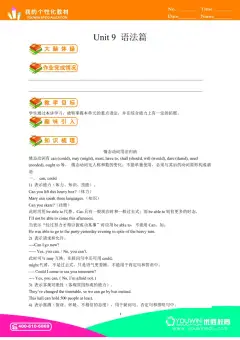
Unit6 语法篇

__________________________________________________________________________________
__________________________________________________________________________________
1.熟练掌握一般现在时的否定句和疑问句的用法
2.熟练掌握动词第三人称单数的变化规则
一、一般现在时的疑问句和否定句
1. 在一般现在时的陈述句中,当句子的主语是第三人称单数时,谓语动词也要使用第三人称
单数形式。
2. 单数第三人称行为动词一般现在时的否定形式是在行为动词前加does 的否定形式doesn't。
(doesn't=does not)
John doesn't like English at all.  约翰一点儿也不喜欢英语。
She doesn't go shopping often.  她不经常购物。
2. 单数第三人称行为动词一般现在时的疑问形式是在句首加助动词does,后面的谓语动词用
动词原形。
Does she go to school by bike every day?  她每天骑自行车上学吗?
Does your father like football?  你爸爸喜欢足球吗?
二、动词第三人称单数变化规则
一般现在时的肯定句中,主语为第三人称单数时,谓语动词应采用第三人称单数形式。
动词第三人称单数的变化规则为:
1. 一般情况下,直接在动词词尾+s ,例如:get → gets; take → takes
2. 以s, sh, ch, x, o 结尾的动词,在词尾+es,例如:teach → teaches; fix → fixes, go
→goes
3. 以辅音字母+ y 结尾的动词,变y 为i,再+es,如:study → studies; try → tries
1.(山东临沂中考改编)Alice has tennis racket(网球拍).(改为一般疑问句)
2


  Alice

  a tennis racket?
2.(2014 年四川达州中考)Emma does her homework every evening.(变为否定句)
Emma


  her homework every evening.
3. --- Dose she like action movies?
---

 .
A. Yes, she do
B. No, she doesn't
C. No, she does
D. Yes, she don't
4.Does she

   to go to the zoo?
A. want
B. wants
C. to want
D. wanting
5. My grandmother


  us stories every day.
A. tell
B. tells
C. asks
D. ask
6.

  your sister

  to work by bus?
A. Do, go
B. Do, goes
C. Does, go
D. Does, goes
7. She

  her homework every night.
A. do
B. does
C. to do
D. doing
解析及答案:
1. 可用“语法分析法”解题。本句用了一般现在时,句中含有行为动词has,改为一般疑问句时,
应在句首加助动词Does,行为动词has 还原为have。答案:Dose,have
2. “语法分析法”解题。主语是第三人称单数的一般现在时的陈述句,变为否定句时要在行为动
词前加doesn't,行为动词第三人称单数要变回动词原形。题干中does 为实意动词,答案为doesn't
do
3. 考查一般疑问句的回答。用Does 提问,肯定回答为“Yes,...does.” 否定回答为
“No,...doesn't”,故选B。
4. 一般疑问句借助于does 提问时,实意动词用原形,故选A。
5.此题考查主谓一致和固定搭配。“讲故事”为tell stories,主语为My grandmother,谓语动
词应该用单数,故选B。
6. 考查含有实意动词的一般疑问句。主语为your sister,应借助于Does 进行提问,实
意动词要用原形,故选C。
7. 此题考查主谓一致。主语为she,谓语动词应是单数,故选B。
基础演练
一、适当形式填空(单句适当形式)
1.

    the panda

    (live) in Sichuan?
2. The lion

   (not eat) grass. It likes

   (eat) meat.
3. My father usually

   (watch) TV in the afternoon.
4.

    your parents

    (listen) to music?
3
5. Shall we

   (buy) some coffee?
6.

    your sister

    (like) hamburgers?
7. We like the monkey

   (call) Cindy in the zoo.
8. The tigers

   (eat) meat. They

   (not eat) vegetables.
9. The kangaroo

   (jump) across the grassland.
10. Meimei, the elephant

   (come) from Yunnan, China.
11. There

   (be) about 200 kinds of monkeys.
12. The tiger

   (like) eating meat. It

   (not like) eating fruit.
答案:
1. Does, live
2. doesn't eat, eating/to eat
3. watches
4. Do, listen
5. buy
6. Does, like
7. called
8. eat; don't eat
9. jumps
10. comes
11. are
12. likes; doesn't like
巩固提高
二、按要求转换句型
1. I like playing games on the computer. (改为否定句)
I


    playing games on the computer.
2. The zoo has many animals. (改为否定句)
The zoo


    many animals.
3. The animals live in the forest. (改为一般疑问句并回答)


    the animals

    in the forest?
No,


   .
4. He usually does his homework after dinner. (改为一般疑问句并回答)


    he usually

    his homework after dinner?
Yes, he

   .
5. Lingling is good at English. (改为一般疑问句并回答)


    Lingling


    English?
Yes,


   .
6. We have an American teacher. (改为同义句)
We have

    teacher


   .
7. The elephants are from Africa. (对划线部分提问)


    the elephants

   ?
8. The monkey comes from Europe. (改为一般疑问句)


    the monkey

    from Europe?
9. Does the giraffe eat grass? (根据实际回答)
4


   , it

   .
10. The tiger comes from South America. (改为否定句)
The tiger


    from South America.
答案:
1. don't like
2. doesn't have
3. Do, live; they don't
4. Does, do; does
5. Is, good at; she is
6. a, from America
7. Where are, from
8. Does, come
9. Yes, does
10. doesn't come
一、单项选择
1. The animals come from all

    the world.

A.
 of
B.
 over
C.
 on
D.
 in
2. Is it

    African elephant?

A.
 an
B.
 a
C.
 the
D.
 /
3. Are there

    on the tree?

A.
 some leafs
B.
 any leafs
C.
 some leaves
D.
 any leaves
4. The panda eats bamboo

    leaves.

A.
 as well as
B.
 as good as
C.
 also
D.
 too
5. Beijing Zoo

    many animals.

A.
 have
B.
 has
C.
 is
D.
 are
6. ---

    is your English teacher?
--- The man in front of Danny.

A.
 What
B.
 How
C.
 Where
D.
 Which
7. Do you live

    Beijing?

A.
 at
B.
 in
C.
 on
D.
 over
8.

    the elephant

    plants?

A.
 Does; eat
B.
 Does; eats
C.
 Do; eat
D.
 Do; eats
9. I often go to the zoo

    my mother.

A.
 and
B.
 with
C.
 for
D.
 to
10. Is there a boy

    Tony?

A.
 called
B.
 calling
C.
 calls
D.
 call
11. Monkeys are very

   . I like them.

A.
 dangerous
B.
 funny
C.
 dirty
D.
 bad
5
12. The panda usually eats

    bamboo a day.

A.
 30 kilos
B.
 30 kilos of
C.
 30 kilo of
D.
 30 kilo
13. Jim and Mike

    in the river.

A.
 is good at swim
B.
 is good at swimming

C.
 are good at swim
D.
 are good at swimming
14. Do you want

    for a walk with us?

A.
 going
B.
 goes
C.
 to go
D.
 go
15. My aunt

    in Beijing, and I often

    with her at weekends(周末).

A.
 lives; lives
B.
 live; stay
C.
 lives; stay
D.
 stays; lives
答案:1-5 BADAB
6-10 DBABA
11-15 BBDCC
二、完形填空
    Welcome to the zoo! There are many kinds of     1

    in it. Let's see the monkeys first. The
monkeys     2

    from Asia. They are funny. They like eating fruit, but they     3

    eat meat.
Children like them very much. The elephants are also from    4

   . They are tall. They
  5

water and plants.
    Look at the pandas over there.     6

    are from China. They are cute. They like eating bamboo.
They are my     7

    animals. The giraffes are from Africa. They have a     8

    neck(脖子).
They like eating leaves. You can also find some     9

    in the zoo. They are large and dangerous.
If(如果) they live in the forest(森林), they will

 1  0

    some animals for food. But in the zoo they
can't.
    Have a good time here!
1.
A.
 trees
B.
 flowers
C.
 children
D.
 animals
2.
A.
 read
B.
 play
C.
 come
D.
 get
3.
A.
 are
B.
 aren't
C.
 do
D.
 don't
4.
A.
 Asia
B.
 America
C.
 Africa
D.
 Europe
5.
A.
 buy
B.
 stay
C.
 like
D.
 eat
6.
A.
 He
B.
 She
C.
 They
D.
 We
7.
A.
 important
B.
 favorite
C.
 interesting
D.
 different
8.
A.
 small
B.
 big
C.
 short
D.
 long
9.
A.
 zebras
B.
 pandas
C.
 monkeys
D.
 lions
10.
A.
 wash
B.
 catch
C.
 watch
D.
 make
答案:1-5 DCDAC
6-10 CBDDB
 _________________________________________________________________________________
 _________________________________________________________________________________
一、阅读理解
A(山东德州市2014 年期末试题)
6
    Come and see the Indian elephants and the new tigers form America. The bears are waiting to meet
you, and the monkeys form China are waiting to throw things at you. The lovely kangaroos from Australia
are waiting to laugh at you, and the giraffes from Zambia are waiting to look down on you.
1. How many kinds of animals are talked about in the passage?
   A. Four.
   B. Five.
   C. Six.
   D. Seven.
2. Mr. Liu is in the zoo with his two sons, one is 14 years old and the other is 10 years old, how much are
the tickets together?
   A. ¥20.00.
   B. ¥30.00.
   C. ¥40.00.
   D. ¥50.00.
3. Which of the following is the visiting time?
   A. 8:30a.m. Monday.
   B. 9:30a.m. Sunday.
   C. 3:00p.m. Friday.
   D. 5:00p.m. Tuesday.
4. Where are the elephants and tigers are from?
   A. India and America.
   B. America and India.
   C. Australia and America.
   D. Australia and India.
5. Which of the following can we do in the zoo?
   A. To give some food to the fish.
   B. To touch the monkey on the head.
   C. To throw(扔) things everywhere.
   D. To take a few nice photos.
B
    There is an elephant and a monkey. They’re friends. But one day they want to know who is stronger
(更强壮). One of them says , “ Who can get apples from the tree across the river , who is
stronger.”The monkey says, “I can’t swim.” The elephant says, “I can swim. Please sit on my
back.”Thus they go across the river. The apple tree is very high. The elephant can’t reach the apples on the
tree. The monkey climbs(爬)up the tree and gets many apples. Now they know they should help each
other.
6. The elephant and the monkey want to know      .
   A. who is smarter
   B. who is higher
   C. who can swim
   D. who is stronger
7.       can’t swim.
   A. The elephant
   B. The monkey
   C. The big animals
   D. The short animals
8.       can’t reach the apples.
   A. The elephant
   B. The monkey
Tickets                                 Opening time
Adults(成人): ¥ 20.00               Monday –Saturday:
Children: Over 12 : ¥ 10.00              9:00 a.m. – 4: 00
p.m.
Under 12: Free
       Sunday:
10:00 a.m. – 3: 00
p.m.
Keep the zoo clean!
D
t t
h
i
f
d t
th
i
l
7
   C. The big animals
      D. The short animals
9. At last the monkey goes across the river with the help of       .
   A. the elephant
   B. the monkey
   C. an animal
   D. a boat
10. From the story we know we should       .
   A. learn from the elephant
   B. learn from the monkey[来源:学_科_网]
   C. A and B
   D. help each other
C
    Many children like to go to pet shows (宠物表演). One day, Miss Brown takes the children to a pet
show. The children are happy, and they can ride(骑) on the animals! Girls and boys ride on horses and
goats(山羊) happily.
    They all like it most when they ride on an elephant. The children give it peanuts(花生). The children
like the ride, and the elephant likes the peanuts.
11. What is the topic(题目) of the story?

A.
 Playing on the grass.
B.
 Riding animals at a pet show.

C.
 Riding in a fast car.
D.
 Fun at the zoo.
12. The children at the pet show ride on

   .

A.
 dogs
B.
 cats
C.
 goats
D.
 pigs
13. The children like it most when they ride on

   .

A.
 an elephant
B.
 a horse
C.
 a goat
D.
 a cow
14. From the story we can know that the elephant likes to eat

   .

A.
 rice
B.
 peanuts
C.
 apples
D.
 ice
15. The children are very

   .

A.
 hungry
B.
 happy
C.
 sad
D.
 old
D
    Round(圆圆的) eyes, round head, round ears, round body! What is this little animal? He looks like a
bear, but he is not a bear. He's a koala (树袋熊). His eyes look like buttons(纽扣). He has small feet and
big ears, and his nose looks like your new black shoes.
    Where do koalas live? In Australia(澳大利亚). There are many koalas in Australia. The people of
Australia love them.
    When a koala is born(出生), he has no fur(毛). And he is no bigger than your little toe(趾).
    The mother koala has a pocket(口袋) in the front of her body. The baby koala stays there for six
months.
    When the baby koala leaves the pocket, he has lots of fur. And he is about as big as your shoe. He
climbs to his mother's back. He rides there while she teaches(教) him to find food.
    The koala could not live without a special(特别的) tree. It is the eucalyptus tree (桉树). The tree gives
him both his home and his food.
8
    The koala sleeps most of the day. He looks for food at night. He only likes eucalyptus trees. He eats
nothing else. The koala gets water from the eucalyptus trees. How? By eating leaves with dew(露水) on
them!
16. The koala has

    feet and

    ears.

A.
 small; small
B.
 small; big
C.
 big; small
D.
 big; big
17. Koalas live in

   .

A.
 England
B.
 Canada
C.
 Australia
D.
 America
18. The koala has no

    when he is born.

A.
 hair
B.
 fur
C.
 toe
D.
 pocket
19. Where can koalas get their food?

A.
 From the eucalyptus trees.
B.
 From the grass.

C.
 From his mother.
D.
 From the water.
20. What do koalas do most of the day?

A.
 Eat.
B.
 Run.
C.
 Play games.
D.
 Sleep.
答案:一、阅读理解
1-5 CBCAD
6-10 DBAAD
11-15 BCABB
16-20 BCBAD
课程顾问签字:                        教学主管签字: