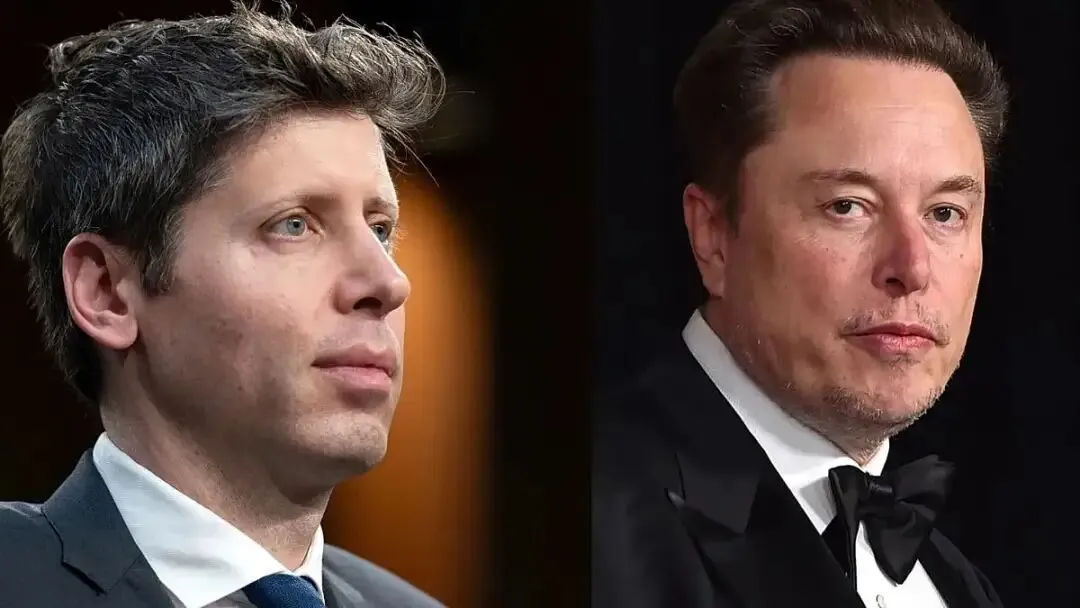
Elon Musk vs. OpenAI: The Battle Over AI’s Soul – Idealism, Betrayal, and Industry Stakes 马斯克诉OpenAI:AI灵魂之战——理想主义、背叛与行业影响In 2015, Elon Musk co-founded OpenAI alongside Sam Altman, Greg Brockman, and others as a nonprofit organization. Its mission was clear: develop artificial general intelligence (AGI) that benefits all of humanity, remain open-source to counterbalance giants like Google, and prioritize safety over profit. Musk provided significant early funding, around $38-44 million, and played a key role in recruiting talent and shaping the vision. He viewed OpenAI as a critical counterweight to potential monopolistic control of powerful AI.Musk departed in 2018 amid disagreements, including his proposal for deeper integration with Tesla. OpenAI evolved: it created a for-profit subsidiary with a capped-profit structure to attract capital, later relaxing restrictions and forging a major partnership with Microsoft. This shift enabled explosive growth, leading to ChatGPT’s success and a valuation soaring toward hundreds of billions, with IPO plans underway. OpenAI argues this structure was necessary for survival and that Musk was aware of for-profit discussions early on.2015年,埃隆·马斯克与Sam Altman、Greg Brockman等人共同创立OpenAI,作为一家非营利组织。其使命明确:开发造福全人类的人工通用智能(AGI),保持开源以制衡谷歌等巨头,并将安全置于利润之上。马斯克提供了早期大量资金(约3800-4400万美元),在招募人才和塑造愿景中发挥关键作用。他将OpenAI视为防止强大AI被垄断控制的重要力量。马斯克于2018年离开,部分因与特斯拉整合等分歧。OpenAI随后演变:设立营利子公司,采用利润上限结构吸引资本,后逐步放松限制并与微软建立重大合作。这一转变推动了爆炸式增长,ChatGPT大获成功,估值飙升至数千亿美元,并计划IPO。OpenAI辩称这种结构对生存必要,且马斯克早期知晓营利讨论。Tensions escalated publicly after Musk launched xAI in 2023 as a competitor focused on “understanding the universe” and AI safety. In 2024, Musk filed suit, accusing OpenAI, Altman, and Brockman of breaching the founding agreement and charitable trust by turning a “charity” into a profit-driven entity effectively controlled by Microsoft. He claims they misled him about remaining nonprofit and open-source, seeking roughly $150 billion in damages (proceeds to charity), reversion to nonprofit status, and removal of Altman and Brockman. Microsoft is accused of aiding the breach.The trial began in late April 2026 in Oakland, California. Musk testified over three days, calling himself a “fool” for funding without stricter safeguards and emphasizing AI’s existential risks. He stressed OpenAI’s original goal to prevent dangerous AGI falling into untrustworthy hands. OpenAI counters that no binding “founding agreement” existed as Musk describes, Musk supported early for-profit ideas, and the suit stems from competitive regret. Testimony has revealed internal emails, journals, and debates over control and mission.2023年马斯克推出xAI作为竞争对手后,矛盾公开化,xAI聚焦“理解宇宙”与AI安全。2024年,马斯克提起诉讼,指控OpenAI、Altman和Brockman违反创始协议和慈善信托,将“慈善机构”转为实质由微软控制的营利实体。他声称对方误导他保持非营利和开源,索赔约1500亿美元(收益用于慈善)、恢复非营利地位并移除Altman与Brockman。微软被控协助违约。2026年4月底,审判在加州奥克兰开庭。马斯克作证三天,自称“傻瓜”未加严格保障,并强调AI生存级风险。他重申OpenAI初衷是防止危险AGI落入不可信之手。OpenAI反驳不存在马斯克所述的约束性“创始协议”,马斯克早期支持营利构想,诉讼源于竞争遗憾。证词披露了内部邮件、日记及控制与使命辩论。Potential Outcomes and Industry ImpactIf Musk wins, it could force OpenAI back toward nonprofit roots, derail its IPO, claw back perceived “wrongful gains,” and oust leadership. This might set a precedent undermining hybrid nonprofit-to-profit transitions, chilling charitable AI initiatives and donations. It would boost Musk’s xAI and other competitors, potentially slowing OpenAI’s momentum but reinforcing safety-focused governance debates. Critics worry it could fragment AI development or empower Musk’s ecosystem (Tesla, SpaceX, xAI).If Musk loses, OpenAI gains validation for its commercial path, likely accelerating commercialization, IPO, and Microsoft ties. However, it may erode public trust in “mission-driven” AI firms, highlight governance risks, and intensify scrutiny on AGI safety. The case already exposes Silicon Valley’s inner workings, influencing how future AI labs structure themselves. Broader effects include heightened focus on AI alignment, competition (U.S. vs. China), and whether profit motives can coexist with existential risk mitigation.Musk and Altman’s relationship shifted from collaborators to rivals, mirroring deeper tensions in tech: idealism vs. pragmatism, open vs. closed AI, and individual vision vs. corporate scale. Regardless of verdict, the lawsuit underscores AI’s stakes—not just technological, but ethical, economic, and geopolitical. It forces the industry to confront: Can frontier AI truly serve humanity when billions are at play?可能结果与行业影响若马斯克胜诉,可能迫使OpenAI回归非营利根源,阻断IPO、追回“不当收益”并更换领导层。这或树立判例,动摇非营利转营利混合模式,打击慈善AI倡议与捐赠。它将提振马斯克xAI及其他竞争者,可能减缓OpenAI势头,但强化安全治理讨论。批评者担忧这会碎片化AI开发或强化马斯克生态(Tesla、SpaceX、xAI)。若马斯克败诉,OpenAI获商业路径认可,加速商业化、IPO与微软合作。但可能削弱公众对“使命驱动”AI公司的信任,凸显治理风险,并加剧AGI安全审查。该案已暴露硅谷运作,影响未来AI实验室结构。更大影响包括强化AI对齐关注、竞争(美中)以及利润动机能否与生存风险缓解共存。马斯克与Altman从合作者变为对手,反映科技深层张力:理想主义vs实用主义、开放vs封闭AI、个人愿景vs企业规模。无论判决如何,此案凸显AI利害——不仅是技术,更是伦理、经济与地缘政治。它迫使行业反思:当前沿AI涉及巨额利益时,能否真正服务人类?
 夜雨聆风
夜雨聆风