个人、家庭、社区及学校生活50 个
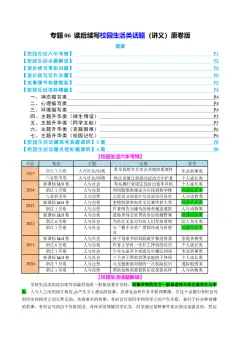
清单06 社会生活和个人成长
1. household adj. 家庭的
2. self-control n. 自制力;自我控制
3. gather vi. 聚集,集合 vt. 收拢;搜集,收集;聚
集
4. apologize v. 道歉(apology n. 道歉)
5. generation n. 一代(人)
6. independent adj. 独立的(independence n. 独立)
7. tolerate vt. 容忍;忍受(tolerant adj. 宽容的;容忍
的; tolerance n. 宽容)
8. talent/gift  n. 天赋,才能(talented/gifted adj. 有天
赋的)
9. adolescence n. 青春期;青春(adolescent adj. 青春
期的;青少年的 n. 青少年)
10. volunteer n. 志愿者 v. 自愿做;无偿做(voluntary
adj. 自愿的
11. responsible adj. 负责的;有责任的
responsibility n. 责任;义务
12. absent adj. 缺席的,缺勤的
13. accustomed adj. 习惯的,惯常的
14. celebrate v. 庆祝(celebration n. 庆祝;庆祝活动)
15. concentrate v. 聚精会神;集中(注意力)
16. excellent adj. 优秀的
17. dormitory n. 学生宿舍,寝室
18. contest n. 比赛,竞赛
19. confident adj. 自信的
20. curious adj. 好奇的;奇特的
21. scholarship n. 奖学金
22. agony n. 痛楚,苦难
23. property n. 房产;所有物;财产
24. individual adj. 独特的,与众不同的(一般含褒义)
25. mature adj. 成熟的,明白事理的
26. well-rounded adj. 全面发展的;面面俱到的
27. potential n. 潜力;可能性 adj. 潜在的,可能的
28. register vt. & vi. 登记;注册
29. graduation n. 毕业;毕业典礼
30. accommodation n. 住宿;膳宿
31. moral n. 道德;品行
32. criticism n. 批评
33. compromise n. 折中,妥协
认识自我、丰富自我、完善自我60 个
34. disheartened adj. 沮丧的,灰心的
35. subtle adj. 难以察觉的;微妙的
36. bittersweet adj. 苦乐参半的
37. persistent adj. 坚持不懈的,不屈不挠的;持续的
38. agenda n. (会议)议程表;议事日程
39. certificate n. 证书;文凭
40. compulsory adj. 强制的,必须做的
41. curriculum n. 课程
42. interval n. 间隔;间歇
43. boast v. 夸口说,自吹自擂;有(值得自豪的东西)
44. credit n. 信用,信誉;[金融]贷款;学分;信任
45. lead/live a…life 过着……的生活
46. devote oneself to 致力于,献身于
47. be keen on 对……着迷的,对……有强烈兴趣的
48. ask for leave 请假
49. sign up (for sth.) 报名(参加课程)
50. meet/satisfy one’s demands 满足某人的需求
1. ordinary adj. 普通的;平常的
2. outgoing adj. 爱交际的;外向的
3. handsome adj. 英俊的;帅的
4. pretty adj. 漂亮的;俊俏的
5. ugly adj. 丑陋的;难看的
6. pale adj. 苍白的;灰白的
7. figure n. 体形;身材
8. overweight adj. 超重的
9. stubborn adj. 固执的;倔强的
10. acquisition n. 获得,习得
11. facial adj. 面部的
12. obey v. 服从;遵守
13. pleased/delighted adj. 高兴的
14. intelligent adj. 聪明的;机智的
15. outstanding adj. 杰出的
16. warm-hearted adj. 热心的
17. character n. 品格;特点
18. personality n. 个性;性格
19. grateful adj. 感激的
20. cultivate vt. 培养,养成(技能、态度或素质)
21. positive adj. 积极的;明确的
22. plain adj. 朴素的;简单的
23. desperate adj. 绝望的;渴望的;不顾一切的
24. blank adj. 茫然的;空虚的
25. indifferent adj. 冷漠的
26. violent adj. 暴力的
27. virtue n. 美德;品行
28. competent adj. 能胜任的
29. weep v. 哭泣;流泪
30. honourable adj. 可敬的;光荣的(=honorable)
31. complex adj. 复杂的;难以理解的
32. diligent adj. 勤奋的;勤勉的(diligence n. 勤奋)
33. depress vt. 使沮丧(depressed adj. 沮丧的;
depression n. 沮丧)
34. aggressive adj. 侵略性的;好斗的
35. ridiculous adj. 荒谬的;愚蠢的;荒唐的
36. characteristic adj. 典型的;独特的 n. 特征;特性
37. initiative n. 主动性;积极性
38. cognition n. 认识,认知
39. righteous adj. 正派的,正直的
40. intently adv. 专心地;一心一意地
41. compassionate adj. 有同情心的
42. profound adj. (感情) 强烈的,深切的;深厚的
43. bookish adj. 好读书的,书呆子气的
44. misjudge v. 对(人或情况) 判断错误
45. exclaim v. (因惊讶、愤怒或兴奋而) 呼喊,惊叫
46. rigid adj. 死板的;僵硬的;固执的
47. punctual adj. 守时的;准时的
48. straightforward adj. 简单的;坦率的
49. conservative adj. 保守的;守旧的 n. 保守的人;
保守者
50. absent-minded adj. 心不在焉的
51. controversial adj. 引起争论的;有争议的
于
乐于学习、善于学习、终身学习60 个
52. be curious about 对……好奇
53. be relaxed with/get on well with 与……相处融洽
54. be active in 在……很积极
55. be of medium height 中等身材
56. below average 低于平均水平
57. be devoted to 致力于;专注于
58. be responsible for 对……负责
59. have a talent/gift for 有……才能/天赋
60. be satisfied/content with 对……满意
1. classic adj. 经典的 n. 名著
2. flexible adj. 灵活的,可变通的
3. concept n. 概念;想法;理念
4. willpower n. 意志力;毅力
5. context n. 上下文;语境;背景
6. timely adj. 适时的,及时的
7. beyond prep. 超出……范围
8. breakthrough n. 突破;重大进展
9. degree n. 程度,等级;度;学位;阶层
10. technical adj. 工艺的,科技的;技术上的;专门
的
11. polish vt. 修改,润饰;擦光,磨光 n. 抛光,上
光
12. gap n. (大的)差距,差额,差别
13. comprehension n. 理解力,领悟能力;理解练习
14. ignorant adj. 无知的;愚昧的
15. simplification n. 简单化;单纯化
16. renew vt. 更新,更换;重新开始,中止后继续
17. pursue vt. 继续;从事;追赶;追求 vi. 追赶;继
续进行
18. drill vt. & vi. 培训,训练;钻(孔) n. 练习,训练;
钻,钻头
19. arrange vt. 排列,布置(arrangement n. 计划;安
排)
20. inquire vt. & vi. 询问,打听
21. access n. 接触的机会;进入(accessible adj. 易接
近的;可进入的;可理解的)
22. familiar adj. 熟悉的;常见的;亲近的
23. approach n. 方法
24. likely adj. 很可能的;合适的;有希望的;adv.
很可能;或许
25. academic adj. 学术的;理论的;学院的
26. reference n. 参考;提到;推荐信(refer vi. 参考;
涉及;提到;查阅 vt. 推荐;委托)
27. effective adj. 有效的,产生预期效果的(effectively
adv. 有效地)
28. composition n. 构图;构成,成分;作品;作曲
29. automatic adj. 自动的;无意识的
30. competence n. 能力,才干;胜任
31. odd adj. 奇特的
32. statistic n. 数据
33. sufficient adj. 充足的
34. normally adv. 通常,平常
35. cease vi. & vt. 停止,终止,结束
36. random adj. 随机的;辨认不出的;不合常理的
37. assumption n. 假定,假设
38. abstract adj. 抽象的,纯理论的 vt. 把……抽象出,
提取
39. bounce vt. (向某人)试探地透露(主意) vi. 跳动 n.
弹跳;活力
40. concrete adj. 确实的,具体的;有形的,实在的
n. 混凝土
41. recreation n. 娱乐,消遣
42. strategy n. 策略;战略;规划
43. periodically adv. 定期地
44. consultation n. 就诊;咨询;查阅
45. vocational adj. 职业的,业务知识的
46. extension n. 进修课;扩大,延伸
47. refresh vt. & vi. 更新;使恢复精力;使想起
48. strategic adj. 战略(上)的;至关重要的
49. presentation n. 幻灯片演示;提交,授予;展示会;
演出
50. verbal adj. 言语的,文字的;口头的
51. take in 吸收;领会
未来职业规划50 个
健康生活方式40 个
52. catch up with 赶上,追上
53. work out 弄懂某事物;计算出
54. have a good command/knowledge of… 精通/ 了
解……
55. be bound to do… 一定会,很可能会
56. keep pace with 与……步调一致;与……并驾齐驱
57. reflect on 思考
58. become aware that 意识到,了解到,知道
59. be perceived as 被视为,被理解为,被认为
60. be impressed on/upon sb 给某人留下深刻的印象
1. author n. 作者,作家
2. employ vt. 雇用(employee n. 受雇者;雇员;
employer n. 雇用者;雇主;employment n. 雇用;职
业;工作;
unemployed adj. 失业的;被解雇的)
3. editor n. 编辑;编者;校订者
4. fire v. 解雇
5. journalist n. 记者
6. librarian n. 图书管理员
7. specialist n. 专科医生;专家;专业人员
8. photographer n. 摄影师
9. monitor n. 班长vt. 监视
10. occupation n. 职业
11. opportunity n. 机会
12. possible adj. 可能
13. proficiency n. 熟练;娴熟;精通
14. rational adj. (想法、决定等)合理的,基于理性的
15. manufacturer n. 制造商;制造公司,制造厂
16. entrepreneurial adj. 具有企业家素质的
17. designer n. 设计师
18. advertisement n. 广告
19. justice n. 公平;公正;合理
20. brand n. 品牌;牌子
21. exceed v. 超过,超出
22. interview n. & vt. 采访;会见;面试
23. manage v. 管理;设法完成
24. poster n. [C]海报;招贴画
25. accountant n. 会计;会计师
26. capable adj. 有能力的
27. deputy n. 副职,副手;代表,代理人
28. attendant n. 服务人员;侍者;随从
29. prospect n. 可能性,希望;前程
30. priority n. 优先事项
31. potential adj. 可能的,潜在的 n. 可能性;潜在性;
潜能
32. vacant adj. 空缺的;未被占用的
33. surgeon n. 外科医生
34. orient vt. 使适应;面对;确定方向
35. afloat adj. 经济上周转得开的;不欠债的
36. dismiss vt. 让……离开;遣散;解散;解雇
37. competent adj. 足以胜任的
38. promotion n. 晋升;提拔
39. personnel n. 人员;人事部门
40. porter n. (尤指火车站、机场或旅馆)搬运工
41. staff n. 全体职工;行政人员
42. client n. 客户,顾客
43. enterprising adj. 有创业精神的;有事业心的;有
进取心的
44. supervise vt. & vi. 主管;指导;监督
45. contract n. 合同;契约
46. be expert in ……方面的专家
47. be appointed as 被任命为
48. apply to sb for. . . 向某人申请……
49. be fit/qualified/suitable for 适合
50. resign from 从……辞职
1. mental adj. 精神的;智力的
2. muscle n. 肌肉;(食用)瘦肉
3. homemade adj. 自制的,家里做的
4. obesity n. (过度)肥胖;肥胖症
5. slim vi. 变苗条;减肥 adj. 苗条的;纤细的
6. appetite n. 食欲,胃口;强烈欲望
7. digest vt. & vi. 消化;领会,理解 n. 摘要,文摘
8. sugary adj. 含糖的;甜的
9. nutrition n. 营养,滋养
10. physically adv. 肉体地,身体上地
11. fitness n. 健康
12. envy n. & vt. 羡慕;忌妒
13. mood n. 情绪,心情;气氛,氛围
14. upset adj. 心烦的,苦恼的 vt. 使心烦;打翻;扰
乱
15. weakness n. 缺点;虚弱;弱点
16. rejection n. 拒绝,否决
17. strength n. 强项;长处;力量(strengthen vt. 加强;
巩固;使坚强 vi. 变强)
18. cooperation n. 合作;协作(cooperate vi. 合作,配
合;协作)
19. enthusiastic adj. 热心的,热衷的(enthusiasm n.
热心,热忱,热情)
20. chef n. 主厨,厨师
21. raw adj. 生的;未加工的
22. symptom n. 症状;征兆
23. dynamic adj. 充满活力的;精力充沛的;动态的
24. consume vt. 吃,喝,饮;消耗,耗费(尤指燃料、
能量或时间)
25. prejudice n. 偏见;成见
26. pessimistic adj. 悲观的;悲观主义的
27. adversity n. 困境;逆境
28. adore vt. & vi. 崇拜;爱慕;喜爱;极喜欢
29. interaction n. 交流
30. prescription n. 药方;诀窍
31. abortion n. 中途失败
32. vegetarian n. 素食主义者;食草动物 adj. 素食的;
素的
33. cater v. 迎合;满足需要;提供饮食及服务
34. appetizer n. 开胃物,开胃食品;前菜,第一道菜
35. epidemic adj. 流行的;传染性的 n. 传染病;流
行病;(风尚等的)流行
36. pandemic adj. (疾病)在全国(或世界)流行的 n. (全
国或全球性)流行病,瘟疫
37. companionship n. 友谊;友好交往
38. long face 愁眉苦脸
39. crack a smile 笑了起来
40. put sb on the spot(故意提出难以回答或尴尬的问题)
使某人难
例题1(2025 年普通高等学校招生全国统一考试(新课标I 卷)英语真题A)
The greening of planes, trains and automobiles
Moving goods and people around the world is responsible for a large part of global CO₂ emissions(排放). As
the world races to decarbonize everything, it faces particular problems with transportation — which accounts for
about a quarter of our energy - related greenhouse gas emissions. Here's the breakdown of the emissions in 2018 for
different modes of transport.
The fuels for transport need to be not just green, cheap and powerful, but also lightweight and safe enough to
be carried around. Each mode of transport has its specific fuel.
This energy transition(变革) is global, and the amount of renewable energy the world will need is "a little bit
mind - blowing," says mechanical engineer Keith Wipke at the National Renewable Energy Laboratory. It's
estimated that the global demand for electricity could more than double by 2050. Fortunately, analyses suggest that
renewables are up to the task. “We need to speed up the development of green energy, and it will all get used," says
Wipke.
21. What percentage of global transport emissions did road vehicles account for in 2018?
A. 11. 6%.
B. 45. 1%.
C. 74. 5%.
D. 86. 1%.
22. Which mode of transport can go green comparatively easily?
A. Planes
B. Trucks.
C. Trains.
D. Ships.
23. What does Wipke suggest regarding energy transition?
A. Limiting fuel consumption.
B. Putting more effort into renewables.
C. Improving energy efficiency.
D. Making electricity more affordable.
重点单词
1. ________ adj. 特别的,尤其的
2. ________ v. 脱碳
3. ________ n. 方式
4. ________ adj. 特定的
5. ________ n. 选择
6. be responsible for ________________
7. account for ________________
8. plug (sth. ) into sth. ________________
9. up to ________________
10. speed up ________________
熟词生义
1. breakdown  熟义:n. 故障,破损 文章义:n. ________
2. settle 熟义:v. 安居,安定 v. ________
派生词
1. transport v. (用交通工具)运输,运送;(以自然方式)运输→________ n. 交通
2. power n. 力量→________ adj. 有力的
3. sustain v. 保持 →________ adj. 可持续的
4. recycle v. 循环→________ adj. 回收的
5. electric n. 电→________ v. 使电气化
6. design v. 设计→________ n. 重新设计
7. analyze/se v. 分析→________ n. 分析
合成词
1. greenhouse + gas =greenhouse gas n. ________________
2. light+ weight= lightweight n. ________________
3. energy+ efficient= energy-efficient adj. ________________
4. solid+ state=solid-state adj. ________________
5. mind+ blow= mind-blowing adj. ________________
一、完形填空
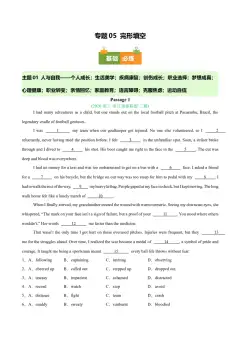
My parents have a 91-year-old neighbour, Helen, who is cared for by nearby friends. Recently, my dad made
it his     1     to move Helen’s mailbox, as it was     2     placed down a steep (陡峭的) driveway off a
busy highway.
He     3     the mail service and arranged to     4     the mailbox location. Since Helen’s house is
brick, attaching a mailbox directly was not an     5    . Then, at a flea (跳蚤) market, my dad, a keen collector,
6     an old-fashioned metal milk can, which     7     him of the first mailbox he and my mother shared years
ago. Several days later, he managed to secure an old mailbox,     8     the milk can with concrete, set the
mailbox on top, and     9     it near Helen’s front door. Now Helen can safely fetch her mail.
Later that week, Helen called to thank my dad, expressing how     10     she felt to have such loving
11    . She even invited him to     12     some timeless treasure from her backyard. After hanging up, my dad
thought aloud about the whole thing.
When we drove by Helen’s house, my dad looked at the old mailbox, reborn through his quiet     13    .
This small action brings fresh tears to my eyes, though it is no surprise that my dad lives to     14     others.
My father, in his thoughtful and well-timed way,     15     said, “That was your mother’s and my first mailbox.
I can still picture it standing by the road all those years ago. ”
1. A. mission
B. proposal
C. reaction
D. ambition
2. A. conveniently
B. dangerously
C. cautiously
D. strategically
3. A. rescued
B. established
C. restored
D. contacted
4. A. change
B. check
C. mark
D. register
5. A. example
B. item
C. option
D. order
6. A. captured
B. invested
C. grabbed
D. spotted
7. A. warned
B. convinced
C. reminded
D. informed
8. A. compared
B. filled
C. provided
D. mixed
9. A. placed
B. stretched
C. relieved
D. hid
10. A. inspired
B. blessed
C. rewarded
D. exhausted
11. A. postmen
B. neighbours
C. collectors
D. drivers
12. A. take over
B. hand in
C. pick out
D. put away
13. A. support
B. struggle
C. reflection
D. kindness
14. A. respect
B. impress
C. serve
D. entertain
15. A. frankly
B. sorrowfully
C. critically
D. simply
二、阅读理解
A
Ruchita Sahukari, born with Osteogenesis Imperfecta (OI)( 脆骨症), is now pursuing journalism at IIMC
from a wheelchair, challenging the odds against her. Despite social cruelty and schools refusing admission, her
parents’ powerful backing kept her hope alive. Until 18, she was excluded from basic schooling and felt depressed.
At 18, Ruchita’s life changed when she joined Amrithavarshini, an NGO in Kerala. There, she met others
with OI and made friends who inspired her. To bridge the academic gap, she completed the Bachelor Preparatory
Programme at IGNOU in 2021 and earned a BA in English Literature in 2023. She then desired to become a
journalist and set her sights on IIMC.
Getting into IIMC’s Eastern Regional Campus was one victory; moving around inside it freely was another.
In India, where few educational institutions are fully accessible, Ruchita’s arrival motivated the campus to change.
The administration built ramps(斜坡), constructed a special room in the ladies’ hostel, and allowed her mother to
stay on campus to assist her.
“Supporting Ruchita is a reflection of our core values. Removing barriers nurtures dignity, courage, and the
right to dream,” says Dr Anand K Pradhan, Regional Director of IIMC Dhenkanal. Her classmates also created a
supportive ecosystem, helping her pursue her dreams.
Ruchita has already published stories, covering often overlooked topics. Her most challenging assignment
was the 2025 Bihar elections coverage, but her friends supported her. "They make me feel like nothing is
impossible," she says.
This year, Ruchita received the Rare Star Award from ORDI for her advocacy work. She dreams of
becoming an advocacy journalist, highlighting policy gaps and accessibility failures. Her message to parents raising
children with disabilities is direct: Parents have the responsibility to educate themselves and empower their child.
You must trust and empower your child instead of leaving them weak. Change within the family, within the home,
is the stepping stone towards bringing social change.
1. What kept Ruchita’s hope alive when she faced difficulties?
A. Her own strong will.
B. The help from her friends.
C. Her parents’strong support.
D. The assistance from the NGO.
2. What did Ruchita do at the age of 18?
A. She joined an NGO in Kerala.
B. She completed a BA degree.
C. She started to pursue journalism.
D. She published some stories.
3. What do we know about IIMC’s Eastern Regional Campus before Ruchita’s arrival?
A. It offered no journalism courses.
B. It refused disabled students’ admission.
C. It let parents stay on campus to assist students.
D. It lacked full accessibility for disabled students.
4. Which of the following can best describe Ruchita?
A. Pessimistic and self-centered.
B. Positive and strong-willed.
C. Ambitious and noble-minded.
D. Creative and warm-hearted.
B
In a groundbreaking development for neuroscience, a team at Tsinghua University has successfully tested a
next-generation “Brain-Computer Interface”(BCI) that allows paralyzed patients to control robotic limbs with
unprecedented precision. Unlike previous models that required invasive surgery and often caused immune
reactions, this new device is minimally invasive and uses flexible electronics that mimic the texture of brain tissue.
The technology, detailed in the journal Nature, works by placing a mesh of electrodes on the brain’s surface.
These electrodes pick up neural signals and translate them into digital commands in milliseconds. In clinical trials,
a 35-year-old patient with spinal cord injury was able to grasp a cup of water and feed himself using a robotic arm,
a task he hadn’t performed in over a decade.
The implications extend beyond mobility. Researchers believe this technology could eventually help restore
speech to patients with locked-in syndrome or treat neurological disorders like Parkinson’s. “This is not just about
moving a limb,” said Professor Zhang, the lead researcher. “It’s about restoring a sense of agency and connection to
the world. ”
However, the technology raises profound ethical questions. As BCIs become more advanced, issues of
privacy, data security, and “neuro-rights” come to the forefront. Who owns the data generated by your brain? Could
this technology be hacked? These are questions scientists, lawmakers, and society must answer as we enter this new
era of human augmentation.
5. What is the key advancement of the new BCI?
A. It requires major brain surgery.
B. It uses rigid materials for stability.
C. It is minimally invasive and biocompatible.
D. It is only used for experimental purposes.
6. What was achieved in the clinical trial?
A. A patient regained full mobility.
B. A patient controlled a robotic arm to perform a daily task.
C. A patient recovered from spinal cord injury.
D. A patient communicated verbally.
7. According to Professor Zhang, what is the deeper impact of this technology?
A. It will replace all traditional medical treatments.
B. It will make robots smarter than humans.
C. It restores the patient's sense of control and connection.
D. It eliminates the need for physical therapy.
8. What is the main concern discussed in the last paragraph?
A. The high cost of the surgery.
B. The potential for job loss.
C. Ethical issues regarding brain data privacy.
D. The lack of qualified surgeons.
三 阅读理解七选五
In psychology, the word “prove” is used carefully, much like a painter applies each brushstroke(笔触) with
great care. Unlike the strong conclusions in physical sciences, psychological research builds a bigger picture
through many small studies.

 1

  His discovery was not a sudden breakthrough but the result of hard and
detailed work.
Similarly, Elizabeth Loftus’s research doubts how accurate witness reports are. Instead of calling it
“unreliable,” researchers use terms like “potential unreliability.”

 2

  So, they use words like “demonstrate”
and “suggest” to show the uncertainty in their conclusions.


 3

  Instead, I teach my students to think critically about how to use it, much like a gardener who
cares for plants. When students first use the word, I encourage them to think about factors that could challenge their
conclusions. For example, I might ask them, “How do we know that not all participants had false memories?” Or,
for French students, “Why might these findings not apply to French culture?”
This approach helps students grasp the complexity of psychological research and develop critical thinking
skills. It encourages them to reflect and analyze, helping them communicate their findings with accuracy.

 4
In psychology, “proving” something is like building a symphony.

 5

  In education, teaching critical
thinking and clear language use is essential for understanding the core of psychological research.
A. This indicates that findings might change.
B. In my classroom, I do not ban the word “prove.”
C. Each piece of evidence adds to a larger understanding.
D. Psychological theories are often revised as new evidence emerges.
E. As a teacher, I often remind my students to use this word appropriately.
F. This method also builds appreciation for the depth of psychological inquiry.
G. For example, Eric Kandel spent years studying sea animals to learn how memory works.
四、语法填空
阅读下面短文,在空白处填入1 个适当的单词或括号内单词的正确形式。
Among the foundational cornerstones of early Chinese civilization, Hongshan Culture holds a place of
profound significance. Hongshan Culture, flourishing roughly from 4700 to 2900 BCE in

 1

  is now
Liaoning Province and neighboring regions, stands

 2

  one of China’s most remarkable Neolithic (新石
器) cultures. The most famous site, Niheliang,

 3

 (feature) a magnificent temple and rubble-mound stone
tombs. Hongshan Culture is

 4

 (unique) characterized by its ritual(礼仪的) practices, which reflect a
sophisticated social structure far beyond many contemporary cultures.
Hongshan Culture,

 5

  influence spreads across a vast area of Northeast China, offers a fascinating
insight into early Chinese civilization. It is famed for its jade artifacts, such as the iconic “C-shaped dragon” and
pig-dragon statues that demonstrate an unparalleled level of craftsmanship and a

 6

 (symbol) belief
system. Besides jade, Hongshan people also built large-scale ceremonial sites,

 7

     (highlight) their
organizational capabilities.
Equally notable is the

 8

 (maintain) of cultural continuity in the region. Elements of Hongshan’s
jade art and ritual traditions have greatly influenced later Chinese civilizations, forming

 9

  important link
in the country’s cultural heritage. Today, ongoing archaeological work enables new evidence

 10


 (uncover)
every year, helping us better understand the origins of ancient Chinese societies and their spiritual world.
五、书面表达
阅读下面材料,根据其内容和所给段落开头语续写两段,使之构成一篇完整的短文。
When I was a child, I lived in a small town in Portugal. People in our neighborhood were very close and
always helped each other. There were many small shops in our street — a baker, a fish seller, a vegetable seller, and
a small grocery store. Most families didn’t have much money, but we managed to live comfortably enough.
One family struggled more than others — the Silva family who lived next to the church. Mr. Silva worked as
a cleaner but found it hard to find regular work. He had four young children to feed. My mother always felt sorry
for them. “Those children need warmer clothes,” she would say. “And they look so thin.” Since our family was a
little better off, my mother often cooked extra soup or bread and brought it to the Silva family.
I remember one winter that was especially difficult. Even my father’s construction work became less
frequent. We had to be careful with our money and food. One evening, my mother heard that Mr. Silva had lost his
job. Without thinking twice, she started preparing a large pot of bean soup. “But Mother,” I complained, “that’s our
dinner for tomorrow!” She simply replied, “They have nothing to eat tonight. We still have some food for
tomorrow. ”
Thankfully, things improved when spring came. Mr. Silva found a steady job at a new hotel in town. The
family began to stand on their own feet again.
Just when everything seemed better, my father had an accident at a construction site and broke his leg. He
couldn’t work for months. My mother’s small income from sewing clothes wasn’t enough for our family. We fell
behind on rent and had to borrow money for food. My sister and I thought we would have to leave school.
注意:1. 续写词数应为150 左右;
2. 请按如下格式在答题卡的相应位置作答。
Then something wonderful happened.
____________________________________________________________________________________________
____________________________________________________________________________________________
____________________________________________________________________________________________
____________________________________________________________________________________________
____________________________________________________________________________________________
____________________________________________________________________________________________
____________________________________________________________________________________________
____________________________________________________________________________________________
With Mr. Silva’s help, our life slowly returned to normal.
____________________________________________________________________________________________
____________________________________________________________________________________________
____________________________________________________________________________________________
____________________________________________________________________________________________
____________________________________________________________________________________________
____________________________________________________________________________________________
____________________________________________________________________________________________
____________________________________________________________________________________________