文档文本内容
话题 12 良好的人际关系与社会交往
Ⅰ.闪记核心单词
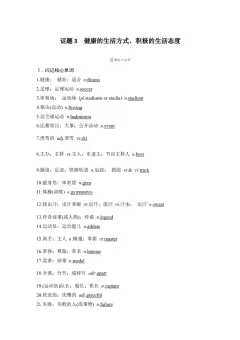
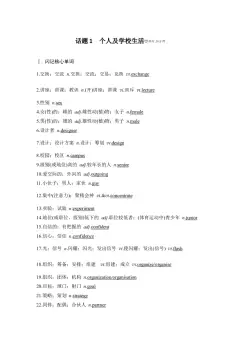
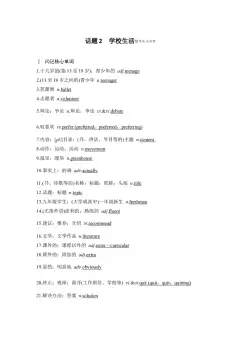
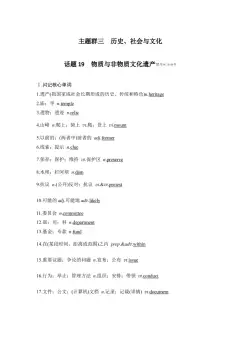
1.交流;相互影响 n.interaction
2.合适的;恰当的 adj.appropriate
3.表现;表达;说明;证明 vt.demonstrate
4.手势;姿势;姿态 n.gesture
5.当场看到;目击;见证 vt.目击者;证人 n.witness
6.相同的 adj.identical
7.面颊;脸颊 n.cheek
8.鞠躬;点头 vi.低(头) vt.弓;蝴蝶结 n.bow
9.腰;腰部 n.waist
10.隔阂;障碍 n.barrier
11.假装的;假的;冒充的 adj.fake
12.愤怒;怒气 n.使生气;激怒 vt.anger
13.发生的事情;严重事件;冲突 n.incident
14.审讯;审判;试验;试用 n.&v.trial
15.略微;稍微 adv.slightly
16.双胞胎之一的;孪生之一的 adj.孪生之一;双胞胎之一 n.twin
17.不涉及言语的;非言语的 adj.nonverbal
18.评估;评价 vt.assess
19.内部的;里面的 adj.internal
20.故作姿态;(为画像、拍照等摆的)姿势 n.摆好姿势 vi.造成(威胁、问题等)vt.pose
21.(使)弯曲;倾斜;偏向 vt.&vi. bend (bent , bent)
22.揭示;显示;露出 vt.reveal
23.使更清晰易懂;阐明;澄清 vt.clarify
24.(给试卷、习题等)打钩号 vt.(钟表)发出嘀嗒声 vi.钩号 n.tick
25.趋势;倾向 n.tendency
26.把……放低;降低;减少 vt.下方的;较小的 adj.lower
27.意味着;暗示 vt.imply
28.几乎不;勉强才能;刚刚 adv.barely
29.下巴 n.chin
30.盯着看;凝视 vi.凝视 n.stare
31.天花板;上限 n.ceiling
32.分散(注意力);使分心 vt.distract
33.察觉;看待;理解 vt.perceive
34.胸部;胸膛 n.chest
35.费心;麻烦;因……操心 vi.&vt.麻烦;不便 n.bother
36.哭泣;流泪 vi.&vt. weep (wept , wept)
37.矛盾;冲突 n.冲突;抵触 vi.conflict
38.最终;最后 adv.ultimately39.(对……)起反应;回应 vi.react
40.组成部分;零件 n.component
41.语气;腔调;口吻 n.tone
42.(根据情况)变化;改变 vi.vary→不同的;各种各样的 adj.various→多样性;
变化;种类 n.variety
43.赞成;同意 vi.批准;通过 vt.approve→赞成;同意;批准 n.approval→赞许
的;赞成的 adj.approving
44.使用;应用;雇用 vt.employ→雇员;受雇者 n.employee→雇主;雇用者
n.employer→雇用;聘用 n.employment
45.把……理解(解释)为 vt.口译 vi.&vt.interpret→口译,解释 n.interpretation→
口译者 n.interpreter
46.相异;不同于 vi.differ→不同的;有差异的 adj.different→差别;差异
n.difference
47.较喜欢;选择;有利于 vt.帮助;恩惠;赞同 n.favour→赞成的;有利的
adj.favourable
48.可靠的;可信赖的 adj.reliable→依赖;信赖 vi.rely
49.教师;教育工作者;教育家 n.educator →教育 vt.educate →受过教育的;有
教养的 adj.educated→教育 n.education
50.占据;占用 vt.occupy→使用中;忙于;被占领的 adj.occupied→占领;职业
n.occupation
51.区分;辨别 vi.&vt.distinguish→卓越的;杰出的 adj.distinguished
52. 难 堪 的 ; 尴 尬 的 adj.embarrassed→ 使 人 难 堪 的 ; 令 人 尴 尬 的adj.embarrassing→使窘迫;使尴尬 vt.embarrass→难堪;窘迫 n.embarrassment
53.羞愧;惭愧 adj.ashamed →羞耻;羞愧;让人遗憾的事 n.shame→可耻的
adj.shameful→无耻的;没廉耻的 adj.shameless
54.询问;打听 vi.&vt.inquire/enquire→询问;调查 n.inquiry/enquiry
55.调整;调节;适应 vt.适应;(使)习惯 vi.&vt.adjust →可调整的;可调节的
adj.adjustable→调整;调节;适应 n.adjustment
56.干预;介入 vi.intervene→干预;介入 n.intervention
Ⅱ.速记重点短语
1.在不同文化间有不同 vary from culture to culture
2.相比之下 by contrast
3.同意,赞同 approve of sb/sth/in favour of
4.与……相同 be identical to/be the same as
5.把……理解为 interpret...as...
6.(与……)相比较 by comparison
7.亲吻某人的脸颊 kiss sb on the cheek
8.熬/渡过困难时期 get through difficult situations
9.消除;分解;打破 break down
10.感到沮丧孤独 feel down/blue
11.进行评价和推断 make assessments and inferences
12.直起来;整理;收拾整齐 straighten up
13.(短暂地)访问;要求(某人讲话等);正式邀请 call on
14.结果是,以做……告终 end up doing sth
15.读懂人们肢体语言的关键 the key to reading people’s body language
16.换句话说;也就是说 in other words
17.倾向于做某事 tend to do/ have a tendency to do sth
18.皱着眉头 wear a frown
19.懒得梳头 not bother to brush one’s hair20.在工作,在运转,在影响 at work
21.和……发生严重冲突 have serious conflicts with sb
22.从学校得到最大的收获 get the most out of school
23.对……起反应 react to
Ⅲ.快记经典句式
1.The crucial thing is using body language in a way that is appropriate to the culture
you are in. (动名词短语作表语)
使用肢体语言时,最重要的是要符合你所处的文化。
2.In France, a person encountering an identical gesture may interpret it as meaning
zero.(现在分词短语作定语)
在法国,看到同一个手势的人可能会将其解读为“零”。
3.A smile can help us get through difficult situations and find friends in a world of
strangers.A smile can break down barriers.(排比)
微笑可以帮助我们渡过困境,在陌生的世界里找到朋友。微笑可以消除隔阂。
4.And if we are feeling down or lonely,there is nothing better than seeing the
smiling face of a good friend.(“否定词+比较级”表示最高级)
当我们感到沮丧或孤独时,最美好的事情莫过于看到好朋友的笑脸。
5.Can you describe a situation where you might smile when you don’t mean it?
(where引导定语从句)
你能描述一个你不是真心微笑的情形吗?
6.At the same time, in a classroom of more than forty students, it is hard to have many
one-to-one conversations with each person. So, how can I really know what
makes each student tick.(习语“使某人这样做的原因”)
同时,在一个四十多人的教室里,很难与每个人进行一对一的交谈。那么,我是如何搞清楚每个学生为何会这样的呢?
7.Of course,not everyone who looks up is paying attention in class.(部分否定)
当然,不是每个抬头看的人都在专心听讲。
8.With their chins on their hands,they occupy themselves by staring out of the
window or up at the ceiling.(with复合结构)
他们两手托着下巴,非常专注地盯着窗外或上面的天花板。
9. While it is easy to perceive when students are interested , bored , or distracted ,it
is sometimes much harder to distinguish when students are troubled.(while引导让步
状语从句)
尽管学生们何时(对讲课)感兴趣、何时感到无聊或精力不集中是容易察觉的,
但要发现学生何时有困扰有时会难得多。
10.Students who are angry, afraid, or experiencing anxiety may have their arms
crossed in front of their chests and their legs closed or crossed,like they are
guarding their bodies.(have sth done; 动作描写)
愤怒、害怕或焦虑的学生可能会双臂交叉抱在胸前,他们双腿并拢或交叉,就
像他们在保护自己的身体一样。
11.Whatever it is, I know I need to inquire and access what is going on.(whatever 引
导让步状语从句)
无论什么原因,我都需要询问并断定在发生什么事情。
12.Their body language lets me know when to adjust class activities , when to
intervene , and when to talk to students individually ,so they can all get the most out
of school.(疑问词+不定式)
他们的肢体语言让我知道该何时调整课堂活动、何时干预、何时与学生单独谈话,从而让他们在校收获最大。
Ⅳ.话题语篇填空
Not all 1.cultures(culture) greet each other the same way. Each country may have 2.its
(it) own way to express feelings. In Britain, people may keep 3.a certain distance,
4.while Japanese may bow to each other when they meet. In France, people shake
hands and kiss each other twice on each cheek, 5.which may make the British people
uncomfortable. And in South American countries, they may stand close and touch
each other. However, in Middle East Muslim countries, men and women are not
6.socially (social) permitted to make eye contact, and men shake hands only with
men, not with women. In China today, people may shake hands with each other,
sometimes they greet each other only 7.with a smile. Smile actually 8.helps (help) us
get through difficult situations, make friends and break down barriers.
In general, 9.studying (study) international customs can certainly help avoid
difficulties in 10.today’s (today) world of cultural crossroads.