教 案
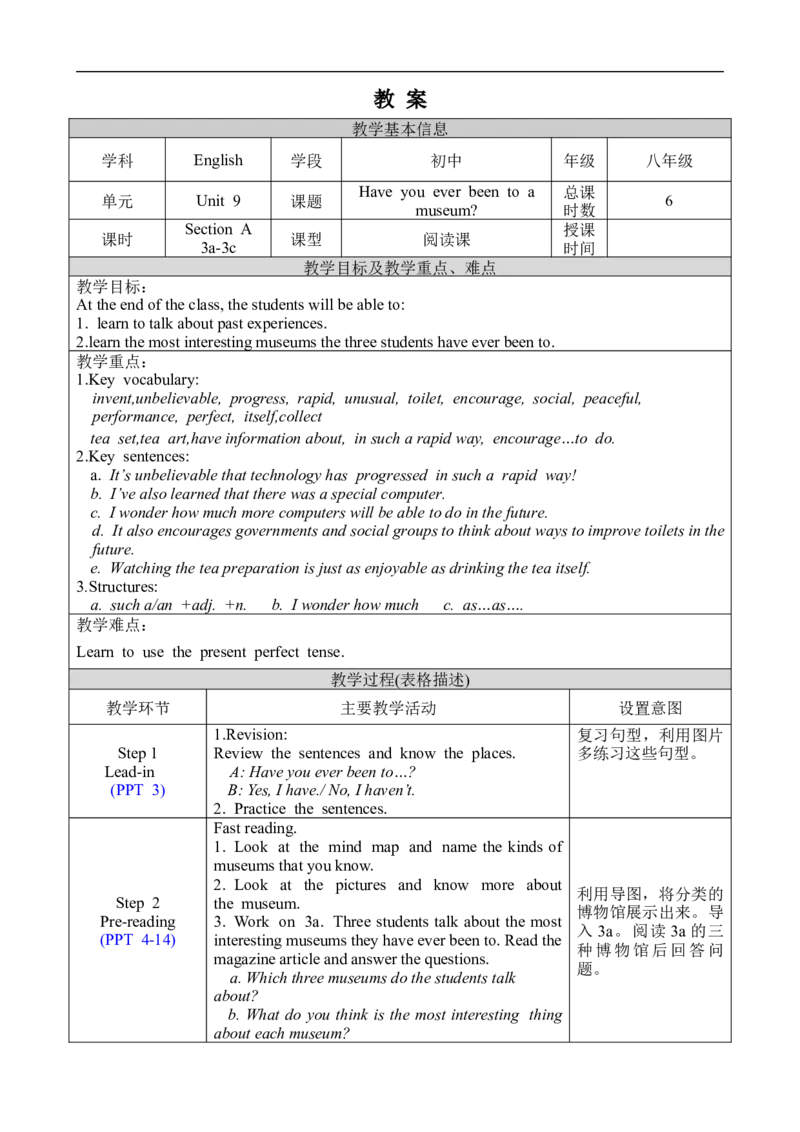
教学基本信息
学科 English 学段 初中 年级 八年级
Have you ever been to a 总课
单元 Unit 9 课题 6
museum? 时数
Section A 授课
课时 课型 阅读课
3a-3c 时间
教学目标及教学重点、难点
教学目标:
At the end of the class, the students will be able to:
1. learn to talk about past experiences.
2.learn the most interesting museums the three students have ever been to.
教学重点:
1.Key vocabulary:
invent,unbelievable, progress, rapid, unusual, toilet, encourage, social, peaceful,
performance, perfect, itself,collect
tea set,tea art,have information about, in such a rapid way, encourage…to do.
2.Key sentences:
a. It’s unbelievable that technology has progressed in such a rapid way!
b. I’ve also learned that there was a special computer.
c. I wonder how much more computers will be able to do in the future.
d. It also encourages governments and social groups to think about ways to improve toilets in the
future.
e. Watching the tea preparation is just as enjoyable as drinking the tea itself.
3.Structures:
a. such a/an +adj. +n. b. I wonder how much c. as…as….
教学难点:
Learn to use the present perfect tense.
教学过程(表格描述)
教学环节 主要教学活动 设置意图
1.Revision: 复习句型,利用图片
Step 1 Review the sentences and know the places. 多练习这些句型。
Lead-in A: Have you ever been to…?
(PPT 3) B: Yes, I have./ No, I haven’t.
2. Practice the sentences.
Fast reading.
1. Look at the mind map and name the kinds of
museums that you know.
2. Look at the pictures and know more about
利用导图,将分类的
Step 2 the museum.
博物馆展示出来。导
Pre-reading 3. Work on 3a. Three students talk about the most
入 3a。阅读 3a 的三
(PPT 4-14) interesting museums they have ever been to. Read the
种博物馆后回答问
magazine article and answer the questions.
题。
a. Which three museums do the students talk
about?
b. What do you think is the most interesting thing
about each museum?4. Answer the questions.
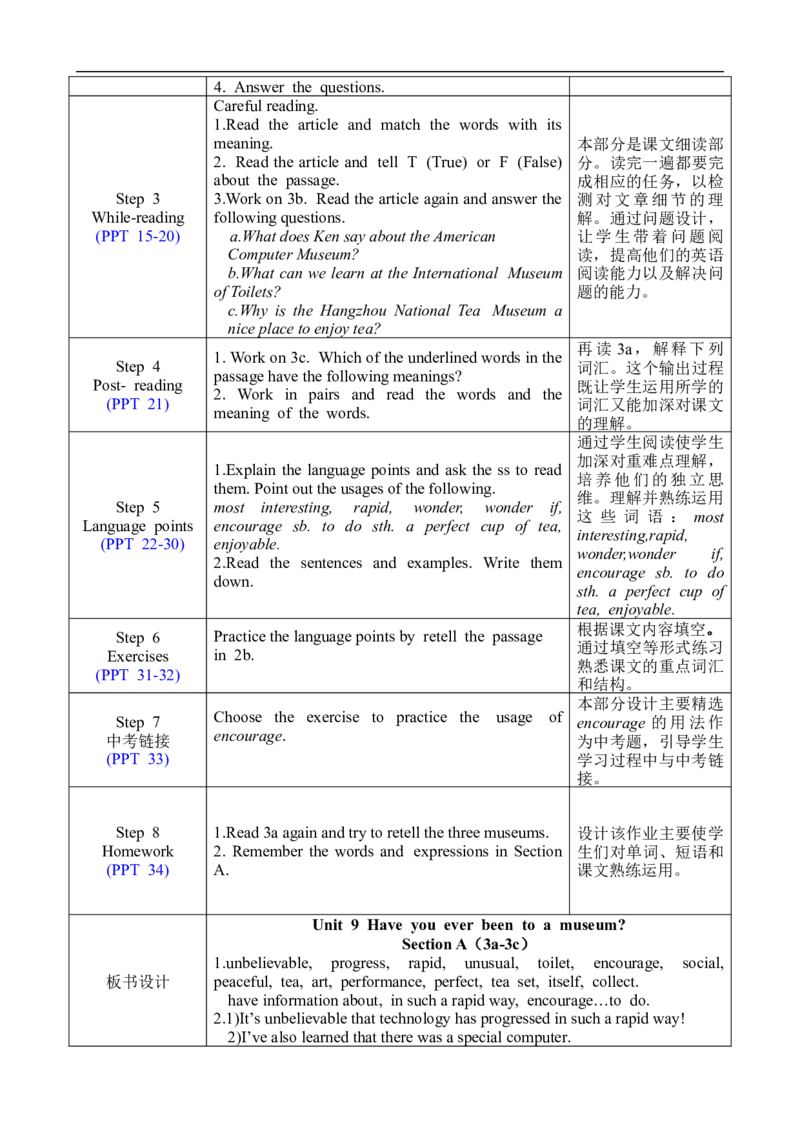
Careful reading.
1.Read the article and match the words with its
meaning. 本部分是课文细读部
2. Read the article and tell T (True) or F (False) 分。读完一遍都要完
about the passage. 成相应的任务,以检
Step 3 3.Work on 3b. Read the article again and answer the 测对文章细节的理
While-reading following questions. 解。通过问题设计,
(PPT 15-20) a.What does Ken say about the American 让学生带着问题阅
Computer Museum? 读,提高他们的英语
b.What can we learn at the International Museum 阅读能力以及解决问
of Toilets? 题的能力。
c.Why is the Hangzhou National Tea Museum a
nice place to enjoy tea?
再读 3a,解释下列
1. Work on 3c. Which of the underlined words in the
Step 4 词汇。这个输出过程
passage have the following meanings?
Post- reading 既让学生运用所学的
2. Work in pairs and read the words and the
(PPT 21) 词汇又能加深对课文
meaning of the words.
的理解。
通过学生阅读使学生
加深对重难点理解,
1.Explain the language points and ask the ss to read
培养他们的独立思
them. Point out the usages of the following.
维。理解并熟练运用
Step 5 most interesting, rapid, wonder, wonder if,
这 些 词 语 : most
Language points encourage sb. to do sth. a perfect cup of tea,
interesting,rapid,
(PPT 22-30) enjoyable.
wonder,wonder if,
2.Read the sentences and examples. Write them
encourage sb. to do
down.
sth. a perfect cup of
tea, enjoyable.
根据课文内容填空。
Step 6 Practice the language points by retell the passage
通过填空等形式练习
Exercises in 2b.
熟悉课文的重点词汇
(PPT 31-32)
和结构。
本部分设计主要精选
Step 7 Choose the exercise to practice the usage of encourage 的用法作
encourage.
中考链接 为中考题,引导学生
(PPT 33) 学习过程中与中考链
接。
Step 8 1.Read 3a again and try to retell the three museums. 设计该作业主要使学
Homework 2. Remember the words and expressions in Section 生们对单词、短语和
(PPT 34) A. 课文熟练运用。
Unit 9 Have you ever been to a museum?
Section A(3a-3c)
1.unbelievable, progress, rapid, unusual, toilet, encourage, social,
板书设计 peaceful, tea, art, performance, perfect, tea set, itself, collect.
have information about, in such a rapid way, encourage…to do.
2.1)It’s unbelievable that technology has progressed in such a rapid way!
2)I’ve also learned that there was a special computer.3) I wonder how much more computers will be able to do in the future.
4)It also encourages governments and social groups to think about ways to
improve toilets in the future.
5)Watching the tea preparation is just as enjoyable as drinking the tea itself.
3. 1)such a/an +adj. +n. .... 2) I wonder how much 3) as…as….
1.本节阅读课主要以各种各类博物馆为话题进行说明。
教学反思
2.通过本节课学习使学生了解科技和艺术的发展历史,开阔学生视野。