ARTICLE · 1233721
高中英语|每日语法填空精准训练——Day20

点击蓝字 关注我们


Da
y
20
每日语法填空精准训练
语篇一(2026·湖北月考)
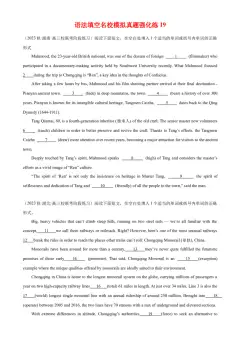
The traditional Chinese Longtaitou Festival, also called the Dragon-Head-Raising Festival, is a (1) (significance) traditional occasion. It falls on the second day of the second month of the Chinese lunar calendar each year, (2) (mark) the beginning of spring and the start of farming activities.
In ancient times, people firmly (3) (hold) the view that after this day, the rainfall increases as the rain-bringing Dragon King has woken up from his long winter sleep. The popular saying “Er yue er, long tai tou”, (4) means “On the second day of the second month, the dragon lifts its head”, (5) (vivid) reflects this belief.
This festival (6) (root) in ancient agricultural Chinese culture has seen some traditional celebration methods fade away, while others remain. One of the most well-known (7) (tradition) is getting a haircut. Some people assume that visiting the barber on this day can drive away bad luck.
Food also plays an important role in the celebration. In Fujian, people eat tofu balls, often making them pray for family well-being and business success. In Shandong, fried beans are (8) must-have. In Suzhou, Jiangsu, people have the tradition of eating chengyao cakes made of sticky rice. Meanwhile, other foods, like noodles, dumplings, spring rolls and popcorn, (9) (name) after dragon body parts to mark the day. Noodles are dragonˈs beard (long xu), dumplings are dragonˈs ears (long er), spring rolls are dragonˈs scales (long lin), (10) popcorn is dragon seeds (long zi).

1.此处修饰名词occasion,应用形容词作定语,故填significant。
2.分析句子结构可知,空格处应用非谓语动词。动词mark与主语It之间构成逻辑上的主谓关系,应用动词-ing形式作伴随状语,故填marking。
3.分析句子结构可知,空格处应用谓语动词。根据时间状语In ancient times可知,句子应用一般过去时,故填held。
4.分析句子结构可知,空格处引导非限制性定语从句。先行词是The popular saying “Er yue er, long tai tou”,指事物,关系词在从句中作主语,应用关系代词which引导从句,故填which。
5.此处修饰动词 reflects,应用副词作状语,故填vividly。
6.分析句子结构可知,空格处应用非谓语动词。(be) rooted in是固定搭配,意为“扎根于;源于”,此处作后置定语修饰This festival,应用过去分词形式,故填rooted。
7.“one of + 复数名词”表示“……之一”,故填traditions。
8.must-have是可数名词单数形式,此处表示泛指,应用不定冠词,且must-have的发音以辅音音素开头,故填a。
9.分析句子结构可知,空格处应用谓语动词。句子描述的是客观事实,应用一般现在时;且other foods与动词name之间是动宾关系,应用一般现在时的被动语态,故填are named。
10.根据语境可知,Noodles are dragonˈs beard (long xu), dumplings are dragonˈs ears (long er), spring rolls are dragonˈs scales (long lin)与popcorn is dragon seeds (long zi)之间是并列关系,应用并列连词and连接,故填and。

语篇二· (2026·云南月考)
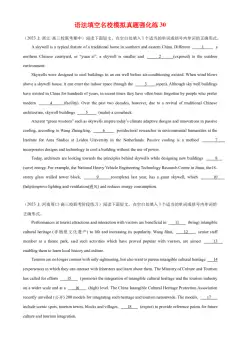
International Museum Day was observed in 1977 in Moscow for the first time aimed at directing the worldˈs attention to the contributions of museums to humankind. Since then, International Museum Day (1) (celebrate) annually. Museums are undoubtedly places (2) you can promote mutual understanding, interaction, and world peace. Museums are vital places for cultural exchange and enrichment as well as for the (3) (develop) of peaceful coexistence and cooperation among nations and communities. This day encourages people (4) (visit) museums dedicated to many fields of human efforts such as agriculture, fashion, astronomy, archaeology, art, (5) natural history.
Visiting a museum in your community is one of the best ways to mark International Museum Day. You can do this by (6) (you), or with friends or your children.
You can visit a museum (7) (virtual) if you donˈt wish to wait in line or deal with crowds. Taking a virtual tour of a museum is in some ways practical because some of the more known museums are likely to be packed (8) guests.
You can share on social media your ideas or opinions about International Museum Day or a museum youˈve recently visited. This motivates other people to visit (9) (museum).
Today, more people than ever before visit museums all over the world. There are also more people (10) (study) history at universities now than at any other time.

1.考查动词时态、语态和主谓一致。句意:自那以后,国际博物馆日每年都会被庆祝。Since then常与现在完成时连用,且主语International Museum Day与celebrate为被动关系,故用现在完成时的被动语态;主语International Museum Day为单数,助动词用has。故填has been celebrated。
2.考查定语从句。句意:博物馆无疑是你能够促进相互理解、互动与世界和平的地方。空格处引导定语从句,对先行词places进行限定说明,并在从句中充当地点状语,用关系副词where引导从句。故填where。
3.考查名词。句意:博物馆对于文化交流、丰富以及各国、各社区之间和平共处与合作的发展至关重要。根据空格前的介词for可知,空格处应该用名词development作宾语。故填development。
4.考查非谓语动词。句意:这个节日鼓励人们参观各种展示人类努力成果的博物馆,包括农业、时尚、天文、考古、艺术和自然历史等多个领域。encourage sb. to do sth.为固定搭配,意为“鼓励某人做某事”,空格处用不定式形式。故填to visit。
5.考查连词。空格前后为并列列举,用并列连词and连接。故填and。
6.考查反身代词。句意:你可以独自或与友人、孩子一起参观。by yourself 表示“独自”,是固定搭配。故填yourself。
7.考查副词。句意:如果你不想排队或面对拥挤,可以虚拟地参观博物馆。空格处修饰动词visit,用副词virtually“虚拟地”作状语。故填virtually。
8.考查介词。句意:因为一些更知名的博物馆很可能挤满了游客。be packed with 为固定搭配,意为“挤满”,空处应用介词with。故填with。
9.考查名词复数。句意:这会激励其他人去参观博物馆。museum是可数名词,此处表示泛指,应该用复数museums。故填museums。
10.考查非谓语动词。句意:现在在大学学习历史的人数比以往任何时候都多。空格处应该用非谓语动词作定语,修饰前面的名词people,名词people与动词study之间是主动关系,所以用现在分词studying作后置定语。故填studying。




微信号丨JimmyLv2007
文博丨纹帛