文档文本内容
教 案
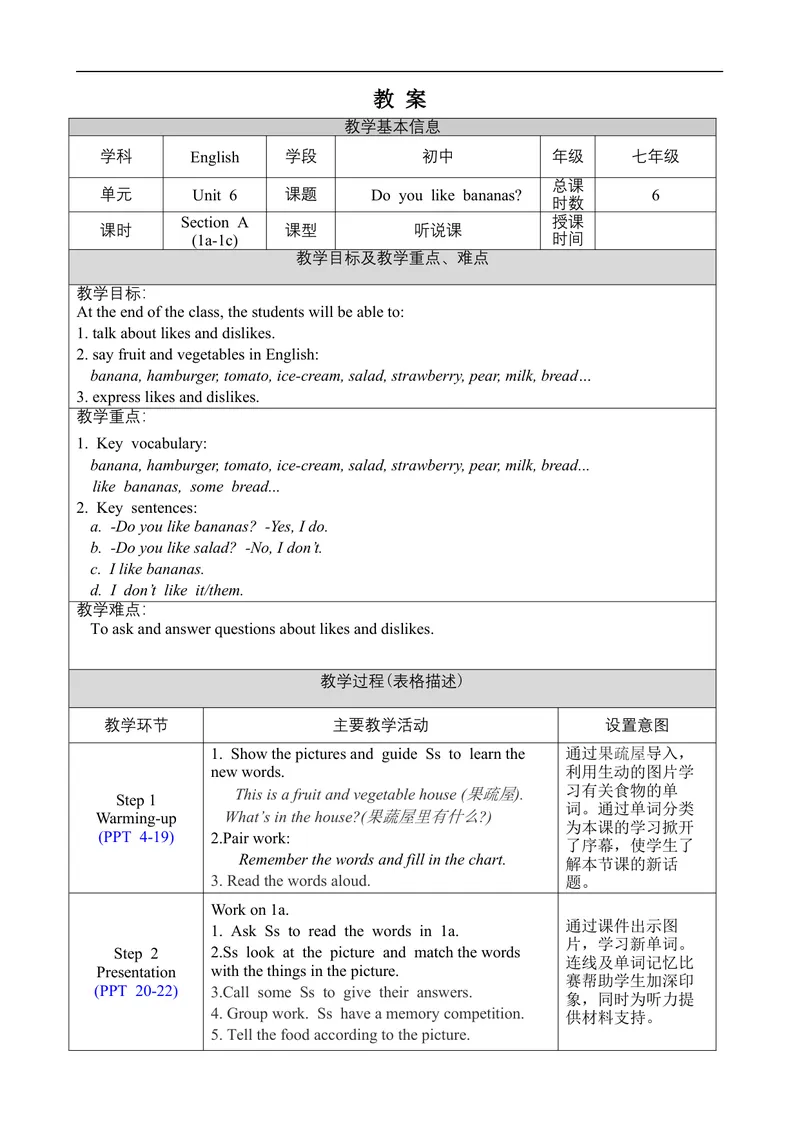
教学基本信息
学科 English 学段 初中 年级 七年级
总课
单元 Unit 6 课题 Do you like bananas? 6
时数
Section A 授课
课时 课型 听说课
(1a-1c) 时间
教学目标及教学重点、难点
教学目标:
At the end of the class, the students will be able to:
1. talk about likes and dislikes.
2. say fruit and vegetables in English:
banana, hamburger, tomato, ice-cream, salad, strawberry, pear, milk, bread…
3. express likes and dislikes.
教学重点:
1. Key vocabulary:
banana, hamburger, tomato, ice-cream, salad, strawberry, pear, milk, bread...
like bananas, some bread...
2. Key sentences:
a. -Do you like bananas? -Yes, I do.
b. -Do you like salad? -No, I don’t.
c. I like bananas.
d. I don’t like it/them.
教学难点:
To ask and answer questions about likes and dislikes.
教学过程(表格描述)
教学环节 主要教学活动 设置意图
1. Show the pictures and guide Ss to learn the 通过果疏屋导入,
new words. 利用生动的图片学
This is a fruit and vegetable house (果疏屋). 习有关食物的单
Step 1
词。通过单词分类
Warming-up What’s in the house?(果蔬屋里有什么?)
为本课的学习掀开
(PPT 4-19) 2.Pair work:
了序幕,使学生了
Remember the words and fill in the chart. 解本节课的新话
3. Read the words aloud. 题。
Work on 1a.
通过课件出示图
1. Ask Ss to read the words in 1a.
片,学习新单词。
Step 2 2.Ss look at the picture and match the words
连线及单词记忆比
Presentation with the things in the picture.
赛帮助学生加深印
(PPT 20-22) 3.Call some Ss to give their answers.
象,同时为听力提
4. Group work. Ss have a memory competition. 供材料支持。
5. Tell the food according to the picture.6. Master the words.
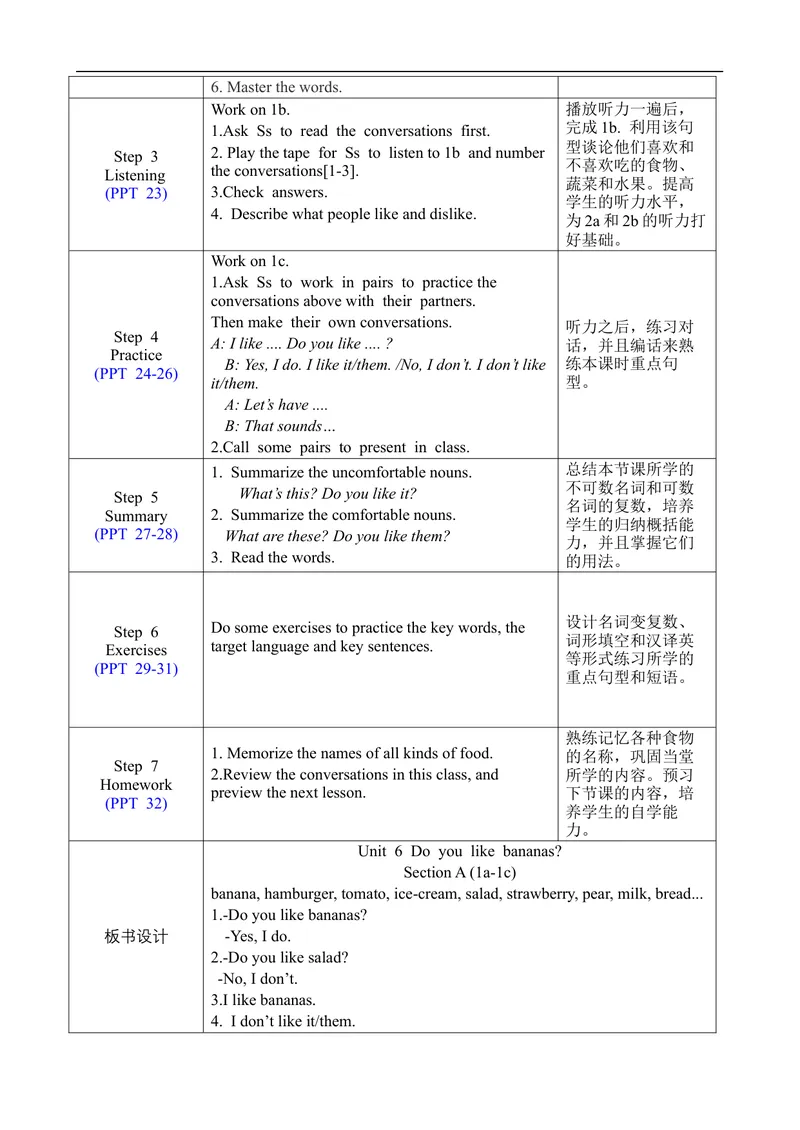
Work on 1b. 播放听力一遍后,
1.Ask Ss to read the conversations first.
完成1b. 利用该句
型谈论他们喜欢和
Step 3 2. Play the tape for Ss to listen to 1b and number
不喜欢吃的食物、
Listening the conversations[1-3].
蔬菜和水果。提高
(PPT 23) 3.Check answers.
学生的听力水平,
4. Describe what people like and dislike.
为2a和2b的听力打
好基础。
Work on 1c.
1.Ask Ss to work in pairs to practice the
conversations above with their partners.
Then make their own conversations.
听力之后,练习对
Step 4
A: I like .... Do you like .... ? 话,并且编话来熟
Practice
B: Yes, I do. I like it/them. /No, I don’t. I don’t like 练本课时重点句
(PPT 24-26)
it/them. 型。
A: Let’s have ....
B: That sounds…
2.Call some pairs to present in class.
1. Summarize the uncomfortable nouns. 总结本节课所学的
不可数名词和可数
Step 5 What’s this? Do you like it?
名词的复数,培养
Summary 2. Summarize the comfortable nouns.
学生的归纳概括能
(PPT 27-28) What are these? Do you like them?
力,并且掌握它们
3. Read the words. 的用法。
设计名词变复数、
Step 6 Do some exercises to practice the key words, the
词形填空和汉译英
Exercises target language and key sentences.
等形式练习所学的
(PPT 29-31)
重点句型和短语。
熟练记忆各种食物
1. Memorize the names of all kinds of food. 的名称,巩固当堂
Step 7
2.Review the conversations in this class, and 所学的内容。预习
Homework
preview the next lesson. 下节课的内容,培
(PPT 32)
养学生的自学能
力。
Unit 6 Do you like bananas?
Section A (1a-1c)
banana, hamburger, tomato, ice-cream, salad, strawberry, pear, milk, bread...
1.-Do you like bananas?
板书设计 -Yes, I do.
2.-Do you like salad?
-No, I don’t.
3.I like bananas.
4. I don’t like it/them.1.本节听说课话题是关于描述自己喜好的。
教学反思 2. 教学过程中要强调可数名词的复数和不可数名词,这是本单元的重
要语法。