文档文本内容
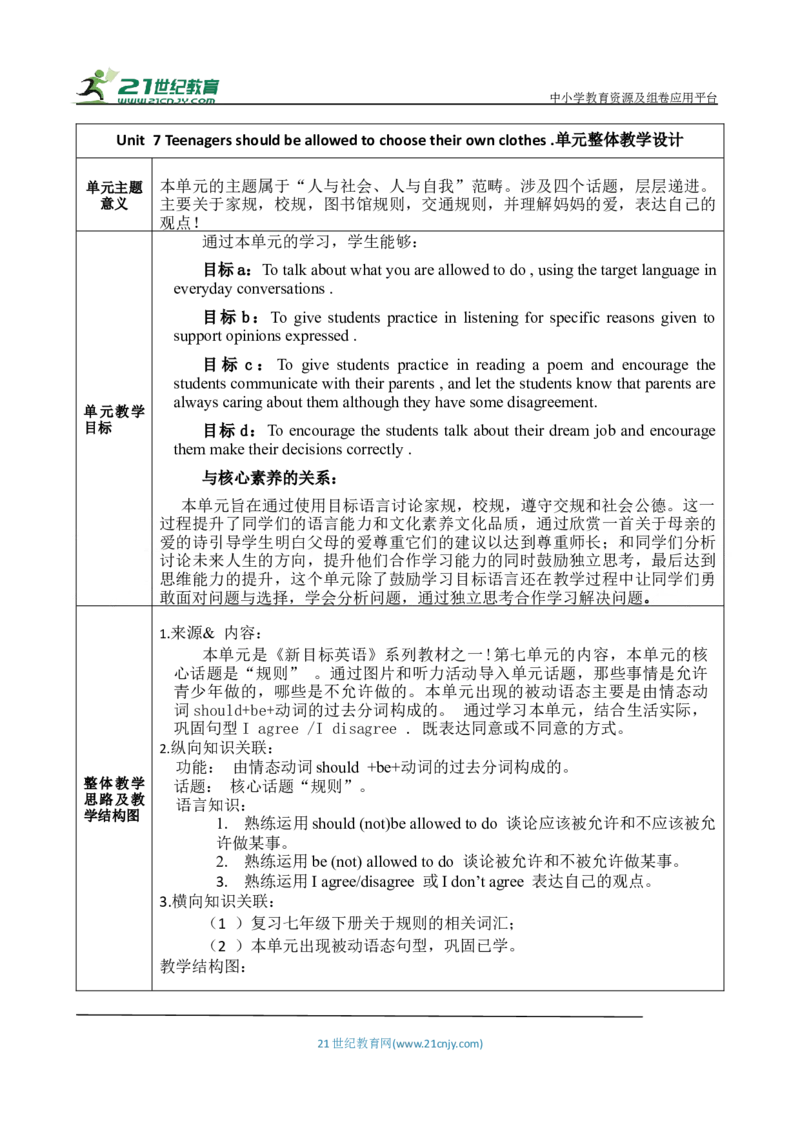
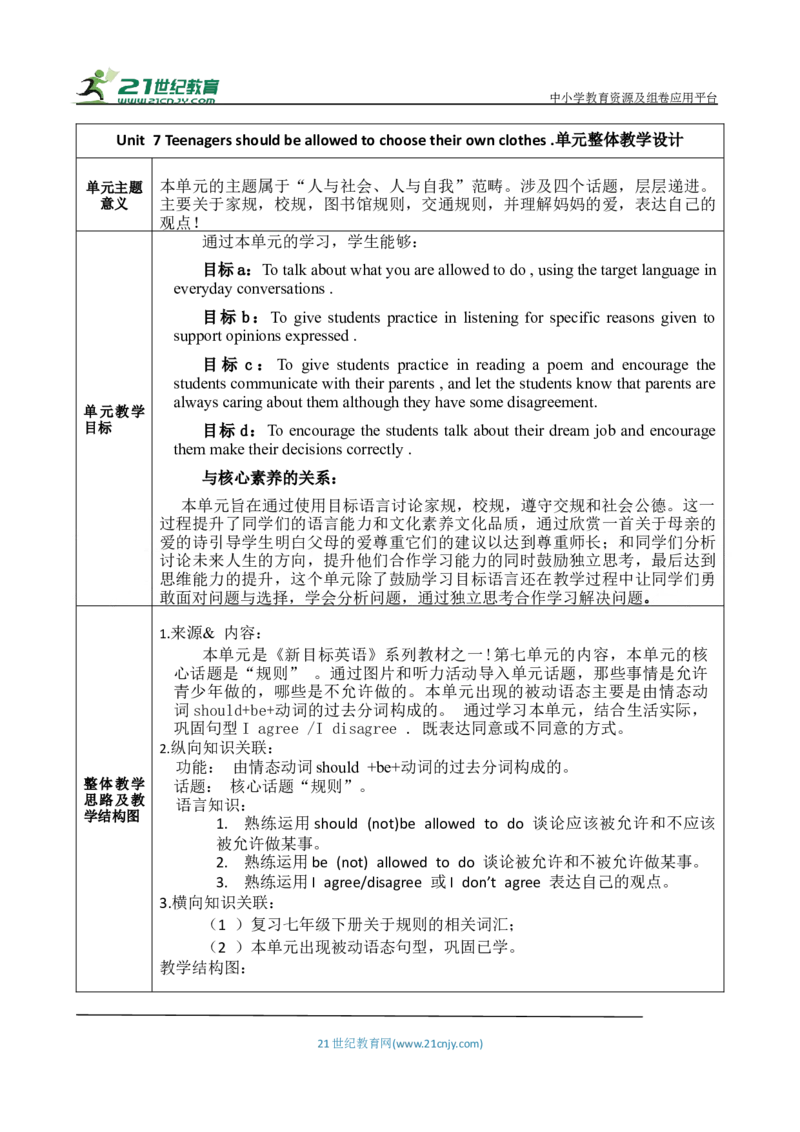
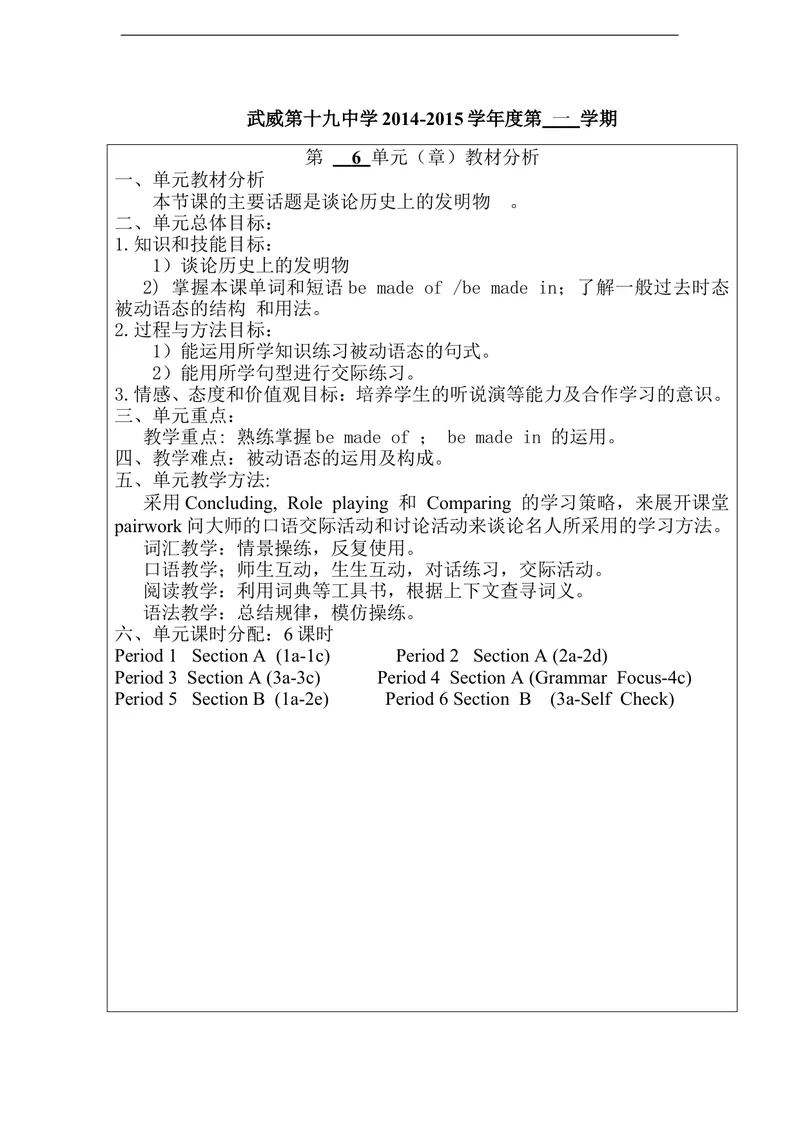
Unit 6 When Was it invented ?单元整体教学设计
单元主题 本单元的主题属于“人与社会 ”范畴,本单元是《新目标英语》系列教材之
意义 一!第六单元的内容,本单元的学习使学生了解一些发明的历史、用途以及历
史上的发明对人类生活的影响,从而激发学生创造发明的欲望。
通过本单元的学习,学生能够:
目标a:能够掌握本单元重点词汇及句型。
目标b:能谈论物品被发明的时间、发明者,表达某发明的用途。
目标c:了解一些近代发明的时间及用途,激发自己热爱发明的情感。
目标d:培养学生善于观察事物,面对难题,用积极的态度去解决,发挥
想象力,认识世界,改造世界,拥有强烈求知欲的素养。
单元教学
目标 与核心素养的关系:
在大单元主题理念下,将本单元碎片化的知识以“子主题”形式有效整合,
是落实英语学科素养的有效手段,通过本单元的学习,在语言能力方面,能够
和他人谈论某项发明,包括发明时间以及功能等;能够读懂发明为话题的阅读
材料,并掌握其中的细节信息;能够制作简单思维导图并以书面形式写一篇以
介绍某项发明为话题的作文,并通过本单元学习使学生懂得人类的科学发明创
造了丰富的物质文明,了解中外发明者的事,增强民族自豪感,激发创造力,
引导学生发行问题解决问题,培养学生的创造发明的能力和愿望。
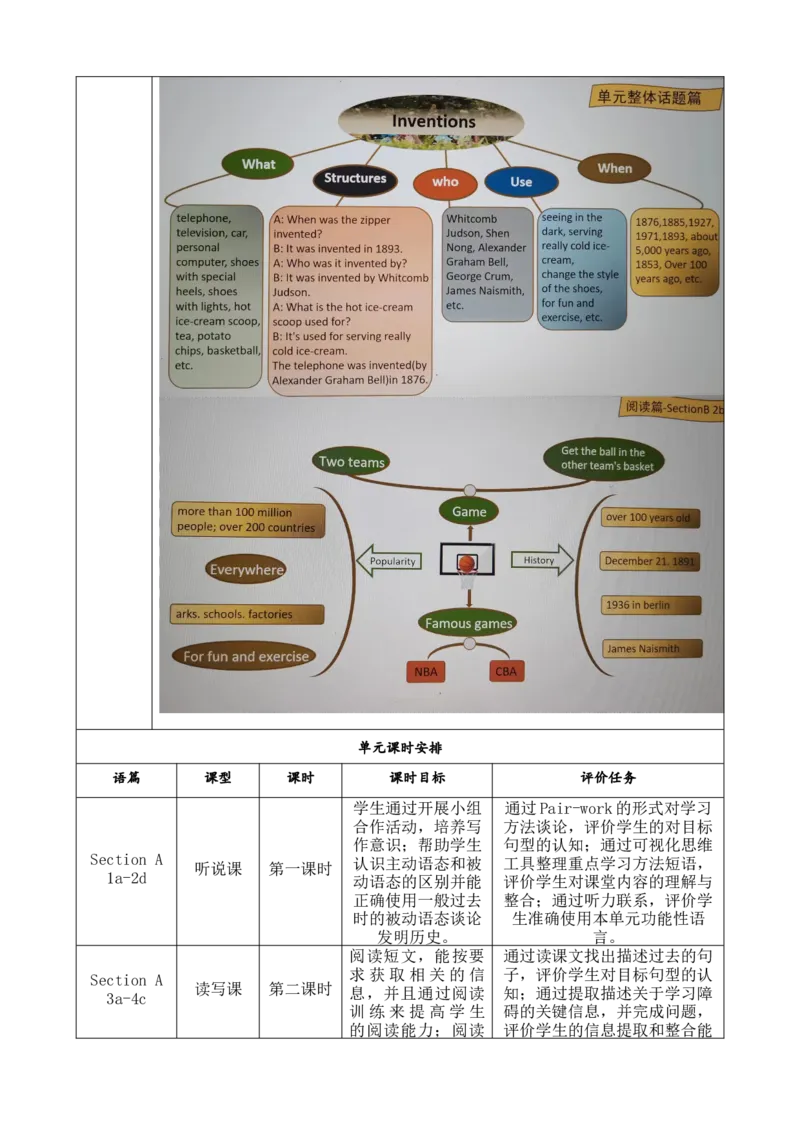
1.来源& 内容:
本单元是《新目标英语》系列教材之一!第六单元的内容,本单元围绕
发明这一话题展开听说读写的活动。首先通过谈论生活中的一些重要发明
以及它们的作用自然地引出本单元话题,然后通过了解薯片以及茶叶的发
明故事,进一步激发学生的学习兴趣,最后学习篮球的发明故事,使教学
层层深入,逐步引导学生在学习活动中感知,学习、运用目标语言。
2.纵向知识关联:
功能: 一般过去时的被动语态。
话题: 学生能谈论中国制造产品的产地和制造方式等主题信息。
整体教学
语言知识:
思路及教
学结构图 1. 能够听懂发明为话题的听力材料。
2. 能够和对方谈论某项发明,包括发明时间以及功能等。
3. 能够读懂以发明为话题的阅读材料,并掌握其中的细节信息。
4. 能够制作简单思维导图并以书面形式写一篇以介绍某项发明为话题
的作文。
3.横向知识关联:
(1 )复习七八年及有关物品的相关词汇;
(2 )本单元出现被动语态句型,巩固已学。
教学结构图:单元课时安排
语篇 课型 课时 课时目标 评价任务
学生通过开展小组 通过Pair-work的形式对学习
合作活动,培养写 方法谈论,评价学生的对目标
作意识;帮助学生 句型的认知;通过可视化思维
Section A 认识主动语态和被 工具整理重点学习方法短语,
听说课 第一课时
1a-2d 动语态的区别并能 评价学生对课堂内容的理解与
正确使用一般过去 整合;通过听力联系,评价学
时的被动语态谈论 生准确使用本单元功能性语
发明历史。 言。
阅读短文,能按要 通过读课文找出描述过去的句
求获取相关的信 子,评价学生对目标句型的认
Section A
读写课 第二课时 息,并且通过阅读 知;通过提取描述关于学习障
3a-4c
训练来提高学生 碍的关键信息,并完成问题,
的阅读能力;阅读 评价学生的信息提取和整合能短文了解茶叶发明 力;在图片和文字提示下,复
发展的过程,能按 述课文,评价学生对语言结构
要求找到相应的信 和词汇的理解;通过编写对话
息并能恰当地使用 和角色表演进行口头输出,评
被动语态完成相关 价学生的英语思维和语言表达
练习。 能力。
通过问题启发式评价引导学
完成听说活动,了
生,评价学生对语篇主题的理
Section B 解美食的发明史;
听说课 第三课时 解;通过个人思考和合作交
1a-1e 能用被动语态谈论
流,评价学生主动参与到学习
美食的发明史。
中的能力。
通过问题启发式评价引导学生
从整体到具体的认识,并提取
关键信息完成思维导图,评价
通过了解篮球的发 学生对文本第一段的理解和信
明的过程,培养学 息提取能力;通过读文章,定
Section B
阅读课 第四课时 生运用思维导图记 位、获取、整合信息,评价学
2a-2f
忆语篇信息的能 生对文章第二段的理解和信息
力。 整合的能力;通过对话编写和
角色表演进行口头输出,并通
过书面表达的形式,评价学生
对句型的掌握
学生能运用书面表
Section B 通过书面表达的形式介绍礼貌
达自己的改变,在
3a-Self 写作课 第五课时 的寻求表达信息,评价学生写
练中学,培养学生
check 作的能力。
语言运用能力。
第3课时 教学设计
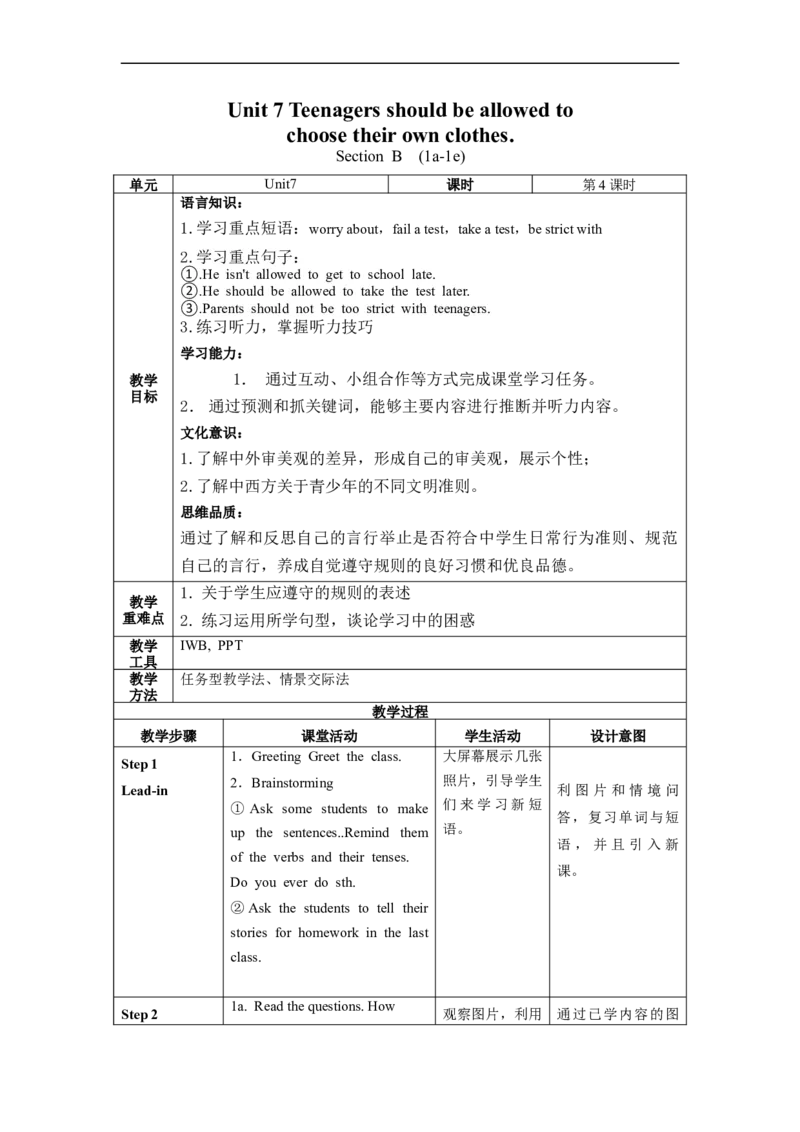
课题 Unit 6 When was it invented ? Section B 1a-1e
课型 听说课 √ 语法课口 阅读课口 写作课口 其它课__________
教材(语篇)分析:
【what】
本课是一节听说课,第一模块1a-1e拓展话题,融入新词汇.
【why】
听的活动要求学生能运用反义词、信息进行多层次的处理。最后进行的活动要求
学生根据听力信息,模仿谈论薯片的发明,内化听力信息。
【how】
1a-1e是一个完整的任务链,1a-1b要求学生观看几种常见的食物图片并能用形容词描
述它们的口感,然后根据形容词列举相应食物。1c-1d是对听力所输入的信息进行对层次
的处理。
学情分析:
(一)自然情况
本单元已经学习了两节课,对于过去式被动语态的构成有了一定的掌握。
(二)已有基础
大部分学生能够用被动语态进行表达。
(三)存在问题
部分学生不敢大声表达出来。
(四)解决措施教师可以鼓励学生勇敢表达。
教学目标:
通过本课学习,学生能够:
1. 完成听说活动,了解美食的发明史。(学习理解)
2. 掌握本课出现的重点短语和句子。 (应用实践)
3. 能用被动语态谈论美食的发明史。 (迁移创新)
教学重难点
重点: 能掌握下列句型
1. The customer was happy in the end.
2. Do you know how potato chips were invented ?
3. -Did you know potato chips were invented by mistake ?
-Wow , I didn’t know that . Who invented them ?
难点: 能利用句型谈论美食的发明。
学习活动设计
教师活动 学生活动
环节一:Activity 1
教师活动1 Lead-in 学生活动1
Show Students some pictures about Ask and answer
the delicious food . How do they
tasted ?Help them understand the
following adjectives ; crispy , salty Discuss
, sour and sweet .
活动意图说明:
通过让学生观察活动图片,并引导学生回答老师的问题,让学生温故知新,了解话题内
容,加强学生的知识积累,为下一步的活动奠定基础。
环节二:Activity 2
教师活动2 Presentation 学生活动2
1. Read the instructions to the class.
Point out the four adjectives on the
left.
2. Have them read the four words Ask and answer questions
together . Then ask some different
students to read them . Ask students to
choose the words in the box to
describe how the food in the pictures Read and use
tastes . Write them under the correct
pictures.
活动意图说明:
利用集中食物的图片及练习帮助学生理解掌握生词。
环节三:Activity 3
教的活动3 Work on 1b 学的活动3
1. Point out the four words . Then
point to the sample answer given .
Can you think of other sweet food Finish 1b
now ?2. Ask students to complete the
activity on their own .
3. After they all finish writing ,
ask some students to read their Check the answers.
answers to the class . Check the
answers with the whole class .
活动意图说明:
通过口语活动帮助学生在运用中进一步理解、巩固词汇。
环节四:Activity 4
教的活动4 学的活动4
Before listening
1. Let students read the instructions
together . Be sure that they know what
Read the instructions
to do . And help them to understand the
words customer and by mistake .
2. Call the students’ attention to the six
sentences in the box . Ask six different
students to read them and give some Pay attention to six sentences.
explanations in their own words on each
sentence .
3. Brainstorm: After that , get the
students to guess what they will hear
about . What are they talking about and Listen to the tapes two times and finish
where did the story happen ? tasks .
Ask students to look at the sample
answers .
While listening
1. Play the recording first . Students only
listen to catch the main idea .
Play the recording again . Check the answers.
2. Ask the children to listen and circle
T for true or F for false .
3. Check the answers with the whole
class.
4. Point to the blanks in the sentences in
the story and tell them to complete the
sentences while they are listening .
Encourage students to fill in the blanks
before listening .
5. Play the recording again . Ask
students to fill in the blanks with the
answers with the whole class.
活动意图说明:
加强学生听力指导,在听时要抓重点内容,第一次听要求学生回答问题,因此在听的时
候,应重点将与这些问题相关的内容听清,其他作为非重点内容。另外,要注意速记下重
点内容。
环节五:Activity 5教的活动5 After -listening 学的活动5
1. Show the following questions and ask
students to listen and write down the
answers
How and when were potato chips
invented ?
What’s the name of the inventor ?
What’s his job ?Where did George Act out
Crum work ?
Why was it a mistake ?
What did the cook do with the
potatoes them ? Listen again and repeat .
2. Play the recording of the history of
potato chips again . Pause for the
students to repeat after it . Get the
students to read after the tape . Tell
them to try their best to imitate the
intonation and pronunciation .
活动意图说明:
复述听力内容能帮助学生更好地理解信息,通过自主归纳表达,能有效地提高学生的语言
表达能力。
环节六: Activity 6
教的活动6 Work on 1e 学的活动
Make a conversation about the invention of
potato chips .
S1: Did you know potato chips were invented
Make a conversation .
by mistake ?
S2: Wow , I didn’t know that . Who invented
them ?
Work in pairs
S3: They were invented by a cook called
George Crum .
活动意图说明:
通过对子活动给学生提供运用重点句型进行口语表达的机会。
板书设计
Unit 6 When was it invented ?
Period 3 Section B 1a-1e
Talk about the invention of potato chips
An accidental invention
What is the mane of the invention ?
Who was it invented by ?
When was it invented ?
How was it invented ?
Why was it a mistake ?
分层作业设计
1. 基础巩固:
Memorize the new words and do some exercises
设计意图:熟记本课重点单词和短语。
2. 能力提升:
Preview the passage in 2b设计意图:复习巩固本节课重点.
教学反思与改进
本节课听前活动完成较好,尤其在头脑风暴活动中说出很多超出老师预设的词汇,充
分调动了学生的积极性,激活了学生记忆与食物有关的词汇,为后面的活动作好了铺垫。
听后Free talk环节学生非常踊跃,但是,在表达方面使用被动语态的意识不够,使用时的
准确度不高。教师应在活动前为学生提供一些语言结构方面的练习,引导学生在活动中使
用,可能效果会更好。