北京曲一线图书策划有限公司 高考项目部
文 化
教材链接:人教B2U4、B3U1、B3U3、XB2U2、XB2U3,外研B2U2,译林B2U3、XB1U1,北师大
B1U3
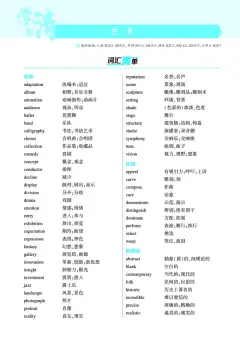
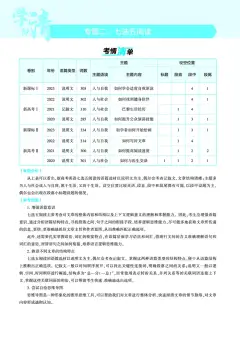
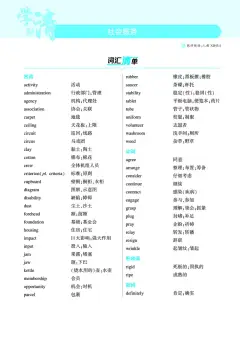
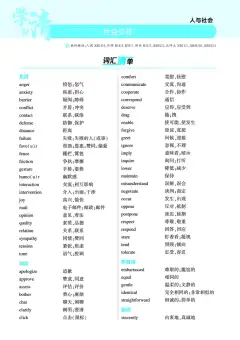
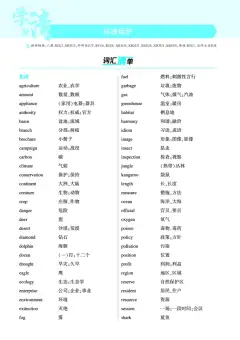
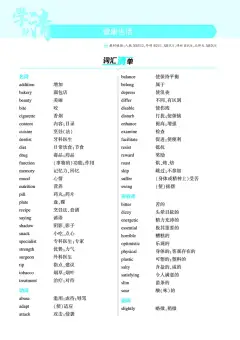
词汇清单
名词
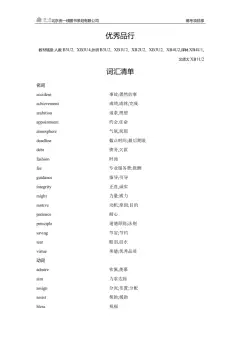
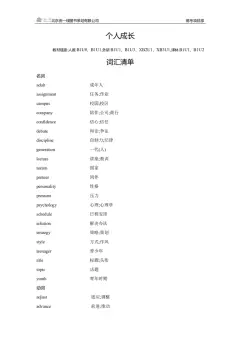
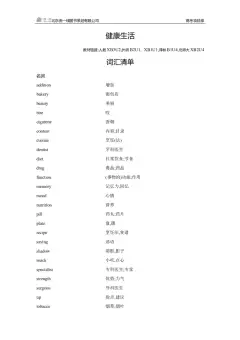
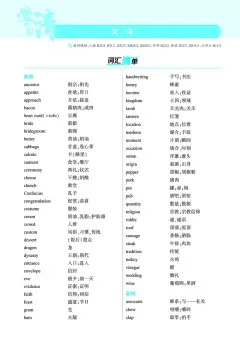
ancestor 祖宗;祖先
appetite 食欲;胃口
approach 方法;接近
bacon 熏猪肉;咸肉
bean curd(=tofu) 豆腐
bride 新娘
bridegroom 新郎
butter 黄油;奶油
cabbage 甘蓝,卷心菜
calorie 卡(路里)
canteen 食堂;餐厅
ceremony 典礼;仪式
cheese 干酪;奶酪
church 教堂
Confucius 孔子
congratulation 祝贺;恭喜
costume 服装
cream 奶油,乳脂;护肤霜
crowd 人群
custom 风俗,习惯,传统
dessert (饭后)甜点
dragon 龙
dynasty 王朝;朝代北京曲一线图书策划有限公司 高考项目部
entrance 入口;进入
envelope 信封
eve 前夕;前一天
evidence 证据;证明
faith 信仰;相信
feast 盛宴;节日
gram 克
ham 火腿
handwriting 手写;书法
honey 蜂蜜
income 收入;收益
kingdom 王国;领域
lamb 羊羔肉;羔羊
lantern 灯笼
location 地点;位置
medium 媒介;手段
moment 片刻;瞬间
occasion 场合,时刻
onion 洋葱;葱头
origin 起源;出身
pepper 甜椒;胡椒粉
pork 猪肉
pot 罐;壶;锅
pub 酒吧;酒馆
quantity 数量;数额
religion 宗教;宗教信仰
riddle 谜,谜语
roof 顶部;屋顶
sausage 香肠;腊肠
steak 牛排;肉块北京曲一线图书策划有限公司 高考项目部
tradition 传统
turkey 火鸡
vinegar 醋
wedding 婚礼
wine 葡萄酒;果酒
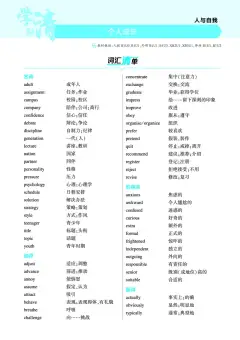
动词
associate 联系;与……有关
chew 咀嚼;嚼碎
clap 鼓掌;拍手
complain 抱怨,不满
consist 组成
consume 吃;喝;消耗
decorate 装饰;装潢
ensure 确保,保证
exist 存在;生存
feature 以……为特色
figure 认为;计算
fry 油炸,油煎
gather 聚集;集合
harvest 收割(庄稼)
hono(u)r 尊重;尊敬
march 行进;前进;示威游行
observe 庆祝,过(节日、生日等)
range (在一定范围内)变化
recall 记起;回想起
regard 认为,看待
represent 象征;代表
request 要求,请求
slice 把……切成片;切开
stuff 填满;把……塞进北京曲一线图书策划有限公司 高考项目部
wrestle 摔跤;奋力对付
形容词
commercial 商业(化)的
damp 潮湿的;湿气重的
eager 热切的;渴望的
exceptional 特别的;罕见的
fancy 花哨的,别致的
fundamental 根本的;基础的
grand 宏伟的,壮丽的
grateful 感激的;表示感谢的
individual 单独的;个别的
lunar 月亮的;月球的
merry 愉快的;高兴的
military 军事的;军用的
ordinary 普通的;平凡的
racial 种族的;人种的
representative 典型的;有代表性的
significant 重要的,影响深远的
副词
overseas 在海外,在国外
regardless 不管,不顾
即练即清
一、单句填空
1. Chinese people celebrate the Mid-Autumn Festival with many
(tradition) activities,such as hanging lanterns, guessing lantern riddles, appreciating the
moon...(重大B3U1)
2. The New Yam Festival is a (significance) annual festival practised
throughout West Africa, especially in Ghana and Nigeria...(重大B3U1改)北京曲一线图书策划有限公司 高考项目部
3. People celebrate to show that they are grateful the year's supply of
food.(人教B3U1)
4. I did not understand all of the traditional (custom), but a few made a
deep impression on me.(译林B2U3)
5. The Chinese character for “knot”, jie, means “connection” or “combination”. It is
(associate) with a wide range of cultural concepts—marriage, brotherhood, friendship,
unity, reunion, etc.(重大B3U5)
6. That is why Letters from Father Christmas could be the perfect book for those
who regard Christmas a special time of year.(外研B2U2)
7. In the United Kingdom, Harvest Thanksgiving (observe) by churches
and schools in late September or early October...(重大B3U1)
8. Now Chinese knots are taken as one of the (representative) symbols of
Chinese culture.(重大B3U5改)
9. On Christmas Eve, Granny took a seat by the fire as we put up the Christmas
tree. I hung most of the (decorate) on the branches.(北师大B1U3)
10. Festivals have a wide range of (origin), such as the seasons of the
year, religions, famous figures, and important events.(人教B3U1改)
11. Nowadays, people eat salted duck all year round and it is estimated that tens of
thousands of ducks (consume) every day in Nanjing!(译林XB1U1)
12. Later, I learnt that the most famous food in Shandong is pancake rolls
(stuff) with sliced Chinese green onions.(人教XB2U3)
13. Naadam means “games” in Mongolian, and it (represent) by three
events: horse racing, wrestling, and archery, which are all so exciting to watch!(人教
B3U1)
答案
1. traditional 2. significant 3. for 4. customs 5. associated 6. as 7. is observed
8. most representative 9. decorations 10. origins 11. are consumed 12. stuffed
13. is represented
二、语境运用
阅读下面材料,根据提示补全短文。北京曲一线图书策划有限公司 高考项目部
(A)
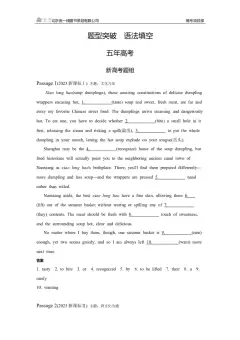
Most festivals have a historical and/or religious origin, while some are in 1 .
(associate) with seasonal changes. All of them, however, bring people together from
all walks of life and offer a sense of 2 . (belong). These particular aspects
of festivals make the celebrations truly grand.
So far, festival celebrations 3 . (become) more self-centred and are
moving away from tradition. Nowadays, the emphasis is on money and the idea that
it buys happiness. Thus, people work more 4 . (make) more money and
spend less time with family and friends. This can be considered an unwelcome
change because, at some point, we might completely forget the reason behind our
festivals. Then, we would be celebrating all our 5 . (tradition) festivals
similarly to Valentine's Day, Father's Day, and Mother's Day: as a commercial
opportunity.
In my opinion, the good old ways of festival celebrations were far better than the
ugly show of wealth that they've become. They say that change is for the better,
6 . I think some things are better left unchanged.(冀教XB2U4改)
(B)
The home has been 7 . (special) decorated for the joyous occasion. Six-
year-old Bofeng has not seen his grandparents for almost a year, and he is full of joy
and excitement. Despite the cold outside, their bright smiles fill the air 8 .
warmth while merry laughter rings throughout the house. Luo Yan, together with his
wife and son has settled in the big city, far away from their hometown. Once 9 .
year, however, they travel back for the Spring Festival, for their dream of “three
generations under the same 10 . (屋顶)”.(译林B2U3改)
(C)
Chopsticks reflect gentleness and 11. (kind), the main moral teaching of
Confucianism. There are some 12. (taboo) about using chopsticks that you
should pay great attention 13. , or you may be laughed at or blamed for
your bad table manners. First, don't use it to hit the side of your bowl or plate to
make noises, because Chinese people think only beggars would do this to beg for北京曲一线图书策划有限公司 高考项目部
meals. Second, don't point at people with your chopsticks or stretch out your index
finger while using them,
14 . would be regarded as a kind of accusation against others. Third, it is
thought to be 15 . impolite behavior when you suck the end of a
chopstick. And at last, never stick your chopsticks upright in the rice bowl, since that
usually appears at the funerals and is believed to be a curse to the host and the
seniors who are at the table.
Apart from being tableware, chopsticks can also be given as a present with
blessings in China. For example, a newly-married couple will be very happy 16 .
(accept) them as their wedding gift as they read “Kuaizi”, which means having sons
soon. What's more, Chinese people also send pairs of chopsticks as a gift to their
business partners. Since chopsticks should 17 . (use) in pairs in Chinese
culture, they stand for close “cooperation” between two parties in business.
Today, chopsticks have become a typical part of Chinese culture, 18 .
(symbolise) the power of unity. Indeed, one chopstick is useless and so delicate 19 .
it can be broken readily. However, ten pairs of chopsticks possess strength, which is
indestructible under almost any circumstance. All Chinese people draw on this spirit,
which always inspires and 20 . (encourage) them to work hand in hand for
a better future.
答案
1. association 2. belonging 3. have become 4. to make 5. traditional 6. but
7. specially 8. with 9. a 10. roof 11. kindness 12. taboos 13. to 14. which
15. an 16. to accept 17. be used 18. symbolising 19. that 20. encourages
写作提升练
应用文写作
假定你是李华,你校校刊将于下个月新开办一个主题为“中外文化差异”的栏目,请
你代表学生会用英文给外教Bruce写一封邀请信,邀请他为该栏目投稿。内容包括:
1. 邀请原因;
2. 投稿要求。