文档文本内容
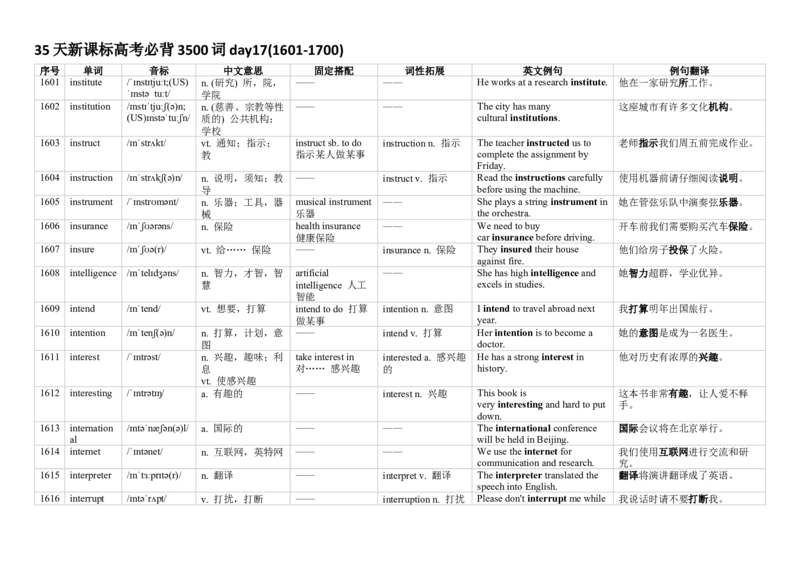
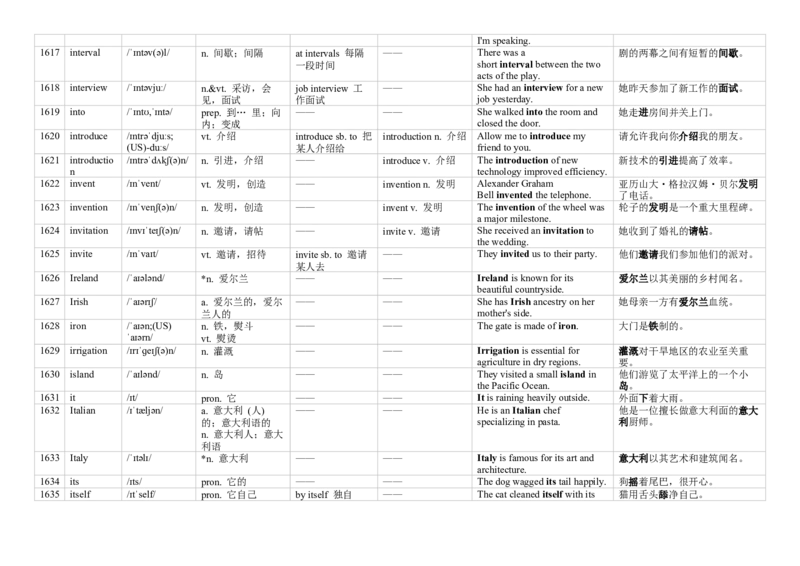
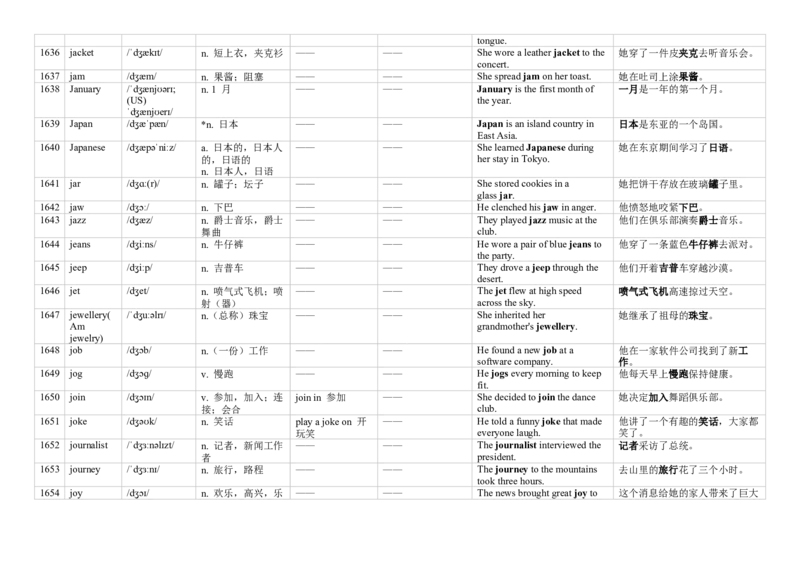
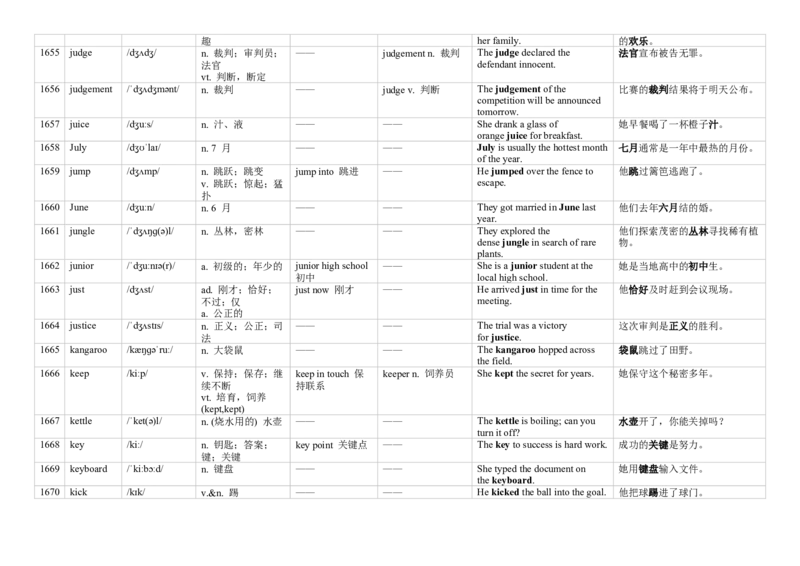
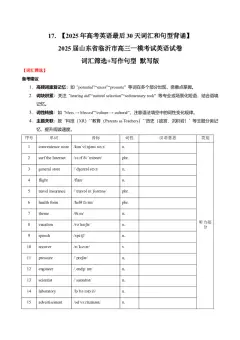
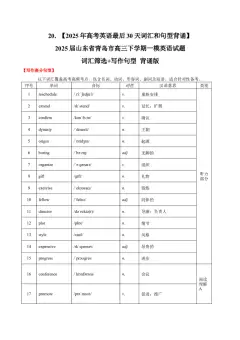
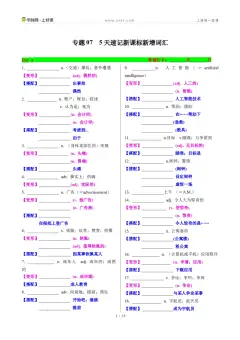
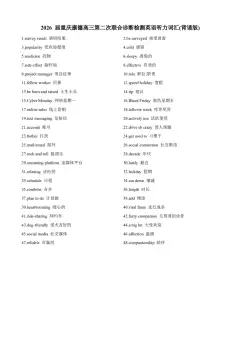
35 天新课标高考必背3500 词day17(1601-1700)
序号
单词
音标
中文意思
固定搭配
词性拓展
英文例句
例句翻译
1601
institute
/ˈɪnstɪtjuːt;(US)
ˈɪnstə tuːt/
n. (研究) 所,院,
学院
——
——
He works at a research institute.
他在一家研究所工作。
1602
institution
/ɪnstɪˈtjuːʃ(ə)n;
(US)ɪnstəˈtuːʃn/
n. (慈善、宗教等性
质的) 公共机构;
学校
——
——
The city has many
cultural institutions.
这座城市有许多文化机构。
1603
instruct
/ɪnˈstrʌkt/
vt. 通知;指示;
教
instruct sb. to do
指示某人做某事
instruction n. 指示
The teacher instructed us to
complete the assignment by
Friday.
老师指示我们周五前完成作业。
1604
instruction
/ɪnˈstrʌkʃ(ə)n/
n. 说明,须知;教
导
——
instruct v. 指示
Read the instructions carefully
before using the machine.
使用机器前请仔细阅读说明。
1605
instrument
/ˈɪnstrʊmənt/
n. 乐器;工具,器
械
musical instrument
乐器
——
She plays a string instrument in
the orchestra.
她在管弦乐队中演奏弦乐器。
1606
insurance
/ɪnˈʃʊərəns/
n. 保险
health insurance
健康保险
——
We need to buy
car insurance before driving.
开车前我们需要购买汽车保险。
1607
insure
/ɪnˈʃʊə(r)/
vt. 给…… 保险
——
insurance n. 保险
They insured their house
against fire.
他们给房子投保了火险。
1608
intelligence
/ɪnˈtelɪdʒəns/
n. 智力,才智,智
慧
artificial
intelligence 人工
智能
——
She has high intelligence and
excels in studies.
她智力超群,学业优异。
1609
intend
/ɪnˈtend/
vt. 想要,打算
intend to do 打算
做某事
intention n. 意图
I intend to travel abroad next
year.
我打算明年出国旅行。
1610
intention
/ɪnˈtenʃ(ə)n/
n. 打算,计划,意
图
——
intend v. 打算
Her intention is to become a
doctor.
她的意图是成为一名医生。
1611
interest
/ˈɪntrəst/
n. 兴趣,趣味;利
息
vt. 使感兴趣
take interest in
对…… 感兴趣
interested a. 感兴趣
的
He has a strong interest in
history.
他对历史有浓厚的兴趣。
1612
interesting
/ˈɪntrətɪŋ/
a. 有趣的
——
interest n. 兴趣
This book is
very interesting and hard to put
down.
这本书非常有趣,让人爱不释
手。
1613
internation
al
/ɪntəˈnæʃən(ə)l/
a. 国际的
——
——
The international conference
will be held in Beijing.
国际会议将在北京举行。
1614
internet
/ˈɪntənet/
n. 互联网,英特网
——
——
We use the internet for
communication and research.
我们使用互联网进行交流和研
究。
1615
interpreter
/ɪnˈtɜːprɪtə(r)/
n. 翻译
——
interpret v. 翻译
The interpreter translated the
speech into English.
翻译将演讲翻译成了英语。
1616
interrupt
/ɪntəˈrʌpt/
v. 打扰,打断
——
interruption n. 打扰
Please don't interrupt me while
我说话时请不要打断我。
I'm speaking.
1617
interval
/ˈɪntəv(ə)l/
n. 间歇;间隔
at intervals 每隔
一段时间
——
There was a
short interval between the two
acts of the play.
剧的两幕之间有短暂的间歇。
1618
interview
/ˈɪntəvjuː/
n.&vt. 采访,会
见,面试
job interview 工
作面试
——
She had an interview for a new
job yesterday.
她昨天参加了新工作的面试。
1619
into
/ˈɪntʊ,ˈɪntə/
prep. 到… 里;向
内;变成
——
——
She walked into the room and
closed the door.
她走进房间并关上门。
1620
introduce
/ɪntrəˈdjuːs;
(US)-duːs/
vt. 介绍
introduce sb. to 把
某人介绍给
introduction n. 介绍
Allow me to introduce my
friend to you.
请允许我向你介绍我的朋友。
1621
introductio
n
/ɪntrəˈdʌkʃ(ə)n/
n. 引进,介绍
——
introduce v. 介绍
The introduction of new
technology improved efficiency.
新技术的引进提高了效率。
1622
invent
/ɪnˈvent/
vt. 发明,创造
——
invention n. 发明
Alexander Graham
Bell invented the telephone.
亚历山大・格拉汉姆・贝尔发明
了电话。
1623
invention
/ɪnˈvenʃ(ə)n/
n. 发明,创造
——
invent v. 发明
The invention of the wheel was
a major milestone.
轮子的发明是一个重大里程碑。
1624
invitation
/ɪnvɪˈteɪʃ(ə)n/
n. 邀请,请帖
——
invite v. 邀请
She received an invitation to
the wedding.
她收到了婚礼的请帖。
1625
invite
/ɪnˈvaɪt/
vt. 邀请,招待
invite sb. to 邀请
某人去
——
They invited us to their party.
他们邀请我们参加他们的派对。
1626
Ireland
/ˈaɪələnd/
*n. 爱尔兰
——
——
Ireland is known for its
beautiful countryside.
爱尔兰以其美丽的乡村闻名。
1627
Irish
/ˈaɪərɪʃ/
a. 爱尔兰的,爱尔
兰人的
——
——
She has Irish ancestry on her
mother's side.
她母亲一方有爱尔兰血统。
1628
iron
/ˈaɪən;(US)
ˈaɪərn/
n. 铁,熨斗
vt. 熨烫
——
——
The gate is made of iron.
大门是铁制的。
1629
irrigation
/ɪrɪˈɡeɪʃ(ə)n/
n. 灌溉
——
——
Irrigation is essential for
agriculture in dry regions.
灌溉对干旱地区的农业至关重
要。
1630
island
/ˈaɪlənd/
n. 岛
——
——
They visited a small island in
the Pacific Ocean.
他们游览了太平洋上的一个小
岛。
1631
it
/ɪt/
pron. 它
——
——
It is raining heavily outside.
外面下着大雨。
1632
Italian
/ɪˈtæljən/
a. 意大利 (人)
的;意大利语的
n. 意大利人;意大
利语
——
——
He is an Italian chef
specializing in pasta.
他是一位擅长做意大利面的意大
利厨师。
1633
Italy
/ˈɪtəlɪ/
*n. 意大利
——
——
Italy is famous for its art and
architecture.
意大利以其艺术和建筑闻名。
1634
its
/ɪts/
pron. 它的
——
——
The dog wagged its tail happily.
狗摇着尾巴,很开心。
1635
itself
/ɪtˈself/
pron. 它自己
by itself 独自
——
The cat cleaned itself with its
猫用舌头舔净自己。
tongue.
1636
jacket
/ˈdʒækɪt/
n. 短上衣,夹克衫
——
——
She wore a leather jacket to the
concert.
她穿了一件皮夹克去听音乐会。
1637
jam
/dʒæm/
n. 果酱;阻塞
——
——
She spread jam on her toast.
她在吐司上涂果酱。
1638
January
/ˈdʒænjʊərɪ;
(US)
ˈdʒænjʊerɪ/
n. 1 月
——
——
January is the first month of
the year.
一月是一年的第一个月。
1639
Japan
/dʒæˈpæn/
*n. 日本
——
——
Japan is an island country in
East Asia.
日本是东亚的一个岛国。
1640
Japanese
/dʒæpəˈniːz/
a. 日本的,日本人
的,日语的
n. 日本人,日语
——
——
She learned Japanese during
her stay in Tokyo.
她在东京期间学习了日语。
1641
jar
/dʒɑː(r)/
n. 罐子;坛子
——
——
She stored cookies in a
glass jar.
她把饼干存放在玻璃罐子里。
1642
jaw
/dʒɔː/
n. 下巴
——
——
He clenched his jaw in anger.
他愤怒地咬紧下巴。
1643
jazz
/dʒæz/
n. 爵士音乐,爵士
舞曲
——
——
They played jazz music at the
club.
他们在俱乐部演奏爵士音乐。
1644
jeans
/dʒiːns/
n. 牛仔裤
——
——
He wore a pair of blue jeans to
the party.
他穿了一条蓝色牛仔裤去派对。
1645
jeep
/dʒiːp/
n. 吉普车
——
——
They drove a jeep through the
desert.
他们开着吉普车穿越沙漠。
1646
jet
/dʒet/
n. 喷气式飞机;喷
射(器)
——
——
The jet flew at high speed
across the sky.
喷气式飞机高速掠过天空。
1647
jewellery(
Am
jewelry)
/ˈdʒuːəlrɪ/
n.(总称)珠宝
——
——
She inherited her
grandmother's jewellery.
她继承了祖母的珠宝。
1648
job
/dʒɔb/
n.(一份)工作
——
——
He found a new job at a
software company.
他在一家软件公司找到了新工
作。
1649
jog
/dʒɔɡ/
v. 慢跑
——
——
He jogs every morning to keep
fit.
他每天早上慢跑保持健康。
1650
join
/dʒɔɪn/
v. 参加,加入;连
接;会合
join in 参加
——
She decided to join the dance
club.
她决定加入舞蹈俱乐部。
1651
joke
/dʒəʊk/
n. 笑话
play a joke on 开
玩笑
——
He told a funny joke that made
everyone laugh.
他讲了一个有趣的笑话,大家都
笑了。
1652
journalist
/ˈdʒɜːnəlɪzt/
n. 记者,新闻工作
者
——
——
The journalist interviewed the
president.
记者采访了总统。
1653
journey
/ˈdʒɜːnɪ/
n. 旅行,路程
——
——
The journey to the mountains
took three hours.
去山里的旅行花了三个小时。
1654
joy
/dʒɔɪ/
n. 欢乐,高兴,乐
——
——
The news brought great joy to
这个消息给她的家人带来了巨大
趣
her family.
的欢乐。
1655
judge
/dʒʌdʒ/
n. 裁判;审判员;
法官
vt. 判断,断定
——
judgement n. 裁判
The judge declared the
defendant innocent.
法官宣布被告无罪。
1656
judgement
/ˈdʒʌdʒmənt/
n. 裁判
——
judge v. 判断
The judgement of the
competition will be announced
tomorrow.
比赛的裁判结果将于明天公布。
1657
juice
/dʒuːs/
n. 汁、液
——
——
She drank a glass of
orange juice for breakfast.
她早餐喝了一杯橙子汁。
1658
July
/dʒʊˈlaɪ/
n. 7 月
——
——
July is usually the hottest month
of the year.
七月通常是一年中最热的月份。
1659
jump
/dʒʌmp/
n. 跳跃;跳变
v. 跳跃;惊起;猛
扑
jump into 跳进
——
He jumped over the fence to
escape.
他跳过篱笆逃跑了。
1660
June
/dʒuːn/
n. 6 月
——
——
They got married in June last
year.
他们去年六月结的婚。
1661
jungle
/ˈdʒʌŋɡ(ə)l/
n. 丛林,密林
——
——
They explored the
dense jungle in search of rare
plants.
他们探索茂密的丛林寻找稀有植
物。
1662
junior
/ˈdʒuːnɪə(r)/
a. 初级的;年少的
junior high school
初中
——
She is a junior student at the
local high school.
她是当地高中的初中生。
1663
just
/dʒʌst/
ad. 刚才;恰好;
不过;仅
a. 公正的
just now 刚才
——
He arrived just in time for the
meeting.
他恰好及时赶到会议现场。
1664
justice
/ˈdʒʌstɪs/
n. 正义;公正;司
法
——
——
The trial was a victory
for justice.
这次审判是正义的胜利。
1665
kangaroo
/kæŋɡəˈruː/
n. 大袋鼠
——
——
The kangaroo hopped across
the field.
袋鼠跳过了田野。
1666
keep
/kiːp/
v. 保持;保存;继
续不断
vt. 培育,饲养
(kept,kept)
keep in touch 保
持联系
keeper n. 饲养员
She kept the secret for years.
她保守这个秘密多年。
1667
kettle
/ˈket(ə)l/
n. (烧水用的) 水壶
——
——
The kettle is boiling; can you
turn it off?
水壶开了,你能关掉吗?
1668
key
/kiː/
n. 钥匙;答案;
键;关键
key point 关键点
——
The key to success is hard work.
成功的关键是努力。
1669
keyboard
/ˈkiːbɔːd/
n. 键盘
——
——
She typed the document on
the keyboard.
她用键盘输入文件。
1670
kick
/kɪk/
v.&n. 踢
——
——
He kicked the ball into the goal.
他把球踢进了球门。
1671
kid
/kɪd/
n. 小孩
——
——
The kid played happily in the
park.
小孩在公园里开心地玩耍。
1672
kill
/kɪl/
v. 杀死,弄死
——
——
The accident killed two people.
事故造成两人死亡。
1673
kilo
/ˈkiːləʊ/
n. 千克;千米
——
——
The apples cost $2 per kilo.
苹果每千克2 美元。
1674
kilogram
/ˈkɪləɡræm/
n. 千克
——
——
The package weighs
5 kilograms.
包裹重 5 千克。
1675
kilometre
/ˈkɪləmiːtə(r)/
n. 千米(公里)
——
——
The distance between the two
cities is 100 kilometres.
两座城市相距 100 公里。
1676
kind
/kaɪnd/
n. 种;类
a. 善良,友好的
a kind of 一种
kindness n. 善良
She is a kind person who
always helps others.
她是个善良的人,总是帮助别
人。
1677
kindergarte
n
/kɪndəˈɡɑːt(ə)n/
n. 幼儿园
——
——
The children went
to kindergarten every morning.
孩子们每天早上上幼儿园。
1678
kindness
/ˈkaɪndnɪs/
n. 仁慈;善良
——
kind a. 善良的
Her kindness touched
everyone's heart.
她的仁慈感动了所有人。
1679
king
/kɪŋ/
n. 国王
——
——
The king ruled his kingdom
wisely.
国王睿智地统治着王国。
1680
kingdom
/ˈkɪŋdəm/
n. 王国
——
——
The kingdom was prosperous
under his rule.
在他的统治下,王国繁荣昌盛。
1681
kiss
/kɪs/
n.&vt. 吻,亲吻
——
——
She gave her child a
goodnight kiss.
她给孩子一个晚安吻。
1682
kitchen
/ˈkɪtʃɪn/
n. 厨房
——
——
She cooked dinner in
the kitchen.
她在厨房做晚饭。
1683
kite
/kaɪt/
n. 风筝
fly a kite 放风筝
——
The children flew kites in the
park.
孩子们在公园放风筝。
1684
knee
/niː/
n. 膝盖
——
——
He hurt his knee while playing
basketball.
他打篮球时伤了膝盖。
1685
knife
/naɪf/
n. 小刀;匕首;刀
片 (复 knives)
——
——
She used a knife to cut the
bread.
她用小刀切面包。
1686
knock
/nɔk/
n.&v. 敲;打;击
knock at/on 敲门
——
There was a loud knock on the
door.
有人大声敲门。
1687
know
/nəʊ/
v. 知道,了解;认
识;懂得
(knew,known)
know about 了解
knowledge n. 知识
I know how to swim.
我会游泳。
1688
knowledge
/ˈnɒlɪdʒ/
n. 知识,学问
——
know v. 知道
He has extensive knowledge of
history.
他有渊博的历史知识。
1689
lab
/læb/
n. 实验室
(“=”laboratory
)
——
——
We did experiments in the
chemistry lab.
我们在化学实验室做实验。
1690
labour (美
/ˈleɪbə(r)/
n. 劳动
——
——
Physical labour can be tiring.
体力劳动可能会很累。
labor)
1691
lack
/læk/
n.&vt. 缺乏,缺少
lack of 缺乏
——
The project failed due to lack of
funding.
由于缺乏资金,项目失败了。
1692
lady
/ˈleɪdɪ/
n. 女士,夫人
——
——
The lady in red is my aunt.
穿红衣服的女士是我阿姨。
1693
lake
/leɪk/
n. 湖
——
——
They went boating on the lake.
他们在湖上划船。
1694
lamb
/læm/
n. 羔羊
——
——
The lamb followed its mother in
the field.
羔羊跟着妈妈在田里走。
1695
lame
/leɪm/
a. 跛的,瘸的,残
废的
——
——
He walks with a lame leg due to
an old injury.
由于旧伤,他走路跛着腿。
1696
lamp
/læmp/
n. 灯,油灯;光源
——
——
She turned on the lamp and
started reading.
她打开灯开始阅读。
1697
land
/lænd/
n. 陆地,土地
v. 登岸 (陆) 降落
——
——
The plane landed safely at the
airport.
飞机在机场安全降落。
1698
language
/ˈlæŋɡwɪdʒ/
n. 语言
——
——
She speaks three
different languages fluently.
她能流利地说三种不同的语言。
1699
lantern
/ˈlæntən/
n. 灯笼;提灯
——
——
They hung lanterns outside the
house for the festival.
他们为节日在房子外挂灯笼。
1700
lap
/læp/
n. (人坐时) 膝部;
(跑道的) 一圈
——
——
The child sat on her
mother's lap and listened to the
story.
孩子坐在妈妈的膝上听故事。