文档文本内容
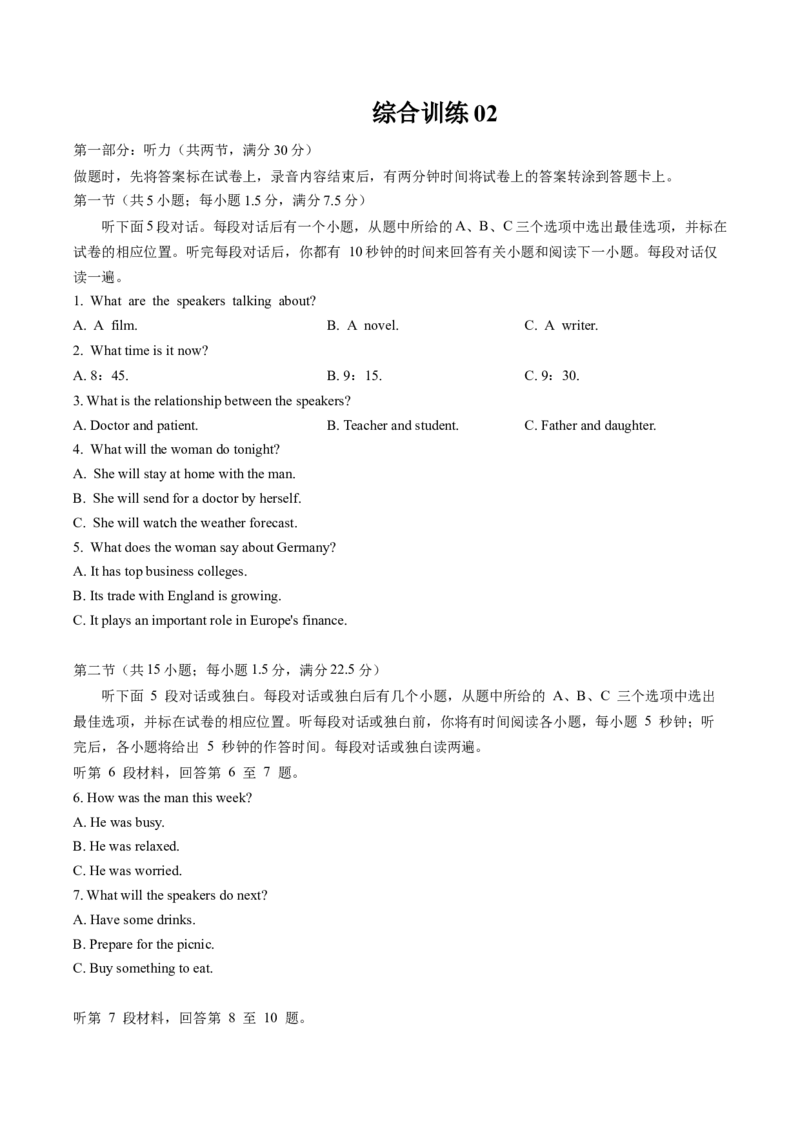
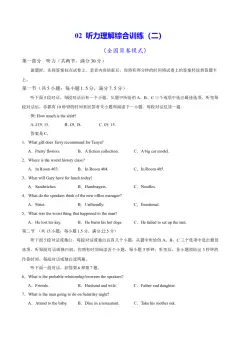
综合训练02
第一部分:听力(共两节,满分30 分)
做题时,先将答案标在试卷上,录音内容结束后,有两分钟时间将试卷上的答案转涂到答题卡上。
第一节(共5 小题;每小题1.5 分,满分7.5 分)
听下面5 段对话。每段对话后有一个小题,从题中所给的A、B、C 三个选项中选出最佳选项,并标在
试卷的相应位置。听完每段对话后,你都有 10 秒钟的时间来回答有关小题和阅读下一小题。每段对话仅
读一遍。
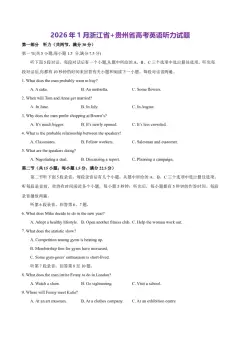
1. What are the speakers talking about?
A. A film.
B. A novel.
C. A writer.
2. What time is it now?
A. 8:45.
B. 9:15.
C. 9:30.
3. What is the relationship between the speakers?
A. Doctor and patient.
B. Teacher and student.
C. Father and daughter.
4. What will the woman do tonight?
A. She will stay at home with the man.
B. She will send for a doctor by herself.
C. She will watch the weather forecast.
5. What does the woman say about Germany?
A. It has top business colleges.
B. Its trade with England is growing.
C. It plays an important role in Europe's finance.
第二节(共15 小题;每小题1.5 分,满分22.5 分)
听下面 5 段对话或独白。每段对话或独白后有几个小题,从题中所给的 A、B、C 三个选项中选出
最佳选项,并标在试卷的相应位置。听每段对话或独白前,你将有时间阅读各小题,每小题 5 秒钟;听
完后,各小题将给出 5 秒钟的作答时间。每段对话或独白读两遍。
听第 6 段材料,回答第 6 至 7 题。
6. How was the man this week?
A. He was busy.
B. He was relaxed.
C. He was worried.
7. What will the speakers do next?
A. Have some drinks.
B. Prepare for the picnic.
C. Buy something to eat.
听第 7 段材料,回答第 8 至 10 题。
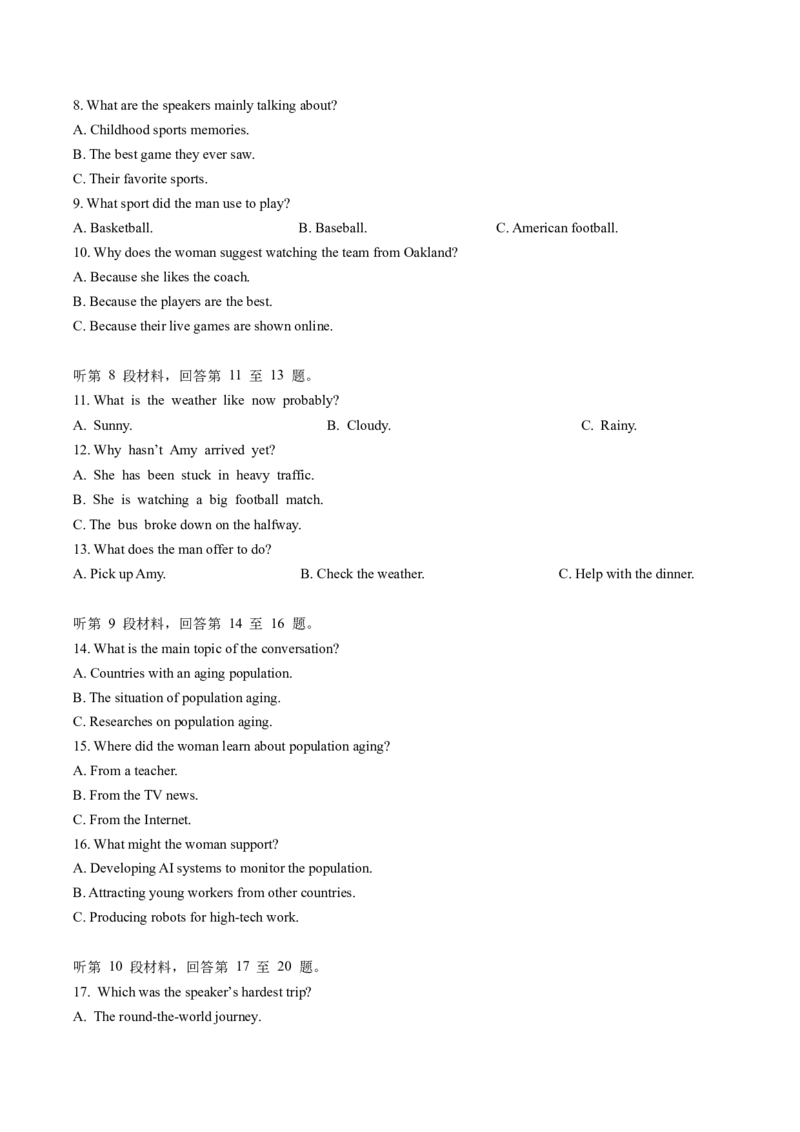
8. What are the speakers mainly talking about?
A. Childhood sports memories.
B. The best game they ever saw.
C. Their favorite sports.
9. What sport did the man use to play?
A. Basketball.
B. Baseball.
C. American football.
10. Why does the woman suggest watching the team from Oakland?
A. Because she likes the coach.
B. Because the players are the best.
C. Because their live games are shown online.
听第 8 段材料,回答第 11 至 13 题。
11. What is the weather like now probably?
A. Sunny.
B. Cloudy.
C. Rainy.
12. Why hasn’t Amy arrived yet?
A. She has been stuck in heavy traffic.
B. She is watching a big football match.
C. The bus broke down on the halfway.
13. What does the man offer to do?
A. Pick up Amy.                   B. Check the weather.                   C. Help with the dinner.
听第 9 段材料,回答第 14 至 16 题。
14. What is the main topic of the conversation?
A. Countries with an aging population.
B. The situation of population aging.
C. Researches on population aging.
15. Where did the woman learn about population aging?
A. From a teacher.
B. From the TV news.
C. From the Internet.
16. What might the woman support?
A. Developing AI systems to monitor the population.
B. Attracting young workers from other countries.
C. Producing robots for high-tech work.
听第 10 段材料,回答第 17 至 20 题。
17. Which was the speaker’s hardest trip?
A. The round-the-world journey.
B. The journey around the Pacific Ocean.
C. The car journey from the North Pole to the South Pole.
18. What kind of trips does the speaker want to have now?
A. Adventurous trips.
B. Relaxing trips.
C. Long-distance trips.
19.What would the speaker probably write?
A. Songs.
B. Newspaper reports.
C. Poetry.
20. What can we know about the speaker?
A. He has never traveled with others.
B. His family encourage him to write at home.
C. He plans to take more long trips in the future.