模块 阅读理解  综合训练(二)
(考试时间:50 分钟  试卷满分:75 分)
甲
阅读理解(共15 小题,每小题2.5 分,共37.5 分)用时:25 分钟
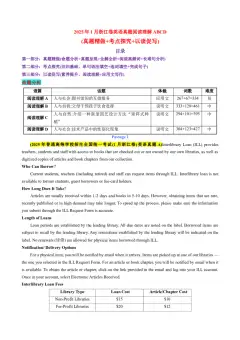
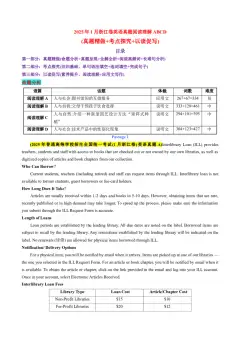
语篇
体裁
词数
话题
命题亮点
错题
统计
错误原因总结
A
应用文
262
适合学生做的
科学实验
以学生学习生活中的几个
实验为情境命题,命题素
材新颖、贴近学生生活。
B
记叙文
332
马修·马丁在Le
Valle 高中的转
变
自我成长
C
说明文
325
如何将蚂蚁的
集体智慧应用
于智能交通系
统
与25 全国I  C 篇命题相
似
D
科普说明文
348
暗示教学法
以乔治·洛扎诺夫提出的暗
示教学法为命题情境,素
材新颖,贴近学习生活
A
Engage students with science with these exciting and entertaining experiments! Students will love exploring
while also gaining invaluable experience by designing and conducting experiments.
Sunscreen Experiment
Kids often don’t enjoy being told they need sunscreen, so showing its power through demonstration can help
them see its value. This science fair project uses simple white beads (珠子) that change color when exposed to UV
rays (紫外线) so children can compare the effectiveness of different sunscreen products. Start this experiment by
applying some of each sunscreen type on paper and placing both pieces of paper in direct sunlight for several hours.
Sundial (日晷) Experiment
Using a sundial to tell time is a fascinating science activity that helps students gain knowledge of shadows and
the movement of sunlight across the sky. Through this hands-on experiment, students gain an opportunity to see
how people in previous times knew time without clocks or watches. Start this experiment by asking students to
identify an outdoor spot that receives sunlight all day, placing a flat board there, tracing the shadows onto it and
noting where the shadows will fall at certain points of the day.
Mineral Experiment
Students learn to identify rocks and minerals through this simple experiment. They use a plate to test the
hardness of various common minerals. They also observe how these minerals form crystals (晶体) and how they
break apart differently from others. This lesson helps students understand the characteristics and uses of different
minerals. Students can even form “companies” and compete to mine different types of rocks with specific features.
1.What is the main purpose of using beads in the sunscreen experiment?
A.To compare the prices of sunscreen.
B.To show the effectiveness of sunscreen.
C.To analyze the impact of sunscreen on skin.
D.To demonstrate chemical reactions in sunscreen.
2.How do students begin the sundial experiment?
A.By building a sundial from beginning.
B.By comparing different types of sundials.
C.By measuring the length of their shadows.
D.By identifying a sunny spot and using a flat board.
3.What does the mineral experiment allow students to do?
A.Observe crystal formation.
B.Learn geological history.
C.Sell rocks they mine.
D.Form companies.
 B
Freshman Matthew Martin has enjoyed playing sports, and forming friendships throughout his first year in
high school. As he finished Grade 8, Martin started the search for his high school and after applying to Jesuit High
School, Martin’s father brought up the idea of Le Valle and thought it would be a good fit to go there. After
spending time with Le Valle schoolmate Will Koch, Martin fell in love with the community.
This year, Martin played on Le Valle’s golf team and soccer team. While the sports themselves were nothing
new, he made the leap from recreational soccer to playing competitively and was on a golf team for the first time
rather than competing individually. Competing on these two teams taught Martin the value of hard work and the
importance of not cutting corners, both in athletics and life. “Always make sure everything gets done and make
sure it gets done right, 100% complete,” Martin said, “quality over quantity.”
In previous years, Martin noted that he wouldn’t ask as many questions and would be on the quiet side in
class, but thanks to all his teachers this year, he asked more questions and felt more comfortable engaging in
discussion. During and after class, Martin could be found as one of two freshmen in math teacher Mr. Linus Oey’s
Honors Algebra (代数) class. Martin said that although it was his hardest class, once he started asking questions
and started to really engage and try his hardest, he felt much more comfortable and confident with the class.
Martin has many pieces of advice he wishes he could tell himself on the first day of school this year and to
the incoming freshmen. “Just relax, have fun. Just make sure you try your hardest no matter what,” Martin said.
“Be sure to join clubs or sports. That’s seriously how you can meet somebody, like I’ve met so many best friends
through soccer and through the soccer camp.”
4.What led to Martin’s choosing Le Valle?
A.The competitive sports teams.
B.The advice of his father.
C.The educational programs offered.
D.The quiet persuasion by Will Koch.
5.What does the underlined phrase “cutting corners” in paragraph 2 probably mean?
A.Taking shortcuts.
B.Making sharp turns.
C.Giving up teamwork.
D.Stopping learning skills.
6.Which of the following best describes today’s Martin?
A.Innovative and responsible.
B.Adventurous and independent.
C.Competitive and graceful.
D.Hardworking and active.
7.What does Martin suggest for the incoming freshmen?
A.Select fun clubs first.
B.Focus on hard subjects.
C.Socialize to find friends.
D.Try out for soccer camp.
 C
When viewed from above, highway traffic resembles ant colonies in motion. Yet unlike human drivers, ants
remarkably avoid traffic jams through collective intelligence. Scientists are now studying these tiny creatures to
develop smarter self-driving car systems that could prevent traffic jams.
Research shows traffic flow becomes unstable when vehicle density reaches 15 cars per mile per lane. A
single brake application can trigger a chain reaction of stopping-what physicist Katsuhiro Nishinari calls a “phase
transition”, similar to water turning to ice. Surprisingly, ants maintain smooth movement even at high densities.
Studies reveal their secret lies in traveling in small groups (3-20 ants) at consistent speeds while maintaining proper
spacing and never overtaking each other.
The parallels between ant colonies and potential smart traffic systems are striking. Just as ants coordinate
through chemical signals without any central authority, future vehicle networks could operate through decentralized
communication. ”What emerges is a remarkably strong system without any single leader,“ observes Noa Pinter-
Wollman, a behavioral ecologist at UCLA who studies ant colonies. This distributed approach to traffic
management could prove far more adaptable than our current top-down systems.
Human drivers, focused on personal speed advantage, inevitably cause jams. “We prioritize individual
interests, which leads to congestion,” explains Nicola Pugno, an engineering professor at Italy’s University of
Trento who contributed to the research. This fundamental difference in approach suggests that future autonomous
vehicles, if properly programmed, could revolutionize traffic flow by adopting ant-like cooperation. Imagine a
network of self-driving cars constantly communicating with nearby vehicles to maintain steady speeds and safe
following distances, eliminating the stop-and-go patterns that waste time and fuel.
While ants show great flexibility by making paths wider or even moving upside down in narrow spaces, cars
today cannot do the same. However, Nishinari offers one simple lesson from ants that all drivers can use: keep a
safe distance. Leaving enough space between cars helps reduce sudden stops that often lead to unexplained traffic
slowdowns.
8.What is the main purpose of scientists studying ants in relation to traffic systems?
A.To understand how ants avoid predators.
B.To develop smarter self-driving car systems.
C.To learn how ants build their colonies.
D.To study the chemical signals ants use.
9.Why can ants avoid traffic jams even at high densities?
A.They travel in small groups with consistent spacing and speed.
B.They rely on a central authority to coordinate their movements.
C.They use chemical signals to communicate with each other.
D.They frequently overtake other ants to avoid congestion.
10.How can ant colonies inspire future vehicle network design?
A.It will rely on a central authority for coordination.
B.It will mimic the top-down systems currently in use.
C.It will operate through decentralized communication.
D.It will prioritize individual speed over collective efficiency.
11.Which of the following is the best title for the passage?
A.Ant Colonies: A Model for Future Traffic Systems
B.Human Drivers: The Cause of Traffic Congestion
C.Self-Driving Cars: The Science Behind Them
D.Decentralized Communication: The Future of Traffic
 D
If we think of a book we studied months ago, we will find it easier to recall its colour, its typeface, and the
table where we sat than the content we were concentrating on. If we think of a lecture we listened to with great
concentration, we will recall the lecturer’s appearance, the failure of the air-conditioning, much more easily than
the ideas we went to learn. This phenomenon proves that the connections made in the brain through unconscious
processing are more lasting than those made through conscious (有意识的) processing. George Lozanov therefore
proposed his theory and came up with a new teaching approach.
In suggestopedia (暗示教学法), as he called his method, consciousness is shifted away from the curriculum
to focus on something around. In a recent experiment, it consists of two sessions. The first session is in two parts.
In the first part, the music is classical (Mozart, Beethoven…) and the teacher reads the text slowly and sincerely,
with attention to the dynamics of the music. The students follow the text in their books. This is followed by several
minutes of silence. In the second part, they listen to baroque music (Bach, Corelli, Handel…) while the teacher
reads the text in a normal speaking voice. During this time they have their books closed.
Some hours after the two-part session, there is a follow-up class at which the students are stimulated to recall
the material presented. Once again the approach is indirect. The students do not focus their attention on trying to
remember the vocabulary, but focus on using the language to communicate.
While suggestopedia has gained some fame through success in the teaching of modern languages, few
teachers are able to achieve the same level of success as Lozanov and his associates. The students have not
developed the appropriate mind set. They are often not motivated to learn through this method because they do not
have enough “faith”. They do not see it as “real teaching” especially as it does not seem to involve the “work” that
is essential to learning.
12.What’s easier to recall in paragraph 1?
A.Book content.
B.Lecture ideas.
C.Associated details.
D.Consciously learned facts.
13.Why are different types of music used in the experiment?
A.To let teachers teach more freely.
B.To see how students react to music.
C.To create different learning atmospheres.
D.To test students’ music appreciation ability.
14.What is a key feature of suggestopedia in the experiment?
A.Focusing on direct vocabulary memorization. B.Stimulating active recall of texts.
C.Using a direct teaching approach.
D.Encouraging passive listening.
15.What can be inferred about the new method from the last paragraph?
A.It has gained great popularity.
B.It still has a long way to go.
C.Students’ attitude helps its success.
D.It’s a win-win strategy.
乙
阅读理解(共15 小题,每小题2.5 分,共37.5 分)用时:25 分钟
语篇
体裁
词数
话题
命题亮点
错题统计
错误原
因总结
A
应用文
246
用AI 技术所创新出
来的一些技术和产品
以AI 科技产品为情境命
题,命题素材新颖,不
落俗套。
B
记叙文
294
讲述了普拉扎尔与京
剧的深厚渊源及传播
贡献
以普拉扎尔与京剧的深
厚渊源及传播贡献为命
题情境,凸显了中外文
化的交流,与此同时也
以一个外国人的体验传
播了中国文化。
C
说明文
355
学校禁止使用智能手
机
命题素材,贴近学生生
活
D
科普说明文
376
如何有效改变他人观
点
心理学类阅读理解是高
考常考话题
 A
Artificial intelligence is a complex computer science concept. The following are several examples of
artificial intelligence.
1. Olly
An artificial intelligence assistant named Olly, is more advanced and developed than Siri and Alexa. It is
integrated with deep learning and natural language processing features. This technology is said to be quite helpful
for people living alone or going through sadness. It can copy the reactions of a friend or companion.
2. Pathai
Pathai is a strong example of artificial intelligence that helps pathologists (病理学家) follow the test reports
more conveniently. This can help save hundreds of lives by correctly diagnosing and determining the underlying
diseases. This interference of AI in the healthcare department has proven to be fruitful for the patients and time-
saving for the pathologists.
3. Drone
You must have heard the word drone, but AI-based drones are one step advanced from your typical drones.
These aerial devices are used for many different reasons. The use of drones has proven to be very beneficial in the
military and surveillance sector (监管部门) but it has also started to benefit the average consumer, saving time and
relieving traffic jams.
4. GPS
GPS is a necessity nowadays. It not only helps to reach far places and areas but also assists in the way. Its
artificial intelligence predicts the estimated time of reaching a destination by analyzing traffic situations in real-
time. GPS also gathers data from thousands of cars and predicts the best route for every car.
1.Which of the following benefits people feeling depressed the most?
A.Olly.
B.Pathai.
C.Drone.
D.GPS.
2.What do Drone and GPS have in common?
A.They are necessities in daily life.
B.They contribute to smooth traffic.
C.They rely on the responses of their owners.
D.They are mainly employed by governments.
3.Which section of a newspaper is the passage possibly taken from?
A.All About Health.
B.Self-driving Adventures.
C.The Theories Explained.
D.Game-changing Innovations.
 B
An internationally praised cultural thing has introduced the attractive tale of Sun Wukong to audiences
worldwide. But for Ghaffar Pourazar, a British-American dual citizen living in California, this legendary figure has
been a part of his identity for decades.
Pourazar’s lifelong passion for Peking Opera began by chance. In 1993, Pourazar attended a performance at
London’s Queen Elizabeth Hall and was instantly captured. He went backstage right after the show and made
friends with the Chinese performers. With their help, Pourazar was enrolled at an opera school. Just three months
later, he left his life in Britain behind and moved to Beijing to train in the martial roles of the art.
Starting as an adult was not easy, as Peking Opera is a complex mixture of vocal performance, mime, martial
arts, dance and acrobatics. In addition to the physical demands, mastering the Chinese language posed another
problem. “I was constantly reciting the subtitles and songs, whether I was eating, bathing, walking, or even
dreaming,” Pourazar said.
Pourazar believes that great art transcends ( 超越) languages. Over the years, he has devoted himself to
introducing Peking Opera and Sun Wukong to international audiences. He has also been teaching courses and
organizing workshops in the United-States, bringing Peking Opera to curious Western learners. To better connect
with Western audiences and learners, he adapted some classic plays such as The Monkey King: Uproar in Heaven
into English versions and he also adapted Shakespeare’s A Midsummer Night’s Dream into Poking Opera.
In recognition of his contributions, Pourazar received the Great Wall Friendship Award from the Beijing
government in 2014. “Cultural exchange should be reciprocal (互惠的). I aim to blend my expertise in opera with
my multicultural background to create enriching artistic experiences for the audiences,” said Pourazar.
4.What is the author’s intention of writing paragraph 1?
A.To prove Ghaffar Pourazar’s achievement.
B.To introduce a cultural influence on an individual.
C.To explain the cultural significance of Sun Wukong.
D.To highlight the fascination of ancient Chinese tales.
5.What do we know about Pourazar’s experience of learning Peking Opera?
A.Language was a significant barrier for him.
B.The performers he met backstage taught him the art.
C.Queen Elizabeth made him interested in Peking Opera.
D.His enthusiasm for Peking Opera started at an early age.
6.Why did Pourazar adapt Shakespeare’s A Midsummer Night’s Dream into Peking Opera?
A.To show off his talent in adapting different plays.
B.To add more complexity to traditional opera forms.
C.To prove that Peking Opera is superior to other art forms.
D.To make Peking Opera more accessible to Western audiences.
7.Which of the following words best describe Pourazar?
A.Determined and creative.
B.Passionate and reserved.
C.Humorous and charming.
D.Traditional and cautious.
 C
France banned smartphones in primary and secondary schools in 2018 to improve focus, reduce social media
exposure, and control cyberbullying. Following this, the Netherlands and Hungary introduced similar bans in 2024,
while the UK debates comparable legislation. The critical debate centers on whether such bans meaningfully
enhance students’ mental health.
The urgency is undeniable. A 2021 U.S. Surgeon General report documented a 40% surge in persistent
hopelessness among American high schoolers between 2009 and 2019. The number who seriously considered
killing themselves went up by 36%. What makes these findings all the worse is that 48% of mental-health problems
(like depression and anxiety) that emerge during adolescence will plague people for the rest of their lives.
It is tempting to connect these trends with the increased availability of smartphones, but establishing a causal
connection is difficult. The brain undergoes profound changes during adolescence, meaning that any research on
the effects of smartphone use needs to consider the developmental age of the children being studied as well as their
precise smartphone habits.
Some studies reveal that unfettered (不受限制的) access to social media on smartphones at critical moments
when the brain is changing may cause problems. Amy Orben at the University of Cambridge surveyed 17,409
people aged 10-21, analyzing the relationship between social media use and life satisfaction. The findings show
that girls who increased their social media use over the course of a year were significantly less satisfied if the
increase took place when they were between 11 and 13. Boys showed the same trend when increases took place
when they were 14 or 15 years old.
How much of this will change by banning phones in schools is unclear. Victoria Goodyear at Britain’s
University of Birmingham compared the mental well-being of students in schools that implemented restrictive
smartphone policies with those with relaxed policies. She also monitored overall screentime. Her results show that,
while those who spent more time on a smartphone overall did have a decline in mental well-being, there was no
difference between the two groups. She and her colleagues argue that setting up policies at schools alone is simply
not enough.
8.How is the second paragraph mainly developed?
A.By analyzing causes.
B.By listing data.
C.By following time order.
D.By examining differences.
9.What does the underlined word “plague” most likely mean?
A.Improve.
B.Affect.
C.Cure.
D.Ignore.
10.What can we infer from Orben’s research?
A.Smartphones cause great harm to teenagers’ brain.
B.Ages make a difference to teenagers’ understanding of life.
C.Girls are more likely to be affected by social media than boys.
D.Unrestricted social media use leads to a decline in life satisfaction.
11.What is Goodyear’s attitude to banning smartphones in schools?
A.Supportive.
B.Indifferent.
C.Skeptical.
D.Critical.
 D
You’ve seen it happen: you present a fact — clear, undeniable — and instead of reconsidering their position,
the other person doubles down. “I just don’t believe it,” they say. This confusing resistance isn’t just frustrating; it’s
deeply human. Our brains are wired not merely to seek truth, but to defend identity. Welcome to the mind’s firewall
— our internal system that protects beliefs from intruding (侵入的) evidence. And yet, understanding this firewall
is the first step to disarming it, for ourselves and others.
In Elizabeth Kolbert’s article “Why Facts Don’t Change Our Minds,” she draws on studies in cognitive
science to show that reasoning evolved not to find truth, but to win arguments. Our brains often favor “motivated
reasoning” — seeking information that supports our views and discounting evidence that challenges them. This
tendency, known as “confirmation bias (偏见)”, helps us maintain a consistent sense of self and stay in line with
our social groups. This makes conversations less about learning and more about defending one’s territory.
Think of your mind like a computer. Facts are like data packets trying to get through your firewall. But
unless they meet certain criteria — emotional relevance, social safety, identity compatibility ( 兼容) — they’re
blocked. The mind doesn’t simply take in raw information; it tries to make sense of it. Facts alone aren’t enough to
truly connect or stick. This is especially true in emotionally charged fields like politics, health, or identity. When we
feel threatened, the emotional brain overrides the rational (理智的) brain. What feels true outweighs what is true.
If facts can’t get past the firewall, what can? As discussed in my book The Art of Change, it’s not about
tearing down the firewall, but about finding alternative paths around it — narrative, emotion, and relationship.
Next time you’re trying to change someone’s mind — or your own — remember: lead with connection, not
argument. Start with shared experiences or values. Use stories, not just analytics. And stay open yourself. Try this:
Think of a belief you hold strongly. Then write down three reasons someone might see it differently — not
arguments, but genuinely thoughtful reasons. Doing this won’t make you weaker in your beliefs. It’ll make you
wiser in your understanding.
12.What does the author think of the mind’s firewall?
A.It is natural.
B.It is confusing.
C.It is beneficial.
D.It is necessary.
13.Why do our brains favor “motivated reasoning”?
A.It helps people seek truth.
B.It allows people to defend identity.
C.It makes people learn more about themselves.
D.It enables people to overcome any challenges.
14.What is paragraph 3 mainly about?
A.The scientific method for processing facts.
B.The underlying logic of the mind’s firewall.
C.The biological structure of the human brain.
D.The conflict between emotional and rational brains.
15.What does the author suggest readers do to change others’ minds?
A.Argue against their beliefs.
B.Present a through analysis to them.
C.Form an emotional bond with them.
D.Train them to be more open-minded.