 夜雨聆风
夜雨聆风



小米人形机器人最新亮相,说明了什么?What Does Xiaomi’s Latest Humanoid Robot Reveal?
今日主题:小米人形机器人最新亮相,说明了什么?
Today’s Topic:What Does Xiaomi’s Latest Humanoid Robot Reveal?
今天,4月27日,小米集团投资者日,小米展示了新一代人形机器人。
现场细节很耐看:
它们像工作人员一样,给客人递袋子、握手、比心,甚至还能玩一局剪刀石头布。
这些动作看起来轻松,但拆开来看,其实对应三类核心能力:
- 精细手部控制(递袋子、手势动作)
- 接触安全与力控(握手)
- 感知—决策—执行的时序稳定(剪刀石头布)
从这组动作可以读出一个很清晰的定位:
这是一台围绕“手部操作 + 稳定执行”设计的工作型机器人。 🤝🧠
Today, April 27, at Xiaomi Group’s Investor Day, Xiaomi showcased a new-generation humanoid robot.
The details were worth watching:
like staff members, the robots handed guests bags, shook hands, made heart gestures, and even played a round of rock–paper–scissors.
These moves look effortless, but when you unpack them, they map to three core capabilities:
– fine hand control (handing a bag, precise gestures)
– contact safety and force control (a handshake)
– stable timing across perception → decision → execution (rock–paper–scissors)
From this set alone, one positioning becomes unmistakable:
this is a work-oriented robot designed around “hands-on manipulation + reliable execution.” 🤝🧠
01|外观“变软”,其实是工程能力在升级
01 | A “Softer” Look Is Actually an Upgrade in Engineering
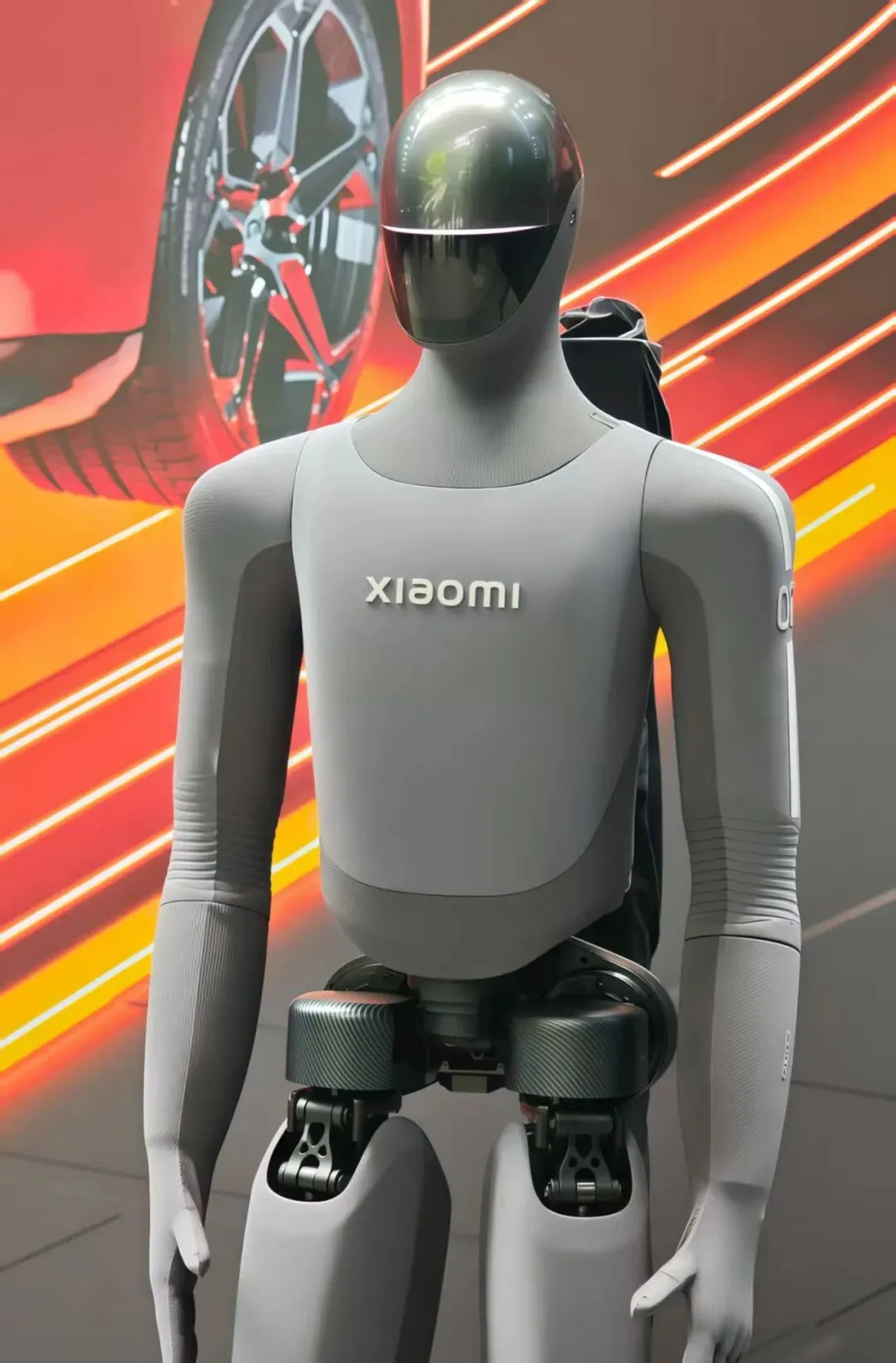
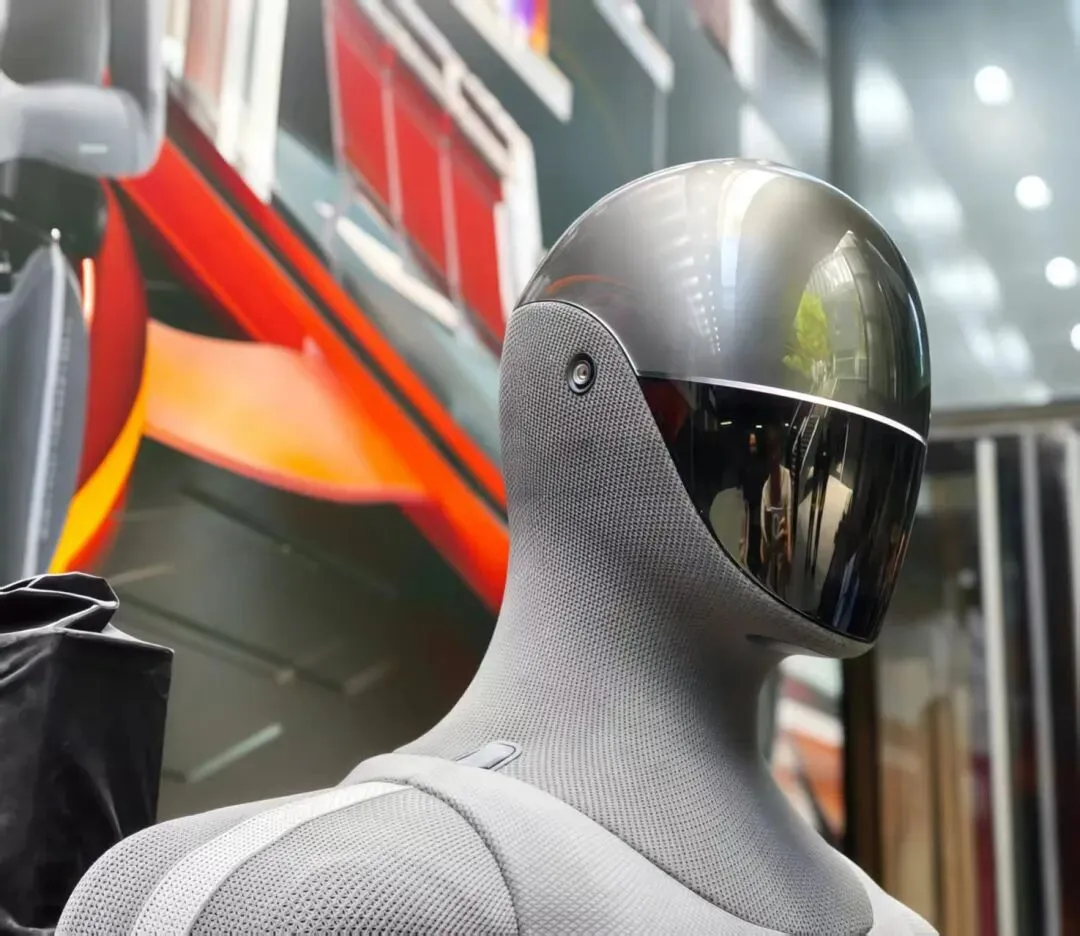
这一代机器人最直观的变化,是“看起来没那么硬了”。
机身大面积采用织物或复合材料包覆,关节更紧凑,整体结构更收敛。
和早期CyberOne的金属外露风格相比,设计逻辑明显转向实际使用场景。
这种变化背后,是很典型的工程选择:
- 接触安全:人与设备频繁接触,软性包覆可以降低碰撞风险
- 耐用与维护:工厂环境复杂,外层材料需要耐磨、可替换
- 热管理:连续运行带来散热压力,结构需要更均衡的温控能力
简单理解就是:
它不再追求“看起来像机器人”,而是“可以长期工作”。 🧩🔧
The most visible change in this generation is that it “looks less hard.”
Large areas of the body are wrapped in fabric or composite materials; joints are more compact; the structure feels more contained.
Compared with the earlier CyberOne(CyberOne)—with exposed metal as its aesthetic—this design clearly shifts toward real-use scenarios.
Behind that is a classic set of engineering decisions:
– contact safety: frequent human–device contact makes soft covering a practical way to reduce collision risk
– durability and maintenance: factory environments demand abrasion resistance and easy replacement
– thermal management: continuous operation raises heat-dissipation pressure, requiring more balanced temperature control
Put simply:
it’s no longer trying to “look like a robot”—it’s trying to “work for the long haul.” 🧩🔧
02|能力边界:先把小动作做到极致 🖐️🎯
02 | Capability Boundaries: Perfect the Small Moves First 🖐️🎯
这台机器人当前的能力重心非常明确:
抓取、拧紧、搬运、分拣。
这些都是看起来简单,但对稳定性要求极高的动作。
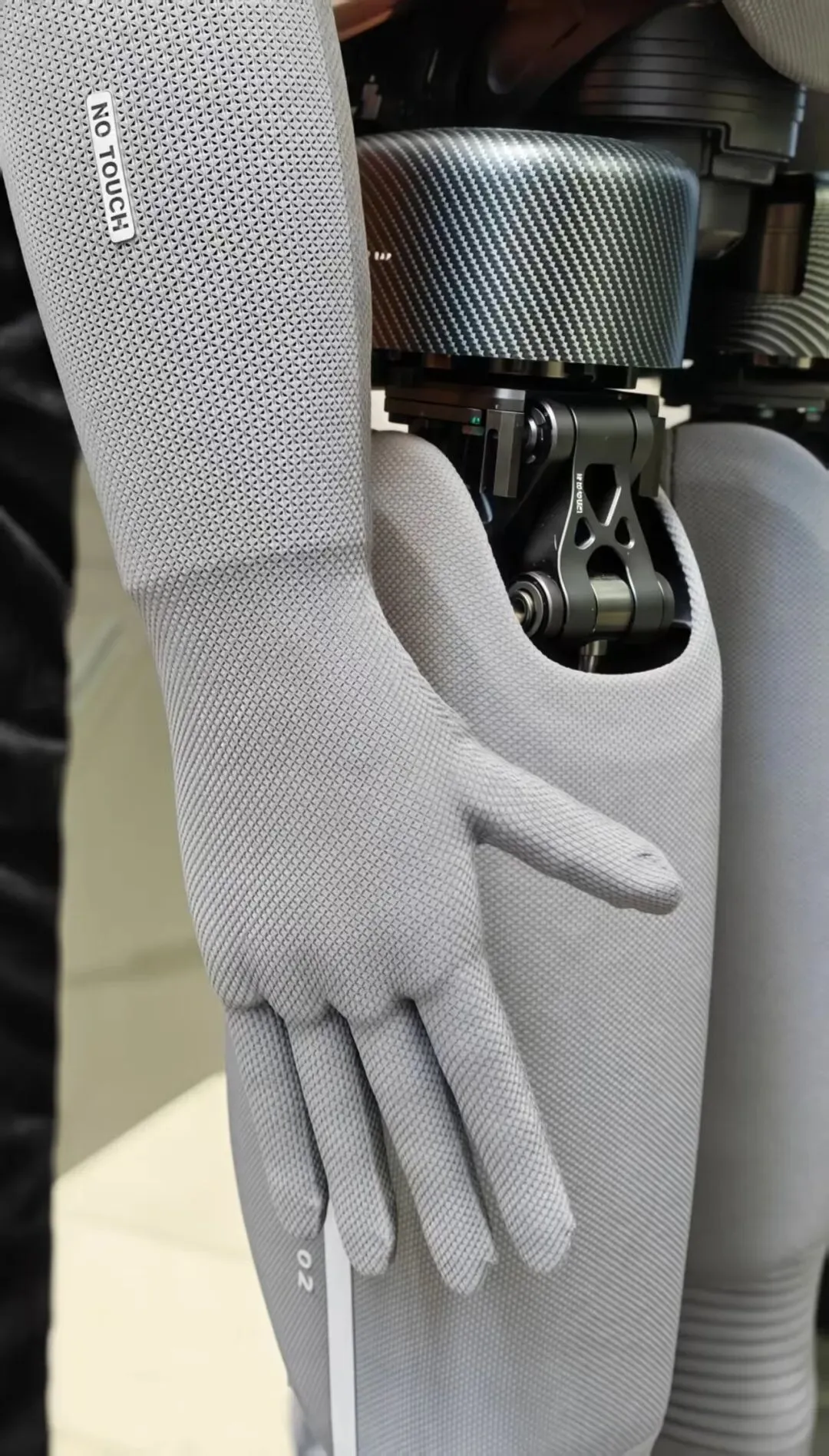
手部尺寸更接近人手,控制精度与触觉能力提升,目标只有一个——
把每一个小动作做稳、做准,并能持续重复。
根据公开信息,它已经进入小米汽车产线,参与螺母安装与物料搬运,
可以对齐生产节拍,连续运行数小时,成功率在90%左右。
这说明一个关键点:
它已经进入真实应用验证阶段。 🏭✅
The robot’s current focus is unmistakably clear:
grasping, tightening, carrying, sorting.
These look simple, but they demand extreme stability.
With hand dimensions closer to a human’s, higher control precision, and improved tactile capability, the goal is singular—
make every small action steady, accurate, and repeatable at scale.
According to public information, it has already entered Xiaomi Auto production lines for nut installation and material handling,
matching line cadence, running continuously for hours, with a success rate around 90%.
That signals one key point:
it has entered the phase of real-world application validation. 🏭✅
03|路径选择:先在制造中“练基本功”
03 | Path Choice: Build Fundamentals Inside Manufacturing First
从CyberOne到今天,小米的目标一直没有变——
做人形机器人,并把它变成可用产品。
变化在于路径。
当前策略很清晰:
先在制造场景把执行能力打磨稳定,再扩展到更复杂的应用环境。
制造业的优势在于:
流程清晰、动作标准、数据可积累。
在这样的环境中,机器人可以不断修正动作、优化模型、提高稳定性。
这一步打牢,后面才有扩展空间。 🧱🧠
From CyberOne to today, Xiaomi’s goal has stayed the same—
build humanoid robots, and turn them into usable products.
What changed is the path.
The strategy is clear:
harden execution stability in manufacturing first, then expand into more complex environments.
Manufacturing has an advantage:
clear workflows, standardized actions, and accumulable data.
In such conditions, robots can continuously correct motion, refine models, and improve stability.
Once that foundation is solid, expansion becomes possible. 🧱🧠
04|家庭规划:方向明确,但标准更高
04 | Home Deployment: The Direction Is Clear, but the Bar Is Higher
很多人关心:什么时候进入家庭?
小米的思路也很直接:
家庭一定会进入,但前提是能力达标。
家庭环境比工厂复杂得多:
任务不固定,场景不标准,变量更多。
这对机器人的要求,是更强的泛化能力和长期稳定性。
所以当前阶段的逻辑是:
先把“执行能力”做扎实,再做“场景扩展”。
顺序很清楚,目标没有改变。 🧭🏡
Many people ask: when will it enter the home?
Xiaomi’s logic is straightforward:
the home will come—but only after capability meets the standard.
Homes are far more complex than factories:
tasks are non-fixed, scenarios are non-standardized, and variables multiply.
That demands stronger generalization and long-term stability.
So the current logic is:
make “execution capability” rock-solid first, then expand across scenarios.
The sequence is clear; the goal has not changed. 🧭🏡
05|技术核心:让动作“连续正确”
05 | The Technical Core: Make Actions “Continuously Correct”
机器人最难的地方,不在单个动作,而在连续动作。
可以拆成一个完整流程:
看见环境 → 理解任务 → 拆解动作 → 执行 → 根据反馈修正
Xiaomi-Robotics-0的作用,是把视觉、语言和动作整合在一个系统中,通过真实数据不断优化执行稳定性。
这条路径听起来不炫,但非常关键:
从“偶尔做对”,变成“持续做对”。 🧠🧷
The hardest part of robotics is not any single action—it’s sequences.
We can break it into a full loop:
see the environment → understand the task → decompose actions → execute → correct via feedback.
Xiaomi-Robotics-0(Xiaomi-Robotics-0) integrates vision, language, and action into one system, using real-world data to continuously optimize execution stability.
It may not sound flashy, but it is decisive:
moving from “sometimes right” to “reliably right, again and again.” 🧠🧷
06|系统优势:小米的底层能力在这里体现
06 | System Advantage: Xiaomi’s Underlying Strength Shows Up Here
单看机器人,很容易低估小米的优势。
但如果放在整个体系里看,会更清楚:
- 汽车工厂:提供真实任务与高密度数据
- 硬件能力:保证成本控制与一致性
- 人车家IoT:提供未来进入家庭的场景基础
这三者形成一个完整闭环:
在工厂里把动作做稳,在生态里把场景做对。
这不是单点突破,而是系统能力。 🌀⚙️
Looking only at the robot, it’s easy to underestimate Xiaomi’s advantage.
But within the full system, it becomes clearer:
– auto factories: real tasks and high-density data
– hardware capability: cost control and consistency at scale
– “Human–Car–Home” IoT: the scenario foundation for eventual home entry
Together, these form a closed loop:
stabilize actions in factories, then get scenarios right within the ecosystem.
This is not a single-point breakthrough—it’s systems capability. 🌀⚙️
07|从“能展示”,走向“能执行”
07 | From “Can Demo” to “Can Execute”
把这次亮相拆开来看,其实信息非常集中:
互动演示 → 验证手部与时序控制
外观变化 → 服务长期运行
产线测试 → 明确应用阶段
模型路径 → 指向稳定执行能力
可以得出一个很清晰的判断:
小米人形机器人,已经从“展示阶段”,进入“执行阶段”。
而这一步,正是整个行业的分水岭。 🧭🏁
If we unpack this appearance, the signal is actually very concentrated:
interactive demos → validate hand control and timing stability
design changes → serve long-run operation
production-line testing → confirm application stage
model path → point toward stable execution capability
A clear judgment follows:
Xiaomi’s humanoid robot has moved from the “demo phase” into the “execution phase.”
And that step is the industry’s real watershed. 🧭🏁
#小米人形机器人 #执行能力与工程路径 #从产线验证到家庭扩展
#XiaomiHumanoidRobot #ExecutionAndEngineeringPath #FromFactoryValidationToHomeExpansion
🌟愿技术走进生活时,带来的不是惊扰,而是安心。🫶✨
🌟When technology enters daily life, may it bring not disruption, but reassurance. 🫶✨