ARTICLE · 1134482
2026广东省初中英语优质课说课逐字稿
课题:外研版八年级下册 U3 Reading for Writing Period 1
主题:No “I” in “team”
授课教师:梁全洪

【说课开始】
I’m contestant number fifteen with my student a. Our lesson is no I in team. Before listening, before designing my lessons, I always keep these seven questions in mind. And now, let me show you my answers, Step by step.
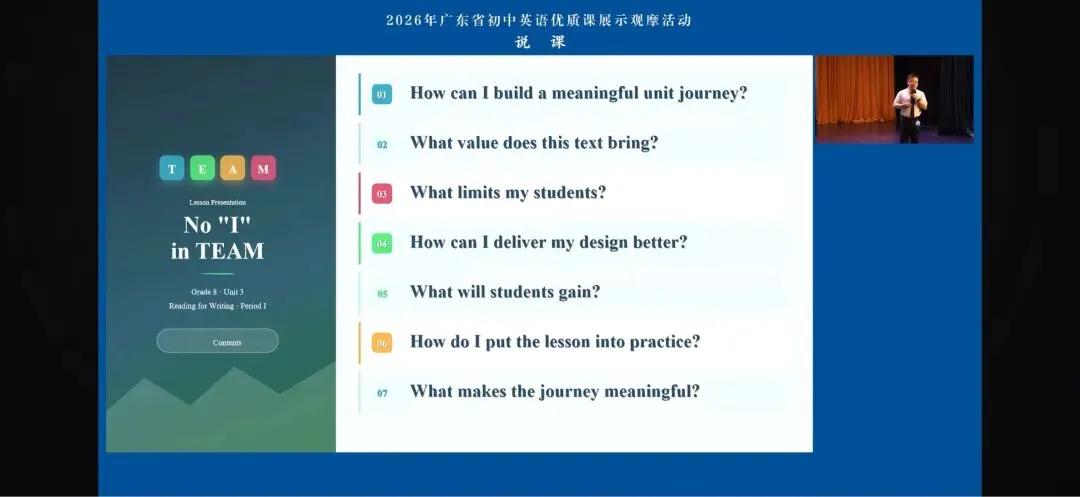
First question: How can I design a meaningful unit journey with my students?
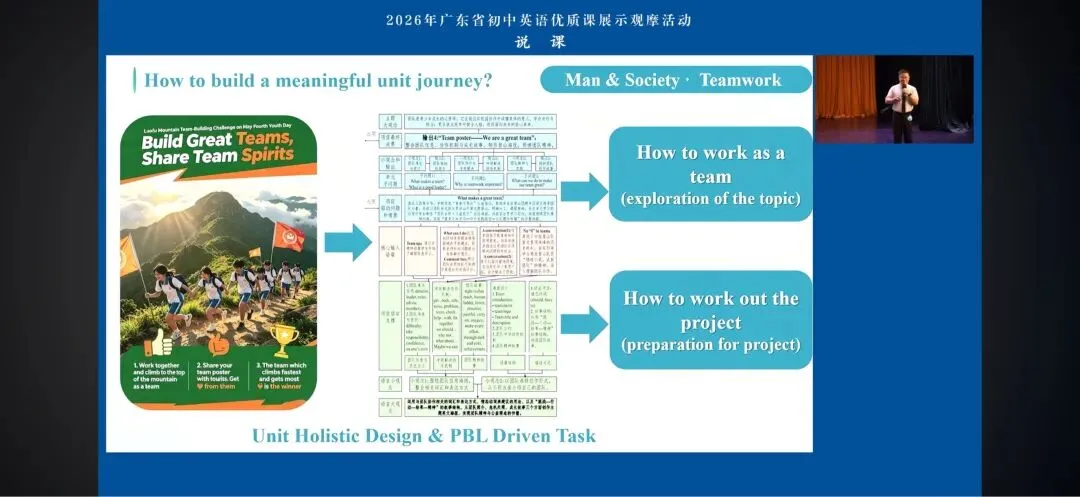
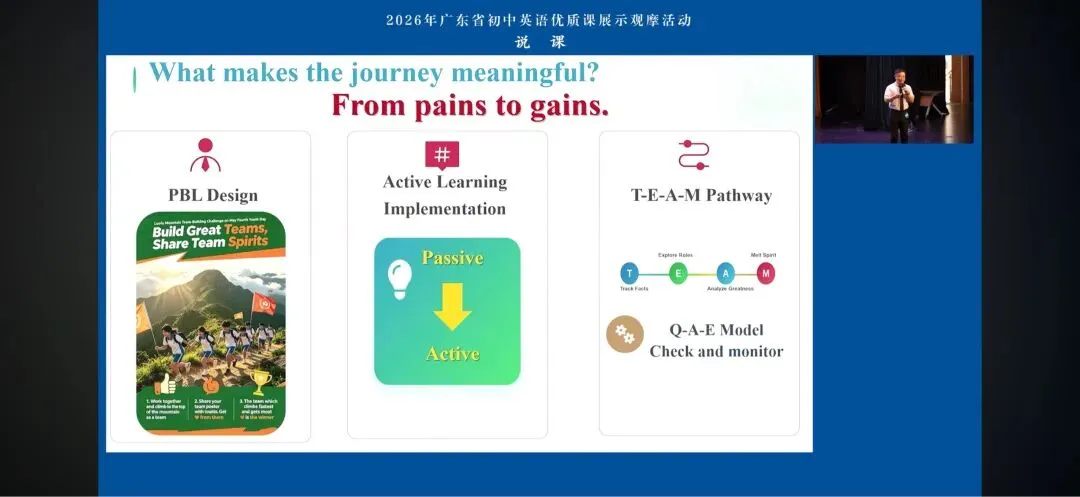
This unit falls under the theme men and society, focusing on teamwork. I center this unit on this unique, holistic unit teaching with a project-based task: Luofu Mountain Team Building Challenge. Students need to climb the mountain as a team and share their post with the tourists to get likes. So, through the unit’s journey, they need to find out how to work as a team and how to work out the project.
The reading lesson is the core of the whole unit, building the value foundation for the project.
So, what value does this text bring?
This narrative about the 1960s Chinese mountaineering team follows a clear time order, centering on the team. No “I” in “team”. It highlights the value of putting the team first and carries the patriotic mountaineering spirit. It is a typical narrative using precise action description, extreme environment depiction, and high contrast to shape the character and evoke empathy.
So, to decode the task factor解码任务因素, I need to find out what limits my students.
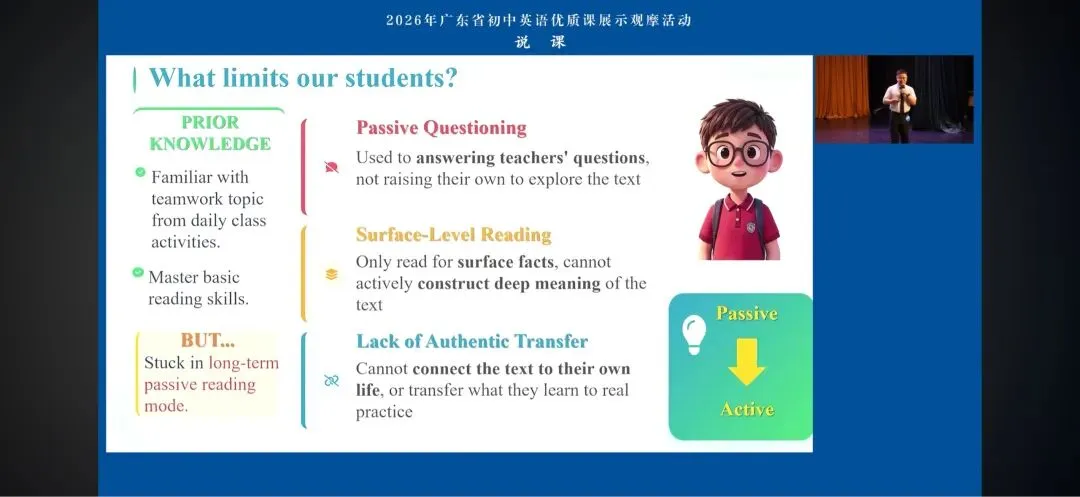
They are familiar with the unit’s topic and they have good reading skills. However, I find that they usually start in the long-term passive reading mode with these pains.
First, they are used to answering my questions but cannot create their own to decode the text. What’s more, they cannot connect the text to themselves or transfer to real practice.
(You are right, teacher. In the reading lesson, I never think about what I really want to know, just to find the answers to your questions. I never think about why you should learn this material.数字学生)
This is exactly the common pain point of my students. So, this lesson, I try to focus on their learning need and change them from passive listeners into active learners.
So, how to change?
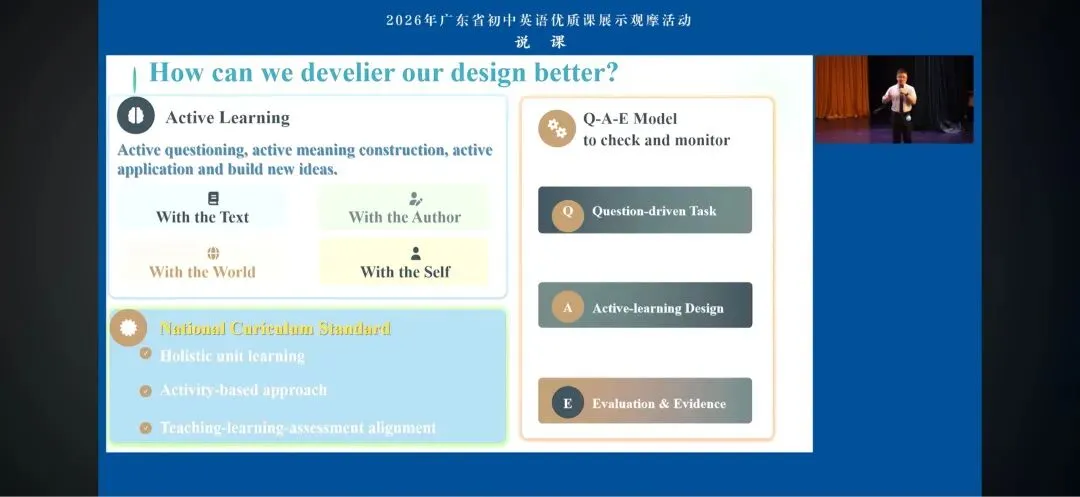
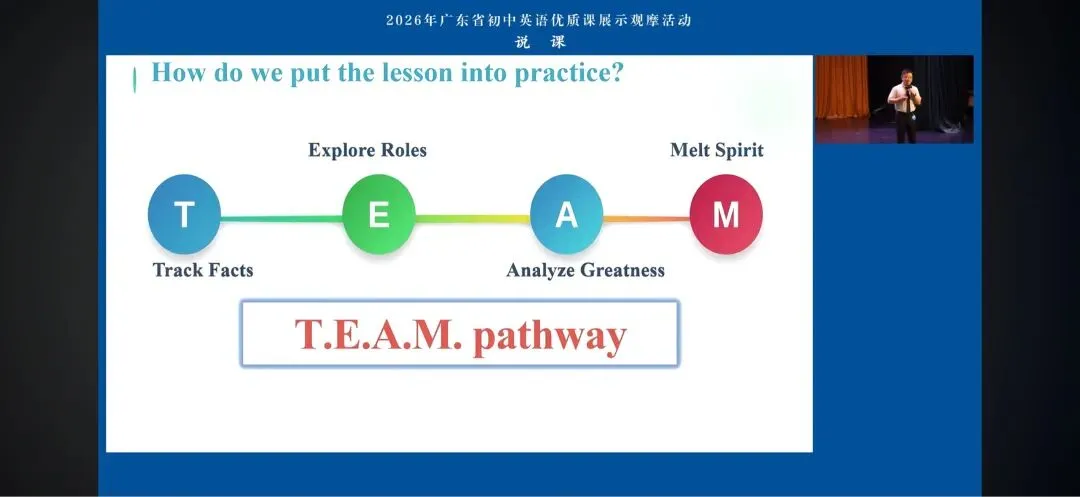
I turn to the theoretical guidance of active learning. I draw the T-E-A-M pathway to turn the students’ pains into gains.
[Track facts]
First, I try to help students gain interest. I ask them to track the facts, to decode the text, and to find the clues. I want them to learn by doing.
[Explore roles]
Then, I try to help them gain empathy. They need to explore the roles and think beyond the text. I want them to learn by feeling.
[Analyze greatness]
Next, I try to help them gain thought. They need to analyze the greatness and evaluate the team. I want them to learn by thinking.
[Melt spirit]
Finally, I try to help them gain value. They need to melt the spirit and connect it to themselves. I want them to learn by becoming.
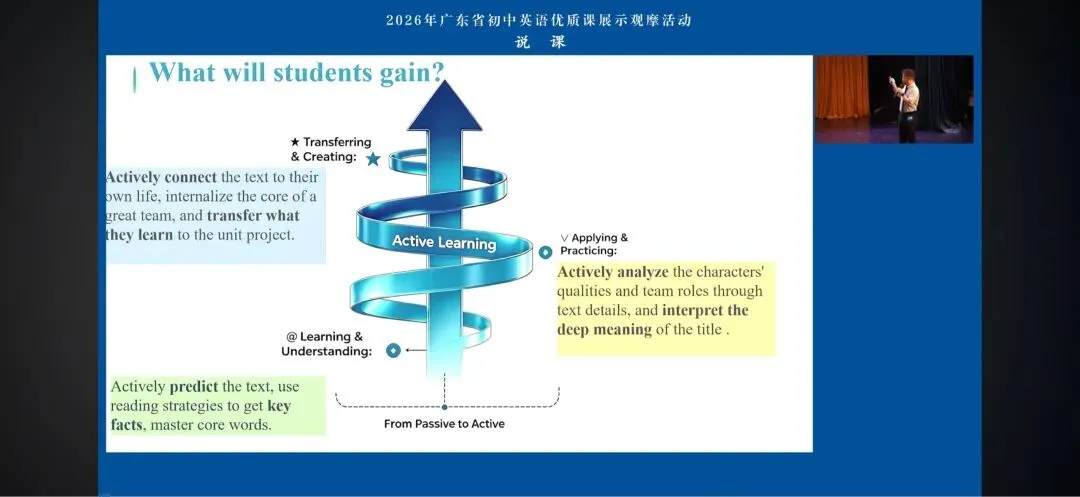
So, what will students gain? A team of active learners.
[Learning & Understanding]学习理解: They can track the facts and decode the text.
[Applying & Practicing]应用实践: They can explore the roles and empathize with the character.
[Analyzing & Evaluating]分析评价: They can analyze the greatness and evaluate the team.
[Transferring & Creating]迁移创新: They can melt the spirit and connect to themselves.
Now, let’s put it into practice.
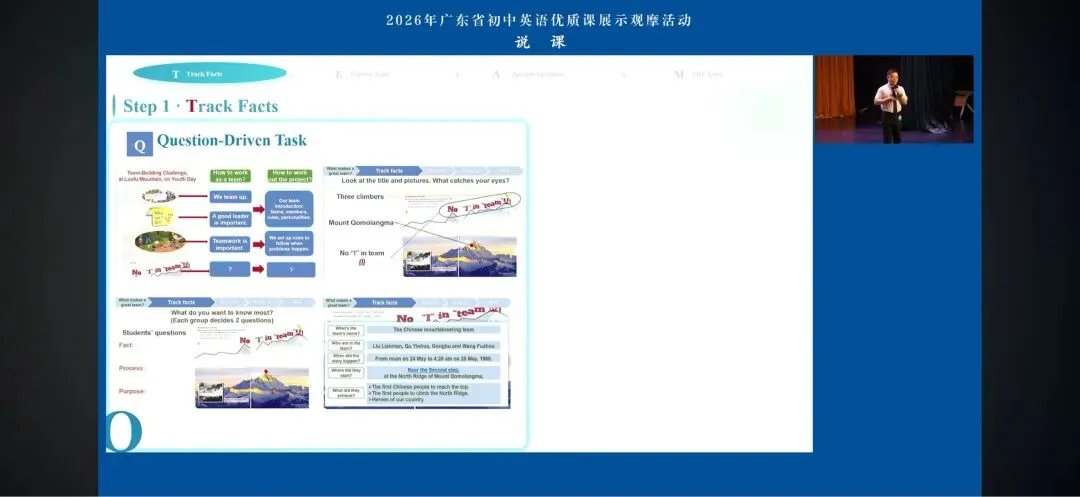
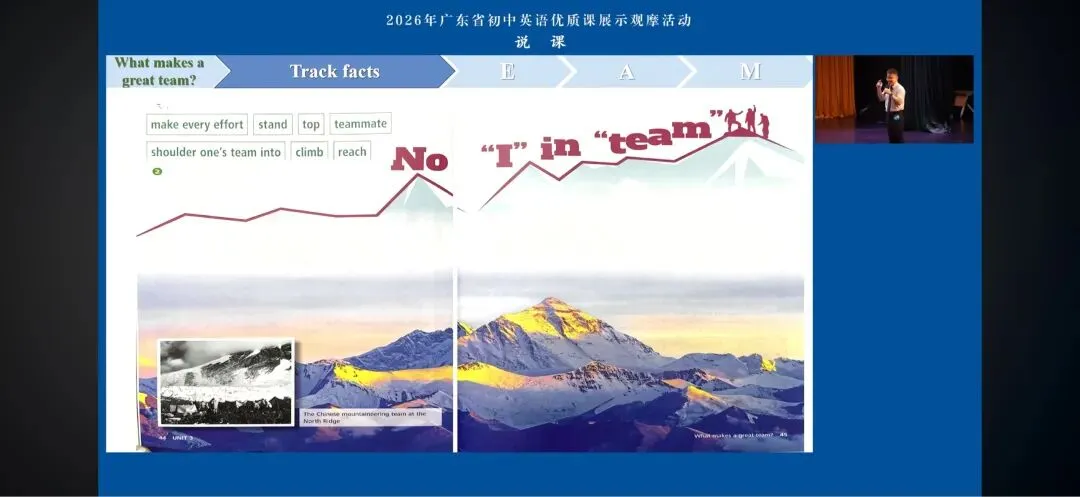
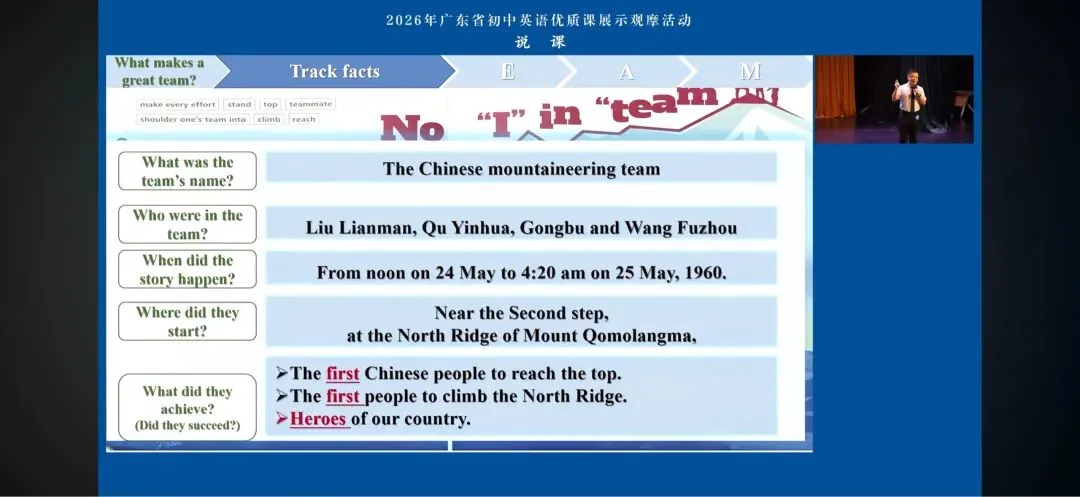
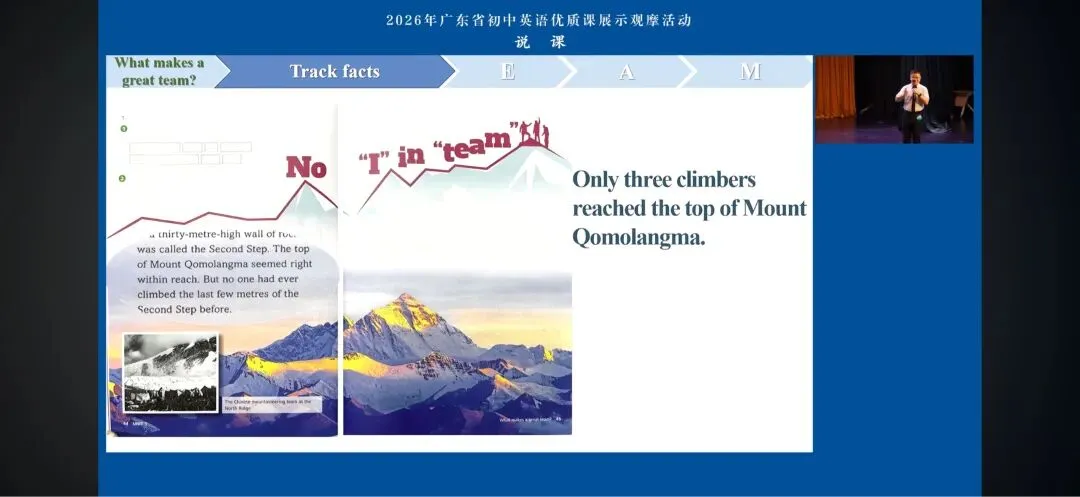
Step 1: Track facts.
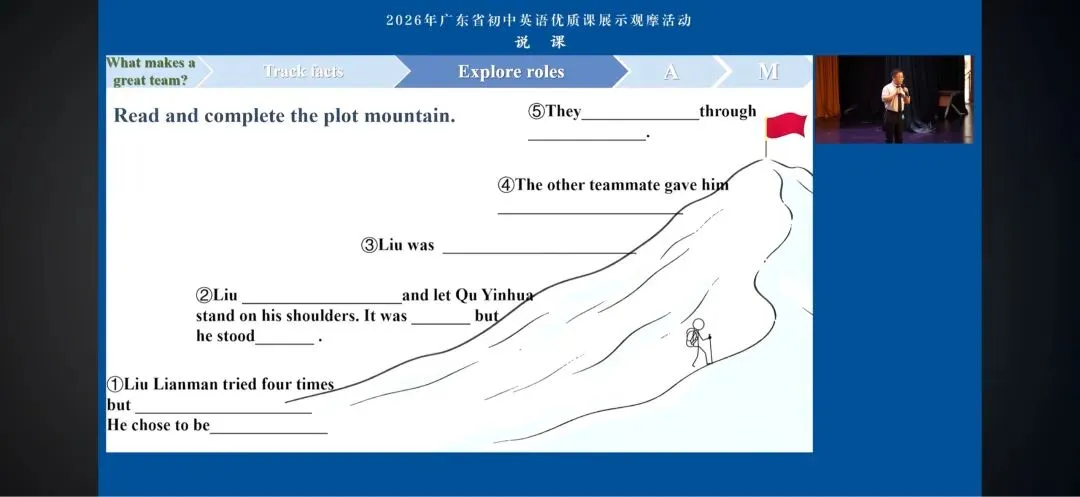
I’ll ask them: What makes a great team? To find out the clues, they need to track the facts and complete the plot mountain.
1. Liu Lianman tried four times but failed. He chose to be a human ladder.
2. Liu stood on his shoulders and let Qu Yinhua stand on his shoulders. It was difficult, but he stood firm.
3. Liu was exhausted.
4. The other teammate gave him all the oxygen.
5. They made it through.
Step 2: Explore roles.
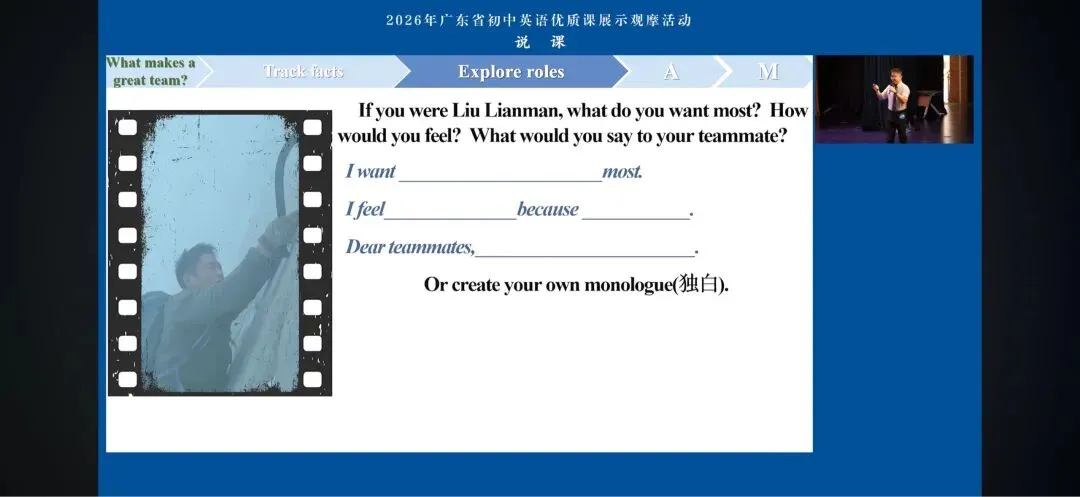
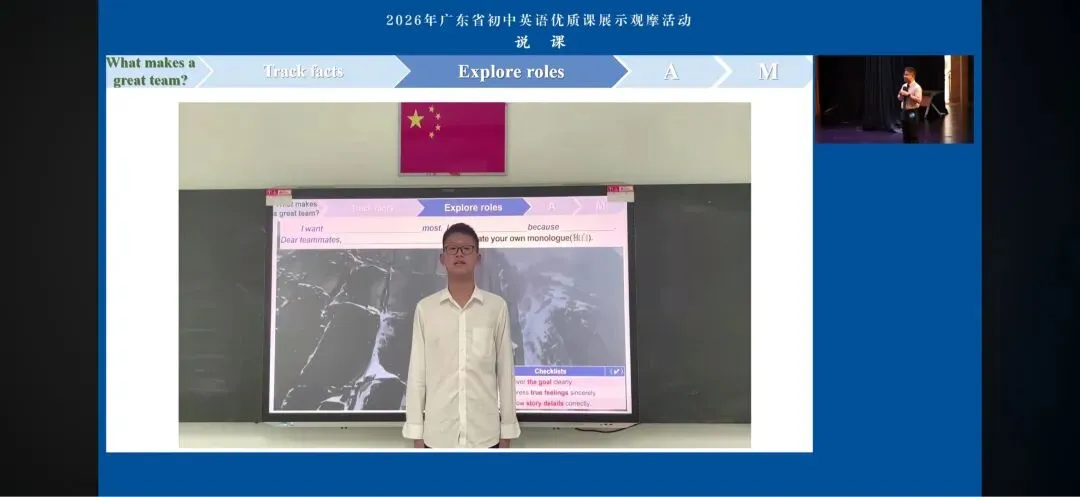
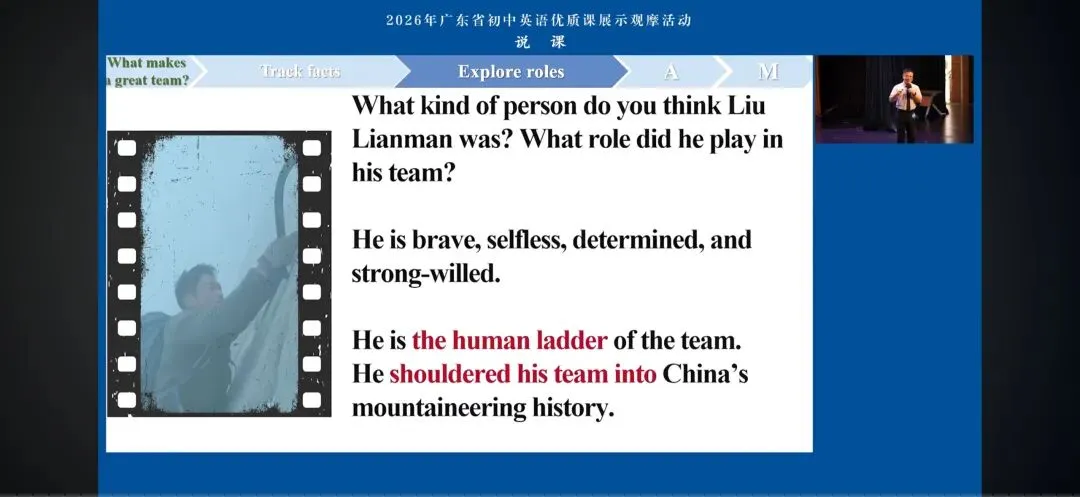
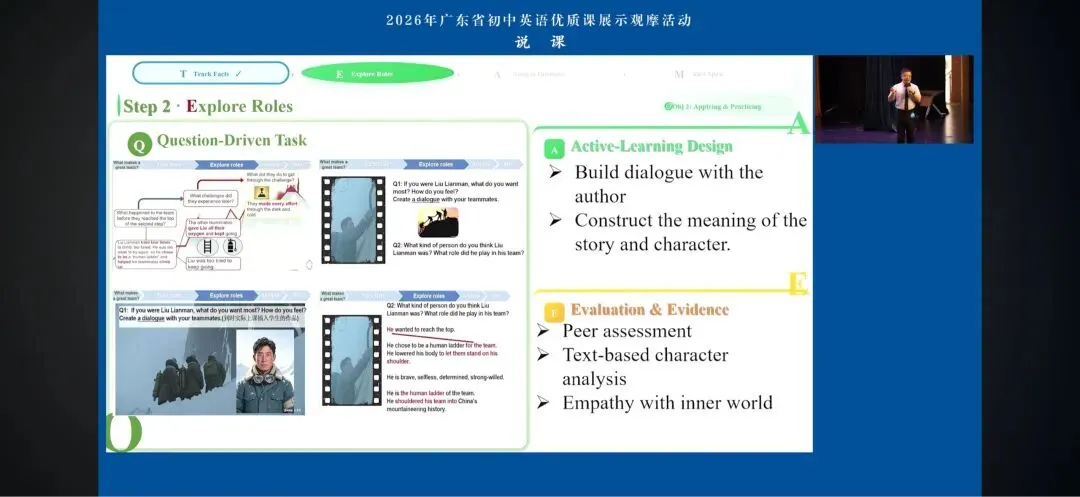
Then I’ll ask: How do team members support each other? To feel the spirit, they need to explore the roles. They can write a monologue for Liu Lianman.
If you were Liu Lianman, what do you want most? How would you feel? What would you say to your teammate?
I want oxygen most.
I feel desperate because I’m dying.
Dear teammates, I’m sorry I failed.
Or create your own monologue.
Step 3: Analyze greatness.
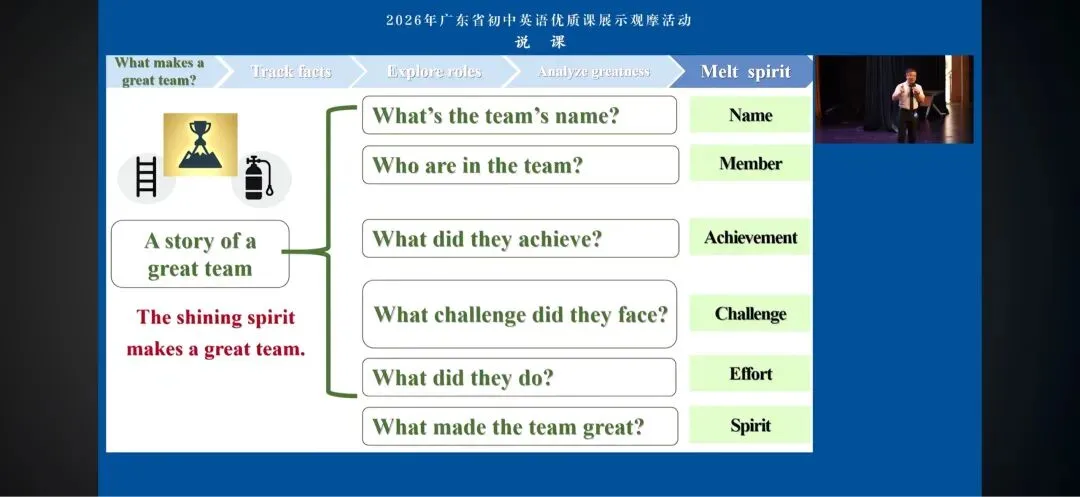
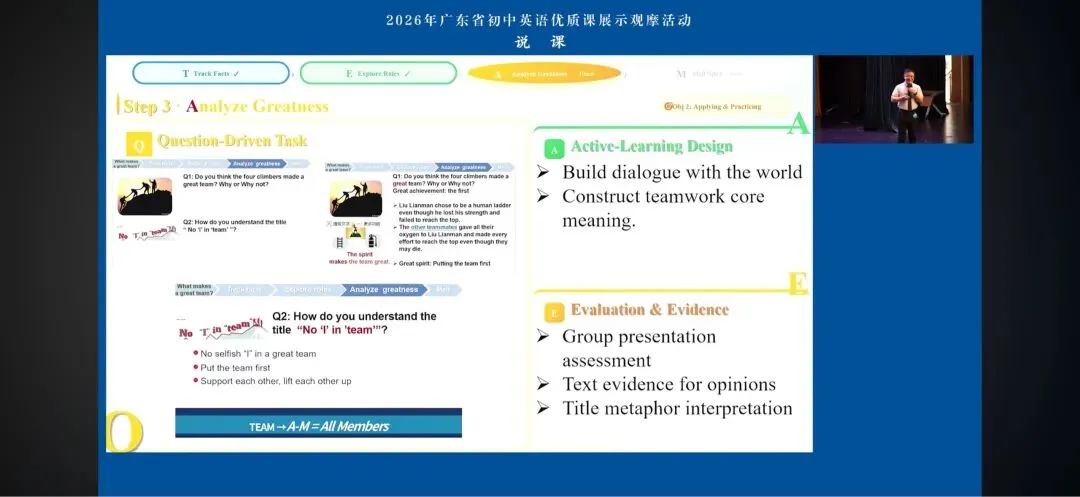
Then I’ll ask: Why is the team great without great achievements? To think and evaluate, they need to analyze the greatness. They need to find the facts to support their ideas.
Do you think the four climbers made a great team? Why or why not?
For example:
• Great achievements: The firsts.
• Liu Lianman chose to be a human ladder even though he failed to reach the top.
• The other teammates gave all their oxygen to Liu Lianman and made every effort to reach the top even though they may die.
The spirit makes the team great.
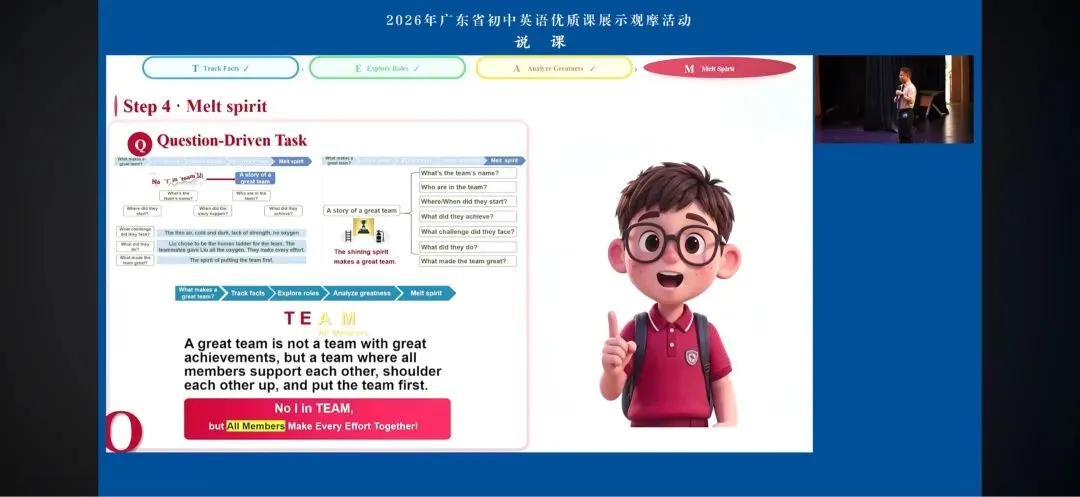
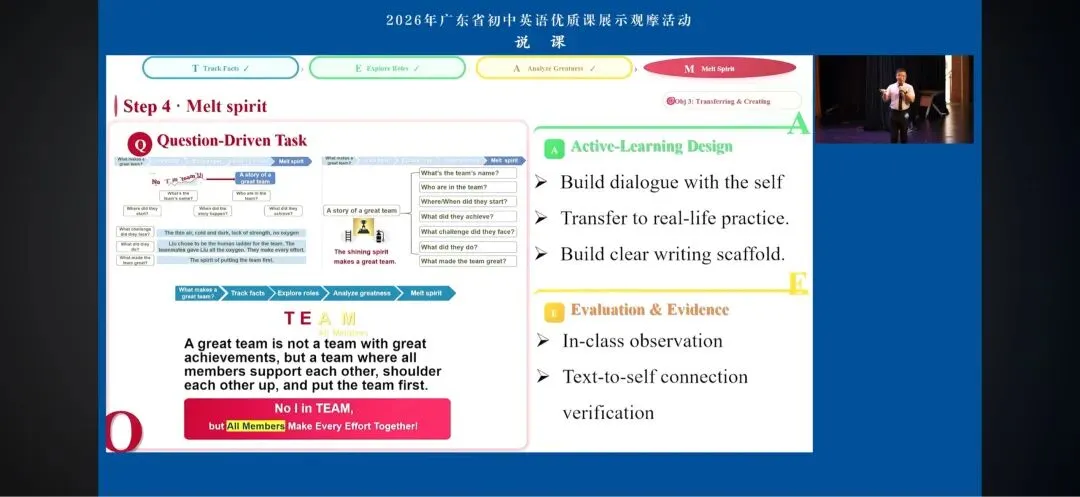
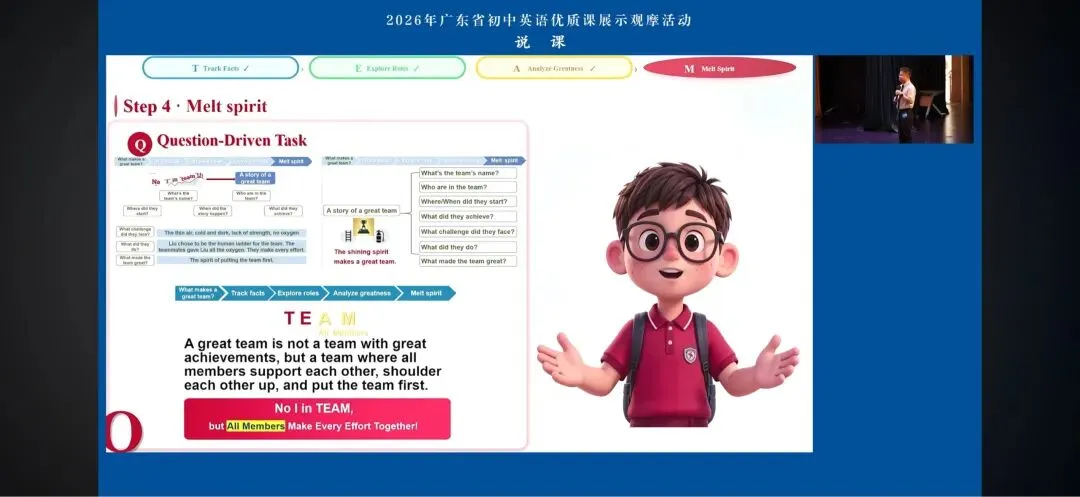
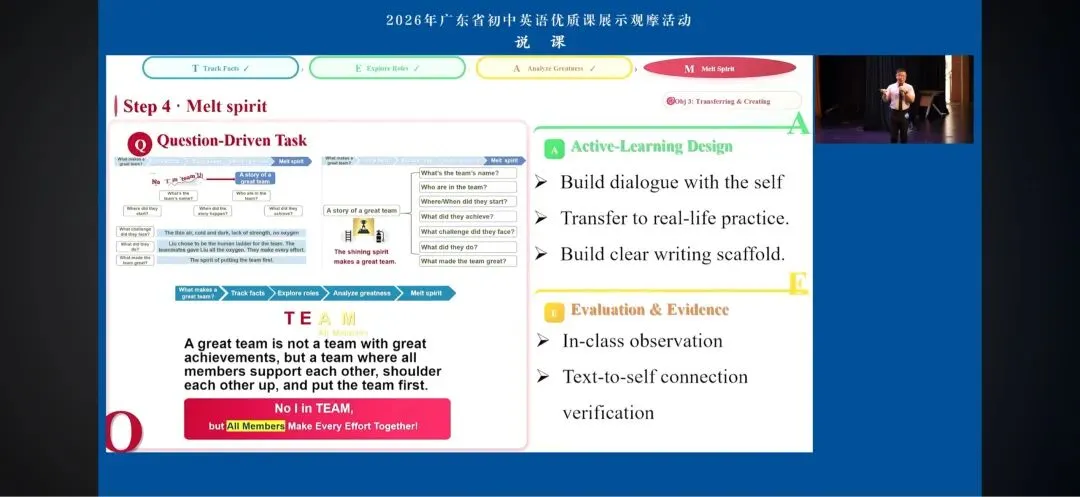
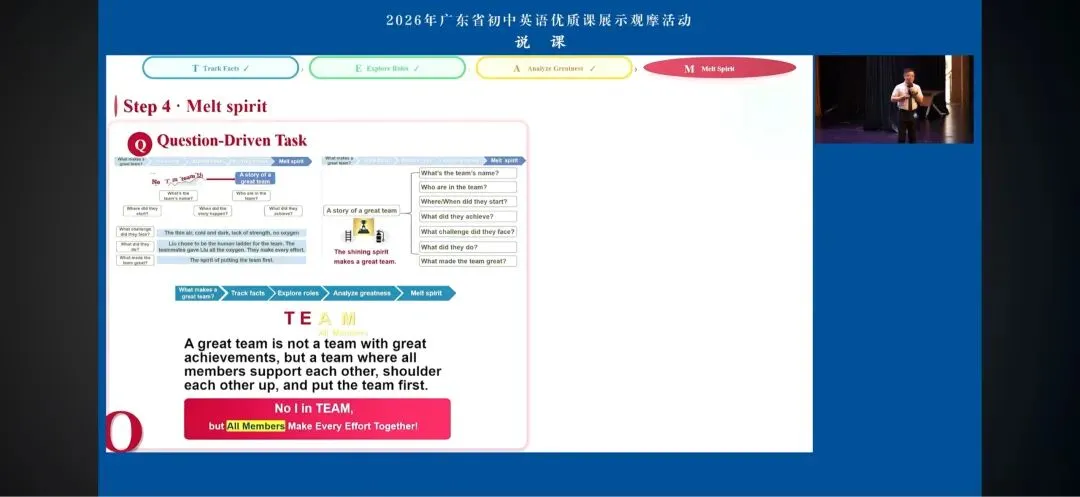
Step 4: Melt spirit.
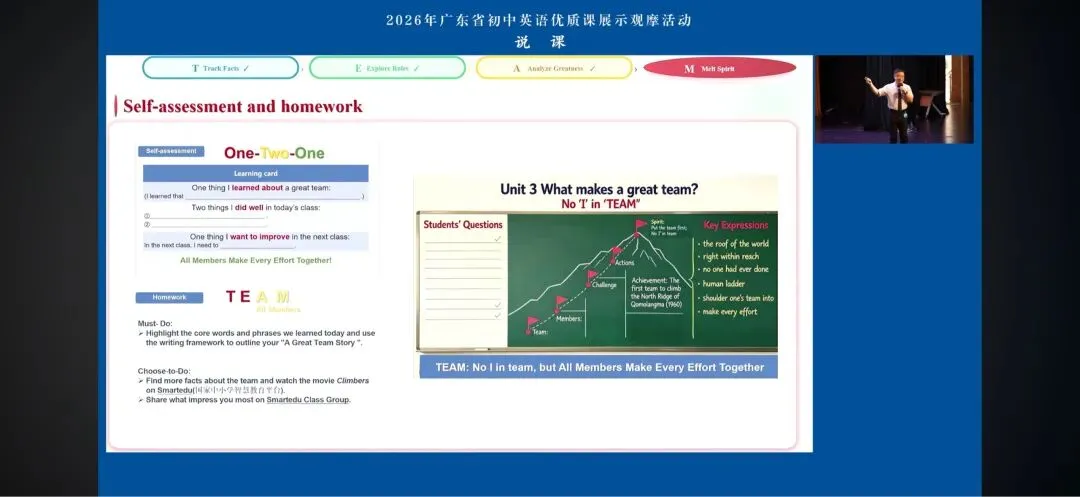
Finally, I’ll ask: What makes the journey meaningful? To connect and create, they need to melt the spirit and summarize the elements of a great team.
T - Together
E - Effort
A - Achievement
M - Mission
A great team is not a team with great achievements, but a team where all members support each other, shoulder each other up, and put the team first.
No “I” in “TEAM”, but All Members Make Every Effort Together!
So, how can I deliver my design better? With the magic of active learning. I try to turn the students from passive to active. I try to build dialogue with the text, with the author, with the world, and with the self. I try to let the students light the fire, not just feel the pain
I try to light their curiosity, light their empathy, light their thinking, and light their value.
So, what makes the journey meaningful? The TEAM.
T asks. Students ask questions.
E engages. Students engage in the text.
A activates. Students activate their thinking.
M evaluates. Students evaluate their learning.
The TEAM, a team of active learners.
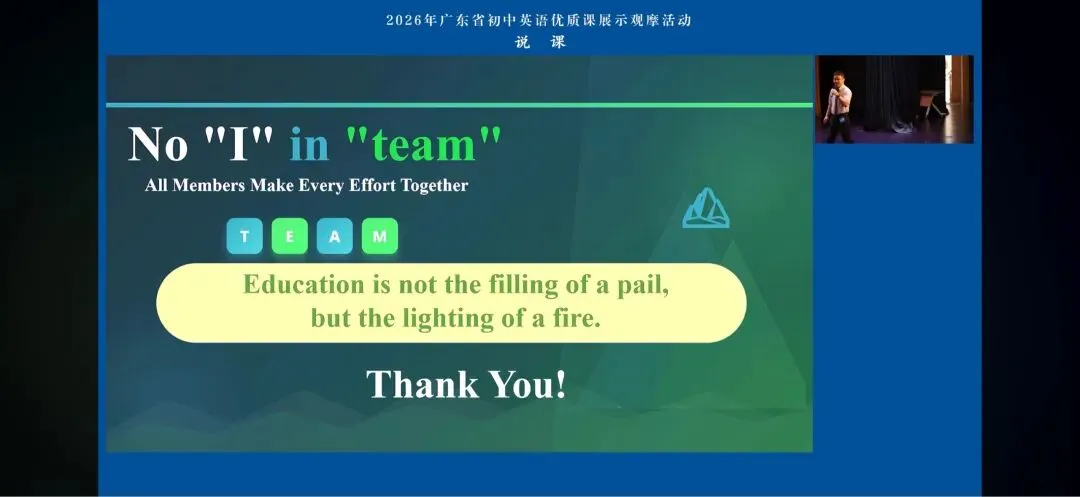
Education is not the filling of a pail(装满一个桶), but the lighting of a fire. 总结升华
Thank you!