必做的10 篇经典阅读理解—应用文
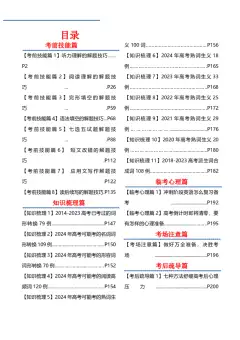
目录
经典试题01------------------项目式学习——“社区天气与气候” 的科学探究活动
经典试题02-------------------------------------------------------人工智能在教育中的应用
经典试题03------------------------------------------------------------中国传统文化
经典试题04------------------------------------------------------------红树林保护与修复
经典试题05-------------------------------------------四个适合步行游览的城市及其特色
经典试题06--------------------------------------------------------wikiHow 的编辑流程指南
经典试题07--------------------------------------------------------一份大学青少年健康调
查
经典试题08-------------------------------------------------------2026 年青年气候行动峰会
经典试题09------------------------------------------------------------介绍《AI First》一书
经典试题10------------------------------------------------------------介绍了《新科学家》
01
(陕西渭南市2026 届高三教学质量检测(Ⅱ))
Weather and Climate in Your Neighborhood
考前必做经典10 题
Objective: To investigate patterns and
variations in local weather and climate by
comparing historical weather data for your
city.
Time required: ≤1 day
Material availability: Readily available
Cost: Under $20
Resources
·A free online database will be used to search for historical weather data. This site (www.wunderground.com)
provides access to almost any type of weather data, including radar and satellite images, astronomical data, storm
warnings, and more.
·Check out books from your local library to learn more about weather and climate.
Materials and equipment
·Computer with Internet access
·Pencil and paper
Procedures
·First, decide which historical dates to use. The database contains monthly averages for many localities
dating back to the early 1900s. The range of dates available for selection will depend on how far back the data
extends for your specific city. Choose a series of months and years.
·Decide how you will organize and record your data in a table.
·Go to www.wunderground.com and search for your city. On the city’s weather page, locate and click the
“History” button to access the historical data lookup tool. You can look up minimum, maximum and average
temperatures for a day, week or month in a specific year.
·Look up and record the corresponding average temperature for each of your chosen months and years on
your data sheet.
·Create a summary graph of the monthly temperatures over a one-year cycle by superimposing (叠加) the
data for different years to determine whether the average temperature in your area has increased or decreased over
the years and whether it fluctuates (起伏不定) or remains constant, and to identify any recurring patterns.
1.How can the historical weather data be found?
A.By searching a free website.
B.By consulting a school teacher.
C.By checking out books from a library.
D.By writing to the national weather service.
2.Why is a summary graph created?
A.To predict future temperature trends.
B.To identify long-term temperature trends.
C.To compare weather data from different cities.
D.To record the corresponding average temperature.
3.What is the text?
A.A news article about climate change.
B.A report about a science project.
C.An advertisement for a weather website.
D.A set of instructions for an experiment.
词数:273 话题:项目式学习——“社区天气与气候” 的科学探究活动 体裁:应
用文
02
A New Era of Learning
Artificial intelligence (AI) is reshaping childhood in far-reaching ways. From school to home, AI is changing
how children learn, play and form relationships. It brings benefits but also dangers.
AI in Education
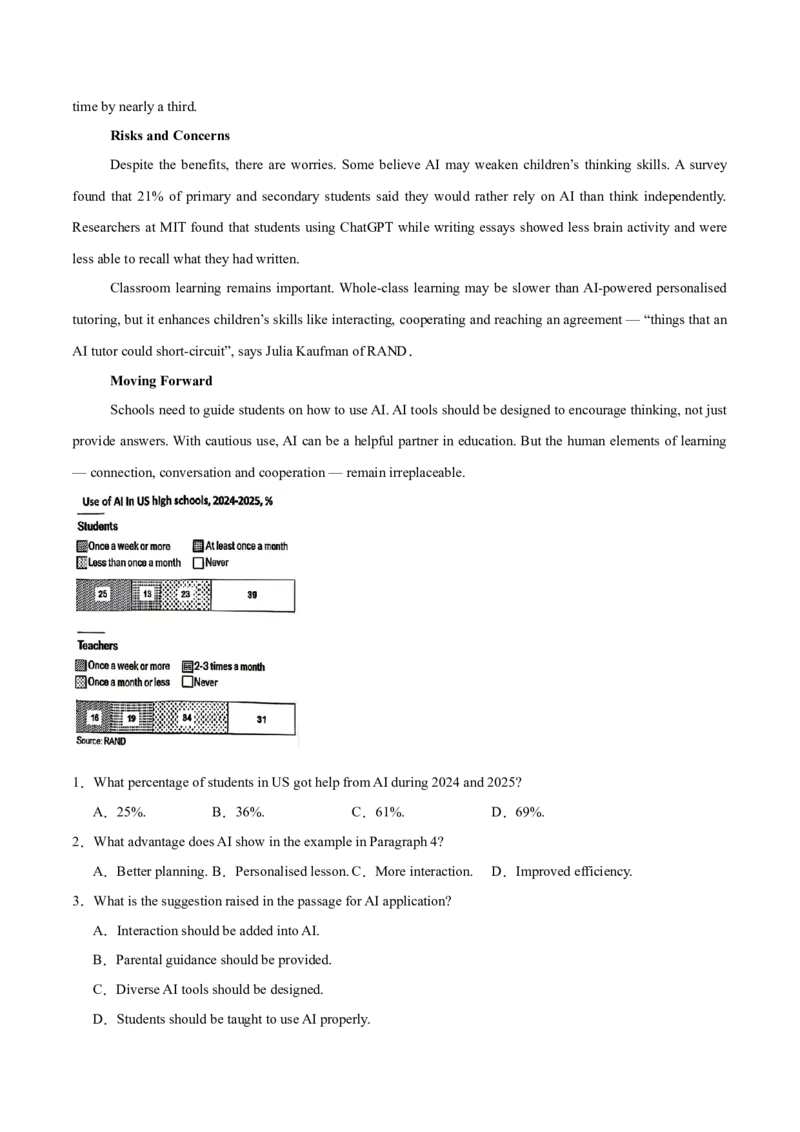
AI use in schools has become common. Here is the result of a survey (see the chart below) from the RAND
Corporation, a research organisation.
Governments are supporting this trend. The United States encourages schools to integrate AI fundamentals
into all subjects. Singapore has introduced AI lessons in primary schools. In Hangzhou, children receive at least ten
hours of annual instruction in AI.
Teachers use AI to generate quizzes as well as personalised assignments for students. A trial in 68 secondary
schools in England found that science teachers equipped with ChatGPT could reduce their weekly lesson-planning
time by nearly a third.
Risks and Concerns
Despite the benefits, there are worries. Some believe AI may weaken children’s thinking skills. A survey
found that 21% of primary and secondary students said they would rather rely on AI than think independently.
Researchers at MIT found that students using ChatGPT while writing essays showed less brain activity and were
less able to recall what they had written.
Classroom learning remains important. Whole-class learning may be slower than AI-powered personalised
tutoring, but it enhances children’s skills like interacting, cooperating and reaching an agreement — “things that an
AI tutor could short-circuit”, says Julia Kaufman of RAND.
Moving Forward
Schools need to guide students on how to use AI. AI tools should be designed to encourage thinking, not just
provide answers. With cautious use, AI can be a helpful partner in education. But the human elements of learning
— connection, conversation and cooperation — remain irreplaceable.
1.What percentage of students in US got help from AI during 2024 and 2025?
A.25%.
B.36%.
C.61%.
D.69%.
2.What advantage does AI show in the example in Paragraph 4?
A.Better planning. B.Personalised lesson. C.More interaction.
D.Improved efficiency.
3.What is the suggestion raised in the passage for AI application?
A.Interaction should be added into AI.
B.Parental guidance should be provided.
C.Diverse AI tools should be designed.
D.Students should be taught to use AI properly.
词数:287 话题:人工智能在教育中的应用 体裁:应用文
03
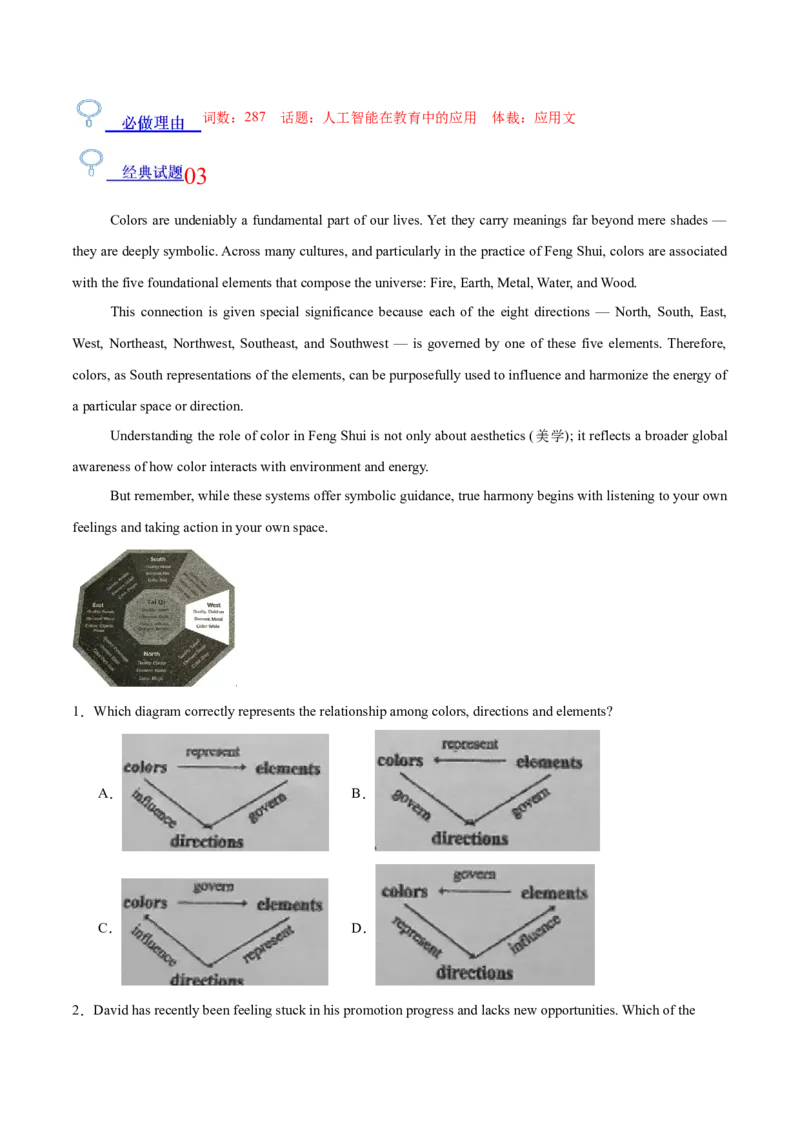
Colors are undeniably a fundamental part of our lives. Yet they carry meanings far beyond mere shades —
they are deeply symbolic. Across many cultures, and particularly in the practice of Feng Shui, colors are associated
with the five foundational elements that compose the universe: Fire, Earth, Metal, Water, and Wood.
This connection is given special significance because each of the eight directions — North, South, East,
West, Northeast, Northwest, Southeast, and Southwest — is governed by one of these five elements. Therefore,
colors, as South representations of the elements, can be purposefully used to influence and harmonize the energy of
a particular space or direction.
Understanding the role of color in Feng Shui is not only about aesthetics (美学); it reflects a broader global
awareness of how color interacts with environment and energy.
But remember, while these systems offer symbolic guidance, true harmony begins with listening to your own
feelings and taking action in your own space.
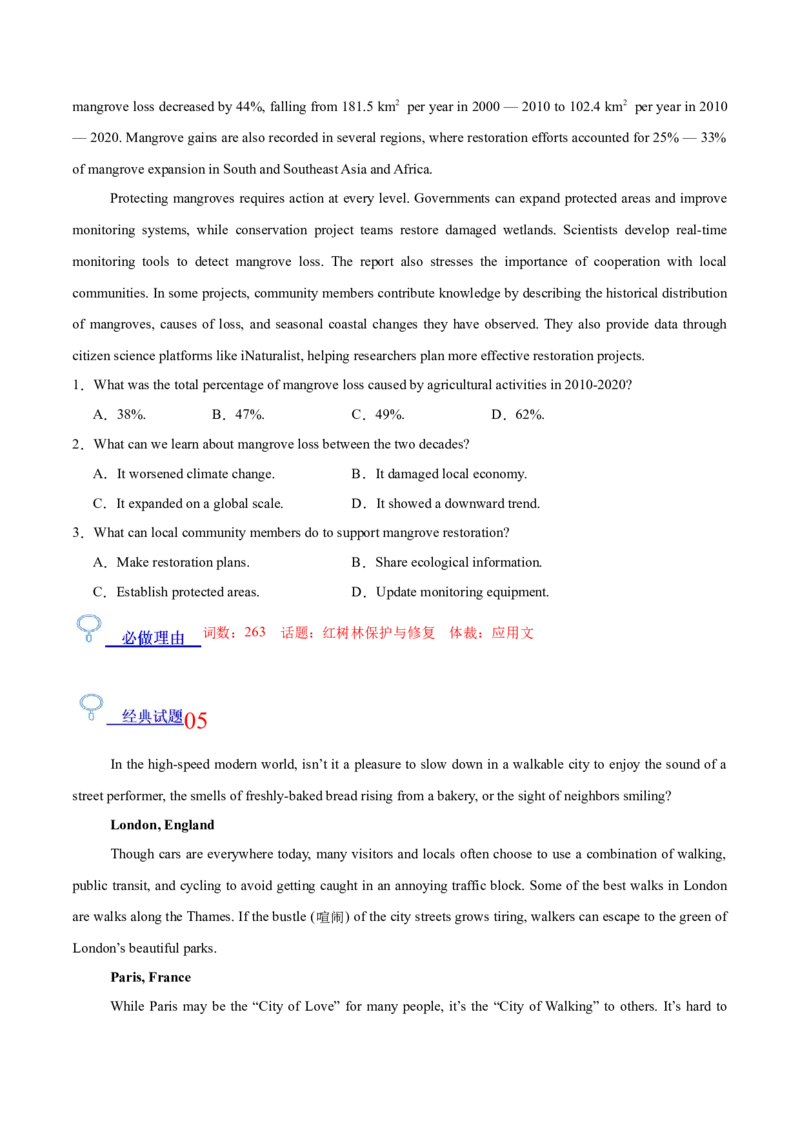
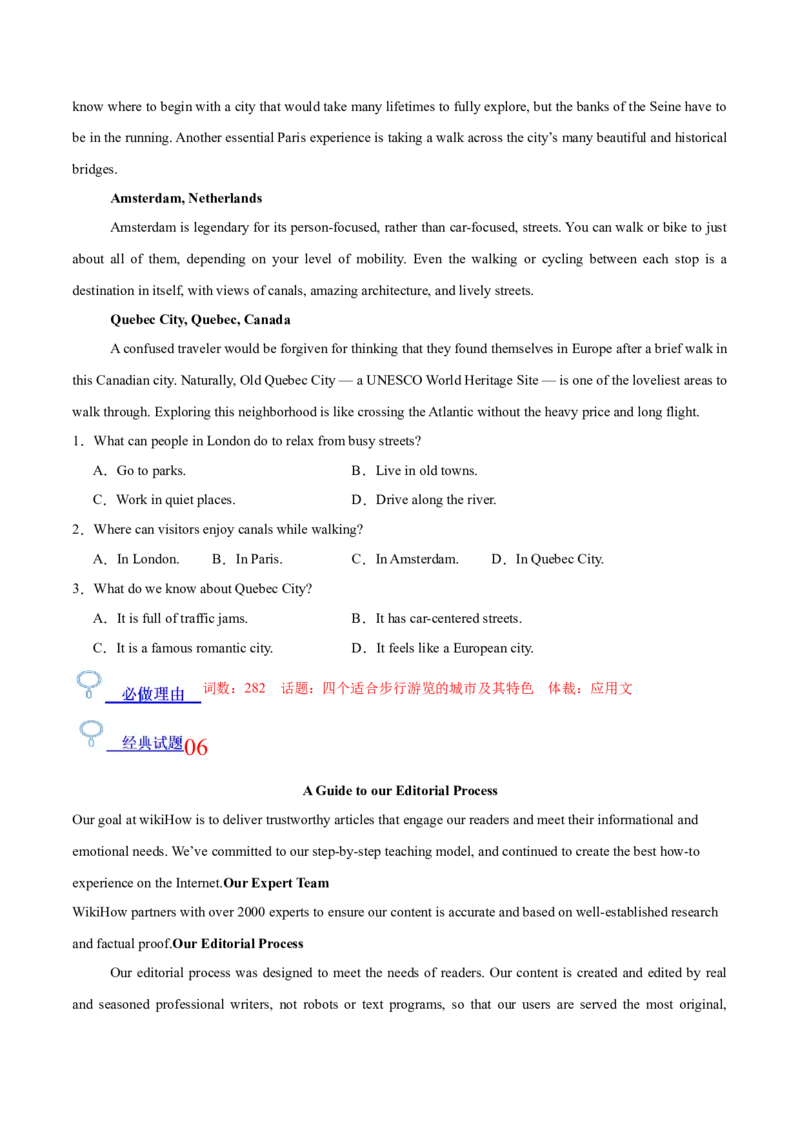
1.Which diagram correctly represents the relationship among colors, directions and elements?
A.
B.
C.
D.
2.David has recently been feeling stuck in his promotion progress and lacks new opportunities. Which of the
following adjustments would be most suitable for him?
A.Using a red desk lamp on his south facing desk.
B.Placing a green plant in the east part of his living room.
C.Displaying a black vase in the north area of his home office.
D.Hanging a white metal clock in the west corner or his workspace.
3.Placing a silver frame mirror in the Northwest area of your home is most suitable for someone wishes
to________.
A.ensure safe and smooth journeys abroad
B.support the growth and creativity of children
C.enhance family unity and solve domestic conflicts
D.improve wisdom and deepen academic knowledge
词数:200 话题:中国传统文化 体裁:应用文
04
Mangroves (红树林) are critical ecosystems that bridge land, freshwater, and sea. Home to various species,
they protect and support countless coastal communities worldwide. Yet they continue to face threats from both
human activities and natural processes. The report, The State of the World’s Mangroves 2024, examines global
changes in mangrove ecosystems over the past two decades.
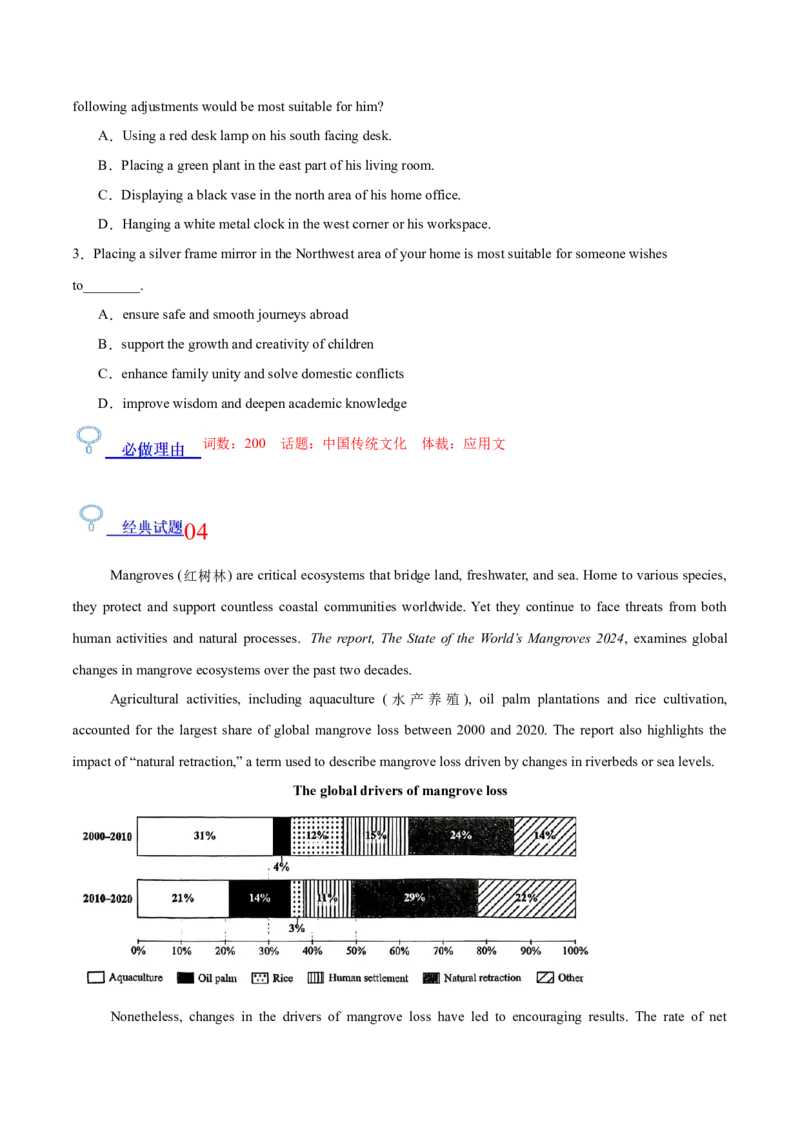
Agricultural activities, including aquaculture ( 水产养殖), oil palm plantations and rice cultivation,
accounted for the largest share of global mangrove loss between 2000 and 2020. The report also highlights the
impact of “natural retraction,” a term used to describe mangrove loss driven by changes in riverbeds or sea levels.
The global drivers of mangrove loss
Nonetheless, changes in the drivers of mangrove loss have led to encouraging results. The rate of net
mangrove loss decreased by 44%, falling from 181.5 km2 per year in 2000 — 2010 to 102.4 km2 per year in 2010
— 2020. Mangrove gains are also recorded in several regions, where restoration efforts accounted for 25% — 33%
of mangrove expansion in South and Southeast Asia and Africa.
Protecting mangroves requires action at every level. Governments can expand protected areas and improve
monitoring systems, while conservation project teams restore damaged wetlands. Scientists develop real-time
monitoring tools to detect mangrove loss. The report also stresses the importance of cooperation with local
communities. In some projects, community members contribute knowledge by describing the historical distribution
of mangroves, causes of loss, and seasonal coastal changes they have observed. They also provide data through
citizen science platforms like iNaturalist, helping researchers plan more effective restoration projects.
1.What was the total percentage of mangrove loss caused by agricultural activities in 2010-2020?
A.38%.
B.47%.
C.49%.
D.62%.
2.What can we learn about mangrove loss between the two decades?
A.It worsened climate change.
B.It damaged local economy.
C.It expanded on a global scale.
D.It showed a downward trend.
3.What can local community members do to support mangrove restoration?
A.Make restoration plans.
B.Share ecological information.
C.Establish protected areas.
D.Update monitoring equipment.
词数:263 话题:红树林保护与修复 体裁:应用文
05
In the high-speed modern world, isn’t it a pleasure to slow down in a walkable city to enjoy the sound of a
street performer, the smells of freshly-baked bread rising from a bakery, or the sight of neighbors smiling?
London, England
Though cars are everywhere today, many visitors and locals often choose to use a combination of walking,
public transit, and cycling to avoid getting caught in an annoying traffic block. Some of the best walks in London
are walks along the Thames. If the bustle (喧闹) of the city streets grows tiring, walkers can escape to the green of
London’s beautiful parks.
Paris, France
While Paris may be the “City of Love” for many people, it’s the “City of Walking” to others. It’s hard to
know where to begin with a city that would take many lifetimes to fully explore, but the banks of the Seine have to
be in the running. Another essential Paris experience is taking a walk across the city’s many beautiful and historical
bridges.
Amsterdam, Netherlands
Amsterdam is legendary for its person-focused, rather than car-focused, streets. You can walk or bike to just
about all of them, depending on your level of mobility. Even the walking or cycling between each stop is a
destination in itself, with views of canals, amazing architecture, and lively streets.
Quebec City, Quebec, Canada
A confused traveler would be forgiven for thinking that they found themselves in Europe after a brief walk in
this Canadian city. Naturally, Old Quebec City — a UNESCO World Heritage Site — is one of the loveliest areas to
walk through. Exploring this neighborhood is like crossing the Atlantic without the heavy price and long flight.
1.What can people in London do to relax from busy streets?
A.Go to parks.
B.Live in old towns.
C.Work in quiet places.
D.Drive along the river.
2.Where can visitors enjoy canals while walking?
A.In London.
B.In Paris.
C.In Amsterdam.
D.In Quebec City.
3.What do we know about Quebec City?
A.It is full of traffic jams.
B.It has car-centered streets.
C.It is a famous romantic city.
D.It feels like a European city.
词数:282 话题:四个适合步行游览的城市及其特色 体裁:应用文
06
A Guide to our Editorial Process
Our goal at wikiHow is to deliver trustworthy articles that engage our readers and meet their informational and
emotional needs. We’ve committed to our step-by-step teaching model, and continued to create the best how-to
experience on the Internet.Our Expert Team
WikiHow partners with over 2000 experts to ensure our content is accurate and based on well-established research
and factual proof.Our Editorial Process
Our editorial process was designed to meet the needs of readers. Our content is created and edited by real
and seasoned professional writers, not robots or text programs, so that our users are served the most original,
helpful, and accurate information possible.
Our Editorial
Values
Centered around trustworthiness and effectiveness, our articles stick to a strict set of editorial requirements to
ensure accurate and accessible information to a diverse audience.
· Comprehensive
We structure articles with multiple methods, so our readers can tackle a problem in the best way for your
unique situation.
· Relatable
We consider readers’ emotional state for the topic, and aim to keep our readers at ease with our empathetic and
honest tone.Our Impact
No matter the topic, wikiHow allows you to find comfort in the fact that the pursuit of knowledge is common
ground — we all have something to learn, and we can all learn together.
1.What is wikiHow’s aim according to the text?
A.To become the best platform.
B.To offer useful articles.
C.To promote their teaching model.
D.To attract more experts.
2.What do we know about wikiHow’s editorial process?
A.It begins with accuracy review.
B.It employs text programs.
C.It centers around readers’ feedback.
D.It follows a specific work flow.
3.Which of the following reflects editorial values?
A.Pursuing fun experiences.
B.Caring for readers’ feelings.
C.Providing unique materials.
D.Stressing strict writing rules.
词数:220 话题:wikiHow 的编辑流程指南 体裁:应用文
07
This survey is about teens’ health habits. The information provided will be used to develop better health
education programs for teens.
Your answers will be kept private — only University researchers can access them. Please answer truthfully.
You may finish the survey in separate sittings.
INSTRUCTIONS
1. Do NOT put your name anywhere on the survey.
2. Make an X in the square for your answer.
3. Sign the Teen Assent (同意) Form.
4. Put the survey in the large envelope and the assent form in the small one, and mail both back.
Whenever you see this symbol
, it means that important instructions follow, which you must read
before answering the next question(s). If you see this symbol
, it means that if you check that box, you should
answer the question that follows.
Given below are some examples of the different ways you will answer the questions.
For some questions, you will PUT AN X IN THE BOX that goes with your answer, like this:
EXAMPLE 1:
1. In the PAST 4 WEEKS on how many days did you feel really sick?
For some questions, you will WRITE A NUMBER IN A BOX, like this:
EXAMPLE 2:
2. How old are you?
In Appreciation of Your Efforts
We will make a contribution on your behalf to a charitable organization of your choice. Please choose one
from the list below, or write in another organization.
□Make-A-Wish Foundation
Grants the wishes of children with life-threatening illnesses.
□Lance Armstrong Foundation
Helps people manage and survive cancer by providing information, services, and support.
□Other
Please describe:
1.What is the purpose of the teen health survey?
A.To track teens’ health status.
B.To raise public health awareness.
C.To instruct teens on keeping healthy.
D.To improve teen health education projects.
2.What are the participants required to do?
A.Write down their full names.
B.Finish the survey in one sitting.
C.Make an X in the square for disagreement.
D.Pack the survey and the assent form separately.
3.What does the symbol in the survey indicate?
A.Vital directions come afterwards.
B.A box needs to be marked with an X.
C.The question needs a written number.
D.A follow-up question must be answered.
词数:265 话题:一份大学青少年健康调查 体裁:应用文
08
2026 Youth Climate Action Summit
Call for Global Youth ParticipantsAbout the Summit
The 2026 Youth Climate Action Summit (峰会), organized by the United Nations Environment Programme
(UNEP) and co-hosted by the City of Nairobi, will take place from July 15 to 21, 2026 in Nairobi, Kenya. Since its
launch in 2018, this annual event brings together young leaders from around the world to share innovative solutions
and take action on the climate crisis, making it one of the largest youth-led climate events globally.
Who Can Apply
· Open to all nationalities
· Young people aged 16-25
· Able to communicate in English
· Active in environmental initiatives
Priority will be given to applicants from local environmental projects. A background in past summits is not
necessary.
What to Expect
Activity
Details
Workshops
Hands-on activities on renewable energy, sustainable agriculture, and youth
action
Project
Showcase
Showcase your own climate action project; top 10 projects receive $5000 seed
funding
Policy
Dialogues
Meet with UN officials and government representatives to share youth
perspectives
Field Visit
Tour local conservation projects and community-led initiatives in Kenya
How to Apply
Submit your application online at www.unep.org/youth-summit-2026 by April 30, 2026. Late applications
will not be considered. Selected applicants will be notified by May 30, 2026.
1.Who is most likely to be accepted to the summit?
A.A former summit participant.
B.An experienced eco-activist.
C.An English translator.
D.A motivated 15-year-old.
2.What activity will participants take part in?
A.Presenting projects.
B.Creating workshops.
C.Writing research papers.
D.Inviting UN officials.
3.What is the main purpose of the summit?
A.To drive climate action.
B.To link youth with policy.
C.To call for climate researchers.
D.To offer travel opportunities.
词数:219 话题:2026 年青年气候行动峰会 体裁:应用文
09
AI First: The Playbook for a Future-Proof Business and Brand
AI First by Adam Brotman and Andy Sack offers a forward-thinking guide for businesses facing fast-developing
AI technology. The authors argue that AI is not an add-on but the foundation for how modern companies will
compete. The book presents a practical framework for leaders to rethink brand strategy, organizational structures,
customer engagement, and innovation cycles in an AI-driven world.
Target Audience
This book is crafted for C-suite executives, marketing leaders, brand managers, entrepreneurs, and consultants who
are shaping future strategies. It also helps professionals across industries understand how AI reshapes customer
expectations, workforce skills, and competitive advantage.
Key Features
● A comprehensive AI-first business playbook that moves beyond theory.
● Insights from leading AI practitioners (从业者) and case studies of organizations already transforming
with AI.
● Strategies to match AI with customer experience and brand reliability.
● Actionable steps for leaders to build resilient, adaptable companies.
What You Will Learn
Readers will gain tools to:
● Redesign business models with AI at the core.
● Reimagine marketing and brand storytelling in an AI-powered era.
● Build AI literacy across teams.
● Balance innovation with ethics and responsibility.
Why This Book is Worth Reading
Unlike general discussions of AI, this book zeroes in on practical use in branding and business growth. It
gives leaders the confidence to not only adopt AI but to build long-term strategies that evolve with it.
Adam Brotman, once a chief digital officer, and Andy Sack, a seasoned entrepreneur and investor, combine
real business leadership with deep knowledge of emerging technologies. The book encourages leaders to embrace
AI not as a risk but as an opportunity to future-proof their businesses and redefine success.
1.What is the core argument of the book AI First about AI’s business role?
A.A risk factor to be avoided.
B.A base for modern competition.
C.A tool to improve efficiency.
D.An addition to business growth.
2.Who are the intended readers of the book?
A.Computer Science students.
B.Academic professionals.
C.Senior business decision-makers.
D.AI technology developers.
3.Which is one of the highlights of AI First?
A.Presenting cases of AI-driven reform.
B.Sharing the views of average businessmen.
C.Focusing on theoretical research in AI.
D.Offering strategies to boost reading awareness.
词数:283 话题:介绍《AI First》一书 体裁:应用文
10
New Scientist is the world’s most popular weekly science and technology publication. Our website, app and
print editions cover international news from a scientific standpoint.
Highlights:
News & Features
Daily online updates and weekly magazine top picks bring you the latest scientific news, covering everything
from artificial intelligence to breakthroughs in health and quantum physics. Written by researchers and expert
journalists, feature articles separate fact from fiction and turn discoveries into easy-to-understand knowledge — no
science background needed.
Culture
This section explores the intersection of science and culture, featuring reviews of books, events, and
exhibitions. It highlights the impact of science on society and the arts.
Views
We present readers’ letters, opinions, and articles by editors, offering in-depth analysis and diverse
viewpoints on science, culture, and social issues. This section encourages critical thinking and discussion.
Subscriber-only Benefits
●Exclusive(专享的) access to articles with great content.
●Priority to paid tours to sites of scientific importance worldwide.
●Four free virtual events each year, including lectures and masterclasses on science topics.
●Newsletters with the latest news and insights, sent directly to your email or digital devices.
Best Offer for New Subscribers
Digital accessAPP + Website
subscription
√Unlimited access to newscientist.com.
√Unrestricted access to the app.
Trial: $10
for 10 weeks.
Then $34.99 every 3 months or $99 a
year.
Print and digital access APP + Website
Subscription
√Unlimited access to newscientist.com.
√Unrestricted access to the app.
√Print edition delivered directly to your door each
week.
Trial: $20 for 10
weeks.
Then $64.99 every 3 months or $199 a year.
1.Who is New Scientist mainly intended for?
A.Students majoring in literature.
B.Scientists devoted to research.
C.Journalists covering global events.
D.General readers interested in science.
2.What is an advantage of being a subscriber?
A.Getting free reading devices.
B.Staying informed of e-updates.
C.Taking discounted science tours.
D.Attending lectures in universities.
3.How much is print and digital access annually after the trial?
A.$64.99.
B.$99.
C.$199.
D.$298.
词数:270 话题:介绍了《新科学家》 体裁:应用文