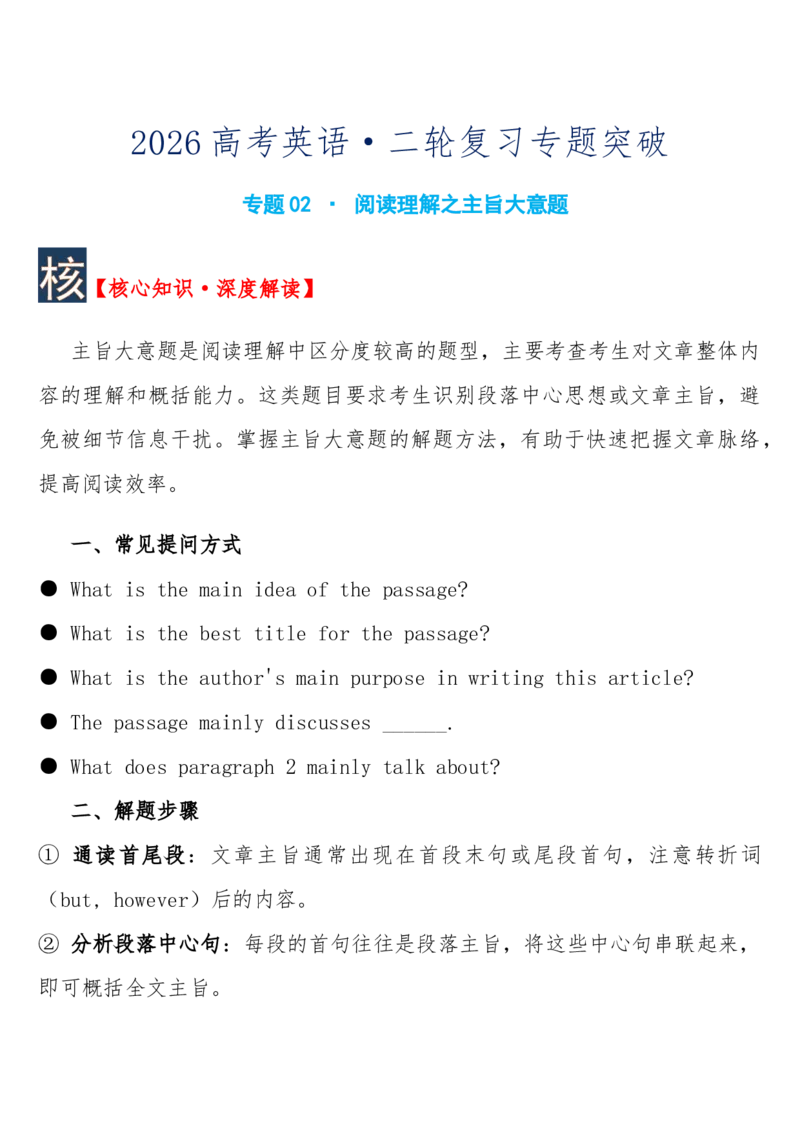
2026 高考英语·二轮复习专题突破
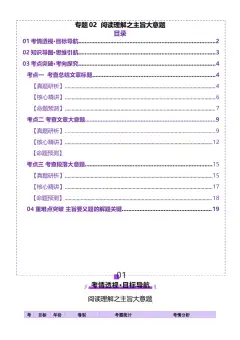
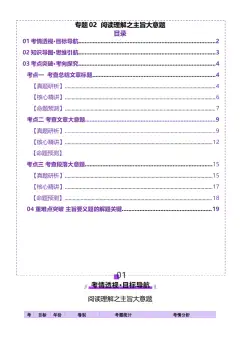
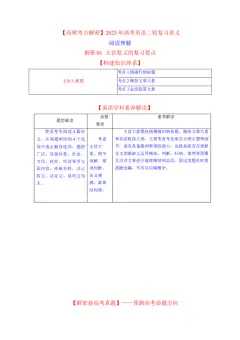
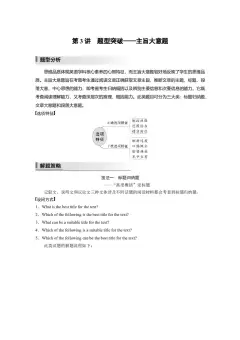
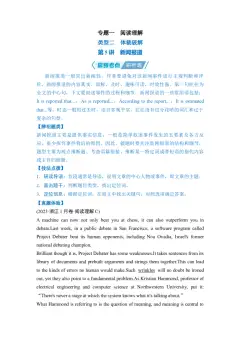
 专题02 · 阅读理解之主旨大意题
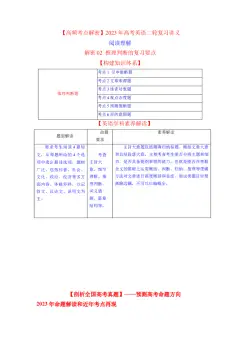
核【核心知识·深度解读】
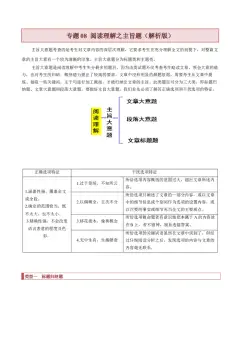
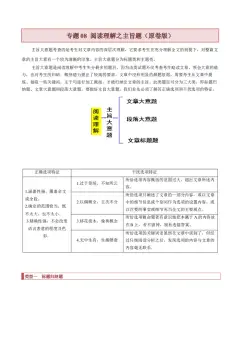
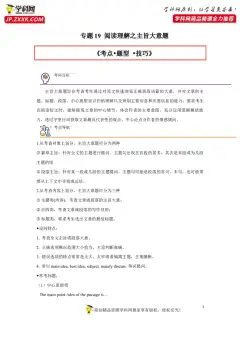
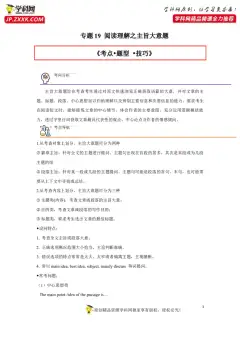
主旨大意题是阅读理解中区分度较高的题型,主要考查考生对文章整体内
容的理解和概括能力。这类题目要求考生识别段落中心思想或文章主旨,避
免被细节信息干扰。掌握主旨大意题的解题方法,有助于快速把握文章脉络,
提高阅读效率。
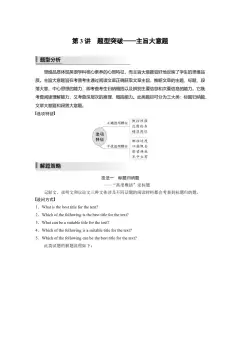
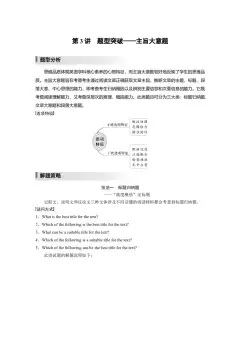
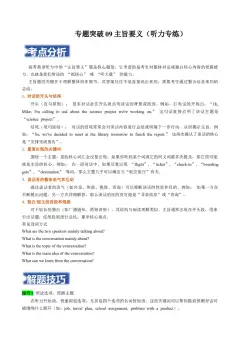
一、常见提问方式
● What is the main idea of the passage?
● What is the best title for the passage?
● What is the author's main purpose in writing this article?
● The passage mainly discusses ______.
● What does paragraph 2 mainly talk about?
二、解题步骤
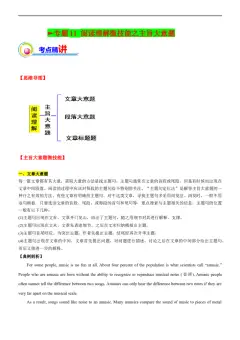
① 通读首尾段:文章主旨通常出现在首段末句或尾段首句,注意转折词
(but, however)后的内容。
② 分析段落中心句:每段的首句往往是段落主旨,将这些中心句串联起来,
即可概括全文主旨。
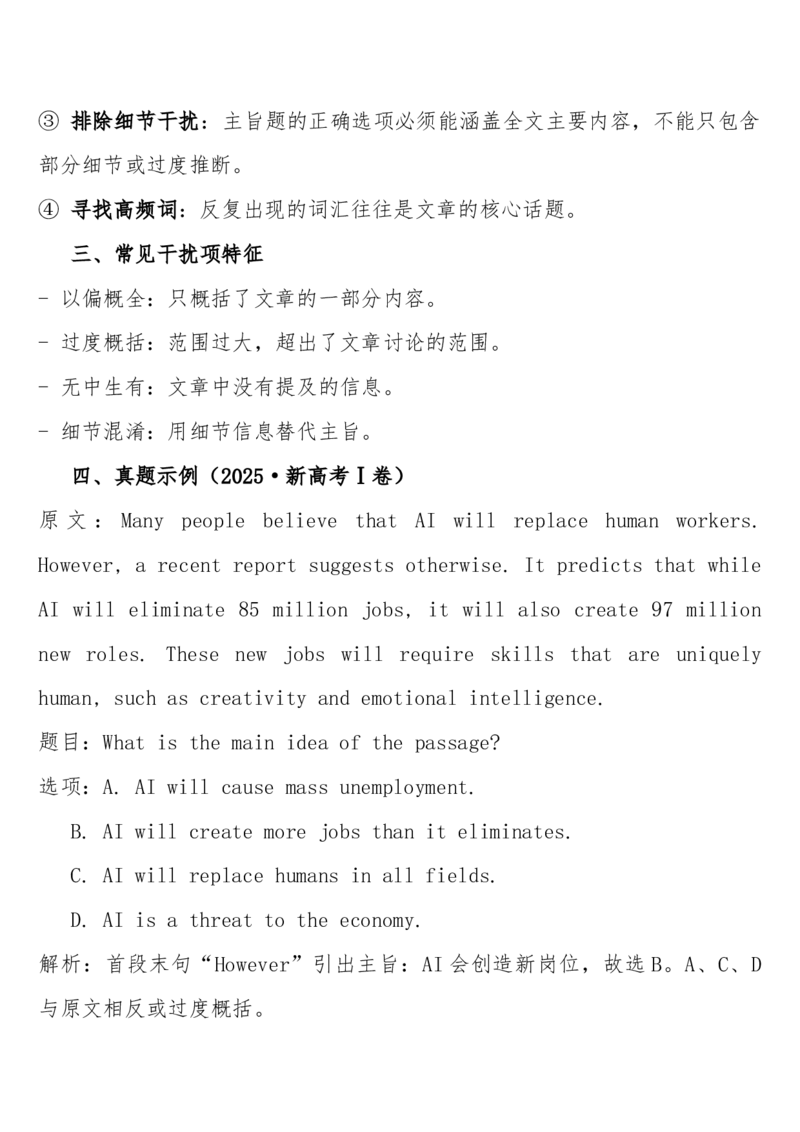
③ 排除细节干扰:主旨题的正确选项必须能涵盖全文主要内容,不能只包含
部分细节或过度推断。
④ 寻找高频词:反复出现的词汇往往是文章的核心话题。
三、常见干扰项特征
- 以偏概全:只概括了文章的一部分内容。
- 过度概括:范围过大,超出了文章讨论的范围。
- 无中生有:文章中没有提及的信息。
- 细节混淆:用细节信息替代主旨。
四、真题示例(2025·新高考Ⅰ卷)
原文:Many people believe that AI will replace human workers.
However, a recent report suggests otherwise. It predicts that while
AI will eliminate 85 million jobs, it will also create 97 million
new roles. These new jobs will require skills that are uniquely
human, such as creativity and emotional intelligence.
题目:What is the main idea of the passage?
选项:A. AI will cause mass unemployment.
B. AI will create more jobs than it eliminates.
C. AI will replace humans in all fields.
D. AI is a threat to the economy.
解析:首段末句“However”引出主旨:AI 会创造新岗位,故选B。A、C、D
与原文相反或过度概括。
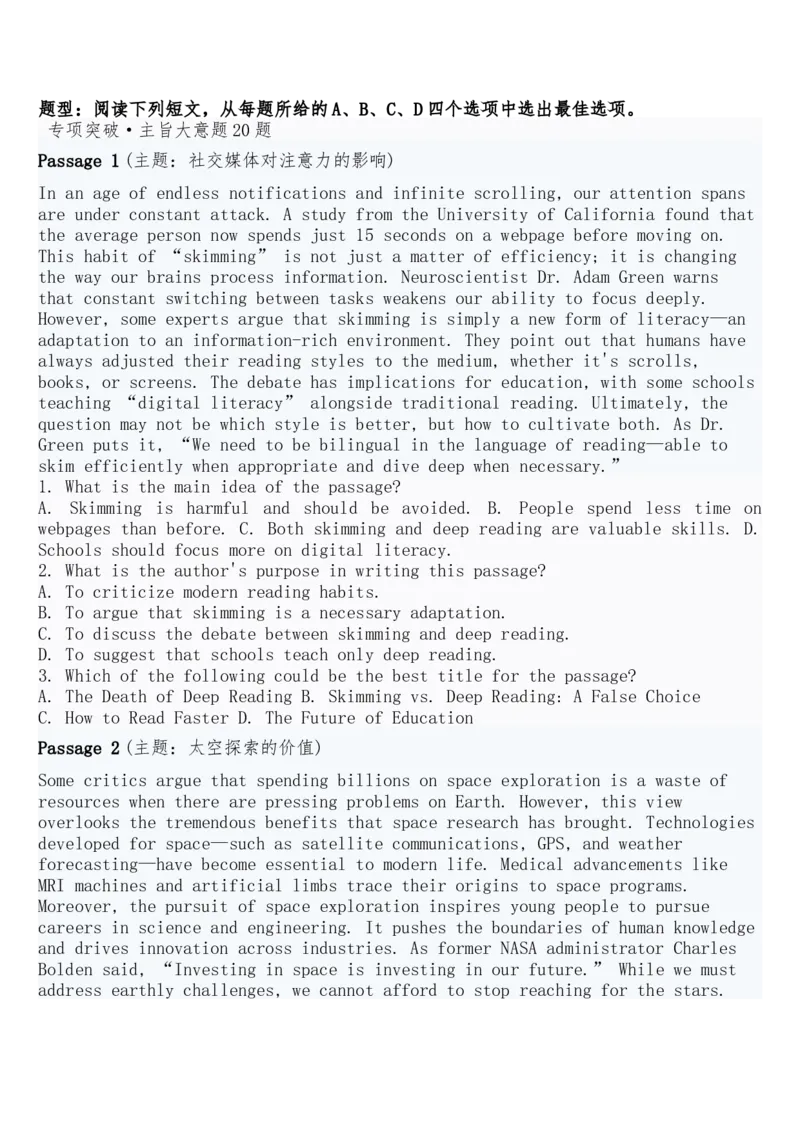
题型:阅读下列短文,从每题所给的A、B、C、D 四个选项中选出最佳选项。
 专项突破·主旨大意题20 题
Passage 1 (主题:社交媒体对注意力的影响)
In an age of endless notifications and infinite scrolling, our attention spans
are under constant attack. A study from the University of California found that
the average person now spends just 15 seconds on a webpage before moving on.
This habit of “skimming” is not just a matter of efficiency; it is changing
the way our brains process information. Neuroscientist Dr. Adam Green warns
that constant switching between tasks weakens our ability to focus deeply.
However, some experts argue that skimming is simply a new form of literacy—an
adaptation to an information-rich environment. They point out that humans have
always adjusted their reading styles to the medium, whether it's scrolls,
books, or screens. The debate has implications for education, with some schools
teaching “digital literacy” alongside traditional reading. Ultimately, the
question may not be which style is better, but how to cultivate both. As Dr.
Green puts it, “We need to be bilingual in the language of reading—able to
skim efficiently when appropriate and dive deep when necessary.”
1. What is the main idea of the passage?
A. Skimming is harmful and should be avoided. B. People spend less time on
webpages than before. C. Both skimming and deep reading are valuable skills. D.
Schools should focus more on digital literacy.
2. What is the author's purpose in writing this passage?
A. To criticize modern reading habits.
B. To argue that skimming is a necessary adaptation.
C. To discuss the debate between skimming and deep reading.
D. To suggest that schools teach only deep reading.
3. Which of the following could be the best title for the passage?
A. The Death of Deep Reading B. Skimming vs. Deep Reading: A False Choice
C. How to Read Faster D. The Future of Education
Passage 2 (主题:太空探索的价值)
Some critics argue that spending billions on space exploration is a waste of
resources when there are pressing problems on Earth. However, this view
overlooks the tremendous benefits that space research has brought. Technologies
developed for space—such as satellite communications, GPS, and weather
forecasting—have become essential to modern life. Medical advancements like
MRI machines and artificial limbs trace their origins to space programs.
Moreover, the pursuit of space exploration inspires young people to pursue
careers in science and engineering. It pushes the boundaries of human knowledge
and drives innovation across industries. As former NASA administrator Charles
Bolden said, “Investing in space is investing in our future.” While we must
address earthly challenges, we cannot afford to stop reaching for the stars.
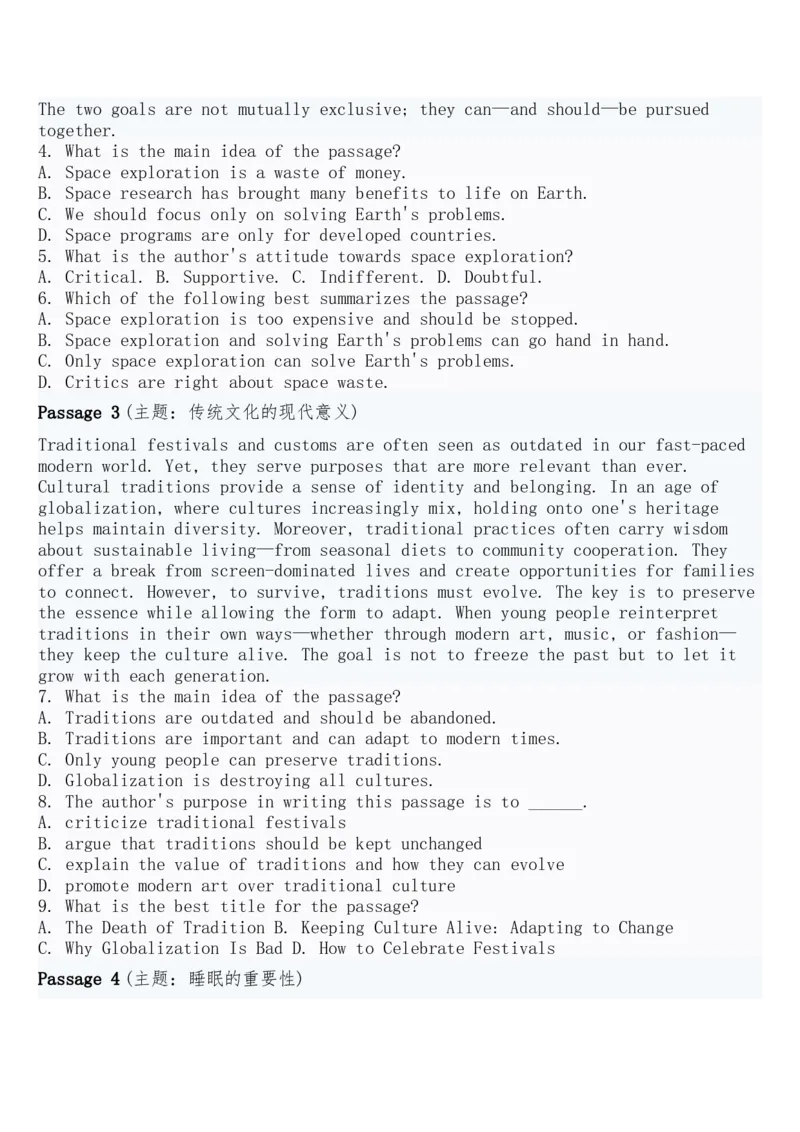
The two goals are not mutually exclusive; they can—and should—be pursued
together.
4. What is the main idea of the passage?
A. Space exploration is a waste of money.
B. Space research has brought many benefits to life on Earth.
C. We should focus only on solving Earth's problems.
D. Space programs are only for developed countries.
5. What is the author's attitude towards space exploration?
A. Critical. B. Supportive. C. Indifferent. D. Doubtful.
6. Which of the following best summarizes the passage?
A. Space exploration is too expensive and should be stopped.
B. Space exploration and solving Earth's problems can go hand in hand.
C. Only space exploration can solve Earth's problems.
D. Critics are right about space waste.
Passage 3 (主题:传统文化的现代意义)
Traditional festivals and customs are often seen as outdated in our fast-paced
modern world. Yet, they serve purposes that are more relevant than ever.
Cultural traditions provide a sense of identity and belonging. In an age of
globalization, where cultures increasingly mix, holding onto one's heritage
helps maintain diversity. Moreover, traditional practices often carry wisdom
about sustainable living—from seasonal diets to community cooperation. They
offer a break from screen-dominated lives and create opportunities for families
to connect. However, to survive, traditions must evolve. The key is to preserve
the essence while allowing the form to adapt. When young people reinterpret
traditions in their own ways—whether through modern art, music, or fashion—
they keep the culture alive. The goal is not to freeze the past but to let it
grow with each generation.
7. What is the main idea of the passage?
A. Traditions are outdated and should be abandoned.
B. Traditions are important and can adapt to modern times.
C. Only young people can preserve traditions.
D. Globalization is destroying all cultures.
8. The author's purpose in writing this passage is to ______.
A. criticize traditional festivals
B. argue that traditions should be kept unchanged
C. explain the value of traditions and how they can evolve
D. promote modern art over traditional culture
9. What is the best title for the passage?
A. The Death of Tradition B. Keeping Culture Alive: Adapting to Change
C. Why Globalization Is Bad D. How to Celebrate Festivals
Passage 4 (主题:睡眠的重要性)
Sleep is often the first thing we sacrifice when life gets busy. But mounting
evidence shows that skimping on sleep harms nearly every system in the body.
Chronic sleep deprivation is linked to heart disease, diabetes, obesity, and
depression. It impairs memory, decision-making, and emotional regulation. Yet,
many people treat sleep as a luxury rather than a necessity. The problem is
partly cultural: we admire those who claim to need little sleep, equating it
with productivity. In reality, well-rested people are more efficient, creative,
and healthier. The solution is not complicated: prioritize sleep. Set a regular
bedtime, limit screen use before bed, and create a relaxing environment. As one
sleep researcher put it, “Sleep is not an option. It is a biological
requirement.” Reclaiming sleep is one of the most effective ways to improve
our lives.
10. What is the main idea of the passage?
A. Sleep is a luxury that successful people don't need.
B. Sleep is essential for health and should be prioritized.
C. Lack of sleep causes only minor problems.
D. Only old people need to worry about sleep.
11. What does the author think about the cultural view of sleep?
A. It is correct.
B. It is harmful because it equates little sleep with productivity.
C. It encourages healthy habits.
 D. It is changing for the better.
12. Which of the following best describes the author's attitude towards sleep?
A. Dismissive. B. Urgent. C. Casual. D. Humorous.
Passage 5 (主题:个人环保行动的价值)
When faced with overwhelming environmental problems, it's easy to feel that
individual actions don't matter. “Why bother recycling when big corporations
pollute so much?” This line of thinking, however, is dangerous. Individual
actions, when multiplied by millions, create the cultural shift needed to drive
larger changes. They set an example that encourages others, and they create
demand for sustainable products. Moreover, the choices we make—from what we
buy to how we travel—send signals to companies and governments about what we
value. A single plastic bottle saved might seem insignificant, but a society
that values conservation becomes a society that demands policy change.
Collective action begins with individual commitment. As the saying goes,
“Never doubt that a small group of thoughtful, committed citizens can change
the world; indeed, it's the only thing that ever has.”
13. What is the main idea of the passage?
A. Individual actions are too small to matter.
B. Collective change starts with individual commitment.
C. Only governments and corporations can solve environmental problems.
D. Recycling is the only way to help the environment.
14. The author's purpose is to ______.
A. discourage people from recycling
B. convince readers that their actions do matter
C. blame corporations for pollution
D. promote government regulations
15. What is the best title for this passage?
A. Why Individual Actions Are Useless
B. The Power of One: How Small Actions Add Up
C. Blame Corporations, Not Yourself
D. A Guide to Recycling
Passage 6 (主题:终身学习的重要性)
In a rapidly changing world, the ability to learn continuously is more
important than ever. Lifelong learning is not just about formal education; it
is a mindset of curiosity and growth. It keeps the brain active, opening new
neural pathways and delaying cognitive decline. It also expands career
opportunities, as industries evolve and new skills become in demand. Beyond
practical benefits, learning enriches life. It allows us to understand the
world more deeply, connect with others, and find joy in discovery. The beauty
of lifelong learning is that it's never too late to start. You don't need to
enroll in a degree program; you can begin with a podcast, a book, or a
conversation with someone knowledgeable. The key is to maintain a curious
attitude. As philosopher John Dewey said, “Education is not preparation for
life; education is life itself.”
16. What is the main idea of the passage?
A. Lifelong learning is only important for students. B. Continuous learning
benefits individuals and enriches life. C. Formal education is the only way to
learn. D. Learning becomes harder as we age.
17. According to the author, how can one start lifelong learning?
A. Only by enrolling in a university.
B. Through small steps like podcasts or books.
C. By waiting until retirement.
D. By focusing only on job-related skills.
18. Which of the following best summarizes the passage?
A. Education ends when school ends.
B. Curiosity and continuous learning are essential for a fulfilling life.
C. Only older adults need to learn new things.
D. Learning is a waste of time.
Passage 7 (主题:共享经济的影响)
The sharing economy, exemplified by platforms like Airbnb and Uber, has
disrupted traditional industries. Proponents praise it for increasing
efficiency, providing flexible work, and making underutilized assets
productive. However, critics raise concerns about labor rights, housing
shortages, and unregulated competition. What is often overlooked is that the
sharing economy reflects a deeper shift in values—from ownership to access.
Younger generations, in particular, prioritize experiences over possessions.
This trend has implications beyond business; it could reshape how we think
about community, sustainability, and the role of corporations. As the sharing
economy matures, regulation is catching up, seeking to balance innovation with
protection. The future likely holds a hybrid model, where traditional and
sharing economies coexist, each offering what the other cannot.
19. What is the main idea of the passage?
A. The sharing economy is entirely positive.
B. The sharing economy is a passing fad.
C. The sharing economy has both benefits and challenges and reflects broader
value shifts.
D. Traditional industries will disappear because of the sharing economy.
20. What does the author suggest about the future of the sharing economy?
A. It will completely replace traditional industries.
B. It will be banned by governments.
C. A hybrid model with traditional economy is likely.
D. It will only be popular among young people.
参考答案及解析
Passage 1
1. C (主旨题。末段“the question may not be which style is better, but how to
cultivate both”点明两种阅读方式都有价值)
2. C (写作目的。全文呈现了关于略读和深读的辩论,并给出平衡观点)
3. B (标题。文章主旨是两者并非对立,而是可以共存)
Passage 2
4. B (主旨题。第二句“this view overlooks the tremendous benefits”及后文列举了
太空探索的贡献)
5. B (态度题。作者用大量事实支持太空探索)
6. B (概括题。末句“they can—and should—be pursued together”总结)
Passage 3
7. B (主旨题。第二句“yet, they serve purposes that are more relevant than
ever”及后文讨论传统如何适应)
8. C (写作目的。解释传统的价值并说明如何演变)
9. B (标题。体现传统需要适应变化以保持活力)
Passage 4
10. B (主旨题。开篇指出牺牲睡眠的危害,结尾强调“sleep is a biological
requirement”)
11. B (细节题。“the problem is partly cultural: we admire those who claim to
need little sleep”)
12. B (态度题。全文语气紧迫,强调睡眠的必要性)
Passage 5
13. B (主旨题。末句“collective action begins with individual commitment”)
14. B (写作目的。反驳“个人行动无用”的观点)
15. B (标题。强调个人行动累积的力量)
Passage 6
16. B (主旨题。全文阐述终身学习的多种好处)
17. B (细节题。倒数第三句“you can begin with a podcast, a book”)
18. B (概括题。强调好奇心和持续学习对人生的价值)
Passage 7
19. C (主旨题。第二句和第三句呈现正反观点,第四句点明深层价值转变)
20. C (细节题。末句“The future likely holds a hybrid model”)
教学使用建议: 建议学生在做题时先快速浏览首尾段,再读每段首句,形
成整体印象。做完后对照解析,分析主旨句位置和干扰项特征,总结规律。
可结合历年真题进行强化训练。