高中英语语法核心知识点详解(讲义)
Part 23 特殊句式篇——主谓一致
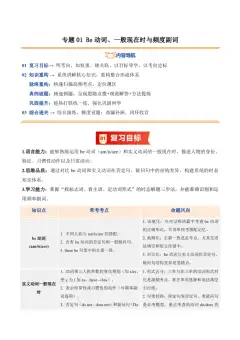
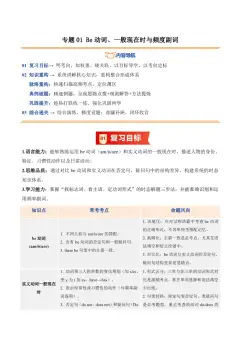
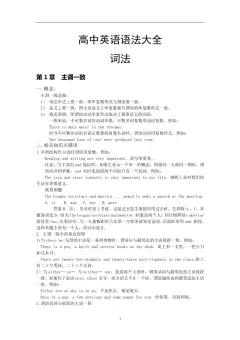
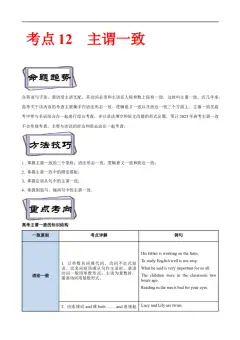
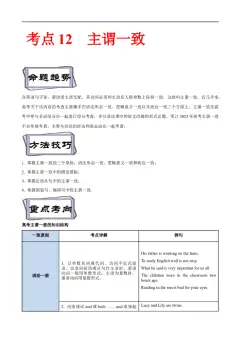
23.1 主谓一致 Subject-predicate Agreement
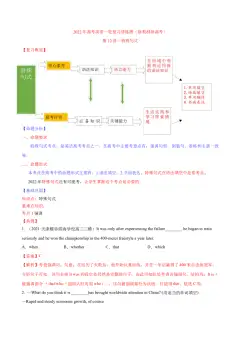
主谓一致指主语和谓语动词之间在“人称”和“数”的方面的一
致关系。
主谓一致在不同情况下,处理这一问题所依据的原则各不相同。
通常有三种形式:语法一致;意义一致;就近原则。
1. 语法一致
主谓一致的原则是指主语和谓语从语法形式上取得一致,主语是
单数形式,谓语也采取单数形式;主语是复数形式,谓语亦采取复
数形式。
This table is a genuine antique.
这个桌子是个名副其实的古董。
Both parties have their own advantages.
双方都有各自的优势。
主语和谓语从语法形式上取得一致的问题远不只上述的那么简
单,有许多方面的情况需要去具体地对待。
(1) 不定式, 动名词以及从句作主语时应看做单数,谓语动词用
单数。
Reading books is a very good way to study.
读书是学习的好方法。
To do this kind of things requires courage.
做这种事情要勇气。
What you have done has been seen.
你所做的已经被看到了。
(2) 不定代词one, every, each, everybody, everyone, one of, no one,
nothing, nobody, someone,somebody, either, neither, many a 等作主语或
是修饰主语时应看做单数,谓语动词用单数。
Neither of them is guilty.
他们两人都无罪。
Many a student is doing exercise.
很多学生都在锻炼。
Every boy and girl shows great interest in English.
每个男孩和女孩对英语表现出很大的兴趣。
(3) 表示国家, 机构, 事件, 作品等名称的专有名词作主语时应看
做单数,谓语动词用单数。
Gone with the Wind is a book known to lovers of English.
《飘》是英语爱好者熟悉的一本好书。
He is leading the class in math.
他在数学方面全班领先。
China plays an important role in the international affairs.
中国在国际事务中起着重要作用。
(4) a portion of, a series of, a kind of, the number of 等与名词构成名
词短语,作主语时,一般应看做单数,谓语动词用单数形式。
A portion of fresh fruit is good for you.
一份新鲜的水果对你有好处。
The number of our population is changing every day.
我们的人口数量每天都在变。
A kind of flower in the garden smells very pleasant.
这个花园里有一种花香气怡人。
A series of expensive goods has been sold out in the shop.
这个商店里的昂贵的东西已被售完。
(5) 由some, several, both, few, many, a number of 等词修饰主语,
或是由它们自身作主语时应看做复数,谓语动词用复数。另外,由
and 连接两个主语时,谓语一般用复数。
Both of us are basketball players.
我们两个都是篮球运动员。
Some people are playing volleyball and some are lying in the sun.
有些人在打排球,有些人躺着晒太阳。
A number of people have applied for the job.
许多人已经申请了这份工作。
(6) 有些短语,如:a lot of, most of, any of, half of, three fifths o,
eighty percent of, some of, none of, the rest of, all of 等后接不可数名
词,或是单数形式的名词作主语时应看做单数,谓语动词用单数;
但如果后接可数名词的复数形式作主语时应看做复数,谓语动词用
复数。
A lot of books have been published recently.
最近出版了许多书籍。
A lot of money in the shop was stolen last night.
昨天晚上那家商店被偷了许多钱。
2. 意义一致
意义一致,是指从意义上来解决主谓一致问题。
有时主语形式上为单数,但意义上却是复数,那么谓语根据意义
用复数形式;而有时主语形式上为复数,但意义上却是单数,那么
谓语根据意义用单数形式。
(1) 当主语后面接由as well as, as much as, accompanied by,
including, in addition to, more than,no less than, rather than, together
with 等引导的词组时,其谓语动词的形式要依主语的单复数而定。
在这样的句子里,这些词所引导的词组不影响主语自身的单, 复数
形式,它们在句子里其实是状语。也就是说,我们完全可以将这些
词组放到句首或是句末,与主语之间用逗号隔开。
Food, along with vegetables, has recently risen in price.
最近食物和蔬菜的价格上涨了。
The teacher, with all his students, is going to have a picnic this
weekend.
老师打算这个周末与学生们一起去野炊。
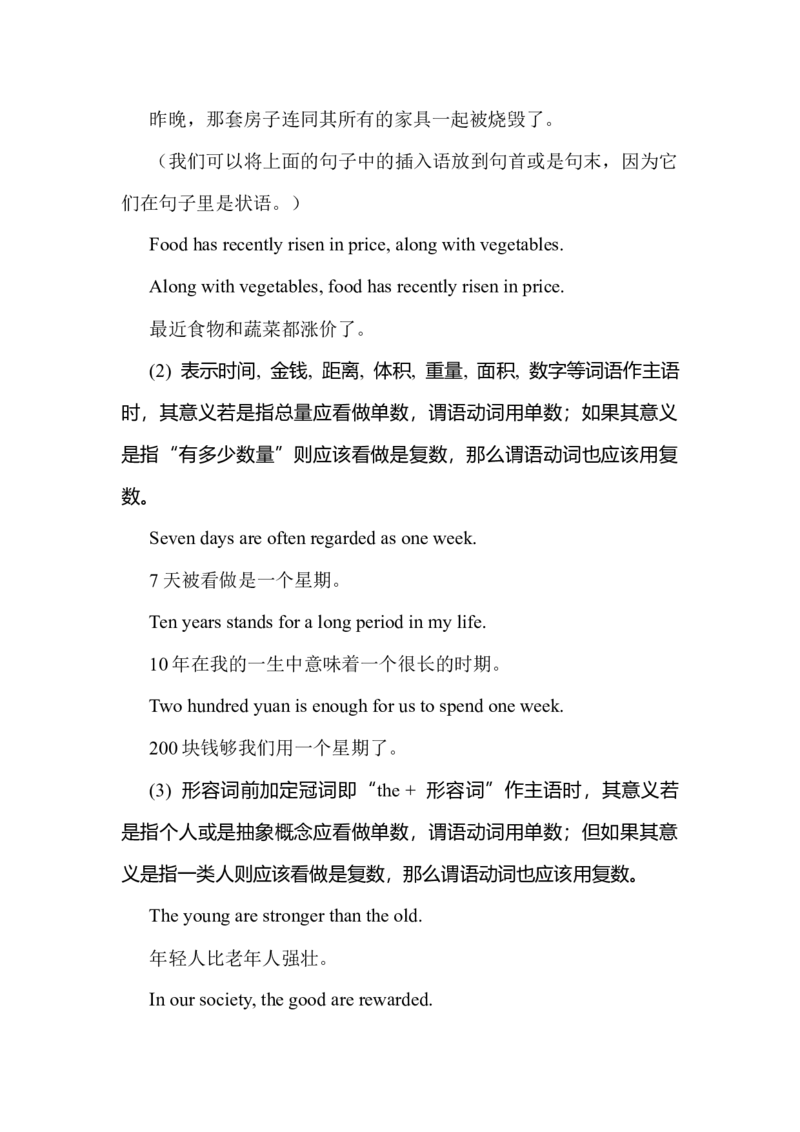
The house, with all its furniture, was burned last night.
昨晚,那套房子连同其所有的家具一起被烧毁了。
(我们可以将上面的句子中的插入语放到句首或是句末,因为它
们在句子里是状语。)
Food has recently risen in price, along with vegetables.
Along with vegetables, food has recently risen in price.
最近食物和蔬菜都涨价了。
(2) 表示时间, 金钱, 距离, 体积, 重量, 面积, 数字等词语作主语
时,其意义若是指总量应看做单数,谓语动词用单数;如果其意义
是指“有多少数量”则应该看做是复数,那么谓语动词也应该用复
数。
Seven days are often regarded as one week.
7 天被看做是一个星期。
Ten years stands for a long period in my life.
10 年在我的一生中意味着一个很长的时期。
Two hundred yuan is enough for us to spend one week.
200 块钱够我们用一个星期了。
(3) 形容词前加定冠词即“the + 形容词”作主语时,其意义若
是指个人或是抽象概念应看做单数,谓语动词用单数;但如果其意
义是指一类人则应该看做是复数,那么谓语动词也应该用复数。
The young are stronger than the old.
年轻人比老年人强壮。
In our society, the good are rewarded.
在社会上,好人总有好报。
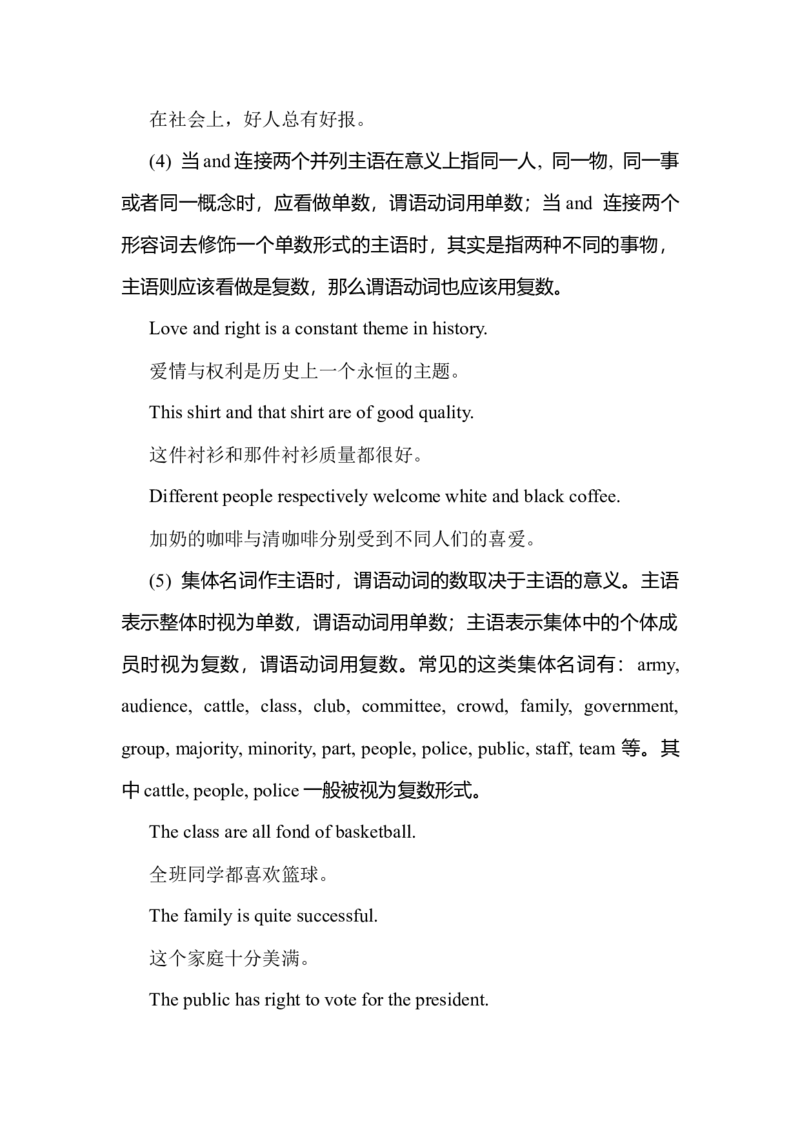
(4) 当and 连接两个并列主语在意义上指同一人, 同一物, 同一事
或者同一概念时,应看做单数,谓语动词用单数;当and 连接两个
形容词去修饰一个单数形式的主语时,其实是指两种不同的事物,
主语则应该看做是复数,那么谓语动词也应该用复数。
Love and right is a constant theme in history.
爱情与权利是历史上一个永恒的主题。
This shirt and that shirt are of good quality.
这件衬衫和那件衬衫质量都很好。
Different people respectively welcome white and black coffee.
加奶的咖啡与清咖啡分别受到不同人们的喜爱。
(5) 集体名词作主语时,谓语动词的数取决于主语的意义。主语
表示整体时视为单数,谓语动词用单数;主语表示集体中的个体成
员时视为复数,谓语动词用复数。常见的这类集体名词有:army,
audience, cattle, class, club, committee, crowd, family, government,
group, majority, minority, part, people, police, public, staff, team 等。其
中cattle, people, police 一般被视为复数形式。
The class are all fond of basketball.
全班同学都喜欢篮球。
The family is quite successful.
这个家庭十分美满。
The public has right to vote for the president.
人民有权选举总统。
The public now come to know that they were cheated by the
government.
人们现在知道被政府骗了。
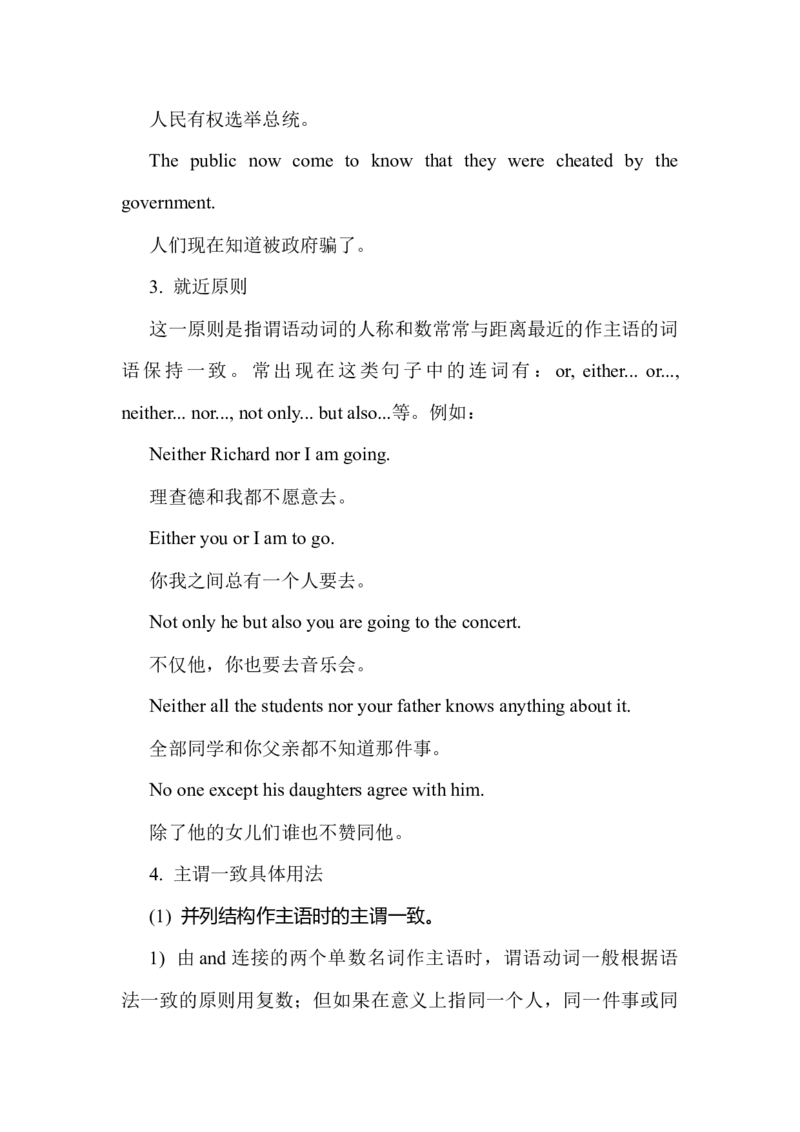
3. 就近原则
这一原则是指谓语动词的人称和数常常与距离最近的作主语的词
语保持一致。常出现在这类句子中的连词有:or, either... or...,
neither... nor..., not only... but also...等。例如:
Neither Richard nor I am going.
理查德和我都不愿意去。
Either you or I am to go.
你我之间总有一个人要去。
Not only he but also you are going to the concert.
不仅他,你也要去音乐会。
Neither all the students nor your father knows anything about it.
全部同学和你父亲都不知道那件事。
No one except his daughters agree with him.
除了他的女儿们谁也不赞同他。
4. 主谓一致具体用法
(1) 并列结构作主语时的主谓一致。
1) 由and 连接的两个单数名词作主语时,谓语动词一般根据语
法一致的原则用复数;但如果在意义上指同一个人,同一件事或同
一个概念时,谓语动词要用单数形式。
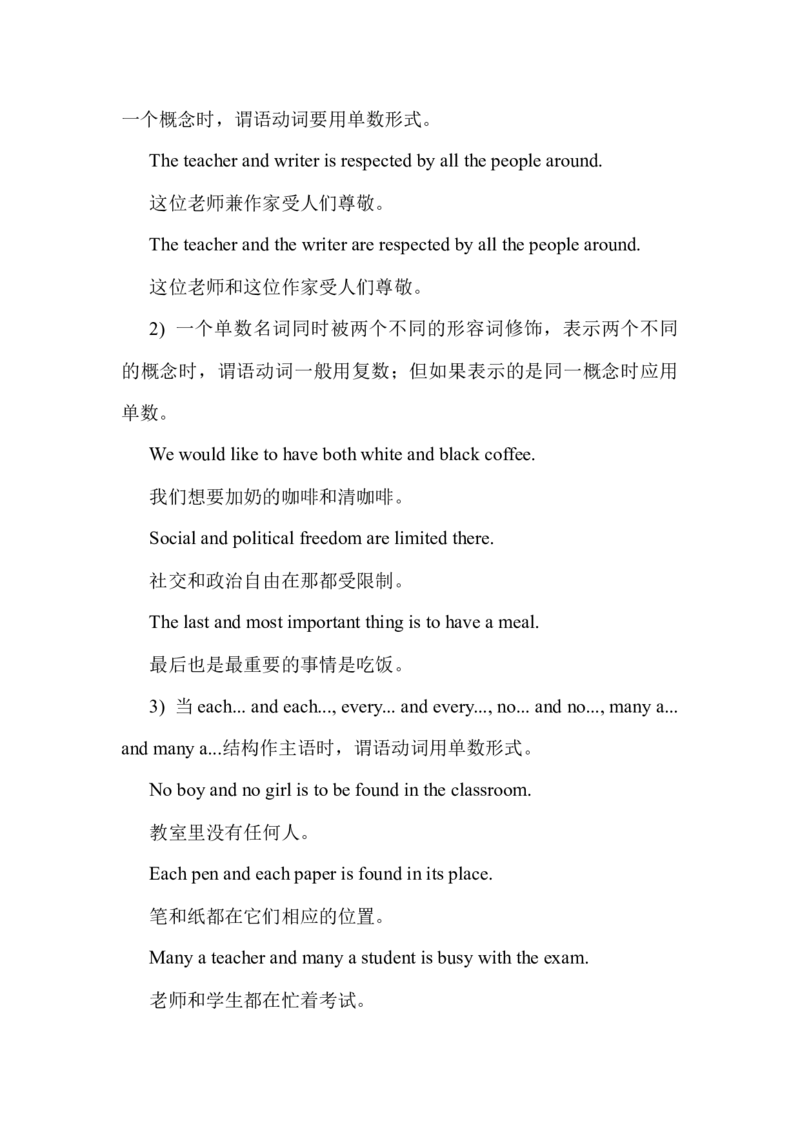
The teacher and writer is respected by all the people around.
这位老师兼作家受人们尊敬。
The teacher and the writer are respected by all the people around.
这位老师和这位作家受人们尊敬。
2) 一个单数名词同时被两个不同的形容词修饰,表示两个不同
的概念时,谓语动词一般用复数;但如果表示的是同一概念时应用
单数。
We would like to have both white and black coffee.
我们想要加奶的咖啡和清咖啡。
Social and political freedom are limited there.
社交和政治自由在那都受限制。
The last and most important thing is to have a meal.
最后也是最重要的事情是吃饭。
3) 当each... and each..., every... and every..., no... and no..., many a...
and many a...结构作主语时,谓语动词用单数形式。
No boy and no girl is to be found in the classroom.
教室里没有任何人。
Each pen and each paper is found in its place.
笔和纸都在它们相应的位置。
Many a teacher and many a student is busy with the exam.
老师和学生都在忙着考试。
4) 由not only... but also..., either... or..., neither... nor..., ...or...连接的
并列主语,谓语动词通常按照就近一致原则决定。
Either the students or the teacher is responsible for the case.
不是学生就是老师要对这件事负责。
Neither my father nor my brothers are likely to be at the theater.
我的爸爸和哥哥们都不可能在戏院。
Not only the switches but also the old wiring has been stolen.
不仅是电闸,旧的配线也都被偷走了。
5) 当主语由as well as, along with, together with, rather than, no less
than, but, except, besides, in addition to, like, including 等词连接时,其
谓语动词的单复数形式通常由前面的词来决定。The room with its
furniture was rented.
这间房连同屋里的家具一起出租。
Billy, together with his sisters, was wounded in the accident.
比利还有他的妹妹们都在事故中受伤了。
The teacher as well as the students was excited.
师生们都很兴奋。
(2) 百分数, 分数作主语时的主谓一致。
当百分数, 分数后面加名词或代词时,要根据这个名词或代词来
决定其谓语动词的单复数形式。如果是复数名词或代词,谓语动词
用复数;如果是单数名词(或不可数名词)或代词,谓语动词用单
数。
Three-fourths of the surface of the earth is sea.
地球表面的3/4 是海洋。
Fifty percent of the students in our school are girls.
我们学校半数的学生是女生。
(3) 不定代词作主语时的主谓一致。
1) 不定代词each, another, the other, either, neither 和由some, any,
no, every + one 或thing 构成的复合代词作主语时,谓语动词用单数
形式。
Nobody likes here.
没有人喜欢这儿。
Neither of us is allergic to it.
我们两个对它都不过敏。
Something has been done to help the poor.
已经采取了措施来帮助穷人。
2) all 作主语表示人时,谓语动词用复数;表示物时,谓语动词
用单数。
All is clear.
一切都清楚了。
All are here.
大家都在这里。
3) both, (a) few, many, several 作主语时,谓语动词通常用复数形
式。
Both of them like singing.
他们两人都喜欢唱歌。
4) none 作主语时,谓语动词既可用单数也可用复数,这要取决
于说话人的看法。
None of us like his present.
我们都不喜欢他的礼物。
None of us has ever been there.
我们谁也没有到过那里。
(4) 表示“全体”,“部分”等意义的词作主语时的主谓一致。
1) 当主语是most, the rest, the last, the remainder 等时,其谓语一
般应遵循意义一致的原则:如果of 后面的名词是单数,则用单数;
如果of 后面的名词是复数,则用复数。
Half of the students will do this, the rest are to do that.
一半的学生做这件事,剩下的做那件事。
After the big fire, the remainder is nothing.
大火之后什么也没剩下。
2) 当town, school, village 等分别表示总称的“镇民”,“全校
师生”,“村民”时,谓语动词可以用单数,也可以用复数。有时
可用the 或加形容词whole 修饰。
The whole village were/was sorry when the teacher left.
老师离开的时候,全体村民都很伤心。
The whole town is/are celebrating the big event.
全体镇民都在庆祝这件大事。
(5)“the + 形容词/过去分词”作主语时的主谓一致。
当“the + 形容词/过去分词”表示一类人或事物时,谓语动词用
复数;如果指某一抽象概念时,谓语动词则用单数。
The young are usually very active.
青年人总是生气勃勃。
The sick are taken good care of in the hospital.
病人在这家医院受到良好的照顾。
(6) 形式为复数,意义为单数的名词作主语时的主谓一致。
1) 表示时间, 距离, 金额, 重量, 计量, 空间, 体积等意义的复数
名词作主语,谓语动词常用单数形式。
Twelve hours of working is too much for me.
12 个小时的工作时间对我来说太长。
Five million pounds was missing in the bank.
银行里的500 万英镑不见了。
2) 以数字作主语的词或短语,有时可以看成是一个整体,谓语
动词用单数形式;两数相加或两数相乘,谓语动词既可用单数形式
也可用复数形式。
Six from twenty leaves fourteen.
20 减去6 等于14。
Three times seven are/is twenty-one.
3 乘以7 等于21。
3) 主语为以-ics 结尾的学科名称时,谓语动词一般用单数形式。
Politics is a complicated subject.
政治是一门复杂的学科。
4) 以-s 结尾的专有名词作主语时,谓语动词用单数形式。
New York Times is a good reading material.
《纽约时报》是一种很好的阅读材料。
5) 一些形式为复数,意义为单数的名词,如:trousers, pants,
shorts, glasses, scissors 等作主语时,谓语动词用复数;但当这类名词
前有a pair of 修饰时,谓语动词应用单数。
My trousers are new.
我的裤子是新的。
This pair of pants is made by her mother.
这条裤子是她妈妈做的。
6) 群岛, 山脉, 瀑布等专有名词,如the Alps, the Philippines,
Niagara Falls 等作主语时,谓语动词用复数形式。
The Alps look very great.
阿尔卑斯山看起来非常雄伟。
(7) number, many a...等作主语时的主谓一致。
1) the number of...(……的数目)作主语时,谓语动词用单数;
而a number of...(许多……)作主语时,谓语动词用复数。
The number of the bags is right.
行李件数正确。
2) many a, more than one + 单数名词构成的短语,尽管在意义上
是复数,但是谓语动词仍用单数形式。
More than one is going.
不止一个人去。
(8) 集体名词作主语时的主谓一致。
1) 无生命的集体名词,如foliage 叶子, machinery 机器,
merchandise 商品/货物等作主语时,谓语动词用单数形式。
All the foliage in the tree is falling down.
树上的叶子正在落下来。
2) 有生命的集体名词,如cattle 牛, police 警察等作主语时,谓
语动词用复数形式。
The police are comforting the injured.
警察正在安慰伤者。
3) audience 观众, class 班级, crew 全体船员, committee 委员会,
family 家庭, team 队, group 组等作主语时,如果指一个整体,谓语
动词用单数;如果指全体中的每一个成员,则用复数形式。
The audience is interested in the performance.
观众对表演非常感兴趣。
The committee are talking about the proposal.
委员会正在讨论提案。
(9) “one of + 复数名词 + 定语从句”结构中的主谓一致。
1) 在“one of + 复数名词 + 定语从句”结构中,定语从句中谓
语动词的单复数应由它修饰的先行词的数来决定。
He is one of the students that have got high marks.
他是取得高分的学生之一。
2) 在“the only one of + 复数名词 + 定语从句”结构中,定语
从句的谓语动词应该用单数形式。
He is the only one of the students who attends the meeting.
他是学生中唯一一个参加这次会议的。
(10) 从句, 动词不定式, V-ing 形式作主语时的主谓一致。
1) 在“主系表”结构中,如果以what 从句作主语,表语是单
数,主句的谓语动词一般用单数:如果表语是复数,主句的谓语动
词一般用复数;动词不定式或是V-ing 形式作主语时,谓语动词一般
用单数。
What makes him so sad is bad news.
是坏消息使得他这样悲伤。
What he got from his friends were some books.
他从朋友那里得到的是几本书。
To eat this kind of food is difficult.
这种东西真是难以下咽。
2) 以who, why, how, whether 或that 引导的从句作主语时,谓语
动词通常用单数形式;由how and why, when and where 引导的从句
作主语时,谓语动词仍用单数形式。Whether he will fire us is
unknown.
还不知道他是否要辞退我们。
Why and how we do the experiment has already been discussed.
我们为什么和怎样做这个实验的问题,已经讨论过了。
3) and 连接的两个名词性从句作主语,如果表示两件事情,其谓
语动词常用复数形式。
What has happened and who was injured remain unknown to us.
发生了什么事,谁受伤了,我们仍不知道。
4) 当what 从句具有两个或两个以上的动词,是表示复数意义的
并列结构时,主句中的谓语动词多用复数形式。
What I do and say are none of your business.
我做什么,说什么都与你无关。