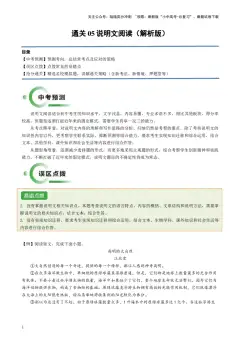
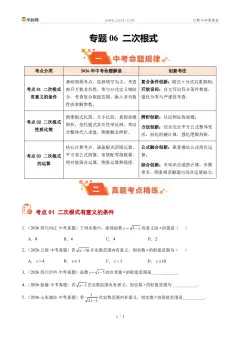
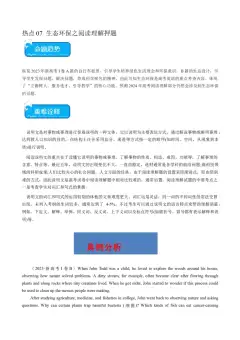
专题07 阅读理解(说明文)

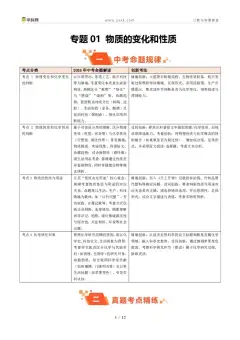
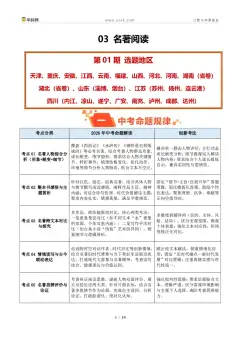
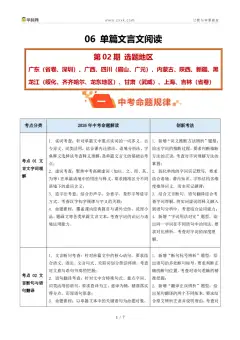
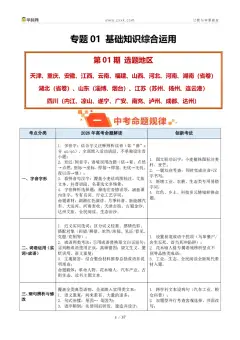
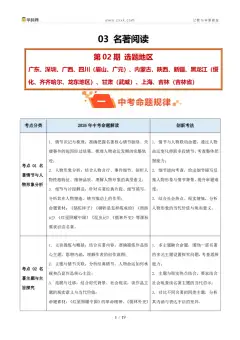
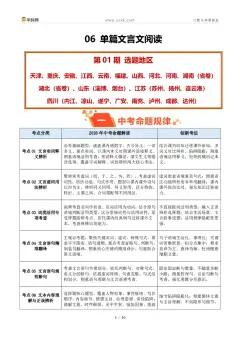
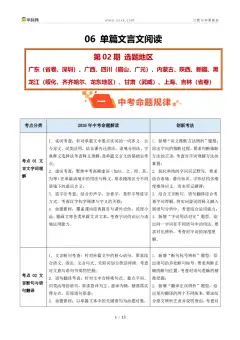
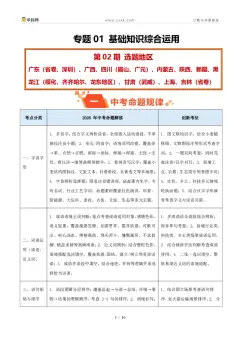
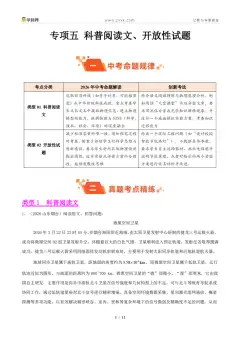
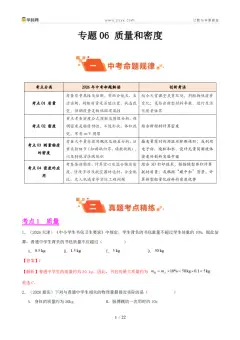
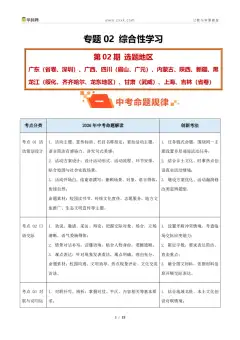
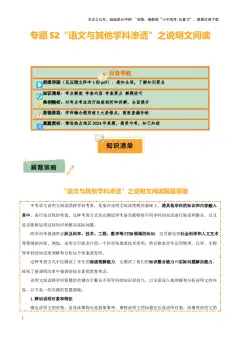
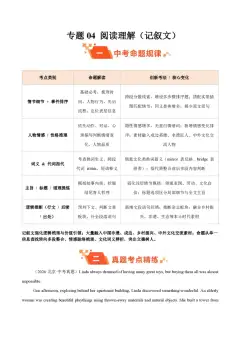
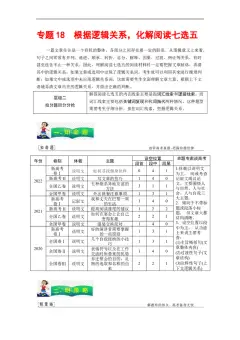
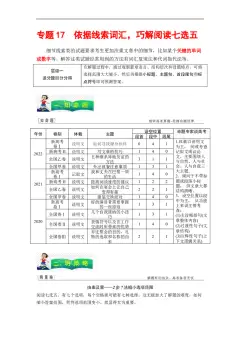
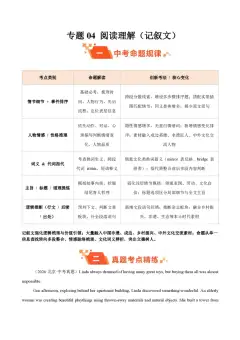
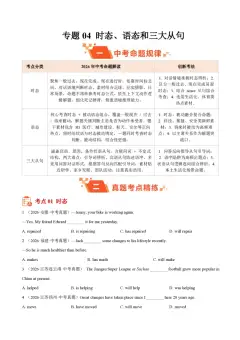
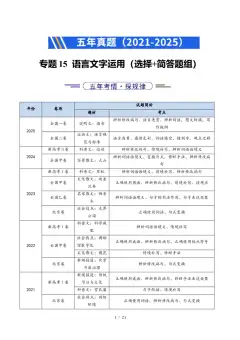
考点类别
命题解读
创新考法 / 重点变化
事实细节
占比最高,考查数据、步骤、事物特
征、因果,定位原文作答
大量图文结合;增设跨段对比、计算类
细节;同义替换增多,弱化原句照搬
词义 / 代词指代
依托上下文猜科普生词、it/they 指代对
象
代词跨段落指代;用科普现象、数据线
索猜专业词汇
段落主旨
概括段意、判断段落作用(引出 / 举
例 / 解释)
考查说明方法识别(列数字、对比),
区分事例与核心观点
推理判断
推断研发初衷、作者态度、技术前景、
隐藏价值
强化思辨,结合中国科技、生态成就进
行价值推断
标题 / 写作目的
概括全文说明对象与核心价值
素材融合国产科技、生态保护、传统文
化,突出文化自信

整体变化:选材覆盖国产设备、生态治理、传统文化科普;多模态图文常态化;减少直白查找,
侧重信息整合、逻辑分析,落实跨学科素养。
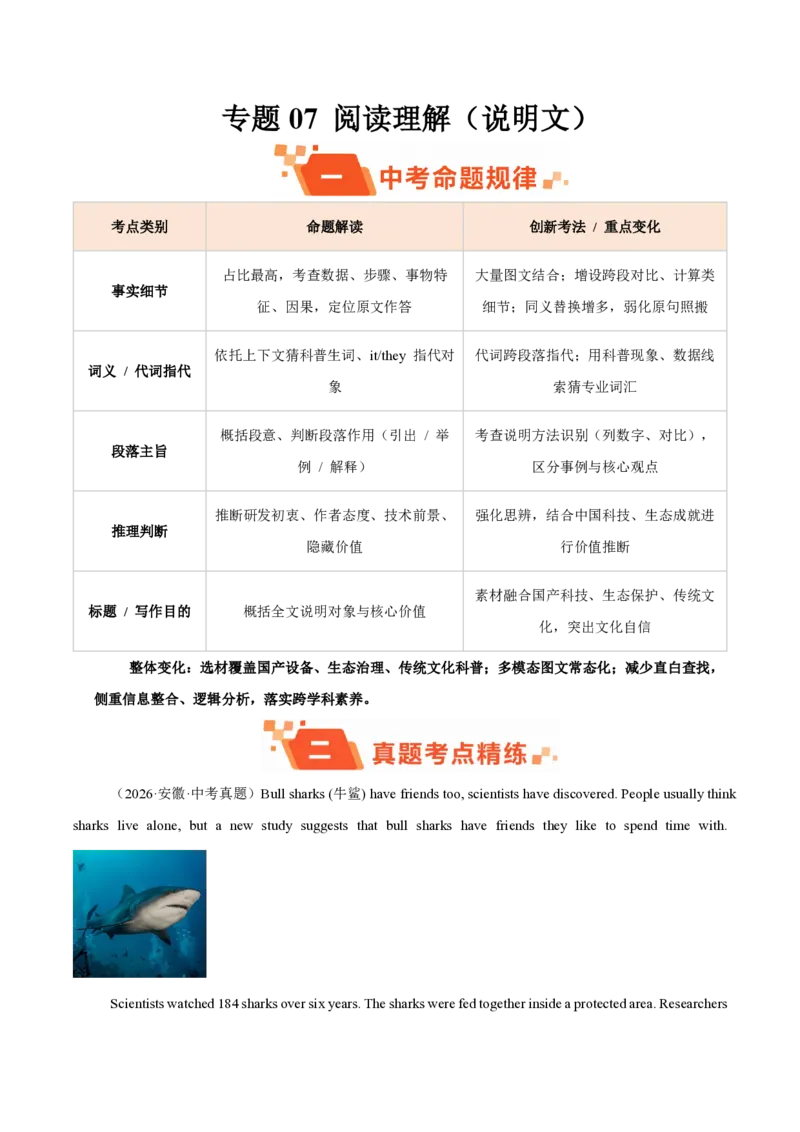
(2026·安徽·中考真题)Bull sharks (牛鲨) have friends too, scientists have discovered. People usually think
sharks live alone, but a new study suggests that bull sharks have friends they like to spend time with.
Scientists watched 184 sharks over six years. The sharks were fed together inside a protected area. Researchers
could go deep down and watch them. The team recorded their actions, such as sharks leading and following each
other and how close together the sharks swam.
They found that both male (雄性的) and female (雌性的) bull sharks like to play with females, but males form
more social relationships. This might be because males are smaller than females, so having more friends protects
them from larger sea animals.
The researchers said that like other animals, bull sharks might learn new skills, find food and stay safe from
enemies by social connections.
“As humans, we build different kinds of social relationships. And these sharks are doing similar things,” said
Natasha Marosi, who led the research. The scientists said understanding bull sharks’ actions can teach us more about
how they live together and move around, which can help with shark protection.
1.What does the new study find about bull sharks?
A.They live alone.
B.They like humans.
C.They have friends.
D.They feed each other.
2.What might be the reason for male sharks to form more social relationships?
A.They need protection.
B.They want to be leaders.
C.They need more areas.
D.They want to meet females.
3.What is the last paragraph mainly about?
A.The meaning of the study.
B.The cause of human action.
C.The advantage of social life.
D.The way of shark protection.
(2026·福建·中考真题)Plastic production has been rising since the end of World War II. Plastic has greatly
influenced modern life. It is widely used in clothing, electronic goods, cars and healthcare. In fact, plastic is not a
single material. A study shows that 16, 000 different chemicals are used in making plastics. When plastic ends up in
nature, it can take hundreds of years to break down. It pollutes soil and water.
People have realized the plastic pollution problem. Thanks to modern recycling technology, we see products
made from recycled plastic — from T-shirts to bags to building materials. This is the magic of turning waste plastic
into valuable products.
Scientists are developing more and more effective methods to recycle waste plastic. For example, researchers
break down plastics into reusable chemicals by using heat, pressure and a kind of special water. Another technology
creates a plastic mix to break down waste plastic into oil for new plastics. Scientists also use electric current (电流) to
turn waste plastic into high quality graphene (石墨烯). The graphene helps to develop new cancer treatments.
Recycling reduces the need to produce new plastic from oil. Besides, it helps to control environmental
pollution. However, recycling plastic is not always easy. Different types of waste plastics must be separated and well
cleaned.
China has been stressing the importance of recycling and has taken action to improve it. Many schools try to
encourage students to recycle properly. For example, students may get an award, such as a small toy or a pencil, for
putting empty bottles into smart recycling machines. Factories are encouraged to use recycled materials in their
products. With each recycled bottle, China moves one step closer to a future where nothing is truly wasted—
everything is just waiting for its next use.
1.What do we know about plastic from Paragraph 1?
A.Plastic production started after World War II.
B.Plastic is commonly used in modern life.
C.There are many ways of producing plastic.
D.Producing plastic takes a long time.
2.In which way can waste plastic be recycled?
A.By mixing reusable chemicals into it.
B.By inventing a plastic mix to break it down.
C.By breaking down high quality graphene.
D.By developing new cancer treatments.
3.What does the underlined word “it” in Paragraph 4 refer to?
A.Oil.
B.New plastic.
C.The need.
D.Recycling.
4.What does the last paragraph focus on?
A.The importance of recycling.
B.The awards for recycling.
C.The efforts in recycling.
D.The future of recycling.
5.Which would be the best title for the text?
A.Plastic Production over Time
B.Waste Plastic: Serious Pollution
C.Effective Methods of Using Plastic
D.Recycling: New Life of Waste Plastic
(2026·福建·中考真题)With the world becoming warmer because of climate change, mosquitoes are busy
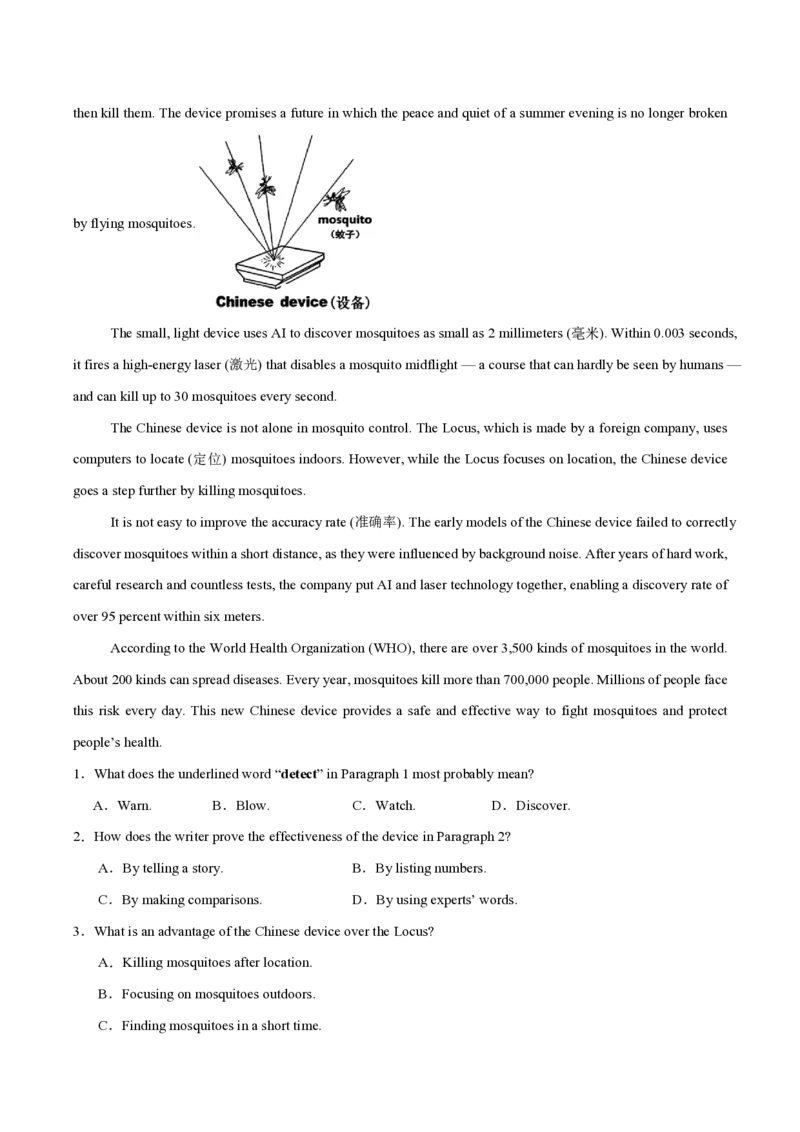
enlarging their living space. Now, a Chinese company has created a new device which can detect mosquitoes and
then kill them. The device promises a future in which the peace and quiet of a summer evening is no longer broken
by flying mosquitoes.
The small, light device uses AI to discover mosquitoes as small as 2 millimeters (毫米). Within 0.003 seconds,
it fires a high-energy laser (激光) that disables a mosquito midflight — a course that can hardly be seen by humans —
and can kill up to 30 mosquitoes every second.
The Chinese device is not alone in mosquito control. The Locus, which is made by a foreign company, uses
computers to locate (定位) mosquitoes indoors. However, while the Locus focuses on location, the Chinese device
goes a step further by killing mosquitoes.
It is not easy to improve the accuracy rate (准确率). The early models of the Chinese device failed to correctly
discover mosquitoes within a short distance, as they were influenced by background noise. After years of hard work,
careful research and countless tests, the company put AI and laser technology together, enabling a discovery rate of
over 95 percent within six meters.
According to the World Health Organization (WHO), there are over 3,500 kinds of mosquitoes in the world.
About 200 kinds can spread diseases. Every year, mosquitoes kill more than 700,000 people. Millions of people face
this risk every day. This new Chinese device provides a safe and effective way to fight mosquitoes and protect
people’s health.
1.What does the underlined word “detect” in Paragraph 1 most probably mean?
A.Warn.
B.Blow.
C.Watch.
D.Discover.
2.How does the writer prove the effectiveness of the device in Paragraph 2?
A.By telling a story.
B.By listing numbers.
C.By making comparisons.
D.By using experts’ words.
3.What is an advantage of the Chinese device over the Locus?
A.Killing mosquitoes after location.
B.Focusing on mosquitoes outdoors.
C.Finding mosquitoes in a short time.
D.Using AI to drive mosquitoes away.
4.What does Paragraph 4 mainly talk about?
A.How the device was tested.
B.The influence of noise on accuracy.
C.How AI was used in the device.
D.The road to a high accuracy rate.
5.What can we learn from the last paragraph?
A.Most mosquitoes are dangerous.
B.The Chinese device is of great use.
C.Mosquitoes around us have been controlled.
D.The Chinese device is praised by the WHO.
(2026·河南·中考真题)Did you notice how nature sometimes repeats itself? Something that repeats is called
a pattern. There are many patterns for you to study and learn.
Look around you. Patterns are everywhere. You may see bright and colorful patterns if you look at fish in the
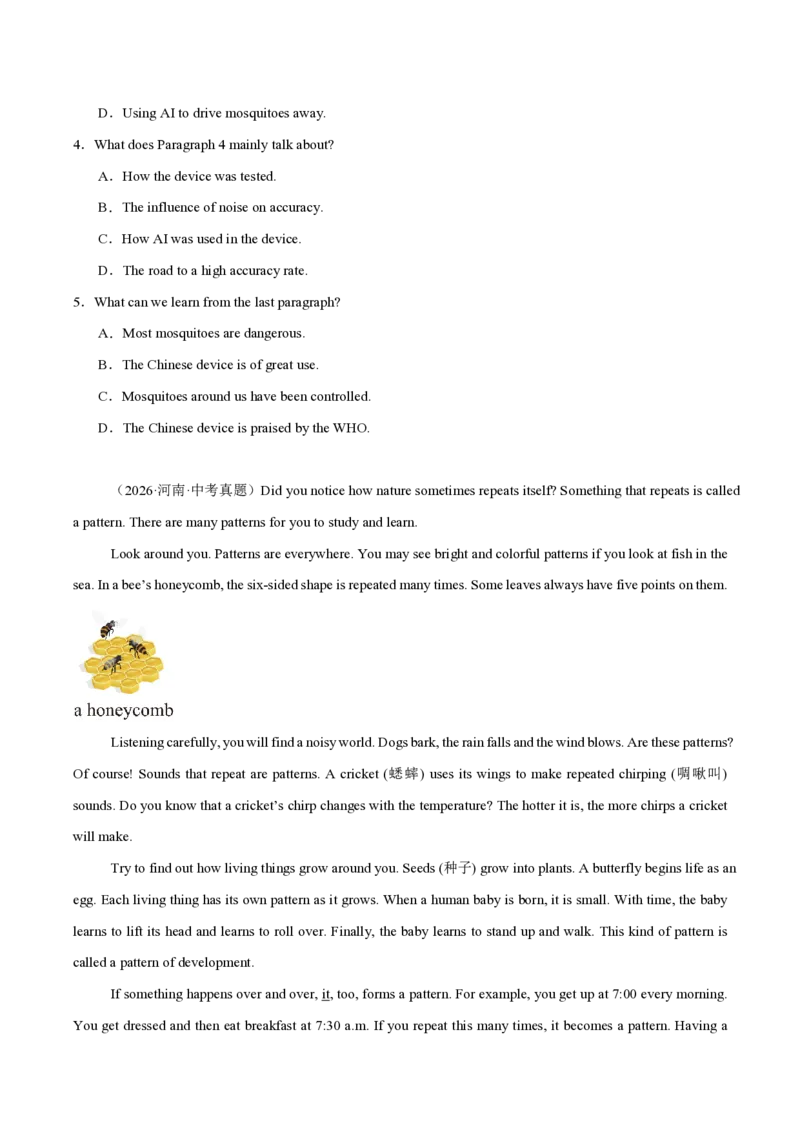
sea. In a bee’s honeycomb, the six-sided shape is repeated many times. Some leaves always have five points on them.
Listening carefully, you will find a noisy world. Dogs bark, the rain falls and the wind blows. Are these patterns?
Of course! Sounds that repeat are patterns. A cricket (蟋蟀) uses its wings to make repeated chirping (啁啾叫)
sounds. Do you know that a cricket’s chirp changes with the temperature? The hotter it is, the more chirps a cricket
will make.
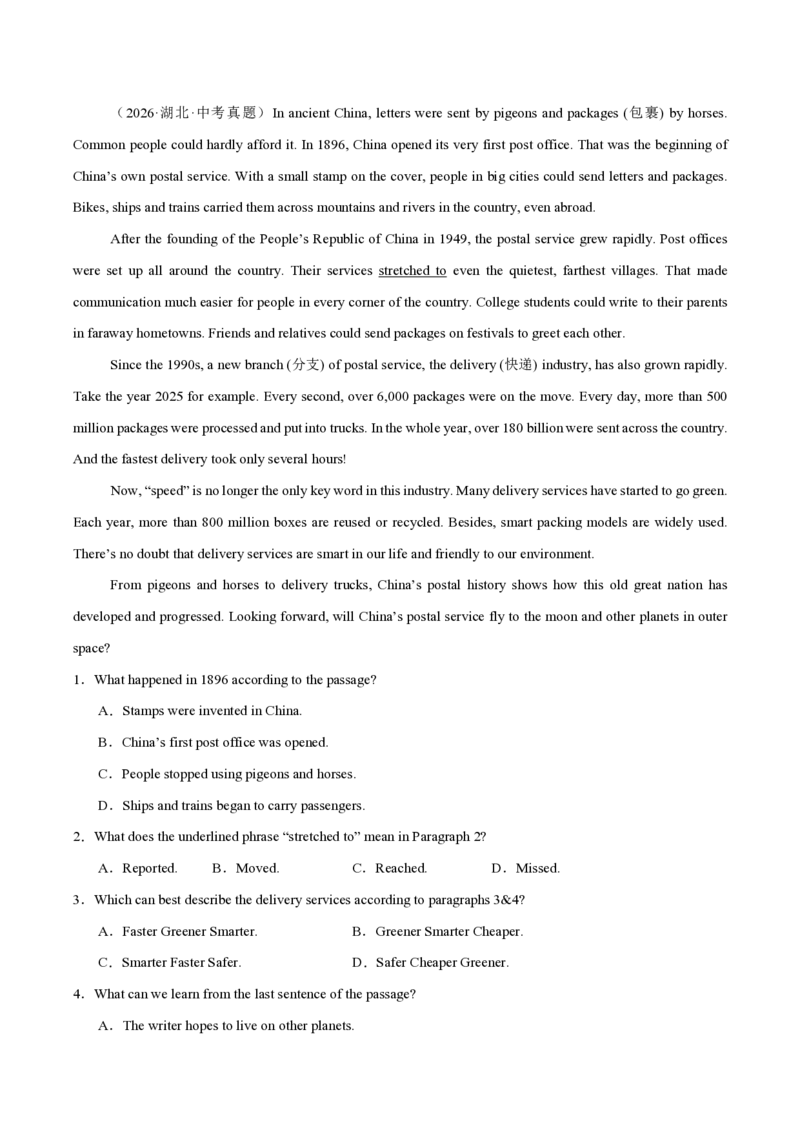
Try to find out how living things grow around you. Seeds (种子) grow into plants. A butterfly begins life as an
egg. Each living thing has its own pattern as it grows. When a human baby is born, it is small. With time, the baby
learns to lift its head and learns to roll over. Finally, the baby learns to stand up and walk. This kind of pattern is
called a pattern of development.
If something happens over and over, it, too, forms a pattern. For example, you get up at 7:00 every morning.
You get dressed and then eat breakfast at 7:30 a.m. If you repeat this many times, it becomes a pattern. Having a
music class every Monday is a pattern. So is going to school five days a week and having Saturday and Sunday off.
It seems as if the world is full of patterns. Just think—without patterns, the world would be much harder to
study!
根据材料内容选择最佳答案。
1.What makes the pattern in a bee’s honeycomb?
A.The shape.
B.The color.
C.The taste.
D.The weight.
2.What is Paragraph 3 mainly about?
A.Patterns you can see.
B.Patterns you can hear.
C.Patterns you can smell.
D.Patterns you can touch.
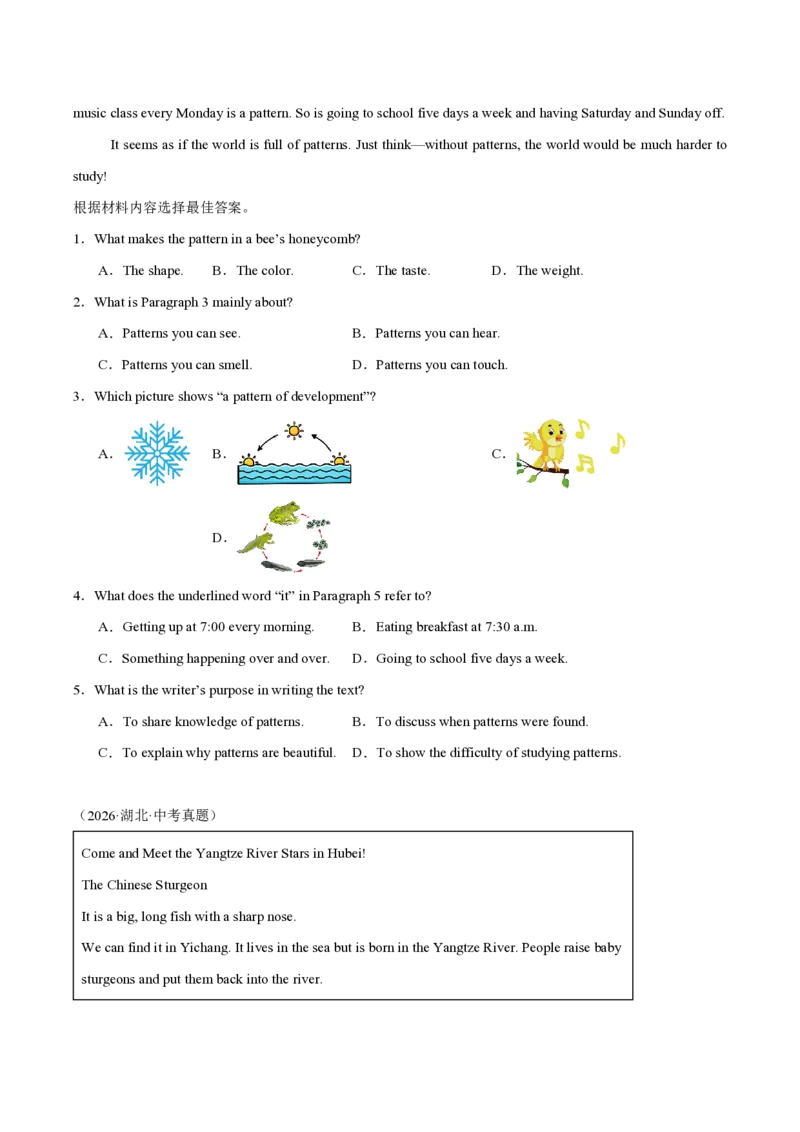
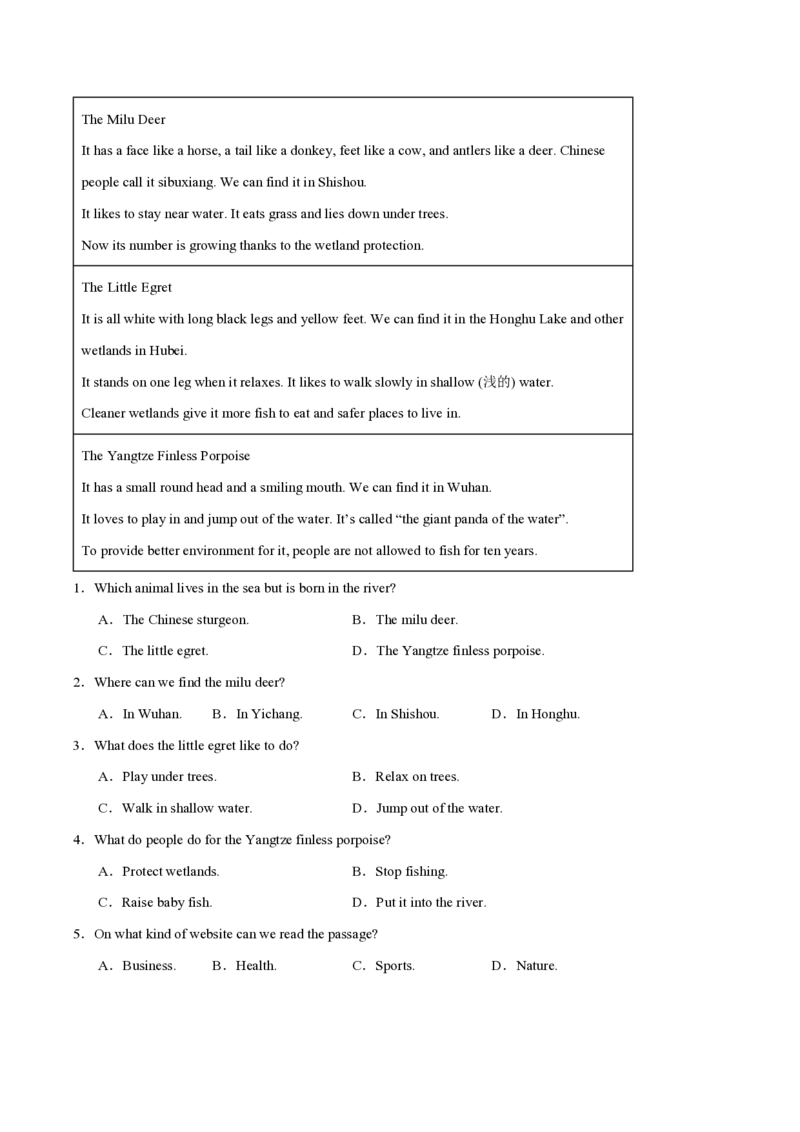
3.Which picture shows “a pattern of development”?
A.
B.
C.
D.
4.What does the underlined word “it” in Paragraph 5 refer to?
A.Getting up at 7:00 every morning.
B.Eating breakfast at 7:30 a.m.
C.Something happening over and over.
D.Going to school five days a week.
5.What is the writer’s purpose in writing the text?
A.To share knowledge of patterns.
B.To discuss when patterns were found.
C.To explain why patterns are beautiful.
D.To show the difficulty of studying patterns.
(2026·湖北·中考真题)
Come and Meet the Yangtze River Stars in Hubei!
The Chinese Sturgeon
It is a big, long fish with a sharp nose.
We can find it in Yichang. It lives in the sea but is born in the Yangtze River. People raise baby
sturgeons and put them back into the river.
The Milu Deer
It has a face like a horse, a tail like a donkey, feet like a cow, and antlers like a deer. Chinese
people call it sibuxiang. We can find it in Shishou.
It likes to stay near water. It eats grass and lies down under trees.
Now its number is growing thanks to the wetland protection.
The Little Egret
It is all white with long black legs and yellow feet. We can find it in the Honghu Lake and other
wetlands in Hubei.
It stands on one leg when it relaxes. It likes to walk slowly in shallow (浅的) water.
Cleaner wetlands give it more fish to eat and safer places to live in.
The Yangtze Finless Porpoise
It has a small round head and a smiling mouth. We can find it in Wuhan.
It loves to play in and jump out of the water. It’s called “the giant panda of the water”.
To provide better environment for it, people are not allowed to fish for ten years.
1.Which animal lives in the sea but is born in the river?
A.The Chinese sturgeon.
B.The milu deer.
C.The little egret.
D.The Yangtze finless porpoise.
2.Where can we find the milu deer?
A.In Wuhan.
B.In Yichang.
C.In Shishou.
D.In Honghu.
3.What does the little egret like to do?
A.Play under trees.
B.Relax on trees.
C.Walk in shallow water.
D.Jump out of the water.
4.What do people do for the Yangtze finless porpoise?
A.Protect wetlands.
B.Stop fishing.
C.Raise baby fish.
D.Put it into the river.
5.On what kind of website can we read the passage?
A.Business.
B.Health.
C.Sports.
D.Nature.
(2026·湖北·中考真题)In ancient China, letters were sent by pigeons and packages (包裹) by horses.
Common people could hardly afford it. In 1896, China opened its very first post office. That was the beginning of
China’s own postal service. With a small stamp on the cover, people in big cities could send letters and packages.
Bikes, ships and trains carried them across mountains and rivers in the country, even abroad.
After the founding of the People’s Republic of China in 1949, the postal service grew rapidly. Post offices
were set up all around the country. Their services stretched to even the quietest, farthest villages. That made
communication much easier for people in every corner of the country. College students could write to their parents
in faraway hometowns. Friends and relatives could send packages on festivals to greet each other.
Since the 1990s, a new branch (分支) of postal service, the delivery (快递) industry, has also grown rapidly.
Take the year 2025 for example. Every second, over 6,000 packages were on the move. Every day, more than 500
million packages were processed and put into trucks. In the whole year, over 180 billion were sent across the country.
And the fastest delivery took only several hours!
Now, “speed” is no longer the only key word in this industry. Many delivery services have started to go green.
Each year, more than 800 million boxes are reused or recycled. Besides, smart packing models are widely used.
There’s no doubt that delivery services are smart in our life and friendly to our environment.
From pigeons and horses to delivery trucks, China’s postal history shows how this old great nation has
developed and progressed. Looking forward, will China’s postal service fly to the moon and other planets in outer
space?
1.What happened in 1896 according to the passage?
A.Stamps were invented in China.
B.China’s first post office was opened.
C.People stopped using pigeons and horses.
D.Ships and trains began to carry passengers.
2.What does the underlined phrase “stretched to” mean in Paragraph 2?
A.Reported.
B.Moved.
C.Reached.
D.Missed.
3.Which can best describe the delivery services according to paragraphs 3&4?
A.Faster Greener Smarter.
B.Greener Smarter Cheaper.
C.Smarter Faster Safer.
D.Safer Cheaper Greener.
4.What can we learn from the last sentence of the passage?
A.The writer hopes to live on other planets.
B.The writer shows interest in space history.
C.The writer wants to check the delivery address.
D.The writer has confidence in China’s postal service.
5.How does the writer organize the passage?
A.In the order of time.
B.In the order of space.
C.From opinions to facts.
D.From reasons to results.
(2026·湖北·中考真题)For most foreign teenagers, learning Chinese poems could be boring. But for a group
of exchange students in China, it became an amazing trip. To help them learn more, Chinese students in a middle
school started a club called “Poetry Gathering”.
In this club, students explored the classic poems in active and creative ways. Chinese students prepared “fun
cards”. On the cards were famous poems and theme (主题) paintings. Cards about Li Bai’s moon, Du Fu’s mountains,
and Wang Wei’s desert were popular. They helped the exchange students know how ancient poets used Chinese to
“paint” pictures.
Besides, they used simple instruments like drums to experience the rhythm (节奏) of the poems. “When I play
the drums to a Tang poem, I can hear the music hidden in the lines,” said Alice, an exchange student. “It makes the
poem easy to sing out loud and interesting to share.” By putting poems, paintings and the rhythm together, students
made the club a fun place where ancient poets met their teenager fans.
When Chinese students and exchange students studied together, they both benefited greatly. “To help them
better understand our poems, I have to do some closer reading. Each character means a lot in poems. For example, 水
(shui) shows beauty, sweetness, and a smooth feeling,” said Li Ran. “When my new foreign friend said he could feel
the imagery (意境) of the lines, I felt very proud of our culture.” Li added.
In fact, learning poems can be fun for everyone. These activities not only offer students a chance to learn more
about Chinese poems, but also bring people of different languages and cultures together.
1.What do most foreign teenagers think of learning Chinese poems?
A.Exciting.
B.Useful.
C.Boring.
D.Easy.
2.What does the underlined word “They” in Paragraph 2 refer to (指代)?
A.Cards.
B.Paintings.
C.Poems.
D.Mountains.
3.What did playing the drums help the students do?
A.Sing more poems.
B.Feel the rhythm of poems.
C.Share classic music.
D.Create lively nature scenes.
4.Why did the writer use the example of “水 (shui)”?
A.To describe different forms of water.
B.To tell the pronunciation of the character.
C.To express Chinese people’s love for water.
D.To show the rich meanings of Chinese characters.
5.Which of the following can be the best title for the passage?
A.A Talk on Chinese Culture
B.A Taste of Classic Lines
C.Power of Deep Thoughts
D.Fun with Chinese Poems
(2026·江苏连云港·中考真题)People may want to get things done without moving a finger. The Internet of
Things (IoT) is making that dream come true. The technology uses sensors (传感器) to connect devices (设备) to
each other and to the Internet. It has encouraged countless products to do everyday tasks. Here are some examples:
I’m a smart fridge. I can do more than keep food cold. If you forget
what you need to buy for lunch, you can check your phone to find what I
have. If you have too many sugary drinks, I can warn you and suggest a
piece of fruit instead.
I’m a smart wristband. I can help people with heart diseases. I can
record blood pressure and heart rate. Then I send the information directly
to a team of doctors so that they can deal with the problem as soon as
possible.
I’m a smart helmet. I help achieve greater safety for motorbike
riders. My cameras can show things around them. I can also warn them
when they are riding too close to passing cars.
I’m a drone. I often fly above farmland. Farmers tell me which field
to survey and how high to fly. My cameras and sensors help them learn
about soil and plants. I can even spray pesticides (喷药) properly.
1.What can smart fridges do?
A.Offer health advice.
B.Store more sugary drinks.
C.Keep food much colder.
D.Remind users to have lunch.
2.Which product can help people with heart problems?
A.A smart fridge. B.A drone.
C.A smart helmet.
D.A smart wristband.
3.In which part of a magazine can you probably read the text?
A.Health.
B.Technology.
C.Environment.
D.Traffic.
(2026·江苏连云港·中考真题)Some of the most beautiful rivers in the UK are from underground springs,
which create perfect conditions for wildlife to live. To understand how healthy the rivers really are, scientists keep
watching them for numbers of species (物种) over time. This can show how well a habitat can manage stress such as
rising temperatures, reduced rainfall and pollution.
Traditionally, researchers survey rivers by going out themselves and searching for plants, animals or signs of
their presence (存在). This method works, but it takes much time and can miss some species not present during the
survey. A new project called GeneFlow tries a new technology — environmental DNA (eDNA).
When a species — for example, a fish — moves through the environment, it drops bits of itself all the time,
from dead skin cells to faeces (粪便). The DNA in these materials is known as environmental DNA (eDNA). If
someone tests a sample (样本) of the water, these pieces of DNA can show the recent presence of the fish, though no
fish is seen. This technology allows scientists to find species that we cannot see with our eyes, so that we can learn
more about the rivers.
GeneFlow aims to explore the species in 10 rivers across the UK. Beyond information collection, it also aims
to connect people with their local rivers. With instructions, members of the public have helped to collect water
samples from chosen rivers.
Scientists are still studying the water samples, but the early results are promising: nearly 2000 species have
been discovered so far, including protected species such as eels and water voles at many places. Several riverfly
species — key signs of water quality — were also recorded.
1.What’s the purpose of the first paragraph?
A.To list possible dangers to the habitats.
B.To describe the rivers’ health conditions.
C.To explain the importance of river surveys.
D.To introduce some beautiful rivers in the UK.
2.What’s the problem with the traditional method to survey rivers?
A.It pollutes the rivers.
B.It doesn’t work at all.
C.It wastes time finding rivers.
D.It can miss hidden species.
3.What is eDNA?
A.The DNA of a certain fish in the UK.
B.The technology of collecting water samples.
C.The technology of preventing water pollution.
D.The DNA of species found in the environment.
4.What can we learn about the GeneFlow Project from the last two paragraphs?
A.It has found positive results so far.
B.It has protected species at many places.
C.Its researchers have completed their study.
D.Its researchers collected samples in person.
(2026·江苏苏州·中考真题)
The 2026 Aranya Theater Festival presents 34 productions from 14 countries, aiming to draw worldwide
attention.
The festival opens with City of Fiction, adapted (改编) from Yu Hua’s novel. It tells the story of a young man
from northern China who starts a journey south in search of an imaginary city. The festival also presents a lot of other
highly expected works. One such show is Na Han, a Chinese-German production adapted from the short story
collection by Lu Xun. It explores themes like family relationships. Dans la tempete continue is a French-Chinese
production, which focuses on the dynamics (动态) within a family.
Besides drama performances, the festival offers other activities such as workshops and street shows, making
visitors’ cultural experiences richer.
1.How many days does the festival last?
A.12 days.
B.14 days.
C.28 days.
D.34 days.
2.What do Na Han and Dans la tempete continue have in common?
A.They tell the story of the young.
B.They try to explore family themes.
C.They are French-Chinese productions.
D.They are adapted from Lu Xun’s works.
3.What do we know about the festival according to the passage?
A.It opens with a foreign production.
B.It allows visitors to direct a drama.
C.It is to draw Chinese people’s attention. D.It is an international event held in China.
(2026·江苏扬州·中考真题)16 winners from 12 countries were awarded at the 18th Special Book Awards of
China held in Beijing in June 2025. Aleksei Rodionov, professor of Chinese studies at Saint Petersburg University,
is a winner of the award in translating.
This award is the highest national award. It is presented each year to foreign authors, translators, and publishers
for their great contributions in promoting Chinese publications and cultural exchanges between China and other
countries. “As a sinologist (汉学家) and translator of Chinese literature, this award will encourage me to do more and
do better in promoting cultural exchanges between Russia and China,” said the professor.
Rodionov said that he feels a special connection with China when he thought about his journey in Chinese
literature.
“I was born on the Russian-Chinese border. From the moment I was born, I had a connection with China. As
someone with a great interest in foreign languages, I naturally chose to learn Chinese. That’s how I started the journey
of studying the Chinese language and literature,” he noted.
To the professor, translation is, in fact, a very enjoyable task. “Translating Chinese literary (文学的) works is
my lifelong calling. It brings me joy and gives my life a deeper sense of purpose,” he said.
For decades, Rodionov has long devoted himself to translating and researching Chinese literature, having
translated 26 works by Chinese authors such as Lao She.
“Literary works are an important gateway to understanding Chinese culture and the Chinese people. They are
important bridges that connect our hearts and minds. In Russia, authors like Mo Yan and Yu Hua are very popular,”
said the professor.
1.What was Aleksei Rodionov awarded for?
A.Translating Chinese literature.
B.Studying the Chinese language.
C.Teaching Russian in China.
D.Publishing a book in Chinese.
2.What do we know about the award?
A.It is held in Beijing every three years.
B.It is the highest national award in Russia.
C.It encourages Chinese writers, translators and publishers.
D.It praises foreigners’ efforts in spreading Chinese culture.
3.What does paragraph 5 mainly talk about?
A.Rodionov’s research into Chinese literature.
B.Rodionov’s understanding of translation.
C.Rodionov’s experiences of learning Chinese.
D.Rodionov’s findings of Russian readers.
4.What is the best title for the text?
A.Connected by Literature
B.Comparing Cultural Differences
C.Rodionov’s Learning Journey in China
D.Rodionov’s Exchange Program with China
(2026·江苏扬州·中考真题)What if things in your home—your toothbrush, books, desks, even you!—
suddenly seemed weightless and began to float? This is what astronauts experience in a space station—microgravity
(微重力). Even though the space station and the astronauts inside are in space, Earth’s gravity is still pulling on them,
though very weak. Let’s explore the astronauts’ life in space. Though there are some challenges, life in space is a
super-fun.
Eating and sleeping
Need to get from one place to another? Just push off a surface and glide there! Nothing stays put. Imagine
turning on a tap. Water would go flying everywhere.
Astronauts aren’t allowed to eat anything in the space station that creates crumbs (碎屑). Food crumbs can
become a disaster if they get into equipment (设备). That’s why astronauts eat specially prepared meals. There’s no
“up” or “down” in space, so astronauts sleep in sleeping bags tied to the wall. Their arms will float in front of them
while they sleep.
Astronauts have to keep their bodies strong. There’s less stress on bones in space, for gravity is weaker.
Muscles (肌肉) aren’t used as much. Their bones and muscles grow weaker. Even astronauts’ hearts can weaken.
Every astronaut has to exercise for about two hours a day. Most of the exercise equipment is specially designed to
imitate the feel of gravity.
Work and play
Astronauts spend much of their time working. They do a lot of experiments—from space life science to new
spacecraft technologies. Sometimes they do spacewalks to make repairs to the outside of the station. When they have
free time, astronauts kick back by reading books and looking down at Earth.
1.According to the text, what may cause danger to the space station?
A.Water in special bags.
B.Very tiny food pieces.
C.Specially prepared meals.
D.Sleeping bags tied to the wall.
2.Which of the following should go in the empty box?
A.Exercising for a strong heart.
B.Moving freely.
C.Dealing with space loneliness.
D.Staying strong.
3.What does the text mainly talk about?
A.Strange changes to astronauts’ bodies in space.
B.Astronauts’ fun and challenging life in space.
C.How astronauts do experiments in space environments.
D.Why astronauts inside the space station can’t stay put.
(2026·江苏扬州·中考真题)If you want to learn new stories about familiar plants and animals, and discover
new species (物种) to plant in your own yard, Nature of Portland, is a must for you.
Most of this book is about which plants and animals are natives in Portland (a city in Oregon, USA). Many
plants and animals in this book have long made their homes here.
In this field guide, filled with local knowledge and humor, LeeAnn Kriegh describes more than 350 plants and
animals found within an hour’s ride of Portland, Inside you’ll discover:
● Common and scientific names
● Key details like size, bloom (flowering) time, and months seen
● Local natural history, ecology, stories, and fun facts
● Details on where to find every species
● Beautiful full-color photos of every species
Take Western Starflower from the book as an example.
Western Starflower (Lysimachia latifolia)
Flowers: Late spring to early summer
Late spring is a magical time to explore trails in the Portland area,
as birds are singing, and colorful blooms are coming out on
wildflowers like this one.
Western starflower’s pinkish blooms stand out against the backdrop of the plant’s big, broad,
deep-green leaves (latifolia translates to “broad-leaved”). A lot of flowers are in the shape of a
star, but species like this one win the starflower name because of their thin flower stalks (茎).
They make the flowers seem to fly in the air like stars.
ID tips: 2-12 inches tall. Look for a whorl of four to seven broadly oval leaves (up to 3.5 inches
long) with pointed tips. Up to a few star-shaped pink flowers (up to 0.75 inches wide) bloom on
thin flower stalks, each with five to seven pointed petals (花瓣).
Locations: Locally common in shady, wet woods, including at Oxbow Regional Park and
Powell Butte Nature Park.
At the back of the book, you’ll find 10 “treasure hunts” in the Portland area. The species are waiting to be
found. Reading about plants and animals is fun, but getting outside to experience and connect with nature is what
Nature of Portland is all about.
1.What is Nature of Portland?
A.A fun, friendly guide to local plants and animals.
B.A photo collection of plants and animals in danger.
C.A field guide to the city’s places of interest.
D.A book mainly about some famous local landscapes.
2.What does the underlined word “natives” in paragraph 2 mean?
A.Animals or plants that live in the sea.
B.Animals that kill and eat other animals.
C.Animals or plants that live or grow naturally in a place.
D.Unusual and exciting plants, especially from other countries.
3.In the table about Western Starflower, what can you get from the Flowers part?
A.How tall the flower is.
B.How many leaves the flower has.
C.Why the flower gets its name.
D.Which parks you can visit to see the flower.
4.What is the purpose of the text?
A.To show how to write a book review.
B.To tell readers what to expect from the book.
C.To give advice on what to grow in your yard.
D.To encourage readers to find new local plants.
(2026·江西·中考真题)HIGH-FLYING HELPERS
Drones, created as tools of war at first, are now performing important tasks to help people around the world.
Sending medical help to hard-to-reach places has been a problem for years. In Rwanda, some small hospitals
don’t have enough medicine. As a result, many people die. A local company is trying to use drones to solve this
problem. Drones can quickly provide healthcare service to the hospitals around Rwanda, and more people receive
life-saving medicine. Drones also help after natural disasters. In 2015, a heavy storm hit Vanuatu, leaving many
people homeless. Drones took pictures for the rescue (救援) teams. This helped the teams judge the situation quickly
and offer help to the areas that were hardest hit.
Drones are also helping environmental organizations. Every year, poachers (偷猎者) kill many endangered
animals. To stop them, the WWF uses drones. “They help us see things that we can’t,” says Colby, who works for
the WWF. Drones can easily identify (识别) poachers in the dark. As well as finding poachers, these tools can be used
to follow and protect animals. Scientists at a university plan to use them for a project: recording wildlife and
identifying animal groups. The project leader believes drones will become widely used. “I think we will have plenty
of drones flying over forests,” he predicts.
A tool made for war is now being used to save lives. “Drones can be good for both humans and animals.
There’s nothing that can take the place of a good scientist. But now, thanks to drones, scientists are able to finish
projects they’ve never imagined before,” says Kike, a man who cares about the environment.
1.What do drones do for the people in Rwanda?
A.They take clear pictures.
B.They help the homeless in time.
C.They send medicine fast.
D.They judge the situation carefully.
2.What does the underlined word “They” in Paragraph 3 refer to?
A.The drones.
B.The poachers.
C.The animals.
D.The organizations.
3.What are drones mainly used for in Paragraph 3?
A.Starting a project.
B.Finding lost people.
C.Protecting animals.
D.Recording daily life.
4.What can we infer from Kike’s words?
A.Wars have brought many problems.
B.New technologies need improvement.
C.People should protect the environment. D.Drones can help scientists do more things.
5.In which section of a magazine can we read the text?
A.Nature.
B.Technology.
C.Health.
D.Travel.
(2026·山东烟台·中考真题)Minqin, lying in the city of Wuwei in Gansu, is sandwiched between China’s
third and fourth-largest deserts. It is one of the country’s main sources (来源) of sandstorms. In 2007, then 26-year-
old Ma Junhe started Minqin’s first environmental protection volunteer program named Save Minqin after reading
in a newspaper that his hometown was at risk of being covered by sand within 17 years. The program started with
just 60 volunteers. Last year, more than 6,000 volunteers planted suosuo trees there, most of whom were aged
between 18 and 30, also called GenZers.
Zhang Liwen, an 18-year-old girl from Xi’an, spent five days planting suosuo trees in Minqin. “This idea came
from my wish to complete a meaningful coming-of-age ceremony, but now I find value in contributing (贡献) to
society,” Zhang said. The vlogs shared by Zhang are lively and attractive. She filmed a group of young volunteers,
including herself, planting trees with stylish sports sunglasses, enjoying local noodles in their tent, and dancing in
the desert after work.
Li Xiuniang, from Heilongjiang province, also posted her volunteer work online. “This task isn’t just for
Minqin; it’s for all of China,” she said.
Lee Ting-Hsuan, a 20-year-old student from Taiwan, is one of thousands of volunteers who travel to Minqin
every year. Around 20 young volunteers from Macao also joined the program. “Through tree planting, we get a
deeper understanding of Northwest China and its culture,” one of them said.
Since 2007, over 80,000 volunteers have joined this program and they have planted over 1.52 million trees,
making a green promise in the yellow sands. Ma Junhe said, “GenZers are more confident in achieving their dreams.
They really enjoy meaningful public activities, and help a lot by sharing their stories online, attracting more people
to take action.”
1.What directly pushed Ma Junhe to set up the Save Minqin program?
A.The fear of meeting sandstorms.
B.The love of green mountains.
C.The wish to attract more GenZers.
D.The worry of losing his hometown.
2.Why does the writer list the number of volunteers in the first paragraph?
A.To prove that Minqin needs more and more volunteers.
B.To show the rapid development of the volunteer program.
C.To call on more volunteers to plant suosuo trees in Minqin.
D.To compare the number of young volunteers with the older ones.
3.Zhang Liwen’s vlogs can attract more volunteers because the vlogs show ______.
A.their contribution to our society
B.the hardship of planting trees
C.the colorful life of volunteering
D.the comfortable life in Minqin
4.What might be the writer’s purpose of writing the passage?
A.To show young people from Taiwan and Macao are active.
B.To introduce the dangerous condition that Minqin is facing.
C.To introduce different ways of encouraging people to plant trees.
D.To show the strong volunteering willingness of Chinese GenZers.
(2026·山西·中考真题)Every time Steve woke up, he felt his right hand was on fire. He could not lift a cup or
touch cold water. The medicine he took didn’t work well. But one day, he put on a VR (虚拟现实) headset and things
began to change.
VR treatment is being used in medical fields, especially for helping people with chronic (慢性的) pain. In fact,
VR can give people experiences that are similar to the real world. In a VR program, Steve was trying out a VR
headset. Surprisingly, it took him to a different situation where he was able to move his right hand slowly. Jenny also
received the VR treatment in this program. Her back pain bothered her for years. Wearing a VR headset, she was
surprised to find she got a little better.
So how does VR help? Scientists say that the pain is not only about the body. It also has something to do with
the brain. When you fully focus on something exciting, your brain pays less attention to the pain. VR uses this idea
to help people feel better.
Of course, VR treatment may not suit everyone suffering from pain. It is still being studied, but for those living
with pain every day, VR technology brings something important: hope.
1.How does the writer start the text?
A.By listing a number.
B.By asking a question.
C.By giving an example.
2.What did Steve do after putting on a VR headset?
A.He lifted his cup quickly.
B.He touched his back easily.
C.He moved his hand slowly.
3.What does the underlined word “bothered” probably mean in Paragraph 2?
A.Protected.
B.Troubled.
C.Covered.
4.How does VR make people feel less painful according to the text?
A.By making the brain focus less on pain.
B.By making the body stronger to fight pain.
C.By giving people medicine through the headset.
5.Which of the following ideas does the writer probably agree with?
A.VR treatment is suitable for everyone.
B.People pay little attention to VR treatment.
C.VR treatment can help people in some ways.
(2026·天津·中考真题)Scientists are creating robots that can be used in many different areas of life. Recently
a new kind of robot which looks like a penguin has been developed. The penguin robot helps scientists get closer to
emperor penguins (帝企鹅) to know more about their behaviour (行为).
Emperor penguins are famous as shy animals. They usually feel nervous and run away when scientists go
towards them. This will cause problems to their hearts. To solve it, a team of scientists created a remote control
vehicle (遥控车). This vehicle allowed the scientists to study the penguins from over 200 metres away. It could move
up to the penguins slowly and quietly without making them run away. It was also used to help make the documentary
(纪录片) March of the Penguins.
The scientists still wanted to watch emperor penguins much closer. After trying many times, they developed
their latest robot which was like a little grey penguin. It had four black wheels, two black arms and a black-and-white
p
a
i
nted face. The wheels were prepared for the robot to walk on the thick snow easily. This new robot didn’t scare (惊吓)
the penguins. They even sang songs to welcome the robot and listened for a response. But the penguins were very
unhappy when there was no answer. The scientists didn’t programme (编写程序) the penguin robot to make a sound.
Next time they will have the robot sing songs.
Thanks to the robots, scientists could do much more research on emperor penguins.
1.Why was the penguin robot developed?
A.To know about scientists’ heart problems.
B.To help scientists walk on the thick snow.
C.To learn about emperor penguins’ behaviour.
D.To help emperor penguins look for more food.
2.How do emperor penguins feel when scientists go towards them?
A.Sad.
B.Angry.
C.Excited.
D.Nervous.
3.What does the word “response” in Paragraph 3 mean?
A.Plan.
B.Answer.
C.Lesson.
D.Reason.
4.What will the penguin robot do next time according to the passage?
A.Sing songs.
B.Swim in the sea.
C.Take photos.
D.Dance on the snow.
5.What is the passage mainly about?
A.Penguins in the film.
B.Penguins in the zoo.
C.Robots for daily housework.
D.Robots for studying penguins.