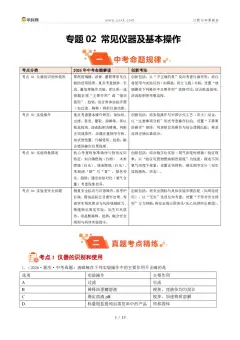
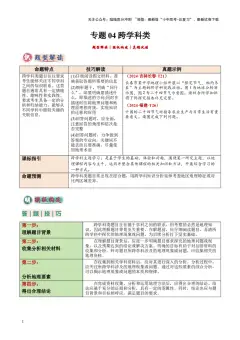
专题6 阅读回答问题


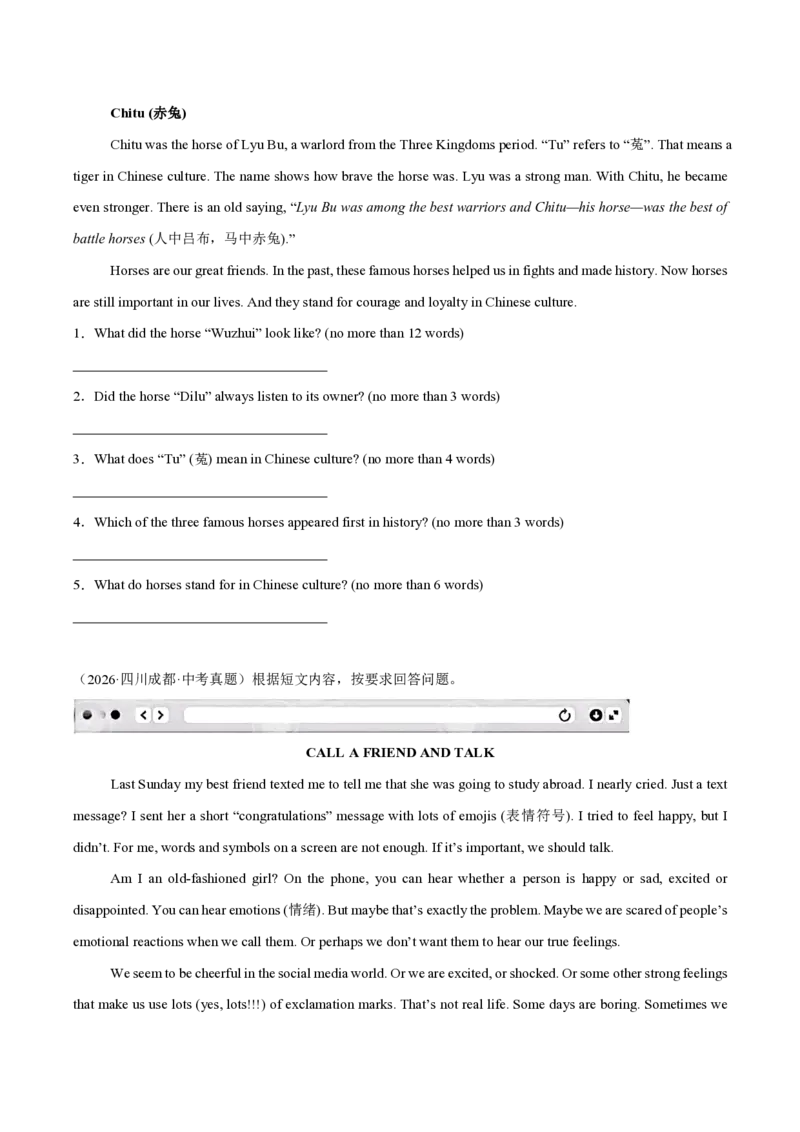
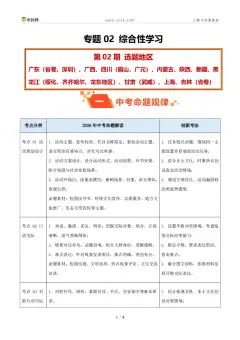
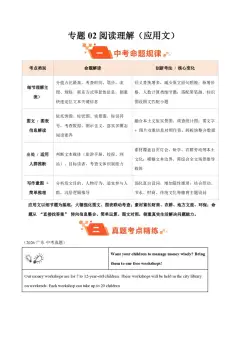
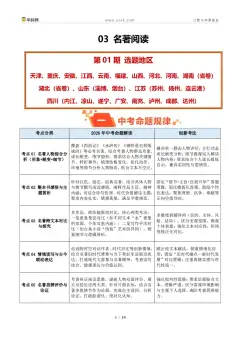
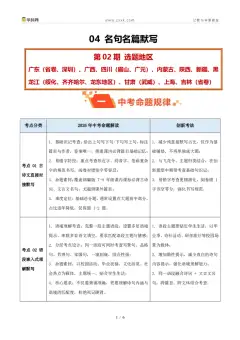
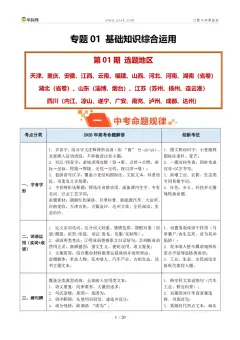
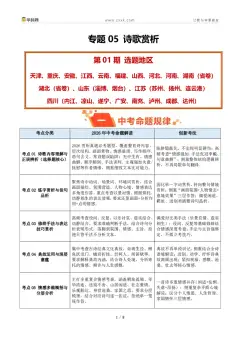
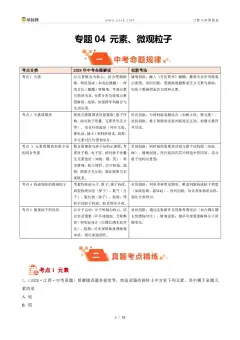
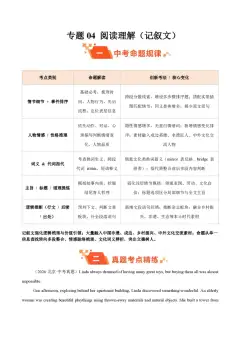
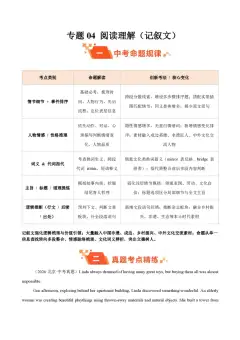
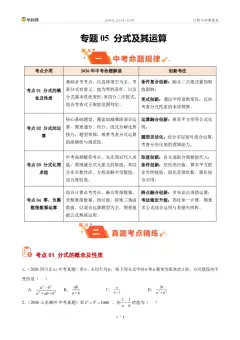
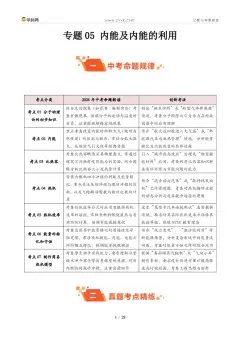
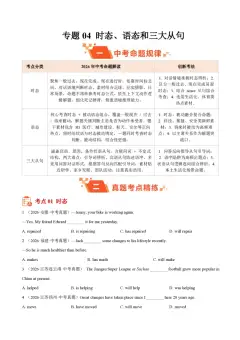
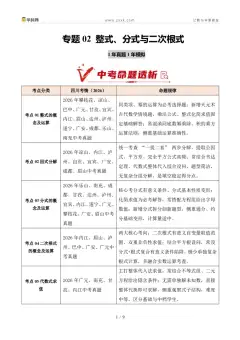
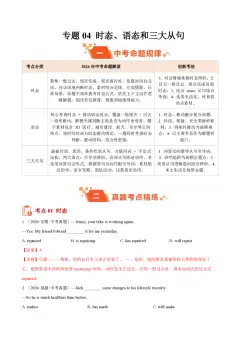
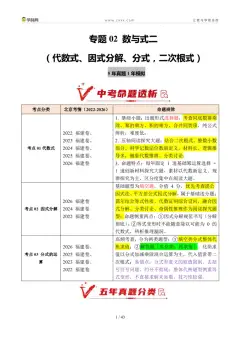
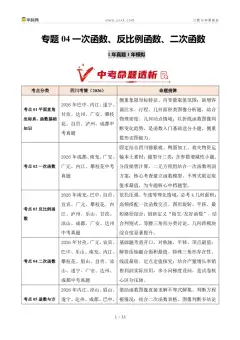
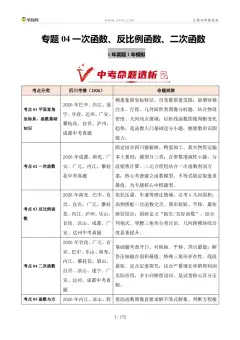
考点分类
命题解读
创新考法重点变化
基础细节题
(5W1H)
占比最高,考查时间、地点、人物、数据显
性信息检索,区分一般疑问句简答与特殊问
句完整作答
严格限定词数(3/5/15 词),拒绝
整句摘抄,需精简整合原文信息
概括推理题
考查主旨、段落作用、行为逻辑,需跨段整
合线索,浅层摘抄无法得分
多模态融合,搭配评论头像、数据
图表辅助推理,提炼核心观点
开放表达题(高
频压轴)
考查思辨与生活迁移,需观点 + 双理由支
撑,贴合学生成长、文化、环保主题
新增续写人物台词、举生活实例、
对比两种观点,强调个性化正向表
达
文化 / 跨学科综
合题
选材覆盖传统文化、科技、劳动实践,渗透
文化自信,兼顾多学科常识
中外文化对比设问,结合非遗、乡
村建设等本土素材,考查文化输出
表达
整体变化:弱化浅层定位,强化信息重构、规范书面输出,梯度分层明显,聚焦核心素养。
(2026·北京·中考真题)阅读短文,根据短文内容回答问题。
Being busy often seems important in today’s world. Full calendars, nonstop notifications (消息提醒), and long
to-do lists make it feel like progress is always happening. However, many people end their days very tired and wonder
why their big goals are still far away. The truth is that being busy is different from being effective: One fills time and
the other creates results. Understanding the difference is important because it helps you control your attention, make
smarter choices, and focus on what truly matters.
Busyness gives a false sense of achievement because it fills time with activity. Answering emails, attending
meetings, and checking off small tasks create the illusion (幻觉) of progress. However, activities of this kind often
have no real purpose and fail to move important goals forward. What’s more, busy people often let outside tasks take
over their time. As a result, they have little control over time, which leads to stress and little progress.
Effectiveness, however, is measured (衡量) by results, not activity. Rather than ask how much was done,
effective people ask what was achieved. They prioritise (优先考虑) tasks that create meaningful change, even if those
tasks require more focus and more effort. For example, they decide ahead of time what is worth their energy and then
prioritise their time for important work. This planned method reduces unnecessary tasks and creates space for deep,
focused effort.
The real cost of busyness lies not in time spent, but in progress lost. Being busy often hides the fact that little
of real value is being achieved. Effective people, on the other hand, often take a break from their work to check if
they are keeping to their goals. When you stop measuring your days by how full they are and start measuring them
by what truly moves you forward, work becomes more purposeful and life feels more satisfying.
1.Why is it important to understand the difference between being busy and being effective?

2.What is the result when busy people let outside tasks take over their time?

3.How does the planned method of effective people work?

4.What do you plan to do to be an effective student? Why? (Please give two reasons.)

(2026·广西·中考真题)Climate change is often talked about, yet the change of seasons—warmer winters and
hotter summers—may not be noticed because it happens very slowly. Studies show people don’t notice slow changes
easily. The story of Princeton is a good example.
In the past, Lake Carnegie froze every winter. People in Princeton could skate on the thick ice through winter.
However, around the 1970s, winters in Princeton started to become warmer. Now, the lake seldom freezes, so people
cannot skate on it every winter. But most people there didn’t connect this with climate change.
The real-life example helped researchers look for a better way to get people to notice slow changes brought
by climate change. In their research, they showed volunteers two different graphs (图表)—a temperature graph and a
lake-freezing graph. The temperature graph showed a fictional (虚构的) town’s rising winter temperatures over the
years. The lake-freezing graph showed whether the town’s lake froze each year. Both graphs showed the same climate
trend (趋势), but they made the volunteers feel differently. When the volunteers saw the lake-freezing graph, they felt
climate change was more serious, because they could directly see the lake didn’t freeze every year like before. This
helped them see the influence of climate change clearly. But when the volunteers saw the temperature graph, they
didn’t feel the same, because the graph failed to help them connect climate change with daily life.
With the help of what the research has found, we can actively notice slow changes in our daily life brought by
climate change. At the same time, we can also help the people around us notice them.
根据语篇内容,按要求回答问题。
1.What do studies show according to Paragraph 1?

2.When did winters in Princeton start to become warmer?

3.What did the researchers show to the volunteers?

4.What is the better way to draw public attention to climate change? (不超过15 个词)

5.What is the purpose of the text? (不超过15 个词)

(2026·河北·中考真题)阅读下面短文,简略回答问题。
Packing for a family holiday often feels like a rush to remember necessary things like socks or medicine.
However, for children, packing can be valuable because it helps them learn math in real life.
Counting is a basic math skill. Before they pack, children should first think about the activities in the holiday.
Different activities require different things. Then they will count the days about the trip and how many things they
will take. For example, if swimming is included, they may need to take swimming clothes. If the trip lasts seven days,
they will consider how many clothes they need. In this process (过程), they practice counting.
Sometimes, the suitcase is not big enough. After they fail to pack everything in, children quickly learn the
importance of space. They might try folding (折叠) their clothes in different ways to make them smaller. By trying
again and again, children start to understand something like volume (容积).
More importantly, the questions from adults can guide children toward deep thinking. For example, when the
mother sees her child put milk and clothes together, she may ask her child if it is OK to do so. The child has to
consider whether it is proper to pack that way. If not, the child will think about what the proper way is. Deep thinking
is what children need when they solve difficult math problems.
Learning math happens not only at a desk but also in other places. Therefore, when parents do housework,
children should try to take part if possible.
1.Why can packing be valuable to children?

2.What should children first think about before they pack?

3.When do children quickly learn the importance of space according to paragraph 3?

4.What can guide children toward deep thinking when they pack?

5.What other daily activities can help children learn math? Give one example and explain.

(2026·四川广安·中考真题)阅读下面短文,然后根据文章内容简要回答小题,并将答案写在答题卡上的
相应位置。
Seeing the Spirit of Horses
The year 2026 is the Year of the Horse. The pictures of horses can be seen here and there. Let’s learn about
some famous horses in history.
Wuzhui (乌骓)
Wuzhui was the horse of Xiang Yu, a warlord (将领) from the late Qin Dynasty (221—206 BC). The horse was
mostly black but its feet were as white as snow. Wuzhui was famous for its strength. It stayed with Xiang Yu for five
years, and they won many fights together. In the stories, Xiang Yu killed himself near the Wujiang River. The horse
followed him and jumped into the river too.
Dilu (的卢)
Dilu was the horse of Liu Bei, the founder of the Shu Kingdom (蜀国) in the Three Kingdoms period (220—
280). Dilu could run very fast, but sometimes it didn’t listen to its owner. So people thought it could be dangerous.
But in the stories, the horse saved Liu’s life by jumping across the Tanxi River. It was about 10 meters wide!
Chitu (赤兔)
Chitu was the horse of Lyu Bu, a warlord from the Three Kingdoms period. “Tu” refers to “菟”. That means a
tiger in Chinese culture. The name shows how brave the horse was. Lyu was a strong man. With Chitu, he became
even stronger. There is an old saying, “Lyu Bu was among the best warriors and Chitu—his horse—was the best of
battle horses (人中吕布,马中赤兔).”
Horses are our great friends. In the past, these famous horses helped us in fights and made history. Now horses
are still important in our lives. And they stand for courage and loyalty in Chinese culture.
1.What did the horse “Wuzhui” look like? (no more than 12 words)

2.Did the horse “Dilu” always listen to its owner? (no more than 3 words)

3.What does “Tu” (菟) mean in Chinese culture? (no more than 4 words)

4.Which of the three famous horses appeared first in history? (no more than 3 words)

5.What do horses stand for in Chinese culture? (no more than 6 words)

(2026·四川成都·中考真题)根据短文内容,按要求回答问题。
CALL A FRIEND AND TALK
Last Sunday my best friend texted me to tell me that she was going to study abroad. I nearly cried. Just a text
message? I sent her a short “congratulations” message with lots of emojis (表情符号). I tried to feel happy, but I
didn’t. For me, words and symbols on a screen are not enough. If it’s important, we should talk.
Am I an old-fashioned girl? On the phone, you can hear whether a person is happy or sad, excited or
disappointed. You can hear emotions (情绪). But maybe that’s exactly the problem. Maybe we are scared of people’s
emotional reactions when we call them. Or perhaps we don’t want them to hear our true feelings.
We seem to be cheerful in the social media world. Or we are excited, or shocked. Or some other strong feelings
that make us use lots (yes, lots!!!) of exclamation marks. That’s not real life. Some days are boring. Sometimes we
might be in low spirits but a chat with a good friend on the phone would cheer us up. Try it! You don’t have to talk
about how terrible you’ve been feeling. Just talk. If your friend takes time for you, you’ll feel so much better after
talking to him or her. And friendship is about sharing true emotions, the negative ones and the positive ones.
Comments
Sunny
Just relax yourself. You misunderstand your friend. A text message can’t be
more convenient. You can send it anytime and anywhere.
David
It matters which way to choose. If the thing is important, a simple text message
can’t show care between close friends. A warm call does, instead.
Tommy
Perhaps the way out is not to choose one side, but to find a middle ground.
Calls, messages and emojis—they’re there. Call me when you are free; text me
when busy.
Abby
Day and night, my phone shows me messages from my boss, workmates and
friends. Why don’t people call me? Anyway, I am totally on your side.
1.How did the writer feel when receiving the text message?

2.Why do some people avoid calling according to the writer?

3.What does the writer suggest doing in Paragraph 3?

4.Who would support the writer according to the comments?

5.Do you prefer to call or text your friend? Why? (Give one reason in your own words.)

(2026·重庆·中考真题)阅读下文并回答问题。
In a small village called Kangtou in Shandong, a special library named “Siyuan Library” has recently caught
people’s eyes. It was set up by Zhou Qinggui, who was awarded in the National Conference on Reading (全民阅读
大会) in 2026. Here are some notes from a reporter who interviewed Zhou Qinggui, Zhou’s father and a volunteer.
Born in a poor family, I was able to continue my education with the help of my family and
villagers. In 2019, when I returned to my hometown, I found there was no place for children to
read, and many of them spent too much time on entertainment (娱乐). Without college student
models to follow, they never dreamed big. I felt heartbroken. My hometown shaped me, and I
wanted to do something in return. Building a library to improve the cultural climate could be a
right step forward.
—Zhou Qinggui
I fully supported his idea of
building the library. Though some
neighbors didn’t understand in the
beginning, we never gave up. Now,
as a librarian, seeing children
reading here, I feel proud.
—Zhou Chenglin, Zhou’s
father
In 2021, Zhou and his six childhood friends raised
over 80,000 yuan to turn his old house into a library. I saw
its growth supported by many people. In the last five years,
it has collected more than 20,000 books from volunteers,
and Zhou’s university alumni ( 校友) have also been
invited to give talks here.
—Hu Feipeng, a volunteer
Siyuan Library has changed the village a lot. As village children pick up good study habits and confidence,
their parents also join them in reading in the library. In 2024, 14 local students entered college; in 2025, this number
rose to 34. Zhao Xiaoya is one of them, who once often read and studied in Siyuan Library and finally went to
university. When asked about the library, Zhao Xiaoya said, “ ”
1.Was Zhou Qinggui born in a poor family?

2.How many books has the library collected in the last five years?

3.What made Siyuan Library a success?

4.What would Zhao Xiaoya say? Finish the ending. (about 30 words)

(2026·黑龙江齐齐哈尔·中考真题)Among the most famous Chinese paintings, there’s a very long painting
of horses called One Hundred Horses. To many people’s surprise, it was painted not by a Chinese artist but an Italian
named Giuseppe Castiglione. He was better known in China by his Chinese name, Lang Shining.
In 1688, he was born in Milan, Italy. When he traveled to Beijing in 1715, he was invited to work as an artist.
By then, he had already made a name for himself because of his special style putting Western and Chinese painting
methods together. The things in the paintings appeared lifelike.
In 1724, Emperor Yongzheng asked him to paint One Hundred Horses on silk nearly eight meters long. It was
no easy task. Once the brush is placed, there is no going back. He first practised on paper over and over again. After
carefully planning, he copied the best piece onto silk, little by little. It took him four years to finish the painting. The
one hundred horses are in different poses. Some stand quietly, while others run, walk, drink water or even fight.
The painting’s large size alone is enough to shock the viewers. A closer look, however, may surprise you
further. He skillfully painted the trees, horses and people, yet they were all painted with a Chinese brush. In One
Hundred Horses, humans and nature live side by side in peace, and so do Eastern and Western aesthetics (美学).
Perhaps this perfect balance is why Emperor Qianlong liked it so much.
根据语篇内容,回答问题。(1-3 题答案不超过5 个词,4 题答案不超过10 个词,5 题答案不超过20 个
词。)
1.Who painted One Hundred Horses?

2.What was he famous for?

3.When did he finish One Hundred Horses?

4.What did he do before painting on silk?

5.What do you think of the painter? Why? (Please give one reason.)

(2026·湖南·中考真题)阅读下面短文,根据短文内容回答问题并翻译画线部分。
Dear Mr. Lee,
I’m writing to express my thanks to you. When I was in junior high school, I often failed
exams. But you never gave up on me. Instead, you always encouraged me to find my real interest.
Because of you, I found I was good at repairing things.
After graduation, I decided to major (主修) in car repair. But my parents didn’t agree.
After knowing about it, you came to my home and had a long talk with my parents. To my
surprise, they changed their mind and supported me. You would never know how thankful I was
at that time. I still remember your words, “All roads lead to Rome.”
Now, I am a student in a vocational and technical (职业技术的) college. At the very
beginning, I had trouble with my studies. Luckily, the teachers here also helped me. I made great
progress after studying hard. Last month, I took part in a national competition. To prepare for it,
I had lessons during the day and attended a skill training program at night. I used to be too weak
to carry heavy car parts. But now I am able to do it after the training. In the end, I won the first
prize in this competition. Many people think that repairing cars is a job for men, but I believe
women can do it as well as men.
If possible, I will try out for an international competition one day. Thank you again for
bringing out the best in me.
Yours,
Judy
1.What was Judy good at in junior high school?

2.Who did Mr. Lee have a long talk with?

3.When did Judy take part in a national competition?

4.Do you want to learn from Judy? Why or why not?

5.将短文中画线部分翻译成中文。

(2026·吉林·中考真题)A couple, Bob and Mary, went on a journey to China. They first arrived in Jilin
Province this June.
When the couple got to Yanji City, they wanted to eat Yanbian specials at a popular restaurant. The waiter
told them that they didn’t have to wait there because they could wait online. They took a number on an APP (应用
软件) and checked it on the phone to see if it was their turn. The couple went shopping during the waiting time. And
then they enjoyed the meal.
Three days later, the couple went to Changbai Mountain by bus. It was raining when they got there. Because
of the bad weather, Mary wanted to give up. But Bob encouraged her to continue to climb. After a while, the sun
came out through the dark clouds. The trees and flowers along the way were shining in the sun. With hard work and
great luck, they reached the top and saw Tianchi Lake. “How beautiful Tianchi Lake is! The beauty is totally beyond
words!” Mary said excitedly.
Bob and Mary got to Changchun City on June 20th. They bought paper cuttings at Xinmin Street Night Market.
They also saw a robot making a milk shake and talking with the customers like a human.
Technology makes a difference to the couple’s journey. They can’t wait to experience more of China.
根据短文内容,回答下列问题。
1.Where did the couple eat Yanbian specials?

2.How did the couple go to Changbai Mountain?

3.Why did Mary want to give up climbing?

4.When did the couple get to Changchun City?

5.What makes a difference to the couple’s journey?

(2026·内蒙古呼和浩特·中考真题)阅读短文,根据短文内容,完成下列各题。
Rain drummed on the window as Sam looked at the empty street outside. His friends were busy with soccer
practice and piano lessons, and he had no plans for the afternoon. He felt bored, then opened his notebook and wrote:
“Plan B: Creativity.” He could paint or learn a new skill from a how-to video.
First, Sam cleared a small place for painting in the living room. He laid a piece of watercolour paper on the
table, mixed blue and green colours, and painted a quiet lake. The painting wasn’t perfect, but at least he tried a new
way of painting. And he liked the way the colours flowed together.
Next, he found an old guitar in the corner. He hadn’t played it since two years ago, but after he practised for a
few minutes, he could play it smoothly. A cheerful sound filled the room. He was surprised to find that he had just
created a new piece of music.
In the evening, Sam’s mother asked him how the day was. “Plan B was a success,” he replied with a smile. He
learned that rainy days can become chances if you choose to fill them with small, creative tasks.
1.Why did Sam choose “Plan B”? (Please give two reasons.)

2.What did Sam create in the afternoon?

3.Use a sentence in the text to explain what “Plan B” means to Sam.

4.Write down a different and creative activity you would like to do on a rainy day. Why is it creative?

(2026·广东·中考真题)
请阅读下面的短文,根据所提供的信息,回答五个问题,并将答案写在答题卡对应题目的答题位置上。要
求所写答案语法正确、信息完整切题。
To celebrate Labor Day, a photo show was held in a community this month. It started from May 1st and
lasted for 10 days.
All the photos on show were about ordinary (普通的) workers in the community. Behind each
p
h
oto there was a happy worker doing his or her daily job. A pancake maker was laughing, with flour (面粉
all over his hands. A driver was helping an elderly lady get off the bus — warm smiles were on their
faces.
The photos were taken by Chen Hang, a young man who lived in the community for five years.
He spent nearly a month walking around the neighborhood with a camera. His idea was simple — to
record the smiles of ordinary workers. He “collected” 100 smiling faces. The photos greatly touched him
and he decided to share the touching moments in the photos with more people. So he went to the
community center for help. The volunteers there organized his photos and turned them into a show for
the Labor Day celebrations.
The show drew people in the community, including the “models,” to stop and watch. They were
excited to recognize the familiar faces in the photos. They felt happy with the photo show and thankful
to Chen Hang. “Without these photos, we may not know how beautiful we are at work,” one of the
“models” said.
1.How long did the photo show last?
_______________________________________________________________________________
2.Who was helping the elderly lady get off the bus in one photo?
_______________________________________________________________________________
3.What did Chen Hang want to record?
_______________________________________________________________________________
4.Where did Chen Hang go for help?
_______________________________________________________________________________
5.Were the people satisfied or disappointed with the photo show?
_______________________________________________________________________________