专题55 语法填空二轮传统文化专辑 原卷版
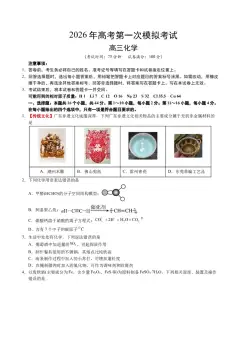
钧瓷+药膳面包+发酵工艺+宣威火腿+瑞典牛肉拉面
【01】(2026·河南信阳·三模)阅读下面短文,在空白处填入1 个适当的单词或括号内单词的正确形式。
Yang Yongchao runs his fingers over a vase, whose surface shines in shades of purple and blue, like a sunset
1     (reflect) gracefully in water. “This one will go to London,” he says with a smile.
Yang grew up in a small Henan town famous for Jun porcelain (钧瓷).     2     (remarkable), he chose
this career path himself at a time when most young people sought careers in cities. “In my childhood, watching my
father work     3     (draw) me in,” Yang recalls. Childhood curiosity gradually evolved     4     a lifelong
career.
Yet mastering the craft is no simple task.     5     fascinates him most is how the fire transforms the
glaze (釉) into something unexpected. This very fascination has carried him through countless failures. His     6
(pursue) of the perfect post-rain blue took over a hundred attempts before finally succeeding.
Such dedication also creates connections beyond languages. Yang once guided     7     American
collector in shaping a vase. To the collector’s delight, it emerged from the kiln (窑) with a rare purple. That vase
still sits on her desk, and she never tires of sending him     8     (photo) captured from every possible angle.
Yang has authored a book and teaches international students, thus     9     (spread) this Chinese craft
globally. When asked about the secret, he says, “It’s not just skill,     10     a conversation with the clay, the
fire, and anyone who holds the piece. That is the real magic of Jun porcelain.”
【02】(25-26 高二下·安徽马鞍山·月考)阅读下面短文,在空白处填入1 个适当的单词或括号内单词的正
确形式。
The heartwarming phrase “Love you, good old self”     1     (sweep) across Chinese social media since
late 2025, drawing widespread attention. Its popularity has led people to refer to themselves as “Old Self” ,     2
friendly nickname that allows one to step back and speak to oneself with the kindness usually reserved for a close
friend. By addressing oneself as an “old friend,” young people     3     (gentle) remind themselves to pause and
practice self-kindness in daily life.
This expression     4     (include) in the “Top 0 Internet Buzzwords of 2025” released last month.
Researchers interpret it as a response     5     the intense pressures facing today’s youth.
Professor Liu Haihua from Peking University explains that the core lies not in escaping challenges,     6
in building inner strength through small acts of kindness. Young people have realized     7     they truly need is
self-approval. This trend represents a healthy psychological turn     8     (root) in the embrace of our own
emotional state.
From the earlier “Sang culture”,     9     was a trending word to reflect a lack of self-motivation felt by
Chinese young people, to “Buddha-like youth,” then to “lying flat,” and now to “love you, good old self,” the world
is witnessing a grand emotional reconciliation among Chinese youth who find      10      (relieve) in digital
spaces. Chinese young people not only engage in self-healing by creating and spreading memes like “love you,
good old self,” but they also form new emotional support networks.
【03】(25-26 高二上·重庆北碚·期末)阅读下面短文,在空白处填入1 个适当的单词或括号内单词的正确
形式。
In Yangzhou, a city in Jiangsu Province, young people are rushing to a local traditional Chinese medicine
(TCM) hospital, not for medical care, but for bread. Since early April, the hospital    1    (gain) local fame for
its special series of breads containing Chinese medicinal herbs.
The herbal bread series,   2     (develop) by the Preventive Treatment Center of the hospital, combines
culinary (烹饪的) innovation with wellness culture and it has attracted health-conscious youth as well as food    3
(enthusiast). “The idea came from observing the growing demand among young people for healthier lifestyles and
foods    4    can address health problems,” said Chen Wei, deputy director of the center.
“TCM dietary therapy is a vital part of preventive healthcare. By making ancient wisdom    5    (access)
and delicious, we hope to encourage younger generations to embrace comprehensive wellness. These breads follow
the rising trend of wellness-focused diets,    6    (particular) for those experiencing issues like tiredness or weak
immunity. They are in line    7    TCM’s philosophy of ‘preventive treatment’ — solving health problems
before they appear,” Chen explained.
   8    (perfect) the recipes, the team experimented with different methods, such as boiling herbs into
liquid blends for dough. After months of trials, six varieties of bread were launched, priced at    9    average of
10 yuan a piece. At first, sales     10     (limit) to a short period each afternoon. However, the subtle herbal
aroma (香味) and unique flavors quickly won praise from customers. The bread often sold out within minutes.
【04】(25-26 高二上·浙江杭州·期中)阅读下面短文,在空白处填入1 个适当的单词或括号内单词的正确
形式。
In 2010, the UN Department of Global Communications instituted language days for each of the
organization’s six official languages. The goal was two-fold:     1     (celebrate) cultural diversity as well as to
promote the equal use of all six tongues.
Language is the     2     (carry) of communication, the bridge of interaction between nations,   3

the bond of understanding among civilizations. At the same time, a language and its individual     4     (write)
forms make up the “soul” of a nation’s cultural tradition. Every language is worthy of respect and should     5

(treat) equally.
The UN Chinese Language Day not only provides     6     unique platform for the world to better
understand China, but also promotes language and cultural exchanges in the world.
Today, more than 70 countries     7     (include) the Chinese language in their education systems.
Chinese plays an increasingly important role in     8     (improve) communication and cooperation between
China and the rest of the world.     9     more and more foreigners start to study the Chinese language and
experience Chinese culture, the world will have a better understanding of China and its rich history, its hard-
working people, its development through innovation, and its inclusiveness. China, on its part, will also embrace the
world with greater openness and make new contributions     10     the international community.
【05】(25-26 高三下·重庆渝中·月考)阅读下面短文,在空白处填入1 个适当的单词或括号内单词的正确形
式。
Eating more fibre,     1     fibre maxxing, may be the hottest new dietary trend of 2026. Is it worth
chasing?
Fibre can stop digestive enzymes ( 酶) from reaching rapidly broken down foods, such as sugar and fat,
preventing too much from     2     (absorb) by the body. What’s more, some water-soluble (水溶) fibre helps
trap harmful compounds, ensuring more end up in the toilet than in your blood.     3     (study) show that the
more fibre you eat, up to 25-30g a day, the lower the risk of cancer, diabetes and heart disease.    4      benefits
continue to increase at higher intakes is less clear.
One risk, though, is getting those 30g from an imbalanced diet. Half a loaf of wholemeal bread can get you
close to the     5     (recommend) daily amount of fibre, but it lacks many of the vitamins and minerals that
6     (be) present in the greens, and also contains less of the soluble kinds of fibre.
A more     7     (sense) approach is to eat a mix of plant-based foods. A research review found that the
health benefits from eating more fruit and vegetables increase up to 800g a day, at     8     point they level off.
Sueh variety helps meet fibre goals without sacrificing essential nutrients.
If you’ve consumed below 10g per day most of your life, start slowly. Increase intake     9     3-5g every
few days, starting with fibre that has already been partially broken down, which the body finds     10     (easy)
to digest.
【06】(2026·山东日照·一模)阅读下面短文,在空白处填入1 个适当的单词或括号内单词的正确形式。
Food has long been regarded as the soul of Chinese culture. And Chinese cuisine, which is renowned for its
diversity and philosophical     1    (deep), holds the ancient art of fermentation (发酵) in particularly high
regard. This transformative process serves not only as a practical method of preservation but also as a     2

(base) technique for unlocking complex flavor profiles. Over the past thousands of years, this traditional food-
making method, carried forward like a living heritage,     3    (pass) down from generation to generation,
shining brightly in the long river of Chinese food culture.
Beyond everyday seasonings     4     soy sauce and vinegar (醋), which are themselves products of
fermentation, more distinctive creations can be found. Southern cuisines, such as    5      of Guangdong, rely
on fermented seafood or beans to form the essential flavorful foundation for numerous dishes. In Sichuan, paocai
(pickled vegetables) provides a sharp counterpoint to the region’s fiery chilies, thus     6    (create) a thrilling
yet balanced taste sensation.
The most iconic example is perhaps fermented tofu (furu),     7     humble beancurd is transformed by
microbes ( 微生物) into a product with a creamy texture and a cheese-like flavor. This tasty food,     8

enjoyed as a fragrant, flavor-packed seasoning or as a steaming, delicious street snack,     9    (reflect) a core
cooking principle: transforming simple ingredients into lasting sources of taste.
Indeed, fermentation represents where microbiology meets gastronomy. To explore them is to taste an
essential pillar of China’s food heritage— one     10    (preserve) through time and folk wisdom.
【07】(2026·湖北孝感·二模)阅读下面短文,在空白处填入1 个适当的单词或括号内单词的正确形式。
Every year, from Frost’s Descent to the Beginning of Spring, farmers and factories in Xuanwei, Yunnan,
enter their busiest season for curing hams. Amazingly,     1     started as a family custom linked to the farming
calendar has grown into a culinary treasure and a powerful engine for local     2     (economy) development.
    3     one of China’s three most famous ham varieties, alongside Jinhua and Rugao, Xuanwei ham
boasts     4     history of nearly 1,000 years. Thanks to its unique ingredients, craftsmanship and climate, it
perfectly combines ancient techniques with modern industry. It is made through a very careful process: producers
choose hind legs from local Wujin pigs,     5     are then salted, stacked, pressed and dried. The hams ferment
(发酵) naturally in the region’s special highland climate, maturing until the next Mid-Autumn Festival.
    6     (know) for its rose-red lean meat, ivory-white fat and delicate flavour, Xuanwei ham enjoys great
7     (popular) at home and abroad. Today, this seasonal craft has developed into a booming industry. In 2024,
8     (it) output reached about 70,000 metric tons, accounting for more than one-third of China’s ham market and
9     (secure) its role as a cultural symbol and an economic engine.
Furthermore, Xuanwei ham also boosts tourism and agriculture. New ham-themed resorts have attracted over
240,000 visitors, and a national agricultural park     70     (expect) to benefit tens of thousands of local
residents.
It is a key to rural vitalization, proving that tradition, with patience and innovation, can nourish the future.
【08】(2026·河南开封·二模)阅读下面短文,在空白处填入1 个适当的单词或括号内单词的正确形式。
Traditional Chinese Medicine (TCM), with a history of more than 2,000 years,     1    (gain) increasing
recognition worldwide in recent decades.     2    (originate) in ancient China, this medical system is based on
the philosophy of balance between yin and yang, as well as the flow of qi (vital energy) through the body’s
meridians (经络).
What makes TCM particularly fascinating is its systematic approach     3     health. Unlike Western
medicine,     4     often focuses on treating specific symptoms. TCM examines the body as an integrated
whole. Practitioners believe that illness occurs when there’s     5     imbalance in the body’s natural harmony.
In 2019, TCM received a significant boost when the World Health Organization     6    (include) it in its
influential International Classification of Diseases. This recognition marked a milestone in TCM’s journey toward
global    7     (accept).
Today, TCM     8    (clinic) are found in many countries outside China. People worldwide are     9
(gradual) turning to TCM treatments such as acupuncture (针灸) and herbal medicine. As globalization continues,
the integration of Eastern and Western medical approaches may lead to     10    (innovate) solutions for
healthcare challenges in the future.
【09】(25-26 高三下·河北保定·开学考试)阅读下面短文,在空白处填入1 个适当的单词或括号内单词的
正确形式。
Joan Deslandes, head of Kingsford Community School in East London, stressed the     1      (important)
of learning the Chinese language and culture at the awards ceremony for the winners of the Chinese Proficiency
Competition — Chinese Bridge. She said, “China is playing a     2     (remarkable) great role in the world. It's
key for young people to understand Chinese traditional culture and so is learning the language.”
The competition, which     3     (hold) online earlier this year, attracted close to 500 students from
across the UK. Joan also pointed out that many young people in Britain were still unfamiliar     4     China's
long history and rich culture. She believed that learning Chinese would greatly benefit their personal     5

(grow).
In 2000, Kingsford became the first school in the UK     6     (make) Chinese part of its regular courses.
The school has created an environment     7     students can practice Chinese in their daily routine, during
which they showed great talents, including singing Chinese songs, performing traditional dances, and    8

(play) Chinese musical instruments.
Suzanne Haigh, head teacher of Kensington Wade School,     9     (share) her view, “As China continues
to hold a key position on the world stage, our children need to gain many skills, including knowledge of the
Chinese language and culture,     10     will help them stay connected in the future.”
【10】(2026·甘肃·一模)阅读下面短文,在空白处填入1 个适当的单词或括号内单词的正确形式。
With the delicious smell of beef soup and the smooth moves of a noodle-pulling chef, Ox Lan draws in a lot
of people. Located in Stockholm, Ox Lan was started by Zhou Yan from Gansu province. For him, Ox Lan is more
than just a business — it is about sharing a Chinese tradition     1     the world.
During a trip to Stockholm in 2023, Zhou felt something was missing from the city’s     2    (color)
Asian food market: Japanese ramen and Vietnamese pho were easy     3     (find), but Chinese noodles were
not.
Zhou saw a chance to introduce Swedes to Lanzhou beef noodles and began making preparations. He studied
local business rules, hired     4     experienced noodle-pulling chef     5     had mastered the art of hand-
pulling noodles, and     6     (open) Sweden’s first Lanzhou beef noodles restaurant.
The restaurant quickly became popular, and 70     7     (percent) of customers are Swedish. They are
very     8     (interest) in how hand-pulled noodles     9    (make). Zhou explained that local people are
used to ramen and pho. But those foods are often pre-made. So,     10     (see) dough (生面团) turn into
noodles right in front of them is a new experience.
Zhou’s beef noodles have become a hit on the Internet. Local influencers often post videos of the hand-
pulling skills, making the restaurant a cultural ambassador(使者).
【11】(25-26 高二下·河北保定·开学考试)阅读下面短文,在空白处填入1 个适当的单词或括号内单词的
正确形式。
Homan Tsui, a chef from Macao, partnered with Chang Longshan, a chef from Beijing,     1     (design)
a menu rooted in regional traditions while exploring contemporary expression.     2     the cooperation
highlighted was not only the geographic diversity but also a     3     (share) culinary (烹饪的) philosophy
centered on respect for ingredients and innovation rooted in tradition.
Tsui, a Hong Kong native     4     more than 20 years of professional experience, is widely regarded as
5     representative figure in the modern interpretation of Lingnan cuisine. Sticking to the principle of “eating in
season”, he is known for     6     (skillful) integrating traditional Cantonese techniques with modern flavor
profiles (简介) to re-energize the region’s long-established culinary heritage. Chang, from Liaoning Province,     7
(commit) himself to researching and reimagining fishermen’s cuisine from the Liaohe River estuary since the
1990s.
United by common culinary values, the two chefs brought complementary (互补的)     8     (approach)
in technique and seasoning (调味品). As a result, most dishes on the menu were co-created, reflecting their distinct
understanding of ingredients.
The north-south dialogue was     9     (evidence) from the opening dishes. One standout dish, “Bohai
Sea Bay double delicacy with yellow rice wine”, combined Chang’s chilled Dandong clams (蛤蜊) with Tsui’s rice-
wine-infused spotted Babylon snails,      10      (use) yellow rice wine as a unifying element to integrate two
expressions of taste.
【12】(25-26 高二上·内蒙古鄂尔多斯·期末)阅读下面短文,在空白处填入1 个适当的单词或括号内单词
的正确形式。
In Milan, a restaurant is attracting local people with an     1     (maze) mix; Chinese braised (红烧)
food served with Italian wine.
At ZioZio, many Italians are discovering the flavors ( 味道) and traditions behind Sichuan-style Chinese
braised cuisine ( 菜肴). As a     2     (describe) of Sichuan’s wet climate suggests, the use of Sichuan
peppercorns (花椒粒) have shaped     3     unique preference for numbing, spicy and aromatic flavors.
Wang Haoran and Zeng Xiaotang, two young art     4     (graduate), founded ZioZio after completing
their studies in Italy. “By combining Chinese braised dishes     5     Italian red wines, we hope to inspire new
flavor and introduce more people to the richness of China’s food cultures.”
“    6     (obvious), more authentic (地道的) Chinese cuisines have appeared in Italy and Europe,     7
not only enriches the local market but also has a positive effect on the     8     (economy) exchanges. I’ ve
never been to China, but now I     9     (attract) to this great country,” says a customer.
For years, Chinese cuisine abroad often meant fried rice or sweet-and-sour pork. Right now, Chinese
restaurant owners of a new generation     10     (change) that view. Authentic Chinese cuisine is more than
food: it is a bridge between cultures too, allowing the world to see the true richness of Chinese culture.
【13】(2026·广东汕头·一模)阅读下面短文,在空白处填入1 个适当的单词或括号内单词的正确形式。
In a classroom    1    (temporary) decorated into a tea space, Ye Hanzhong, a national-level
representative inheritor of gongfu cha, patiently taught students the steps of brewing tea ( 沏茶) . With each step,
from teapot handling to serving, the techniques and the hidden values    2    (display). From water temperature
and timing to the proper way of serving, Ye spoke with the same rhythm as tea itself— careful,    3
(attention), unhurried.
He introduced the students to a    4    (simplify) system refined from the tradition’s 21 classic
movements. The demonstration of brewing and sharing offered a practical entry point into a centuries-old practice
without losing the essence of gongfu cha. Yet, the lesson went far    5    tea. In Ye’s telling, gongfu cha is a
quiet philosophy of life: the discipline of striving for precision and the    6    (wise) of harmony. And the
ceremony’s most heartfelt moment came    7    students served the tea to their teachers, which is    8
silent yet deep expression of respect and gratitude.
Rooted in everyday life, gongfu cha has always belonged to the people,    9    (enrich) daily moments
with warmth and connection. Today, it is finding new pathways into classrooms and younger generations, as it
moves beyond its origin to touch a     10     (wide) world.
【14】(25-26 高一下·全国·课后作业)(2026·广东汕头·一模)阅读下面短文,在空白处填入1 个适当的
单词或括号内单词的正确形式。
Chinese are the first p   eople to have tea. One thousand and two hundred years ago, Lu Yu wrote a book
1     (call) The Classic of Tea. The book gives a detailed     2     (explain) of the origin, the processing skills
and the classification of tea.
However, Chinese tea culture goes far beyond tea     3     (it). Take green tea for instance, and the ideal
temperature of the water should be around 80℃. If the water is too hot, nutrients ( 营养) in the tea will     4

(destroy) . On the other hand, if the water is not hot enough, the tea     5     (leaf) won’t open and you will miss
the pleasantly fresh flavor. So Chinese people are used     6     drinking hot tea. When you visit a Chinese
friend, your friend will     7     (constant) add hot water to your empty teacup. It is polite     8     (offer)
the teacup to guests with both hands. Of course, the guests should pay respect as well,    9    (take) the teacup
with both hands.
Talking about adding water to the teacup, there is     10     saying: Wine full, full cup. Tea half, half cup.
For wine, the full cup symbolizes whole heartiness. For tea, the half cup means modesty.
【15】(2026·江苏·二模)阅读下面短文,在空白处填入1 个适当的单词或括号内单词的正确形式。
China is widely recognized as    1    noodle paradise. Shanxi Province, in particular, is known as the
home of wheaten food in China. As an American exchange student, my first encounter with noodles was in Shanxi.
Everyone knows that noodles    2    (be) the king of Shanxi cuisine. There are about 300 kinds of noodles,
among    3    my favorite is sliced noodles. You can find a bowl of sliced noodles in almost every part of
China.
Once, in a restaurant, I ordered sliced noodles and was lucky enough    4    (watch) the cook make them
5    the kitchen window. I was amazed to see the cook shave the noodles so quickly! When I tasted them for the
first time, I felt extremely happy.
Later, I tried to make sliced noodles    6   (I). The more I practiced, the harder it seemed. But when I got
the angle right, it became much    7   (easy). In fact, cooking sliced noodles requires many skills. The first step
is the    8    (prepare) of the dough. After that, let it rest for 5 to 10 minutes. Then, you cut the noodles by    9
(move) the knife up and down. Finally, cook them in hot water for 5 minutes.
People love sliced noodles not only for their special taste     10     also because the making process is an
art form.