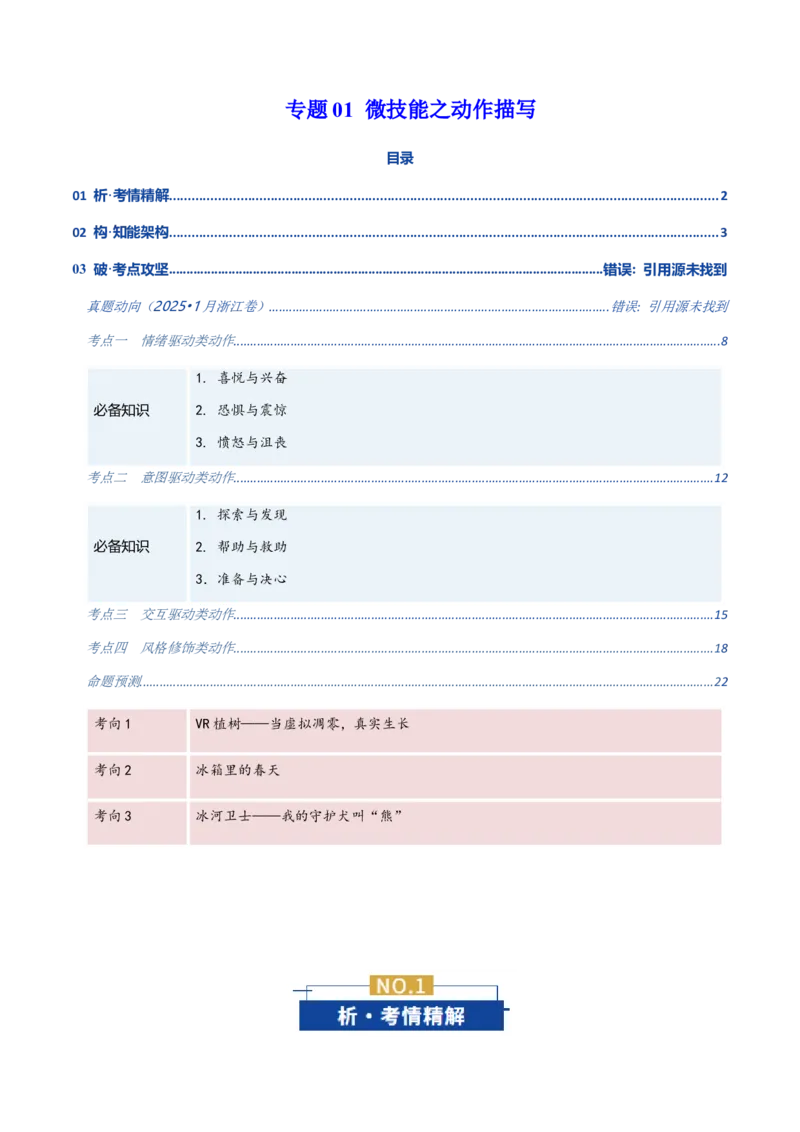
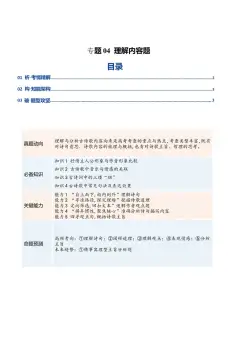
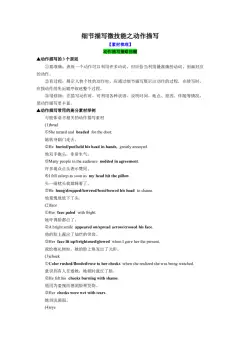
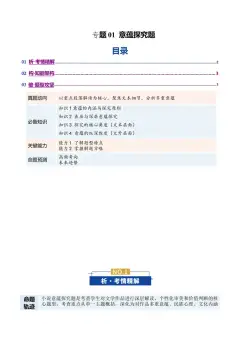
专题01 微技能之动作描写
目录
01 析·考情精解..................................................................................................................................................2
02 构·知能架构..................................................................................................................................................3
03 破·考点攻坚............................................................................................................................错误: 引用源未找到
真题动向(2025•1 月浙江卷).....................................................................................................错误: 引用源未找到
考点一  情绪驱动类动作.................................................................................................................................................8
必备知识
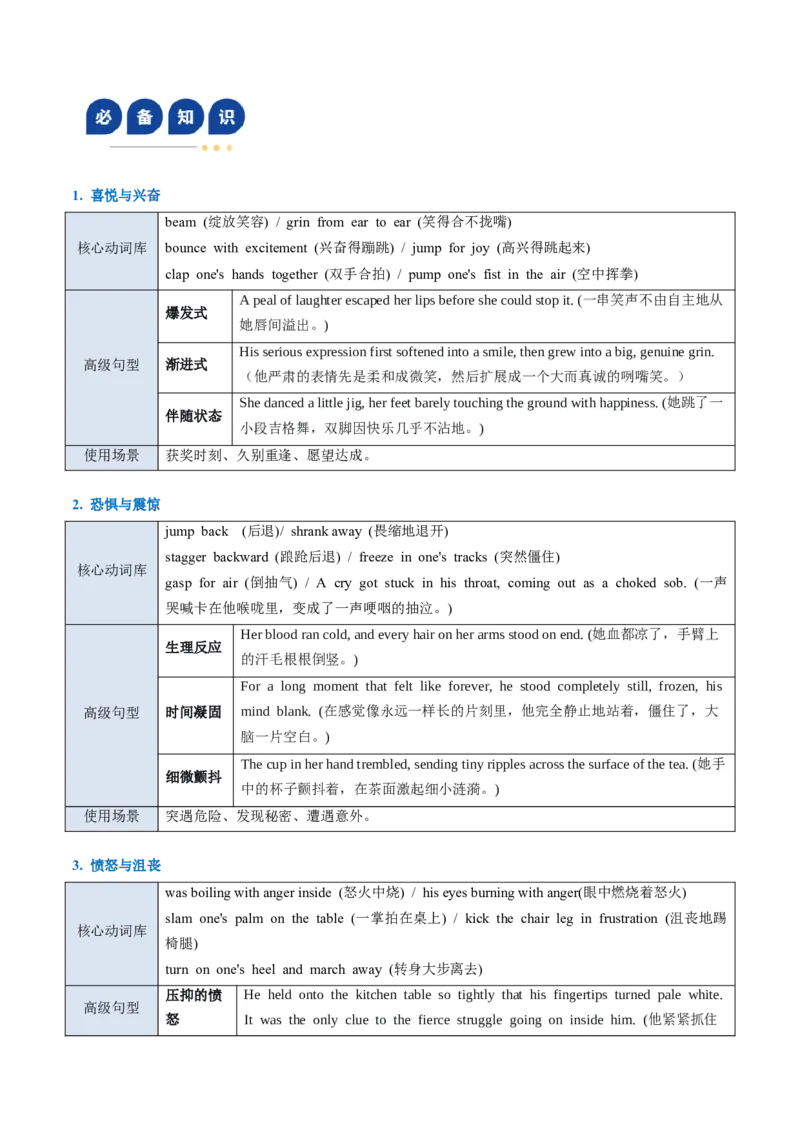
1. 喜悦与兴奋
2. 恐惧与震惊
3. 愤怒与沮丧
考点二  意图驱动类动作...............................................................................................................................................12
必备知识
1. 探索与发现
2. 帮助与救助
3.准备与决心
考点三  交互驱动类动作...............................................................................................................................................15
考点四  风格修饰类动作...............................................................................................................................................18
命题预测...........................................................................................................................................................................22
考向1
VR 植树——当虚拟凋零,真实生长
考向2
冰箱里的春天
考向3
冰河卫士——我的守护犬叫“熊”
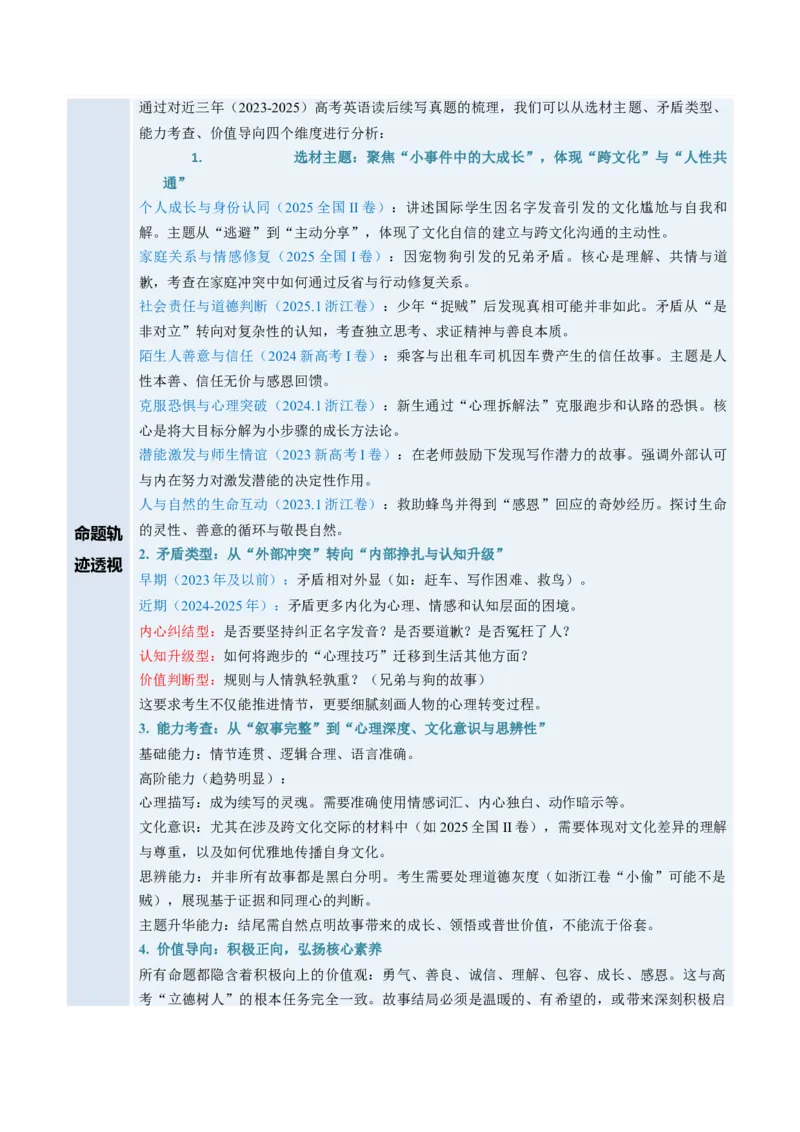
命题轨
迹透视
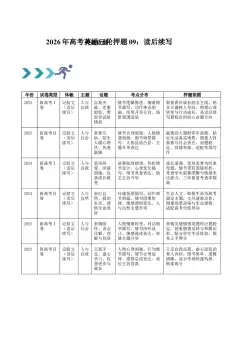
通过对近三年(2023-2025)高考英语读后续写真题的梳理,我们可以从选材主题、矛盾类型、
能力考查、价值导向四个维度进行分析:
1.
选材主题:聚焦“小事件中的大成长”,体现“跨文化”与“人性共
通”
个人成长与身份认同(2025 全国II 卷):讲述国际学生因名字发音引发的文化尴尬与自我和
解。主题从“逃避”到“主动分享”,体现了文化自信的建立与跨文化沟通的主动性。
家庭关系与情感修复(2025 全国I 卷):因宠物狗引发的兄弟矛盾。核心是理解、共情与道
歉,考查在家庭冲突中如何通过反省与行动修复关系。
社会责任与道德判断(2025.1 浙江卷):少年“捉贼”后发现真相可能并非如此。矛盾从“是
非对立”转向对复杂性的认知,考查独立思考、求证精神与善良本质。
陌生人善意与信任(2024 新高考I 卷):乘客与出租车司机因车费产生的信任故事。主题是人
性本善、信任无价与感恩回馈。
克服恐惧与心理突破(2024.1 浙江卷):新生通过“心理拆解法”克服跑步和认路的恐惧。核
心是将大目标分解为小步骤的成长方法论。
潜能激发与师生情谊(2023 新高考I 卷):在老师鼓励下发现写作潜力的故事。强调外部认可
与内在努力对激发潜能的决定性作用。
人与自然的生命互动(2023.1 浙江卷):救助蜂鸟并得到“感恩”回应的奇妙经历。探讨生命
的灵性、善意的循环与敬畏自然。
2. 矛盾类型:从“外部冲突”转向“内部挣扎与认知升级”
早期(2023 年及以前):矛盾相对外显(如:赶车、写作困难、救鸟)。
近期(2024-2025 年):矛盾更多内化为心理、情感和认知层面的困境。
内心纠结型:是否要坚持纠正名字发音?是否要道歉?是否冤枉了人?
认知升级型:如何将跑步的“心理技巧”迁移到生活其他方面?
价值判断型:规则与人情孰轻孰重?(兄弟与狗的故事)
这要求考生不仅能推进情节,更要细腻刻画人物的心理转变过程。
3. 能力考查:从“叙事完整”到“心理深度、文化意识与思辨性”
基础能力:情节连贯、逻辑合理、语言准确。
高阶能力(趋势明显):
心理描写:成为续写的灵魂。需要准确使用情感词汇、内心独白、动作暗示等。
文化意识:尤其在涉及跨文化交际的材料中(如2025 全国II 卷),需要体现对文化差异的理解
与尊重,以及如何优雅地传播自身文化。
思辨能力:并非所有故事都是黑白分明。考生需要处理道德灰度(如浙江卷“小偷”可能不是
贼),展现基于证据和同理心的判断。
主题升华能力:结尾需自然点明故事带来的成长、领悟或普世价值,不能流于俗套。
4. 价值导向:积极正向,弘扬核心素养
所有命题都隐含着积极向上的价值观:勇气、善良、诚信、理解、包容、成长、感恩。这与高
考“立德树人”的根本任务完全一致。故事结局必须是温暖的、有希望的,或带来深刻积极启
示的。
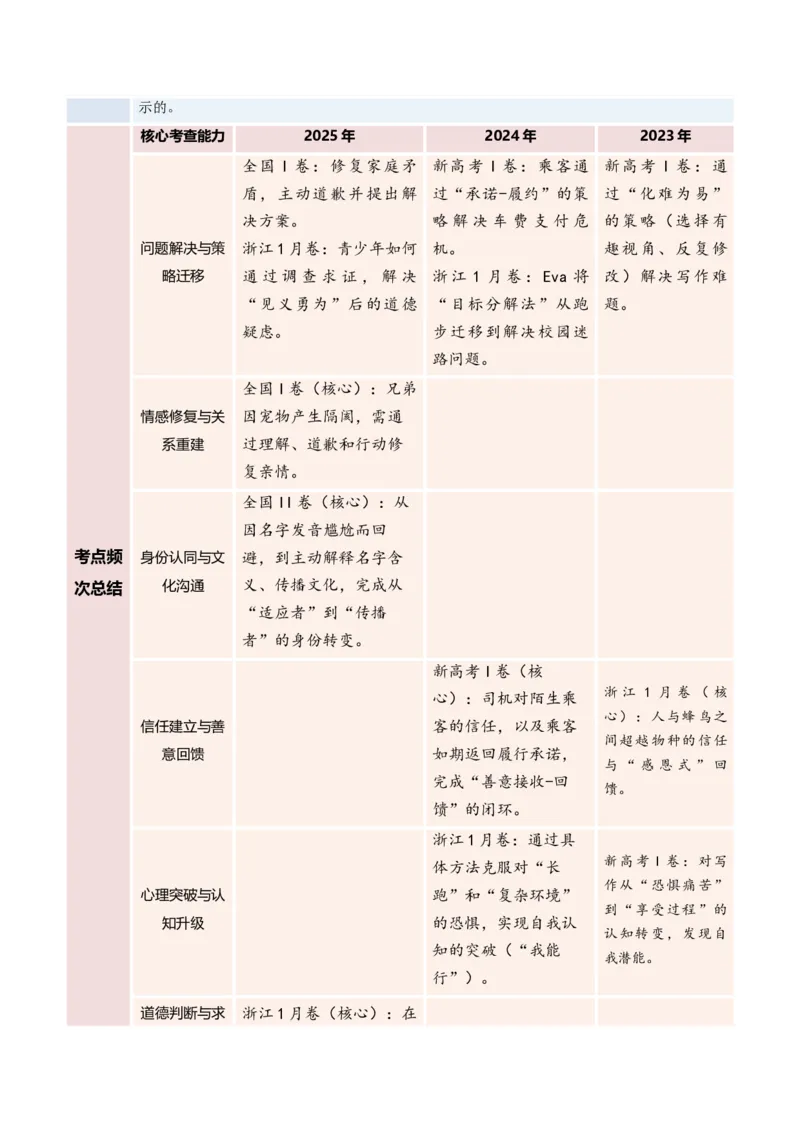
考点频
次总结
核心考查能力
2025 年
2024 年
2023 年
问题解决与策
略迁移
全国I 卷:修复家庭矛
盾,主动道歉并提出解
决方案。
浙江1 月卷:青少年如何
通过调查求证,解决
“见义勇为”后的道德
疑虑。
新高考I 卷:乘客通
过“承诺-履约”的策
略解决车费支付危
机。
浙江1 月卷:Eva 将
“目标分解法”从跑
步迁移到解决校园迷
路问题。
新高考I 卷:通
过“化难为易”
的策略(选择有
趣视角、反复修
改)解决写作难
题。
情感修复与关
系重建
全国I 卷(核心):兄弟
因宠物产生隔阂,需通
过理解、道歉和行动修
复亲情。
身份认同与文
化沟通
全国II 卷(核心):从
因名字发音尴尬而回
避,到主动解释名字含
义、传播文化,完成从
“适应者”到“传播
者”的身份转变。
信任建立与善
意回馈
新高考I 卷(核
心):司机对陌生乘
客的信任,以及乘客
如期返回履行承诺,
完成“善意接收-回
馈”的闭环。
浙江1 月卷(核
心):人与蜂鸟之
间超越物种的信任
与“ 感恩式” 回
馈。
心理突破与认
知升级
浙江1 月卷:通过具
体方法克服对“长
跑”和“复杂环境”
的恐惧,实现自我认
知的突破(“我能
行”)。
新高考I 卷:对写
作从“恐惧痛苦”
到“享受过程”的
认知转变,发现自
我潜能。
道德判断与求
浙江1 月卷(核心):在
证精神
“见义勇为”与“可能
冤枉好人”之间产生道
德焦虑,并通过实际行
动(询问邻居、前往警
局)寻求真相,体现理
性与善良的结合。
成长领悟与价
值升华
所有卷别:最终都导向积极的领悟,如亲情可贵、文化自信、善良需智慧等。
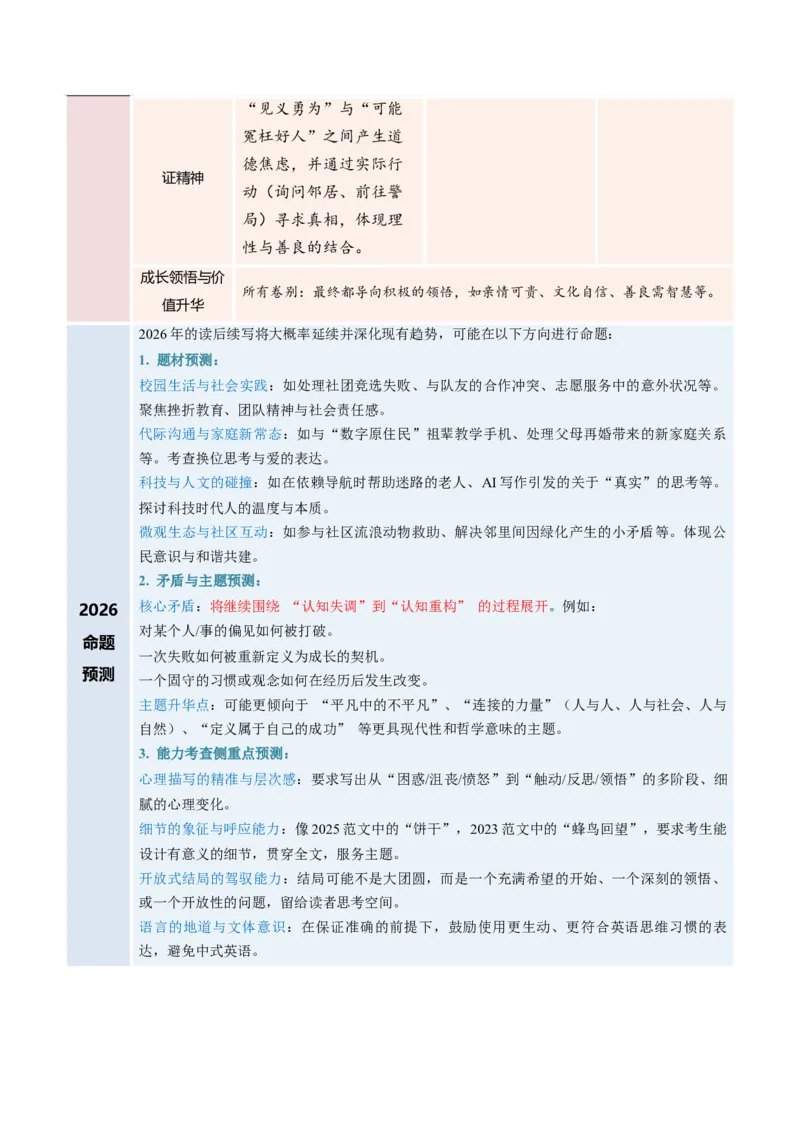
2026
命题
预测
2026 年的读后续写将大概率延续并深化现有趋势,可能在以下方向进行命题:
1. 题材预测:
校园生活与社会实践:如处理社团竞选失败、与队友的合作冲突、志愿服务中的意外状况等。
聚焦挫折教育、团队精神与社会责任感。
代际沟通与家庭新常态:如与“数字原住民”祖辈教学手机、处理父母再婚带来的新家庭关系
等。考查换位思考与爱的表达。
科技与人文的碰撞:如在依赖导航时帮助迷路的老人、AI 写作引发的关于“真实”的思考等。
探讨科技时代人的温度与本质。
微观生态与社区互动:如参与社区流浪动物救助、解决邻里间因绿化产生的小矛盾等。体现公
民意识与和谐共建。
2. 矛盾与主题预测:
核心矛盾:将继续围绕 “认知失调”到“认知重构” 的过程展开。例如:
对某个人/事的偏见如何被打破。
一次失败如何被重新定义为成长的契机。
一个固守的习惯或观念如何在经历后发生改变。
主题升华点:可能更倾向于 “平凡中的不平凡”、“连接的力量”(人与人、人与社会、人与
自然)、“定义属于自己的成功” 等更具现代性和哲学意味的主题。
3. 能力考查侧重点预测:
心理描写的精准与层次感:要求写出从“困惑/沮丧/愤怒”到“触动/反思/领悟”的多阶段、细
腻的心理变化。
细节的象征与呼应能力:像2025 范文中的“饼干”,2023 范文中的“蜂鸟回望”,要求考生能
设计有意义的细节,贯穿全文,服务主题。
开放式结局的驾驭能力:结局可能不是大团圆,而是一个充满希望的开始、一个深刻的领悟、
或一个开放性的问题,留给读者思考空间。
语言的地道与文体意识:在保证准确的前提下,鼓励使用更生动、更符合英语思维习惯的表
达,避免中式英语。
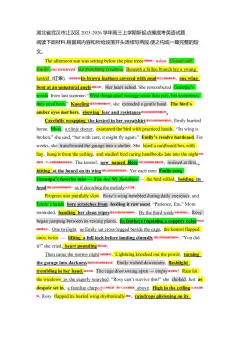
(2025·1 月浙江卷)
阅读下面材料,根据其内容和所给段落开头语续写两段,使之构成一篇完整的短文。
Kevin was pretty bored. His mother was at work, and his father had been away on business.
Therefore, he was left in the care of Mrs. Hill, an old lady who lived next door. His parents had raised
the 12-year-old to be a good boy. He never got into trouble, though sometimes he wanted to do risky
things. Mrs. Hill was asleep. Kevin sighed (叹息) and hoped something exciting would happen. Suddenly,
a movement outside caught his eye.
Mrs. Hill’s front window faced Mr. and Mrs. Green’s house across the street. The couple had both
gone to work, so it was strange that someone was over there. Kevin stared at the man at their front
door. Suddenly, the man jumped through an open window into the house. With his heart in his mouth,
Kevin grabbed Mrs. Hill’s home phone and called the police.
Thinking that the man might get away with whatever he wanted before the police arrived, Kevin
decided to do something. He rushed out of Mrs. Hill’s house and crossed the street quickly. Grabbing a
branch from a cut-down tree, he jumped in through the window. “Stop right there! You must leave right
now!” he called out, holding the branch with both hands.
The man froze for a second, but when he saw the skinny boy he breathed a sigh of relief. “Hey,
kid, put that down. It was my home. My parents used to live here and my father’s watch was here,” he
explained, trying to lift a floorboard.
At that moment, the sounds of a police car echoed (回响) in the air. The man stood up in a panic,
then ran through the house toward the window and jumped out. Kevin followed out and told the arriving
police officers what had happened. They pursued and arrested the man.
Kevin went back to Mrs. Hill’s house. Somehow he wasn’t sure he had done the right thing. “What
if he has told the truth?” he thought to himself. The man’s words sounded pretty convincing.
注意:
(1)续写词数应为150 左右;
(2)请按如下格式在答题卡的相应位置作答。
When Mr. and Mrs. Green got home, Kevin went to talk to them.
_________________________________________________________________________________________
_________________________________________________________________________________________
_________________________________________________________________________________________
_________________________________________________________________________________________
_________________________________________________________________________________________
Kevin and Mr. Green took the watch they had found to the police station.
_________________________________________________________________________________________
_________________________________________________________________________________________
_________________________________________________________________________________________
_________________________________________________________________________________________
_________________________________________________________________________________________
考点一  情绪驱动类动作
1. 喜悦与兴奋
核心动词库
beam (绽放笑容) / grin from ear to ear (笑得合不拢嘴)
bounce with excitement (兴奋得蹦跳) / jump for joy (高兴得跳起来)
clap one's hands together (双手合拍) / pump one's fist in the air (空中挥拳)
高级句型
爆发式
A peal of laughter escaped her lips before she could stop it. (一串笑声不由自主地从
她唇间溢出。)
渐进式
His serious expression first softened into a smile, then grew into a big, genuine grin.
(他严肃的表情先是柔和成微笑,然后扩展成一个大而真诚的咧嘴笑。)
伴随状态
She danced a little jig, her feet barely touching the ground with happiness. (她跳了一
小段吉格舞,双脚因快乐几乎不沾地。)
使用场景
获奖时刻、久别重逢、愿望达成。
2. 恐惧与震惊
核心动词库
jump back  (后退)/ shrank away (畏缩地退开)
stagger backward (踉跄后退) / freeze in one's tracks (突然僵住)
gasp for air (倒抽气) / A cry got stuck in his throat, coming out as a choked sob. (一声
哭喊卡在他喉咙里,变成了一声哽咽的抽泣。)
高级句型
生理反应
Her blood ran cold, and every hair on her arms stood on end. (她血都凉了,手臂上
的汗毛根根倒竖。)
时间凝固
For a long moment that felt like forever, he stood completely still, frozen, his
mind blank. (在感觉像永远一样长的片刻里,他完全静止地站着,僵住了,大
脑一片空白。)
细微颤抖
The cup in her hand trembled, sending tiny ripples across the surface of the tea. (她手
中的杯子颤抖着,在茶面激起细小涟漪。)
使用场景
突遇危险、发现秘密、遭遇意外。
3. 愤怒与沮丧
核心动词库
was boiling with anger inside (怒火中烧) / his eyes burning with anger(眼中燃烧着怒火)
slam one's palm on the table (一掌拍在桌上) / kick the chair leg in frustration (沮丧地踢
椅腿)
turn on one's heel and march away (转身大步离去)
高级句型
压抑的愤
怒
He held onto the kitchen table so tightly that his fingertips turned pale white.
It was the only clue to the fierce struggle going on inside him. (他紧紧抓住
厨房桌子的边缘,指尖都发白了。这是他内心激烈挣扎的唯一线索。)
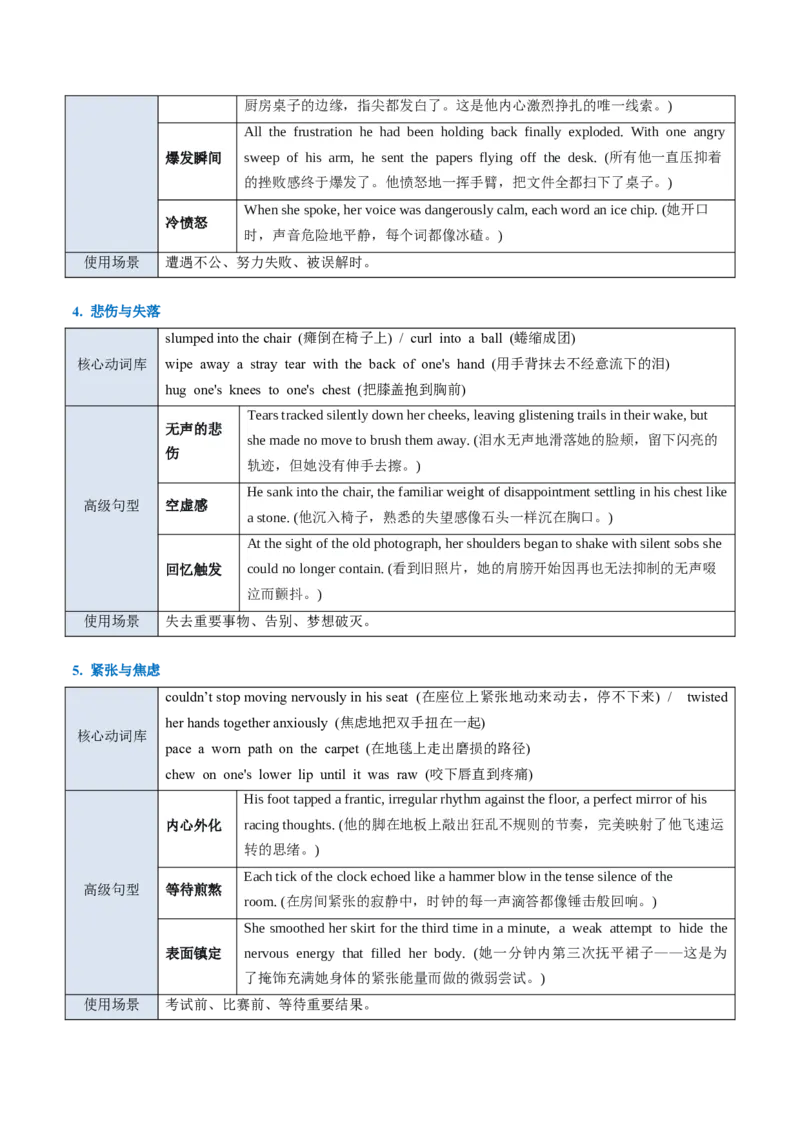
爆发瞬间
All the frustration he had been holding back finally exploded. With one angry
sweep of his arm, he sent the papers flying off the desk. (所有他一直压抑着
的挫败感终于爆发了。他愤怒地一挥手臂,把文件全都扫下了桌子。)
冷愤怒
When she spoke, her voice was dangerously calm, each word an ice chip. (她开口
时,声音危险地平静,每个词都像冰碴。)
使用场景
遭遇不公、努力失败、被误解时。
4. 悲伤与失落
核心动词库
slumped into the chair (瘫倒在椅子上) / curl into a ball (蜷缩成团)
wipe away a stray tear with the back of one's hand (用手背抹去不经意流下的泪)
hug one's knees to one's chest (把膝盖抱到胸前)
高级句型
无声的悲
伤
Tears tracked silently down her cheeks, leaving glistening trails in their wake, but
she made no move to brush them away. (泪水无声地滑落她的脸颊,留下闪亮的
轨迹,但她没有伸手去擦。)
空虚感
He sank into the chair, the familiar weight of disappointment settling in his chest like
a stone. (他沉入椅子,熟悉的失望感像石头一样沉在胸口。)
回忆触发
At the sight of the old photograph, her shoulders began to shake with silent sobs she
could no longer contain. (看到旧照片,她的肩膀开始因再也无法抑制的无声啜
泣而颤抖。)
使用场景
失去重要事物、告别、梦想破灭。
5. 紧张与焦虑
核心动词库
couldn’t stop moving nervously in his seat (在座位上紧张地动来动去,停不下来) /  twisted
her hands together anxiously (焦虑地把双手扭在一起)
pace a worn path on the carpet (在地毯上走出磨损的路径)
chew on one's lower lip until it was raw (咬下唇直到疼痛)
高级句型
内心外化
His foot tapped a frantic, irregular rhythm against the floor, a perfect mirror of his
racing thoughts. (他的脚在地板上敲出狂乱不规则的节奏,完美映射了他飞速运
转的思绪。)
等待煎熬
Each tick of the clock echoed like a hammer blow in the tense silence of the
room. (在房间紧张的寂静中,时钟的每一声滴答都像锤击般回响。)
表面镇定
She smoothed her skirt for the third time in a minute, a weak attempt to hide the
nervous energy that filled her body. (她一分钟内第三次抚平裙子——这是为
了掩饰充满她身体的紧张能量而做的微弱尝试。)
使用场景
考试前、比赛前、等待重要结果。
考点二  意图驱动类动作
1. 探索与发现
初步观察
His eyes scanned the room, taking in every detail from the dust motes dancing in the
sunlight to the faint scratch on the floorboards. (他的眼睛扫视房间,从阳光下飞舞的灰尘
到地板上的细微划痕,不放过任何细节。)
靠近检查
Crouching down for a closer look, he ran his fingers lightly over the surface, feeling for
anything out of the ordinary. (蹲下来仔细查看,他手指轻触表面,感受任何异常。)
发现关键
There, half-hidden behind the leg of the desk, was a tiny object that shone like metal—
something that didn’t belong. (在那里,桌子腿后面半藏着一个像金属一样反光的小东西
——一个不属于那里的东西。)
进阶技巧
多感官结
合
He didn't just see the open window; he felt the draft (感受到气流), smelled
the rain on the night air (闻到夜雨的气息).
视角切换
From her vantage point on the stairs, she could see... (从她在楼梯上的有利位
置,她能看见...)
2. 帮助与救助
情感递增式
即时反应
Without a second thought, she sprinted towards the fallen figure, her medical
training kicking in automatically. (不假思索地,她冲向倒地的人,医疗训练自
动启动。)
专业评估
Kneeling beside him, she kept her hands steady as she checked his airway and
pulse, her voice calm as she asked, "Can you hear me?" (跪在他身边,她的
手很稳,检查他的气道和脉搏,声音平静地问:“能听见吗?”)
持续关怀
She stayed by his side, holding his hand and speaking in low, reassuring tones
until the ambulance arrived. (她留在他身边,握着他的手,用低沉安慰的语气
说话,直到救护车到来。)
心理描写融
入
Her own heart was pounding wildly in her chest, but for his sake, she forced herself to
breathe slowly and evenly. (她自己的心在胸膛里狂跳不止,但为了他,她强迫自己缓慢而
均匀地呼吸。)
3.准备与决心
仪式感构建
心理准备
He closed his eyes for a moment, picturing the steps ahead, gathering his
courage as if it were something solid he could hold. (他闭上眼睛片刻,在脑海
中描绘着接下来的步骤,仿佛勇气是某种他能紧紧握住的实体,正将它一点
点聚集起来。)
身体调整
Rolling his shoulders to loosen the tension, he took a deep breath that filled
his lungs with purpose. (他转动肩膀以放松紧绷的肌肉,随后深吸一口气,
这口气息仿佛为他注满了决心与力量。)
行动开始
With a final, determined nod to his reflection in the window, he pushed
open the door and stepped into the “unknown”. (最后,他对着窗户中自己
的倒影坚定地点了点头,随即推开门,步入了未知。)
象征性动作
She fastened her grandmother's locket around her neck, feeling the weight of legacy and
love giving her strength. (她把祖母的项链戴在脖子上,感受着传承与爱的重量给予她力
量。)
考点三  交互驱动类动作
1 亲密与支持
层次化描写
轻度安慰
He gave her shoulder a gentle, reassuring squeeze, wordless but full of
understanding. (他轻轻、安慰地捏了捏她的肩膀,无言但充满理解。)
中度支持
She reached across the table and covered his restless hand with her own,
stilling its anxious movement. (她伸手越过桌子,用自己的手盖住他不安的
手,止住了焦虑的动作。)
深度连接
They stood forehead to forehead, breathing together, a silent conversation
passing between them in the shared space. (他们额头相抵,呼吸同步,无声
的交谈在共享的空间中传递。)
2. 冲突与对抗
张力构建
表达委屈与
失望
She turned her face away, refusing to meet his eyes. (她把脸扭向一边,拒
绝与他对视。)
Hugging her arms tightly around herself, she stared at the ground, a wall of
silence between them. (她紧紧抱住自己,盯着地面,两人之间隔着一道沉默
的墙。)
Her words were quiet but firm, each one feeling like a small stone
dropping into the space between them. (她的话很轻但坚定,每一个字都像
一颗小石子,落入两人之间的空间。)
表达惊吓与
退缩
When he reached out, she instinctively pulled her hand back. (当他伸出手
时,她本能地把手缩了回去。)
His touch was meant to be comforting, but she flinched away as if it stung,
the surprise clear in her wide eyes. (他的触碰本意是安慰,但她像被蜇到一
样躲开了,圆睁的双眼里写满了惊愕。)
Part of her wanted to accept the apology, but a stronger part made her take
a small step back, creating a safe distance. (她心里有一部分想接受道歉,
但更强烈的部分让她向后退了一小步,划出一个安全的距离。)
3.尴尬与缓和
微妙时刻
打破僵局
Clearing his throat awkwardly, he extended the olive branch— a hesitant
hand offered for a handshake. (尴尬地清了清嗓子,他伸出橄榄枝——犹豫
地伸出手想要握手。)
化解尴尬
She let out a small laugh, breaking the tension and meeting his eyes with a
regretful smile. (她发出一声小小的笑声,打破紧张,带着懊悔的微笑迎上他
的目光。)
重建联系
Their eyes met over the table, and a “hesitant”, almost shy smile began to
form on both their faces. (他们在桌子上方目光相遇,一个犹豫的、近乎羞
涩的微笑开始在两人脸上形成。)
考点四  风格修饰类动作
1. 比喻化动作
自然比喻
Time melted away like snow in spring. (时间如春雪般消融。)
Her confidence bloomed like a flower finally seeing the sun. (她的信心如终于见到阳光的
花朵般绽放。)
Doubt crept in, a cold snake coiling around his heart. (怀疑悄悄潜入,像一条冰冷的蛇缠
绕他的心。)
创新组合
He didn't walk; he “carved” a path through the crowd. (他不是在走;他是在人群中开辟
出一条路。)
Her words “mended” the group. (她的话修复了这个群体。)
2. 副词与介词短语宝库
副词修饰
1. gently (轻柔地) — 表达小心、温柔、克制
He “gently” placed the book on the table. (他轻轻地把书放在桌上。)
She spoke “gently” to calm the frightened child. (她温柔地说话,安抚受惊的孩子。)
2. firmly (坚定地) —表达决心、果断、不容改变
She “firmly” shook her head. (她坚定地摇了摇头。)
He held her hand “firmly”, giving her strength. (他紧紧地握着她的手,给她力量。)
3. suddenly / abruptly (突然地 / 唐突地) — 制造转折、惊讶或紧张感
The door “suddenly” opened. (门突然开了。)
He stopped “abruptly”, realizing his mistake. (他猛地停下,意识到了自己的错误。)
4. slowly (缓慢地) —表达迟疑、沉重、或故意拖延
He “slowly” stood up, as if carrying a great weight. (他缓缓地站起来,仿佛背负着重
担。)
A smile “slowly” spread across her face. (一个微笑慢慢在她脸上绽开。)
六大万能介
词短语
表达方式:with + N.
“With great care”, she opened the envelope. (极其小心地,她打开了信封。)
He answered “with confidence”. (他充满自信地回答。)
She listened “with a puzzled expression”. (她带着困惑的表情听着。)
表达伴随:with + N. + V-ing (高级结构)
He apologized, “with his eyes fixed on the ground”. (他道了歉,眼睛一直盯着地面。)
She made her decision, “with her heart pounding wildly”. (她做出了决定,心在狂跳。)
表达没有:without + N.
She faced the challenge “without fear”. (她毫无畏惧地面对挑战。)
“Without a word”, he turned and left. (一言不发地,他转身离开了。)
表达在…之下:under the + N.
“Under the watchful eyes of the teacher”, we began the test. (在老师审视的目光下,我们
开始了考试。)
He made the promise “under great pressure”. (他在巨大压力下做出了承诺。)
表达通过…:by + V-ing
“By taking a deep breath”, she calmed herself down. (通过深呼吸,她让自己平静下来。)
He solved the problem “by thinking outside the box”. (他通过跳出常规思维解决了问
题。)
表达尽管:in spite of + N. / despite + N.
“In spite of her tiredness”, she finished the race. (尽管很累,她还是跑完了比赛。)
He smiled “despite the disappointment”. (他尽管失望,还是笑了。)
3.伴随状态大师级写法
身体状态伴
随
She delivered the speech “with her voice steady but her palms pressed flat against her
trembling thighs.” (她发表演讲时声音稳定,但手掌紧贴颤抖的大腿。)
环境互动伴
随
He worked “as the rain painted grey streaks down the window behind him.”(他在工作
时,雨水在他身后的窗户上画出灰色的条纹。)
内心外化伴
随
She signed the contract “with a mix of excitement and anxiety turning in her stomach.”
(她签署合同时,兴奋与焦虑在胃中翻搅。)
考向1 VR 植树——当虚拟凋零,真实生长
(2025·浙江温州十校期末考)阅读下面材料,根据其内容和所给段落开头语续写两段,使之构
成一篇完整的短文。
I stood in the school auditorium(礼堂),VR headset on my head. The virtual forest buzzed with life—3D
fireflies danced above a stream, their glow waving on the water. My team had spent months programming this for
the Eco Youth Summit, to show how deforestation harms wildlife. The air smelled of fresh paint, and whispers from
the audience reached me through the headset.
But as judges approached, the headset suddenly went dark. Panic surged through me. I tore off the device to
see Maya frozen at the control panel(控制板). “Server crashed,” she mouthed, hands shaking over the black
screen. “Our project—it’s all gone.” Murmurs rose in the crowd, and my neck burned under the stage lights.
I scanned the judges, their expectant smiles fading. A man in green tapped his writing board; the woman
beside him frowned at her watch. Then my gaze met a girl in the front row, holding a stuffed owl(猫头鹰). Her
pigtails bobbed as she leaned forward, but when I shook my head, her eyes filled with disappointment—mirroring
my sister’s look when a trip is canceled.
“Wait,” I claimed, grabbing Maya’s arm. She shrank back, but I pressed on: “What if we tell the story without
VR?” For a moment, she stared, then nodded sharply. Stepping to the stage edge, I said, “This forest isn’t just code.
It’s a real home where owls nest...” My voice cracked, but words poured out—about drying rivers, about birds
losing habitats.
When I finished, the auditorium fell silent. Suddenly the girl rose to her feet, with her sneakers making a sharp
noise: “Instead of a virtual forest, can we plant a real tree?” The audience laughed softly, and judges exchanged
nods. Maya’s hand found mine, steady and warm. Though the VR failed, a definite idea had taken root.
注意:
(1)续写词数应为150 个左右;
(2)请按如下格式在答题纸的相应位置作答。
The crowd’s laughter faded as the head judge stood up, microphone in hand.
____________________________________________________________________________________________
____________________________________________________________________________________________
____________________________________________________________________________________________
____________________________________________________________________________________________
____________________________________________________________________________________________
Two weeks later, volunteers arrived at the school with gardening tools and young trees.
____________________________________________________________________________________________
____________________________________________________________________________________________
____________________________________________________________________________________________
____________________________________________________________________________________________
____________________________________________________________________________________________
考向2 冰箱里的春天
(2025·全国天域名校协作体高三试题)阅读下面材料,根据其内容和所给段落开头语续写两段,
使之构成一篇完整的短文。
The Popsicle Kids
A nearly empty box of Popsicles (棒冰) in the freezer, left from a grandchild’s visit, caught my attention.
Initially, I wanted to throw it away, but my wife suggested we give the remaining Popsicles to the neighborhood
children. Her suggestion changed our life and led us to a future full of “Popsicle Kids.”
My wife and I, retired on Social Security, live in an apartment complex. After careers in sales and nursing, our
daily concerns revolved around aches, pains, and dinner. We often wondered what good we were to the world.
That changed dramatically after we gave away the first Popsicle.
Minutes after watching a neighbor boy, a second grader, walk away with an icy treat, our doorbell rang. An
adorable blond girl, about six, smiled sweetly, “Is it true you’re giving away Popsicles?”
With the box empty, we returned to our concerns.
Early the next morning, the doorbell rang repeatedly. Standing on our porch were the four children from the
previous day. They vocalized their wants, chanting (有节奏地喊), “We want Popsicles! We want Popsicles!”
Looking into their eager young faces, I wondered, “What have I started?” Sensing a victory, they nodded
eagerly when I explained the rules: ring the bell once, one Popsicle per day, and share something good about their
day. But their thin shoulders bent downwards in disappointment when I mentioned they had to give something in
return. I came to the rescue, suggesting they share something positive about their day, like what they learned at
school or helping another student. Over time, new rules were added: “Ladies first,” “Don’t interrupt,” and
“Properly get rid of the sticks.”
On holidays, they expressed their understanding of why the day was celebrated. Over the years, about fifty
youngsters visited. Some became part of my life, like the four kids who joined me on the steps one spring to read
“Where the Red Fern Grows.” We discussed catching crawfish, loving pets, and family relationships. This simple
act of sharing Popsicles transformed our life, bringing joy and meaning to both the children and ourselves.
注意:
1. 续写词数应为150 个左右;
2. 请按如下格式在答题卡的相应位置作答。
One night, another boy appeared at the door, saying “I don’t want a Popsicle; I just need to talk.”
____________________________________________________________________________________________
____________________________________________________________________________________________
____________________________________________________________________________________________
____________________________________________________________________________________________
____________________________________________________________________________________________
I’ve sensed it’s more than Popsicles that bring these kids to our door.
____________________________________________________________________________________________
____________________________________________________________________________________________
____________________________________________________________________________________________
____________________________________________________________________________________________
____________________________________________________________________________________________
考向3 冰河卫士——我的守护犬叫“熊”
(2025·浙江省名校协作体)阅读下面材料,根据其内容和所给段落开头语续写两段,使之构成一篇完整的
短文。
Bear was not a bear. She was a big dog on the Perkinses' family farm, a woolly creature with floppy ears
and paws like bedroom slippers. She protected the ducks and chickens from being eaten by foxes and
raccoons(浣熊).
She guarded the children as well, watching over them as closely as she did the chickens and ducks. In
winter the dog ran alongside the children as they sledded (滑雪橇) down snowy hills. In summer she swam with
them in a nearby river.
Bear belonged to a breed(品种) that had long been used by Atlantic fishermen to help with their work, and
it had a keen instinct for water rescue. When the children were in the river, the dog would swim in circles around
them, barking when she felt they went out too far. She was the perfect farm dog—— companion, guardian,
protector.
The dog's favorite among the three children was three-year-old little Mike. They often curled up together.
Sometimes Bear would doze while Mike pretended to read to her. Often both were sound asleep, a tangle of dark
fur, blond hair, small hands and huge paws. At bedtime, Mike saved his last hug for Bear, his “best friend”.
On a cold winter day, when their parents went out to send a parcel, eight-year-old Martha, seven-year-old
Sara and Mike, went to slide on the frozen pond of their farm. Shouting happily, they slid back and forth, their
boots gliding easily across the ice. They laughed as they watched Bear's attempts to stop suddenly, which would
instead send her skidding beyond them. Then, tired, the three sat down on the ice, with Bear beside them.
Suddenly the ice gave way under their combined weight.
As Bear jumped for shore, the three children fell into the freezing cold water. Screaming, Martha and Sarah
struggled to find footing on rocks underwater. Branches from a tree nearby provided handholds, and using every
bit of their strength, the two girls pulled themselves to shore.
注意:(1)续写词数应为150 左右:
(2)请按如下格式在答题卡的相应位置作答。
Looking back, they saw little Mike holding on to a broken chunk(大块) office, unable to crawl onto it.
____________________________________________________________________________________________
____________________________________________________________________________________________
____________________________________________________________________________________________
____________________________________________________________________________________________
____________________________________________________________________________________________
Seeing that, Bear let out a series of woofs and jumped into the water; heading straight for Mike.
____________________________________________________________________________________________
____________________________________________________________________________________________
____________________________________________________________________________________________
____________________________________________________________________________________________
____________________________________________________________________________________________