文档文本内容
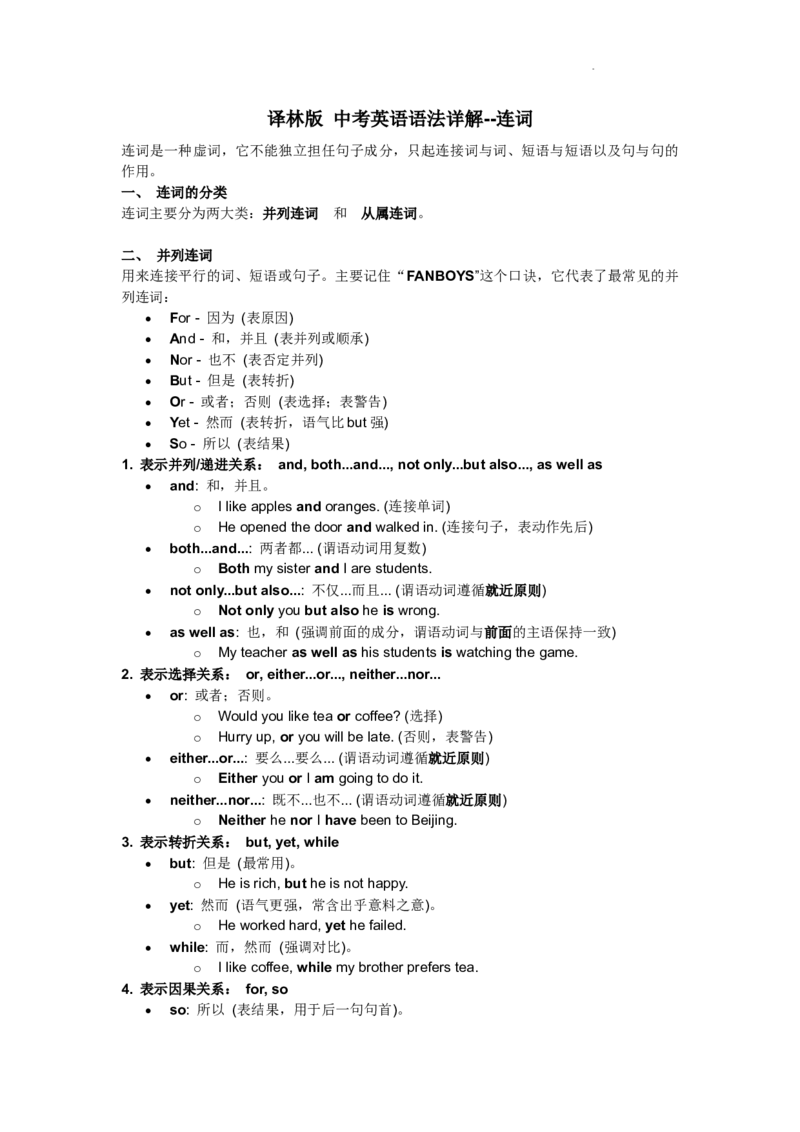
译林版 中考英语语法详解--连词
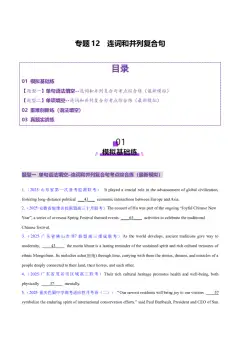
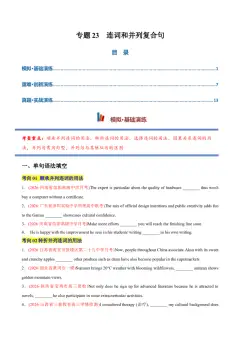
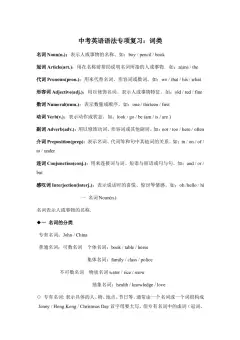
连词是一种虚词,它不能独立担任句子成分,只起连接词与词、短语与短语以及句与句的
作用。
一、 连词的分类
连词主要分为两大类:并列连词 和 从属连词。
二、 并列连词
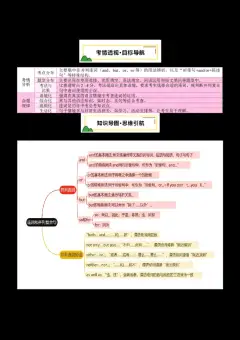
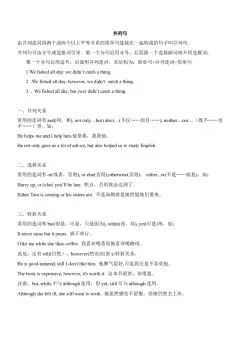
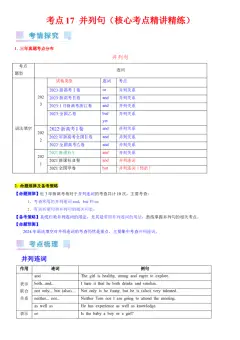
用来连接平行的词、短语或句子。主要记住“FANBOYS”这个口诀,它代表了最常见的并
列连词:
For - 因为 (表原因)
And - 和,并且 (表并列或顺承)
Nor - 也不 (表否定并列)
But - 但是 (表转折)
Or - 或者;否则 (表选择;表警告)
Yet - 然而 (表转折,语气比but强)
So - 所以 (表结果)
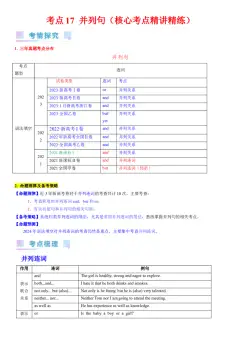
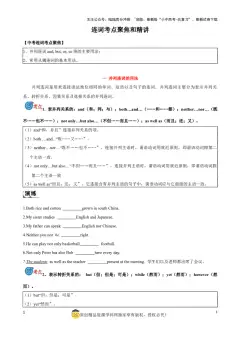
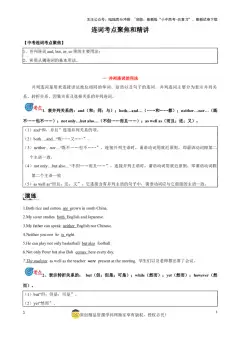
1. 表示并列/递进关系: and, both...and..., not only...but also..., as well as
and: 和,并且。
o I like apples and oranges. (连接单词)
o He opened the door and walked in. (连接句子,表动作先后)
both...and...: 两者都... (谓语动词用复数)
o Both my sister and I are students.
not only...but also...: 不仅...而且... (谓语动词遵循就近原则)
o Not only you but also he is wrong.
as well as: 也,和 (强调前面的成分,谓语动词与前面的主语保持一致)
o My teacher as well as his students is watching the game.
2. 表示选择关系: or, either...or..., neither...nor...
or: 或者;否则。
o Would you like tea or coffee? (选择)
o Hurry up, or you will be late. (否则,表警告)
either...or...: 要么...要么... (谓语动词遵循就近原则)
o Either you or I am going to do it.
neither...nor...: 既不...也不... (谓语动词遵循就近原则)
o Neither he nor I have been to Beijing.
3. 表示转折关系: but, yet, while
but: 但是 (最常用)。
o He is rich, but he is not happy.
yet: 然而 (语气更强,常含出乎意料之意)。
o He worked hard, yet he failed.
while: 而,然而 (强调对比)。
o I like coffee, while my brother prefers tea.
4. 表示因果关系: for, so
so: 所以 (表结果,用于后一句句首)。
学科网(北京)股份有限公司o It was raining, so we stayed at home.
for: 因为 (表补充说明的原因,语气弱,不能放在句首)。
o He must be ill, for he looks pale. (他一定病了,因为他脸色苍白。)
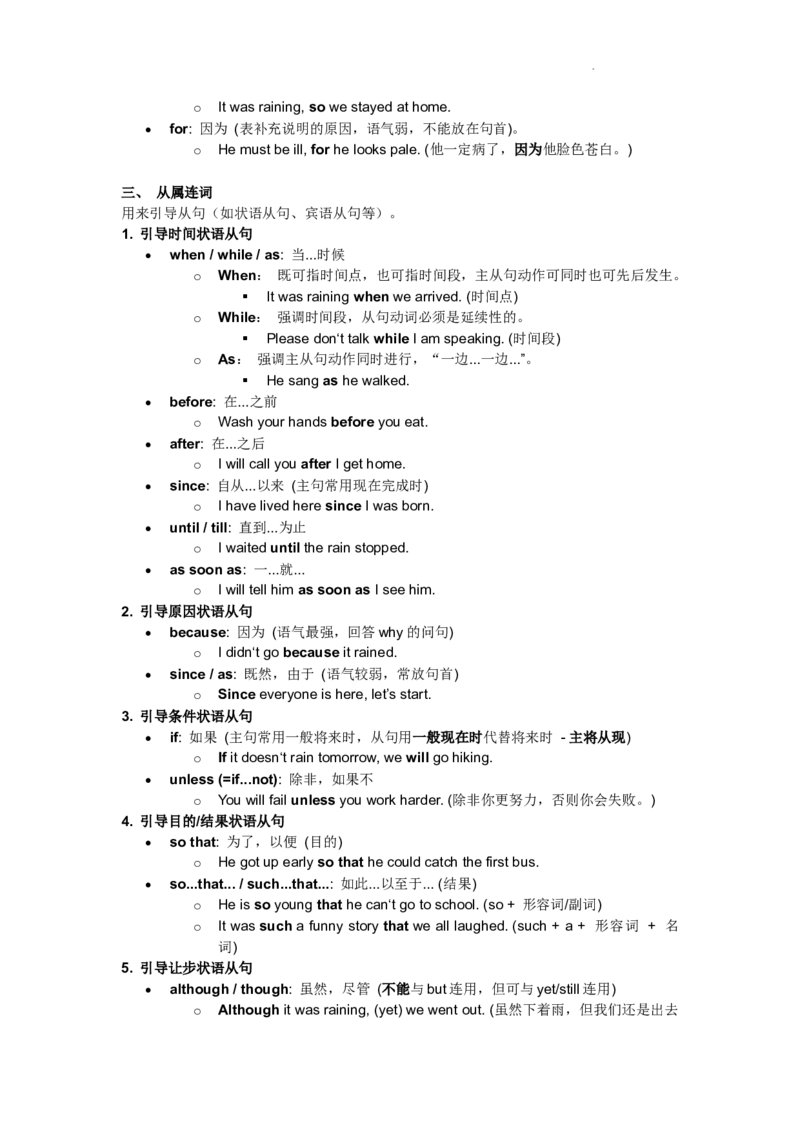
三、 从属连词
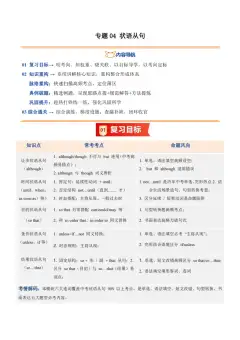
用来引导从句(如状语从句、宾语从句等)。
1. 引导时间状语从句
when / while / as: 当...时候
o When: 既可指时间点,也可指时间段,主从句动作可同时也可先后发生。
It was raining when we arrived. (时间点)
o While: 强调时间段,从句动词必须是延续性的。
Please don‘t talk while I am speaking. (时间段)
o As: 强调主从句动作同时进行,“一边...一边...”。
He sang as he walked.
before: 在...之前
o Wash your hands before you eat.
after: 在...之后
o I will call you after I get home.
since: 自从...以来 (主句常用现在完成时)
o I have lived here since I was born.
until / till: 直到...为止
o I waited until the rain stopped.
as soon as: 一...就...
o I will tell him as soon as I see him.
2. 引导原因状语从句
because: 因为 (语气最强,回答why的问句)
o I didn‘t go because it rained.
since / as: 既然,由于 (语气较弱,常放句首)
o Since everyone is here, let’s start.
3. 引导条件状语从句
if: 如果 (主句常用一般将来时,从句用一般现在时代替将来时 - 主将从现)
o If it doesn‘t rain tomorrow, we will go hiking.
unless (=if...not): 除非,如果不
o You will fail unless you work harder. (除非你更努力,否则你会失败。)
4. 引导目的/结果状语从句
so that: 为了,以便 (目的)
o He got up early so that he could catch the first bus.
so...that... / such...that...: 如此...以至于... (结果)
o He is so young that he can‘t go to school. (so + 形容词/副词)
o It was such a funny story that we all laughed. (such + a + 形容词 + 名
词)
5. 引导让步状语从句
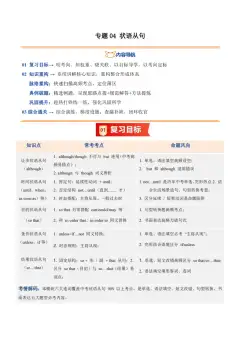
although / though: 虽然,尽管 (不能与but连用,但可与yet/still连用)
o Although it was raining, (yet) we went out. (虽然下着雨,但我们还是出去
学科网(北京)股份有限公司了。)
6. 引导比较状语从句
than: 比
o He is taller than I (am).
as...as...: 和...一样...
o English is as important as math.
7. 引导宾语从句
that: 无实义 (常可省略)
o I think (that) you are right.
if / whether: 是否
o I wonder if/whether he will come.
四、 中考高频考点与易混点辨析
1. because vs. so / although vs. but
o 中文常说“因为...所以...”和“虽然...但是...”,但英语中because和so、
although和but不能同时出现在一个句子里,只能用其中一个。
o 错误: Because he was ill, so he didn‘t go to school.
o 正确: Because he was ill, he didn’t go to school. 或 He was ill, so he didn‘t
go to school.
o 错误: Although it was cold, but he went out.
o 正确: Although it was cold, he went out. 或 It was cold, but he went out.
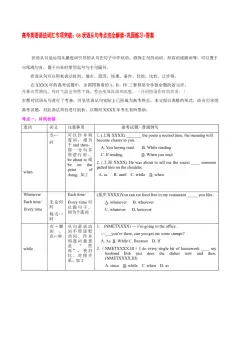
2. when vs. while
o When 从句动词可以是延续性或非延续性动词。
o While 从句动词必须是延续性动词。
o When I got home, he was cooking. (got是非延续性动词)
o While I was cooking, he was watching TV. (cooking是延续性动词)
3. if 的两种含义
o “是否”: 引导宾语从句,时态根据需要变化。
I don‘t know if he will come tomorrow.
o “如果”: 引导条件状语从句,遵守“主将从现”原则。
If it rains tomorrow, I will stay at home.
4. not only...but also... vs. as well as
o not only A but also B: 强调B,谓语动词与B保持一致。
o A as well as B: 强调A,谓语动词与A保持一致。
五、 中考经典例题分析
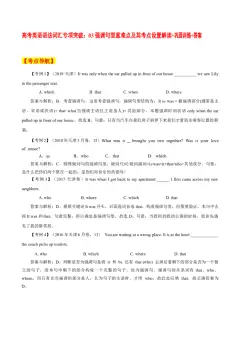
1. ( )— Hurry up, ____ you will miss the train.
— OK, I’m coming.
A. and B. but C. so D. or
答案:D。解析:“快点,否则你会错过火车。”表示警告,用or。
2. ( )____ my father ____ my mother is a doctor. They are teachers.
A. Both; and B. Either; or C. Neither; nor D. Not only; but also
答案:C。解析:根据后句“他们都是老师”,可知父母“都不是”医生。
neither...nor...表示“既不...也不...”。
学科网(北京)股份有限公司3. ( )— It‘s 9 o’clock. I‘m afraid I have to leave, ____ I will be late for work.
— I’ll drive you there.
A. but B. or C. so D. and
答案:B。解析:“我恐怕得走了,否则我上班会迟到。”表示警告,用or。
4. ( )____ it is very late, ____ my mother is still doing some housework.
A. Although; but B. Although; / C. But; although D. /; although
答案:B。解析:although和but不能连用,只能选其一。B项Although it is very
late, my mother is still... 是正确的。
5. ( )I don’t know ____ he will come tomorrow. ____ he comes, I‘ll tell you.
A. if; Whether B. whether; Whether C. if; That D. if; If
答案:D。解析:第一空是宾语从句,表示“是否”,if/whether均可。第二空是
条件状语从句,表示“如果”,只能用If。
学科网(北京)股份有限公司