2027 年高考英语一轮复习能力突破(结构化知识+题型提升
练)
专题08 名词性从句
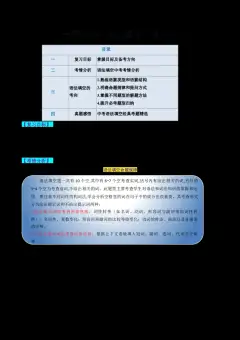
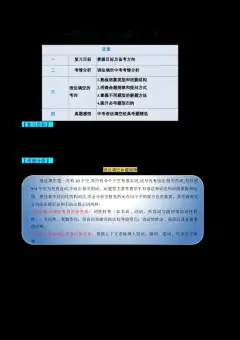
目录
第一部分 必备知识结构化清单
         梳理必备的语言知识点,夯实语言基础能力
第二部分 知识运用题型强化练
         必备知识与能力提升练,提升语言运用能力
◇Part 01  必备知识结构化清单
知|识|清|单
真题分析
【真题再现】
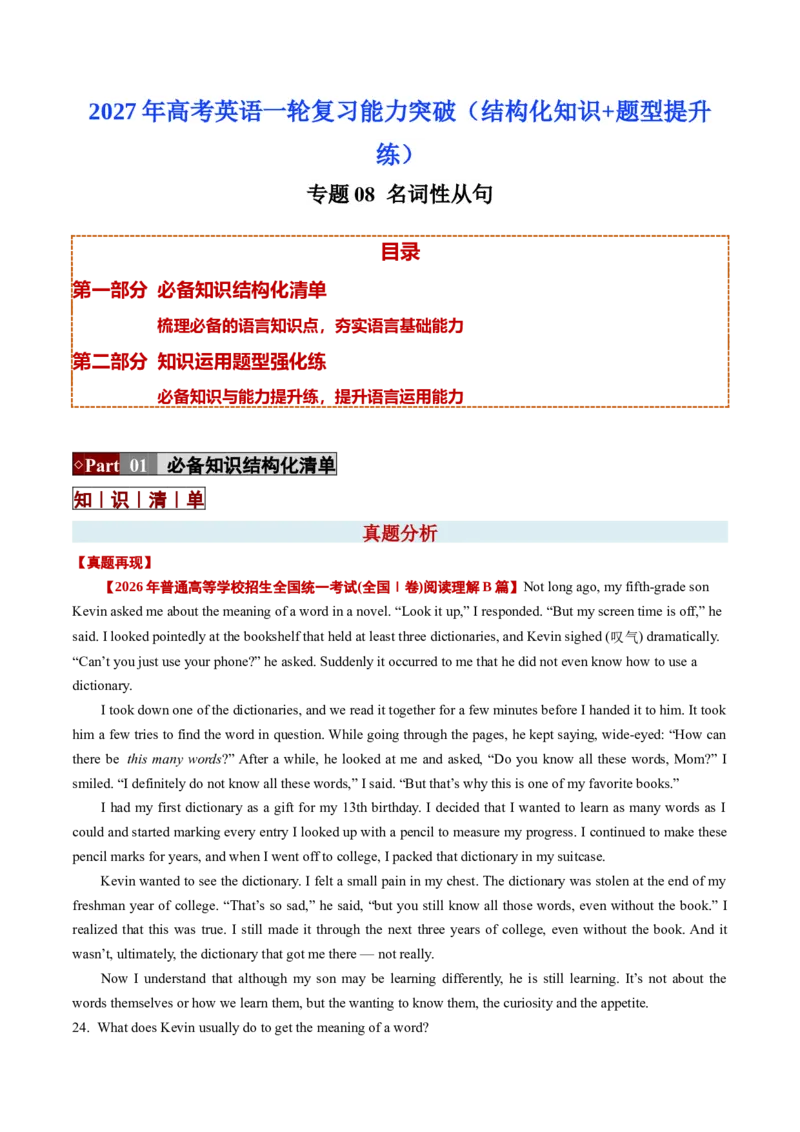
【2026 年普通高等学校招生全国统一考试(全国Ⅰ卷)阅读理解B 篇】Not long ago, my fifth-grade son
Kevin asked me about the meaning of a word in a novel. “Look it up,” I responded. “But my screen time is off,” he
said. I looked pointedly at the bookshelf that held at least three dictionaries, and Kevin sighed (叹气) dramatically.
“Can’t you just use your phone?” he asked. Suddenly it occurred to me that he did not even know how to use a
dictionary.
I took down one of the dictionaries, and we read it together for a few minutes before I handed it to him. It took
him a few tries to find the word in question. While going through the pages, he kept saying, wide-eyed: “How can
there be this many words?” After a while, he looked at me and asked, “Do you know all these words, Mom?” I
smiled. “I definitely do not know all these words,” I said. “But that’s why this is one of my favorite books.”
I had my first dictionary as a gift for my 13th birthday. I decided that I wanted to learn as many words as I
could and started marking every entry I looked up with a pencil to measure my progress. I continued to make these
pencil marks for years, and when I went off to college, I packed that dictionary in my suitcase.
Kevin wanted to see the dictionary. I felt a small pain in my chest. The dictionary was stolen at the end of my
freshman year of college. “That’s so sad,” he said, “but you still know all those words, even without the book.” I
realized that this was true. I still made it through the next three years of college, even without the book. And it
wasn’t, ultimately, the dictionary that got me there — not really.
Now I understand that although my son may be learning differently, he is still learning. It’s not about the
words themselves or how we learn them, but the wanting to know them, the curiosity and the appetite.
24. What does Kevin usually do to get the meaning of a word?
A. Use electronic devices.
B. Consult a paper dictionary.
C. Guess from the context.
D. Turn to his English teacher.
25. How did Kevin feel while looking up the word in the dictionary?
A. Annoyed.
B. Disappointed.
C. Encouraged.
D. Astonished.
26. What can we learn about the author’s first dictionary?
A. It helped her through college.
B. It was given to Kevin as a gift.
C. It bore witness to her efforts.
D. It was a valuable limited edition.
27. What has the author come to realize about learning?
A. It is never too late to start.
B. Motivation is what really matters.
C. Children need role models.
D. Dictionaries are still a useful tool.
(答案:24. A    25. D    26. C    27. B)
【要点分析】
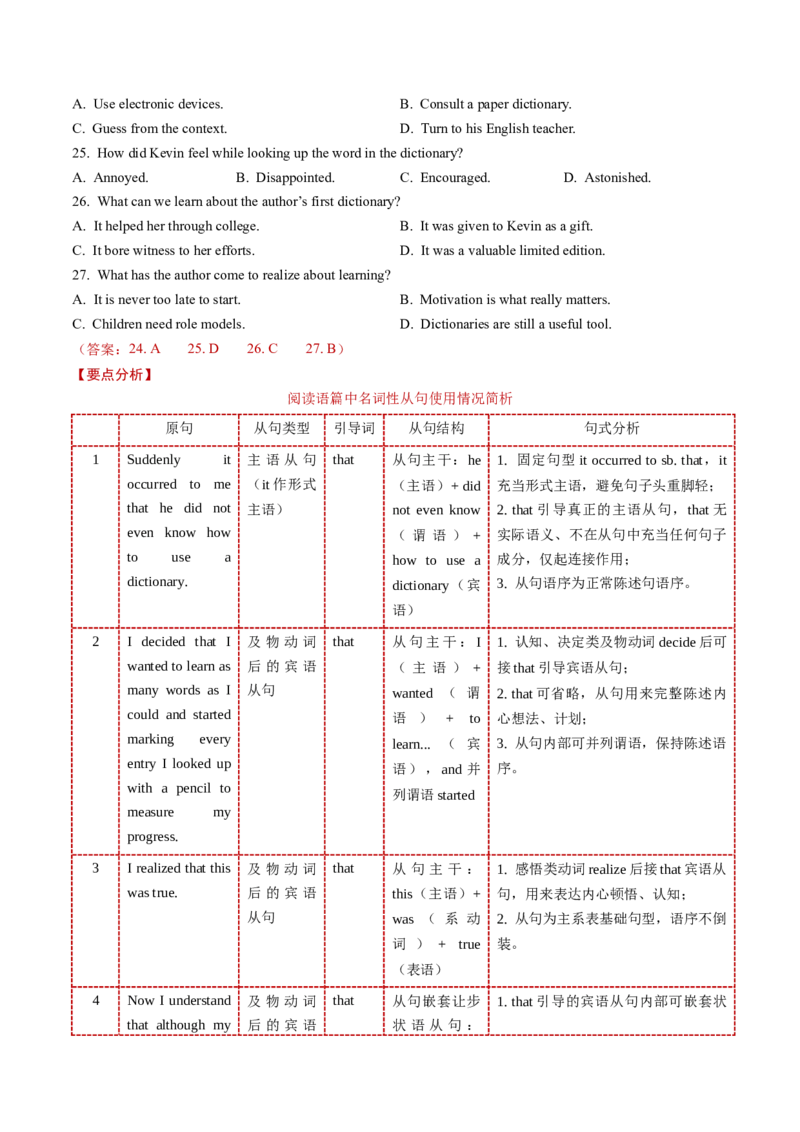
阅读语篇中名词性从句使用情况简析
原句
从句类型
引导词
从句结构
句式分析
1
Suddenly

it
occurred to me
that he did not
even know how
to

use

a
dictionary.
主语从句
(it 作形式
主语)
that
从句主干:he
(主语)+ did
not even know
(谓语)+
how to use a
dictionary(宾
语)
1. 固定句型it occurred to sb. that,it
充当形式主语,避免句子头重脚轻;
2. that 引导真正的主语从句,that 无
实际语义、不在从句中充当任何句子
成分,仅起连接作用;
3. 从句语序为正常陈述句语序。
2
I decided that I
wanted to learn as
many words as I
could and started
marking every
entry I looked up
with a pencil to
measure

my
progress.
及物动词
后的宾语
从句
that
从句主干:I
(主语)+
wanted (谓
语
)
+ to
learn... (宾
语),and 并
列谓语started
1. 认知、决定类及物动词decide 后可
接that 引导宾语从句;
2. that 可省略,从句用来完整陈述内
心想法、计划;
3. 从句内部可并列谓语,保持陈述语
序。
3
I realized that this
was true.
及物动词
后的宾语
从句
that
从句主干:
this(主语)+
was (系动
词)+ true
(表语)
1. 感悟类动词realize 后接that 宾语从
句,用来表达内心顿悟、认知;
2. 从句为主系表基础句型,语序不倒
装。
4
Now I understand
that although my
及物动词
后的宾语
that
从句嵌套让步
状语从句:
1. that 引导的宾语从句内部可嵌套状
son may be
learning
differently, he is
still learning.
从句
although 引导
分句作让步,
主句he (主
语)+ is still
learning (谓
语)
语从句(让步/时间/条件等),从句
结构可复合化;
2. 外层that 只承担连接主句与宾语从
句的功能,不影响内部状语从句逻
辑。
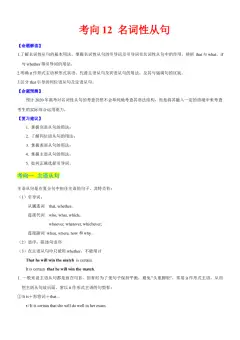
知识回顾
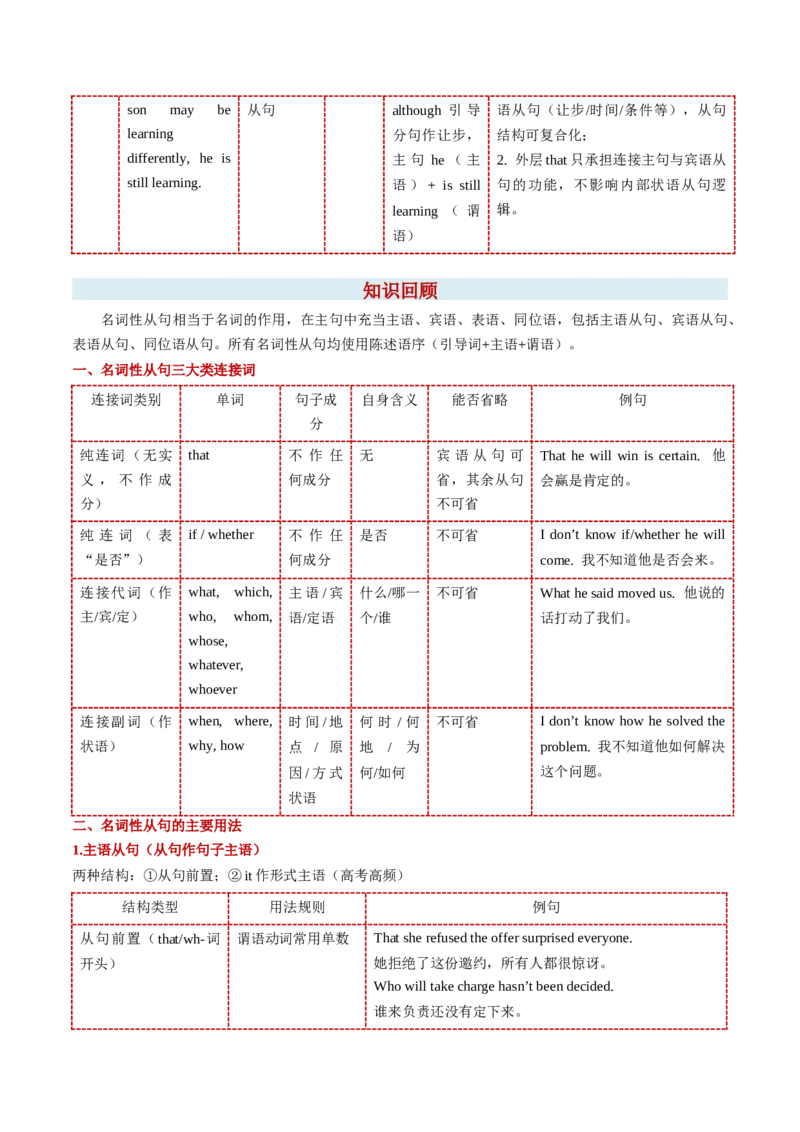
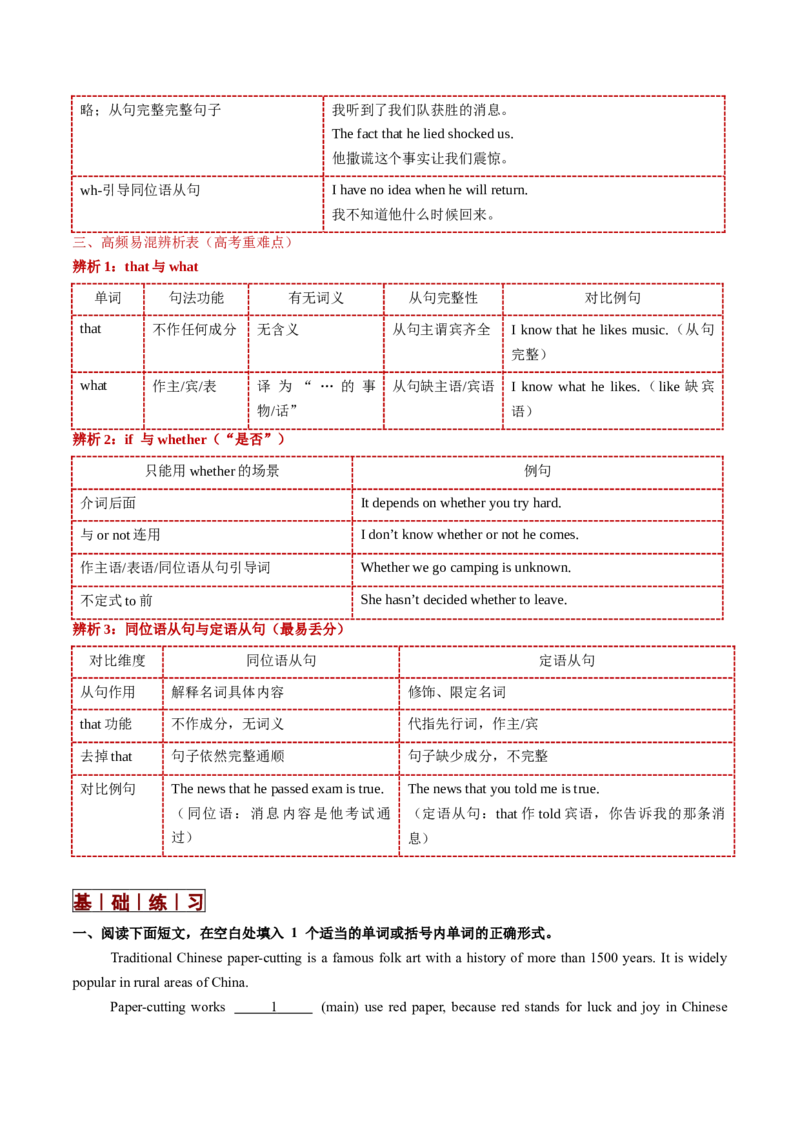
名词性从句相当于名词的作用,在主句中充当主语、宾语、表语、同位语,包括主语从句、宾语从句、
表语从句、同位语从句。所有名词性从句均使用陈述语序(引导词+主语+谓语)。
一、名词性从句三大类连接词
连接词类别
单词
句子成
分
自身含义
能否省略
例句
纯连词(无实
义,不作成
分)
that
不作任
何成分
无
宾语从句可
省,其余从句
不可省
That he will win is certain. 他
会赢是肯定的。
纯连词(表
“是否”)
if / whether
不作任
何成分
是否
不可省
I don’t know if/whether he will
come. 我不知道他是否会来。
连接代词(作
主/宾/定)
what, which,
who, whom,
whose,
whatever,
whoever
主语/ 宾
语/定语
什么/哪一
个/谁
不可省
What he said moved us. 他说的
话打动了我们。
连接副词(作
状语)
when, where,
why, how
时间/ 地
点
/
原
因/ 方式
状语
何时/ 何
地
/
为
何/如何
不可省
I don’t know how he solved the
problem. 我不知道他如何解决
这个问题。
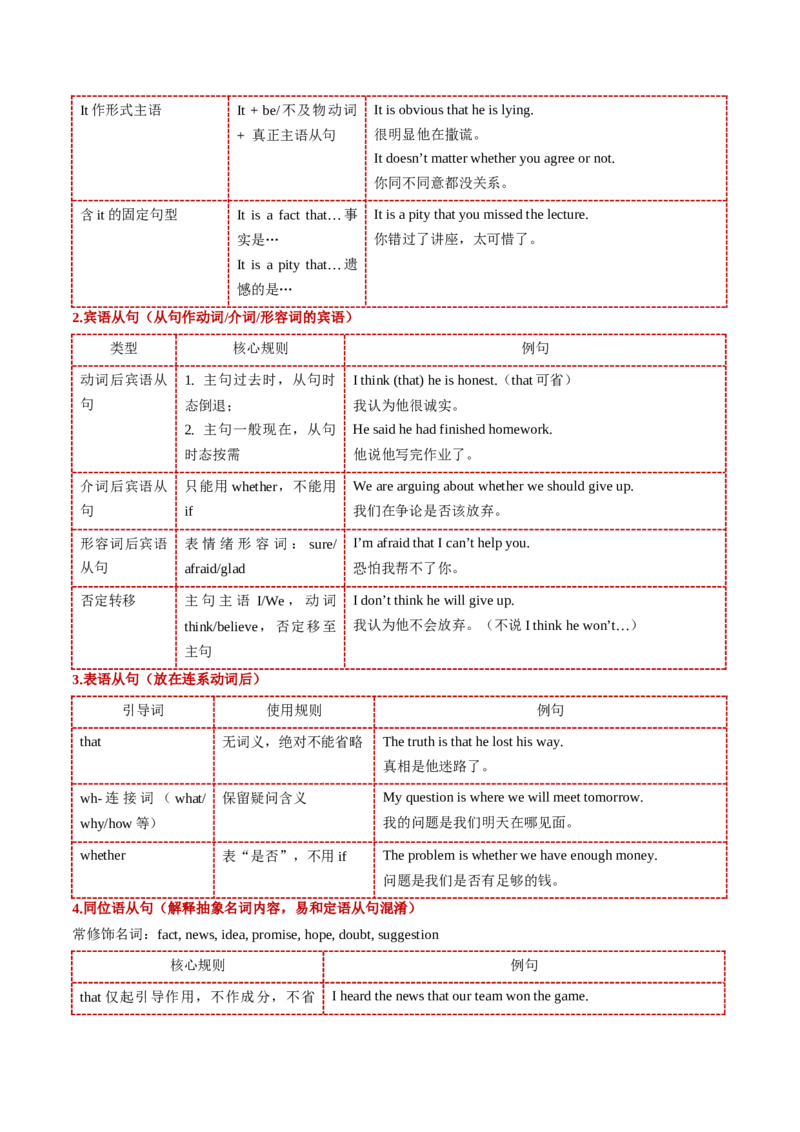
二、名词性从句的主要用法
1.主语从句(从句作句子主语)
两种结构:①从句前置;②it 作形式主语(高考高频)
结构类型
用法规则
例句
从句前置(that/wh-词
开头)
谓语动词常用单数
That she refused the offer surprised everyone.
她拒绝了这份邀约,所有人都很惊讶。
Who will take charge hasn’t been decided.
谁来负责还没有定下来。
It 作形式主语
It + be/不及物动词
+ 真正主语从句
It is obvious that he is lying.
很明显他在撒谎。
It doesn’t matter whether you agree or not.
你同不同意都没关系。
含it 的固定句型
It is a fact that… 事
实是…
It is a pity that… 遗
憾的是…
It is a pity that you missed the lecture.
你错过了讲座,太可惜了。
2.宾语从句(从句作动词/介词/形容词的宾语)
类型
核心规则
例句
动词后宾语从
句
1. 主句过去时,从句时
态倒退;
2. 主句一般现在,从句
时态按需
I think (that) he is honest.(that 可省)
我认为他很诚实。
He said he had finished homework.
他说他写完作业了。
介词后宾语从
句
只能用whether,不能用
if
We are arguing about whether we should give up.
我们在争论是否该放弃。
形容词后宾语
从句
表情绪形容词:sure/
afraid/glad
I’m afraid that I can’t help you.
恐怕我帮不了你。
否定转移
主句主语I/We ,动词
think/believe,否定移至
主句
I don’t think he will give up.
我认为他不会放弃。(不说I think he won’t…)
3.表语从句(放在连系动词后)
引导词
使用规则
例句
that
无词义,绝对不能省略
The truth is that he lost his way.
真相是他迷路了。
wh- 连接词(what/
why/how 等)
保留疑问含义
My question is where we will meet tomorrow.
我的问题是我们明天在哪见面。
whether
表“是否”,不用if
The problem is whether we have enough money.
问题是我们是否有足够的钱。
4.同位语从句(解释抽象名词内容,易和定语从句混淆)
常修饰名词:fact, news, idea, promise, hope, doubt, suggestion
核心规则
例句
that 仅起引导作用,不作成分,不省
I heard the news that our team won the game.
略;从句完整完整句子
我听到了我们队获胜的消息。
The fact that he lied shocked us.
他撒谎这个事实让我们震惊。
wh-引导同位语从句
I have no idea when he will return.
我不知道他什么时候回来。
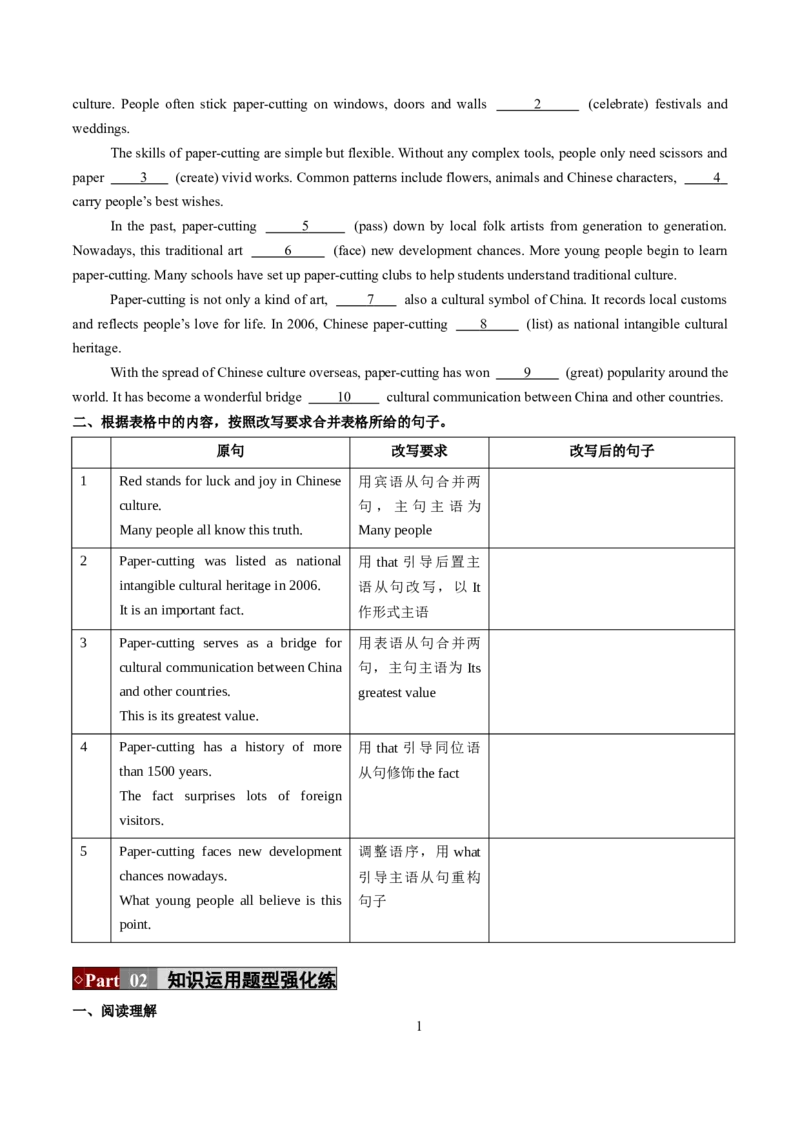
三、高频易混辨析表(高考重难点)
辨析1:that 与what
单词
句法功能
有无词义
从句完整性
对比例句
that
不作任何成分
无含义
从句主谓宾齐全
I know that he likes music.(从句
完整)
what
作主/宾/表
译为“ … 的事
物/话”
从句缺主语/宾语
I know what he likes. (like 缺宾
语)
辨析2:if 与whether(“是否”)
只能用whether 的场景
例句
介词后面
It depends on whether you try hard.
与or not 连用
I don’t know whether or not he comes.
作主语/表语/同位语从句引导词
Whether we go camping is unknown.
不定式to 前
She hasn’t decided whether to leave.
辨析3:同位语从句与定语从句(最易丢分)
对比维度
同位语从句
定语从句
从句作用
解释名词具体内容
修饰、限定名词
that 功能
不作成分,无词义
代指先行词,作主/宾
去掉that
句子依然完整通顺
句子缺少成分,不完整
对比例句
The news that he passed exam is true.
(同位语:消息内容是他考试通
过)
The news that you told me is true.
(定语从句:that 作told 宾语,你告诉我的那条消
息)
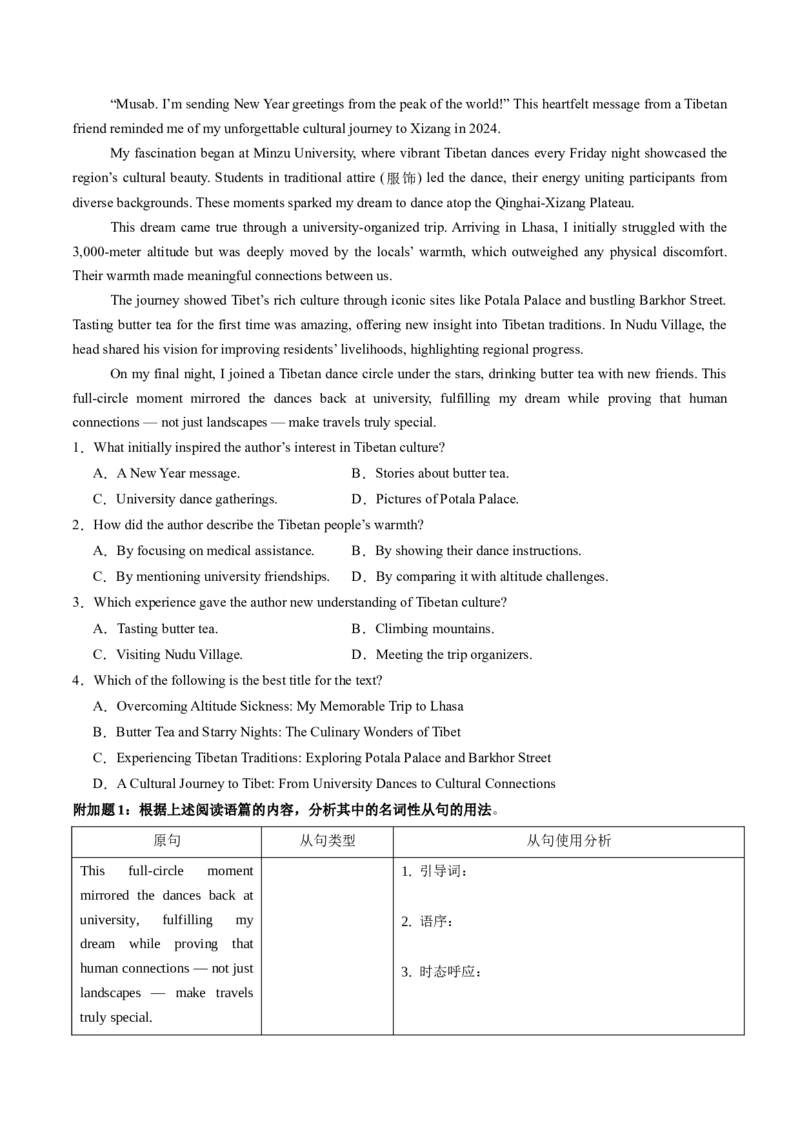
基|础|练|习
一、阅读下面短文,在空白处填入 1 个适当的单词或括号内单词的正确形式。
Traditional Chinese paper-cutting is a famous folk art with a history of more than 1500 years. It is widely
popular in rural areas of China.
Paper-cutting works

 1

  (main) use red paper, because red stands for luck and joy in Chinese
culture. People often stick paper-cutting on windows, doors and walls

 2

  (celebrate) festivals and
weddings.
The skills of paper-cutting are simple but flexible. Without any complex tools, people only need scissors and
paper

 3

  (create) vivid works. Common patterns include flowers, animals and Chinese characters,

 4
carry people’s best wishes.
In the past, paper-cutting

 5

  (pass) down by local folk artists from generation to generation.
Nowadays, this traditional art     6     (face) new development chances. More young people begin to learn
paper-cutting. Many schools have set up paper-cutting clubs to help students understand traditional culture.
Paper-cutting is not only a kind of art,

 7

  also a cultural symbol of China. It records local customs
and reflects people’s love for life. In 2006, Chinese paper-cutting

 8

  (list) as national intangible cultural
heritage.
With the spread of Chinese culture overseas, paper-cutting has won

 9

  (great) popularity around the
world. It has become a wonderful bridge

 10


  cultural communication between China and other countries.
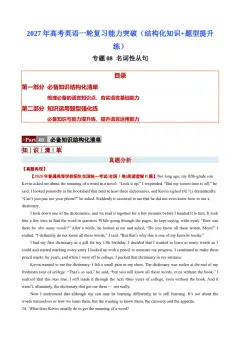
二、根据表格中的内容,按照改写要求合并表格所给的句子。
原句
改写要求
改写后的句子
1
Red stands for luck and joy in Chinese
culture.
Many people all know this truth.
用宾语从句合并两
句,主句主语为
Many people
2
Paper-cutting was listed as national
intangible cultural heritage in 2006.
It is an important fact.
用that 引导后置主
语从句改写,以It
作形式主语
3
Paper-cutting serves as a bridge for
cultural communication between China
and other countries.
This is its greatest value.
用表语从句合并两
句,主句主语为Its
greatest value
4
Paper-cutting has a history of more
than 1500 years.
The fact surprises lots of foreign
visitors.
用that 引导同位语
从句修饰the fact
5
Paper-cutting faces new development
chances nowadays.
What young people all believe is this
point.
调整语序,用what
引导主语从句重构
句子
◇Part 02  知识运用题型强化练
一、阅读理解
1
“Musab. I’m sending New Year greetings from the peak of the world!” This heartfelt message from a Tibetan
friend reminded me of my unforgettable cultural journey to Xizang in 2024.
My fascination began at Minzu University, where vibrant Tibetan dances every Friday night showcased the
region’s cultural beauty. Students in traditional attire (服饰) led the dance, their energy uniting participants from
diverse backgrounds. These moments sparked my dream to dance atop the Qinghai-Xizang Plateau.
This dream came true through a university-organized trip. Arriving in Lhasa, I initially struggled with the
3,000-meter altitude but was deeply moved by the locals’ warmth, which outweighed any physical discomfort.
Their warmth made meaningful connections between us.
The journey showed Tibet’s rich culture through iconic sites like Potala Palace and bustling Barkhor Street.
Tasting butter tea for the first time was amazing, offering new insight into Tibetan traditions. In Nudu Village, the
head shared his vision for improving residents’ livelihoods, highlighting regional progress.
On my final night, I joined a Tibetan dance circle under the stars, drinking butter tea with new friends. This
full-circle moment mirrored the dances back at university, fulfilling my dream while proving that human
connections — not just landscapes — make travels truly special.
1.What initially inspired the author’s interest in Tibetan culture?
A.A New Year message.
B.Stories about butter tea.
C.University dance gatherings.
D.Pictures of Potala Palace.
2.How did the author describe the Tibetan people’s warmth?
A.By focusing on medical assistance.
B.By showing their dance instructions.
C.By mentioning university friendships.
D.By comparing it with altitude challenges.
3.Which experience gave the author new understanding of Tibetan culture?
A.Tasting butter tea.
B.Climbing mountains.
C.Visiting Nudu Village.
D.Meeting the trip organizers.
4.Which of the following is the best title for the text?
A.Overcoming Altitude Sickness: My Memorable Trip to Lhasa
B.Butter Tea and Starry Nights: The Culinary Wonders of Tibet
C.Experiencing Tibetan Traditions: Exploring Potala Palace and Barkhor Street
D.A Cultural Journey to Tibet: From University Dances to Cultural Connections
附加题1:根据上述阅读语篇的内容,分析其中的名词性从句的用法。
原句
从句类型
从句使用分析
This full-circle moment
mirrored the dances back at
university, fulfilling my
dream while proving that
human connections — not just
landscapes — make travels
truly special.
1. 引导词:
2. 语序:
3. 时态呼应:
4. 省略规则:
2
Samvith Mahadevan, 14, suffers from severe food allergies. “I have eagerly eaten foods, only to experience
an itchy mouth, a sore throat, and swollen eyes that are all obvious signs of an allergic reaction,” he says.
He was upset that many available allergen sensors (过敏源检测器) were so expensive and required contact
with food, making them not very useful in daily life. Inspired by how accurately ants seem to find food, Mahadevan
decided to train a volatile organic compound (VOC) sensor. He used machine learning to identify allergens by
“smelling” food particles (分子) floating in the air.
The boy started with a low-cost VOC sensor, and trained the sensor with a machine learning program. He
exposed the sensor to samples of peanuts, eggs, almonds, and walnuts. When he first started training his system, the
accuracy was very low and he had to try a lot of different approaches. There were a lot of failures along the way. He
constantly changed the allergen samples he was using. However, that didn’t work. The accuracy only improved
significantly after he changed some parts of his machine learning program.
After training his program over 2,048 rounds of testing, Mahadevan tested his sensor on real-world products
with allergens, such as almond cookies, peanut butter caramel balls, curries, and muffins. His “nose” achieved an
accuracy rate of 94 to 97 percent in identifying allergens. “This was quite motivating because it showed me that this
idea has a big future. With further development, we could save a lot of lives,” he recalls.
Mahadevan’s research earned him the Lemelson Foundation Award for Invention in 2024. The boy says,
“Once you think about a problem you want to solve, you can keep it in the back of your mind. You have to be
observant all the time and have a curious mind. Sometimes, inexperience develops out-of-the-box thinking.”
5.Why did Mahadevan develop his own allergen sensor?
A.He wanted to cure his food allergy completely.
B.Existing sensors were impractical in daily life.
C.He couldn’t afford the expensive sensors on the market.
D.Ant behavior studies proved existing sensors ineffective.
6.What does the invention imply for allergy sufferers?
A.It works only in laboratory environment.
B.It replaces the need for medical treatment.
C.It helps avoid allergens without touching food.
D.It identifies all the allergies in the real world.
7.What contributed to the obvious increase of the sensor’s accuracy?
A.Increasing testing rounds to 2,048.
B.Using more diverse allergen samples.
C.Switching to a higher-quality VOC sensor.
D.Improving the machine learning program.
8.Which of the following words can best describe Mahadevan?
A.Observant and proud.
B.Persistent and creative.
C.Generous and optimistic.
D.Cautious and modest.
附加题2:根据上述阅读语篇的内容,分析其中的名词性从句的用法。
原句
从句类型
从句使用分析
1
He was upset that many
available allergen sensors
were so expensive and
required contact with food.
1. 句式特征:
2. 引导词:
3. 时态呼应:
2
This was quite motivating
because it showed me that
this idea has a big future.
1. 动词搭配:
2. 时态特殊点:
3. 语序规则:
3
When it comes to natural beauty and great outdoor destinations, Colorado stands out as an exceptional
choice, offering various camping experiences for nature lovers. Discover your ultimate Colorado camping
adventure among these four incredible spots!
Maroon Bells
Consisting of a pair of 14,000-foot snow-capped mountains, the Maroon Bells offers breathtaking views all
year long. There are three campsites in the mountain’s shadow, which are situated close to the town of Aspen. This
is highly convenient if you need to collect food or drinks or just want to walk around town for a bit.
Piñon Flats Campground
For a different camping experience, travel to the Great Sand Dunes (沙丘) National Park. This destination
features towering dunes rather than snow-capped peaks. While skiing and snowboarding are popular winter sports
in Colorado, sandboarding here offers a unique adventure. For those with limited mobility, there are five different
campsites that are wheelchair accessible.
Angel of Shavano Campgrounds
Located inside the San Isabel National Forest, this campground is rarely ever crowded. This is partly due to
its remote nature, which requires a three-hour drive from Denver to get to the location. Therefore, it’s quite easy to
reserve a spot, even during the busier summer months. The thickly wooded forest is also an ideal place for those
looking to escape the busy modern life.
Moraine Park Campground
The site offers excellent views of the breathtaking landscapes. And sharp-eyed campers can often spot
passing wildlife with black bears, mountain lions, and elk all living within the park. Meanwhile, it is another option
for those with limited mobility. There are four wheelchair accessible campsites you can reserve in advance.
9.Which is the easiest campground to book in busy seasons?
A.Maroon Bells.
B.Piñon Flats.
C.Angel of Shavano. D.Moraine Park.
10.What special experience does Piñon Flats offer to visitors?
A.Observing passing wildlife.
B.Sandboarding down towering dunes.
C.Using wheelchair-friendly facilities.
D.Admiring snow-capped mountains.
11.What is the main purpose of the text?
A.To recommend outdoor activities.
B.To introduce famous camping sites.
C.To compare different campgrounds.
D.To attract tourists to the camping sites.
4
Just over half (51%) of published novelists in the UK say that artificial intelligence (AI) is likely to entirely
replace their work, a new University of Cambridge study has found. 59% of novelists say they know their work has
been used to train AI Large Language Models (LLMs) without permission or payment. Most (85%) novelists
expect their future income to be driven down by AI.
The study, led by Dr. Clementine Collett, surveyed 258 novelists to estimate how AI is viewed and used in
the world of British fiction. Genre authors are considered to be the most easily replaceable, according to the report,
with 66% of all those surveyed listing romance authors as “extremely threatened”, followed closely by writers of
thrillers (61%) and crime (60%).
Despite these concerns, overall attitude in UK fiction is not anti-AI, with 80% of participants in the survey
agreeing that AI offers benefits to parts of society. In fact, most novelists use AI in their writing process, mainly for
“non-creative” tasks such as information search.
Novelists feel copyright (版权) laws have not been respected since the emergence of generative AI. They call
for respecting copyright and fair payment for the use of their work. Many warn of a potential loss of originality in
fiction, as well as the loss of trust between writers and readers if AI use is not public. Some worry that suspicions of
AI use could damage their reputation.
Writers fear AI may weaken the deep human connection between writers and readers at a time when reading
is already at historically low levels, particularly among the next generation; only a third of UK children say they
enjoy reading in their free time. Many novelists think AI could lead to plain, more formulaic fiction that increases
stereotypes ( 刻板印象) and they want to see more AI-free creative writing on the school curriculum and
government-backed initiatives aimed at finding new voices to counter risks of homogeneity in fiction brought
about by generative AI.
12.What phenomenon does the author point out in paragraph 1?
A.Novelists’ income has stopped growing. B.Novelists fear AI may change their work.
C.AI brings unexpected benefits to novelists.
D.Novelists actively resist the application of AI.
13.What is the majority view on AI in UK fiction?
A.It can improve creativity capability.
B.It will replace traditional search tools.
C.It has no practical value for society.
D.It serves as an aid in the writing process.
14.What is the novelists’ opinion regarding their work being used to train AI?
A.It should be prohibited completely.
B.AI’s learning mode should be enhanced.
C.It should respect their rights and interests.
D.Gaining high fees is their top demand.
15.What does the underlined word “homogeneity” in the last paragraph mean?
A.Similarity.
B.Contradiction.
C.Competition.
D.Misunderstanding.
附加题3:根据上述阅读语篇的内容,分析其中的名词性从句的用法。
原句
从句类型
从句使用分析
1
A new University of
Cambridge study has
found that artificial
intelligence (AI) is
likely to entirely
replace their work.
1. 文体特征:
2. 省略规则:
3. 长难句规律:
2
Writers fear that AI
may weaken the deep
human connection
between writers and
readers.
1. 动词归类:
2. 时态呼应:
3. 否定转移:
二、完形填空
At Texas A&M University, the halls of learning held more than just lectures and late-night study sessions.
They held the footsteps of a (n)     16     mom who turned her dream into four college degrees.
Jessica Caldwell, a mother of four, spent over a decade     17     the classrooms overnight,     18
more than 26,000 miles behind a cleaning cart (手推车). But what makes her story     19     isn’t just the
distance she covered, it’s the     20     she made along the way.
When her shift     21     at 5 a.m., she had just enough time to     22     her children before running
to attend college courses. “I am     23     for cleaning two of the three buildings on the campus, and some
classrooms have computers,” she said. “So I can find a seat easily and work on my     24     online during my
lunch breaks since I have little time to do homework in the evening.”
Her full-time job made earning a traditional teaching degree     25     impossible, but the professors who
saw her potential helped her find a (n)     26    . By day, she studied in the classroom she cleaned at night,
27     late shifts into stepping stones. She has completed her bachelor’s and master’s degrees while raising four
kids and working full-time, and now she’s     28     to earn her teacher’s license.
“Just be     29     as far as continuing on something that you want to achieve,” Jessica Caldwell says.
With a mop (拖把) in one hand and a master’s degree in the other, Jessica proved that determination can     30
through the quiet corners of a university hallway.
16.A.curious
B.gentle
C.exhausted
D.determined
17.A.sweeping
B.decorating
C.designing
D.monitoring
18.A.measuring
B.recording
C.walking
D.transporting
19.A.confusing
B.amusing
C.terrifying
D.inspiring
20.A.fortune
B.impression
C.adjustment
D.journey
21.A.delayed
B.approached
C.ended
D.changed
22.A.care for
B.calm down
C.cheer up
D.hand over
23.A.fit
B.responsible
C.fearful
D.anxious
24.A.proof
B.application
C.thought
D.assignment
25.A.nearly
B.hardly
C.merely
D.genuinely
26.A.solution
B.excuse
C.target
D.shortcut
27.A.forcing
B.stuffing
C.tricking
D.transforming
28.A.hesitant
B.ready
C.opposed
D.ashamed
29.A.independent
B.innovative
C.persistent
D.generous
30.A.occupy
B.shine
C.drill
D.guard
三、语法填空
阅读下面短文,在空白处填入1 个适当的单词或括号内单词的正确形式。
For more than 2, 000 years, the Chinese people     31     (guide) by the ideas of Confucianism. Now in
Confucius’ birthplace, Shandong province, ancient traditions are not just words in textbooks, but are brilliant, real
experiences.
Elizova Elizaveta,     32     23-year-old Russian student learning Chinese in Qufu, Shandong, recently
took part in one such experience. As she     33     (careful) smoothed a sheet of paper over a stone and
sprinkled (喷洒) it with water, she experienced the magic of the age-old technique of rubbings (拓印). “This unique
practice, which does not exist in Russia, is     34     makes Chinese culture so fascinating,” she said,     35
(trace) the emerging image with her fingers.
Not too far away in Luyuan village in Qufu, tourists get the opportunity to participate in various traditional
experiences. They can try their hand     36     weaving delicate lujin and watch thrilling acrobatic (杂技的)
performances from up close.
These examples of intangible cultural heritage, once nearly     37     (forget), are gaining new life by
combining with modern tourism. They represent Shandong’s push for creative     38     (transform) and
innovative development of fine traditional Chinese culture.
As the birthplace of Qilu culture and home to great thinkers, Shandong uses its long history     39

(keep) old traditions alive today. The province hosted the 11th Nishan Forum on World Civilizations in July 2025,
40     brought together more than 560 guests from over 70 countries and regions. Participants explored the
interplay between cultural diversity and modernization.
四、写作
    假如你是李华,你校将在9 月举办读书活动——“书香嘉年华”(Book Carnival)。请给你的外教Mr.
Johnson 写一封邮件,邀请他参加本次活动,内容包括:
1.活动介绍;
2.邀请Mr. Johnson 做读书分享。
注意:1.字数100 左右;2.可适当增加细节,以使行文连贯;3.不得出现真实姓名和校名。
Dear Mr. Johnson,
____________________________________________________________________________________________
____________________________________________________________________________________________
____________________________________________________________________________________________
____________________________________________________________________________________________
____________________________________________________________________________________________
____________________________________________________________________________________________
____________________________________________________________________________________________
_________________________________________________________________________________
Yours,
Li Hua