文档文本内容
高考读后续写主题通关——师生情谊类
——2023 年新课标全国 I 卷
引言解读
这篇解析以 2023 年新课标全国 I 卷读后续写真题为载体,聚焦 “师生情谊” 这一核心主题,构建
了从文本解读到续写实操的完整指导体系。解析首先通过细致的 “段落大意表” 拆解原文要素,明确人
物(“我” 与老师)、事件(写作比赛的参与过程)、情感(从抗拒到享受的转变)等关键信息,为续
写奠定逻辑基础;接着梳理核心线索,指出师生间 “引导与成长” 的关系是贯穿全文的主线,并提示学
生常见误读陷阱,避免偏离主题。
在此基础上,解析提炼原文情感与动作关键词,预判主旨方向 —— 即 “教师的鼓励与信任,推动
学生突破自我、发现潜能”,为续写划定情感与主题边界。同时,提供场景化语言表达库,涵盖高频动
词、高分句型及应用示例,兼顾语言规范性与表达生动性。
最终,通过 “情节构思三原则”(逻辑连贯、细节支撑、呼应主旨)和写作示例,将理论指导转化
为实操方案,强调续写需承接原文中 “我” 对写作态度的转变,通过 “获奖消息” 与 “赛后交流”
两个场景,深化师生情谊,凸显成长主题。整体解析兼顾文本逻辑、情感脉络与语言技巧,为学生提供了
“理解原文 — 把握主题 — 精准表达” 的完整解题路径,助力在续写中实现内容与形式的统一。
原文解码(what to read)
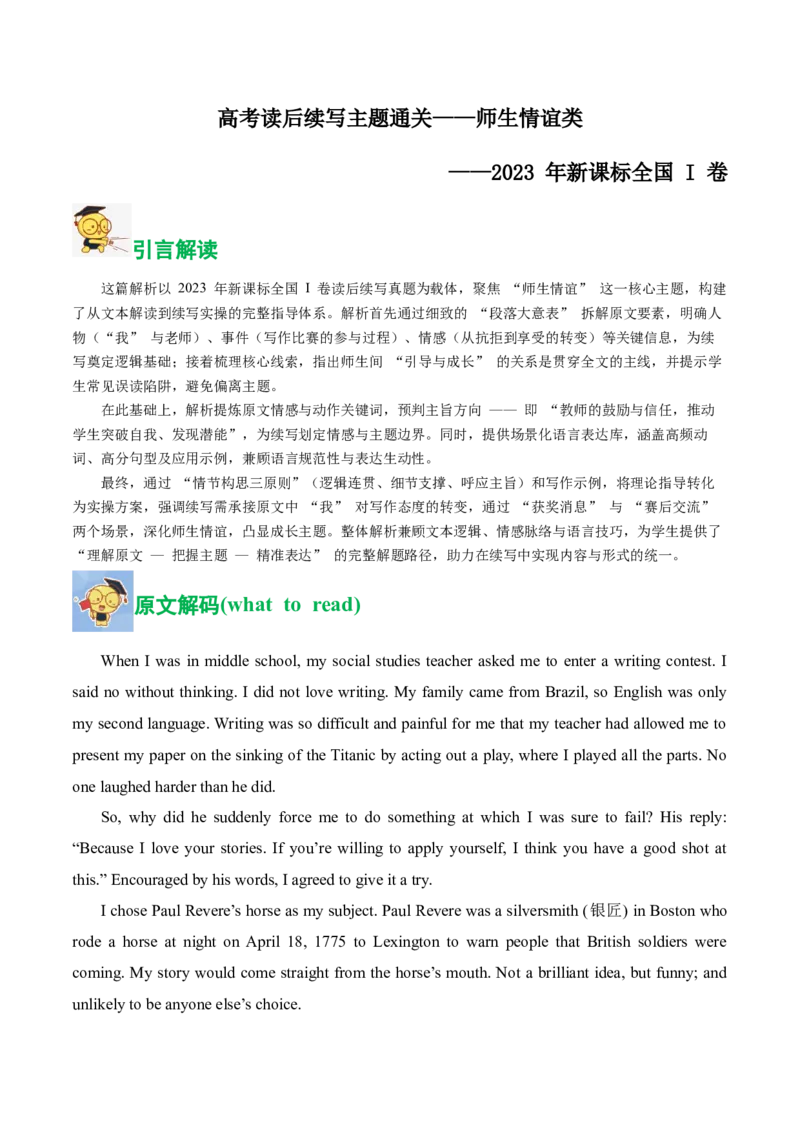
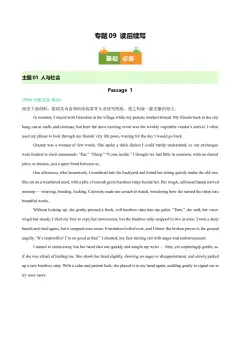
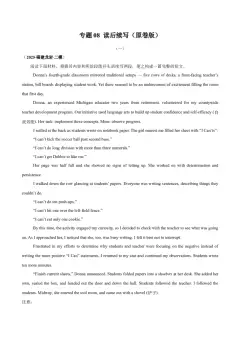
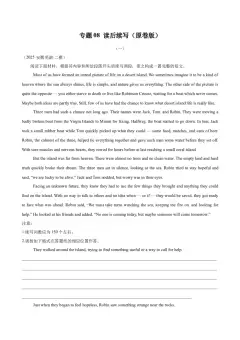
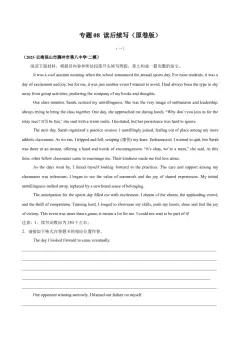
When I was in middle school, my social studies teacher asked me to enter a writing contest. I
said no without thinking. I did not love writing. My family came from Brazil, so English was only
my second language. Writing was so difficult and painful for me that my teacher had allowed me to
present my paper on the sinking of the Titanic by acting out a play, where I played all the parts. No
one laughed harder than he did.
So, why did he suddenly force me to do something at which I was sure to fail? His reply:
“Because I love your stories. If you’re willing to apply yourself, I think you have a good shot at
this.” Encouraged by his words, I agreed to give it a try.
I chose Paul Revere’s horse as my subject. Paul Revere was a silversmith (银匠) in Boston who
rode a horse at night on April 18, 1775 to Lexington to warn people that British soldiers were
coming. My story would come straight from the horse’s mouth. Not a brilliant idea, but funny; and
unlikely to be anyone else’s choice.
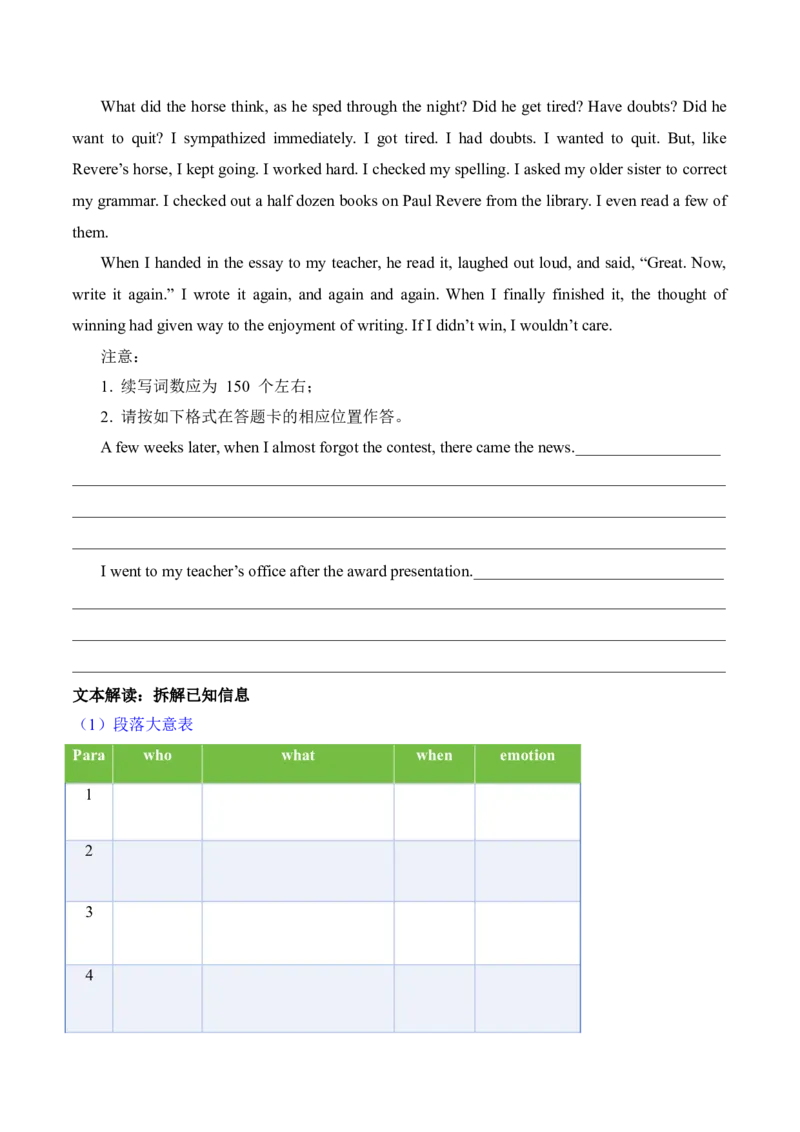
What did the horse think, as he sped through the night? Did he get tired? Have doubts? Did he
want to quit? I sympathized immediately. I got tired. I had doubts. I wanted to quit. But, like
Revere’s horse, I kept going. I worked hard. I checked my spelling. I asked my older sister to correct
my grammar. I checked out a half dozen books on Paul Revere from the library. I even read a few of
them.
When I handed in the essay to my teacher, he read it, laughed out loud, and said, “Great. Now,
write it again.” I wrote it again, and again and again. When I finally finished it, the thought of
winning had given way to the enjoyment of writing. If I didn’t win, I wouldn’t care.
注意:
1. 续写词数应为 150 个左右;
2. 请按如下格式在答题卡的相应位置作答。
A few weeks later, when I almost forgot the contest, there came the news.__________________
_________________________________________________________________________________
_________________________________________________________________________________
_________________________________________________________________________________
I went to my teacher’s office after the award presentation._______________________________
_________________________________________________________________________________
_________________________________________________________________________________
_________________________________________________________________________________
文本解读:拆解已知信息
(1)段落大意表
Para
who
what
when
emotion
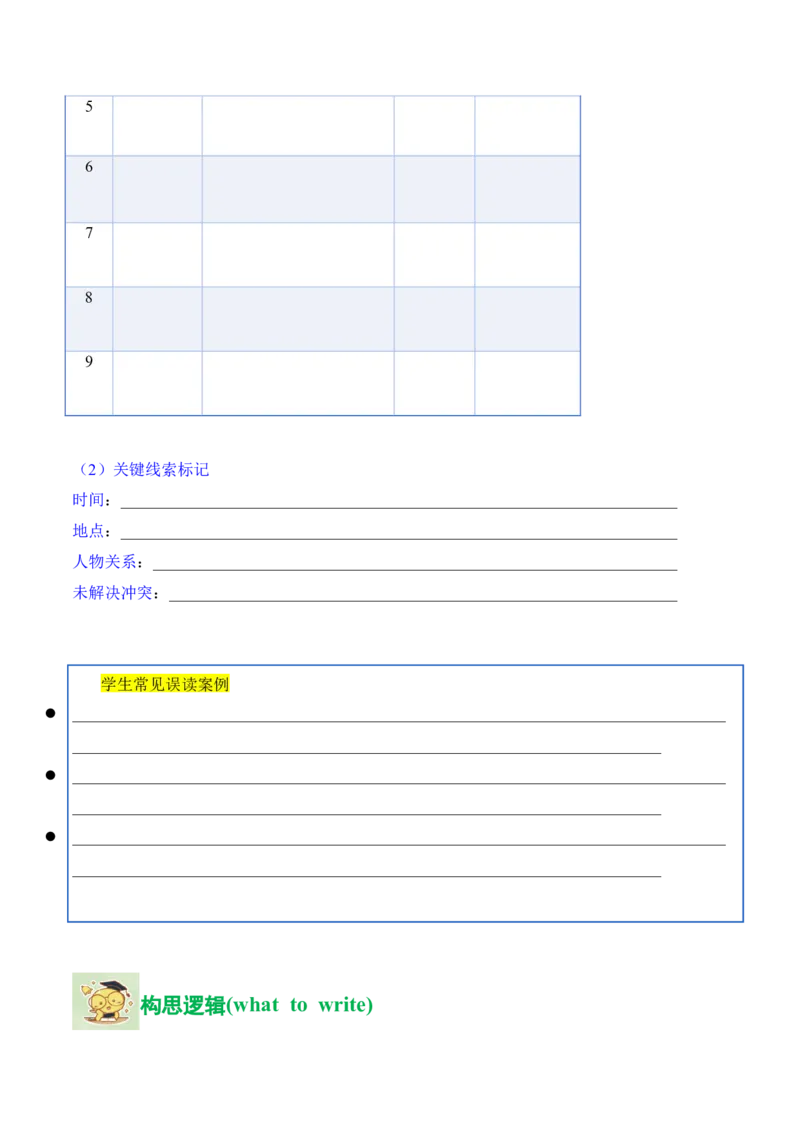
1
2
3
4
5
6
7
8
9
(2)关键线索标记
时间:_____________________________________________________________________
地点:_____________________________________________________________________
人物关系:_________________________________________________________________
未解决冲突:_______________________________________________________________
学生常见误读案例
_________________________________________________________________________________
_________________________________________________________________________
_________________________________________________________________________________
_________________________________________________________________________
_________________________________________________________________________________
_________________________________________________________________________
构思逻辑(what to write)
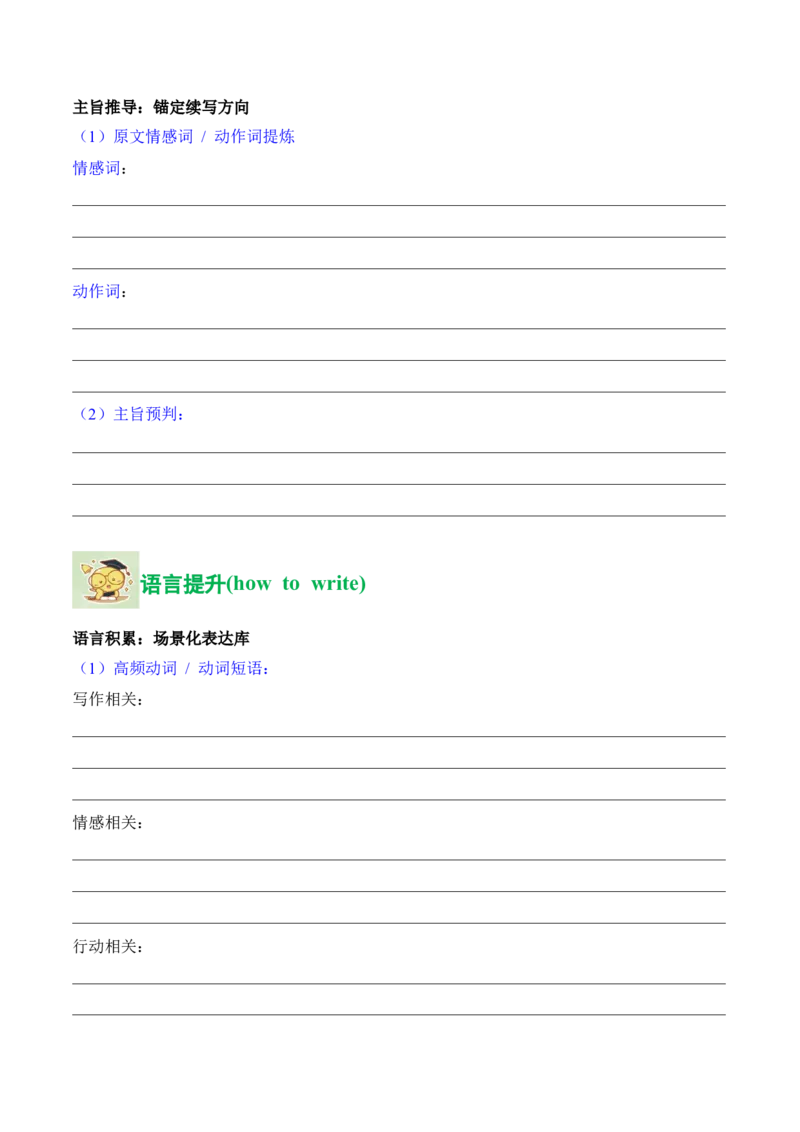
主旨推导:锚定续写方向
(1)原文情感词 / 动作词提炼
情感词:
_________________________________________________________________________________
_________________________________________________________________________________
_________________________________________________________________________________
动作词:
_________________________________________________________________________________
_________________________________________________________________________________
_________________________________________________________________________________
(2)主旨预判:
_________________________________________________________________________________
_________________________________________________________________________________
_________________________________________________________________________________
语言提升(how to write)
语言积累:场景化表达库
(1)高频动词 / 动词短语:
写作相关:
_________________________________________________________________________________
_________________________________________________________________________________
_________________________________________________________________________________
情感相关:
_________________________________________________________________________________
_________________________________________________________________________________
_________________________________________________________________________________
行动相关:
_________________________________________________________________________________
_________________________________________________________________________________
_________________________________________________________________________________
(2)高分句型
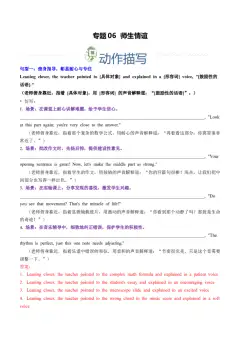
动作描写类
v-ing/v-ed +
①
其它,主语 + 动作 1 + 其它
eg: Staring at the blank screen, I deleted and retyped sentences over and over again. (盯着空白屏
幕,我一遍又一遍地删除和重新输入句子。)
② 主语 + 动作 1 + 动作 2,and 动作 3 + 其它
eg: He taught me how to cut out unnecessary words, how to use more vivid language, and how to
structure my paragraphs for maximum impact.(他教我如何删减不必要的词语,如何使用更生动
的语言,以及如何构建段落以达到最大效果。)
情感描写类
③ 形容词 1 and 形容词 2,主语 + 动词 + 其它
eg: Excited and terrified, I didn't know where to start my first feature story.(既兴奋又恐惧,我不
知道我的第一篇特写报道该从哪里开始。)
Sb. felt a sense of +
④
情绪名词 + welling up from one’s heart.
eg: I felt a sense of pride welling up from my heart when I held the published newspaper.(当我拿
着发表的报纸时,一种自豪感从心底涌起。)
主旨句
⑤ 强调句型
eg: It was the editor's guidance that helped me grow into a qualified writer.(正是编辑的指导帮助
我成长为一名合格的作家。)
⑥ 倒装句
eg: Never had I thought that the challenging first assignment would become a precious memory.(我
从未想过那次充满挑战的首次任务会成为珍贵的回忆。)
⑦ 定语从句
eg: The community center, which had a great impact on people's lives, became the focus of my first
feature story.(那个对人们生活有很大影响的社区中心,成了我第一篇特写报道的焦点。)
其它
With
⑧
复合结构
eg: With the editor's patient help, I gradually mastered the skills of writing feature stories.(在编辑
的耐心帮助下,我逐渐掌握了写特写报道的技巧。)
⑨ 无灵主语
eg: Inspiration suddenly struck me when I recalled the editor's words.(当我想起编辑的话时,灵
感突然来了。)
⑩ 独立主格结构
eg: Notes spread out on the desk, I tried to sort out the key points of the interview.(笔记摊在桌子
上,我努力整理采访的要点。)
(3)小试牛刀
① 意识到自己的错误后,我知道是时候主动联系哥哥,修复我们的关系了。
_________________________________________________________________________________
_________________________________________________________________________________
②编辑走进办公室,拿起我的稿件,仔细阅读后提出了修改建议。
_________________________________________________________________________________
_________________________________________________________________________________
③迷茫又焦虑,我不知该如何完成这篇难度远超以往的报道。
_________________________________________________________________________________
_________________________________________________________________________________
④当看到自己的文章发表在杂志上时,我感到一种巨大的成就感从心底涌起。
_________________________________________________________________________________
_________________________________________________________________________________
⑤正是那些艰难的时刻让我学会了在写作中不断突破自我。
_________________________________________________________________________________
_________________________________________________________________________________
⑥直到多年后,我才明白编辑那些严厉的批评对我而言是多么宝贵。
_________________________________________________________________________________
_________________________________________________________________________________
⑦那本记录着采访细节的笔记本,成了我写作路上的重要伙伴。
_________________________________________________________________________________
_________________________________________________________________________________
⑧随着截稿日期的临近,我更加努力地寻找这篇报道的核心主题。
_________________________________________________________________________________
_________________________________________________________________________________
⑨新的写作任务带来的压力,让我再次想起了第一次写报道时的情景。
_________________________________________________________________________________
_________________________________________________________________________________
⑩稿件散落一地,我坐在椅子上,努力理清混乱的思绪。
_________________________________________________________________________________
_________________________________________________________________________________
实践演练
情节构思三原则
逻辑连贯:
_________________________________________________________________________________
_________________________________________________________________________________
细节支撑:
_________________________________________________________________________________
_________________________________________________________________________________
呼应主旨:
_________________________________________________________________________________
_________________________________________________________________________________
迁移训练
总结与迁移
1)
核心步骤回顾
文本解读融主旨,段落拆解要素明。
人事物时情细看,时空人物冲突清。
背景信息莫轻弃,误读陷阱要绕行。
情感动作细提炼,主旨方向早判定。
贴合原文不偏离,核心思想显其形。
价值导向藏文中,呼应主题贯始终。
2)
知识迁移创新
假设场景:“我” 参加学校的作文比赛,主题是 “最难忘的一天”。“我” 想写小学
时第一次在全校面前演讲的经历,但总觉得写不出当时的紧张与成长。眼看截稿日期快到
了,“我” 对着稿纸发呆,这时曾经鼓励 “我” 演讲的老师走过来看了看 “我” 的草
稿。
The teacher tapped the draft gently, her eyes full of understanding. _______________________
_________________________________________________________________________________
_________________________________________________________________________________
_________________________________________________________________________________
_________________________________________________________________________________
_________________________________________________________________________________
_________________________________________________________________________________
Inspired by the teacher's words, I began to describe the way my voice trembled at first, _______
_________________________________________________________________________________
_________________________________________________________________________________
_________________________________________________________________________________
_________________________________________________________________________________
_________________________________________________________________________________
_________________________________________________________________________________