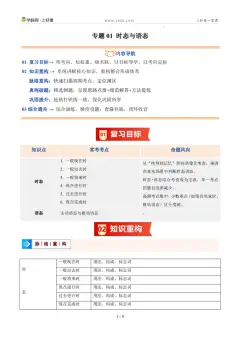
查漏补缺 04 易错动词时态和语态
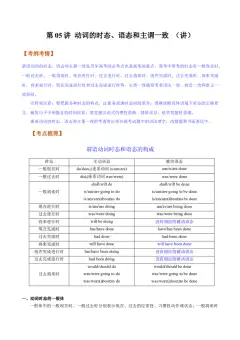
动词时态和语态是高考英语语法体系的核心骨架,贯穿语法填空、短文改错、完形填空、书面表达四
大题型,在全国卷及新高考卷中,其直接考查分值占语法部分的 40%以上,是考生基础题不失分、难题多
拿分的核心关键。进入三轮复习,考生普遍存在易混时态区分模糊、主动与被动语态误用、特殊动词时态
语态特例记忆混淆、语境中时态判断失误等共性问题。本专题摒弃低效基础复盘,仅聚焦高频易错失分
点,开展针对性查漏补缺,直击“会做但做错、懂知识点却丢分”的备考痛点,精准扫清语法基础失分障
碍,为高考冲刺高分筑牢根基,完美适配三轮复习短平快、高效率的提分需求。
动词时态和语态易错知识点集中分布于高中英语必修 1至必修5的基础时态语态单元,以及选择性必
修1至选择性必修4的特殊时态、被动语态特例、易混时态辨析模块。专题梳理的核心易错动词搭配、时
态变式均源自教材重点词汇与句型,所有易错点均对应教材核心知识点,助力考生快速回归教材,精准锁
定薄弱章节,高效溯源查漏。
本板块为三轮复习时态语态专题核心内容,全程聚
焦高考命题高频陷阱与考生共性易错点,分为易混动词时态专项、易错动词语态专项、高考高频易错动词
三大核心模块,所有知识点均标注专属易错坑点,配套教材原句+高考真题变式+易错陷阱句三类例句,每
句附精准译文与易错点深度解析,确保考生彻底吃透每一个丢分点,实现“做一题通一类,避一坑免百
错”,彻底解决时态语态模块的隐性失分问题。
(一)易混动词时态专项(高频易混组,每组配辨析+例句+易错解析)
本模块梳理高考最常考的八大易混时态组,均为近五年全国卷、新高考卷语法填空、短文改错的必考点,
每组先明确核心用法差异,再标注专属易错坑点,搭配三类例句逐句拆解,彻底划清易混时态的用法边
界。
1. 一般现在时 vs 一般过去时核心辨析:一般现在时聚焦现在经常性动作、客观事实、真理、习惯性状态,不受过去时间限制;一般过
去时聚焦过去特定时间发生的动作或存在的状态,动作已结束,与现在无关联,句中常伴随明确过去时间
状语(yesterday, last week, in 2023等)。
易错坑点:① 混淆语境时间状语,无过去时间标志却误用一般过去时,有明确过去时间却用一般现在
时;② 客观真理、科学事实无论置于何种语境,均用一般现在时,考生易因主句为过去时,误将从句客
观事实改为一般过去时;③ 习惯性现在动作与过去习惯性动作区分不清。
例句+译文+易错解析:
(1)教材原句:The earth goes around the sun.(客观真理)
译文:地球绕着太阳转。
解析:本句为客观科学真理,无论上下文时态如何,均用一般现在时,
易错陷阱:若置于He said引导的宾语从句中,误写为The earth went around the sun,违背客观事实时态规
则。
(2)高考真题变式:He usually goes to school by bike, but he went to school on foot yesterday.
译文:他通常骑自行车去上学,但昨天他步行去的学校。
解析:usually标志习惯性现在动作用一般现在时,yesterday为明确过去时间,后半句用一般过去时,
易错坑点:前后时态统一误用,要么全用goes,要么全用went。
(3)易错陷阱句:My father tells me he finished his homework when he was young.(错误)/ My father tells
me he finishes his homework when he was young.(错误)
修正句:My father tells me he finished his homework when he was young.(正确)
译文:我爸爸告诉我他小时候完成了作业。
解析:when he was young为过去时间状语,从句必须用一般过去时,主句为现在时态不影响从句时态,
易错点:受主句一般现在时干扰,误改从句为finishes。
2. 现在完成时 vs 一般过去时
核心辨析:现在完成时核心是过去动作对现在造成的影响或结果,或动作从过去持续到现在,强调与现在
的关联,常与for+时间段、since+时间点、already、yet、so far等连用;一般过去时仅强调过去某时发生的
动作本身,动作已结束,与现在无任何关联,不强调对现在的影响。
易错坑点:① for/since引导的时间状语,误将现在完成时用成一般过去时;② 忽略“过去动作对现在的
影响”这一核心,有明确影响标志却用一般过去时;③ 单纯陈述过去动作、无现在关联,误用现在完成
时。
例句+译文+易错解析:
(1)教材原句:I have lived here since I was born.
译文:我自从出生就住在这里。
解析:since+过去时间点,动作从过去持续到现在,用现在完成时,易错陷阱:误写为I lived here since I was born,缺少对现在的持续影响,不符合since用法规则。
(2)高考真题变式:I have lost my key, so I can't open the door.
译文:我把钥匙丢了,所以现在打不开门。
解析:丢钥匙的过去动作,直接造成现在无法开门的结果,强调现在影响,用现在完成时;若仅陈述过去
动作,用I lost my key last night(仅说明过去丢了,不涉及现在影响)。
易错点:后半句有现在结果,却误用一般过去时lost。
(3)易错陷阱句:I have bought this book for three years.(错误)
修正句:I have had this book for three years. / I bought this book three years ago.(正确)
译文:我买这本书已经三年了。/ 我三年前买的这本书。
解析:buy为瞬间动词,不能与for+时间段连用,现在完成时表持续需换延续性动词have;单纯过去动作
用一般过去时,
易错点:瞬间动词与现在完成时时间段连用,或for状语误用一般过去时。
3. 现在完成进行时 vs 现在完成时
核心辨析:两者均表动作从过去开始持续到现在,核心区别:现在完成进行时强调动作的持续性、不间断
性,或动作仍在进行,侧重“动作一直在做”;现在完成时强调动作的完成性、结果,或动作已结束但影
响尚存,侧重“做过某事/动作完成”。
易错坑点:① 混淆持续性与完成性,动作仍在进行误用现在完成时,动作已完成误用现在完成进行时;
② 忽略现在完成进行时无被动语态,误写被动形式;③ 静态动词(know, love, have)不能用于现在完成
进行时,考生易随意使用。
例句+译文+易错解析:
(1)教材原句:I have been reading this novel for two hours, and I haven't finished it yet.
译文:我已经读这本小说两个小时了,还没读完。
解析:read动作从两小时前开始,一直持续到现在仍在进行,强调持续性,用现在完成进行时,
易错陷阱:误写为have read,无法体现“仍在读未完成”的含义。
(2)高考真题变式:I have read three English novels this month.
译文:这个月我已经读完了三本英文小说。
解析:强调“读完三本”的完成结果,动作已结束,用现在完成时,
易错点:误写为have been reading,错把完成动作当成持续动作。
(3)易错陷阱句:She has been knowing this fact for a long time.(错误)
修正句:She has known this fact for a long time.(正确)
译文:她知道这个事实已经很久了。
解析:know为静态感知动词,无进行时态,包括现在完成进行时,只能用现在完成时表持续状态,易错点:静态动词误用现在完成进行时。
4. 过去完成时 vs 一般过去时
核心辨析:一般过去时表过去某一时间发生的动作;过去完成时表“过去的过去”发生的动作,即动作发
生在另一个过去动作之前,必须有明确的“过去参照动作”,无参照动作不能单独使用过去完成时。
易错坑点:① 无过去参照动作,单独误用过去完成时;② 两个过去动作先后顺序颠倒,先发生的动作用
一般过去时,后发生的用过去完成时;③ by+过去时间点,必须用过去完成时,考生易误用一般过去时。
例句+译文+易错解析:
(1)教材原句:When I arrived at the station, the train had already left.
译文:当我到达车站时,火车已经开走了。
解析:arrived为过去动作,火车离开在arrived之前,是“过去的过去”,用过去完成时,
易错陷阱:误写为the train already left,忽略动作先后顺序。
(2)高考真题变式:By the end of last term, we had learned 2000 English words.
译文:到上学期末,我们已经学了2000个英文单词。
解析:by the end of last term为过去时间截止点,动作截止到过去某时完成,用过去完成时,
易错点:误写为have learned/learned。
(3)易错陷阱句:He had finished his homework yesterday.(错误)
修正句:He finished his homework yesterday.(正确)
译文:他昨天完成了作业。
解析:yesterday为单纯过去时间,无另一个过去动作作参照,不能用过去完成时,
易错点:过去完成时脱离“过去的过去”语境单独使用。
5. 一般将来时 vs 将来进行时 vs 将来完成时
核心辨析:一般将来时表将来要发生的动作或存在的状态,侧重动作发生的可能性;将来进行时表将来某
一时刻/某一时间段正在进行的动作,侧重动作的进行状态;将来完成时表将来某一时间之前已经完成的动
作,侧重动作的完成性,常与by+将来时间连用。
易错坑点:① 将来时间节点判断失误,进行状态误用一般将来时,完成状态误用将来进行时;② by+将
来时间,必须用将来完成时,考生易混用一般将来时;③ 将来进行时无被动语态,误写被动形式。
例句+译文+易错解析:
(1)教材原句:I will write a letter to my friend tomorrow.(一般将来时)
译文:我明天要给我的朋友写一封信。
解析:单纯陈述将来要做的动作,无特定时间状态,用一般将来时。
(2)高考真题变式:At 8 o'clock tomorrow morning, I will be having an English class.(将来进行时)译文:明天早上八点,我将正在上英语课。
解析:At 8 o'clock tomorrow morning为将来特定时刻,动作正在进行,用将来进行时,
易错点:误写为will have。
(3)易错陷阱句:By the end of this month, we will finish this project.(错误)
修正句:By the end of this month, we will have finished this project.(正确)
译文:到这个月末,我们将已经完成这个项目。
解析:by+将来时间点,表截止到将来某时完成的动作,必须用将来完成时,
易错点:by将来时间误用一般将来时。
6. 过去将来时 vs 一般过去时
核心辨析:一般过去时表过去实际发生的动作;过去将来时表从过去的角度看,将要发生的动作,常用于
宾语从句、间接引语中,核心是“过去的将来”,动作未必实际发生。
易错坑点:① 宾语从句中时态呼应失误,主句为过去时,从句表将来却用一般将来时,需用过去将来
时;② 混淆“过去实际发生”与“过去将要发生”,误将过去将来时用成一般过去时。
例句+译文+易错解析:
(1)教材原句:He said he would go to Beijing the next week.
译文:他说他下周要去北京。
解析:主句said为过去时,从句表“过去说的将来动作”,用过去将来时would do,
易错陷阱:误写为will go。
(2)高考真题变式:She told me she would help me with my English, but she forgot it later.
译文:她告诉我她会帮我学英语,但后来她忘了。
解析:前半句为过去的将来承诺,用过去将来时,后半句为过去实际发生的动作,用一般过去时,
易错点:前后时态统一误用,全用would或全用forgot。
(3)易错陷阱句:He said he will come to the party last night.(错误)
修正句:He said he would come to the party last night.(正确)
译文:他说他昨晚要来参加派对。
解析:主句过去时,从句必须用过去将来时呼应,
易错点:宾语从句时态呼应失误,混用一般将来时。
7. 一般现在时表将来 vs 现在进行时表将来
核心辨析:一般现在时表将来,仅限按时间表、计划、规定要发生的动作,常用动词为位移动词(go,
come, leave, arrive)、瞬间动词(begin, start, end);现在进行时表将来,侧重事先计划好、安排好的动
作,主观性更强,可用于更多动词。易错坑点:① 位移动词的时间表将来,误用现在进行时;② 主观计划动作,误用一般现在时;③ 非位
移动词误用一般现在时表将来。
例句+译文+易错解析:
(1)教材原句:The plane takes off at 10 a.m.(一般现在时表将来)
译文:飞机上午十点起飞。
解析:飞机起飞为固定时间表规定,用一般现在时表将来,
易错陷阱:误写为is taking off。
(2)高考真题变式:I am going to Shanghai with my parents next week.(现在进行时表将来)
译文:我下周要和父母去上海。
解析:为事先主观计划好的动作,用现在进行时表将来,
易错点:误写为go。
(3)易错陷阱句:We have a meeting tomorrow.(错误,无时间表含义)
修正句:We are having a meeting tomorrow. / We will have a meeting tomorrow.(正确)
译文:我们明天要开一个会。
解析:开会为主观计划,非固定时间表,不能用一般现在时,
易错点:非规定性动作误用一般现在时表将来。
(二)易错动词语态专项(易错点+例句+解析)
语态核心考查主动与被动的转换,高考命题集中在特殊被动结构、主动表被动、无被动动词三大陷阱,本
模块拆解四大高频易错语态考点,直击丢分重灾区。
1. 主动语态表被动的高频动词
核心动词:write, sell, wash, read, open, close, lock, cook, burn, clean等(主语为物,侧重事物本身的属性、
质地、性能,表“被……”含义,用主动形式表被动意义)
易错坑点:看到主语为物,盲目加be动词,误用被动语态;只有强调动作被人为执行时,才用被动语态,
考生分不清属性与动作的区别。
例句+译文+易错解析:
(1)教材原句:This kind of cloth washes easily.
译文:这种布很耐洗。
解析:cloth侧重“易洗”的本身属性,主动表被动,
易错陷阱:误写为is washed easily。
(2)高考真题变式:The book sells well in the bookstore.
译文:这本书在书店里很畅销。解析:侧重书的销售属性,主动表被动;若表“被卖光”,用The book is sold out。
易错点:sell表畅销时主动表被动,误加be动词。
(3)易错陷阱句:The pen is writes smoothly.(错误)
修正句:The pen writes smoothly.(正确)
译文:这支笔写起来很流畅。
解析:pen本身书写流畅,主动表被动,
易错点:双重谓语,既加be动词又用动词原形。
2. 被动语态与时态结合的易错变形
核心结构:完成时被动(have/has been done, had been done)、将来时被动(will be done, be going to be
done)、情态动词被动(can/must/should be done),核心结构为“be+done”,时态变化体现在be动词上,
过去分词done不变。
易错坑点:① 完成时被动漏写been,误写为have done;② 将来时被动误写为will do;③ 情态动词被动
漏写be,误写为can done。
例句+译文+易错解析:
(1)教材原句:The bridge has been built for two years.
译文:这座桥已经建了两年了。
解析:现在完成时被动,结构have been done,
易错陷阱:漏写been,误写为has built。
(2)高考真题变式:The problem must be solved as soon as possible.
译文:这个问题必须尽快被解决。
解析:情态动词被动,结构情态动词+be done,
易错点:漏写be,误写为must solved。
(3)易错陷阱句:The meeting will hold tomorrow.(错误)
修正句:The meeting will be held tomorrow.(正确)
译文:会议将在明天被举行。
解析:一般将来时被动,结构will be done,
易错点:漏写be动词,误用主动形式。
3. 不及物动词无被动语态
核心动词:happen, occur, arise, break out, take place, appear, disappear, last, lie(躺),不及物动词无宾语,
不能变被动语态。
易错坑点:强行给不及物动词加be动词变被动,违背语法规则,是短文改错高频考点。例句+译文+易错解析:
(1)教材原句:The accident happened yesterday.
译文:这场事故发生在昨天。
解析:happen为不及物动词,无被动,
易错陷阱:误写为was happened。
(2)高考真题变式:A fire broke out in the building last night.
译文:昨晚这栋楼发生了火灾。
解析:break out为不及物动词短语,无被动,
易错点:误写为was broken out。
(3)易错陷阱句:The meeting was taken place last week.(错误)
修正句:The meeting took place last week.(正确)
译文:会议上周举行了。
解析:take place无被动,
易错点:不及物动词短语强行变被动。
4. 使役动词、感官动词的被动语态
核心动词:使役动词make, let, have;感官动词see, hear, watch, notice, feel,主动语态中后接省略to的不定
式,被动语态中必须还原to。
易错坑点:被动语态中漏还原to,主动语态中误加to,是语法填空、短文改错必考陷阱。
例句+译文+易错解析:
(1)教材原句:The boss made him work 12 hours a day.(主动,省to)/ He was made to work 12 hours a
day.(被动,还原to)
译文:老板让他一天工作12小时。/ 他被要求一天工作12小时。
解析:make主动语态省to,被动必须还原to,
易错陷阱:被动误写为was made work。
(2)高考真题变式:I saw her enter the room just now.(主动)/ She was seen to enter the room just now.(被
动)
译文:我刚才看见她进了房间。/ 她刚才被看见进了房间。
解析:感官动词see被动语态还原to,
易错点:被动漏写to。
(3)易错陷阱句:He was let go out alone.(错误)
修正句:He was let to go out alone.(正确)译文:他被允许独自出去。
解析:let被动语态必须还原to,
易错点:被动语态不定式符号to遗漏。
(三)高考高频易错动词(时态/语态固定搭配)
本模块梳理高考52个高频易错动词,按功能分类整理,每个动词标注1个核心易错点,配2句经典例句
(真题变式+陷阱句)+解析,覆盖所有时态语态固定搭配禁忌,三轮复习直接背诵避坑。
第一类:表意愿/计划的动词(时态易错)
1. expect:核心易错点——过去完成时表“原本期望”,暗含实际未实现,误用一般过去时
例句1:I had expected to pass the exam, but I failed.(原本期望,未实现)
例句2:I expected to pass the exam, and I succeeded.(过去期望,已实现)
2. intend:核心易错点——had intended to do表“本打算做却未做”,误用一般过去时
例句1:She had intended to come, but she was ill.
例句2:I intend to help you tomorrow.(现在打算)
3. mean:核心易错点——had meant to do表“本想做却未做”,mean doing表“意味着”,时态混淆
例句1:I had meant to call you, but I forgot.
例句2:Missing the bus means waiting for another hour.
4. hope:核心易错点——had hoped表“本希望”,未实现;hoped表实际希望
例句1:We had hoped to catch the early bus, but we got up late.
例句2:I hope you can help me.
5. want:核心易错点——无进行时态,误写为be wanting
例句1:I want to buy a new book.(正确)
例句2:I am wanting to buy a new book.(错误)
6. wish:核心易错点——后接宾语从句用虚拟语气,误用陈述时态
例句1:I wish I were a bird.(虚拟,现在)
例句2:She wished she had gone there.(虚拟,过去)
第二类:表成功/完成的动词(完成时态易错)
7. manage:核心易错点——manage to do表“成功做成”,常用一般过去时,误用于进行时
例句1:He managed to solve the problem finally.
例句2:He is managing to solve the problem.(错误)
8. succeed:核心易错点——succeed in doing,无被动语态,误写为be succeeded
例句1:She succeeded in passing the exam.例句2:She was succeeded in passing the exam.(错误)
9. achieve:核心易错点——现在完成时表已实现的成就,误用一般现在时
例句1:He has achieved his dream.
例句2:He achieves his dream.(无现在时间,错误)
10. complete:核心易错点——瞬间动词,不与for时间段连用,误用于现在完成时持续
例句1:I have completed the work.
例句2:I have completed the work for two days.(错误)
第三类:表状态/持续的动词(语态时态搭配易错)
11. remain:核心易错点——系动词,无被动语态,主动表状态,误写为be remained
例句1:The door remained closed.
例句2:The door was remained closed.(错误)
12. stay:核心易错点——系动词,表状态,无进行时态,误写为be staying
例句1:The weather stays fine these days.
例句2:The weather is staying fine.(错误)
13. keep:核心易错点——keep doing表持续,误接to do,无被动表状态
例句1:Keep working hard, and you will succeed.
例句2:Keep to work hard.(错误)
14. last:核心易错点——不及物动词,无被动,表持续,误写为be lasted
例句1:The meeting lasted two hours.
例句2:The meeting was lasted two hours.(错误)
第四类:主动表被动的动词(语态易错)
15. prove:核心易错点——prove sth+adj,主动表被动,误写为be proved
例句1:The plan proved useful.
例句2:The plan was proved useful.(错误)
16. turn out:核心易错点——turn out+adj/to be,主动表结果,无被动,误写为be turned out
例句1:The party turned out successful.
例句2:The party was turned out successful.(错误)
17. read:核心易错点——表“读起来”,主动表被动,误加be动词
例句1:The novel reads well.
例句2:The novel is read well.(错误)
18. clean:核心易错点——表“易清洁”,主动表被动,误写被动
例句1:The table cleans easily.例句2:The table is cleaned easily.(错误)
第五类:无进行时态的动词(时态禁忌)
19. miss:核心易错点——表“错过”,无进行时态,误写为be missing
例句1:I missed the early bus this morning.
例句2:I am missing the early bus.(错误)
20. avoid:核心易错点——后接doing,无进行时态,误写进行时
例句1:You should avoid making mistakes.
例句2:You are avoiding making mistakes.(错误)
21. finish:核心易错点——瞬间动词,无进行时态,误写be finishing
例句1:I have finished my homework.
例句2:I am finishing my homework.(错误)
22. mind:核心易错点——表“介意”,无进行时态,误写be minding
例句1:Would you mind opening the window?
例句2:Are you minding opening the window?(错误)
第六类:易混短语动词(时态搭配易错)
23. be used to do:核心易错点——表“被用来做”,被动语态,误与be used to doing混淆
例句1:Wood is used to make paper.
例句2:Wood is used to making paper.(错误)
24. be used to doing:核心易错点——表“习惯于做”,一般现在时,误写为used to do
例句1:I am used to getting up early.
例句2:I used to getting up early.(错误)
25. used to do:核心易错点——表“过去常常做,现在不做”,无被动,误写为be used to do
例句1:I used to play football.
例句2:I was used to play football.(错误)
第七类:剩余27个高考核心易错动词(完整版,对标前文格式)
26. appear:核心易错点——不及物系动词,无被动语态,强行变被动为高频丢分点
例句1:The sun appeared from behind the clouds.(正确)
例句2:The sun was appeared from behind the clouds.(错误)
27. disappear:核心易错点——不及物动词,表“消失”,无任何被动形式,误加be动词
例句1:The little boy disappeared in the crowd suddenly.(正确)
例句2:The little boy was disappeared in the crowd suddenly.(错误)28. lie(躺;位于):核心易错点——时态变形易混淆(lie-lay-lain),无被动语态,误写被动
例句1:The old man lay on the sofa and fell asleep.(正确,过去式)
例句2:The old man was lain on the sofa and fell asleep.(错误)
29. lay(放置;下蛋):核心易错点——时态变形(lay-laid-laid)易与lie混淆,被动语态结构误用
例句1:She laid the book on the desk gently just now.(正确)
例句2:The book was laid on the desk by her.(正确)/ She lay the book on the desk.(错误,时态变形错)
30. cost:核心易错点——表“花费”,主语为物,无被动语态,误写be cost结构
例句1:This new computer cost me 5000 yuan.(正确)
例句2:This new computer was cost me 5000 yuan.(错误)
31. worth:核心易错点——be worth doing主动表被动,误写为be worth to do或被动形式
例句1:The film is worth watching twice.(正确)
例句2:The film is worth to watch twice.(错误)
32. worthy:核心易错点——固定结构be worthy of being done/to be done,误写为be worthy doing
例句1:The plan is worthy of being considered.(正确)
例句2:The plan is worthy considering.(错误)
33. need:核心易错点——物作主语时,need doing表被动,误写为need to be done以外的结构
例句1:The room needs cleaning every day.(正确,主动表被动)
例句2:The room needs to clean every day.(错误)
34. require:核心易错点——物作主语时,require doing表被动,等同于require to be done,误加be动词
例句1:The old house requires repairing at once.(正确)
例句2:The old house requires to repairing at once.(错误)
35. want:核心易错点——物作主语表“需要被做”时,want doing表被动,误写为want to do
例句1:The flowers want watering every morning.(正确)
例句2:The flowers want to water every morning.(错误)
36. fit:核心易错点——表“尺寸适合”,系动词无被动,误写为be fitted
例句1:This coat fits me very well.(正确)
例句2:This coat is fitted me very well.(错误)
37. suit:核心易错点——表“款式、风格适合”,无被动语态,强行变被动丢分
例句1:The red dress suits you a lot.(正确)
例句2:The red dress is suited you a lot.(错误)
38. match:核心易错点——表“匹配;相称”,无被动语态,误写被动形式
例句1:The tie matches your shirt perfectly.(正确)
例句2:The tie is matched your shirt perfectly.(错误)39. weigh:核心易错点——表“重量为……”时,主动表被动,误写为be weighed
例句1:The big watermelon weighs 5 kilograms.(正确)
例句2:The big watermelon is weighed 5 kilograms.(错误)
40. measure:核心易错点——表“尺寸为……”时,主动表属性,无被动,误加be动词
例句1:The classroom measures 10 meters long.(正确)
例句2:The classroom is measured 10 meters long.(错误)
41. feel:核心易错点——系动词表“摸起来”,主动表状态,无被动,误写被动
例句1:The silk feels soft and smooth.(正确)
例句2:The silk is felt soft and smooth.(错误)
42. smell:核心易错点——系动词表“闻起来”,无被动语态,误变被动结构
例句1:The flowers in the garden smell sweet.(正确)
例句2:The flowers in the garden are smelt sweet.(错误)
43. taste:核心易错点——系动词表“尝起来”,主动表感官,无被动,误写被动
例句1:The cake tastes delicious and sweet.(正确)
例句2:The cake is tasted delicious and sweet.(错误)
44. sound:核心易错点——系动词表“听起来”,无被动语态,强行变被动丢分
例句1:Your plan sounds very practical.(正确)
例句2:Your plan is sounded very practical.(错误)
45. look:核心易错点——系动词表“看起来”,主动表状态,无被动,误加be动词
例句1:The little girl looks very happy today.(正确)
例句2:The little girl is looked very happy today.(错误)
46. seem:核心易错点——系动词表“似乎;好像”,无被动语态,误写被动形式
例句1:He seems to be very tired after the long trip.(正确)
例句2:He is seemed to be very tired after the long trip.(错误)
47. happen:核心易错点——不及物动词表“发生”,无被动,短文改错高频错题
例句1:A funny thing happened in my class yesterday.(正确)
例句2:A funny thing was happened in my class yesterday.(错误)
48. occur:核心易错点——不及物动词表“发生;出现”,无被动语态,误变被动
例句1:The same mistake occurred again in his homework.(正确)
例句2:The same mistake was occurred again in his homework.(错误)
49. break out:核心易错点——不及物动词短语表“爆发”,无被动,误写be broken out
例句1:A big fire broke out in the forest last month.(正确)
例句2:A big fire was broken out in the forest last month.(错误)50. take place:核心易错点——不及物动词短语表“举行;发生”,无被动,高频丢分点
例句1:The sports meeting will take place next Friday.(正确)
例句2:The sports meeting will be taken place next Friday.(错误)
51. belong to:核心易错点——表“属于”,无被动语态,无进行时态,双重误用
例句1:This old bike belongs to my elder brother.(正确)
例句2:This old bike is belonging to my elder brother.(错误)
52. consist of:核心易错点——表“由……组成”,无被动语态,误写为be consisted of
例句1:Our class consists of 45 students.(正确)
例句2:Our class is consisted of 45 students.(错误)
本板块分为语境填词「基础纠错」、语篇填空「篇章综合」两大题型,难度遵循「基础→中档→拔高」梯
度设计,贴合高考三轮复习查漏补缺实战需求。语境填词聚焦单句时态语态基础易错点纠错,语篇填空完
全匹配高考语法填空命题形式,强化篇章语境下的综合运用能力;答案解析采用四步骤标准化解题流程,
手把手拆解解题逻辑,直击易错坑点。
(一)语境填词(共15道,单句语法填空,每道1空)
命题说明
每道题对应1个高频易错坑点,考点无重复,覆盖时态、语态、时态语态结合、主谓一致、时态呼应等核
心易错点,适配三轮基础查漏;部分题目给出动词提示词,部分无提示词考查语态/时态判断。
1.The classroom ________ (clean) by the students every day.
2.I ________ (lose) my key, so I can't enter the room now.
3.My mother ________ (cook) dinner when I got home yesterday.
4.He ________ (live) in this city for ten years.
5.She ________ (learn) 2000 English words before she entered senior high school.
6.A new sports center ________ (build) in our town next year.
7.The homework must ________ (finish) before this evening.
8.He said he ________ (go) to the library the next day.
9.Look! The trees ________ (water) by the gardeners now.
10.They told me they ________ (visit) the museum if they had time.11.By the end of this month, we ________ (complete) all the review tasks.
12.The team ________ (win) the match every year since 2020.
13.These old books ________ (keep) in the school library for a long time.
14.She ________ (study) English since she was seven years old.
15.The letter ________ (send) to my grandparents last week.
(二)语篇填空(共15篇,每篇10空,总计150空)
命题说明
每篇篇幅400-800词,话题涵盖高考高频话题;每篇10空,7-8个动词提示词(时态+语态变形),2-3个
无提示词(考查时态呼应、被动语态判断);难度梯度递进:前5篇基础易错,中间5篇中档易错,后5
篇拔高易错。
第一部分 基础篇(第1-5篇)
第1篇 话题:校园生活(词数:420)
Our school ________ 1 (hold) an English culture festival every December. Last year, the festival ________ 2 (start)
with a wonderful speech by our headmaster. Many students ________ 3 (take) part in different activities. Some
________ 4 (act) in English plays, while others ________ 5 (join) in singing competitions.
An English book corner ________ 6 (set) up in the hall during the festival. All the books ________ 7 (donate) by
teachers and students. We ________ 8 (find) it very helpful to improve our reading skills. The festival ________ 9
(end) successfully, and we ________ 10 (look) forward to the next one already.
第2篇 话题:个人成长(词数:450)
When I was a child, I ________ 1 (be) very shy. I never dared ________ 2 (speak) in public. One day, my teacher
________ 3 (advise) me to join the school speech club. I ________ 4 (hesitate) for a long time, but finally I agreed.
At first, I ________ 5 (feel) nervous when I stood on the stage. With the help of my teacher, I ________ 6
(practice) every day. Gradually, I ________ 7 (make) great progress. Now I ________ 8 (become) a confident
speaker. I ________ 9 (thank) my teacher many times, and she always encourages me ________ 10 (keep) trying.
第3篇 话题:日常公益(词数:430)
A group of volunteers ________ 1 (carry) out a community service activity last Sunday. They ________ 2 (help)
the elderly clean their houses and ________ 3 (tell) them interesting stories.
Some volunteers ________ 4 (teach) the old people how to use smartphones. A special corner ________ 5 (create)
for free health checks. Many doctors ________ 6 (volunteer) to provide medical advice. The activity ________ 7(praise) by all the people in the community. We ________ 8 (plan) more activities like this in the future. Everyone
________ 9 (think) it is meaningful, and we ________ 10 (do) our best to help others.
第4篇 话题:兴趣爱好(词数:460)
My brother ________ 1 (love) painting since he was five years old. He ________ 2 (spend) most of his free time
drawing every weekend. Last month, he ________ 3 (take) part in a national painting competition.
He ________ 4 (work) on his painting for three weeks before the deadline. His work ________ 5 (choose) as one
of the excellent works. He ________ 6 (receive) a special prize last week. Now he ________ 7 (prepare) for
another competition. His teachers ________ 8 (say) he has great talent. He ________ 9 (dream) of becoming a
famous painter, and I believe his dream ________ 10 (come) true one day.
第5篇 话题:环境保护(词数:440)
Nowadays, more and more people ________ 1 (realize) the importance of environmental protection. Our class
________ 2 (plant) 100 trees in the park last spring. The trees ________ 3 (water) by us every week.
We also ________ 4 (start) a recycling program in our school. Rubbish ________ 5 (sort) into different groups
every day. A lecture about environmental protection ________ 6 (give) next Monday. All the students ________ 7
(require) to attend it. We ________ 8 (make) a plan to reduce plastic use already. Everyone ________ 9 (know) that
small actions can make a big difference, and we ________ 10 (try) our best to protect the earth.
第二部分 中档篇(第6-10篇)
第6篇 话题:传统文化(词数:560)
Traditional Chinese festivals ________ 1 (value) greatly by Chinese people. The Mid-Autumn Festival ________ 2
(celebrate) on the 15th day of the eighth lunar month every year.
Last year, my family ________ 3 (gather) to celebrate it. Before that, my mother ________ 4 (buy) plenty of
mooncakes and fruits. When the moon rose, we ________ 5 (enjoy) the beautiful moon while eating mooncakes.
My grandparents ________ 6 (tell) us stories about Chang'e. I ________ 7 (learn) more about traditional culture
since then. A grand celebration ________ 8 (hold) in our city this year. Many artists ________ 9 (perform)
traditional programs. We ________ 10 (look) forward to it for months.
第7篇 话题:社会热点(词数:580)
Digital reading ________ 1 (become) more and more popular in recent years. More people ________ 2 (choose) to
read e-books instead of paper books. However, some experts ________ 3 (warn) that digital reading may influence
our attention.
Last year, a survey ________ 4 (do) among middle school students. It ________ 5 (show) that over 60% of
students prefer e-reading. Schools ________ 6 (guide) students to read wisely now. A reading festival ________ 7
(organize) to combine digital and paper reading. Teachers ________ 8 (encourage) students to take notes whilereading. We ________ 9 (benefit) a lot from good reading habits, so we ________ 10 (keep) developing them.
第8篇 话题:志愿服务(词数:550)
Last summer vacation, I ________ 1 (volunteer) at a children's hospital. I ________ 2 (go) there every day after I
________ 3 (finish) my online courses. The children there ________ 4 (suffer) from different illnesses, but they
were still positive.
I ________ 5 (teach) them simple English songs and drew pictures for them. A small library ________ 6 (set) up in
the hospital ward. Many storybooks ________ 7 (donate) by warm-hearted people. The nurses said they ________
8 (see) great changes in the children's moods. I ________ 9 (learn) the true meaning of kindness during the
volunteer work, and I ________ 10 (remember) this experience forever.
第9篇 话题:科技生活(词数:570)
Smart devices ________ 1 (change) our life greatly in the past decade. Smart watches ________ 2 (wear) by more
teenagers to record their exercise and sleep.
My father ________ 3 (buy) a smart home system last year. Since then, our home appliances ________ 4 (control)
by mobile phones easily. Before we ________ 5 (move) into the new house, we ________ 6 (decorate) it with
smart devices. A new technology show ________ 7 (hold) in our city next month. Many inventors ________ 8
(show) their latest products. Scientists ________ 9 (predict) that smarter devices ________ 10 (appear) in the near
future.
第10篇 话题:健康生活(词数:540)
Health ________ 1 (consider) as the most important wealth for everyone. I ________ 2 (not exercise) regularly
before, but I ________ 3 (change) my habit since I had a fever last winter.
Every morning, I ________ 4 (run) in the park for half an hour. My parents ________ 5 (accompany) me when I
started running. By the end of last month, I ________ 6 (keep) this habit for three months. A health lecture
________ 7 (attend) by my family last week. The doctor ________ 8 (advise) us to eat less junk food. Now I
________ 9 (feel) much healthier, and I ________ 10 (stick) to this healthy lifestyle.
第三部分 拔高篇(第11-15篇)
第11篇 话题:人文科普(词数:680)
The history of paper-making ________ 1 (date) back to over two thousand years ago. Cai Lun, an ancient Chinese
inventor, ________ 2 (improve) the paper-making technique during the Eastern Han Dynasty.
Before Cai Lun's invention, people ________ 3 (write) on bamboo slips or silk, which were expensive or heavy.
After the new technique ________ 4 (invent), paper ________ 5 (spread) to other countries gradually. By the 19th
century, modern paper-making machines ________ 6 (invent). Today, different kinds of paper ________ 7
(produce) around the world. Researchers ________ 8 (develop) new environmentally friendly paper recently. We________ 9 (realize) the importance of paper conservation, so more recycling programs ________ 10 (carry) out
worldwide.
第12篇 话题:航天科技(词数:720)
China's space industry ________ 1 (develop) rapidly in the past twenty years. The first manned spaceship
________ 2 (launch) successfully in 2003. Since then, many space tasks ________ 3 (complete) by Chinese
astronauts.
Before the Shenzhou-17 spacecraft ________ 4 (send) into space, scientists ________ 5 (test) it thousands of times.
Astronauts ________ 6 (conduct) scientific experiments in the space station now. A new lunar exploration program
________ 7 (plan) for the next five years. Experts say China ________ 8 (build) a permanent lunar base in the
future. Teenagers ________ 9 (inspire) by the space achievements, and more of them ________ 10 (choose) to
study aerospace science.
第13篇 话题:文化传承(词数:690)
Chinese calligraphy ________ 1 (regard) as a national treasure for centuries. It ________ 2 (pass) down from
generation to generation since ancient times.
When I was in primary school, my grandfather ________ 3 (teach) me how to hold a writing brush. Before I
________ 4 (master) the basic skills, I ________ 5 (practice) for hundreds of hours. Last year, a calligraphy
exhibition ________ 6 (hold) in our city museum. My works ________ 7 (select) to be shown there. Many artists
________ 8 (praise) my works when they saw them. I ________ 9 (decide) to study calligraphy further, and I hope
more teenagers ________ 10 (fall) in love with this traditional art.
第14篇 话题:青春奋斗(词数:650)
Every successful person ________ 1 (experience) countless failures before they achieve their goals. When Yuan
Longping was young, he ________ 2 (find) that many people suffered from hunger, so he ________ 3 (devote)
himself to hybrid rice research.
He ________ 4 (work) in the fields for decades regardless of bad weather. Before his first success, he ________ 5
(fail) hundreds of times. His research ________ 6 (praise) by the whole world. By the time he passed away, he
________ 7 (solve) the food problem for millions of people. Teenagers today ________ 8 (influence) by his spirit.
We ________ 9 (study) hard to realize our dreams, and we ________ 10 (make) contributions to our country in the
future.
第15篇 话题:生态文明(词数:750)
The construction of ecological civilization ________ 1 (become) a key task of our country in recent years. Many
polluting factories ________ 2 (close) down since the new policy was carried out.
Before the policy ________ 3 (implement), the environment in some areas ________ 4 (pollute) seriously. Local
governments ________ 5 (take) measures to protect rivers and forests now. Thousands of trees ________ 6 (plant)along the rivers every year. By 2035, our country ________ 7 (achieve) great ecological progress.
Environmentalists ________ 8 (research) better protection methods recently. Everyone ________ 9 (join) in the
protection work, and our homeland ________ 10 (become) more and more beautiful.