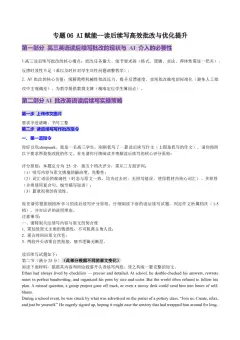
读后续写04-语言描写专题
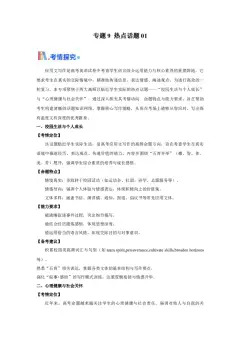
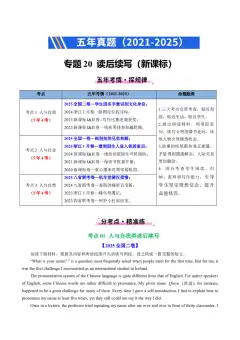
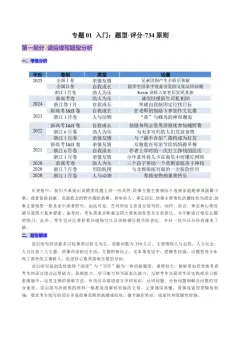
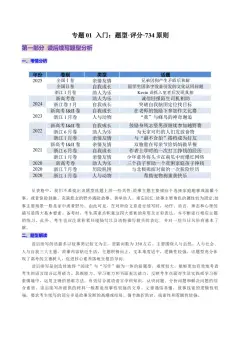
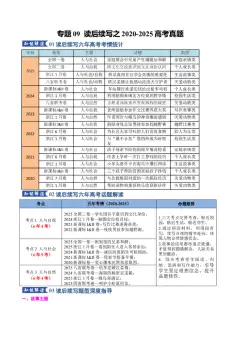
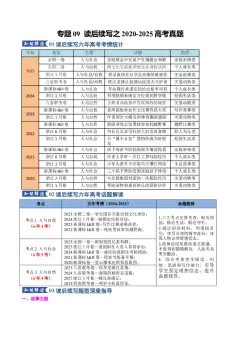
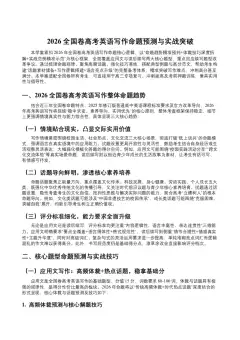
1.考察情况
年份
试卷
场景类
型
考查重点
高频英文词块/短语
占比
2025
全国一
卷
兄弟矛
盾调解
对话推动冲突化
解,语气词暗示
心理
sigh softly, grit one's teeth, murmur in a
trembling voice, pause for a breath
32%
2024
九省联
考
自然环
境
海洋馆场景推动
情节发展
rippling water, dolphin's whistle, cool tile floor,
underwater tunnel
30%
2023
浙江卷
野外遇
险场景
气候描写与求生
情节结合
howling blizzard, frostbitten fingers, snowdrift,
crackling fire
25%
2022
全国一
卷
家庭生
活场景
室内细节反映人
物关系
creaky floorboard, flickering candle, musty
attic, chipped teacup
20%
2021
浙江卷
社会交
往场景
街道环境暗示社
会背景
bustling marketplace, street vendor, graffiti-
covered wall, echoing alley
15%
2.命题规律及备考策略:
(1)命题规律
① 功能多元化:从单纯 “传递信息” 转向 “情节推动 + 心理暗示 + 性格塑造” 三重作用。如
2025 年全国一卷通过 “母亲攥着皱巴巴的试卷,叹气说‘我们再试试’” 的对话,既化解亲子矛盾,
又暗示母亲的包容,为后续 “共同制定学习计划” 铺垫。
② 形式场景化:避免孤立对话,要求结合动作、神态、语气词还原真实语境。2024 九省联考 “社团分
工” 场景中,考生需写出 “Lily 推了推眼镜,指着计划表解释‘这里可以分两组’”,而非仅写 “Lily
said we can divide into two groups”。
③ 潜台词深化:高考倾向考查 “话外音”,如 2023 浙江卷 “邻居阿姨递过一碗热汤:‘刚炖的,孩子
趁热喝’”,未直接说 “关心你”,但通过日常对话传递温情,考查对含蓄表达的把握。
(2)备考策略
按 “积累 — 应用 — 复盘” 三步推进,聚焦 “对话即叙事” 的核心意识:
① 分层积累素材:按 “情感表达 / 信息传递 / 冲突解决 / 日常互动” 四大功能分类词块(如 “安慰
类” 记 “pat sb. gently + murmur ‘It's not your fault’”),关联 “语气词 + 动作”(记 “apologize” 时,
同步积累 “lower one's head + stammer ‘I'm sorry’”),避免只记孤立动词。
② 聚焦微场景应用:设计 10 个高频场景(如 “考试失利安慰”“活动分歧协商”),每篇写 3-5 句对
话(80 词内),写完对照 “是否有动作 / 神态辅助”“是否体现潜台词” 自查,强化 “对话不孤立”
意识。
③ 真题拆解迁移:分析近 3 年真题的语言描写,提炼 “词块 + 技法” 组合(如 2022 全国二卷用
“urge firmly + grab sb.'s arm” 体现紧急),尝试用同类词块改写自己的旧作(如将 “he said angrily” 改
为 “he slammed the door and snapped”),复盘 “对话干巴、无场景感” 等问题。
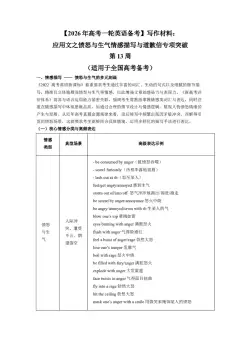
一、必备素材库
(一)情感表达类
基础词汇
happy, sad, angry, worried, sorry
进阶词汇
喜悦:beam(笑容满面地说), chuckle(笑着说), exclaim with delight(欣喜地呼喊)
悲伤:murmur through tears(含泪低语), sob(抽噎着说), sigh heavily(沉重地叹气说)
愤怒:snarl(怒吼), snap(厉声说), grit one's teeth and say(咬牙说)
担忧:frown and say(皱眉说), voice one's concern(表达担忧), hesitate to say(犹豫地说)
歉意:stammer(结巴地说), lower one's head and apologize(低头道歉), say with guilt(愧疚地说)
高考高频词块
安慰:pat sb. on the shoulder and murmur(轻拍某人肩膀低语), soften one's voice and say(放柔声音说),
ease one's anxiety by saying(说... 缓解焦虑)
愤怒:slam the table and snap(拍桌厉声说), glare at sb. and snarl(瞪着某人怒吼), clench one's fists and
say(攥拳说)
担忧:bite one's lip and frown(咬唇皱眉说), glance at sb. worriedly and say(担忧地瞥着某人说), hesitate
for a second before saying(犹豫片刻后说)
高级表达
She knelt down to meet the little girl's eyes, her voice soft as cotton: "Don't cry, honey—we'll find your mom
soon."(她跪下来与小女孩对视,声音软得像棉花:“别哭呀,宝贝 —— 我们很快就能找到妈妈
的。”)—— 动作 + 语气,体现温柔
He slammed the report on the desk, his face flushed with anger: "How could you make such a stupid
mistake?"(他把报告摔在桌上,脸因愤怒涨红:“你怎么能犯这么蠢的错?”)—— 动作 + 神态,强化
愤怒
Grandma wiped the tears from my cheek with her rough hand, murmuring through her own sobs: "It's okay, my
dear—life gets better."(奶奶用粗糙的手擦掉我脸颊的泪,自己也抽噎着低语:“没事的,孩子 —— 日子
会好起来的。”)—— 动作 + 情感共鸣,传递温暖
—————————————————————————————————————————————
(二)信息传递类
基础词汇
tell, explain, say, answer, ask
进阶词汇
解释:elaborate(详细说明), clarify(澄清), gesture while explaining(边做手势边解释)
询问:inquire politely(礼貌询问), press for details(追问细节), wonder aloud(自言自语般询问)
回应:nod and reply(点头回应), respond promptly(立刻回应), add 补充说(补充说)
提醒:remind gently(温柔提醒), warn seriously(严肃警告), call attention to(提醒注意)
高考高频词块
详细解释:point to the chart and elaborate(指着图表详细说明), break down the problem and explain(拆解
问题解释), use examples to clarify(举例澄清)
礼貌询问:smile and inquire politely(微笑礼貌询问), lean forward and ask softly(前倾身体轻声问), phrase
the question carefully(谨慎措辞询问)
及时提醒:tap sb.'s arm and remind(轻碰某人手臂提醒), raise one's voice slightly to warn(略微提高声音
警告), note with a glance(瞥一眼提醒)
高级表达
The tour guide pointed to the ancient painting, gesturing with her index finger as she elaborated: "This part shows
the daily life of nobles in the Tang Dynasty."(导游指着古画,食指比划着详细说明:“这部分展现了唐朝贵
族的日常生活。”)—— 动作辅助,让解释更具象
"Excuse me," the old man leaned forward slightly, inquiring politely, "could you tell me how to get to the nearest
bus stop?"(“打扰一下,” 老人微微前倾身体,礼貌询问:“您能告诉我最近的公交站怎么走吗?”)
—— 动作 + 礼貌语气,符合人物身份
Seeing Tom about to touch the hot pot, Mary tapped his hand quickly and warned seriously: "Don't! It's still
boiling!"(看到汤姆要碰火锅,玛丽赶紧轻拍他的手,严肃警告:“别碰!还开着锅呢!”)—— 动作 +
及时提醒,推动场景安全
—————————————————————————————————————————————
(三)冲突解决类
基础词汇
argue, disagree, apologize, compromise
进阶词汇
争执:quarrel(争吵), debate heatedly(激烈辩论), interrupt sharply(粗暴打断)
让步:give in(让步说), compromise(妥协说), soften one's stance and say(缓和立场说)
和解:hold out one's hand and say(伸手说), smile and forgive(笑着原谅), admit one's mistake(承认错
误)
高考高频词块
激烈争执:raise one's voice to quarrel(提高声音争吵), cut sb. off sharply(粗暴打断某人), argue back and
forth(来回争辩)
主动让步:sigh and give in(叹气让步), relax one's frown and compromise(舒展眉头妥协), say with a sigh
of relief(松口气说)
和解破冰:hold out a peace offering and say(递出和解的小礼物说), pat sb.'s arm and forgive(拍着某人手
臂原谅), laugh it off and say(一笑而过说)
高级表达
"I'm not being stubborn—you just won't listen!" Lucy raised her voice, but when she saw Mike's red eyes, she
softened her stance: "Fine, let's try your way first."(“我不是固执 —— 是你根本不听!” 露西提高了声音,
但看到迈克通红的眼睛,她缓和了立场:“好吧,先按你的方法试试。”)—— 冲突→让步,体现情感
转变
After a minute of silence, John held out his broken toy car and admitted: "I was wrong—I shouldn't have hidden
yours. Let's fix them together."(沉默了一分钟后,约翰递出自己摔坏的玩具车,承认道:“是我错了 ——
不该藏你的玩具。我们一起修好吧。”)—— 动作 + 认错,推动冲突化解
They argued back and forth for ten minutes until Mom walked in, holding two glasses of water: "How about we sit
down and talk slowly? Anger won't solve anything."(他们来回吵了十分钟,直到妈妈端着两杯水走进来:
“不如坐下来慢慢说?生气解决不了问题的。”)—— 第三方介入,用温和对话平息冲突
—————————————————————————————————————————————
(四)日常互动类
基础词汇
greet, thank, invite, refuse
进阶词汇
问候:greet warmly(热情问候), wave and say(挥手说), ask after sb.'s health(询问健康)
感谢:express gratitude(表达感谢), say with a smile(笑着说), thank sincerely(真诚感谢)
邀请:invite eagerly(热切邀请), extend an invitation(发出邀请), ask hopefully(满怀希望地问)
拒绝:decline politely(礼貌拒绝), explain the reason and say(解释原因说), apologize for refusing(道歉
拒绝)
高考高频词块
日常问候:wave from across the street and greet(街对面挥手问候), stop to ask after sb.'s family(停下询问
家人情况), smile and say "Good morning"(笑着说 “早上好”)
真诚感谢:clasp one's hands and express gratitude(双手合十表达感谢), say with a grateful smile(带着感
激的笑容说), thank sb. for the help(感谢帮助)
礼貌邀请:hold out a ticket and invite(递出门票邀请), ask with a hopeful look(带着期待的表情问), say
"Would you like to..."(说 “你愿意... 吗”)
高级表达
Mrs. Lee waved from her garden as we walked by, calling out warmly: "Hi kids! Come over later—I made
cookies!"(我们路过时,李阿姨在花园里挥手,热情喊道:“孩子们好!晚点过来呀 —— 我烤了饼
干!”)—— 日常场景 + 热情语气,还原生活感
"Thank you so much for helping me carry the books," Tom clasped his hands, his eyes bright with gratitude: "I
couldn't have done it alone."(“太谢谢你帮我搬书了,” 汤姆双手合十,眼睛因感激发亮:“我一个人肯
定搬不动。”)—— 动作 + 神态,让感谢更真挚
"Would you like to come to my birthday party this weekend?" Lily held out a hand-drawn invitation, asking
hopefully: "My mom will make your favorite chocolate cake."(“这周末来我生日派对好吗?” 莉莉递出一
张手绘邀请函,满怀希望地问:“我妈妈会做你最爱的巧克力蛋糕。”)—— 动作 + 细节,让邀请更有
吸引力
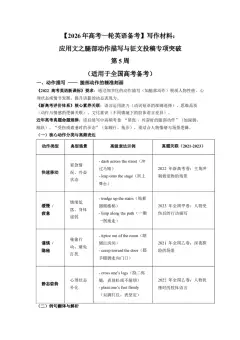
二、三大写作技法
1. “对话 + 动作 / 神态” 联动法(避免干巴对话)
定义:不孤立使用 “sb. said”,而是搭配动作(如 “攥拳”“递东西”)、神态(如 “脸红”“皱
眉”),让对话有场景感、人物更立体。
真题示例(2024 九省联考)
原句:"We need to finish the poster by Friday," Anna said to her group members.
升级:"We need to finish the poster by Friday," Anna tapped the calendar on the desk, her brows furrowed slightly as
she glanced at each member: "Who can take charge of the drawings?"(安娜轻敲桌上的日历,皱眉扫过每个
组员说:“我们周五前要完成海报——谁来负责画图部分?”)
技法解析:通过 “tap the calendar”(动作)和 “brows furrowed”(神态),既体现安娜的 “认真负责”
又自然引出后续分工的对话,让场景更真实。
—————————————————————————————————————————————
2. 潜台词设计法(体现含蓄表达)
定义:不直接说出人物情感或意图,而是通过 “省略、细节暗示” 传递 “话外音”,符合高考 “细腻
描写” 要求。
公式:“具体动作 / 细节 + 简短对话 = 潜台词”
案例
直接表达:Mom was worried about my safety.
潜台词表达:Mom checked my backpack again, tucking a flashlight into the side pocket: "Call me when you get
to school, okay?"(妈妈又检查了一遍我的书包,把一个手电筒塞进侧袋:“到学校给我打电话,好
吗?”)
技法解析:未提 “worried”,但 “检查书包”“塞手电筒”“叮嘱打电话” 的细节,暗藏对 “安全”
的担忧,比直白表达更有感染力。
—————————————————————————————————————————————
3. 语气词 / 停顿还原法(贴近真实语境)
定义:加入日常语气词(如 “Um...”“Well...”“Oh”)、停顿(如 “hesitate for a second”“pause to think”),
让对话更像 “真实的人在说话”,避免书面化生硬感。
真题示例(2023 浙江卷)
原句:The neighbor said she would help me fix the bike.
升级:The neighbor leaned over to look at my broken bike, scratching her head slightly: "Well... I fixed my son's
bike last month. Let me try, okay?"(邻居俯身看着我坏了的自行车,轻轻挠头:“嗯... 我上个月修过我儿
子的车。我试试?”)
技法解析:“Well...” 和 “scratching her head” 体现 “思考是否能帮忙” 的犹豫,还原普通人的真实反
应,让对话更鲜活。
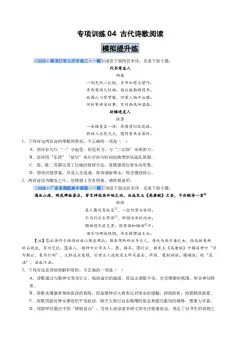
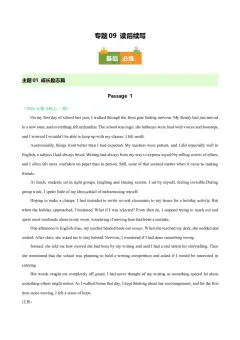
(2025·湖南·一模)阅读下面材料,根据其内容和所给段落开头语续写两段,使之构成一篇完整的短文。
Amy shut the bedroom door behind her, annoyed, “Why do I always have to do the dishes? It’s so unfair!”
she whispered, sinking onto her bed.
Her mother. Mrs. Thompson, always tried to explain. “Doing housework helps you grow into a responsible
person. Amy, And it shows you care about our family.” But Amy never listened. To her, household chores were a
tiresome burden, a waste of her precious teenage years.
One Monday evening, as Amy sat at the dinner table pushing her food around her plate, her mother coughed
violently. Her face turned pale, and she excused herself, saying she wasn’t feeling well, Mrs. Thompson went to bed
early, leaving a sink full of dirty dishes.
Amy thought about asking her mother to wash the dishes later, but something held her back. Remembering
her mother’s pale face and weak voice. Amy was overwhelmed with a strange feeling. For the first time, she noticed
how tired her mother looked lately. She realized that, besides taking care of the family, her mother also worked long
hours at the office.
With a sigh. Amy stood up and walked into the kitchen. She stared at the mountain of dishes, feeling
discouraged. But she rolled up her sleeves. As she washed the plates and bowls, she thought about all the times her
mother had done this without a single complaint. Just as she was finishing up, she heard a soft voice behind her.
“Amy?” It was her mother, looking surprised and touched, “You...you did the dishes.”
Amy turned around, feeling a bit embarrassed, “Yeah, well... you weren’t feeling well. so I thought I’d help
out,” Mrs. Thompson smiled. her eyes filled with pride. “Thank you, dear, That’s very kind of you.”
That night, as Amy lay in bed, she couldn’t stop thinking. Maybe her mother was right. Maybe doing
housework wasn’t just a chore-it was a way to show love and care for her family.
注意:
1.续写词数应为150 个左右;
2.请按如下格式在答题卡的相应位置作答。
The next morning, Amy woke up early and headed straight to the kitchen.


From that day on, Amy’s perspective on doing household chores changed.


(2025·云南·模拟预测)阅读下面材料,根据其内容和所给段落开头语续写两段,使之构成一篇完整的短
文。
On a quiet Sunday evening, Pastor (牧师) Roy was settling into his chair when his phone rang. It was Trisha,
a new member of the small church where Roy had been working for the past five years and Roy was still getting to
know the families.
“Pastor Roy, I’m so sorry that Jeanie fell,” Trisha said, her voice filled with concern. Roy knew Jeanie well;
she was the only church pianist who had broken her wrist in an accident earlier that week. Several members had
offered to help, but Trisha had a different idea. “My son Daniel plays the piano quite well,” she said hesitantly. “If
you’d like, he could fill in until Jeanie recovers.”
Roy paused, momentarily at a loss for words. Daniel was only nine years old. He imagined the audience’s
reaction to a child playing the piano during the Sunday service. Would they be supportive, or would they be
skeptical? He didn’t want to hurt Trisha’s feelings, “May I call you back in a few minutes?” he asked. Trisha agreed,
and he hung up, deep in thought.
Roy leaned back in his chair, reflecting on the situation. He had always emphasized the importance of faith and
trust in his teaching, yet here he was, hesitating over a decision. He decided to seek advice from Ben, a music
director and his close friend. “What if we ask Trisha to bring Daniel to the church on Tuesday evening?” Ben
proposed. “We can listen to him play and then make an informed decision.”
On Tuesday evening, Trisha-arrived at the church with Daniel. Roy and Ben sat in the front row, watching as
Daniel walked up to the piano. He gave a slight bow, a gesture he was used to before his recitals ( 演奏会) . At the
moment, Trisha smiled encouragingly, while Roy and Ben exchanged nervous glances.
注意:
1.续写词数应为150 个左右;
2.请按如下格式在答题纸的相应位置作答。
Daniel sat down and carefully placed the sheet music on the stand.


The following Sunday morning, Roy proudly announced the young pianist to the audience.


一、用单词的适当形式填空。
1.She ______ (murmur) something about being late as she rushed out the door.
2.He ______ (snap) at his sister when she knocked over his toy car.
3.The teacher ______ (explain) the problem patiently, pointing to the blackboard again and again.
4.Mom ______ (sigh) heavily when she saw the messy room.
5.They ______ (argue) back and forth for ten minutes before reaching a compromise.
6.The little boy ______ (stammer) an apology when he broke the vase.
7.Grandma ______ (chuckle) as she told us stories about her childhood.
8.The tour guide ______ (gesture) while ______ (elaborate) on the history of the building.
二、根据意思补全句子
1.She ______ (轻拍我的肩膀) and said softly: "Don't be nervous—it's just a small test."
2.He ______ (攥紧拳头) and snarled: "I won't let you do that!"
3.The old man ______ (微微前倾身体) and inquired politely: "Could you help me read this note?"
4.Lisa ______ (含泪低语) through her sobs: "I miss my mom so much."
5.Dad ______ (指着日历) and reminded us: "Don't forget the family dinner this weekend."
一、句子中译英练习。
1.妈妈把一碗热汤放在我面前,笑着说:“快喝吧,暖暖身子。”


2.他把破碎的玩具递给我,结巴地说:“对不起,我不是故意的。”


3.老师皱着眉,指着我的作业本解释:“这里的公式用错了,我们再算一遍。”


4.邻居阿姨递过一把伞,热情地说:“下雨了,拿着伞,别淋湿了。”


5.妹妹抱着她的玩偶,含泪说:“我的小熊脏了,怎么办呀?”


二、微场景写作
微情境 1:考试失利后的安慰
场景设定:你的朋友 Lisa 考砸了数学,躲在教室角落偷偷哭,你过去安慰她。
训练目标:“对话 + 动作 / 神态” 联动 + 潜台词设计
提示词:teary eyes(含泪的眼睛), crumpled exam paper(皱巴巴的试卷), pat on the back(拍后背),
comfort(安慰)


微情境 2:活动分歧的协商
场景设定:班级计划周末去野餐,你想在公园草坪,同学 Tom 想去湖边,两人产生分歧,最后协商一致。
训练目标:语气词 / 停顿还原 + 冲突解决类对话
提示词:argue back and forth(来回争辩), scratch the head(挠头), compromise(妥协), smile(微笑)


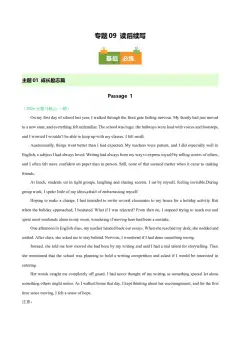
(2025·全国二卷·高考真题)阅读下面材料,根据其内容和所给段落开头语续写两段,使之构成一篇完整
的短文。
“What is your name? ” is a question most frequently asked when people meet for the first time. But for me, it
was the first challenge I encountered as an international student in Ireland.
The pronunciation system of the Chinese language is quite different from that of English. For native speakers
of English, some Chinese words are rather difficult to pronounce. My given name Qiuyu ( 秋雨), for instance,
happened to be a great challenge for many of them. Every time I gave a self-introduction, I had to explain how to
pronounce my name at least five times, yet they still could not say it the way I did.
Once in a lecture, the professor tried repeating my name after me over and over in front of thirty classmates. I
really did not know whether I should continue correcting him or simply drop the matter. I feared that my classmates
might grow tired of my efforts or even lose patience with me. After all, I did care about how others would think of
me. I realized that if I didn’t stop, the entire lecture would be ruined. “It’s okay, professor,” I shrugged (耸肩). The
awkward moment ended with the class erupting into laughter. I forced a smile, unsure how to respond further.
After that incident, I stopped acting as a “Chinese teacher.” Instead of correcting others when they were
struggling to pronounce my name, I just smiled and nodded approvingly. This approach spared me the discomfort
of having to over-explain. However, I soon found that by doing so, I might be losing something more important: the
opportunity to share a small part of my cultural identity.
注意:
(1) 续写词数应为150 个左右;
(2) 请按如下格式在答题卡的相应位置作答。
In a class discussion, I was invited to explain the meaning of my name.


Many of my classmates got interested and came up to me after class.