读后续写09-文化传播专题
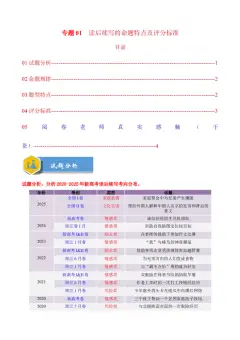
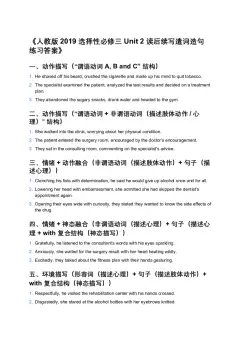
1.考察情况
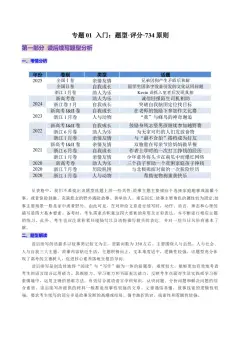
文化传播是高考读后续写中 “人与社会” 主题的重要分支,聚焦 “传统与现代、本土与国际” 的文化
互动,多通过 “非遗传承、传统节日、中外交流、文化创新” 等日常场景,考查学生对文化价值的认知
与传播意识。掌握文化传播类故事的写作框架,学会在跨文化交流或文化传承的场景中构建冲突、刻画
人物、推进情节,并升华至文化自信、理解与共情的主题,符合高考“讲好中国故事”的命题导向。
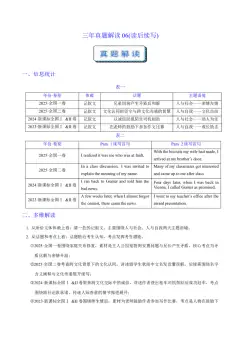
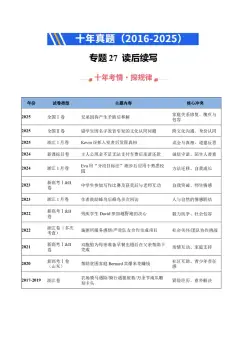
年份
试卷
原文情境
主题升华方向
2025
全国二卷
中文名字的内涵
名字背后的中国文化
2.命题规律及备考策略:
(1)命题规律
①场景“日常化”:高考真题均选择高中生可接触的文化场景,无复杂专业背景,如“学做传统糕点”
“拍非遗短视频”“教外国友人包粽子”,贴近生活体验,降低审题门槛。例如2023 浙江卷“苏式糕点
制作”,聚焦“揉面、包馅、印模”等基础动作,学生易联想具体细节。
②情节“认知—实践—传播”:核心情节围绕“对文化的初始认知(如觉得非遗枯燥)→实践参与(如
学剪纸、做糕点)→主动传播(如展示、教他人)”展开,考查“文化理解—情感转变—传播行动”的
完整逻辑。如2025 新高考I 卷“从被动帮艺人拍视频,到主动设计脚本推广剪纸”。
③主题“文化认同与传承”:不强调“宏大文化叙事”,更侧重“小切口传递大价值”——通过个人经
历(如学技艺、助传播),升华到“文化自信”“跨文化包容”“传统创新”,如2024 全国乙卷“外国
友人学会包粽子后,说‘这是中国的温暖味道’”,体现文化的感染力。
(2) 备考策略(真题导向三步法)
①素材锚定:按“文化传播类型(非遗传承/传统节日/中外交流/文化创新)”分类积累词块,每日10-12
个,关联“动作+文化内涵”。例如记“paper-cutting scissors(剪纸剪刀)”时,同步联想“老艺人握剪
刀的手满是老茧,红纸在指尖翻转成窗花”的场景;记“zongzi wrapping leaves(粽子叶)”时,关联
“奶奶教我折叶、填米,说‘这是端午的念想’”的画面。
②技法适配:针对“文化认知偏差(如觉得非遗过时)、跨文化误解(如外国友人不懂节日习俗)、传
播困难(如短视频没人看)”3 类高频冲突,每类练2 篇50-80 词微场景,自查“冲突化解是否符合文化
逻辑”“文化内涵是否通过细节体现”。例如写“文化自豪”不用“I was proud of our culture”,而用
“my chest swelled when the foreigner praised the paper-cut as‘magic’”;写“文化讲解”不用“I
explained the culture”,而用“pointing to the dragon pattern on the zongzi,I said‘It stands for good luck
in Chinese culture’”。
③真题迁移:分析近3 年真题的“文化传播触发点”(如2025 新高考I 卷“剪纸艺人不懂短视频操作”、
2023 浙江卷“糕点印模损坏”),用同类词块改写旧作。例如将“非遗传播(拍剪纸短视频)”改写为
“非遗传播(拍皮影戏直播)”,保留“学习技艺+解决传播问题+获得关注”的核心逻辑,强化场景适
配能力。
(一)四大场景类型及高频词汇
文化传播类场景围绕“传统与现代、本土与国际”的互动展开,每类场景按“基础词汇—进阶词汇—高
考高频词块—高级表达”分层梳理,确保语言贴合文化场景且传递文化内涵:
1.非遗传承场景(文化传播的核心载体)
基础词汇:paper-cut(剪纸),shadow puppet(皮影),clay figurine(泥塑),craft(手艺),old craftsperson
(老艺人)
进阶词汇:
技艺/道具:intangible cultural heritage(非物质文化遗产,简称ICH),calloused hands(布满老茧的
手),traditional mold(传统模具),hand-carved pattern(手工雕刻图案)
动作/状态:carve carefully(精细雕刻),fold red paper(折叠红纸),paint the puppet(给皮影上色),pass
down the skill(传承技艺)
高考高频词块:
技艺搭配:the old crafts person's calloused hands(老艺人布满老茧的手),the traditional mold for rice cakes
(年糕的传统模具),the hand-carved pattern on the shadow puppet(皮影上的手工雕刻图案)
动作搭配:fold the red paper into a square for paper-cutting(把红纸折成方形准备剪纸),carve the clay figurine
with a small knife(用小刀雕刻泥塑),pass down the shadow puppet skill to the younger generation(把皮影技
艺传给年轻一代)
高级表达:
Sunlight streamed through the workshop window,falling on Grandpa’s calloused hands—he held a piece of red
paper,folding it neatly before picking up the scissors.The sound of“snip-snip”filled the room,and slowly,a phoenix
with outstretched wings took shape on the paper,its feathers detailed and vivid.(阳光透过作坊窗户,落在爷爷
布满老茧的手上——他捏着一张红纸,整齐折叠后拿起剪刀。“咔嚓咔嚓”的声音充满房间,渐渐地,
一只展翅的凤凰在纸上显形,羽毛细腻生动。)
The intangible cultural heritage exhibition hall was quiet except for the soft brush strokes—Ms.Li,the clay figurine
craftsperson,dipped her brush in pink paint,carefully coloring the cheeks of a little figurine.“Each figurine tells a
story,”she said,her voice gentle.“This one is about the Spring Festival.”(非遗展厅里只有轻柔的笔触声——泥
塑艺人李奶奶蘸了点粉色颜料,仔细给小泥塑的脸颊上色。“每个泥塑都有故事,”她声音轻柔,“这
个讲的是春节的事。”)
—————————————————————————————————————————————
2.传统节日场景(文化传播的生活载体)
基础词汇:Spring Festival (春节),Mid-Autumn Festival (中秋节),Dragon Boat Festival (端午
节),mooncake(月饼),zongzi(粽子),lantern(灯笼)
进阶词汇:
习俗/物品:red envelope(红包),family reunion dinner(团圆饭),lantern riddles(灯谜),glutinous rice(糯
米),osmanthus cake(桂花糕)
动作/氛围:paste couplets(贴春联),solve lantern riddles(猜灯谜),make zongzi together(一起包粽
子),gather for reunion(团聚)
高考高频词块:
习俗搭配:paste red couplets on the door for Spring Festival(春节在门上贴红春联),solve lantern riddles under
the moon at Mid-Autumn Festival(中秋节月下猜灯谜),make zongzi with bamboo leaves for Dragon Boat
Festival(端午节用竹叶包粽子)
氛围搭配:the warm atmosphere of the family reunion dinner(团圆饭的温馨氛围),the bright lanterns hanging
on the street during Lantern Festival(元宵节街上悬挂的明亮灯笼)
高级表达:
On New Year’s Eve,the living room was filled with the smell of dumplings—Mom rolled the dough,Dad pasted red
couplets on the door,and my little sister held a lantern,jumping around.When the clock struck twelve,we raised our
glasses of jujube wine,and the sound of firecrackers outside mixed with our laughter.(除夕夜,客厅里满是饺
子的香味——妈妈擀着皮,爸爸在门上贴春联,妹妹举着灯笼蹦蹦跳跳。时钟敲响十二点时,我们举起
红枣酒杯,窗外的鞭炮声和我们的笑声交织在一起。)
The Mid-Autumn Festival moon hung high,and we sat in the yard,sharing a plate of osmanthus mooncakes.Grandma
pointed to the moon,telling the story of Chang’e—her voice was slow,and the moonlight fell on her silver hair,making
the moment feel like a precious painting.(中秋的月亮高高挂着,我们坐在院子里,分享一盘桂花月饼。奶
奶指着月亮,讲嫦娥的故事——她的声音缓缓的,月光落在她的银发上,这一刻像一幅珍贵的画。)
—————————————————————————————————————————————
3.中外文化交流场景(文化传播的跨域载体)
基础词汇:foreign friend(外国友人),exchange student(交换生),teach(教),learn(学),culture(文
化),custom(习俗)
进阶词汇:
人物/行为:international student(国际生),cultural exchange(文化交流),explain the custom(讲解习
俗),experience traditional life(体验传统生活)
物品/场景:Chinese tea set (中国茶具),Peking Opera mask (京剧脸谱),dumpling wrapper(饺子
皮),traditional tea ceremony(传统茶道)
高考高频词块:
互动搭配:teach the foreign exchange student to make dumplings(教交换生包饺子),explain the meaning of
the Peking Opera mask to the international student(给国际生讲解京剧脸谱的含义),invite foreign friends to
experience the traditional tea ceremony(邀请外国友人体验传统茶道)
场景搭配:the kitchen where we taught Lily to wrap zongzi(教莉莉包粽子的厨房),the classroom where Tom
learned to paint Peking Opera masks(汤姆学画京剧脸谱的教室)
高级表达:
Lily,the exchange student from England,stared at the dumpling wrapper in her hand,her tongue sticking out in
concentration.I showed her how to fold the wrapper:“Pinch the edges like this,so the filling doesn’t leak.”She
tried,but the wrapper fell apart—we both laughed,and I handed her a new one.When she finally made a lopsided
dumpling,she held it up proudly:“Look!This is my Chinese dumpling!”(来自英国的交换生莉莉盯着手里的饺
子皮,专注地吐着舌头。我教她怎么折皮:“这样捏边,馅儿就不会漏了。”她试了试,可皮还是散了
——我们都笑了,我又递给她一张新的。当她终于包出一个歪歪扭扭的饺子时,她骄傲地举起来:“看
这是我的中国饺子!”)
Mr.Smith,our English teacher,sat at the tea table,watching Grandma perform the tea ceremony.She poured hot water
into the teapot,waited a minute,then poured the tea into small cups—its light green color and faint fragrance made
Mr.Smith’s eyes widen.“This is more than just tea,”he said.“It’s a beautiful culture.”(我们的英语老师史密斯先
生坐在茶桌旁,看着奶奶表演茶道。她把热水倒进茶壶,等了一分钟,再把茶倒进小杯子里——茶水的
淡绿色和清香让史密斯先生睁大了眼睛。“这不仅仅是茶,”他说,“这是一种美丽的文化。”)
—————————————————————————————————————————————
4.文化创新场景(文化传播的现代载体)
基础词汇:short video(短视频),live stream(直播),new way(新方式),design(设计),promote(推
广)
进阶词汇:
技术/方式:social media(社交媒体),digital platform(数字平台),creative design(创意设计),online
exhibition(线上展览)
动作/成果:shoot a short video(拍短视频),host a live stream(开直播),design a modern version(设计现代
版本),attract online attention(吸引线上关注)
高考高频词块:
创新搭配:shoot a short video about paper-cutting for social media(拍剪纸短视频发社交媒体),host a live
stream of shadow puppet shows on a digital platform(在数字平台开皮影戏直播),design a modern version of
the cheongsam(设计旗袍的现代款式)
成果搭配:the short video about clay figurines that went viral(走红的泥塑短视频),the online exhibition of
Peking Opera masks that attracted 100k views(吸引10 万次观看的京剧脸谱线上展览)
高级表达:
I set up my phone on a tripod,ready to shoot a short video of Grandpa’s paper-cutting.“Smile a little when you talk
about the phoenix,”I said.Grandpa nodded,holding up the finished paper-cut—its wings glittered in the light.When
we posted the video on Douyin,we didn’t expect it to get 50k likes in three days;comments like“This is our traditional
culture!”filled the screen.(我把手机架在三脚架上,准备拍爷爷剪纸的短视频。“讲凤凰的时候笑一笑,”
我说。爷爷点点头,举起剪好的作品——翅膀在灯光下闪闪发亮。我们把视频发到抖音上,没想到三天
就有5 万个赞,屏幕上满是“这是我们的传统文化!”这样的评论。)
Our class decided to host a live stream of the school’s cultural festival.I was in charge of introducing the shadow
puppet show—when the puppets danced on the screen,I explained their stories to the online audience.“The red
puppet is a hero in Chinese legend,”I said.By the end of the live stream,we had 30k viewers,and many left messages
saying they wanted to learn shadow puppetry too.(我们班决定直播学校文化节。我负责介绍皮影戏——当皮
影在屏幕上舞动时,我给线上观众讲解它们的故事。“这个红色的皮影是中国传说里的英雄,”我说。
直播结束时,我们有3 万名观众,很多人留言说也想学习皮影戏。)
(二)高分词块分类素材库
按“文化传播的情感与功能需求”分类,覆盖“情感表达、信息传递、冲突解决、日常互动”四大核
心,每类含基础与进阶词块,适配高考文化主题的细节化写作要求:
1.情感表达类(文化传播中的核心情绪)
情感
类型
基础词块
进阶词块(含动作/细节)
文化
自豪
be proud of culture,love
traditions
chest swell when foreigners praise the paper-cut(外国人称赞剪纸时胸
口发热);run fingers over the old craft and smile(摩挲老手艺品微
笑)
传承
热情
be eager to learn,pass
down skills
stay after school to practice shadow puppet control(放学后留下练习
皮影操控);beg the craftsperson to teach the secret skill(恳求艺人
传授绝技)
跨文
化友
be friendly,help foreign
friends
laugh together when the exchange student fails to make dumplings(交
换生包饺子失败时一起笑);pat the foreigner’s shoulder and
好
say“You’re doing great”(拍外国人肩膀说“你做得很好”)
创新
喜悦
be happy with
innovation,celebrate
success
jump up when the cultural short video goes viral(文化短视频走红时
跳起来);hug teammates after the live stream gets 10k views(直播
破1 万观看时拥抱队友)
2.信息传递类(文化传播中的沟通互动)
互动
类型
基础词块
进阶词块(含动作/文化内涵)
文化
讲解
explain
culture,introduce
customs
point to the dragon on zongzi and say“It stands for good luck”(指着粽
子上的龙说“它代表吉祥”);show the Peking Opera mask and
explain“Red means loyalty”(展示京剧脸谱说“红色代表忠诚”)
技艺
教学
teach a skill,show how
to do sth.
demonstrate folding red paper step by step(一步步示范折红纸);
hold the student’s hand to guide the scissors(握学生的手指导剪法)
创新
建议
suggest new
ways,design ideas
propose shooting a short video of the craft(提议拍手艺短视频);
advise adding modern patterns to the traditional cheongsam(建议在传
统旗袍上加现代图案)
成果
分享
share
achievements,show
works
hold up the finished paper-cut to the camera(对着镜头举起剪好的剪
纸);play the shadow puppet show for the online audience(给线上观
众表演皮影戏)
3.冲突解决类(文化传播中的问题应对)
冲突类
型
基础词块
进阶词块(含过程/解决)
文化认
知偏差
correct
misunderstanding,explain
better
tell the foreigner“It’s not just food—it’s a festival tradition”(告诉
外国人“这不只是食物,是节日传统”);show a video of the
Spring Festival to explain the custom(播放春节视频解释习俗)
技艺学
习困难
help with
difficulty,practice more
slow down to show the clay-carving step again(放慢速度再演示一
次泥塑步骤);give the student a small tool to make the craft easier
(给学生小工具简化操作)
传播效
果不佳
improve the video,adjust
the live stream
add background music about traditional instruments to the short
video(给短视频加传统乐器背景音乐);change the live stream
time to attract more viewers(调整直播时间吸引更多观众)
跨文化
语言障
碍
use gestures,draw pictures
gesture like folding a dumpling to explain the step(做折饺子的手
势解释步骤);draw a moon on paper to talk about Mid-Autumn
Festival(在纸上画月亮讲中秋节)
4.日常互动类(文化传播中的温暖细节)
互动
类型
基础词块
进阶词块(含动作/文化温度)
非遗
体验
互动
make crafts
together,visit
workshops
sit side by side with the old craftsperson to carve clay(和老艺人并排坐雕刻
泥塑);hold the shadow puppet together to make it dance(一起握皮影让它
舞动)
节日
共同
参与
prepare for
festivals,celebrate
together
help mom make dumplings for Spring Festival(帮妈妈包春节饺子);solve
lantern riddles with foreign friends at Mid-Autumn Festival(和外国友人中秋
猜灯谜)
文化
推广
协作
work on
videos,plan
exhibitions
discuss the short video script about paper-cutting(讨论剪纸短视频脚本);
decorate the classroom for the cultural exhibition(布置教室办文化展览)
成果
纪念
留存
take photos,keep
works
take a photo of the foreign friend with her first dumpling(拍外国友人拿着第
一个饺子的照片);keep the paper-cut the craftsperson gave as a gift(珍藏
艺人送的剪纸礼物)
(三)写作技法及应用
针对文化传播“细节传内涵、情感显认同”的核心要求,提炼4 类高频写作技法,每类含“技法说明+基
础/升级范例+文化场景应用+技法解析”,确保可操作、可迁移:
1.“文化细节+情感”联动法
•技法说明:通过“文化物品细节(如剪纸纹路、月饼花纹)”或“技艺动作细节(如捏饺子的力度、雕
刻的手法)”,传递对文化的情感(自豪、热爱、珍视),避免直白抒情。
•基础版:I was proud of Grandpa’s paper-cutting.(我为爷爷的剪纸感到自豪。)
•升级版:Grandpa held up the paper-cut phoenix—its tail feathers had seven layers,each carved so carefully that
you could see the fine lines in the light.I reached out to touch it,and the red paper felt smooth under my fingers. “This
is amazing,”I said,my chest swelling with pride—this wasn’t just a craft,but a piece of our culture.(爷爷举起剪
纸凤凰——它的尾羽有七层,每一层都刻得极细,在灯光下能看到细微的纹路。我伸手去摸,红纸在指
尖下光滑细腻。“太厉害了,”我说,胸口涌起自豪感——这不仅是手艺,更是我们文化的一角。)
•文化场景应用:Lily held her lopsided dumpling,her eyes shining.“Look!I made it!”she said.I pointed to the little
fold on the edge:“That’s called‘the lucky fold’—my grandma says it brings good luck.”Lily traced the fold with her
finger,smiling:“Chinese culture is so warm.”I nodded,happy that she could feel the warmth in this small dumpling.
(莉莉举着她歪歪扭扭的饺子,眼睛亮晶晶的。“看!我包成了!”她说。我指着边缘的小折痕:“这
叫‘吉祥褶’——我奶奶说它能带来好运。”莉莉用手指描摹着折痕,笑着说:“中国文化好温
暖。”我点点头,很高兴她能从这个小饺子里感受到这份温暖。)
•技法解析:通过“七层尾羽”“细微纹路”等剪纸细节,以及“吉祥褶”的文化内涵,让“文化自
豪”和“跨文化温暖”通过具体细节传递,而非空洞的“proud”“warm”,符合高考“细节见主题”的要
求。
—————————————————————————————————————————————
2.文化潜台词设计法
•技法说明:不直接陈述“这是文化传承”“这是文化交流”,而是通过“重复的文化动作(如奶奶每年
做糕点)、特殊的文化物品(如祖传的模具)”暗示文化的延续与传播,让主题更含蓄深刻。
•基础版:Grandma passed down the rice cake skill to me.(奶奶把年糕技艺传给了我。)
•升级版:Grandma took out the wooden mold for rice cakes—it had been in our family for 50 years,its surface
worn smooth by generations of hands.“Your great-grandma used this to make cakes for the village,”she said, pressing
the rice dough into the mold.I followed her,and when we turned the mold over,two round cakes with flower patterns
fell out.“Now you’re the fourth one to use this mold,”Grandma said,her eyes soft.(奶奶拿出年糕的木模具——
它在我们家已经50 年了,表面被几代人的手磨得光滑。“你太奶奶用它给全村人做年糕,”她说着,把
米粉团压进模具。我跟着做,当我们把模具翻过来时,两个带花纹的圆年糕掉了出来。“现在你是第四
个用这个模具的人了,”奶奶说,眼神温柔。)
•文化场景应用:Every Spring Festival,Mom takes out the same red cloth to wrap the zongzi.“This cloth was given
by my mom when I married,”she said.This year,Lily asked to help—Mom wrapped the zongzi in the red cloth,and
Lily copied her.When Lily left,she took a small piece of the cloth:“I’ll use it to wrap zongzi for my family in
England.” Mom smiled—she knew the cloth would carry the Spring Festival to another country.(每年春节,妈
妈都会拿出同一块红布包粽子。“这块布是我结婚时妈妈给的,”她说。今年莉莉要帮忙——妈妈用红
布包粽子,莉莉跟着学。莉莉离开时,拿走了一小块布:“我要带回去给英国的家人包粽子。”妈妈笑
了——她知道这块布会把春节带到另一个国家。)
•技法解析:通过“祖传模具”“代代使用”暗示“技艺传承”,通过“红布从中国到英国”暗示“文化
传播”,避免直白的“pass down”“spread culture”,让文化的延续感和传播力通过物品自然流露,更具感
染力。
—————————————————————————————————————————————
3.多感官文化整合法
•技法说明:在文化场景中融入“视觉(剪纸的颜色、皮影的动作)、听觉(剪刀声、京剧唱腔)、触觉
(红纸的光滑、面团的柔软)、嗅觉(粽子的香味、茶香)、味觉(月饼的甜味、饺子的鲜味)”,让
文化场景可“触摸”“感知”,增强沉浸式体验。
•基础版:We enjoyed the Mid-Autumn Festival together.(我们一起过中秋节。)
•升级版:The Mid-Autumn moon cast silver light on the yard—Grandma placed a plate of osmanthus mooncakes
on the table,their sweet fragrance mixing with the cool night air.I bit into a mooncake,and the osmanthus filling
melted in my mouth,sweet but not greasy.Dad played a Peking Opera tune on his phone,and Lily clapped her
hands:“The music is beautiful!” We sat together,talking and eating,and the moonlight felt like a soft blanket covering
us.(中秋的月亮给院子洒上银辉——奶奶把一盘桂花月饼放在桌上,甜香和清凉的夜气交织。我咬了一
口月饼,桂花馅儿在嘴里化开,甜而不腻。爸爸用手机放京剧选段,莉莉拍手说:“这音乐真好
听!”我们坐在一起,边聊边吃,月光像柔软的毯子裹着我们。)
•文化场景应用:The paper-cutting workshop was a feast for the senses—red paper was piled on the table,the
sound of scissors“snip-snip”filled the air,and Grandpa’s hands,rough from years of cutting,handed me a piece of
paper.I folded it,and the paper felt crisp under my fingers.When I finished my first paper-cut—a small rabbit—I
held it up to the light,and the sunlight made its ears glow.“You’ve got the touch,”Grandpa said,and I smelled the
faint ink on his apron,a smell that felt like home.(剪纸作坊是感官的盛宴——桌上堆着红纸,“咔嚓咔嚓”的
剪刀声充满房间,爷爷那双因常年剪纸而粗糙的手递给我一张纸。我折叠时,红纸在指尖下清脆作响。
当我完成第一个剪纸——一只小兔子时,我把它举到灯光下,阳光让它的耳朵闪闪发亮。“你有这天
赋,”爷爷说,我闻到他围裙上淡淡的墨香,那味道像家一样。)
•技法解析:通过“视觉(银辉、红纸)、听觉(剪刀声、京剧)、嗅觉(甜香、墨香)、味觉(月饼
甜)、触觉(纸脆、手糙)”的多感官整合,让“中秋团圆”和“剪纸传承”的文化场景立体可感,比
单一描写更能传递文化的温度。
—————————————————————————————————————————————
4.文化冲突-解决法
•技法说明:通过“文化认知冲突(如外国友人不懂节日习俗)、技艺学习冲突(如学剪纸总剪坏)”的
设置与解决,展现文化传播中的“理解过程”或“传承过程”,让情节更有层次,主题更突出。
•基础版:Lily learned to understand the Dragon Boat Festival.(莉莉学会理解端午节了。)
•升级版:When Lily first saw zongzi,she frowned:“Why wrap rice in leaves?”I didn’t know how to explain,so I
took her to the community center,where an old man was telling the story of Qu Yuan.Lily listened carefully,her eyes
wide.After that,we went home to make zongzi—she folded the leaves carefully,and when she bit into the zongzi,she
said,“Now I know—this is to remember a hero.”Her smile told me she didn’t just eat a zongzi,but understood a part
of Chinese culture.(莉莉第一次看到粽子时皱起眉头:“为什么要把米包在叶子里?”我不知怎么解释,
就带她去社区中心,那里有位老人在讲屈原的故事。莉莉听得很认真,眼睛睁得大大的。之后我们回家
包粽子——她仔细地折叶子,当她咬下一口粽子时,她说:“现在我知道了——这是为了纪念一位英
雄。”她的笑容告诉我,她不只是吃了一个粽子,还理解了中国文化的一部分。)
•文化场景应用:I wanted to shoot a short video of Grandpa’s shadow puppet show,but he refused:“Old things
don’t belong on phones.” I was upset, but I didn’t give up. I showed him videos of other intangible cultural
heritage crafts on Ticktock: “Look,people love these—they want to learn.” Grandpa watched quietly, and the
next day,he said,“Let’s try.” We shot the video, and when comments like “I want to learn shadow puppetry!”
appeared, Grandpa smiled:“Maybe old things can have new lives.”(我想拍爷爷皮影戏的短视频,但他拒绝
了:“老东西不属于手机。”我很沮丧,但没放弃。我给爷爷看抖音上其他非遗手艺的视频:“你看,
大家喜欢这些——他们想学。”爷爷静静地看着,第二天他说:“咱们试试。”我们拍了视频,当“我
想学皮影戏!”这样的评论出现时,爷爷笑了:“也许老东西也能有新生命。”)
•技法解析:通过“莉莉不懂粽子意义”“爷爷拒绝短视频”的冲突,以及“听故事理解”“看案例改变
想法”的解决过程,展现“跨文化理解”和“文化创新传承”的逻辑,让情节有起伏,主题从“文化传
播”深化到“文化活态传承”,符合高考“情节合理+主题深刻”的要求。
(2025·山东·模拟预测)阅读下面材料,根据其内容和所给段落开头语续写两段,使之构成一篇完整的短
文。
I, an art teacher from New York, have always been drawn to traditional Chinese crafts. Last summer, I traveled
to Weifang, a small city in Shandong Province noted as the “Kite Capital of the World.” The exquisite ( 精美的)
kites of Weifang left me completely amazed. From the moment I arrived, I was greeted by a breathtaking sight:
people crafting kites everywhere, and hundreds of colorful kites soaring gracefully in the sky. The atmosphere was
filled with laughter and excitement as both locals and tourists gathered to celebrate the annual International Kite
Festival.
I spent several days exploring the festival, marveling (大为赞叹) at the complicated designs of the kites.
Some were shaped like impressive dragons, their long bodies twisting and turning in the air. Others resembled
delicate butterflies, their wings decorated with brilliant patterns that seemed to come alive against the blue sky. I
couldn’t resist purchasing several kites to bring back home, each one a true masterpiece of craftsmanship.
When I returned to my classroom in New York, I eagerly shared the kites with my students. Their eyes
widened with wonder as they examined the delicate bamboo frames and the hand-painted rice paper. “They’re so
beautiful!” one student exclaimed (惊呼), holding up a butterfly-shaped kite. Another student, fascinated by a dragon
kite, asked, “How do they make these? They look so light, yet they fly so gracefully.”
Inspired by their enthusiasm, I decided to teach them how to make their own kites. We started with simple
designs, using lightweight materials like bamboo sticks and tissue paper. However, despite our best efforts, the kites
we crafted never flew as well as the ones from Weifang. Some would lose their balance, while others barely managed
to lift off the ground. The students grew disheartened, and so did I. “Why can’t ours fly like the Chinese kites?” one
student asked, her voice tinged with (略带) disappointment. Their words made me realize that making a kite wasn’t
just about assembling (组装) materials; it required a profound (深刻的) understanding of balance, precision, and
the art of aerodynamics (空气动力学). “Why not seek guidance from the people of the ‘Kite Capital of the World’?
They must be experts in kite-making,” I thought to myself.
注意:
1. 续写词数要求应为150 个左右;
2. 请按如下格式在答题卡的相应位置作答。
Eventually I decided to post our kite-making struggles on a Chinese website.
___________________________________________________________________________________________
___________________________________________________________________________________________
___________________________________________________________________________________________
___________________________________________________________________________________________
_______________________________
On a clear, windy day, my students and I took our newly-made kites to a nearby park.
___________________________________________________________________________________________
___________________________________________________________________________________________
___________________________________________________________________________________________
___________________________________________________________________________________________
_______________________________
【范文】One possible version:
Eventually I decided to post our kite-making struggles on a Chinese website. To my surprise, within hours, I
received lots of responses from Weifang kite masters offering detailed advice. One kind craftsman even sent step-
by-step video courses, demonstrating how to properly bend bamboo frames and adjust string tension for perfect
flight. My students and I watched in awe as he made delicate adjustments with practiced ease. “It’s all about the
balance between weight and wind resistance,” he explained through translation. We carefully noted every tip and
redesigned our kites accordingly.
On a clear, windy day, my students and I took our newly-made kites to a nearby park. Holding our breath, we
released them into the sky. This time, the kites flew easily, dancing among the clouds just like the ones in Weifang.
The students cheered as their colorful creations fluttered higher and higher. A passing jogger stopped to admire the
scene, remarking, “Those look like professional kites!” Beaming with pride, one student turned to me and said,
“Now we understand — it’s not just making a kite, it’s creating art that flies.” Watching their joy, I realized our
project had become more than a craft lesson; it was a bridge connecting cultures through shared wonder and
perseverance.
【导语】本文以制作风筝为线索展开,讲述了身为纽约美术老师的作者被潍坊风筝的魅力所震撼,将这
份中国传统工艺带回美国课堂。面对学生制作风筝的困境,作者在中文网站上发布了帖子。通过中国工
匠的远程指导,学生们成功制作出能飞的艺术品,作者领悟到传统工艺背后的文化连接。
【详解】1. 段落续写:
①由第一段首句内容“最终,我决定在一个中文网站上发帖分享我们制作风筝时遇到的困难”可知,第
一段可描写中国的风筝工匠回复了作者的帖子,指导如何成功做出风筝,作者带领学生认真学习,重新
制作风筝。
②由第二段首句内容“在一个晴朗、有风的日子里,我和学生们把我们新做的风筝带到附近的公园”可
知,第二段可描写作者和学生成功放飞风筝,学生们非常开心,作者领悟到这次经历背后文化交流的价
值。
2. 续写线索:发帖求助——工匠指导——作者和学生学习——带着新风筝到公园——作者和学生成功放
飞风筝——作者的感悟
3. 词汇激活
行为类
①收到:receive/get/gain
②展示:demonstrate/show
③解释:explain/clarify/explicate
④意识到:realize/recognize
情绪类
①惊讶:surprise/amazement
②高兴:joy/delight/happiness
【点睛】[高分句型1] My students and I watched in awe as he made delicate adjustments with practiced ease.
(as 引导时间状语从句)
[高分句型2] Holding our breath, we released them into the sky. (现在分词短语作状语)
(2025·辽宁鞍山·一模)阅读下面材料,根据其内容和所给段落开头语续写两段,使之构成一篇完整的短
文。
Studying abroad in Canada, I never thought that the small chopsticks would become a unique barrier in my
cross-cultural adaptation.
For a Chinese student, using chopsticks to eat is the most natural thing. But here, every time I ate in the
cafeteria and skillfully picked up food with chopsticks, the foreign classmates around me always cast curious and
slightly confused looks, and from time to time, there were whispers: “How do they do that?” At first, I would smile
and briefly explain how to use chopsticks to them. But as the number of times increased, the sense of strangeness
brought about by cultural differences gradually made me feel uncomfortable. Even for a moment, I hesitated to
switch to a knife and fork to eat in order to fit in.
During a group dinner, everyone sat around the restaurant. I habitually reached out for chopsticks. Jack, who
was in the same group, saw this and exclaimed excitedly: “Hey, let’s see your magic with chopsticks!” As he spoke,
he also picked up a pair of chopsticks and clumsily imitated. But before he could pick up anything, the chopsticks
slipped from his hand. The other classmates laughed, and my face burned. I lowered my head to eat awkwardly, but
my heart was in a mess. I realized that in their eyes, chopsticks were just a novel “performance prop (道具)”, and I,
as a “foreigner” using chopsticks, seemed to have become an object of observation.
After that, when facing others’ curiosity about chopsticks, I lost the initial enthusiasm to share and just
casually smiled. I was afraid of this excessive attention, afraid that my cultural habits would become an “outsider
label” in the eyes of others. I even began to deliberately reduce the number of times I used chopsticks in public,
trying to make myself  “fit in” with the local dining style.
注意:
1.续写词数应为150 个左右;
2.请按如下格式在答题卡的相应位置作答。
Until one day, the school held an international cultural festival.
___________________________________________________________________________________________
___________________________________________________________________________________________
___________________________________________________________________________________________
I started to patiently explain how to hold chopsticks and what they symbolize.
___________________________________________________________________________________________
___________________________________________________________________________________________
___________________________________________________________________________________________
【范文】
Until one day, the school held an international cultural festival. Each country’s student union was required to
set up a booth to showcase their own culture. Our Chinese student union decided to take chopsticks as the theme.
At first, I was a little hesitant, but when I saw my classmates actively preparing, I was also infected by their
enthusiasm. I thought, since chopsticks are an important part of Chinese culture, why not let more people know and
understand them?
I started to patiently explain how to hold chopsticks and what they symbolize. I told them that chopsticks
represent the wisdom and philosophy of the Chinese people. They are not only a tool for eating, but also a cultural
carrier. As I spoke, more and more people gathered around our booth. Some of them were curious, some were
amazed, and some even tried to use chopsticks under my guidance. Looking at their serious expressions and the
smiles on their faces, I felt a sense of pride and satisfaction. I realized that cultural differences are not a barrier, but a
bridge. As long as we are willing to share and communicate, we can understand and respect each other’s cultures.
【导语】本文讲述了作者在加拿大留学时,因使用筷子吃饭被外国同学好奇围观,逐渐对筷子产生抵触
直到学校举办国际文化节。
【详解】1. 段落续写:
①第一段首句“直到有一天,学校举办了国际文化节。”可续写作者在文化节上的经历,如决定以筷子
为主题展示中国文化,开始时的犹豫,以及看到同学们积极准备后的转变。
②第二段首句“我开始耐心地解释如何拿筷子以及它们象征着什么。”可续写作者在文化节上向外国同
学介绍筷子的过程,同学们的反应,以及作者自己的感受和领悟。
2. 续写线索:学校举办国际文化节——中国学生以筷子为主题——作者犹豫后加入——作者介绍筷子
——同学们的反应——作者的感受和领悟
3. 词汇激活:
行为类:
①展示:showcase/display
②影响:infect/affect
③聚集:gather/assemble
情绪类:
①热情:enthusiasm/passion/zeal
②满意:satisfaction/contentment
【点睛】[高分句型1] I thought, since chopsticks are an important part of Chinese culture, why not let more people
know and understand them? (运用了since 引导原因状语从句)
[高分句型2] As I spoke, more and more people gathered around our booth. (运用了as 引导时间状语从句)
[高分句型3] I realized that cultural differences are not a barrier, but a bridge. (运用了that 引导宾语从句)
一、用单词的适当形式填空(文化传播高频词)。
1.The old craftsperson______(carve)a clay figurine with a small knife when we visited his workshop.
2.We______(shoot)a short video of the shadow puppet show and______(post)it on Douyin last week.
3.Lily,the exchange student,______(fold)the red paper carefully,trying to make a paper-cut.
4.Grandma______(explain)the meaning of the dragon on the zongzi to Sarah,who______(listen)carefully.
5.Our class______(host)a live stream of the cultural festival,which______(attract)30k viewers.
6.Mr.Chen______(pass)down the shadow puppet skill to us,and we______(practice)every afternoon.
7.I______(trace)the pattern on the Peking Opera mask with my finger,amazed by the fine details.
8.Mom______(paste)red couplets on the door,and Dad______(hang)lanterns to prepare for the Spring Festival.
答案:1.was carving(正在雕刻)2.shot;posted(拍摄;发布)3.folded(折叠)4.explained;listened(解
释;听)5.hosted;attracted(举办;吸引)6.passed;practiced(传承;练习)7.traced(描摹)8.pasted;hung
(贴;挂)
二、根据意思补全句子。
1.The old paper-cutting artist’s ______________________(布满老茧的手)moved quickly,and the red paper
turned into a phoenix.
2.We __________________(教交换生包饺子)during the Cultural Exchange Day,and they all had a great time.
3.The short video about __________________(非遗皮影戏)went viral on social media,getting 50k likes.
4.Grandma took out the __________________(祖传的年糕模具),which had been used for 50 years.
5.I _____________________(向外国友人讲解京剧脸谱的含义),telling them that red stands for loyalty.
6.Our class __________________(开直播展示传统剪纸),and many viewers said they wanted to learn.
答案:1.calloused hands 2.taught the exchange students to make dumplings 3.the intangible cultural heritage
shadow puppet show 4.family heirloom rice cake mold 5.explained the meaning of Peking Opera masks to foreign
friends 6.hosted a live stream to show traditional paper-cutting
一、句子中译英(校园竞赛场景)
1.爷爷教我用小刀雕刻泥塑,他握着我的手,告诉我“要顺着泥土的纹路刻”。


2.在中秋节那天,我们和外国友人一起猜灯谜、吃月饼,向他们讲述嫦娥的故事。


3.我们拍的非遗剪纸短视频在抖音上走红,很多网友留言说想学习这门传统技艺。


4.奶奶用祖传的布料包粽子,她说“这块布能把家的味道带给远方的人”。


5.交换生汤姆学画京剧脸谱时,把红色涂在了脸谱的额头上,我们笑着教他正确的画法。


答案:
1.Grandpa taught me to carve clay figurines with a small knife; he held my hand and said,“Carve along the grain
of the clay.”
2.On Mid-Autumn Festival, we solved lantern riddles and ate mooncakes with foreign friends, telling them the
story of Chang’e.
3.The short video about the intangible cultural heritage paper-cutting went viral on Douyin, and many netizens left
messages saying they wanted to learn this traditional skill.
4.Grandma wrapped zongzi with the family heirloom cloth; she said,“This cloth can bring the taste of home to
people far away.”
5.When Tom, the exchange student, learned to paint Peking Opera masks, he painted red on the forehead—we
laughed and taught him the correct way.
二、微场景写作
微情境1:外国友人学做中国结,总编错绳结,你耐心指导并讲解中国结的文化意义。
场景设定:学校文化角,交换生Emma 拿着红绳发愁,你过去帮忙,发现她总把“吉祥结”编错,你一
边教她,一边告诉她“中国结代表团圆”。
训练目标:文化冲突-解决法+文化细节传递
提示词:red string, Chinese knot, wrong knot, explain, reunion, smile


范文:
Emma sat at the cultural corner, staring at the red string in her hand—she’d tried to make a “lucky knot”
but the strings were tangled. “Let me help,” I said, sitting next to her. I showed her how to cross the strings:“This
loop goes over here,like a hug.” She tried again, her fingers fumbling, but this time the knot started to take
shape. “What does this knot mean?” she asked. “It’s called a ‘lucky knot’ —it stands for reunion in Chinese
culture,” I said. Emma smiled, holding up her lopsided knot:“I’ll send this to my family in America—it’s a little
piece of China.”
微情境2:你用短视频记录爷爷做皮影的过程,一开始爷爷拒绝入镜,后来看到视频评论后改变想法。
写作要求:写出3-4 句包含“文化潜台词”的句子;至少使用一处“多感官描写”;字数控制在60-80
词。


范文:
I asked Grandpa to be in the shadow puppet video, but he shook his head:“Old crafts don’t need cameras.” I
shot the video anyway, showing his calloused hands carving leather. When I showed him comments like “I want
to learn!”, he picked up a puppet—its paint still wet—and said, “Next time, let’s show how to make the eyes.” The
sound of his scissors filled the room, a sign he’d agreed.
(2025·全国二卷·高考真题)阅读下面材料,根据其内容和所给段落开头语续写两段,使之构成一篇完整
的短文。
“What is your name? ” is a question most frequently asked when people meet for the first time. But for me,
it was the first challenge I encountered as an international student in Ireland.
The pronunciation system of the Chinese language is quite different from that of English. For native speakers
of English, some Chinese words are rather difficult to pronounce. My given name Qiuyu (秋雨), for instance,
happened to be a great challenge for many of them. Every time I gave a self-introduction, I had to explain how to
pronounce my name at least five times, yet they still could not say it the way I did.
Once in a lecture, the professor tried repeating my name after me over and over in front of thirty classmates. I
really did not know whether I should continue correcting him or simply drop the matter. I feared that my classmates
might grow tired of my efforts or even lose patience with me. After all, I did care about how others would think of
me. I realized that if I didn’t stop, the entire lecture would be ruined. “It’s okay, professor,” I shrugged (耸肩). The
awkward moment ended with the class erupting into laughter. I forced a smile, unsure how to respond further.
After that incident, I stopped acting as a “Chinese teacher.” Instead of correcting others when they were
struggling to pronounce my name, I just smiled and nodded approvingly. This approach spared me the discomfort
of having to over-explain. However, I soon found that by doing so, I might be losing something more important: the
opportunity to share a small part of my cultural identity.
注意:
(1) 续写词数应为150 个左右;
(2) 请按如下格式在答题卡的相应位置作答。
In a class discussion, I was invited to explain the meaning of my name.
___________________________________________________________________________________________
___________________________________________________________________________________________
___________________________________________________________________________________________
___________________________________________________________________________________________
___________________________________________________________________________________________
____________________
Many of my classmates got interested and came up to me after class.
___________________________________________________________________________________________
___________________________________________________________________________________________
___________________________________________________________________________________________
___________________________________________________________________________________________
___________________________________________________________________________________________
____________________
【范文】One possible version:
In a class discussion, I was invited to explain the meaning of my name. Standing up, I felt a mix of nervousness
and excitement. “My name, Qiuyu, combines the characters for autumn and rain in Chinese,” I began, my voice
steady. “Autumn represents harvest and maturity, while rain symbolizes nourishment and growth. Together, they
embody a time of abundance and renewal.” As I spoke, I noticed the rapt attention of my classmates, their eyes
reflecting curiosity and respect. It was a moment of connection, a bridge built between cultures through the simple
act of sharing my name.
Many of my classmates got interested and came up to me after class. They surrounded me, their questions
pouring out like a stream. “What other names have beautiful meanings in Chinese?” “Can you teach us how to write
our names in Chinese characters?” I smiled, feeling a warmth spread through me. I took out a piece of paper and
began to sketch out characters, explaining each stroke and its significance. Through this interaction, I realized that
by embracing my cultural identity, I was not only preserving my heritage but also enriching the lives of those around
me. It was a small yet meaningful step towards fostering cultural understanding and appreciation.
【导语】本文以人物为线索展开,主要讲述了作者作为国际学生在爱尔兰因中文名字发音难而遭遇挑战
之后在一次课堂讨论中分享名字含义,意识到分享文化身份重要性,并借此与同学增进文化理解的故事。
【详解】1.段落续写:
①由第一段首句内容“在课堂讨论中,我被邀请解释我名字的含义。”可知,第一段可描写作者在课堂
讨论中解释自己名字的含义,并感受到同学们的专注和尊重,意识到这是一个文化交流的契机。
②由第二段首句内容“我的许多同学都很感兴趣,下课后都来找我。”可知,第二段可描写课后同学们
对作者名字背后的文化产生浓厚兴趣,纷纷提问,作者通过教他们写中文名字,进一步加深了彼此的文
化理解和欣赏。
2.续写线索:课堂受邀请解释名字的含义——作者阐释名字的寓意——同学们专注倾听——同学们对名字
背后的文化感兴趣——作者教他们写中文名字——感悟文化桥接
3.词汇激活
行为类
①代表:represent/stand for
②解释:explain/illustrate
③保护:preserve/protect
情绪类
①紧张:nervousness/tension
②兴奋:excitement/thrill
【点睛】【高分句型1】As I spoke, I noticed the rapt attention of my classmates, their eyes reflecting curiosity
and respect.(运用了as 引导的状语从句以及独立主格结构)
【高分句型2】Through this interaction, I realized that by embracing my cultural identity, I was not only preserving
my heritage but also enriching the lives of those around me.(运用了that 引导的宾语从句和“not only...but
also...”连接两个并列结构)