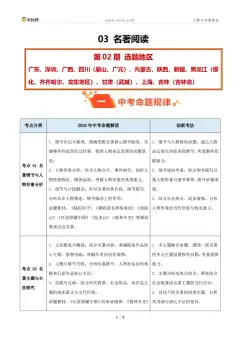
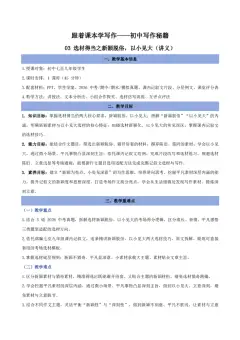
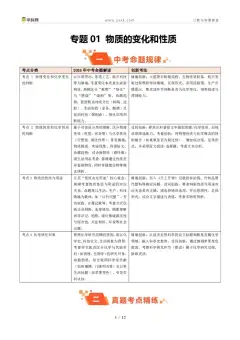
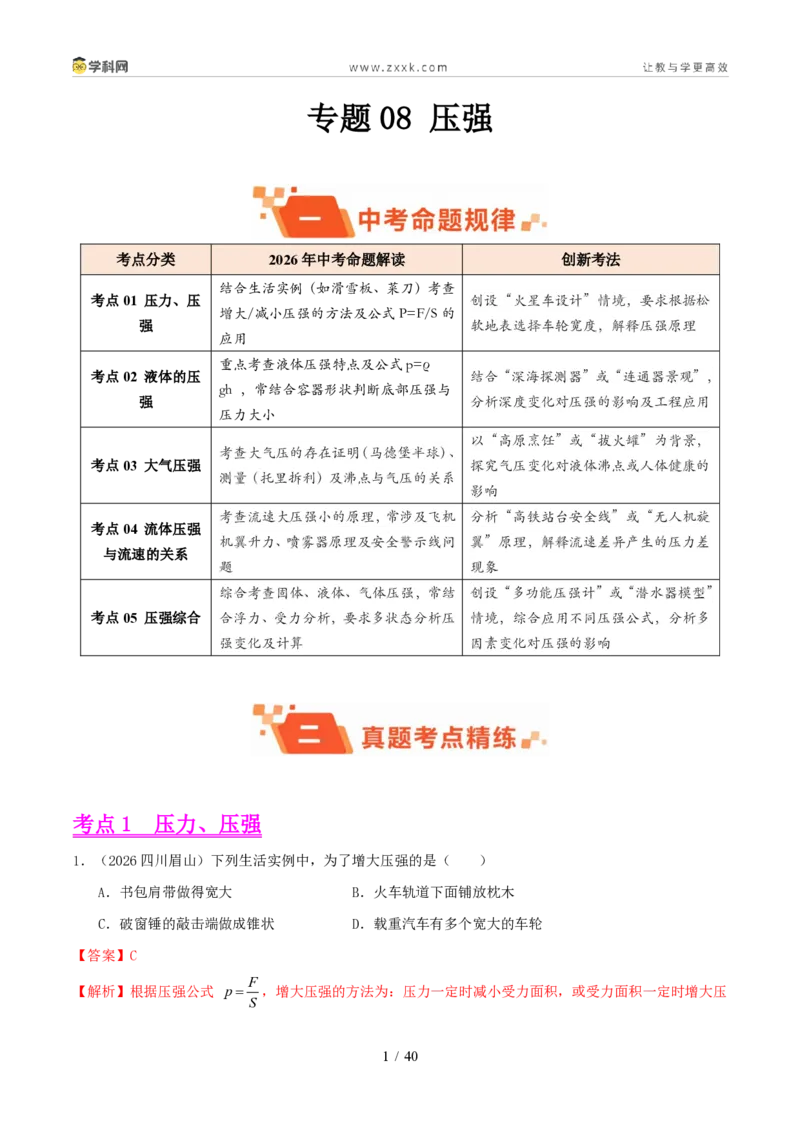
专题08 阅读理解(记叙文)

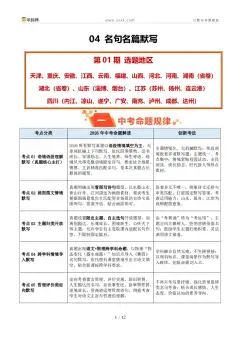
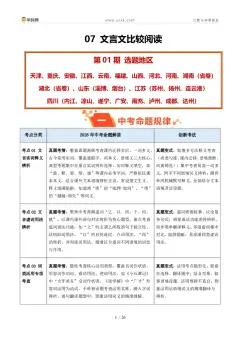
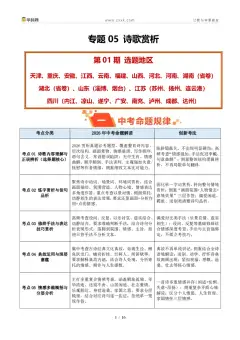
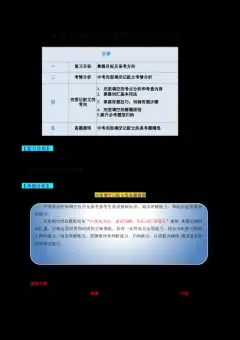
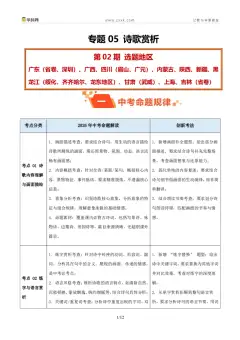
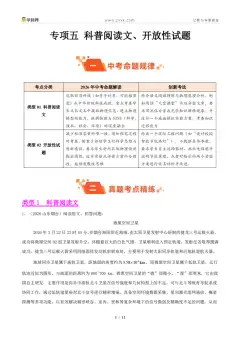
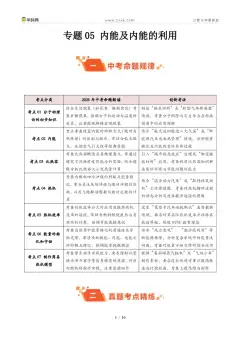
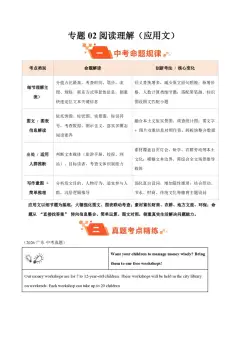
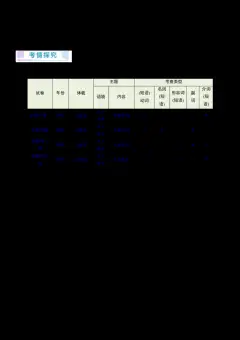
考点类别
命题解读
创新考法 / 重点变化
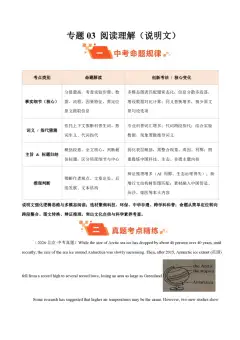
细节理解
考查时间、人物行为、事件起因,含情节
排序题
跨段整合信息;新增图文匹配选择
题;时间排序成为高频拔高题型
词义 / 代词指代
依托人物对话、情节猜生词,it/they 指代
人或事物
结合人物品质、传统文化词汇设题,
拒绝简单同义替换
推理判断
推断人物情绪、心理、行为动机,隐性情
节预判
侧重人物品格、故事隐性情感,加大
思辨考查比重
段落 / 主旨标题
概括段意、提炼故事哲理,匹配谚语类标
题选项
素材融合非遗、国产人物、中外文化
交流,重价值升华
写作意图
分析文章传递的成长、善良、文化自信等
主旨
弱化情节概括,侧重故事育人道理与
文化传播内核

整体变化:素材大量选用中国人物故事;多模态图文常态化;减少原文原句定位,强化情节梳理、情感推
理、文化价值理解等高阶思维。
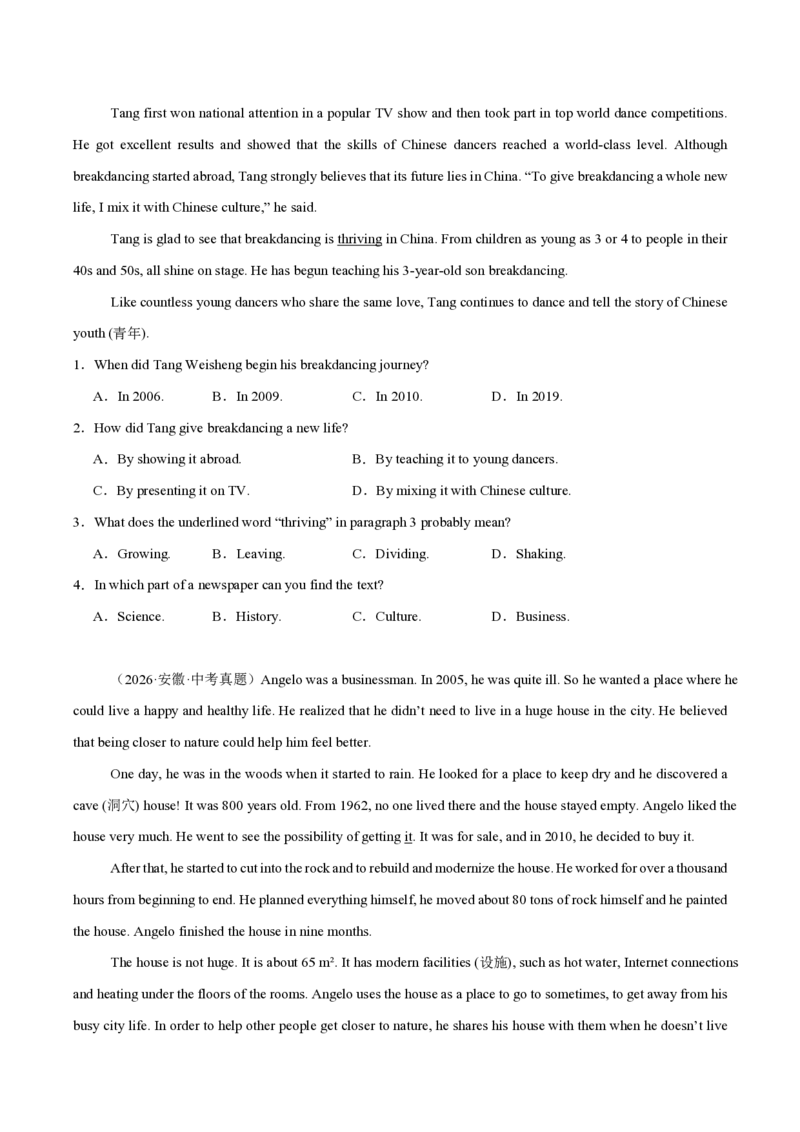
(2026·安徽·中考真题)Tang Weisheng, also called Longzai, comes from Guangzhou. He has loved
breakdancing (霹雳舞) for almost 20 years. He began his breakdancing journey at the age of 13 in 2006. However,
dance took up too much of his time, which worried his parents. To win his parents’ support, Tang tried hard to do
well both in study and dance. His parents found that dance had a good influence on him. Finally, they agreed. Their
understanding became his strongest motivation (动力). Later, he turned out to be a famous dancer.
Tang first won national attention in a popular TV show and then took part in top world dance competitions.
He got excellent results and showed that the skills of Chinese dancers reached a world-class level. Although
breakdancing started abroad, Tang strongly believes that its future lies in China. “To give breakdancing a whole new
life, I mix it with Chinese culture,” he said.
Tang is glad to see that breakdancing is thriving in China. From children as young as 3 or 4 to people in their
40s and 50s, all shine on stage. He has begun teaching his 3-year-old son breakdancing.
Like countless young dancers who share the same love, Tang continues to dance and tell the story of Chinese
youth (青年).
1.When did Tang Weisheng begin his breakdancing journey?
A.In 2006.
B.In 2009.
C.In 2010.
D.In 2019.
2.How did Tang give breakdancing a new life?
A.By showing it abroad.
B.By teaching it to young dancers.
C.By presenting it on TV.
D.By mixing it with Chinese culture.
3.What does the underlined word “thriving” in paragraph 3 probably mean?
A.Growing.
B.Leaving.
C.Dividing.
D.Shaking.
4.In which part of a newspaper can you find the text?
A.Science.
B.History.
C.Culture.
D.Business.
(2026·安徽·中考真题)Angelo was a businessman. In 2005, he was quite ill. So he wanted a place where he
could live a happy and healthy life. He realized that he didn’t need to live in a huge house in the city. He believed
that being closer to nature could help him feel better.
One day, he was in the woods when it started to rain. He looked for a place to keep dry and he discovered a
cave (洞穴) house! It was 800 years old. From 1962, no one lived there and the house stayed empty. Angelo liked the
house very much. He went to see the possibility of getting it. It was for sale, and in 2010, he decided to buy it.
After that, he started to cut into the rock and to rebuild and modernize the house. He worked for over a thousand
hours from beginning to end. He planned everything himself, he moved about 80 tons of rock himself and he painted
the house. Angelo finished the house in nine months.
The house is not huge. It is about 65 m². It has modern facilities (设施), such as hot water, Internet connections
and heating under the floors of the rooms. Angelo uses the house as a place to go to sometimes, to get away from his
busy city life. In order to help other people get closer to nature, he shares his house with them when he doesn’t live
there. They can enjoy Angelo’s happy house and run away from their busy lives, too.
1.What do we know about Angelo in paragraph 1?
A.He was a young doctor.
B.He wanted a different life.
C.He was always in good health.
D.He lived in the countryside.
2.What does the underlined word “it” in paragraph 2 refer to (指的是)?
A.The rain.
B.The wood.
C.The house.
D.The money.
3.What is paragraph 3 mainly about?
A.Why Angelo liked the house.
B.How Angelo rebuilt the house.
C.Why the house was for sale.
D.How the house was discovered.
4.Why does Angelo share his house with other people?
A.To raise some money.
B.To present its modern facilities.
C.To make more friends.
D.To help them get closer to nature.
(2026·福建·中考真题)In our city, a long-running race is held every year in June. Dad loved it very much. I
loved Dad, so I ran. As a kid, I didn’t just take part in this running race. I joined in all kinds of running races. Dad
always ran along beside me to make sure I was safe.
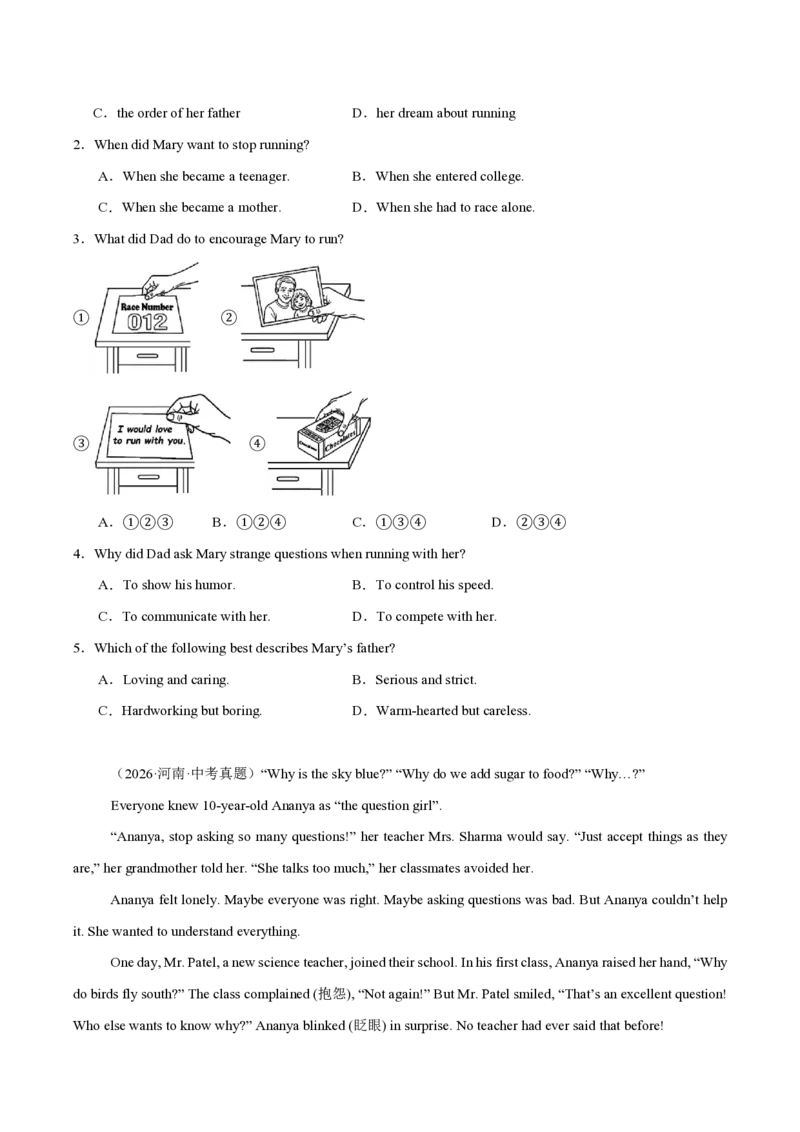
When I became a teenager, I wanted to stop running. But Dad encouraged me to go on. “Mary, I’ll register
(为……报名) both of us,” Dad would say. Before he went to bed, he would put my race number on my desk. Next to
it, there would be a box of chocolates and a note: “I would love to run with you.” It was enough to get me out of bed
the next morning to join him. Slowly, I started to like running. Dad always cheered me on in my high school and
college running races.
Now, as a mother of three children, I have come to realize that my father must have slowed down when he ran
with me. I also know why he ran along beside a younger me, asking strange questions. He was trying to communicate
with me because he didn’t know what I was thinking.
Last year, I joined in the city race alone, for Dad was too sick to run. Though he was not there to cheer me on,
I knew he would always be with me, guiding me every step of the way.
1.Mary took part in running races as a kid because of ________.
A.the rule of the city
B.her love for her father
C.the order of her father
D.her dream about running
2.When did Mary want to stop running?
A.When she became a teenager.
B.When she entered college.
C.When she became a mother.
D.When she had to race alone.
3.What did Dad do to encourage Mary to run?
①
    ②

③
    ④
A.①②③
B.①②④
C.①③④
D.②③④
4.Why did Dad ask Mary strange questions when running with her?
A.To show his humor.
B.To control his speed.
C.To communicate with her.
D.To compete with her.
5.Which of the following best describes Mary’s father?
A.Loving and caring.
B.Serious and strict.
C.Hardworking but boring.
D.Warm-hearted but careless.
(2026·河南·中考真题)“Why is the sky blue?” “Why do we add sugar to food?” “Why…?”
Everyone knew 10-year-old Ananya as “the question girl”.
“Ananya, stop asking so many questions!” her teacher Mrs. Sharma would say. “Just accept things as they
are,” her grandmother told her. “She talks too much,” her classmates avoided her.
Ananya felt lonely. Maybe everyone was right. Maybe asking questions was bad. But Ananya couldn’t help
it. She wanted to understand everything.
One day, Mr. Patel, a new science teacher, joined their school. In his first class, Ananya raised her hand, “Why
do birds fly south?” The class complained (抱怨), “Not again!” But Mr. Patel smiled, “That’s an excellent question!
Who else wants to know why?” Ananya blinked (眨眼) in surprise. No teacher had ever said that before!
After class, Mr. Patel called Ananya aside. “Don’t ever stop asking questions,” he said. “Do you know what
scientists do all day? They ask ‘why’. Every scientist was once a curious child.” For the first time, Ananya didn’t
feel annoyed (烦恼的). She felt special.
Mr. Patel taught Ananya to find answers herself. “When you have a question, first try to find the answer. Read
books. Watch carefully. Then, if you still don’t understand, ask.”
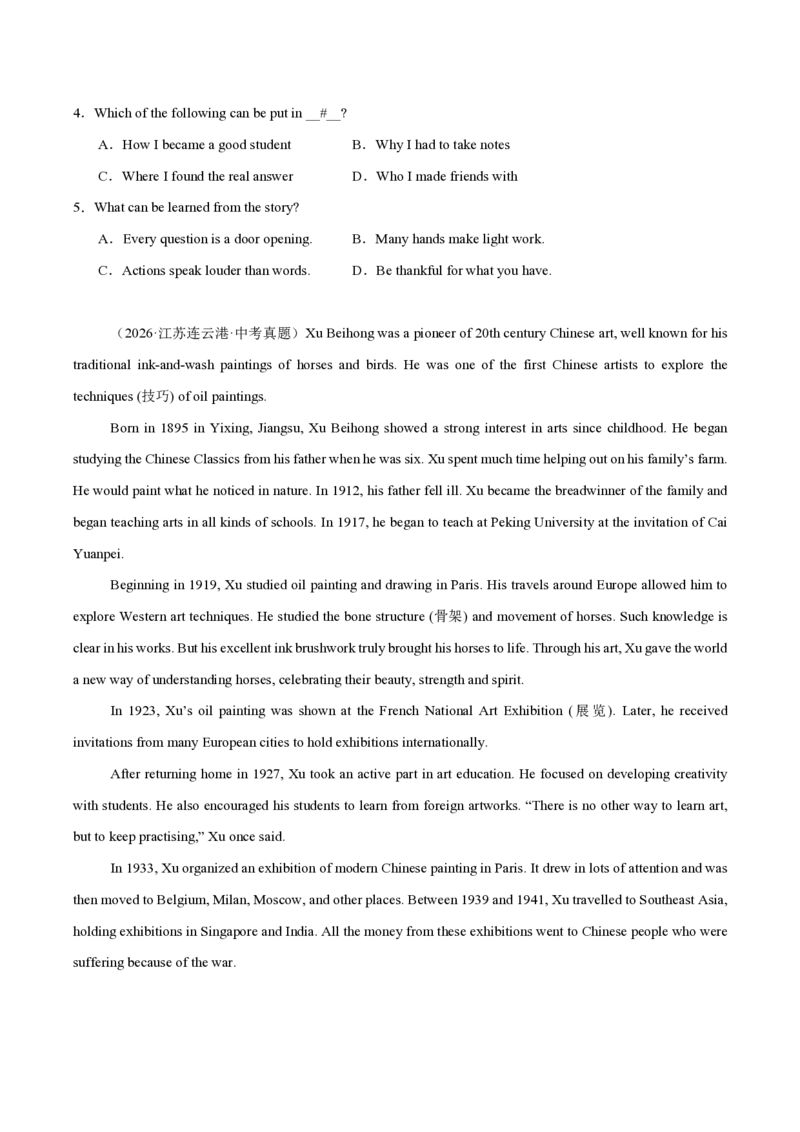
Ananya started visiting the library. She read books about science and nature. She started a “Question
Notebook”.
Her questions became better. Instead of “Why is the sky blue?” she asked “Why does the sky’s color change
during sunrise?” Teachers noticed. Ananya’s questions now sparked interesting discussions.
When Ananya was twelve, she had a question: “Why do some street dogs sleep on the road at night?” She
studied that for three months. Then she created a project showing temperature differences. It won first prize at school,
then district, then national level!
Today, Ananya is 24 and studies environmental science. She still asks “why” all the time. She visits schools,
talking to children. “Never let anyone make you feel bad for being curious,” she tells them.
根据材料内容选择最佳答案。
1.Why did Ananya’s classmates avoid her?
A.Because she didn’t like to talk with others.
B.Because she kept asking so many questions.
C.Because she always got into trouble with others.
D.Because she couldn’t answer teachers’ questions.
2.What does the underlined word “curious” mean in the text?
A.Dealing with danger with courage.
B.Showing a sense of humor.
C.Wanting to know about something.
D.Enjoying meeting new people.
3.What did Mr. Patel do to help Ananya?
A.He taught her some social skills.
B.He created a project with her.
C.He bought a lot of books for her.
D.He encouraged her to ask wisely.
4.Which of the following can be put in __#__?
A.How I became a good student
B.Why I had to take notes
C.Where I found the real answer
D.Who I made friends with
5.What can be learned from the story?
A.Every question is a door opening.
B.Many hands make light work.
C.Actions speak louder than words.
D.Be thankful for what you have.
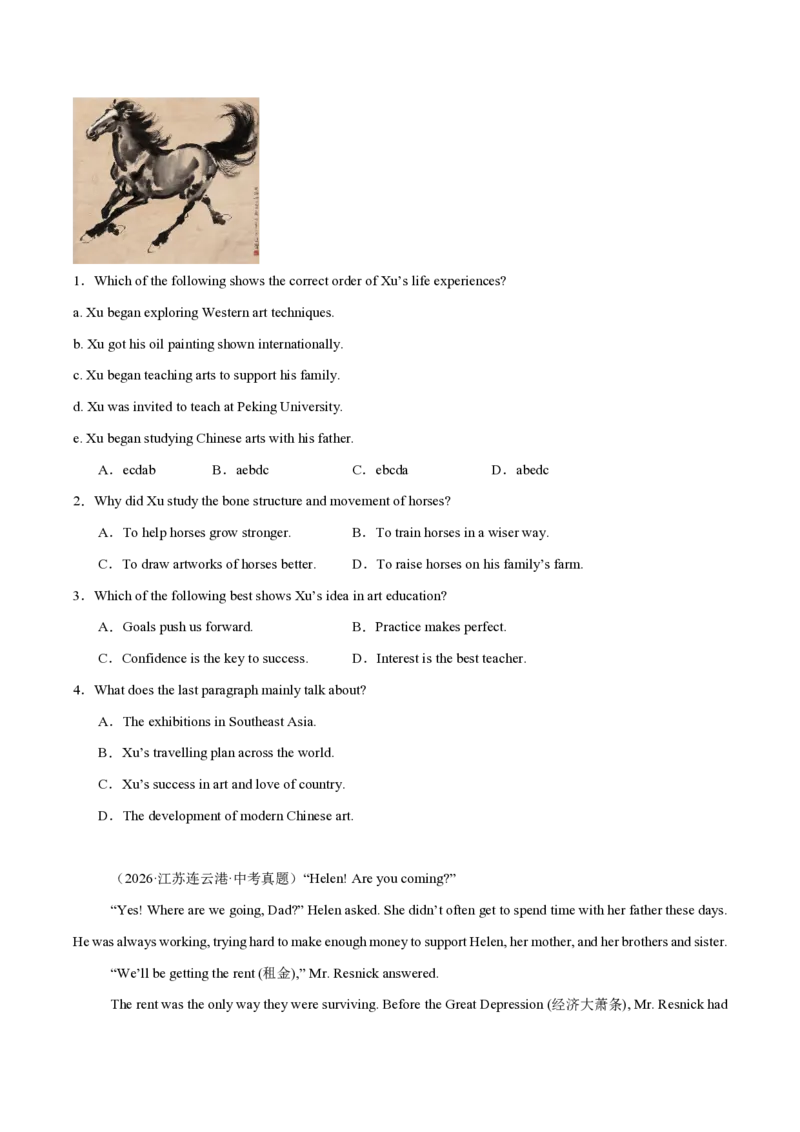
(2026·江苏连云港·中考真题)Xu Beihong was a pioneer of 20th century Chinese art, well known for his
traditional ink-and-wash paintings of horses and birds. He was one of the first Chinese artists to explore the
techniques (技巧) of oil paintings.
Born in 1895 in Yixing, Jiangsu, Xu Beihong showed a strong interest in arts since childhood. He began
studying the Chinese Classics from his father when he was six. Xu spent much time helping out on his family’s farm.
He would paint what he noticed in nature. In 1912, his father fell ill. Xu became the breadwinner of the family and
began teaching arts in all kinds of schools. In 1917, he began to teach at Peking University at the invitation of Cai
Yuanpei.
Beginning in 1919, Xu studied oil painting and drawing in Paris. His travels around Europe allowed him to
explore Western art techniques. He studied the bone structure (骨架) and movement of horses. Such knowledge is
clear in his works. But his excellent ink brushwork truly brought his horses to life. Through his art, Xu gave the world
a new way of understanding horses, celebrating their beauty, strength and spirit.
In 1923, Xu’s oil painting was shown at the French National Art Exhibition ( 展览). Later, he received
invitations from many European cities to hold exhibitions internationally.
After returning home in 1927, Xu took an active part in art education. He focused on developing creativity
with students. He also encouraged his students to learn from foreign artworks. “There is no other way to learn art,
but to keep practising,” Xu once said.
In 1933, Xu organized an exhibition of modern Chinese painting in Paris. It drew in lots of attention and was
then moved to Belgium, Milan, Moscow, and other places. Between 1939 and 1941, Xu travelled to Southeast Asia,
holding exhibitions in Singapore and India. All the money from these exhibitions went to Chinese people who were
suffering because of the war.
1.Which of the following shows the correct order of Xu’s life experiences?
a. Xu began exploring Western art techniques.
b. Xu got his oil painting shown internationally.
c. Xu began teaching arts to support his family.
d. Xu was invited to teach at Peking University.
e. Xu began studying Chinese arts with his father.
A.ecdab
B.aebdc
C.ebcda
D.abedc
2.Why did Xu study the bone structure and movement of horses?
A.To help horses grow stronger.
B.To train horses in a wiser way.
C.To draw artworks of horses better.
D.To raise horses on his family’s farm.
3.Which of the following best shows Xu’s idea in art education?
A.Goals push us forward.
B.Practice makes perfect.
C.Confidence is the key to success.
D.Interest is the best teacher.
4.What does the last paragraph mainly talk about?
A.The exhibitions in Southeast Asia.
B.Xu’s travelling plan across the world.
C.Xu’s success in art and love of country.
D.The development of modern Chinese art.
(2026·江苏连云港·中考真题)“Helen! Are you coming?”
“Yes! Where are we going, Dad?” Helen asked. She didn’t often get to spend time with her father these days.
He was always working, trying hard to make enough money to support Helen, her mother, and her brothers and sister.
“We’ll be getting the rent (租金),” Mr. Resnick answered.
The rent was the only way they were surviving. Before the Great Depression (经济大萧条), Mr. Resnick had
bought a house and rented it to three families. Where the Resnicks would be without that rent money now, Helen
really couldn’t imagine.
Mrs. Miller gave them the money in dollar bills. Mr. Schmidt managed with a bag of coins. But the third
family never had enough money. It had become harder and harder to accept their rent. But as Helen’s mother said,
the money in Mr. Resnick’s hand by the end of today must be enough to last for the whole month.
Mrs. Katz opened the door. Mr. Katz and the two children were sitting at a table, waiting for Mr. Resnick.
They all have such thin faces! Helen thought.
Mr. Katz gave Helen’s father the money he was holding. Mr. Resnick thanked him and turned to go.
“Mr. Resnick?” Mrs. Katz said before they could leave. “We haven’t eaten in two days.”
The two little kids began to cry. Without a word, Helen’s father put all of their rent money back on the table.
Then he took out the rest of the money he’d collected that day and counted out two dollars.
“Helen,” he said, “Use this to buy food and bring it right back here.”
Helen ran all the way to the store. She chose cheap and good foods, like her mom would do. Two dollars
bought such a lot! Helen carried the heavy bags back to the house. The kids cried with joy when they saw each
favorite food. Mr. and Mrs. Katz laughed at that, and Helen thought it was their first laugh in a long, long time.
1.Why does the author mention the Great Depression?
A.To present Helen’s wild imagination.
B.To describe Helen’s unhappy childhood.
C.To suggest a better way to make a living.
D.To stress the importance of getting the rent.
2.What did Mrs. Katz mean by saying “We haven’t eaten in two days.”?
A.She was too weak to cook.
B.She would stop renting the house.
C.She invited Mr. Resnick for dinner.
D.She needed help to feed her family.
3.What can we learn about Mr. Resnick?
A.He did not get any rent that day.
B.He spent much time with his family.
C.He would have a harder time that month.
D.He was not satisfied with Helen’s shopping.
4.What does the story mainly tell us?
A.Hard work brings good luck.
B.Kindness shines even in difficult times.
C.Silence speaks louder than actions.
D.Kids should learn to use money properly.
(2026·江苏苏州·中考真题)In 2014, doctors told Cai Lu he would never walk again. After twelve years, the
34-year-old is proving them wrong—not just by walking, but by running a company.
When he was 22, he lost his right leg in an accident on a business trip. In 2018, Cai began using a prosthetic
(义肢) and relearned to walk. But stepping outside was another fight for him. The stares (凝视) he received made him
uncomfortable.
A turning point came through Wei Qing, who is a member of a local disabled persons’ organization. Wei
visited Cai repeatedly, gently inviting him to attend group outings. Cai finally went. “I realized I wasn’t alone,” he
said.
Around 2020, Cai tried starting a fried chicken delivery (外卖) business but failed. “Don’t rush. Take your
time,” his mother told him. Hearing her words, Cai stepped back and poured himself into training programs. In 2023,
he won a national championship for persons with disabilities in tea art—an achievement that gave him the confidence
to start his prosthetics company the same year.
As a prosthetic user himself, Cai could better understand his customers. “Traditional companies fit you and
send you away,” he said. “We provide full life cycle service: pre-fitting training, fitting, and future support.”
His athletic career has also taken off. In 2025, Cai was chosen for China’s disabled park golf (高尔夫) team.
When he isn’t on the green or in the company, he travels as a speaker for schools across Zhejiang province.
Looking back at his experiences, we find the message is simple: “Keep being brave.”
1.What does the underlined sentence mean in paragraph 2?
A.He couldn’t step outside with disabilities.
B.He was afraid of being treated differently.
C.He lost the chance to go on a business trip.
D.He was worried about another accident.
2.What is the right order of Cai Lu’s experiences?
a. He was badly hurt in an accident.    b. He started his prosthetics company.
c. He tried a fried chicken delivery business.    d. He won a national championship in tea art.
A.b-a-d-c
B.b-a-c-d
C.a-c-b-d
D.a-c-d-b
3.What makes Cai Lu’s company different from traditional ones?
A.It provides free support.
B.It helps to fit customers.
C.It offers full-period service.
D.It sends customers home.
4.What is the main message we can get from Cai Lu’s story?
A.Accept help from others.
B.Obey traffic rules strictly.
C.Spread ideas in schools.
D.Face challenges bravely.
(2026·江苏苏州·中考真题)
I am a free dog called Johannes. I live in a large park by the sea. Freya is one of the three Bison (野牛) who live
in an area with a fence (篱笆) within the park. Recently, I wanted to set them free and I almost succeeded.
Towards the end of the journey, Freya said to me, “We can’t go on that ship.”
“But it’s right down there,” I said. “We’ve already done the hard part. The goats (羊) have performed their
duties, jumping and crying and making chaos (混乱) all around, so you wouldn’t be found when you hid among them.
Everything’s ready.” I was worried, for the sky was growing brighter, and it would be more difficult for the goats to
hide the Bison from humans as they went down the hill.
“No,” Freya said. “We’re not going. We thought we could, but this short journey has already proven we are
not ready for more. We can’t make it.”
“But why let me—let all of us—go through all this trouble?” I asked.
“You needn’t be angry,” Freya said. “Or sad. Or even surprised. Look at us. We’re slow and old. We couldn’t
go across the sea in strange boats. Seeing this is enough.”
She was still looking at the morning sea, which had grown brighter and whiter. She turned to me then. “Thank
you, Johannes.” She turned to the goats. “We are so thankful. We have lived quiet lives. But you have freed our eyes
and our minds. What you did today mattered a great deal. You gave us the sea. And we will not forget it.”
I tried to organize my thoughts. Was all this for nothing? And would we all have to go back to the park? I
stood on the top of that small mountain, wondering what to do.
Then one of the goats said to me, “You could come with us. We will protect you, and when you reach the
mainland, you can stay with us, or simply run free. There are a million free dogs like you. You can run with them
and see places and things.”
I thought about this. I knew it was true. I knew I would go.
1.What did Freya think of their journey?
A.It was worth it. B.It was too long.
C.It was boring.
D.It was smooth.
2.What can we infer from paragraph 3?
A.The goats messed up everything.
B.Their plan was very well-organized.
C.The Bison were at the foot of the hill.
D.Their secret was discovered by humans.
3.What would Johannes do in the end?
A.Protect the goats.
B.Join the Bison.
C.Continue the journey.
D.Return to the park.
4.What is the theme of the story?
A.Some friends cannot be trusted.
B.Humans can make friends with animals.
C.We can make choices for others.
D.Everyone can find their place in the world.
(2026·江西·中考真题)About ten years ago, I went on a trip to Luxor to see the Valley of the Kings, one of
the most important tourist sites (景点) in Egypt. I stayed in the town on one side of the Nile River; the Valley of the
Kings is on the other side. People usually take a guided tour to the site, but I wanted to go alone.
First, the good things. Adawy, a very nice man near my hotel, lent a donkey (驴) to me. He also gave me
directions to the site. I rode slowly to the river and I felt really good in the morning air. I often stopped to take photos
— the view was beautiful.
The old walls and tall mountains looked wonderful. I rode past quiet fields and stone buildings. The clean air
made me feel great. Everything felt new and exciting. I knew I was visiting a special place all by myself. This trip
gave me a happy feeling I would always remember.
I had some problems, though. I made two mistakes. First, it was a very hot day and I only brought one small
bottle of water with me — I drank it up quickly in the morning, and I was thirsty all day. The second problem was
the sun because I didn’t have a hat. I got terrible sunburn, and felt really hot and tired. After a few hours, I reached
the site and took lots of photos. The site was astounding and made me feel great pleasure.
In the end, I enjoyed the experience. True, I didn’t feel very well, but now I have some beautiful photos and
memories. I’d love to do it again, but not on a donkey!
1.How did the writer go to the Valley of the Kings?
A.By taking a guided tour.
B.By riding with the locals.
C.By travelling by himself.
D.By walking with Egyptians.
2.What did Adawy do to help the writer?
A.He took photos for him.
B.He drove him to the site.
C.He showed him the way.
D.He gave him some water.
3.What was one of the writer’s mistakes?
A.He lost his sun hat.
B.He didn’t bring enough water.
C.He broke his camera.
D.He didn’t go in the right direction.
4.What does the underlined word “astounding” in Paragraph 4 mean?
A.Amazing.
B.Boring.
C.Crowded.
D.Modern.
5.What is the best title for the text?
A.The History of Luxor
B.The Valley of the Kings
C.A Guided Tour in Egypt
D.An Unforgettable Donkey Tour
(2026·山东烟台·中考真题)Jake Pinnick, the 36-year-old from the United States, has an unusual story of
“Becoming Chinese”. Now he is known as a foreign coach at Wudang Mountain in Hubei province, teaching martial
arts (武术) to students from around the world.
As a fan of Jackie Chan and Bruce Lee, Pinnick always wanted to learn “real kung fu from its roots (根源)”.
Attracted by a video of Wudang martial arts online, he finally made up his mind to come to China in 2010.
Life in China was not easy at the beginning. The training was hard, but he never gave up. By repeating every
move countless times each day, he gradually realized that martial arts are never supposed to compete against or win
over others. Instead, they help achieve balance between inner spirit and outer strength, just as his master once told
him, “Develop virtue before practising martial arts.”
After finishing his five-year training at Wudang Mountain, Pinnick returned to the US with his Chinese wife
and their daughter. However, he found himself “stuck between Chinese and American culture”. So in 2018, he
decided to return to Wudang Mountain to teach and spread Wudang culture.
Over the past years in China, Pinnick has become completely used to the local life. He now enjoys drinking
hot tea instead of coffee. He is also proud of his Chinese name, Li Zigen, given by his master.
Pinnick hopes to deepen understanding between different cultures through his efforts. With encouragement
from his wife, he started posting videos online about martial arts in 2020. His videos soon got popular, attracting
millions of fans. Now he is busy preparing for a new international summer camp. “I want to let people from all over
the world enjoy the beauty of traditional Chinese culture and benefit from it,” he said.
1.Which has nothing to do with the reasons for Pinnick’s coming to China?
A.The wish of having a Chinese name.
B.The love of Jackie Chan and Bruce Lee.
C.The dream of learning Chinese kung fu.
D.The attraction of a Wudang martial arts video.
2.What’s the best explanation of the underlined word “virtue” in Paragraph 3?
A.noun /'vɜːtʃu:/ a smart ability to learn something new
B.noun /'vɜːtʃu:/ a fast movement in playing martial arts
C.noun /'vɜːtʃu:/ a strong body for practicing martial arts
D.noun /'vɜːtʃu:/ a general quality of goodness in a person
3.Put the following events in the correct time order.
① Pinnick became a coach at Wudang Mountain.
② Pinnick became popular and had millions of fans.
③ Pinnick planned a new international summer camp.
④ Pinnick watched a video of Wudang martial arts online.
A.④→①→②→③
B.②→③→④→①
C.①→④→②→③
D.①→②→④→③
4.What can be the best title for the passage?
A.An American’s Special Journey in China
B.The Long History of Wudang Martial Arts
C.A US Martial Arts Lover Bridges between Cultures
D.An Unusual Way of Learning Martial Arts in China
(2026·山西·中考真题)Ieoh Ming Pei was known as the master of modern architecture (建筑). He designed
(设计) many famous buildings and landmarks around the world.
Pei was born in Guangzhou in 1917. He grew up in a family that valued education and traditional art. Suzhou
was his ancestral hometown. Pei spent most of his childhood holidays there. During those holidays, he would visit
the gardens whenever he had time. Seeing those rocks, stone bridges and waterfalls, he began to show interest in
them. At the age of ten, Pei moved with his family to Shanghai. The city’s international architectural style had a
strong influence on him. He decided to become an architect. In 1935, Pei went abroad to study. When he was 38, he
started his company in New York. In 1983, he won the Pritzker Prize, the highest honor in architecture.
One of Pei’s most famous works is the glass pyramid in front of the Louvre Museum (卢浮宫) in Paris, which
was designed in 1989. It showed his idea—let light design the buildings. Many people disliked it because it was so
different from the traditional architecture at that time. But today, it is one of the most popular places in France.
Suzhou Museum is another work of his. It opened in 2006 and became a must-go place later. Pei explained, “It should
belong to Suzhou, but also to the world. It should be traditional, yet modern.” He left over 50 designs during his life.
Pei passed away in 2019 at the age of 102. His designs are regarded as the gifts to the world.
1.Where did Pei begin to show interest in gardens?
A.In Suzhou.
B.In Guangzhou.
C.In Shanghai.
2.What is the right order of the following facts according to Paragraph 2?
① He moved to Shanghai. ② He won the Pritzker Prize. ③ He began to study abroad.
A.①②③
B.①③②
C.③①②
3.What is the glass pyramid in front of the Louvre Museum like today?
A.It is very popular.
B.It is easily broken.
C.It is quite traditional.
4.What does Paragraph 3 mainly talk about?
A.Pei’s experiences.
B.Pei’s achievements.
C.Pei’s background.
5.What can be the best title for the text?
A.Science Opens up Mind
B.Prize Builds up Courage
C.Architecture Lights up Life
(2026·天津·中考真题)My mother was strict with me when I was young. She made lots of family rules to let
me know what to do and not to do.
As I grew older, I began to realise how wise my mother was. She kept telling me different ways to solve my
daily problems. At the same time, she would always stand behind me in order to offer help to me when necessary.
For me, a home filled with love was built by her. I could grow up happily to explore (探索) the unknown, learn from
mistakes and become truly mature (成熟的).
When I failed my first job interview, I made a phone call to my mother. She answered it and stayed silent to
let me cry aloud first. After I calmed down, she said, “Tom, I’m always with you. Just face the problem because it’s
no use crying.” She was so encouraging (令人鼓舞的) that I became confident to be successful next time. At that
moment, there was only my dear mother and me. Forever.
My mother lets me know what a mother is. A mother is the person who makes the world a better place to live
in and spends her lifetime helping me grow up.
1.What did Tom’s mother make when he was young?
A.Travel lists.
B.Family rules.
C.Model planes.
D.Delicious cakes.
2.Why would Tom’s mother always stand behind him?
A.To give him help.
B.To buy him gifts.
C.To tell jokes.
D.To watch matches.
3.What did Tom do when he failed his first job interview?
A.He had a meal.
B.He met his friends.
C.He called his mother.
D.He did some shopping.
4.Which of the following words best describes Tom’s mother?
① Strict.     ② Honest.     ③ Wise.     ④ Encouraging.
A.①②③
B.①②④
C.①③④
D.②③④
5.What could be the best title of the passage?
A.Promises: When to Be Mature
B.Advice: Where a Family Lives
C.Difficulty: How to Grow Up
D.Thanks: What a Mother Is