读后续写07-家人亲情专题
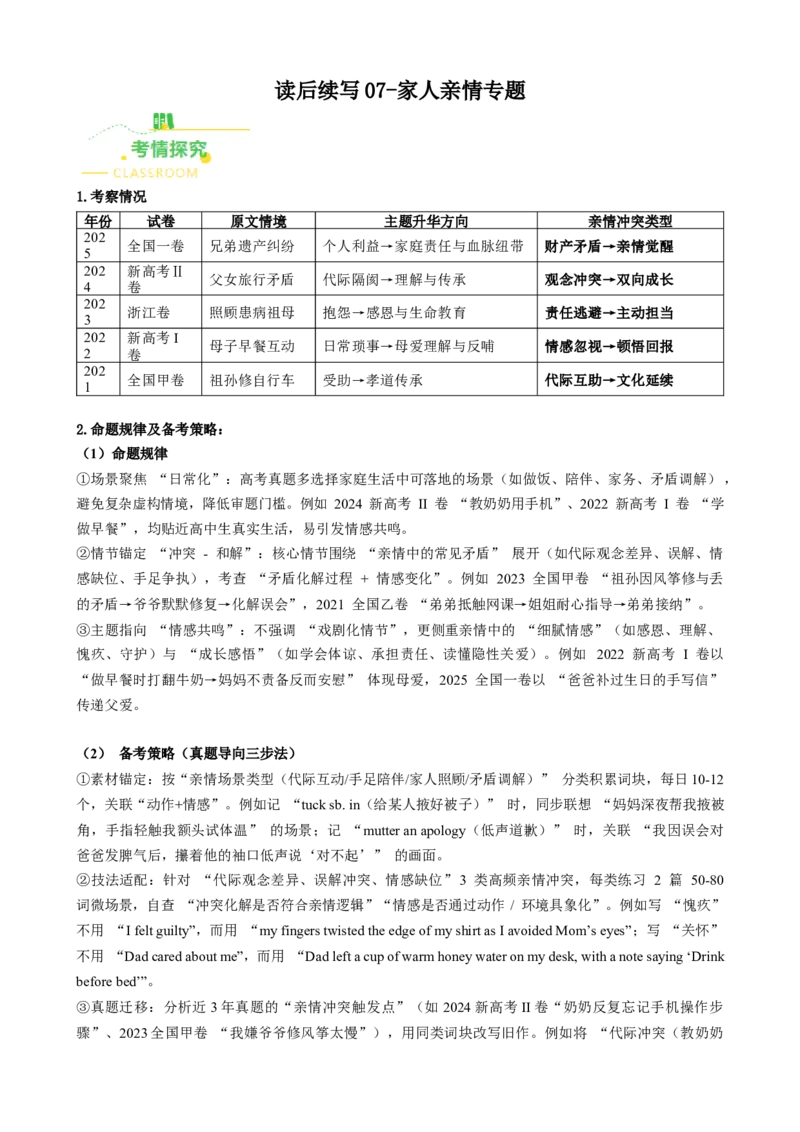
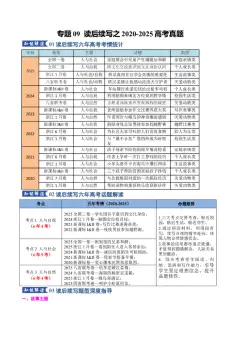
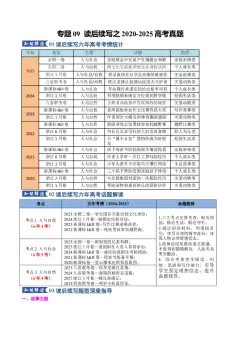
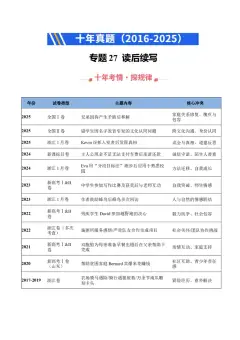
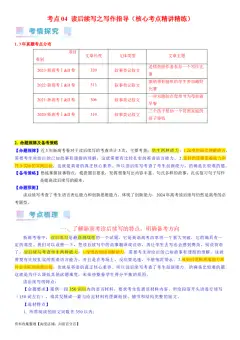
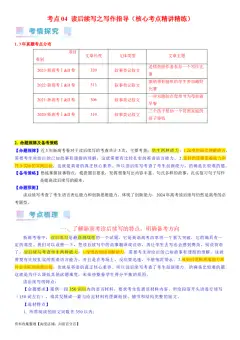
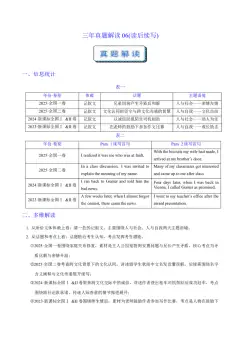
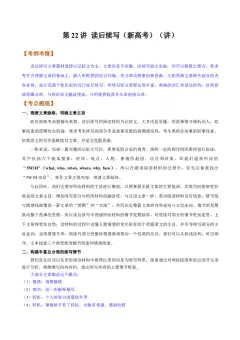
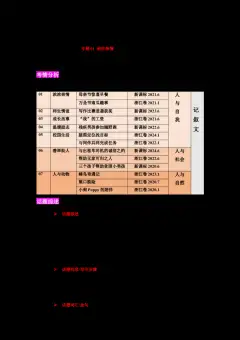
1.考察情况
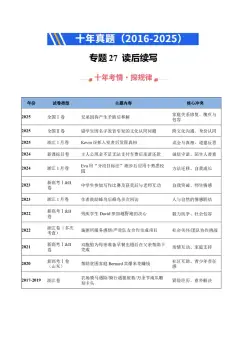
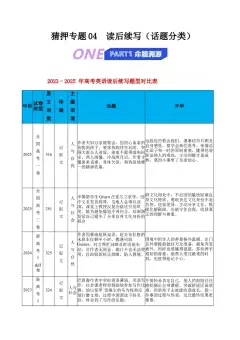
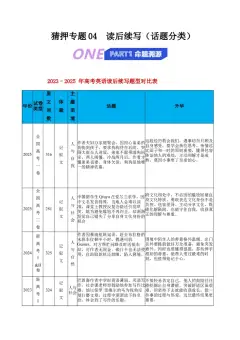
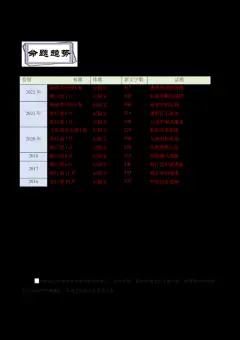
年份
试卷
原文情境
主题升华方向
亲情冲突类型
202
5
全国一卷
兄弟遗产纠纷
个人利益→家庭责任与血脉纽带
财产矛盾→亲情觉醒
202
4
新高考Ⅱ
卷
父女旅行矛盾
代际隔阂→理解与传承
观念冲突→双向成长
202
3
浙江卷
照顾患病祖母
抱怨→感恩与生命教育
责任逃避→主动担当
202
2
新高考I
卷
母子早餐互动
日常琐事→母爱理解与反哺
情感忽视→顿悟回报
202
1
全国甲卷
祖孙修自行车
受助→孝道传承
代际互助→文化延续
2.命题规律及备考策略:
(1)命题规律
①场景聚焦 “日常化”:高考真题多选择家庭生活中可落地的场景(如做饭、陪伴、家务、矛盾调解),
避免复杂虚构情境,降低审题门槛。例如 2024 新高考 II 卷 “教奶奶用手机”、2022 新高考 I 卷 “学
做早餐”,均贴近高中生真实生活,易引发情感共鸣。
②情节锚定 “冲突 - 和解”:核心情节围绕 “亲情中的常见矛盾” 展开(如代际观念差异、误解、情
感缺位、手足争执),考查 “矛盾化解过程 + 情感变化”。例如 2023 全国甲卷 “祖孙因风筝修与丢
的矛盾→爷爷默默修复→化解误会”,2021 全国乙卷 “弟弟抵触网课→姐姐耐心指导→弟弟接纳”。
③主题指向 “情感共鸣”:不强调 “戏剧化情节”,更侧重亲情中的 “细腻情感”(如感恩、理解、
愧疚、守护)与 “成长感悟”(如学会体谅、承担责任、读懂隐性关爱)。例如 2022 新高考 I 卷以
“做早餐时打翻牛奶→妈妈不责备反而安慰” 体现母爱,2025 全国一卷以 “爸爸补过生日的手写信”
传递父爱。
(2) 备考策略(真题导向三步法)
①素材锚定:按“亲情场景类型(代际互动/手足陪伴/家人照顾/矛盾调解)” 分类积累词块,每日10-12
个,关联“动作+情感”。例如记 “tuck sb. in(给某人掖好被子)” 时,同步联想 “妈妈深夜帮我掖被
角,手指轻触我额头试体温” 的场景;记 “mutter an apology(低声道歉)” 时,关联 “我因误会对
爸爸发脾气后,攥着他的袖口低声说‘对不起’” 的画面。
②技法适配:针对 “代际观念差异、误解冲突、情感缺位”3 类高频亲情冲突,每类练习 2 篇 50-80
词微场景,自查 “冲突化解是否符合亲情逻辑”“情感是否通过动作 / 环境具象化”。例如写 “愧疚”
不用 “I felt guilty”,而用 “my fingers twisted the edge of my shirt as I avoided Mom’s eyes”;写 “关怀”
不用 “Dad cared about me”,而用 “Dad left a cup of warm honey water on my desk, with a note saying ‘Drink
before bed’”。
③真题迁移:分析近3 年真题的“亲情冲突触发点”(如2024 新高考II 卷“奶奶反复忘记手机操作步
骤”、2023 全国甲卷 “我嫌爷爷修风筝太慢”),用同类词块改写旧作。例如将 “代际冲突(教奶奶
用手机)” 改写为“代际冲突(教爷爷拍短视频)”,保留“耐心指导+重复练习+成功喜悦”的核心逻
辑,强化场景适配能力。
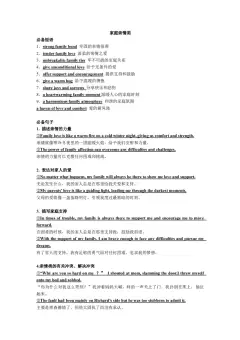
(一)四大场景类型及高频词汇
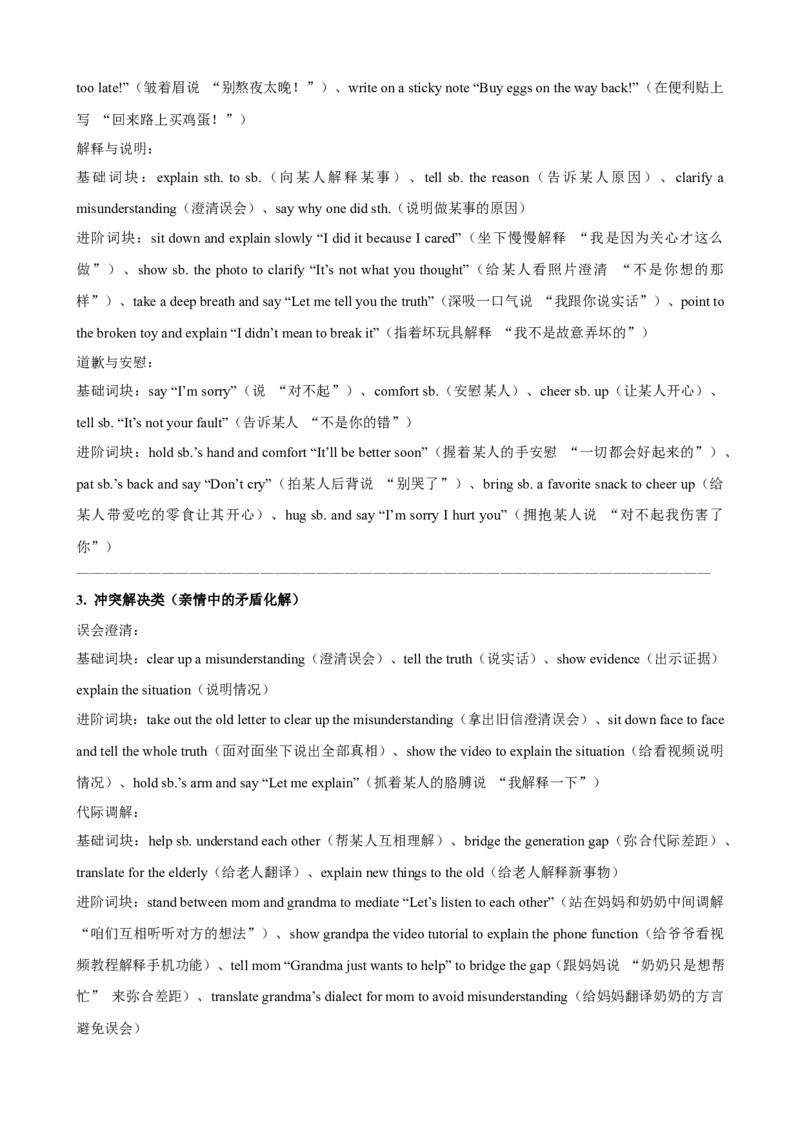
1. 家庭日常环境类(亲情互动的基础场景)
基础词汇:kitchen(厨房)、living room(客厅)、bedroom(卧室)、dining table(餐桌)、sofa(沙
发)、lamp(台灯)
进阶词汇:grandma’s wicker chair(奶奶的藤椅)、mom’s apron(妈妈的围裙)、dad’s toolbox(爸爸的工
具箱)、family photo album(家庭相册)、warm quilt(暖被子)、steaming bowl(冒着热气的碗)
高考高频词块:the kitchen filled with the smell of porridge(飘着粥香的厨房)、dad’s toolbox left on the living
room floor(爸爸落在客厅地板上的工具箱)、mom’s apron stained with flour(沾着面粉的妈妈的围裙)、
the family photo album spread on the sofa(摊在沙发上的家庭相册)
高级表达:The morning sun streamed through the kitchen window, where Mom stood by the stove, her apron
fluttering slightly as she stirred the porridge—steam curled up, mixing with the soft sound of her humming an old
song.(清晨的阳光透过厨房窗户,妈妈站在灶台旁,搅拌粥时围裙轻轻晃动 —— 热气袅袅升起,与她哼
着老歌的轻柔声音交织在一起。)
—————————————————————————————————————————————
2. 特殊时刻环境类(亲情升温的关键场景)
基础词汇:birthday(生日)、sick(生病)、festival(节日)、trip(旅行)、graduation(毕业)、rainy
day(雨天)
进阶词汇:grandpa’s hospital ward(爷爷的病房)、birthday cake with lit candles(插着蜡烛的生日蛋糕)、
Mid-Autumn Festival mooncake(中秋月饼)、rainy day umbrella(雨天的伞)、graduation gift from dad(爸
爸的毕业礼物)、family trip backpack(家庭旅行背包)
高考高频词块:the hospital ward filled with fresh flowers(摆满鲜花的病房)、the birthday cake with 16 lit
candles(插着 16 根点燃蜡烛的生日蛋糕)、the rainy day umbrella shared by mom and me(妈妈和我共撑
的雨天的伞)、the graduation gift wrapped in dad’s favorite blue paper(用爸爸最爱的蓝纸包装的毕业礼
物)
高级表达:It was raining heavily outside, and Dad held the umbrella over my head, his shoulder getting soaked by
the rain—he didn’t notice, though, just smiling and asking if my schoolbag was dry.(外面下着大雨,爸爸把伞
举在我头顶,肩膀被雨水打湿 —— 但他没在意,只是笑着问我的书包有没有湿。)
—————————————————————————————————————————————
3. 矛盾场景环境类(亲情磨合的典型场景)
基础词汇:argument(争吵)、silence(沉默)、anger(生气)、misunderstanding(误会)、cold(冷
战)、tear(眼泪)
进阶词汇:the cold dining table(冷战的餐桌)、the closed bedroom door(关着的卧室门)、the crumpled
note(皱巴巴的纸条)、the untouched dinner(没动过的晚饭)、the wet tissue(用过的纸巾)、the quiet
living room(安静得压抑的客厅)
高考高频词块:the cold dining table after our argument(争吵后冷冰冰的餐桌)、the closed bedroom door
with a note slipped under it(门下塞着纸条的关着的卧室门)、the untouched dinner getting cold on the table(桌
上变凉的没动过的晚饭)、the quiet living room with neither of us speaking(两人都不说话的安静客厅)
高级表达:The dining table was covered with cold dishes—Mom had cooked my favorite braised pork, but it sat
untouched. I stared at the closed bedroom door, where a crumpled note peeked out from under it, my throat tight
with regret for yelling at her.(餐桌上摆着冷掉的菜 —— 妈妈做了我最爱吃的红烧肉,却一口没动。我盯
着关着的卧室门,门下露出一角皱巴巴的纸条,想起刚才对她大吼,喉咙一阵发紧。)
—————————————————————————————————————————————
4. 和解场景环境类(亲情修复的温暖场景)
基础词汇:hug(拥抱)、smile(微笑)、talk(谈心)、help(帮忙)、share(分享)、forgive(原谅)
进阶词汇:the shared bowl of fruit(共吃的一碗水果)、the hand patting the back(拍后背的手)、the warm
cup of tea(温热的茶杯)、the shared blanket(共盖的毯子)、the laugh in the living room(客厅里的笑声)
the joint cooking(一起做饭)
高考高频词块:the hand patting my back gently during our talk(谈心时轻轻拍我后背的手)、the warm cup
of tea Mom gave me after the argument(争吵后妈妈给我的温热茶杯)、the shared blanket on the sofa while
watching TV(看电视时沙发上共盖的毯子)、the joint cooking in the kitchen with Dad(和爸爸一起在厨房
做饭)
高级表达:After talking for a long time, Mom handed me a warm cup of chrysanthemum tea, her fingers brushing
mine slightly. We sat on the sofa under the same blanket, and the living room was filled with the soft sound of our
laughter—just like old times.(聊了很久后,妈妈递给我一杯温热的菊花茶,手指轻轻碰到我的手。我们坐
在沙发上共盖一条毯子,客厅里满是我们轻柔的笑声 —— 就像从前一样。)
(二)高分词块分类素材库
1. 情感表达类(亲情中的核心情绪)
关怀与体贴:
基础词块:care for sb.(照顾某人)、ask about sb.’s day(问某人一天过得怎样)、prepare sb.’s favorite
food(做某人爱吃的菜)、remind sb. to wear warm clothes(提醒某人穿暖和)
进阶词块:feel sb.’s forehead to check for fever(摸某人额头试体温)、tuck sb. in and kiss the forehead(给
某人掖好被子并亲额头)、leave a note with caring words(留一张写满关心的纸条)、warm up milk for sb.
before bed(睡前给某人热牛奶)
愧疚与道歉:
基础词块:say sorry to sb.(向某人道歉)、feel guilty about sth.(为某事愧疚)、apologize for one’s
mistake(为错误道歉)、admit one’s fault(承认过错)
进阶词块:mutter an apology while staring at the floor(盯着地板低声道歉)、hold sb.’s hand and say “I’m
wrong”(握着某人的手说 “我错了”)、write a sorry note with a small gift(写道歉纸条并附小礼物)、
lower one’s head in guilt and explain(愧疚地低下头解释)
感恩与珍惜:
基础词块:thank sb. for sth.(为某事感谢某人)、cherish the time with sb.(珍惜和某人的时光)、be grateful
for sb.’s help(感激某人的帮助)、value sb.’s care(珍视某人的关心)
进阶词块:hug sb. tightly and say “Thank you”(紧紧拥抱某人说 “谢谢”)、keep the small gift from sb.
carefully(小心收好某人送的小礼物)、say “I’m lucky to have you” with tears(含泪说 “有你真好”)、
write down the touching moments with sb.(写下和某人的感动瞬间)
和解与包容:
基础词块:forgive sb.(原谅某人)、make up with sb.(和某人和好)、understand sb.’s feeling(理解某人
的感受)、accept sb.’s apology(接受某人的道歉)
进阶词块:smile and say “It’s okay”(微笑着说 “没关系”)、pat sb.’s shoulder to show forgiveness(拍某
人肩膀表示原谅)、share a snack to break the silence(分享零食打破沉默)、say “Let’s forget about it”
gently(轻声说 “咱们别在意了”)
—————————————————————————————————————————————
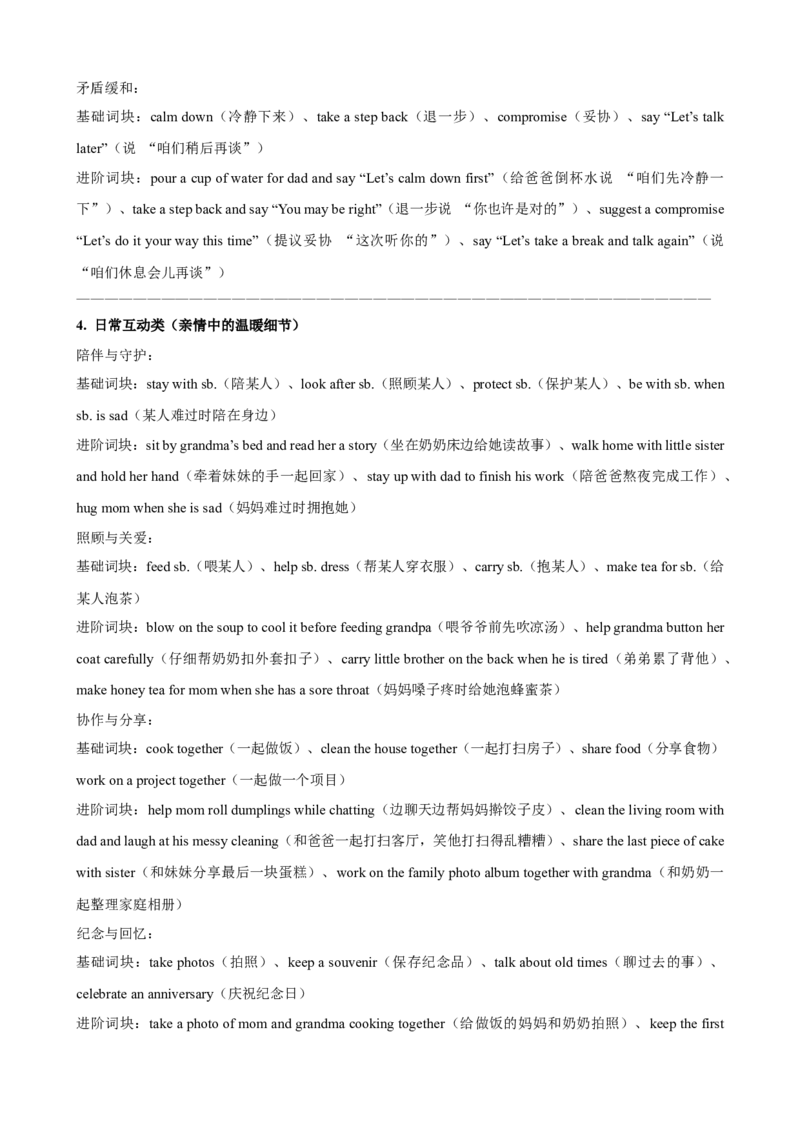
2. 信息传递类(亲情中的沟通互动)
叮嘱与提醒:
基础词块:tell sb. to be careful(告诉某人小心)、remind sb. of sth.(提醒某人某事)、warn sb. not to do
sth.(警告某人别做某事)、advise sb. to rest(建议某人休息)
进阶词块:call out from the doorway “Don’t forget your umbrella!”(在门口喊 “别忘带伞!”)、tap sb.’s
arm and remind “Take your medicine!”(轻碰某人胳膊提醒 “吃药!”)、say with a frown “Don’t stay up
too late!”(皱着眉说 “别熬夜太晚!”)、write on a sticky note “Buy eggs on the way back!”(在便利贴上
写 “回来路上买鸡蛋!”)
解释与说明:
基础词块:explain sth. to sb.(向某人解释某事)、tell sb. the reason(告诉某人原因)、clarify a
misunderstanding(澄清误会)、say why one did sth.(说明做某事的原因)
进阶词块:sit down and explain slowly “I did it because I cared”(坐下慢慢解释 “我是因为关心才这么
做”)、show sb. the photo to clarify “It’s not what you thought”(给某人看照片澄清 “不是你想的那
样”)、take a deep breath and say “Let me tell you the truth”(深吸一口气说 “我跟你说实话”)、point to
the broken toy and explain “I didn’t mean to break it”(指着坏玩具解释 “我不是故意弄坏的”)
道歉与安慰:
基础词块:say “I’m sorry”(说 “对不起”)、comfort sb.(安慰某人)、cheer sb. up(让某人开心)、
tell sb. “It’s not your fault”(告诉某人 “不是你的错”)
进阶词块:hold sb.’s hand and comfort “It’ll be better soon”(握着某人的手安慰 “一切都会好起来的”)、
pat sb.’s back and say “Don’t cry”(拍某人后背说 “别哭了”)、bring sb. a favorite snack to cheer up(给
某人带爱吃的零食让其开心)、hug sb. and say “I’m sorry I hurt you”(拥抱某人说 “对不起我伤害了
你”)
—————————————————————————————————————————————
3. 冲突解决类(亲情中的矛盾化解)
误会澄清:
基础词块:clear up a misunderstanding(澄清误会)、tell the truth(说实话)、show evidence(出示证据)
explain the situation(说明情况)
进阶词块:take out the old letter to clear up the misunderstanding(拿出旧信澄清误会)、sit down face to face
and tell the whole truth(面对面坐下说出全部真相)、show the video to explain the situation(给看视频说明
情况)、hold sb.’s arm and say “Let me explain”(抓着某人的胳膊说 “我解释一下”)
代际调解:
基础词块:help sb. understand each other(帮某人互相理解)、bridge the generation gap(弥合代际差距)、
translate for the elderly(给老人翻译)、explain new things to the old(给老人解释新事物)
进阶词块:stand between mom and grandma to mediate “Let’s listen to each other”(站在妈妈和奶奶中间调解
“咱们互相听听对方的想法”)、show grandpa the video tutorial to explain the phone function(给爷爷看视
频教程解释手机功能)、tell mom “Grandma just wants to help” to bridge the gap(跟妈妈说 “奶奶只是想帮
忙” 来弥合差距)、translate grandma’s dialect for mom to avoid misunderstanding(给妈妈翻译奶奶的方言
避免误会)
矛盾缓和:
基础词块:calm down(冷静下来)、take a step back(退一步)、compromise(妥协)、say “Let’s talk
later”(说 “咱们稍后再谈”)
进阶词块:pour a cup of water for dad and say “Let’s calm down first”(给爸爸倒杯水说 “咱们先冷静一
下”)、take a step back and say “You may be right”(退一步说 “你也许是对的”)、suggest a compromise
“Let’s do it your way this time”(提议妥协 “这次听你的”)、say “Let’s take a break and talk again”(说
“咱们休息会儿再谈”)
—————————————————————————————————————————————
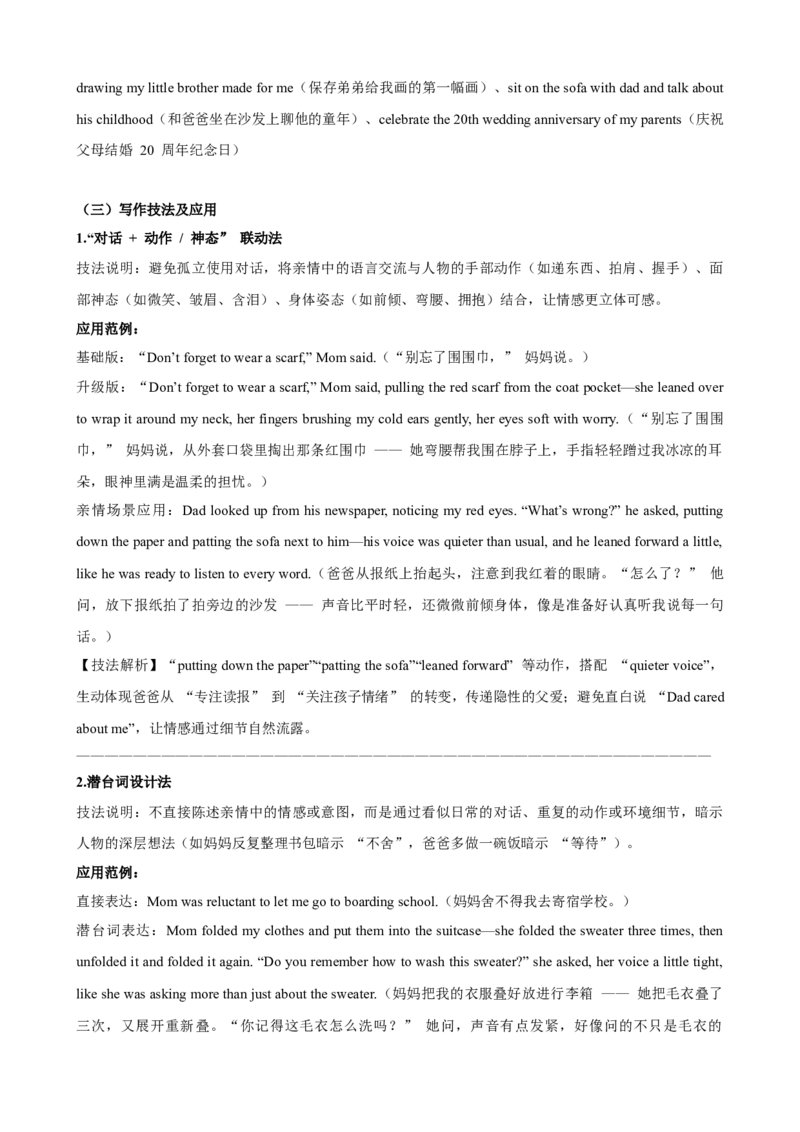
4. 日常互动类(亲情中的温暖细节)
陪伴与守护:
基础词块:stay with sb.(陪某人)、look after sb.(照顾某人)、protect sb.(保护某人)、be with sb. when
sb. is sad(某人难过时陪在身边)
进阶词块:sit by grandma’s bed and read her a story(坐在奶奶床边给她读故事)、walk home with little sister
and hold her hand(牵着妹妹的手一起回家)、stay up with dad to finish his work(陪爸爸熬夜完成工作)、
hug mom when she is sad(妈妈难过时拥抱她)
照顾与关爱:
基础词块:feed sb.(喂某人)、help sb. dress(帮某人穿衣服)、carry sb.(抱某人)、make tea for sb.(给
某人泡茶)
进阶词块:blow on the soup to cool it before feeding grandpa(喂爷爷前先吹凉汤)、help grandma button her
coat carefully(仔细帮奶奶扣外套扣子)、carry little brother on the back when he is tired(弟弟累了背他)、
make honey tea for mom when she has a sore throat(妈妈嗓子疼时给她泡蜂蜜茶)
协作与分享:
基础词块:cook together(一起做饭)、clean the house together(一起打扫房子)、share food(分享食物)
work on a project together(一起做一个项目)
进阶词块:help mom roll dumplings while chatting(边聊天边帮妈妈擀饺子皮)、clean the living room with
dad and laugh at his messy cleaning(和爸爸一起打扫客厅,笑他打扫得乱糟糟)、share the last piece of cake
with sister(和妹妹分享最后一块蛋糕)、work on the family photo album together with grandma(和奶奶一
起整理家庭相册)
纪念与回忆:
基础词块:take photos(拍照)、keep a souvenir(保存纪念品)、talk about old times(聊过去的事)、
celebrate an anniversary(庆祝纪念日)
进阶词块:take a photo of mom and grandma cooking together(给做饭的妈妈和奶奶拍照)、keep the first
drawing my little brother made for me(保存弟弟给我画的第一幅画)、sit on the sofa with dad and talk about
his childhood(和爸爸坐在沙发上聊他的童年)、celebrate the 20th wedding anniversary of my parents(庆祝
父母结婚 20 周年纪念日)
(三)写作技法及应用
1.“对话 + 动作 / 神态” 联动法
技法说明:避免孤立使用对话,将亲情中的语言交流与人物的手部动作(如递东西、拍肩、握手)、面
部神态(如微笑、皱眉、含泪)、身体姿态(如前倾、弯腰、拥抱)结合,让情感更立体可感。
应用范例:
基础版:“Don’t forget to wear a scarf,” Mom said.(“别忘了围围巾,” 妈妈说。)
升级版:“Don’t forget to wear a scarf,” Mom said, pulling the red scarf from the coat pocket—she leaned over
to wrap it around my neck, her fingers brushing my cold ears gently, her eyes soft with worry.(“别忘了围围
巾,” 妈妈说,从外套口袋里掏出那条红围巾 —— 她弯腰帮我围在脖子上,手指轻轻蹭过我冰凉的耳
朵,眼神里满是温柔的担忧。)
亲情场景应用:Dad looked up from his newspaper, noticing my red eyes. “What’s wrong?” he asked, putting
down the paper and patting the sofa next to him—his voice was quieter than usual, and he leaned forward a little,
like he was ready to listen to every word.(爸爸从报纸上抬起头,注意到我红着的眼睛。“怎么了?” 他
问,放下报纸拍了拍旁边的沙发 —— 声音比平时轻,还微微前倾身体,像是准备好认真听我说每一句
话。)
【技法解析】“putting down the paper”“patting the sofa”“leaned forward” 等动作,搭配 “quieter voice”,
生动体现爸爸从 “专注读报” 到 “关注孩子情绪” 的转变,传递隐性的父爱;避免直白说 “Dad cared
about me”,让情感通过细节自然流露。
—————————————————————————————————————————————
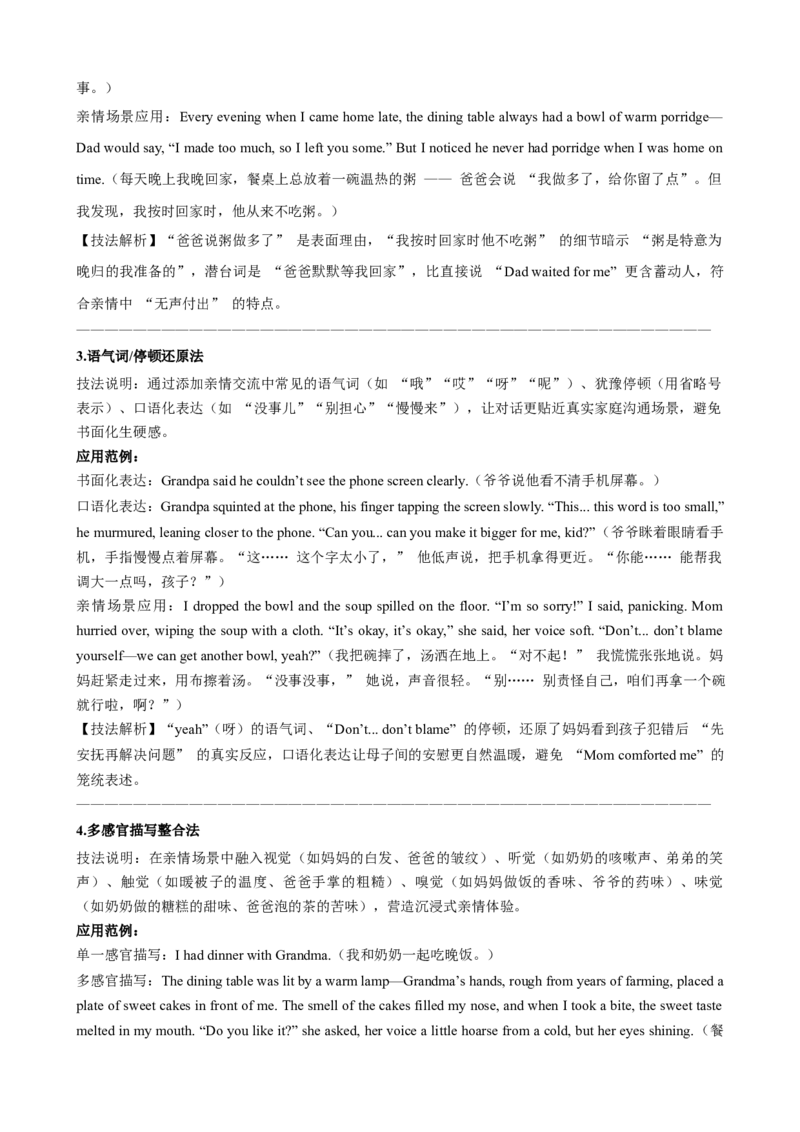
2.潜台词设计法
技法说明:不直接陈述亲情中的情感或意图,而是通过看似日常的对话、重复的动作或环境细节,暗示
人物的深层想法(如妈妈反复整理书包暗示 “不舍”,爸爸多做一碗饭暗示 “等待”)。
应用范例:
直接表达:Mom was reluctant to let me go to boarding school.(妈妈舍不得我去寄宿学校。)
潜台词表达:Mom folded my clothes and put them into the suitcase—she folded the sweater three times, then
unfolded it and folded it again. “Do you remember how to wash this sweater?” she asked, her voice a little tight,
like she was asking more than just about the sweater.(妈妈把我的衣服叠好放进行李箱 —— 她把毛衣叠了
三次,又展开重新叠。“你记得这毛衣怎么洗吗?” 她问,声音有点发紧,好像问的不只是毛衣的
事。)
亲情场景应用:Every evening when I came home late, the dining table always had a bowl of warm porridge—
Dad would say, “I made too much, so I left you some.” But I noticed he never had porridge when I was home on
time.(每天晚上我晚回家,餐桌上总放着一碗温热的粥 —— 爸爸会说 “我做多了,给你留了点”。但
我发现,我按时回家时,他从来不吃粥。)
【技法解析】“爸爸说粥做多了” 是表面理由,“我按时回家时他不吃粥” 的细节暗示 “粥是特意为
晚归的我准备的”,潜台词是 “爸爸默默等我回家”,比直接说 “Dad waited for me” 更含蓄动人,符
合亲情中 “无声付出” 的特点。
—————————————————————————————————————————————
3.语气词/停顿还原法
技法说明:通过添加亲情交流中常见的语气词(如 “哦”“哎”“呀”“呢”)、犹豫停顿(用省略号
表示)、口语化表达(如 “没事儿”“别担心”“慢慢来”),让对话更贴近真实家庭沟通场景,避免
书面化生硬感。
应用范例:
书面化表达:Grandpa said he couldn’t see the phone screen clearly.(爷爷说他看不清手机屏幕。)
口语化表达:Grandpa squinted at the phone, his finger tapping the screen slowly. “This... this word is too small,”
he murmured, leaning closer to the phone. “Can you... can you make it bigger for me, kid?”(爷爷眯着眼睛看手
机,手指慢慢点着屏幕。“这…… 这个字太小了,” 他低声说,把手机拿得更近。“你能…… 能帮我
调大一点吗,孩子?”)
亲情场景应用:I dropped the bowl and the soup spilled on the floor. “I’m so sorry!” I said, panicking. Mom
hurried over, wiping the soup with a cloth. “It’s okay, it’s okay,” she said, her voice soft. “Don’t... don’t blame
yourself—we can get another bowl, yeah?”(我把碗摔了,汤洒在地上。“对不起!” 我慌慌张张地说。妈
妈赶紧走过来,用布擦着汤。“没事没事,” 她说,声音很轻。“别…… 别责怪自己,咱们再拿一个碗
就行啦,啊?”)
【技法解析】“yeah”(呀)的语气词、“Don’t... don’t blame” 的停顿,还原了妈妈看到孩子犯错后 “先
安抚再解决问题” 的真实反应,口语化表达让母子间的安慰更自然温暖,避免 “Mom comforted me” 的
笼统表述。
—————————————————————————————————————————————
4.多感官描写整合法
技法说明:在亲情场景中融入视觉(如妈妈的白发、爸爸的皱纹)、听觉(如奶奶的咳嗽声、弟弟的笑
声)、触觉(如暖被子的温度、爸爸手掌的粗糙)、嗅觉(如妈妈做饭的香味、爷爷的药味)、味觉
(如奶奶做的糖糕的甜味、爸爸泡的茶的苦味),营造沉浸式亲情体验。
应用范例:
单一感官描写:I had dinner with Grandma.(我和奶奶一起吃晚饭。)
多感官描写:The dining table was lit by a warm lamp—Grandma’s hands, rough from years of farming, placed a
plate of sweet cakes in front of me. The smell of the cakes filled my nose, and when I took a bite, the sweet taste
melted in my mouth. “Do you like it?” she asked, her voice a little hoarse from a cold, but her eyes shining.(餐
桌被暖灯照亮 —— 奶奶那双因多年种地而粗糙的手,把一盘糖糕放在我面前。糖糕的香味飘进鼻子,我
咬了一口,甜味在嘴里化开。“好吃吗?” 她问,声音因感冒有点沙哑,但眼睛亮晶晶的。)
亲情场景应用:I sat by Dad’s bed when he was sick. The smell of medicine was in the air, and I touched his
forehead—it was still hot. He opened his eyes slightly, his voice weak: “Did you finish your homework?” I nodded,
handing him a cup of warm water. The cup felt warm in his cold hand, and he smiled a little, like the water had
made him feel better.(爸爸生病时我坐在他床边。空气中有药味,我摸了摸他的额头 —— 还是烫的。他
轻轻睁开眼睛,声音虚弱:“作业写完了吗?” 我点头,递给他一杯温水。杯子在他冰凉的手里显得暖
暖的,他微微笑了笑,好像这杯水让他舒服了些。)
【技法解析】整合嗅觉(药味)、触觉(额头烫、手凉、杯子暖)、听觉(声音虚弱)、视觉(眼睛微
睁、微笑),全面展现 “我照顾生病爸爸” 的场景,让 “父女间的牵挂” 通过多感官细节传递,比单
一描写更有感染力。
(25-26 高二上·四川·期中)It was in the afternoon before the end of the Second World War that Antonio Black,
who was twelve, caught sight of a beautiful brooch (胸针) in a shop window. The brooch is so beautiful that he was
unwilling to leave the store until he had purchased it. But it was too expensive — $5. His family was very poor and
his parents struggled to make ends meet. Five dollars would buy almost a week’s food for his family.
Antonio couldn’t ask his father for the money. Everything his father made through fishing went to his
mother, Susan. Slim and beautiful, his mother was the center of the home and the glue that held it together. The
housework was never-ending, and she struggled to feed and clothe their five children, but she was happy as her
family and their well-being were all she cared about.
Nevertheless, he opened the shop’s door and went inside. Standing proudly and straight in his flour-sack
(面粉袋改做的) shirt and washed-out trousers, he told the shopkeeper what he wanted, adding, “But I don’t have
the money right now. Can you please hold it for me for some time?”
“I’ll try,” the shopkeeper smiled. “People around here don’t usually have that kind of money to spend on
things. It should keep for a while.”
Antonio respectfully touched his worn cap and walked out. He would raise the money and not tell anybody,
for he thought Mum would be surprised when she saw that brooch. On hearing the sound of hammering (锤打) from
a side street, Antonio suddenly had an idea that he could raise money by selling the used nail bags. People built their
own homes in Bay Roberts, using nails bought in bags from a local factory. Sometimes the used bags were thrown
away at the construction site, and Antonio knew he could sell them back to the factory for five cents a piece. That
day he sold two nail bags and hid the money in a rusty soda tin.
注意:
1. 续写词数应为150 左右;
2.请按如下格式在答题卡的相应位置作答。
Every day after school, Antonio started his plan.
___________________________________________________________________________________________
___________________________________________________________________________________________
___________________________________________________________________________________________
___________________________________________________________________________________________
___________________________________________________________________________________________
____________________
The day finally came!
___________________________________________________________________________________________
___________________________________________________________________________________________
___________________________________________________________________________________________
___________________________________________________________________________________________
___________________________________________________________________________________________
___________________
(2025·河北邯郸·一模)阅读下面材料,根据其内容和所给段落开头语续写两段,使之构成一篇完整的短
文。
Every time we went to Lehman’s store, I would rush straight to the same shelf. There it was: a brown little
guy with a large nose that fit perfectly over my shoulder. I hugged the brown stuffed aardvark (土豚) doll tightly
and whispered, “Hi, Artie.”
Last week, my mother finally noticed. “Why do you always disappear?” she asked at checkout. “Next time,
your brother is going with you.”
Oh, no! My brother, Rich, was going to accompany me into the store. He would watch me and report
everything to our mother.
Anyway, I wasn’t going to give up seeing my precious Artie. So, when Rich and I walked into the store
together, I advised him to get the daily groceries, since he was older. He agreed but said I shouldn’t go off to look
at the cosmetics (化妆品), as I wasn’t allowed to wear them yet.
He needn’t have worried about that; I was already heading toward Artie. There it was, awaiting me. I grabbed
it and hugged it tightly. Just then, I heard my brother: “What in the world are you doing?”
“This is Artie,” I said. “I hug it every single time I come here. Don’t tell Mom. I know we can’t afford it,
and I hope it doesn’t get sold, because I just love this little guy.”
The look on Rich’s face was unreadable, but I knew deep down that he wasn’t going to make fun of me. In
fact, a few times when he accompanied me to the store, he said, “Go on and hug your ugly animal, if it’s still there,
and I’ll get the groceries.”
One day before Thanksgiving Day, Rich was working with Dad somewhere, so Mom took me to Lehman’s
but waited outside. “You go in by yourself,” she said. “My legs are tired today. Just don’t take forever, okay?”
注意:1.续写词数应为150 个左右;
2.请按如下格式在答题卡的相应位置作答。
I rushed straight to Artie’s shelf, but it was gone.

___________________________________________________________________________________________
___________________________________________________________________________________________
___________________________________________________________________________________________
___________________________________________________________________________________________
___________________________________________________________________________________________
_____
On Thanksgiving Day, as we were allowed to open one present, Rich walked up.

___________________________________________________________________________________________
___________________________________________________________________________________________
___________________________________________________________________________________________
___________________________________________________________________________________________
___________________________________________________________________________________________
_____
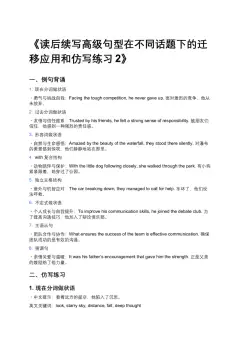
一、用单词的适当形式填空(家人亲情主题)。
1.Mom ______ (murmur) a lullaby while she tucked me into bed last night.
2.Dad ______ (sigh) in relief when he saw I came home safely in the rain.
3.Grandma ______ (pat) my shoulder and comforted me when I failed the exam.
4.I ______ (hug) my little sister tightly after she came back from her first school trip.
5.Mom ______ (frown) a little when she saw the messy room, but she still helped me clean it.
6.Dad ______ (explain) the math problem to me again patiently, even though I asked three times.
7.We all ______ (laugh) when Grandpa told us the funny story of his childhood.
8.I ______ (apologize) to Mom for forgetting her birthday, and she forgave me quickly.
二、根据意思补全句子。
1.Grandma ________________ (帮我掖好被子) and kissed my forehead before turning off the light.
2.Dad _______________________ (拍着我的肩) and said: “Don’t be afraid, I’ll be with you.”
3.Mom _____________________ (把热牛奶放在我桌上) with a note saying “Drink it before doing homework.”
4.I __________________________ (握着爷爷的手) and listened to him talk about his life as a farmer.
5.My little sister _______________________________ (分享她的糖果给我) when she saw I was sad.
6.We _____________________________ (一起整理家庭相册) on Sunday afternoon, laughing at the old photos.
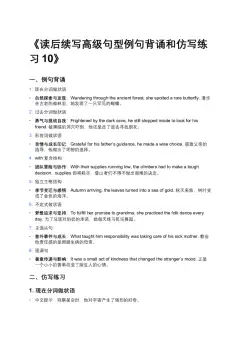
一、句子中译英(校园竞赛场景)
1.奶奶教我包饺子时,耐心纠正我捏褶子的手法,直到我能包出好看的饺子。


2.爸爸加班晚归,我把饭菜热好放在餐桌上,他看到后笑着摸了摸我的头。


3.妈妈生病时,我学着她平时的样子,给她熬了一碗姜茶,虽然味道有点怪。


4.爷爷看不懂手机上的新闻,我坐在他身边,逐字逐句读给他听,他听得很认真。


5.和妹妹因玩具吵架后,我把玩具让给她,她拉着我的手说 “姐姐最好了”。


二、微场景写作
情境 1:妈妈加班晚归,我热饭等她
训练目标:通过 “动作细节 + 环境烘托” 体现 “我对妈妈的关心”,避免直白抒情。
提示词:kitchen, reheated rice, warm soup, mom’s tired face, smile


情境 2:和爷爷因手机使用吵架后道歉
训练目标:用 “对话 + 动作 / 神态” 展现 “道歉与和解”,包含 1 处潜台词(如爷爷的动作暗示原
谅)。
提示词:living room, old phone, apologize, grandpa’s hands, shared tea


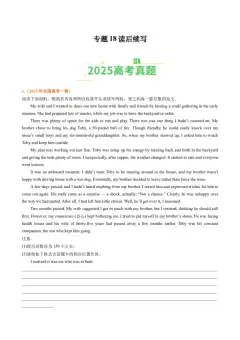
(2025·全国一卷·高考真题)阅读下面材料,根据其内容和所给段落开头语续写两段,使之构成一篇完整
的短文。
My wife and I wanted to share our new home with family and friends by hosting a small gathering in the
early summer. She had prepared lots of snacks, while my job was to have the backyard in order.
There was plenty of space for the kids to run and play. There was just one thing I hadn’t counted on: My
brother chose to bring his dog Toby, a 50-pound ball of fire. Though friendly, he could easily knock over my niece’s
small boys and my six-month-old granddaughter. So, when my brother showed up, I asked him to watch Toby and
keep him outside.
My plan was working out just fine. Toby was using up his energy by running back and forth in the backyard
and giving the kids plenty of room. Unexpectedly, after supper, the weather changed. It started to rain and everyone
went indoors.
It was an awkward moment. I didn’t want Toby to be running around in the house, and my brother wasn’t
happy with driving home with a wet dog. Eventually, my brother decided to leave rather than force the issue.
A few days passed, and I hadn’t heard anything from my brother. I texted him and expressed wishes for him
to come out again. His reply came as a surprise — a shock, actually: “Not a chance.” Clearly, he was unhappy over
the way we had parted. After all, I had left him little choice. Well, he’ll get over it, I reasoned.
Two months passed. My wife suggested I get in touch with my brother, but I resisted, thinking he should call
first. However, my conscience (良心) kept bothering me. I tried to put myself in my brother’s shoes. He was facing
health issues and his wife of thirty-five years had passed away a few months earlier. Toby was his constant
companion, the one who kept him going.
注意:
(1)续写词数应为150 个左右;
(2)请按如下格式在答题卡的相应位置作答。
I realized it was me who was at fault.

___________________________________________________________________________________________
___________________________________________________________________________________________
___________________________________________________________________________________________
___________________________________________________________________________________________
___________________________________________________________________________________________
____________________
With the biscuits my wife had made, I arrived at my brother’s door.

___________________________________________________________________________________________
___________________________________________________________________________________________
___________________________________________________________________________________________
___________________________________________________________________________________________
___________________________________________________________________________________________