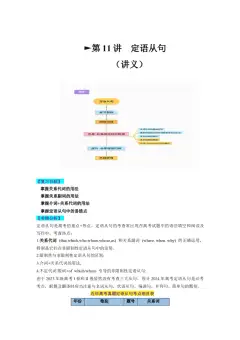
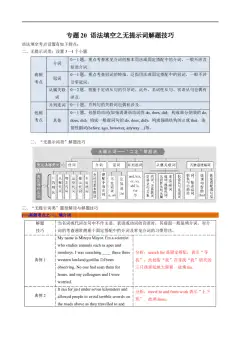
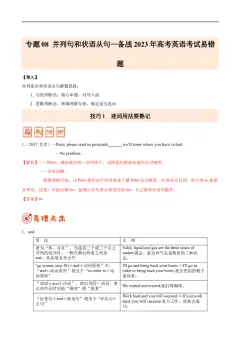
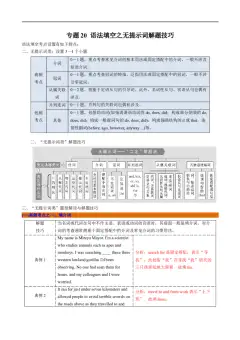
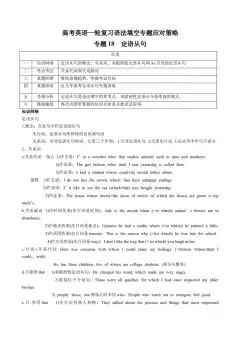
11并列句和状语从句
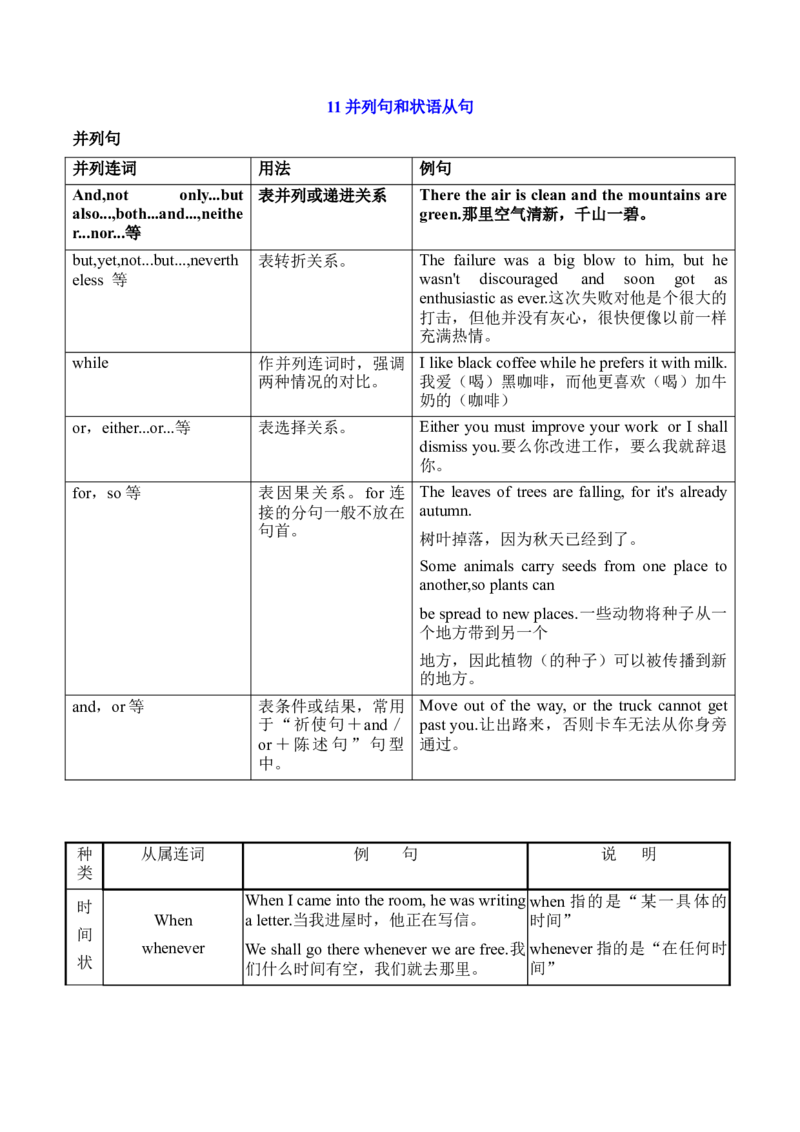
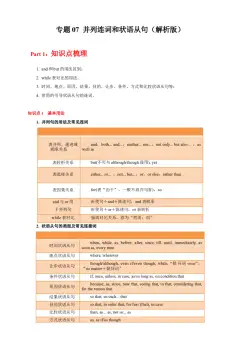
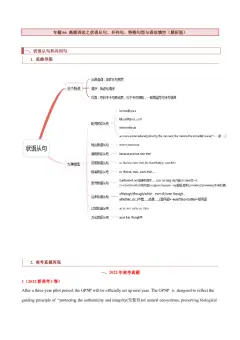
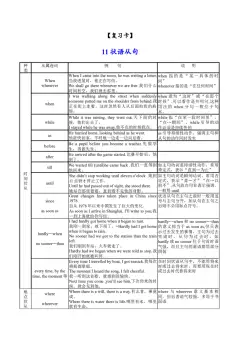
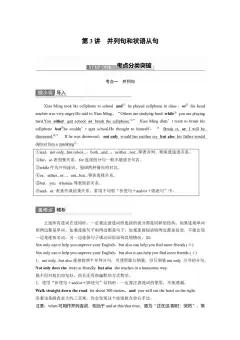
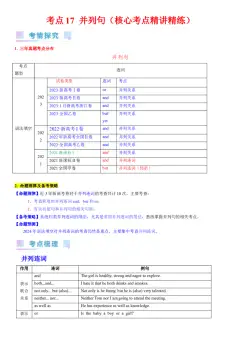
并列句
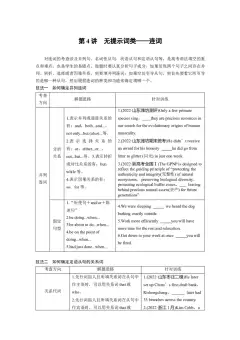
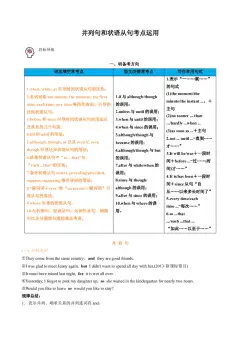
并列连词 用法 例句
And,not only...but 表并列或递进关系 There the air is clean and the mountains are
also...,both...and...,neithe green.那里空气清新,千山一碧。
r...nor...等
but,yet,not...but...,neverth 表转折关系。 The failure was a big blow to him, but he
eless 等 wasn't discouraged and soon got as
enthusiastic as ever.这次失败对他是个很大的
打击,但他并没有灰心,很快便像以前一样
充满热情。
while 作并列连词时,强调 I like black coffee while he prefers it with milk.
两种情况的对比。 我爱(喝)黑咖啡,而他更喜欢(喝)加牛
奶的(咖啡)
or,either...or...等 表选择关系。 Either you must improve your work or I shall
dismiss you.要么你改进工作,要么我就辞退
你。
for,so等 表因果关系。for 连 The leaves of trees are falling, for it's already
接的分句一般不放在 autumn.
句首。
树叶掉落,因为秋天已经到了。
Some animals carry seeds from one place to
another,so plants can
be spread to new places.一些动物将种子从一
个地方带到另一个
地方,因此植物(的种子)可以被传播到新
的地方。
and,or等 表条件或结果,常用 Move out of the way, or the truck cannot get
于“祈使句+and/ past you.让出路来,否则卡车无法从你身旁
or+陈述句”句型 通过。
中。
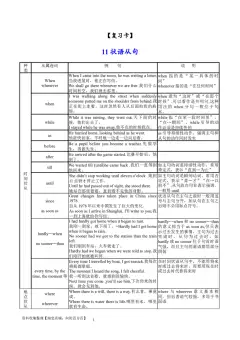
种 从属连词 例 句 说 明
类
When I came into the room, he was writing when 指的是“某一具体的
时
When a letter.当我进屋时,他正在写信。 时间”
间
whenever We shall go there whenever we are free.我whenever指的是“在任何时
状
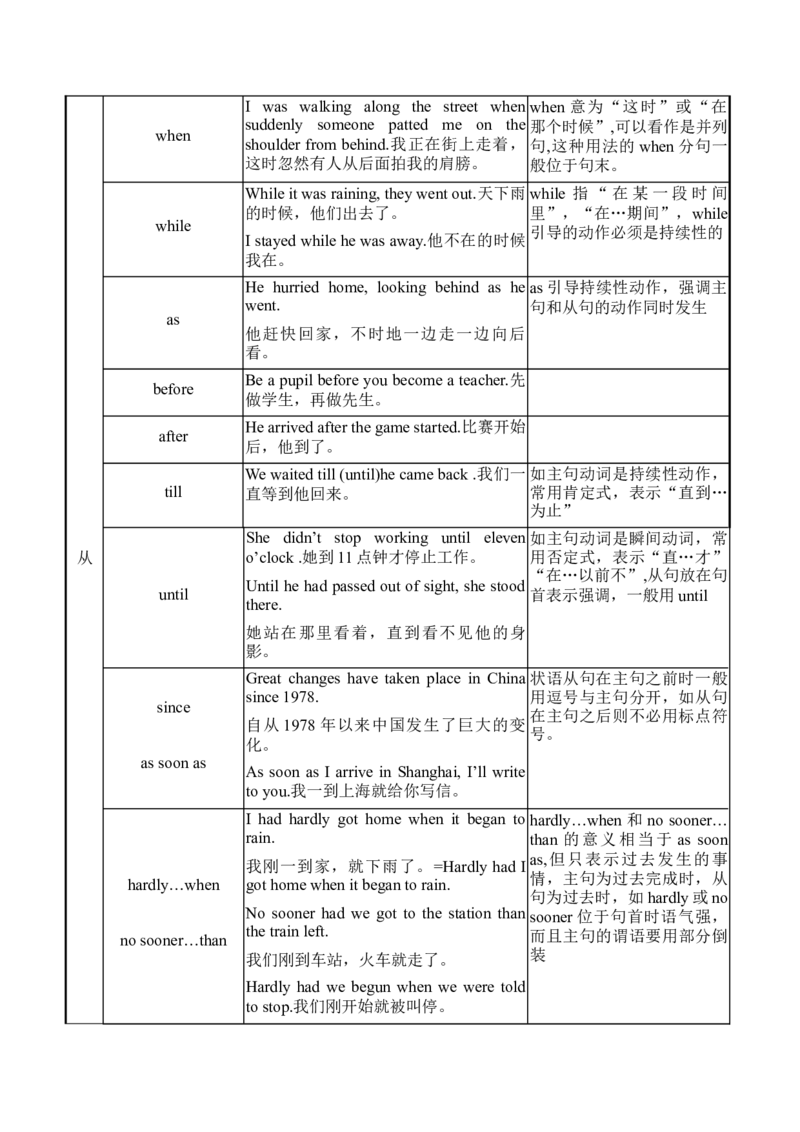
们什么时间有空,我们就去那里。 间”I was walking along the street when when 意为“这时”或“在
suddenly someone patted me on the 那个时候”,可以看作是并列
when
shoulder from behind.我正在街上走着, 句,这种用法的 when分句一
这时忽然有人从后面拍我的肩膀。 般位于句末。
While it was raining, they went out.天下雨while 指“在某一段时间
的时候,他们出去了。 里”,“在…期间”,while
while
引导的动作必须是持续性的
I stayed while he was away.他不在的时候
我在。
He hurried home, looking behind as he as引导持续性动作,强调主
went. 句和从句的动作同时发生
as
他赶快回家,不时地一边走一边向后
看。
Be a pupil before you become a teacher.先
before
做学生,再做先生。
He arrived after the game started.比赛开始
after
后,他到了。
We waited till (until)he came back .我们一如主句动词是持续性动作,
till 直等到他回来。 常用肯定式,表示“直到…
为止”
She didn’t stop working until eleven 如主句动词是瞬间动词,常
从 o’clock .她到11点钟才停止工作。 用否定式,表示“直…才”
“在…以前不”,从句放在句
Until he had passed out of sight, she stood
until 首表示强调,一般用until
there.
她站在那里看着,直到看不见他的身
影。
Great changes have taken place in China 状语从句在主句之前时一般
since 1978. 用逗号与主句分开,如从句
since
在主句之后则不必用标点符
自从 1978 年以来中国发生了巨大的变
号。
化。
as soon as
As soon as I arrive in Shanghai, I’ll write
to you.我一到上海就给你写信。
I had hardly got home when it began to hardly…when 和 no sooner…
rain. than 的意义相当于 as soon
as,但只表示过去发生的事
我刚一到家,就下雨了。=Hardly had I
情,主句为过去完成时,从
hardly…when got home when it began to rain.
句为过去时,如hardly或no
No sooner had we got to the station than sooner位于句首时语气强,
the train left. 而且主句的谓语要用部分倒
no sooner…than
装
我们刚到车站,火车就走了。
Hardly had we begun when we were told
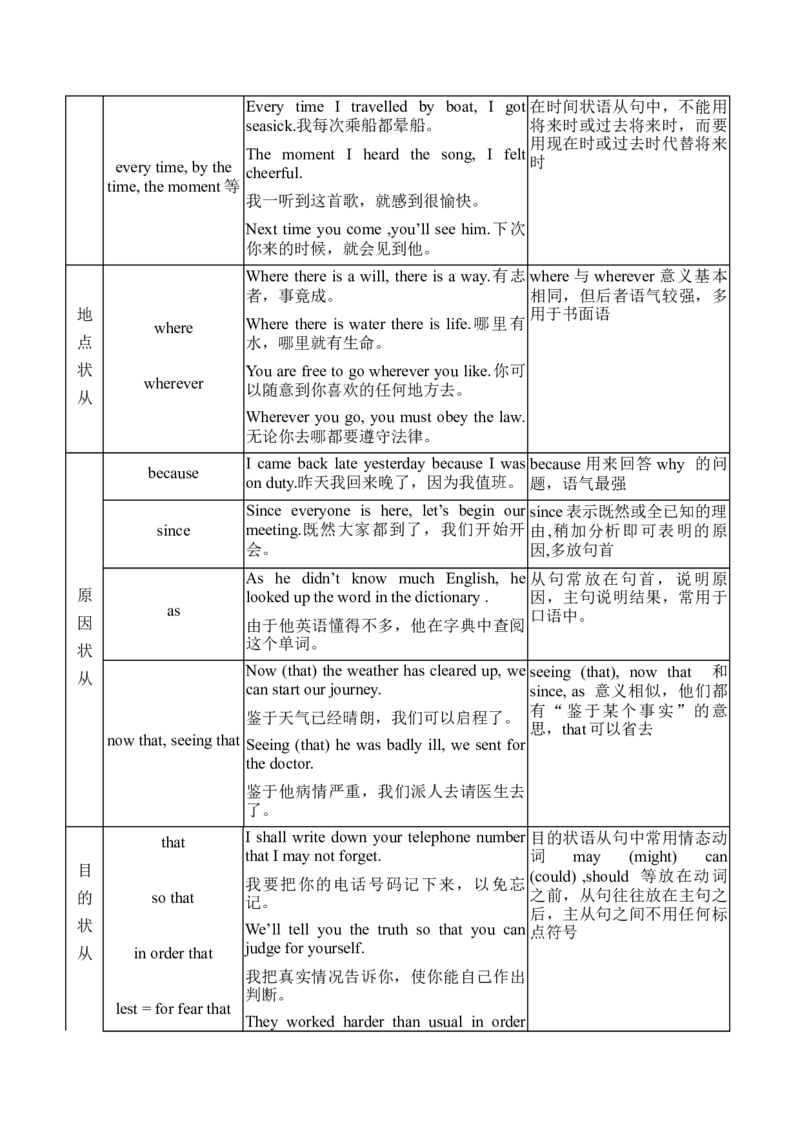
to stop.我们刚开始就被叫停。Every time I travelled by boat, I got 在时间状语从句中,不能用
seasick.我每次乘船都晕船。 将来时或过去将来时,而要
用现在时或过去时代替将来
The moment I heard the song, I felt
时
every time, by the
cheerful.
time, the moment等
我一听到这首歌,就感到很愉快。
Next time you come ,you’ll see him.下次
你来的时候,就会见到他。
Where there is a will, there is a way.有志where 与 wherever 意义基本
者,事竟成。 相同,但后者语气较强,多
地 用于书面语
where Where there is water there is life.哪里有
点 水,哪里就有生命。
状 You are free to go wherever you like.你可
wherever
以随意到你喜欢的任何地方去。
从
Wherever you go, you must obey the law.
无论你去哪都要遵守法律。
I came back late yesterday because I was because 用来回答 why 的问
because
on duty.昨天我回来晚了,因为我值班。 题,语气最强
Since everyone is here, let’s begin our since表示既然或全已知的理
since meeting.既然大家都到了,我们开始开 由,稍加分析即可表明的原
会。 因,多放句首
As he didn’t know much English, he 从句常放在句首,说明原
原 looked up the word in the dictionary . 因,主句说明结果,常用于
as
口语中。
因 由于他英语懂得不多,他在字典中查阅
这个单词。
状
Now (that) the weather has cleared up, we seeing (that), now that 和
从
can start our journey. since, as 意义相似,他们都
有“鉴于某个事实”的意
鉴于天气已经晴朗,我们可以启程了。
思,that可以省去
now that, seeing that
Seeing (that) he was badly ill, we sent for
the doctor.
鉴于他病情严重,我们派人去请医生去
了。
I shall write down your telephone number 目的状语从句中常用情态动
that
that I may not forget. 词 may (might) can
目
(could) ,should 等放在动词
我要把你的电话号码记下来,以免忘
的 so that 记。 之前,从句往往放在主句之
后,主从句之间不用任何标
状
We’ll tell you the truth so that you can 点符号
judge for yourself.
从 in order that
我把真实情况告诉你,使你能自己作出
判断。
lest = for fear that
They worked harder than usual in orderthat they could finish the work ahead of
time .他们比往常更加努力工作,为了能
提前完成工作。
Put on more clothes lest (= for fear that )
you should catch cold.
多穿点衣服,以免感冒。
We turned up the radio, so that everyone so that 前有逗号为结果状语
heard the news. 从句
so that
我们把收音机的音量放大,大家都听到 so…that 的so 后面跟形容词
了新闻。 或副词
He was so excited that he couldn’t say a
so…that
word.
结
他十分激动,以致一句话都说不出来。
果
He gave such important reasons that he such…that 的 such 后面跟名
状 was excused. 词,如果名词是单数就要用
such a /an…that 还可以转换
他说出了这么重要的理由,得到大家的
从
用so…that,语气较强
谅解。
such…that It is such an interesting novel that all of us
want to read it.
It is so interesting a novel that all of us
want to read it.
这是一本十分有趣的书,大家都想看。
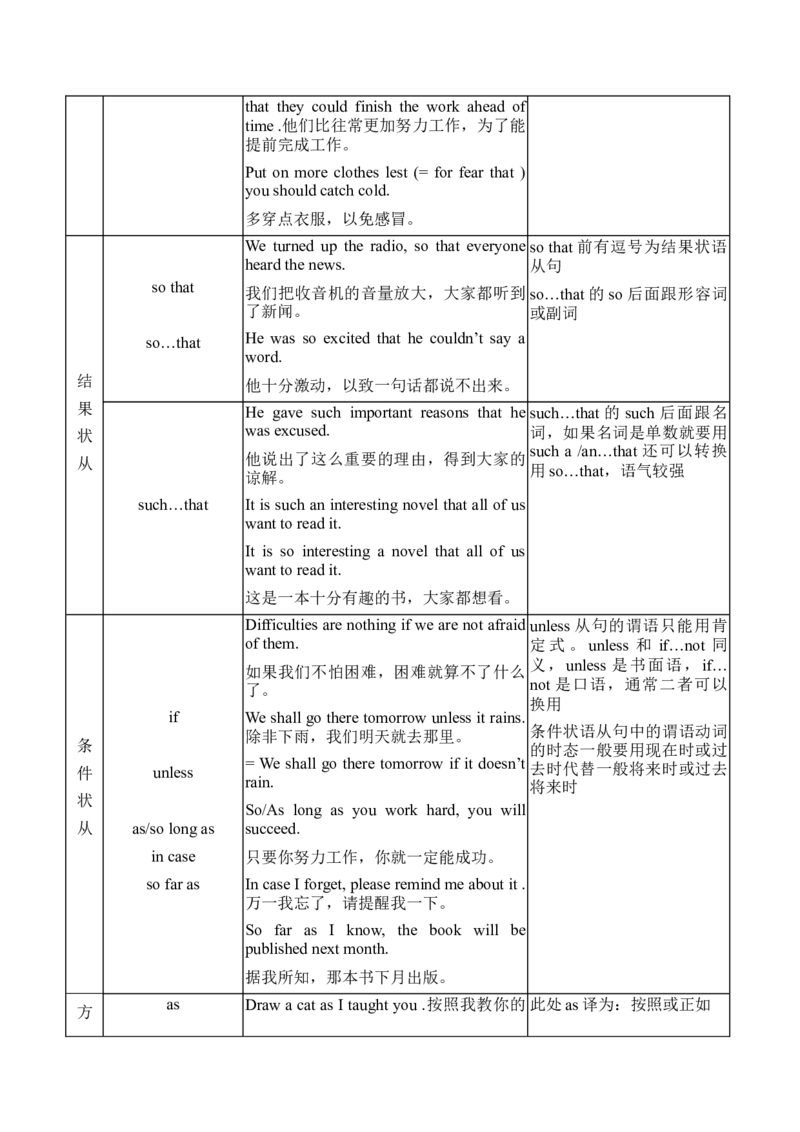
Difficulties are nothing if we are not afraid unless 从句的谓语只能用肯
of them. 定式。unless 和 if…not 同
义,unless 是书面语,if…
如果我们不怕困难,困难就算不了什么
not 是口语,通常二者可以
了。
换用
if We shall go there tomorrow unless it rains.
条件状语从句中的谓语动词
除非下雨,我们明天就去那里。
条
的时态一般要用现在时或过
= We shall go there tomorrow if it doesn’t
去时代替一般将来时或过去
件 unless
rain.
将来时
状
So/As long as you work hard, you will
从 as/so long as succeed.
in case 只要你努力工作,你就一定能成功。
so far as In case I forget, please remind me about it .
万一我忘了,请提醒我一下。
So far as I know, the book will be
published next month.
据我所知,那本书下月出版。
as Draw a cat as I taught you .按照我教你的 此处as译为:按照或正如
方画一只猫。 as if或as though的意义和用
法基本一样。从句中可以用
as if… Do as you are told.按照人家告诉你做的
现在时表示可能符合事实,
去做。
as though 也可以用虚拟语气
She looks as if she is ill.看上去她好象是
式
生病了。
状
He acted as if (though) nothing had
从
happened.他的行动就好象什么也没有发
生。
They treat the black boy as if (though) he
were an animal.
他们对待这黑孩子仿佛他是一头牲口。
Although (Though) he was over sixty, (yet) 在句子中一般用了“虽然”
he began to learn French. 就不能再用“但是”(but)
但可以与 yet 或 still 连用。
虽然他六十多岁了,但仍开始学习法语
although though / although意义相同,
。
用法基本一样,前者通俗,
though
We were not tired though (although) we 口语化,后者正式多放主句
had worked all day. 的前面
虽然我们干了一天活,但并不累。
I’ll go even if (though) it rains tomorrow. even if 和 even though 的意
即使明天下雨,我也要去。 思为“即使”“纵使”有退
even if,even though
一步设想的意味,多用于书
面语中
让
Child as he is , he knows a lot .虽然他是as引出的状语从句多用于书
步
一个孩子,但他懂得很多。 面语,它比用
状
as Cold as it is, (= Though it is cold,)the though 或 although 引导的从
从
children play outdoors. 句,语气强,更有表现力,
从句常放在句首,语序部分
虽然天气冷,但孩子们仍在户外玩。
倒装。
Do it no matter what others say.不管别人no matter……与 who-ever引
怎么说,尽管干。 导的让步状语从句意义基本
一 样,no matter……引导
No matter how busy he was, he studied
的从句可是以位于主句前或
English every day.
no matter (who, 主句后
what when, where 不管他多忙,他都每天坚持学习英语。
which, how…)
No matter who takes up the matter for
me ,I shall be very grateful.
不管谁为我处理这件事,我都将非常感
激。Whatever happens / may happen , we shall
not lose heart.
wh+ever (whatever
whoever ,whenever 无论发生什么,我们都不要失去信心。
whichever ,however)
Whoever comes, he will be welcome.无论
谁来,都会受到欢迎。
Mary is as old as my sister.玛利和我姐姐连词表示同程度级的比较,
一样大。 肯定句用as…as否定句可用
as…as , not as…as 或not so…as
He doesn’t run so (as) fast as Jack (does).
not so/as…as 他不如杰克跑得那样快。
the same…as His book is the same as mine.他的书和我
的一样。
such…as
Henry is not such a good worker as Peter .
享利这个工人不如彼得那样好。
She has made greater progress this year
than she did last year.
比 …than… 她今年比去年进步更大。
较 He bought fewer books than I (did).他买的
书比我买的少。
状
从 The more you read, the better you the more…the more 意思为
understand.你看的书越多,你懂得的就 越…越…,通常的语序为从
越多。 句在前主句在后,这两个
the 都是表示程度的副词,
The more tickets you sell, the more money
用在比较级的形容词或副词
you will get.
前面
the more
你卖的票越多,你的收入也越多。
…the more…
The harder you work, the greater progress
you will make.
你工作越努力,你取得的进步就越大。
The sooner, the better.越快越好。The
warmer, the better.越暖和越好。
易混知识:
易混 因连词词义掌握不全而误选引导词
考生应灵活掌握连词的用法,在做题时要充分体会语境,注意一词多义。常见的一词多义的
连词有:
While 当...时(引导时间状语从句)/虽然;尽管(引导让步状语从句)/然而(连接并列句)
so that 为了(引导目的状语从句)/因此(引导结果状语从句)
as当······时(引导时间状语从句)/因为;由于(引导原因状语从句)/ 虽然;尽管(引导让
步状语从句)/按······方式(引导方式状语从句)/和······一样(引导比较状语从句)
in case 以防(引导目的状语从句)/如果(引导条件状语从句)
since 自······以来(引导时间状语从句)/既然;因为(引导原因状语从句)
巩固练习
单句填空
1. ____________ the future of virtual humans seems promising, there will be many problems in its
development.
2. The Chinese began to accept Western medicine as early as the beginning of this
century,___________Chinese medicine is still in doubt among Western people.
3. Stores selling cigarettes to minors will be fined up to 5,000 yuan _________even risk getting their
business license canceled.
4.The rising melody is slow and steady __________the falling melody is often integrated with a
lively rhythm.
5. ___________you send me a text to say that you won't go for a picnic, I'll wait for you at the picnic
spot.
6.In order to make full use of the energy, many water power stations are built ___________there are
big waterfalls.
7.She had almost reached her destination____________ a delicious smell arrested her progress and
she stopped.
8.Ordinary____________ coming-of-age stories may look on the outside, they often allow us to look
underneath the surface and see the power of life itself.
9.So,_____________you're an art lover or just looking for a fun time, you're sure to find inspiration
in London.
10.If you smile, even ____________you're in a bad mood, it will immediately improve your mood.
语法填空
The giant panda 1__________(love) by people throughout the world. Chinese scientists 2___________(recent)
had a chance to study a wild female panda with a newborn baby.She was a very 3__________(care)mother,For 25
days, she never left her baby, not even to find something 4__________ (eat)!She would not let any other pandas
come near. She licked the baby constantly to keep it clean. Any smell might attract natural 5_______ (enemy) that
would try to eat the little panda. The mother held the baby in her front paws much the way a human does.6___________ it cried,she rocked it back and forth and gave it comforting pats. The mother continued to care for
the young panda 7___________ more than two years. By that time,the young panda no longer needed 8_________
(it) mother for food.However,it stayed with her and learned about the ways of the forest. Then, after two and a half
years, the mother 9___________ (drive) the young panda away. It was time for her to have a new
baby,10__________ it was also time for the young panda to be independent.