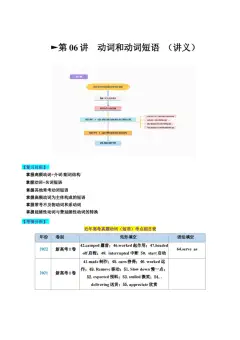
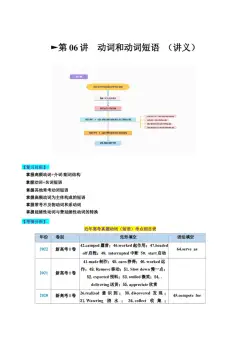
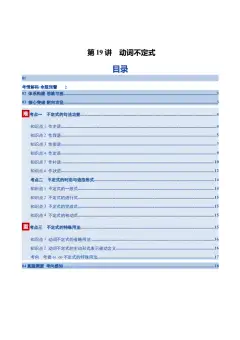
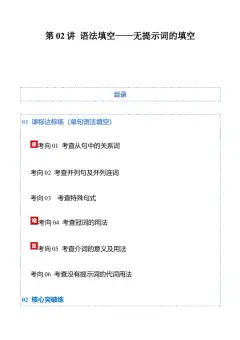
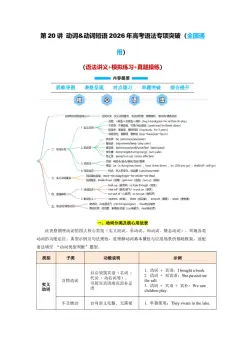
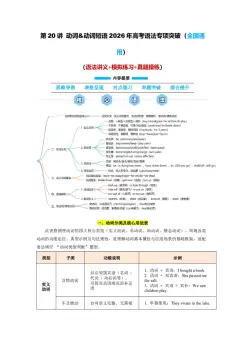
第05 讲  动词和动词短语
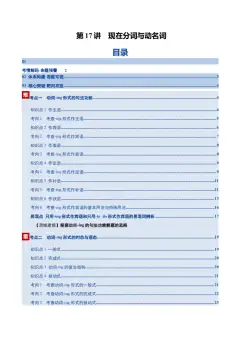
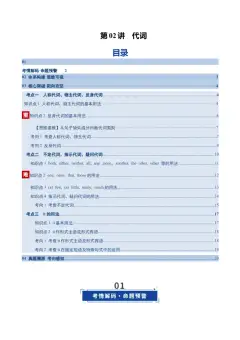
目录
01
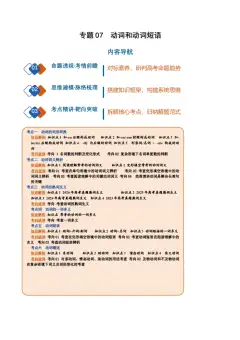
考情解码·命题预警
2
02 体系构建·思维可视.................................................................................................................................................4
03 核心突破·靶向攻坚.................................................................................................................................................4
考点一  动词.................................................................................................................................................................4
知识点1 系动词.....................................................................................................................................................4
知识点2 情态动词................................................................................................................................................6
知识点3 基本助动词............................................................................................................................................9
知识点4 实义动词...............................................................................................................................................11
考向1 对系动词、情态动词、基本助动词的用法考查.................................................................................12
考向2 对及物动词和不及物动词在复杂语境下词义及词形式变化的考查.................................................13
【思维建模】掌握动词的变化规则与复杂语境中的时态、语态、主谓一致的综合运用
考点二  动词短语...................................................................................................................................................14
知识点1 动词+介词/副词..................................................................................................................................14
知识点2 动词+名词............................................................................................................................................16
考向 复杂语境下考查动词短语词义辨析........................................................................................................17
考点三  动词和动词短语的一词多义、熟词生义...........................................................................................18
知识点1 动词一词多义、熟词生义..................................................................................................................18
知识点2 动词短语一词多义、熟词生义.........................................................................................................22
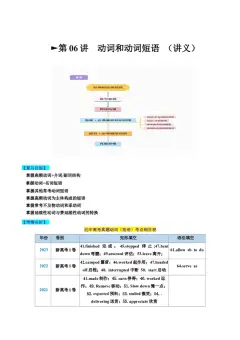
04 真题溯源·考向感知.................................................................................................................................................24
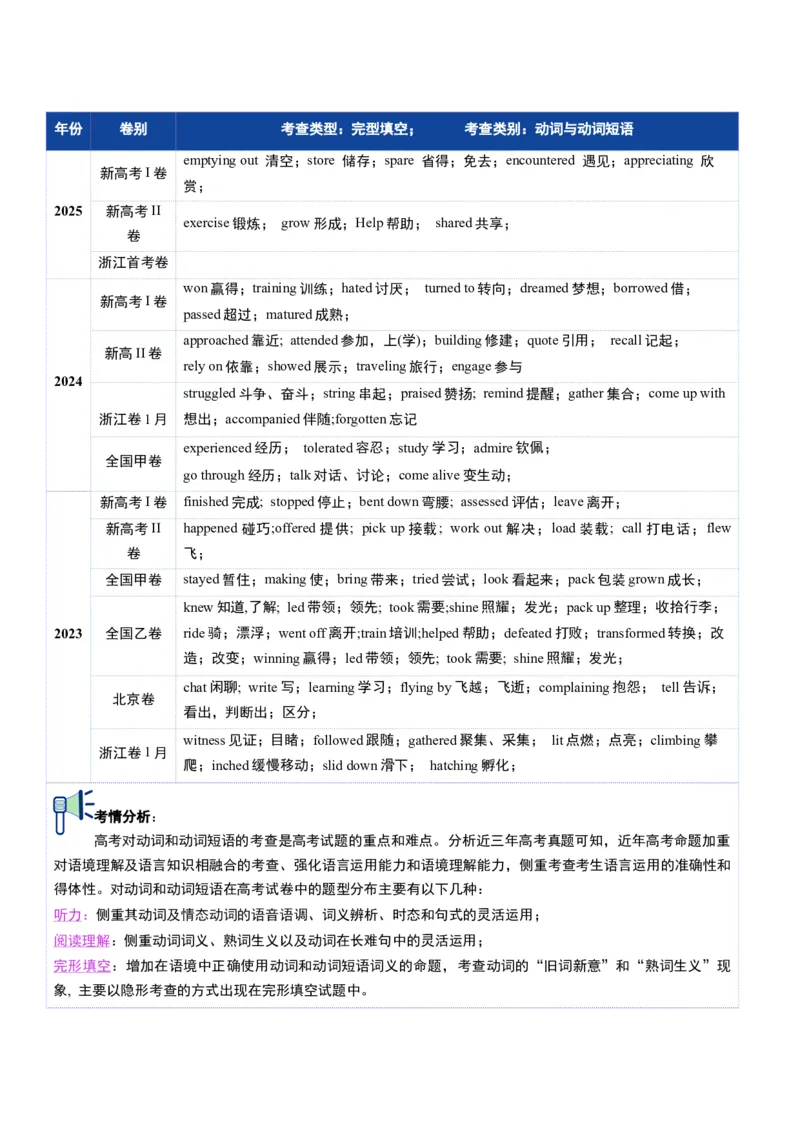
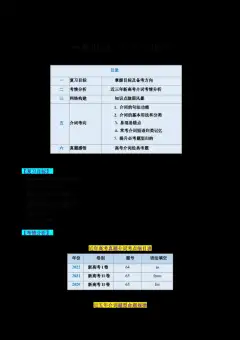
年份
卷别
考查类型:完型填空;      考查类别:动词与动词短语
2025
新高考I 卷
emptying out 清空;store 储存;spare 省得;免去;encountered 遇见;appreciating 欣
赏;
新高考II
卷
exercise 锻炼; grow 形成;Help 帮助; shared 共享;
浙江首考卷
2024
新高考I 卷
won 赢得;training 训练;hated 讨厌; turned to 转向;dreamed 梦想;borrowed 借;
passed 超过;matured 成熟;
新高II 卷
approached 靠近; attended 参加,上(学);building 修建;quote 引用; recall 记起;
rely on 依靠;showed 展示;traveling 旅行;engage 参与
浙江卷1 月
struggled 斗争、奋斗;string 串起;praised 赞扬; remind 提醒;gather 集合;come up with
想出;accompanied 伴随;forgotten 忘记
全国甲卷
experienced 经历; tolerated 容忍;study 学习;admire 钦佩;
go through 经历;talk 对话、讨论;come alive 变生动;
2023
新高考I 卷
finished 完成; stopped 停止;bent down 弯腰; assessed 评估;leave 离开;
新高考II
卷
happened 碰巧;offered 提供; pick up 接载; work out 解决;load 装载; call 打电话;flew
飞;
全国甲卷
stayed 暂住;making 使;bring 带来;tried 尝试;look 看起来;pack 包装grown 成长;
全国乙卷
knew 知道,了解; led 带领;领先; took 需要;shine 照耀;发光;pack up 整理;收拾行李;
ride 骑;漂浮;went off 离开;train 培训;helped 帮助;defeated 打败;transformed 转换;改
造;改变;winning 赢得;led 带领;领先; took 需要; shine 照耀;发光;
北京卷
chat 闲聊; write 写;learning 学习;flying by 飞越;飞逝;complaining 抱怨; tell 告诉;
看出,判断出;区分;
浙江卷1 月
witness 见证;目睹;followed 跟随;gathered 聚集、采集; lit 点燃;点亮;climbing 攀
爬;inched 缓慢移动;slid down 滑下; hatching 孵化;
考情分析:
高考对动词和动词短语的考查是高考试题的重点和难点。分析近三年高考真题可知,近年高考命题加重
对语境理解及语言知识相融合的考查、强化语言运用能力和语境理解能力,侧重考查考生语言运用的准确性和
得体性。对动词和动词短语在高考试卷中的题型分布主要有以下几种:
听力:侧重其动词及情态动词的语音语调、词义辨析、时态和句式的灵活运用;
阅读理解:侧重动词词义、熟词生义以及动词在长难句中的灵活运用;
完形填空:增加在语境中正确使用动词和动词短语词义的命题,考查动词的“旧词新意”和“熟词生义”现
象, 主要以隐形考查的方式出现在完形填空试题中。


 考点一  动词


语法填空:侧重考查动词的各种形态变化;
书面表达

 : 考查对动词词义和用法的熟练掌握。
复习目标:
1. 掌握动词和动词短语的基本词义;


2. 掌握动词的规则与不规则变化规律;


3. 掌握动词和动词短语在特定语境中的熟词生义和一词多义;


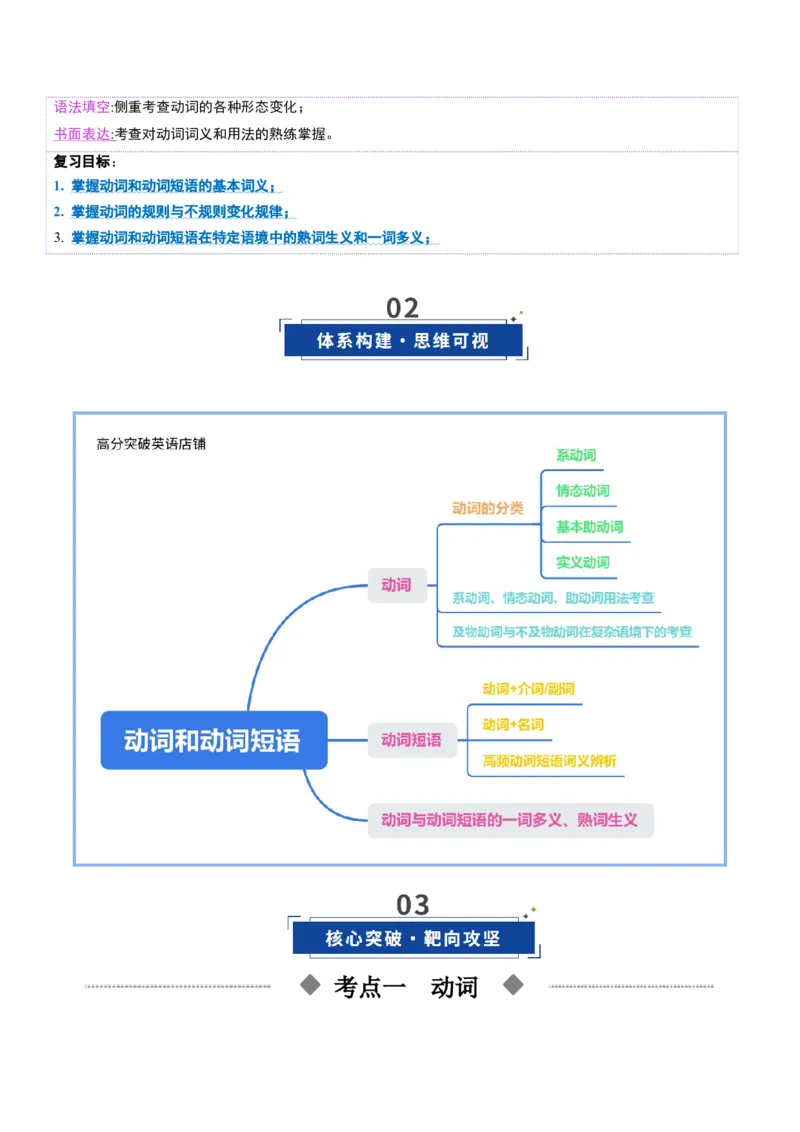
动词在英语中分为四大类,分别是实义动词(句子中表示动作的词如eat, )、系动词(链接前后的作用
如,be, keep,become 等)、情态动词(表示说话人的语气和态度,如must, can, may, should 等。)和助
动词(帮助实义动词构成疑问句、否定句和各种时态do, have)。
知识点1  系动词
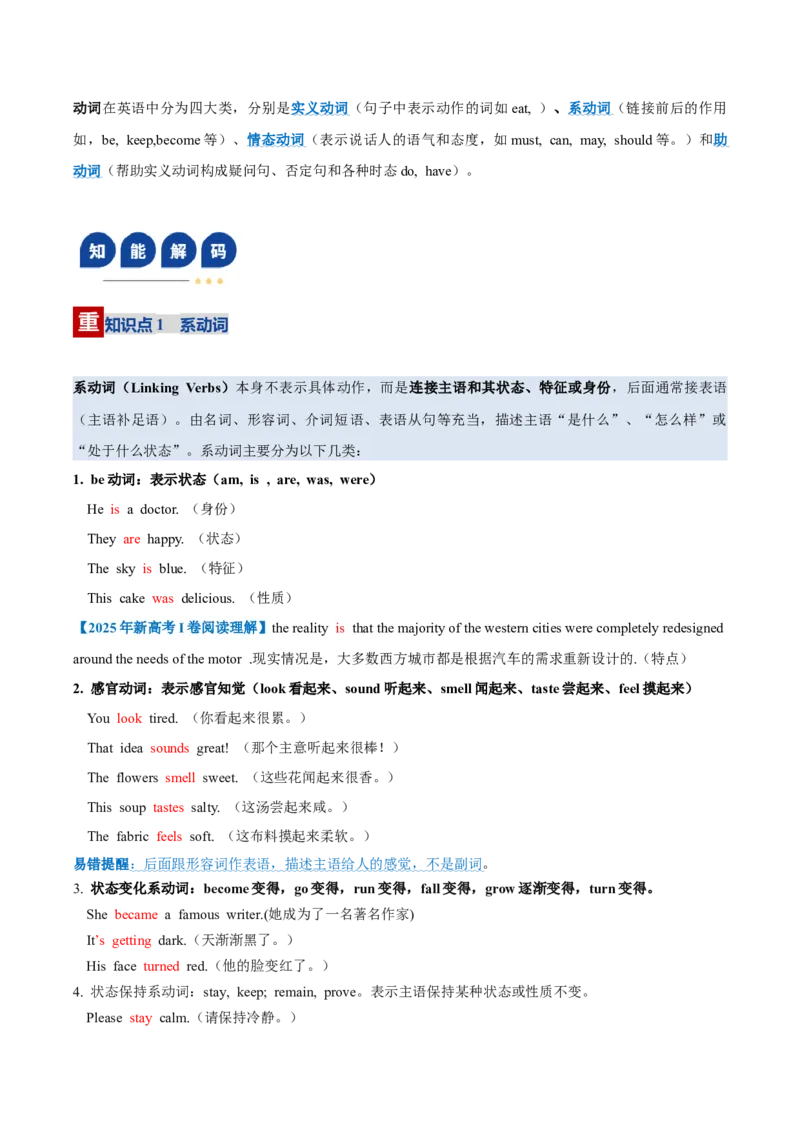
系动词(Linking Verbs)本身不表示具体动作,而是连接主语和其状态、特征或身份,后面通常接表语
(主语补足语)。由名词、形容词、介词短语、表语从句等充当,描述主语“是什么”、“怎么样”或
“处于什么状态”。系动词主要分为以下几类:
1. be 动词:表示状态(am, is , are, was, were)
He is a doctor. (身份)
They are happy. (状态)
The sky is blue. (特征)
This cake was delicious. (性质)
    【2025 年新高考I 卷阅读理解】the reality is that the majority of the western cities were completely redesigned
around the needs of the motor .现实情况是,大多数西方城市都是根据汽车的需求重新设计的.(特点)
2. 感官动词:表示感官知觉(look 看起来、sound 听起来、smell 闻起来、taste 尝起来、feel 摸起来)
  You look tired. (你看起来很累。)
  That idea sounds great! (那个主意听起来很棒!)
The flowers smell sweet. (这些花闻起来很香。)
This soup tastes salty. (这汤尝起来咸。)
The fabric feels soft. (这布料摸起来柔软。)
易错提醒:后面跟形容词作表语,描述主语给人的感觉,不是副词。
3. 状态变化系动词:become 变得,go 变得,run 变得,fall 变得,grow 逐渐变得,turn 变得。
She became a famous writer.(她成为了一名著名作家)
It’s getting dark.(天渐渐黑了。)
His face turned red.(他的脸变红了。)
4. 状态保持系动词:stay, keep; remain, prove。表示主语保持某种状态或性质不变。
Please stay calm.(请保持冷静。)
Despite the chaos, he remained silent. (尽管一片混乱,他仍然保持沉默。)
5. 表象系动词:appear 看起来; seem 似乎; look 显得;
She appears (to be) very confident. (她显得非常自信。)
He seems (like) a nice guy.(他看起来是个好人。)
It looks like rain./It looks as if it might rain.(看起来要下雨了。)
得分速记
1. 区分系动词和实义动词:很多系动词(如 feel, look, smell, taste, turn, grow, prove)本身也可以是实
义动词(表示具体动作)。关键在于它们后面接什么以及表达什么含义。
系动词用法:后接表语(形容词

 / 名词等),描述主语状态。


The rose smells sweet. (系动词,描述主语特征)
She feels happy. (系动词,描述主语状态)
实义动词用法

 :
  后接宾语(名词

 / 代词)或副词,表示具体动作。


She smelled the rose carefully.(实义动词,有宾语和副词)
The doctor felt my pulse.(实义动词,有宾语)
2. 表语是形容词,不是副词:系动词后描述主语状态特征的是形容词,不是修饰动词的副词。
The soup tastes delicious (adj). (描述汤的状态)
The soup tastes deliciously (adv). 副词不能描述主语)
知识点2  情态动词
情态动词本身有一定的意义,但也不能独立作谓语,只能和动词原形一起构成谓语,表示说话人的态度或
情感,如can, could, shall, should, will, may, might, must。
(一)can/could 的用法
1、表示具备某种“能力”。can 表示现在;could 表示过去。如:
Can you swim across the river? 你能游过那条河吗?
We couldn’t get the truck to start. 我们发动不了那辆卡车。
2、表示“请求”(疑问句中)、“允许”。Could 比 Can 委婉;都指现在。如:
Could you lend me $55?  你能借给我55 美圆吗?
Yes, of course.  当然可以。
No, I cannot/I’m sorry I cannot.  不,不行/对不起,恐怕不行。
3、表示“可能性”。 could 的语气更加不肯定。如
That can/could be very awkward. 那可就太尴尬了。
Can/Could it be true? 那会/可能是真的。
That can’t/couldn’t be true. 那不可能是真的。
(二)may/might 的用法
1、表示允许或请求允许;might 语气更礼貌:
May I turn on the TV? 我可以把电视打开吗?
She asked if she might have my bike. 她问是否可以借用我的自行车。
can/could 和may/might 都可以表示允许和请求允许。can 最直截了当;could 礼貌客气;may 既尊重又婉
转礼貌;might 带者太多的虚礼,所以很少使用。如:
肯定回答:Yes, of course. Yes, you can/may.
否定回答:No, you can’t/may not /mustn’t /I’m afraid not.
2、表示可能性,“也许”。may 和might 无时间差别,might 语气上更不肯定些。不用于疑问句,可用
can/could 或别的说法。
You may/might have some fever. 你也许发烧了。
Can/could they be having a bath?  他们可能正在洗澡吗?
(三)must 的用法
1、表示义务、命令或劝告,是“必须”之意。否定回答,多用needn’t 或 don’t have to。mustn’t 表示“绝
对不行、不可以”。
We must take this seriously. 我们必须严肃对待这事。
Must the ladies wear dresses? No, they don’t have to/they needn’t.
Can/May I come in?  No, you can’t/mustn’t.  可以进来吗?不行/绝对不行。
2、表示推测,是“肯定、一定”之意。此时,must 只用于肯定句。在否定句或疑问句中,用can/could:
There must be a mistake. 准是弄错了。
Can/Could there be a mistake 可能会有错吗?
There can’t/couldn’t be a mistake. 不可能会有错吗?
名师提醒:(
  1 )表示对现在和将来状况的推测:

 must

 一定,

 may

 可能,

 might

 也许,

 can’t

 不可能。从


“一定”到“不可能”,可能性逐渐降低。
(2)对已经过去的情况的推测:情态动词+have +done。
(四)need:作为情态动词,一般只用于否定句和疑问句中。
You needn’t try to explain. 你不需要解释。(情态动词)
Need we stay here this evening? 今晚我们需要在这儿住下来吗?(情态动词)
She needs to come tomorrow. 明天她需要来。(实义动词)
need 做实义动词时,后面的宾语如果是动名词,用主动形式表示被动意义,如果是不定式的被动形
式,来表示被动意义。类似need 的这种用法,还有require, want 等。
My shoes need repairing. = My shoes need to be repaired. 我的鞋需要修理。
(五)dare:情态动词dare 表示“敢”,在现代英语中,dare 往往用做实意动词。
Dare he swim across the river?  他敢游过这条河吗?
He dare not come to see me.  他不敢来见我。
He didn’t dare to go. 他不敢去。
(六)should/ought to 的用法
1、表示道义上的责任,义务或要求,有时表示劝告。ought to 否定式为ought not to /oughtn’t to。
You ought to /should pay more attention to what your lawyer says.你应该更多的注意你律师的。
2. 表示推测和可能性,是“应该”之意。 表示对现在和将来的推测。
You ought not to/shouldn’t be sleeping now. It’s eight o’clock.你不该还在睡觉,已经八点了。
3、“should/ought to have+过去分词”表示对过去的推测,“应该已经”。有时表“本应该”的意思;
“should not/ought not to have+过去分词”表示“本不该”的意思。
He began two hours ago. He ought to have finished filling in the forms now.
两个钟头前他就开始了,现在应该填完那些表格了。
You should not have asked him for help. 你本不应该向他求助。
4、表示讲话人惊奇,失望,愤怒等感情:
It’s strange that he should have lost his temper. 真奇怪,他竟然发脾气。
(七)情态动词+have done
1、“must have+过去分词”表对过去的推测,“一定已经,准是已经….”,用于肯定句。表示否定,要用
“can’t/couldn’t+ have+过去分词”,意 思 是“不可能”.
The streets are wet. It must have rained. 街道是湿的,准是下雨了。
The money can’t have been lost there. 钱不可能是在那儿丢的。
2、 “may/might have+过去分词”表示对过去的推测,“也许已经┅,可能已经…”。用于肯定或否定句
中。疑问句中用can 或could. “might(不是may)have+过去分词”也表示“本来可以…”。
He may have gone to bed. 他可能已经上床睡觉了。
You might have succeeded if you had tried. 假如你尝试过,或许已经成功了。(虚拟语气)
3、“needn’t+ have+过去分词”表示“作了不必做或不需要做的事”。可译成“本不必”。
I needn’t have borrowed the money yesterday. 昨天我根本不需要借钱的。(实际上已经借了)
4、can/could have done 在疑问句、否定句中,表示怀疑和不可能,这时没有时间上的差别,只是could 的
语气更弱一些:
Who can/could have taken them? 谁会把它们拿走了呢?
He can’t/couldn’t have taken it home. 他不可能是带回家去了。
could have done(但不是can)在肯定句中,表示“本来可以…;差点就要…”。
We could have started a little earlier. 我们其实可以更早一些动身的。
5、should/ought to have done 表示“过去应该做谋事却没有做”;“should not/ought not to have+过去分
词”表示“做了不应该做的事”。含有责备或遗憾的意思。
She should/ought to have gone there alone. 她本该一个人去那里的。(实际上不是)
The boy shouldn’t have been playing the piano. 那孩子不应该一直在弹钢琴。
6、might, may, must 表示推测时的区别: may,might, must 可表示 推 测“可能”.根据表示可能性的大小,
我们把这三个词排列为:might<may<must(或许→可能→肯定)。例如:
It might rain tomorrow.  (将来)明天可能下雨。
They might be watching TV now.  (现在)他们可能正在看电视。
Jane might have visited the Summer Palace last year.  (过去)去年珍妮可能去过颐和园。
He may have something important to do.  (现在)他可能有更重要的事要做。
They may have been to Shanghai last summer.  (过去)去年夏天他们可能去过上海。
There must be something wrong with him.  (现在)他肯定出问题了。
He must have made a mistake.  (过去)他一定是犯了个错误。
名师提醒:情态动词的重点和难点是:情态动词之间的区别;表示“推测”的表达方式;以及“情态动词
+have+

 过去分词”的含义。


知识点3    基本助动词
助动词(Auxiliary Verbs)本身不表示独立完整的动作或状态,而是辅助主要动词表达特定的语法功
能,如:时态、语态、疑问、否定、强调、可能性、必要性等。它们必须与主要动词的原形或分词形式结
合使用。助动词分为两大类:
基本助动词be, do,have 和情态助动词can/could, may/might, will/would, shall/should, must, ought to。
1. Be 动词 (am, is, are, was, were, being, been)
功能1:构成进行时态(Continuous Tenses)
结构: be + V-ing(现在分词)
      She is studyingEnglish now.(现在进行时)
      They were playing** football when it rained.(过去进行时)
      He will be sleeping at this time tomorrow.(将来进行时)
功能2:构成被动语态(Passive Voice)
结构: be + V-ed(过去分词)
     The book was written by Shakespeare.(一般过去时被动)
     The project **has been completed(现在完成时被动)
     Dinner is being cooked by Mom.(现在进行时被动)
2. Have 动词 (have, has, had, having)
功能:构成完成时态(Perfect Tenses)
结构:** have + V-ed(过去分词)
     I have finished my homework.(现在完成时)
     She had left before I arrived.(过去完成时)
     By next year, he **will have graduated(将来完成时)
3. Do 动词 (do, does, did)
功能1:构成疑问句(Questions)
结构: Do/Does/Did + 主语 + 动词原形?
    Do you like coffee?(一般现在时疑问)
    Did she call you yesterday?(一般过去时疑问)
功能2:构成否定句(Negatives)
结构: 主语 + do/does/did + not + 动词原形
     He did not (didn't) go to school.
功能3:表示强调(Emphasis)
结构:主语 + do/does/did + 动词原形 (+ 其他)
     I do understand your problem!(我真的理解!)
     We did see** that movie!(我们确实看了那部电影!)
知识点4  实义动词
实义动词 (action Verbs)又叫行为动词,是英语动词的核心,表示动作的动词,有实在的意义,如eat,
run, think 等。实义动词是具有完整意义,可以单独作谓语,主要表示主语的动作、状态和品质。根据其在
句子中是否需要跟宾语,分为及物动词和不及物动词。
常见的不及物动词有:
agree 同意
arrive 到达
come 来
die 死
exist 存在
fall 掉下
spread 传开
happen 发生
lie 平躺
stay 待
walk 走
rise 升起
remain 剩下
consist 由......组成
go 去
lie 位于,在于
laugh 大笑
snow 下雪
live 居住
think 想
hope 希望
名师提醒:1.  不及物动词不能直接跟宾语,需要加上相应的介词才能跟宾语,不及物动词不能用于被动语


态。
如
  talk
   to   /with

  sb(
  与某人交谈

 ) ,
  think

  about

  sth(
  思考某事

 ) ,
  hope

  for
   sth.
  (希望某事),

 dream

  of
   sth.

(梦想某事)。

 2.  有些动词可以跟同源宾语如,

 dream

  a  good/bad

  dream;

  live
   a  comfortable

  life
  过着舒适


的生活。

 3.  有些动词表达动作事实是及物动词,如

 sell,
   lock,

  wash,

  write,

  spread;

  表示性质特点时为不及


物动词。
例1. The books have been sold out.(vt.)这些书已经卖完了。
例2. The book sells well.(vi.)这本书很畅销。
例3. You don’t have to write these things in detail. (vt.)你不必详细地写这些东西。【2021·新高考II】
例4. The pen writes smoothly. (vi.)这支笔写起来很流利。
思维建模  多维度根据语境及动词类别及用法掌握语法填空中有关动词题的解题思路。
答案
对照
检验
1.长难句中首先考虑找到谓语,提炼句子的主干;
2.解决熟词生义时务必瞻前顾后,根据上下文进行合理推断;
3.  掌握谓语的考点和解题策略;
4.  掌握非谓语的考点和解题策略;
5.  在复杂语境中根据前后文进行词类转换。
信息
提取
确定
词性
考向1 对系动词、情态动词、助动词的用法考查
例1(2025 年天津卷3 月)There are 50,000 signs in modern Chinese but luckily, Chinese children
_______ learn all of them for everyday purpose.
A. couldn’t           B. mustn’t         C.needn’t         D.wouldn’t
例2(24-25 高三下·江苏扬州·模拟试题)There       (be) a thousand Hamlets in a thousand people’s eyes.
What we should keep in mind is that books and movies are two different forms of media and therefore have
different rules. We should judge a movie in its own right.
【变式训练1·变情景】(2023 年天津卷6 月)We _________bother with details, for our teammates will do
everything in their power to help us.
A.mustn’t
B.daren’t
C.needn’t
D.can’t
【变式训练2·变载体】(2024 年新高考I 卷听力)W:Yeah, you cannot be too careful.
思维建模:遇到情态动词的句子时,务必根据上下文具体语境迅速判断情态动词的具体意义或特殊句式中
的意思。
【变式训练3·变载体】(浙江卷阅读理解)Of course, our brains can decline as we grow older for lots of
reasons
including other environmental influences or genetic factors.
【变式训练4·变情景】 In Asia, messaging platforms are growing rapidly, with users in the hundreds of
millions, both at work and play.
易错提醒:
  1.  有些单词一词多义,在作系动词时,要跟形容词作表语;但同一词形如果作实义动词用,意思变


化
且用副词修饰。

 2.  系动词有时态的变化,不能用于被动语态。


考向2 及物动词和不及物动词在复杂语境下词义及词形变化的考查
例1(24-25 高三下·河北保定·开学考试)One fact, however, contradicts that concern. Since the beginning of
the Chunyun period, many netizens have posted pictures on social media showing the food their parents or other
relatives          (send) them.
例2(24-25 高三下·江苏苏州·阶段练习) Excelling in many key areas, the CR450         (set) new global
standards so far, according to China State Railway Group.
【变式训练1·变考法】 (2024 年湖南高三模拟试卷)The water          (feel) cool when I jumped into
the pool for morning exercise.
【变式训练2·变情景】It had white-painted tunnels and bright red carriages, and         (prove)extremely
popular with the public.
得分速记
观察设空处句子成分。体步骤如下:
第一步看成分:观查设空处句子成分,找出主语、宾语的位置和指代对象。
第二步看指代:仔细分析句意,判断主语和宾语是否指代同一对象。同时积累含有反身代词的固定搭配。
第三步定答案:注意单复数的正确形式。


 考点二 动词短语

知识点1 动词+介词/副词
   动词+介词
这类动词短语相当于及物动词,其后必修有宾语,且介词与动词不能分开,宾语只能放在介词之后,如:
account for 解释,说明,占比
adjust to 调整,适应
all for 要求
add to 增加,
break into 破门而入
ask for 索取,寻找
care about 关心,在乎
come across 偶然遇到
go for 努力获取
deal with 处理
get over 克服
hope for 希望,期待
get into 养成(习惯)
rely on 依靠,依赖
pay for 偿还,赔偿
answer for 负责

provide for 供给

plan for 打算,为……计划
send for 派人去请
fall behind 落在......后面
laugh at 嘲笑
feel like 想要
refer to 提到,参考
stick to 坚持
   动词+away
throw away 扔掉
put away 把……收拾好
give away 捐赠,分发
carry away 运走

run away 潜逃,跑开

go away 走开
send for 派人去请

stay away 远离
   动词+on
try on 试穿,试验
put on 穿上,上演
have on 穿着,戴着
pull on 穿,戴

hold on 不挂断,坚持,继续

carry on 继续开展,坚持
keep on 继续
go on 继续

get on 上(车)
focus/concentrate on 集中注意力于,关注;
   动词+over
come over 过来
hand over 移交
go over 仔细检查,复习
get over 克服,恢复
look over 检查
think over 仔细考虑
take over 接受,接管
hand over 移交
turn over 翻转
【2020·江苏卷·阅读理解】As darkness came over the field and the match ended, the goal keeper, Juan,
walked over to me and said in a matter of fact way, “In your home, do you have a moon too?”
夜幕降临赛场时,比赛结束,守门员胡安走到我身边,面不改色地问我:“你家也有月亮吗?”
   动词+up
bring up 抚育,培养

call up 召唤,打电话给
come up 走上前来,长出
cut up 切碎
fix up 修理
give up 放弃;
go up 上升,增长
grow up 长大
look up 尊敬,向上看,查寻

make up 虚构,弥补,组成
put up 举起,搭建
set up 建立,创(纪录)
pick up 捡起,(开车)接某人,偶然得到
send up 发射
show up 揭露,露面

turn up 出现,把……调高一点
   动词+out
come out 出来
go out 出去,熄灭
look out 留神,当心
walk out 走出
set out 出发,开始
put out 扑灭,生产
give out 发出,发表

hand out 分发
pick out 挑选
find out 找出,发现

speak out 大声地说

turn out 生产,结果是
get out 出去,离开
carry out 实行,执行

work out 计算出,解决,实行,行得通
bring out 出版
start out 出发,动身
知识点2 动词+名词
   动词+out
lose patience 失去耐心
lose heart 灰心
make a bet 打赌
make a face 做鬼脸
take effect 生效
take place 发生
take action/measures/steps 采取措施

give way 让步
lose weight 减肥
lead the way 领路
make a fortune 发财
take one’s time 慢慢来
take exercise 做锻炼
take turns 轮流
take advice 征求意见
make a difference 有影响
   动词+名词+介词
take care of 照顾                           make fun of 取笑
take account of 考虑到                     take part in 参加

make friends with 与……交朋友              find fault with 挑……的毛病
get rid of 摆脱
                         lose sight of 看不见

pay attention to 注意                        make progress in 在…方面取得进步
make room for 为……腾出空间               make contributions to 对……作出贡献
play a part in 起作用                         put an end to 结束
take advantage of 利用                       take notice of 注意到
take pride in 以......为豪                      catch sight of 看到
find fault with......挑......的毛病
   动词+介词+名词
Point1 动词后需跟宾语类的短语有:
bring.. to an end 使……结束
bring... under control 使……在掌控下
keep/have... in mind 记住……
put... into effect 使……生效
learn... by heart 记住……
Point2 动词后不带宾语类的短语有:
burst into tears 突然大哭起来
come into being 产生
come to power 执政
come into use 开始被使用
come into effect 生效
put on weight 长胖
考向  复杂语境下考查动词短语词义辨析
例1 (24-25 高三上·福建·期末)The young man later returned to Hangzhou as a high-ranking official, avenged
(报仇) his brother’s murder and sought out his sister-in-law. Since then, the dish______    (hand) down from
generation to generation.
例2 (24-25 高三下·天津·阶段练习)How could you _______ such a fantastic job when you have been out of
work for months?
A.give off
B.break in
C.turn down
D.take away
【变式训练1·变情景】To maintain a healthy lifestyle, doctors advise people to ______ high-sugar foods and
drinks as much as possible.
A.take in
B.bring up
C.break down
D.keep off
【变式训练2·变载体】“Dad, can I buy another pair of CONVERSE (匡威)?” I begged. I loved CONVERSE all
star shoes and    1     two pairs already. They were totally in and well, let’s just say that I liked to     2

the times.
……
1.A.wore out
B.owned
C.sold out
D.washed
2.A.stand for
B.comment on
C.live up to
D.keep up with


 考点三  动词与动词短语一词多义、熟词生义


知识点1 动词一词多义、熟词生义
动词
汉译
动词
汉译
abandon
遗弃;放弃
abuse
滥用;虐待;辱骂
access
接近;进入;使用权限;通
道(n. );接近;使用
(v.)
accompany
陪伴;为…… 伴奏;附有
accomplish
完成;实现
account
账户;解释(n. );解
释;导致;占(比例)
(v.)
acknowledge
承认;致谢;告知收到
address
称呼;演说;写姓名地
址;处理
adjust
调整;适应
admit
承认;准许进入;容纳
advocate
提倡,主张
affect
影响;感动;假装
appeal
呼吁;有吸引力;上诉
apply
申请;应用;涂,敷
appoint
委派,任命
approach
接近;方法;途径
(n.);接近;处理(v.)
approve
批准;赞成,同意
argue
争论,辩论;主张,认为
arrange
安排;整理;布置
assume
假定;设想;承担;呈现
attach
附,系,贴;重视
attempt
企图,尝试
attend
参加;照顾;注意
attribute
把…… 归因于;属性,特
征(n.)
bargain
讨价还价;便宜货(n.)
bear
忍受;承受;承担;生
育;携带
beat
(尤指用棍或其他硬物)接
连地打,击;打败,胜过;
跳动
benefit
益处,好处(n.);有益
于;受益
betray
背叛;出卖;泄露
block
街区;障碍物(n.);阻
塞;阻止
bother
打扰;麻烦(n.);费心
(常用于否定句和疑问句)
cause
导致;原因(n.)
challenge
挑战;质疑;艰巨任务
(n.);向…… 挑战;质
疑
charge
收费;充电;指控;负责
(n.);收费;充电;指
控;使承担责任(v.)
claim
要求;宣称,断言;索赔
classify
分类,归类
commit
犯(罪);承诺;使承担义
务
compromise
妥协,和解;损害(n. /
v.)
conclude
结束;推断出,得出结论
conduct
组织,实施;指挥(乐队
动词
汉译
动词
汉译
等);表现;行为(n.)
confirm
证实;确认;批准
confuse
使困惑;混淆
consider
考虑;认为;体谅
consume
消耗;消费;吃,喝
contain
包含,容纳;控制,抑制
continue
继续;持续
contract
合同,契约(n.);收缩;
订合同(v.)
convince
使信服;说服
count on
依靠,指望
cover
覆盖;包括;报道;支付
(费用);封面(n.)
crash
碰撞;撞击;崩溃;倒闭
create
创造;创建;引起
cure
治愈;疗法(n.);治愈,
治疗
demand
要求;需求(n. );要
求;需要
decline
下降;拒绝;衰落(n. /
v.)
deliver
递送;发表;接生
deserve
应得;值得
design
设计;图案,设计图
(n.);设计;旨在,目
的是
desire
渴望;欲望(n.);渴望,
期望
destroy
破坏,摧毁;消灭
detect
察觉,发现;检测
develop
发展;开发;养成;冲洗
(照片)
devote
致力于;奉献;把…… 用
于
differ
不同,有差异
effect
效果,影响(n.);实现,
使发生(v.)
direct
指导;指挥;导演;直接
的(adj.)
disappear
消失;失踪
discover
发现;发觉
discourage
使气馁;阻止
distinguish
辨别,分清
disturb
扰乱;妨碍
divide
划分;分开;除
earn
挣得;赢得;获得
encounter
遭遇;邂逅
engage
从事;使参与;雇佣;订婚
ensure
确保,保证
evaluate
评价,评估
examine
检查;审查;考试
exceed
超过;超出
exchange
交换;交流;交易所
(n.);交换,交流(v.)
expand
扩大;扩展;膨胀
expect
预料;期待;要求
explain
解释;说明
expose
揭露;暴露
face
面对;面临;脸(n.)
fade
逐渐消失;衰落;褪色
fail
失败;不及格;未能(做某
事);失灵
forbid
禁止;阻止
form
形式;表格(n.);形成;
组成;养成
found
创建,建立
guarantee
保证,担保;保修单
(n.);保证,担保(v.)
handle
处理;操作;把手(n.)
impact
影响;冲击(n.);影响;
冲击(v.)
imply
暗示
import
进口;进口商品(n.);进
口(v.)
improve
改进,改善;提高
include
包括,包含
increase
增加,增长(n. / v.)
indicate
表明;指示;暗示
infer
推断,推理
inform
通知,告知
lie
躺;位于;撒谎(v.);
谎言(n.)
动词
汉译
动词
汉译
inspire
激励,鼓舞;启发;引发
involve
包含,需要;牵涉;使参
与
join in
参加,加入
judge
判断;评判;法官(n.)
know
知道;认识;了解;精通
lay
放置;铺设;产卵;下蛋
leave
离开;留下;使处于(某种
状态)
ignore
忽视;不理会
link
联系,连接;纽带(n.)
manage
设法(做);经营;管理
learn
学习;了解到;得知
march
行进;游行示威;三月
(n. );行进;使前进
(v.)
matter
要紧;有关系(v.);事
情,问题(n.)
measure
测量;衡量;尺寸(n.)
miss
错过;想念;未击中;漏掉
monitor
监测;监控;班长(n.)
move
移动;感动;搬家;行动
(n.)
observe
观察;庆祝;遵守
occur
发生;出现;被想到
offer
提供;主动提出;报价
(n. / v.)
operate
操作;经营;动手术
oppose
反对;抵制
order
命令;订单;顺序
(n.);命令;订购;整
理(v.)
ought to
应该,应当
owe
欠(钱、债等);归功
于;应感激
pack up
整理;收拾行李
pace
步伐;速度(n.);来回
踱步;确定速度(v.)
participate
参加,参与
persuade
说服,劝服
mention
提及,提到
pour
倒,灌;倾泻;涌入
practise
练习;实践;从事(职业)
present
提出;呈现;赠送;现在
的(adj.);礼物;现在
(n.)
prevent
阻止,预防
promote
促进;提升;宣传
promise
答应;承诺;希望,前途
(n.)
reflect
反射;反映;反思
raise
提升,举起;筹集;养育;
提出
reach
到达;达到;伸手去够;
范围(n.)
react
反应;回应
realize
实现;意识到;变卖
recognize
认出,识别;承认
reduce
减少;降低;使沦为
replace
取代,代替;更换
require
需要;要求
rescue
营救,救援;营救行动
(n.)
resist
抵抗,抵制;忍住
respond
回答,回应;做出反应
restore
恢复;修复;归还
retire
退休;退下;退出
review
复习;回顾;评论;审查
(n. / v.)
rid
使摆脱;使去掉
rise
上升;升起;增长;起身
remove
移动;去除,使消失;开除
save
拯救,挽救;节省;储存
shrink
收缩;缩小;减少
settle
解决;定居;使平静
scare
使害怕,惊吓;害怕的
(adj.,常用于 be scared of
skip
跳过;略过;跳绳
动词
汉译
动词
汉译
结构)
seize
抓住;夺取;理解
select
(精心地)挑选,选定
shape
形状;外形(n.);塑造;
形成
share
分享;共享;份额(n.)
shoot
射击;拍摄;发芽
strike
突然性或一次性的击打;
罢工;撞击;突然想起
(常用于 It strikes sb.
that... 结构)
signal
信号;暗号(n.);发信
号;示意(v.)
simplify
简化,使简易
solve
解决;解答
spare
省出,抽出(时间等);
备用的(adj.)
spot
发现;认出;斑点;地点
(n.)
stand
站立;忍受;位于;看台
(n.)
starve
挨饿;饿死;渴望
state
陈述,说明;国家;州
(n.)
struggle
挣扎;奋斗;努力;斗争
succeed
成功;接替;继任
suffer
遭受;忍受;受苦
supply
供应;供给;补给(n. /
v.)
support
支持;支撑;供养;证据
(n.)
suppose
认为;假定;猜想
switch
开关;转换(n. / v.)
target
目标;靶子(n. );
把…… 作为目标;瞄准
(v.)
taste
味道;滋味(n.);品尝;
尝起来(v.)
tend
倾向于;照料,护理
test
测试,考验;试验(n. /
v.)
thank
感谢,感激
transform
转换、改造;使改观
treat
对待;治疗;款待(n. /
v.)
use
使用;用途(n.);使用;
运用(v.)
value
价值;重要性(n.);重
视;估价(v.)
view
观点;看法;风景(n.);
看待;观看(v.)
visit
拜访;参观;访问
volunteer
志愿者(n.);自愿做;自
愿提供(v.)
wander
闲逛;漫步;走神
知识点2 动词短语一词多义、熟词生义
单词 / 短语
汉译
单词 / 短语
汉译
break
away(from)
脱离;摆脱
break down
分解;出故障;崩溃;失
败
break out
爆发
break up
打碎;分裂;解散;结束
bring about
导致,引起
bring up
养育;提出;呕吐
cut down
削减;砍倒
call for
要求;需要;提倡
call off
取消
call on
拜访(某人);号召
carry out
执行,实施
catch on
流行起来;理解
单词 / 短语
汉译
单词 / 短语
汉译
catch up with
赶上;追上
count on
依靠,指望
cut off
切断;中断;隔绝
deal with
处理;对付;涉及
dream of
梦想;梦见
depend on
依靠,依赖
do with
处理;忍受
draw on
利用;凭借;临近
drop in
顺便拜访
end up
最终成为;以…… 告终
fix on
确定;选定;集中(目光
等)于
fall for
迷恋;上…… 的当
fall out
争吵;脱落
figure out
计算出;弄明白
fill in
填写;填补
fit in (with)
相处;适应
get across
使理解;使通过
get away
离开;逃脱
get down to
开始认真处理,着手做
get in
进入;收获;插话
get off
下车;离开;脱下
get on
上车;进展;相处
get over
克服;恢复;熬过
get rid of
摆脱;除去
get through
通过;接通(电话);完
成
give away
赠送;泄露;暴露
give in
屈服;让步;上交
give off
发出(光、热、气味等)
give out
分发;发出(声音等);
用完,耗尽
give up
放弃;停止
go ahead
前进;请便;继续
go by
经过;(时间)流逝;遵
循
go in for
参加;爱好
go out
出去;熄灭;过时
go through
经历;浏览;仔细检查;
通过
hold on
等一会儿;坚持;不挂断
(电话)
head for
前往;朝…… 方向行进
insist on
坚持
hold up
举起;支撑;延迟;抢劫
join in
参加,加入
keep up with
跟上;与…… 保持同步
let down
使失望;放下
lead to
导致,造成
let out
放出;发出(声音等);
泄露
look out
小心,当心
live up to
达到(预期);符合(要
求)
look after
照顾,照料
look down
on/upon
轻视,看不起
look forward
to
期待,盼望
look into
调查;研究
meet with
(偶然)遇到;经历;符
合
look through
浏览;仔细查看
make for
走向;有助于
make it
获得成功;准时赶到
make up
组成;编造;化妆;弥补
ought to
应该,应当
pack up
整理;收拾行李
pull down
拆毁;拉下;使降低
point out
指出
pick up
接载;捡起;学会;恢复
(健康等)
pull out
拔出;离开;(火车等)
出站
put aside
储存;把…… 放在一边
put away
放好;储存
put forward
提出;将…… 提前
put off
推迟,拖延
put on
穿上;上演;增加(体重
等)
put out
扑灭;伸出;出版
put up
张贴;搭建;提供住宿
单词 / 短语
汉译
单词 / 短语
汉译
refer to
提及;参考;查阅;指的
是
rely on
依靠,信赖
run into
偶然遇到;撞上;陷入
slow down
放慢速度
stick to
坚持;遵守;粘贴在……
上
search for
寻找,搜寻
serve as
担任;用作
show off
炫耀
show up
出现;露面
take after
(外貌、性格等)与……
相像
take in
吸收;理解;欺骗;收留
take off
脱下;起飞;成名;请假
take on
承担;呈现;雇用
take over
接管;接任
take up
占据(时间、空间等);
开始从事;拿起
throw at
扔向
think over
仔细考虑
throw away
扔掉;浪费
try out
试验;试用
turn down
拒绝;调小(音量等)
turn in
上交;归还
turn off
关掉;关闭
turn on
打开;发动
turn out
结果是;证明是;生产
turn over
翻转;移交;仔细考虑
turn to
转向;求助于;翻到(书
页等)
1. (2025 年新高考II 卷阅读理解)She generally works with their regular teachers to get lessons and tests
being used at their home schools.
2. (2025 年新高考II 卷 )Getting to Shrewsbury Town Center from London  is   challenging but worth the
anxiety.
3.(2025 年新高考I 卷听力)Could you put down your information in this form?
4.(2025 年北京卷)My first step of redefining success began with course registrations
5.(2024 年新高考I 卷)These sepals open on warm days to give the inside plants sunshine and fresh air. In
cold weather, the structure stays ________ (close) to protect the plants.
6.(2025 年新高考I 卷完型填空)My husband and I had just sold our house and we were busy ___38___ the
beloved home our family had spent 23 years filling up.
38. A. painting over
B. looking around
C. emptying out
D. pulling down
7.(2024 年新高考II 卷完形填空)During my first visit to Italy, I ___22___ to ask for directions or order in a
restaurant. But every time I tried to ___23___ a sentence of Italian together, the locals smiled at me and
___24___ my language skills. That encouragement helped me to get through the language __
  barrier

 _  . After I
made Italy my permanent home, I discovered how warm-hearted__ Italians are. Neighbors will bring me freshly
made cheese and will come to my door to ___27___ me to close the window in my car when rain is coming. It's
these small __
  acts

 __
   of kindness that make a new country feel like home.
As a foodie, the way to my heart is through my stomach, and nowhere fuels my __ appetite_ quite like Italy.
Each town has its own traditional ___

 dish

 ___

 , and every family keeps a recipe passed from one generation to
another. Families ____31____ for big meals on Sundays, birthdays, and whatever other excuses they can
____32____. These meals are always ____33____ by laughter and joy. Whatever __
  disadvantages

 __
   life in Italy
might have, the problems are ____35____ once you sit down to a big meal with friends and family.
22. A. planned
B. struggled
C. refused
D. happened
23. A. string
B. hang
C. mix
D. match
24. A. improved
B. assessed
C. admired
D. praised
27. A. remind
B. allow
C. persuade
D. order
31. A. gather
B. cheer
C. leave
D. wait
32. A. put up with
B. stand up for
C. come up with
D. make up for
33. A. signaled
B. confirmed
C. represented
D. accompanied
35. A. created
B. forgotten
C. understood
D. identified