专题17 阅读理解之说明文12 篇 (天津专用)
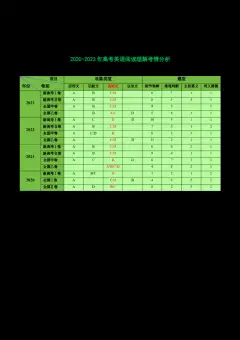
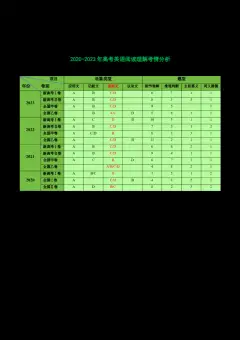
【题型知识点细目表】
题号
难度
知识点
1
适中
身体部位 ,科普知识 ,说明文
2
较难
科普知识 ,说明文
3
适中
说明文,人与动植物,科普知识
4
适中
体态语,说明文
5
适中
体态语,说明文
6
适中
社会问题与社会现象,说明文,学习
7
适中
情绪,方法/策略,说明文,段落大意,语意转化,逻辑推理
8
适中
情绪,说明文,科普知识
9
较难
人工智能,说明文
10
适中
阅读 ,方法/策略,说明文,论证方式,段落大意,正误判断,语意转化,逻辑推理
11
适中
社会问题与社会现象,人工智能,说明文
12
适中
环境保护,说明文
【高考典例】
There is something about wine experts that annoys people. Wine tasting has become the best example of a
privileged group who spend their days nose deep in a glass of fine wine. This negative view of wine experts isn’t
only misguided, but part of a general devaluation of our sense of smell.
Humans are, in fact, sensitive smellers. A decade ago, researchers discovered that humans can often detect
odours (气味) at a weaker concentration than animals can, outperforming most other animals except dogs. Ethyl
mercaptan, a chemical added to natural gas so we can detect leaks, requires the amount equal to just three drops in
a space the size of an Olympic swimming pool for us to detect it.
It is true that our sense of smell is different from our other senses. While our brains are superb at
performing visual analyses, the human sense of smell creates overall impressions of our surroundings, informed
by all our senses. When we perceive a smell, we interpret it based also on what we see, hear, think and feel. For
example, hunger or the bodily memory of an illness might create opposite reactions to the same food smell.
These cross-sensory (跨感官的) influences on our smell perceptions might seem like a shortcoming, but it
is rather a feature, not a problem. The brain is especially engaged in making predictions about future smells, and
when those predictions are violated by a surprising smell, several regions across the brain respond in an effort to
re-evaluate what we are actually smelling.
Wine experts are great at making smell predictions. A pale ruby-red colour might guide the expert to smell
out apple or strawberry in a fine wine. The sense of smell evolved in natural environments where the senses had to
work together to find potential food sources and remember the consequences of eating them. The competence of
wine tasters is fuelled by their knowledge of sensory correspondences.
Smells link together impressions from all the senses, connecting them to our internal states: hunger,
emotions, memories and expectations. That is why the loss of the ability to smell often leaves people depressed
with a bad appetite and a lack of enjoyment from eating and drinking.
Smelling makes us live our life more vividly. Spending more time among the smells of nature is an
excellent way to increase our nasal (鼻子的) intelligence.
1.What is the author’s purpose of mentioning wine experts in Paragraph 1?
A.To present a misunderstanding.
B.To support a commonly held view.
C.To share a personal experience.
D.To criticize a certain group of people.
2.What did researchers find about the human sense of smell a decade ago?
A.Humans are very sensitive to natural gas.
B.Humans can smell extremely weak odours.
C.Humans excel in identifying chemicals in the air.
D.Humans do worse in detecting smells than animals.
3.What can be inferred from Paragraph 3?
A.Overusing the sense of smell may weaken other senses.
B.Hunger has little connection with the sense of smell.
C.The colour of food may help bring out its smell.
D.Sharpening the senses boosts memory capacity.
4.When predicting a smell, the brain may make a re-evaluation if________.
A.an unpleasant smell is quickly detected B.cross-sensory influences are maximized
C.the sense of smell is frequently disturbed
D.the perceived smell goes against the expectation
5.According to Paragraph 5, the evolution of the sense of smell has much to do with________.
A.easy access to food sources
B.human curiosity about nature
C.sensory knowledge about food
D.dangers in natural environments
6.What does the passage focus on?
A.How the sense of smell assists the working of other senses.
B.How the sense of smell functions by involving other senses.
C.How all the senses operate together to bring us a vivid world.
D.How we can train ourselves to be sensitive smellers.
Science serves as a powerful tool for unlocking the mysteries of the universe, but understanding its
limitations is essential for its effective application. There are occasions where I have used the handle of a knife as
a hammer (锤子), but the result would have been better if I’d had a more suitable tool at hand. As far as science
goes, it is really good at testing things that are testable, but not so for those that are not.
We can do, and have done, an impressive amount with our brains. But there are limits. Sometimes these
limits go away if we keep at it for long enough — we just need better facilities and experiments to get the answer.
Breaking new ground in modern science this way can be costly. Next-generation supercomputers or incredibly
large telescopes are expensive, yet these may be required to find answers to some of the unsolved mysteries of the
universe.
Sometimes the limits we encounter in trying to unlock the nature of the universe are cognitive ( 认知的).
Think about this: human DNA is only about 1.2 percent different from that of chimps (黑猩猩). Chimps are smart,
no question. But could you teach them advanced mathematics? What if our DNA were another 1.2 percent further
evolved than it is? What might our brains be capable of then? The level of abstract thinking might be
unimaginable.
Sometimes the limits we hit are fundamental. There are laws of nature we may never be able to understand,
however advanced our brains might become. There are experiments we might never be able to perform. We may
never be able to test what caused the universe to be created, and what caused the cause of the universe being
created. This is where science may never break through.
For something to be considered scientific, it must, by definition, be testable. There is a problem here: it may
not need to be testable right now, but it must be testable at some point in the future by experiment. If an idea is
untestable, that doesn’t mean it is wrong. It means it is untestable for now. These untestable ideas also happen to
be some of the most interesting ones, probably because they’ve puzzled humanity for centuries.
1.Why does the author mention “knife” and “hammer” in Paragraph 1?
A.To demonstrate how tools can be used creatively.
B.To highlight consequences of using a wrong tool.
C.To show the necessity of keeping a handy tool within reach.
D.To stress the need for the right tool to achieve desired results.
2.What is often required in breaking new ground in science?
A.Broader science education.
B.More advanced facilities for experiments.
C.Deeper understanding of the brain power.
D.More investment in next-generation scientists.
3.How does the author assess human beings in terms of their cognitive capacity?
A.They are just 2.4% away from true abstract thinking.
B.They are slightly smarter than other intelligent beings.
C.They are yet to evolve further to learn more about the universe.
D.They are good at solving problems with advanced mathematics.
4.What message does Paragraph 4 convey?
A.Some puzzles about the universe are way beyond scientific exploration.
B.Experimental research lays solid foundations for space technology.
C.Boundaries of science can be pushed back with determined efforts.
D.Limitations of science may result from insufficient testing.
5.What has the author added to the definition of a scientific idea?
A.Correct ideas are testable.
B.Untestable ideas can be true.
C.Some scientific ideas may never be testable. D.An idea must be testable to be seen as correct.
All animals take in oxygen from the air they breathe in, and release CO₂ from their blood when breathing
out. Most mammals (哺乳动物) can’t directly detect oxygen levels in the blood supplied to their tissues. Instead,
they rely on the rising level of CO₂ in their blood to signal that they might need to take a breath. But a recent study
published in Science suggests seals (海豹) can sense the amount of oxygen in the blood, and change their diving
behavior in response.
To find out if oxygen levels affected seal behavior, Professor McKnight at the University of St. Andrews
and his colleagues created a special section in a pool where young seals were held. In one corner, there was a
breathing chamber (呼吸室), where they were sheltered from the rain and the wind.
The breathing chamber was surrounded by panels that prevented surface swimming, yet swimming below
the surface for about 200 feet would give the seals access to a feeder where they could eat as much fish as they
liked. Once the seals got familiar with the setup, the researchers started to gradually change the composition of the
air in the breathing chamber, increasing or reducing the levels of oxygen and CO₂ to see an effect on their
behavior. Sure enough: the higher the level of oxygen, the longer the seals stayed at the feeder.
The finding suggests that seals don’t just physically respond to oxygen levels by changing their heart rate or
breathing, but that they are sufficiently aware of them to change their behavior. This ability would put seals in a
class beyond any land mammals that have been tested. Since oxygen levels on land remain stable, humans don’t
seem to have evolved (演化) to notice low blood oxygen levels, sometimes not even when they’re about to pass
out in free-diving.
Therefore, in free-diving without oxygen tanks, accidents are quite common. Our reliance on sensing CO₂
levels in our blood instead of oxygen may be to blame. Actually, this is a perfectly reasonable strategy on land,
where growing CO₂ tends to signal breathing issues. But when holding our breath during diving, relying on CO₂
levels is risky, especially on repeated dives. Because every time we surface and breathe in, our sensitivity to CO₂
is decreased, even if its levels are already high, and this increases the chance that a person will, without
awareness, pass out before they get to the surface.
1.What do most mammals rely on to determine when to take a breath?
A.The growing amount of CO₂ in their blood.
B.The rising level of oxygen in their lungs.
C.The intensity of their physical activity.
D.The blood supply to body tissues.
2.When would the seals stay at the feeder for a longer period of time?
A.When they needed to take in more food at the feeder.
B.When the oxygen level in the chamber grew higher.
C.When they familiarized themselves with the setup.
D.When the CO₂ level in the chamber was raised.
3.What results in humans’ inability to notice low oxygen levels in their blood?
A.The unstable CO₂ levels in the air.
B.Their lack of attention to breathing.
C.The constant oxygen levels on land.
D.Their functionally changeable heart rate.
4.Why do accidents often occur when divers go free-diving?
A.Their breath cannot be held long enough.
B.They cannot adjust the consumption of oxygen.
C.They may fail to notice rising CO₂ levels soon enough.
D.Their breathing organs stop working properly underwater.
5.Which statement is probably supported by McKnight’s seal research?
A.Seals have evolved to survive in low oxygen environments.
B.Seals are quick to sense oxygen levels and act accordingly.
C.Seals can maintain their heart rate even with low blood oxygen levels.
D.Seals are more sensitive to changes in the environment than other mammals.
【热点话题练习】
Believe it or not, you could be creating a bad impression on others, whether at your job or in your personal
life, with what you don’t say, even if you are saying and doing the right things. That’s because many of our
reactions to others are based on body language. If your body language is communicating a negative message,
that’s the message others could be getting regardless of what actual words come out of your mouth.
What are some of the negative messages sent via body language? Things like having your arms folded
across the chest can show hostility (敌意). Lack of eye contact can indicate shiftiness (奸诈). An unsmiling face
could communicate a variety of things, like anger, disappointment or sadness, depending upon what other facial
expressions are included at the same time. Want to know what body language communicates? An interesting
approach is to watch a TV show or a movie with the sound of, and see how much you can figure out of the plot, or
at least you can get a sense of what is going on.
However, many of the clues that indicate negativity could also be the result of nervousness or other issues.
For example, somebody who doesn’t make eye contact could simply be nervous. The same is true of a not-so-firm
hand-shake. Someone folding his arms could simply be more comfortable with the arms that way. Someone who
doesn’t smile could be self-conscious about her teeth. The person who sends off bad body gestures may not even
realize that they’re doing it.
Unfortunately, some people who do recognize what body language communicates are scam (欺诈) artists.
They may have the firmest handshake you’ve ever had, the shiniest smile you’ve ever seen and make the greatest
eye contact so that you find their sincerity so convincing and their schemes so irresistible. They can achieve what
they desire because they know how much this nonverbal communication matters in communicating a sense of
trustworthiness. People fall for them, because their body language seems so truthful.
If you’re not sure what your body language is communicating, better ask a trusted friend for help. You can
also concentrate on standing up straight and sitting up straight, if posture ( 姿势) is a problem. What’s more,
practicing in front of a mirror can also help you get rid of some bad habits. Also, remember to smile and nod if
needed. And try to learn how to relax. Pay more attention to these details in your daily communications, and you
will send more positive messages with your body language.
1.Watching a TV show with the sound turned off, we can ________.
A.have a chance to experience how much body language counts
B.practice how to read other’s body language correctly
C.have a lot of fun guessing what the characters are saying
D.learn to tell the messages such as hostility or shiftiness
2.Which of the following statements is TRUE?
A.A person who is not smiling must be communicating hostility.
B.Verbal expressions matter more in making an impression on others.
C.A not-so-firm handshake may indicate that one may be frightened or worried about something.
D.We can judge a person’s attitude correctly according to his expression.
3.We can learn from the 4th paragraph that ________.
A.a person with great eye contact will be seen a scam artist
B.people can make use of body language for wrong purposes
C.one should not put trust in a person with a shiniest smile
D.you will be regarded as a scam artist if you shake hands firmly
4.The underlined phrase “fall for” is closest in meaning to ________.
A.be taken in.
B.be given up
C.be used to
D.be fully dropped
5.Which is the best title for this passage?
A.The Secret of Body Language.
B.Body Language and Messages.
C.Is Body Language Serving You Well?
D.What Can Body Language Convey?
For some people, hearing and seeing are luxuries that they don’t possess, yet this doesn’t mean they can’t
communicate. In fact, there’s a special community in Washington State that has created their own language known
as pro-tactile ASL (触觉手语), which has gained recognition in recent years.
While humans that can speak tend to use different kinds of additional sensory ( 感官的) signals to help
those with hearing disabilities — like making hand gestures or faces — touching to communicate is usually
reserved for those with incredibly close human connections.
But when it comes to people who cannot hear or see, language is becoming more tactile (触觉的). Pro-
tactile ASL, reportedly born from the spirit of human connection, is used by these people as their communication
media.
Katherine Ellen Foley, a writer, described a first-hand encounter with a deaf-blind American gentleman
who used pro-tactile ASL. With the help of an ASL interpreter, the man explained that learning this language
follows the same principle as learning any other: it’s about connecting with the community that speaks it.
Foley gave the example “I climb a tree,” where the signer takes someone’s arm and does the sign for
walking up the arm as if the arm were a tree. When it comes to “lollipop (棒棒糖),” it’s almost the same, except
that the signer uses a closed fist for the candy part. Notably, while a closed fist at the end of a forearm could mean
a number of things, such as a hammer (锤子) or a lollipop or many others, it’s the context of the sentence that will
help both sides of the communication to the correct inference.
In America, the possible number of people who are blind and deaf is around 50,000, and this new type of
language is becoming increasingly popular.
It’s important to understand that communication is not defined simply by words and mouth sounds, but it’s
a way of understanding between individuals. Going back to this was what pushed this pro-tactile system to grow.
1.What does the author intend to do in paragraph 2?
A.Provide some advice for speakers.
B.Introduce a new topic for discussion.
C.Add some background information.
D.Clarify a concept in the previous paragraph.
2.What does the deaf-blind gentleman stress about pro-tactile ASL?
A.It follows very strict rules.
B.It requires practice to master.
C.It builds bonds among users.
D.It will replace traditional ASL.
3.Why is context important to pro-tactile ASL?
A.Words can be hard to sign.
B.Gestures change often.
C.Signs may feel alike.
D.Sentences have different meanings.
4.What does the word “this” underlined in the last paragraph refer to?
A.The use of multiple senses.
B.The development of tactile systems.
C.The role of touch in communication.
D.The essence of communication.
5.What can be the best title for the text?
A.Pro-tactile ASL: Language for Deaf-Blind People
B.How to Learn Pro-tactile Sign Language
C.Communication Challenges of Deaf-Blind People
D.The Importance of Context in Tactile Communication
A study of school design has discovered that school design can influence a child’s development by as much
as 25 percent over the course of an academic year. The 751 pupils using 34 classrooms across seven primary
schools in Blackpool were studied by the University of Salford. Standardized data, such as age, gender (性别) and
academic performance,were collected on each child at the start and end of the year, while each classroom was
evaluated for quality on ten different environmental factors, such as direction for natural light, shape, color and
temperature.
The results, published in Building and the Environment, showed that the architecture and design of
classrooms has an important role to play in influencing academic performance. Six of the environmental factors
— color, choice, connection, complexity, flexibility and light — were clearly correlated with grade scores.
Architect Peter Barrett, the study’s lead author, said, “This is the first time a whole assessment has been
made that successfully links the overall impact directly to learning rates in schools. The impact identified is in fact
greater than we imagined.” According to the results, once the differences between the “worst” and “best” designed
classrooms in the study were taken into account, it was found that the influence that “best” designed classrooms
bring is equivalent (相等的) to the progress that a typical pupil would be expected to make over a year.
The results are particularly interesting as the government has introduced a controversial series of
standardized templates ( 模板) for new school buildings, with the purpose of reducing the costs of hiring
architects. The opinion on a range of strictly-defined design features replaces the previous Labour government’s
more architecturally luxurious Building Schools for the Future Program, which was canceled by education
secretary Michael Gove. He has claimed that his department’s new Priority School Building Program, and its
basic plans, will put an end to a situation which he believes existed only to “make architects richer”.
1.It can be inferred that the standardized data ________.
A.were based on ten environmental factors
B.were collected twice in an academic year
C.were collected by the University of Salford in person
D.were changeable because of the school environment
2.The underlined phrase “correlated with”has the closest meaning to “________”.
A.associated with
B.compared to
C.unconcerned with
D.based on
3.What did Peter Barrett think of the results of the study?
A.They were not believable.
B.They were wonderful.
C.They were arguable.
D.They were against his expectations.
4.Why did Michael Gove cancel the program?
A.Because the program didn’t reach the standard.
B.Because standardized templates were not finally decided.
C.Because the program was made by the previous government.
D.Because it was against the government’s demand for cost saving.
5.What’s the best title for the passage?
A.School Design Can Greatly Affect Teachers’ Life
B.School Design Can Greatly Affect Teachers’ Work
C.School Design Can Greatly Affect Children’s Interest
D.School Design Can Greatly Affect Children’s Grades
Like many teens, I often felt that my best friend was my diary. I’d enter my bedroom in a terrible mood, but
as the sentences took shape on the page, whatever was troubling me no longer felt like quite as much of a disaster.
I wasn’t able to remove my deep sadness, but often I felt calmer.
These moments always brought to mind a scene in Harry Potter and the Goblet of Fire, in which the
headteacher at Hogwarts, AI bus Hogwarts, takes out upsetting memories with his magic stick and places them in
a shallow bowl called the “Pensieve”. In this way, he can view things without emotional interference ( 干扰).
Writing, for me, provided the same relief. As a science writer, I have been delighted to discover that the practice
not only comforts a troubled soul but also improves physical health.
Given these benefits, the question arises: Why is writing so stress- relieving in the first place? One
possibility is that externalizing our thoughts gives us more head space to think about other things. We now know
that simply writing a to- do list can release people’s cognitive (认知的) resources for other activities, as it reduces
the amount of information in their minds. This eases stress and if done before bedtime, it can even improve sleep.
However, no single way will suit everyone: writing is just one tool and some may be unwilling to set out
their feelings in detail. If you’d like to include it in your own mental first aid kit, though, there are some ways to
maximize its benefits.
When writing about your experiences, try to keep some natural flow in a story-like way. For example,
briefly describe what happened and what led to the situation. Clearly state the emotions you feel — whether it’s
annoyance, depression, disappointment, or something else. Identifying these feelings accurately can help you
understand them better. Also, think about how the situation shows your positive qualities or what you care about,
like showing strength or kindness, or realizing how important certain friendships are.
1.What can we know about the author when he was a teenager?
A.He was unpopular with friends.
B.He was active in social activities.
C.He tended to hide his true feelings.
D.He had a way to adjust his emotions.
2.Why does Hogwarts use the Pensieve according to paragraph 2?
A.To share memories with others.
B.To awake delighted memories.
C.To observe memories objectively.
D.To find inspiration for teaching.
3.Writing gives us more space to think about other things by _________.
A.changing memory patterns
B.freeing up mental capacity
C.seeking comfort from others
D.generating more cognitive confidence
4.What can be inferred about writing as a stress- relief method?
A.It is a one-size-fits-all solution.
B.It requires professional guidance.
C.Its role has been universally proven.
D.Its effect varies from person to person.
5.What does the last paragraph mainly focus on?
A.Suggestions on expressive writing.
B.Strategies for managing daily stress.
C.Importance of developing real friendship.
D.Reflections on interpersonal relationships.
It may be a sunset, an exciting piece of orchestral music or an attractive painting — whatever gives you
goose bumps (鸡皮疙瘩) or makes you shed a tear. Experts believe that consistently trying to find out these awe-
inspiring (令人起敬畏心的) experiences could lead to a significantly happier and healthier life.
“We particularly feel awed when we encounter things that are vast or beyond our frame of reference,” said
Dr. Dacher Keltner, who has been studying human emotions for decades.“And then those kinds of experiences
lead to wonder, reflection and imagination.”
Keltner approaches awe in part by exploring the social, physical and mental benefits of this powerful
emotion. “As a species, we are very interdependent, he said. “But the central challenge to healthy social networks,
which are vital to our health, is uncontrolled self-interest.” The power of awe is that it motivates us to see beyond
our own desires. Awe improves positive behavior by helping people feel as though they are part of something
bigger than themselves. It quiets the voice of the self and, consequently, makes you share things and work together
with other people.
But is finding wonder through art as simple as looking at a beautiful painting? The answer is
complex.  When we look at art that fits our understanding of the world, such as impressive landscape paintings of
rolling hills, we recognize that we see beauty. But Keltner argues that awe-inspiring art happens when things run
counter to our expectations — when things are out of place or turned upside down. In contrast to beauty, awe is
overwhelming and mysterious.
Shock value isn’t enough, though. A study found that awe rarely occurred alongside feelings of disgust,
horror, fear or anxiety. Fundamentally, what separates wonder from shock is that the former invites us to learn and
grow. All this slight difference means it can sometimes be hard to recognize feelings of awe when they appear. So
Keltner suggests taking careful note of various stimuli (刺激因素), like paintings, music or natural phenomena,
and analyzing how they make you feel.
So let’s slow down and welcome our surroundings. Look for things that challenge our scale, both small and
vast — anything from a pattern created by flowers near the sidewalk to our city’s skyline on our journey to work.
1.What are people encouraged to do in paragraph 1?
A.Seek for the sources of awe.
B.Avoid being influenced by feelings of awe.
C.Familiarize oneself with different forms of art.
D.Reflect on the meaning and significance of awe.
2.On what occasion are we especially in awe?
A.When we want to express emotions properly.
B.When we come across something unbelievable.
C.When we take part in healthy social activities.
D.When we reflect on what we have experienced.
3.What may characterize a person experiencing awe?
A.He/ She has a natural talent for leadership.
B.He/ She has a desire for personal success.
C.He/ She has a passion for creating imaginative art.
D.He/ She has a tendency to interact more with others.
4.Which of the following can replace the underlined phrase “run counter to” in paragraph 4?
A.Fit in with.
B.Turn down.
C.Go against.
D.Get hold of.
5.What can be inferred from the text?
A.The world is full of the unknown.
B.Wonder goes along with different feelings.
C.Distinguishing wonder needs inner stimuli.
D.Cultivating wonder contributes to personal growth.
How AI oversight (监管) affects human decision- making is an important question in a world where AI
plays an ever-larger role in everyday life. Car drivers, financial traders and air- traffic controllers already see their
decisions overruled by AI systems put in place to rapidly correct poor judgment. Doctors and judges could be
next.
Mr. Almog believes“ tennis is one of the most visible settings where final decision rights are given to AI”.
So, he and his colleagues have studied whether tennis judges could correctly call balls in or out for nearly 100,000
points played in some 700 matches worldwide, both before and after the introduction of the hawk-Eye ball-
tracking

system

in

2006.

The

AI

system

uses

between

six

and

ten
cameras  positioned  around  the  court  to  create  a  three-dimensional representation of the ball’s movement.
This can then be presented on a screen visible to players, audiences, officials and TV viewers. Players can use it to
appeal against human decisions, with the AI’s judgment considered final. Bad calls from the judges are now often
overturned.
The latest analysis showed that the introduction of hawk-Eye oversight has resulted in a remarkable 8%
reduction in mistakes made by human officials. Most of the improvement came during the multi-shot rallies (多次
击球) that followed a successful serve ( 发球) and return. However, when the researchers studied serves in
particular, and especially in cases where the served ball landed within 20mm on either side of a line, they were
surprised to see the table was turned. Before hawk-Eye, judges were more likely to call a serve out when it was in
while afterwards they were more likely to wave through balls that were actually out.
Such a shift is easily understood. Human officials prefer less bothersome,overlooked faults and
reputationally safer choices, despite resulting in more errors. Tennis, with clear evidence of whether a decision
was right or wrong, offers a highly simplified model for AI oversight. But many of the same tendencies will be at
play in fields like medicine and law, says Mr. Almog, and should be considered seriously before AI is allowed to
overturn human decisions. If AI oversight is used in these fields, judges, for example, may prefer to under-accuse
and doctors, on the other hand, might give over treatment.
1.Why does the author mention professionals in different fields?
A.To show people’s preference for AI systems.
B.To illustrate people’s different opinions on AI.
C.To highlight the increasing impact of AI oversight.
D.To stress the challenges of AI’s correcting poor judgment.
2.What can be inferred about the hawk-Eye ball-tracking system?
A.It leads to conflicts between players and judges.
B.It helps guarantee the fairness of a match.
C.It involves complex technical operations.
D.It simplifies the flow of the match.
3.In what situation will judges’ error rate increase after applying the AI system?
A.When the served ball hits the net.
B.When players serve within the lines.
C.When players make multi-shot rallies.
D.When the served ball is a little off the lines.
4.What is Mr. Almog’s attitude towards introducing the AI system into the medical field?
A.Cautious.
B.Supportive.
C.Neutral.
D.Contradictory.
5.Why does the author structure the text with tennis as the primary example?
A.To criticize technological overreach in non- medical domains.
B.To emphasize entertainment value for reader engagement.
C.To contrast sports with more complex fields where’ AI is inapplicable.
D.To establish a controlled scene where decision outcomes are measurable.
Reading is the key to success. Apparently every successful person develops a passion for reading. This is
because reading is a key element to obtain the information required to understand something. For instance:
lawyers have to study and learn every established law on their specific branches. Sometimes the law changes
according to people’s needs. A good lawyer has to be informed about the latest news in the court. A doctor has to
be informed of the latest advances in medicine.
Reading is very important for all mankind. Everything is relative in this world, especially reading. Reading
can open many doors and it can lead you into a path of success. Studies have confirmed that reading to your
unborn child is very good. This way your child will develop a passion for reading later on.
How do you develop a passion for reading? There is only one way you can boost your passion for reading.
Let me explain this to you. If you want to learn how to ride a bike, you have to get on the bike as many times as
possible until you have learned. It works the same way with reading. If you want to boost your passion for
reading, take a book and read it all the way through. When you finish reading your first book, take another book
and do the same. Try to read as much as you can. If you are going out, grab a magazine, a book, an article or
something to read.
There is a very important factor behind the reading — reading comprehension. It’s what makes you
understand the meaning behind the text. Let’s assume that you read a document and you are supposed to explain
the meaning of the document. How would you explain the document if you couldn’t capture the message of the
author?
1.The first two paragraphs mainly talk about _________.
A.the key to success
B.how to develop a passion for reading
C.what reading comprehension is
D.the importance of reading
2.We can define reading comprehension as _________.
A.a very important factor behind the reading
B.something that makes people understand what they
read
C.the latest information in reading
D.a strong passion for reading
3.Which of the following is true according to the passage?
A.A good lawyer should update his knowledge timely.
B.Reading is important only to those working in offices.
C.Reading to an unborn child doesn’t make any sense.
D.You can develop a passion for reading by reading on bike.
4.The author develops the passage mainly by _________.
A.comparing the opinions of different people
B.following the natural time order
C.presenting opinions and giving examples
D.presenting a cause and analyzing its effects
5.What do you suppose the following paragraph will talk about?
A.Famous people who love reading.
B.Popular reading websites.
C.The importance of reading at school.
D.Ways to improve reading comprehension.
As new technologies take on increasingly humanlike qualities, there’s been a push to make them
genderless. “People are stereotyping ( 形成刻板印象) their gendered objects in very traditional ways,” says
Ashley Martin, a Stanford associate professor of organizational behavior. Removing gender from the picture
altogether seems like a simple way to fix this. Yet as Martin has found in her work, gender is one of the
fundamental ways people form connections with objects, particularly those designed with human characteristics.
In her study, Martin asked participants to rate their attachment to male, female, and genderless versions of a
digital voice assistant and a self-driving car known as “Miuu.” It was found that gender increased users’ feelings
of attachment to these devices and their interest in purchasing them. For example, participants said they would be
less likely to buy a genderless voice assistant than versions with male or female voices.
While gendering a product may be good marketing, it may also strengthen outdated or harmful ideas about
power and identity. The stereotypes commonly associated with men, such as competitiveness and dominance, are
more valued than those associated with women. These qualities, in turn, are mapped onto products that have been
assigned a gender.
Martin’s study also found that creating a genderless object was difficult. For instance, if an object’s name
was meant to sound genderless, like Miuu, participants would still assign a gender to it — they would assume
Miuu was a “he” or “she.”
Martin sees a silver lining, however: She believes that anthropomorphism ( 拟人化) “provides an
opportunity to change stereotypes.” When women are put into positions of leadership like running companies, it
reduces negative stereotypes about women. Similarly, anthropomorphized products could be created to take on
stereotype-inconsistent roles — a male robot that assists with nursing or a female robot that helps do calculations,
for instance.
1.What is the purpose of making new technologies genderless?
A.To reduce stereotypes.
B.To meet public demand.
C.To cut production costs.
D.To encourage competition.
2.What were the participants probably asked to do in the study?
A.Design a product.
B.Respond to a survey.
C.Work as assistants.
D.Take a language test.
3.Why is it difficult to create genderless objects?
A.They cannot be mass-produced.
B.Naming them is a challenging task.
C.People assume they are unreliable.
D.Gender is rooted in people’s mind.
4.What does the last paragraph mainly talk about?
A.The quality of genderless products.
B.The upside of gendering a product.
C.The meaning of anthropomorphism.
D.The stereotypes of men and women.
5.What is an example of breaking stereotypes through anthropomorphized products?
A.A genderless voice assistant with a neutral name.
B.A male robot designed for nursing work.
C.A female self-driving car named Miuu.
D.A digital assistant with traditional female traits.
The “Black Summer” bushfires of 2019 — 2020 killed or displayed nearly 3 billion animals in Australia.
To understand how wildlife would recover, project “Eyes on Recovery” was launched More than 1,100 motion-
activated cameras were placed across the country’s bushfire-affected regions. And researchers also applied
Wildlife Insights — a platform powered by AI models developed at Google. Collectively, more than 7 million
photos have been gathered and processed, giving researchers an unequal view of wildlife recovery.
Without the AI technology, researchers would have had to review millions of images one by one — a
boring and time-consuming task. Wildlife Insights processed the images captured by motion-activated cameras
five to ten times faster than a human-thanks in large part to its ability to filter ( 过滤) out blanks, which can
account for the vast majority of images.
The analysis not only proves the presence of delicate species — it also provides information on their
recovery. Koalas, for example, were among the hardest hit species. An estimated 60,000 were killed, injured or
displaced as wildfires tore through the forests where they live. The damage was so destructive that the Australian
government declared koalas endangered across much of eastern Australia. Field cameras captured koalas
wandering the forest floor, which is unusual for species that spends most of its time in trees. It's an indication that
the forest is still recovering, but wildlife is returning.
“Eyes on Recovery” has offered new data into nature’s resilience (恢复力) and where native species need
additional support recovering. This could inform investment priorities and more effective measures like protecting
areas where fires are less likely to occur so that they can serve as habitat shelters or setting up food and water
stations after a fire for species that are slower to return to their natural habitats.
“We talk about resilience in nature frequently, and how we must increase it in the face of climate change
and more frequent natural disasters,” said Conservation International wildlife scientist Jorge Ahumada. “But what
exactly does that mean? These cameras — and the AI we’ve developed — are giving us clues that can support
species' survival in future wildfires.”
1.What is the first paragraph mainly about?
A.The introduction of Wildlife Insights.
B.The function of motion-activated cameras.
C.The purpose and tasks of “Eyes on Recovery”.
D.The impact of bushfires on Australia’s wildlife.
2.How did Wildlife Insights help researchers?
A.By conducting on-site surveys.
B.By gathering millions of images.
C.By using motion-activated cameras.
D.By efficiently processing photos.
3.What can we know about Koalas from the text?
A.Nearly 60,000 Koalas were killed in the fires.
B.Their habitats have fully recovered.
C.They used to live mainly in trees.
D.They are endangered across Australia.
4.What insight can the data from “Eyes on Recovery” provide?
A.The patterns of wildfire occurrence.
B.The strategies for conservation efforts.
C.The effects of climate change on wildlife.
D.The measures to find proper habitat shelters
5.What does Ahumada think of the cameras and AI?
A.They can reduce scientists’ workload.
B.They are an answer to climate issues.
C.They help increase resiliency in nature. D.They are making wildlife more adaptable.