文档文本内容
2023高考英语二轮复习完形填空专题对点讲练
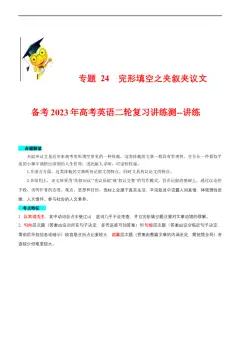
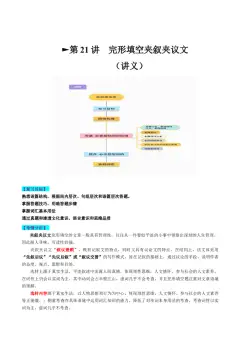
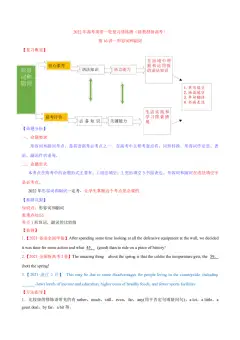
第一讲 完形填空命题规律解析
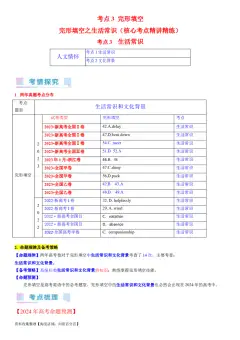
1. 大数据分析
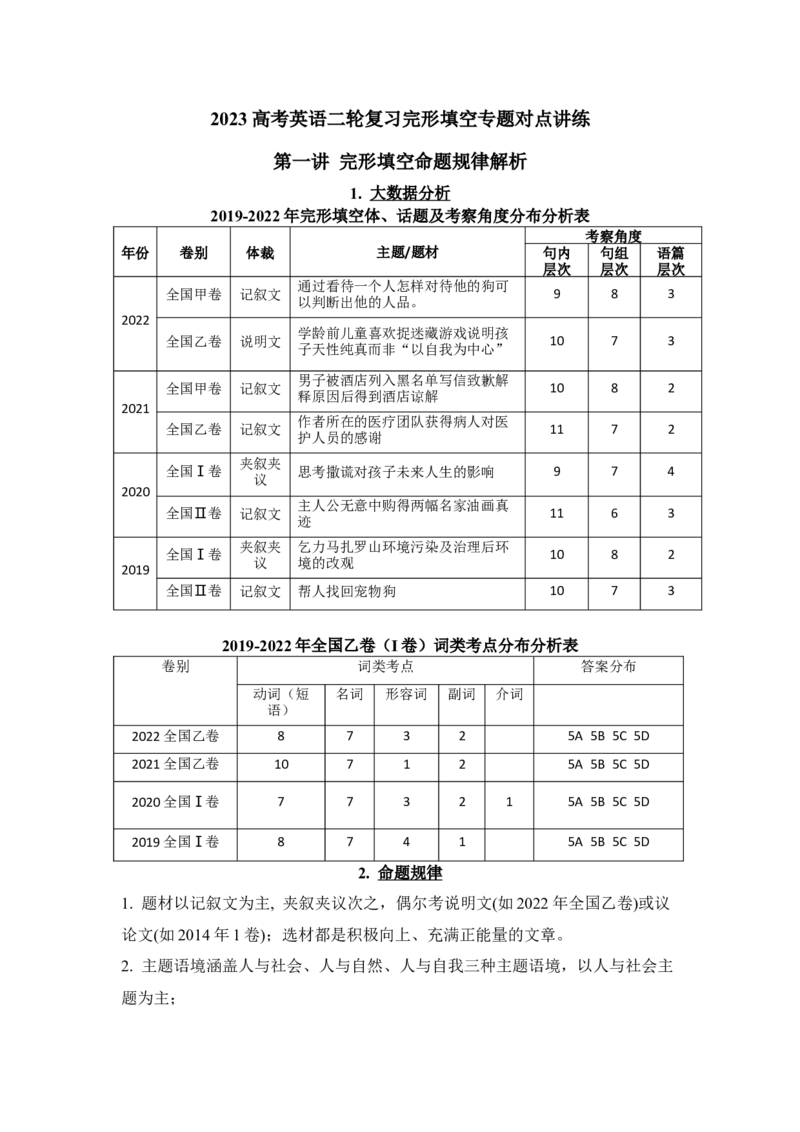
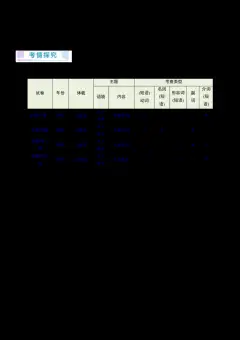
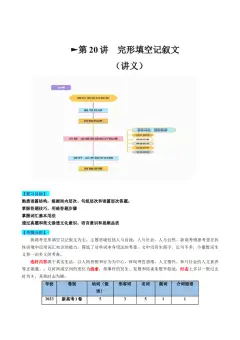
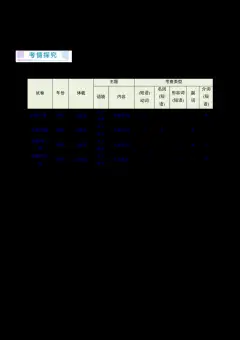
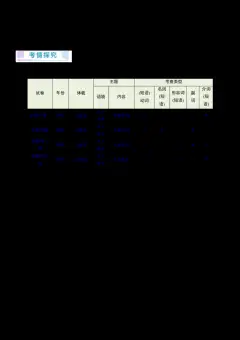
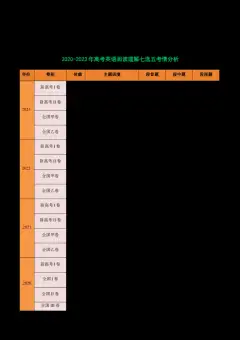
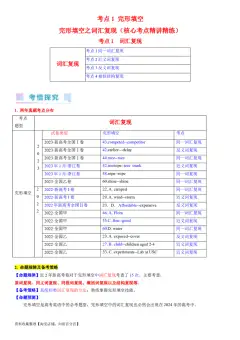
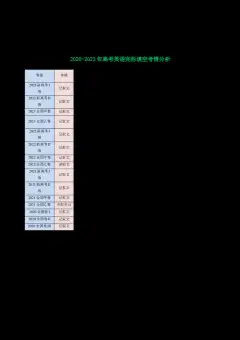
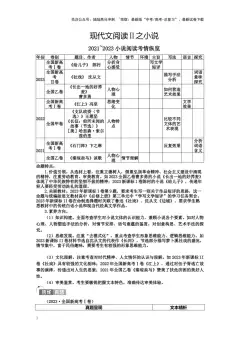
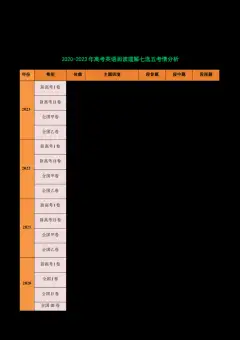
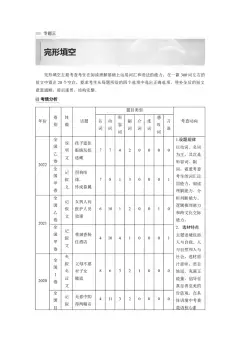
2019-2022年完形填空体、话题及考察角度分布分析表
考察角度
年份 卷别 体裁 主题/题材 句内 句组 语篇
层次 层次 层次
通过看待一个人怎样对待他的狗可
全国甲卷 记叙文 9 8 3
以判断出他的人品。
2022
学龄前儿童喜欢捉迷藏游戏说明孩
全国乙卷 说明文 10 7 3
子天性纯真而非“以自我为中心”
男子被酒店列入黑名单写信致歉解
全国甲卷 记叙文 10 8 2
释原因后得到酒店谅解
2021
作者所在的医疗团队获得病人对医
全国乙卷 记叙文 11 7 2
护人员的感谢
夹叙夹
全国Ⅰ卷 思考撒谎对孩子未来人生的影响 9 7 4
议
2020
主人公无意中购得两幅名家油画真
全国Ⅱ卷 记叙文 11 6 3
迹
夹叙夹 乞力马扎罗山环境污染及治理后环
全国Ⅰ卷 10 8 2
议 境的改观
2019
全国Ⅱ卷 记叙文 帮人找回宠物狗 10 7 3
2019-2022年全国乙卷(I卷)词类考点分布分析表
卷别 词类考点 答案分布
动词(短 名词 形容词 副词 介词
语)
2022全国乙卷 8 7 3 2 5A 5B 5C 5D
2021全国乙卷 10 7 1 2 5A 5B 5C 5D
2020全国Ⅰ卷 7 7 3 2 1 5A 5B 5C 5D
2019全国Ⅰ卷 8 7 4 1 5A 5B 5C 5D
2. 命题规律
1. 题材以记叙文为主, 夹叙夹议次之,偶尔考说明文(如2022年全国乙卷)或议
论文(如2014年1卷);选材都是积极向上、充满正能量的文章。
2. 主题语境涵盖人与社会、人与自然、人与自我三种主题语境,以人与社会主
题为主;3. 考点涉及句内层次、句间层次和语篇层次,以句内和句间层次为主,侧重考
察上下文语篇理解能力和词汇应用能力。
4. 语法填空考察选型词以实词为主,其中名词、动词是考察重点,其次是形容
词和副词,词组短语也是常考,A、B、C、D四个选项分布是大致均等的。
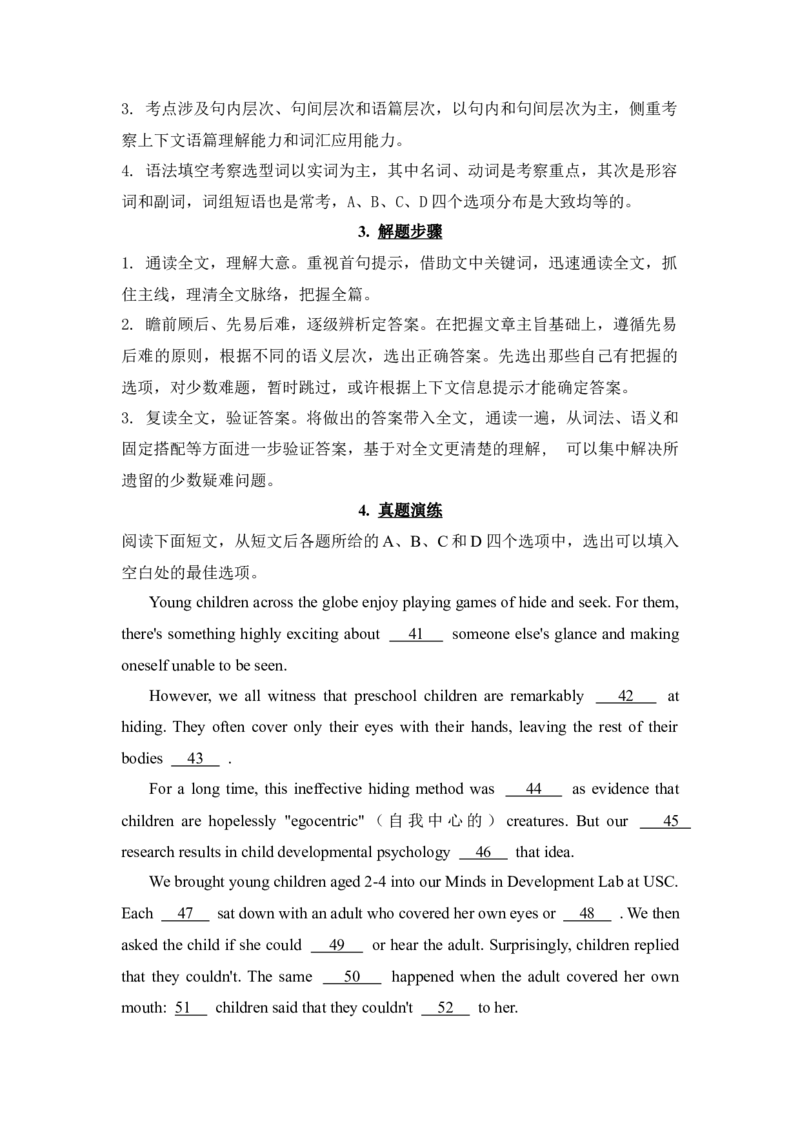
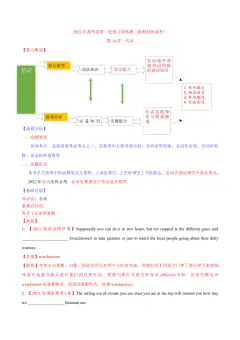
3. 解题 步骤
1. 通读全文,理解大意。重视首句提示,借助文中关键词,迅速通读全文,抓
住主线,理清全文脉络,把握全篇。
2. 瞻前顾后、先易后难,逐级辨析定答案。在把握文章主旨基础上,遵循先易
后难的原则,根据不同的语义层次,选出正确答案。先选出那些自己有把握的
选项,对少数难题,暂时跳过,或许根据上下文信息提示才能确定答案。
3. 复读全文,验证答案。将做出的答案带入全文, 通读一遍,从词法、语义和
固定搭配等方面进一步验证答案,基于对全文更清楚的理解, 可以集中解决所
遗留的少数疑难问题。
4. 真题演练
阅读下面短文,从短文后各题所给的A、B、C和D四个选项中,选出可以填入
空白处的最佳选项。
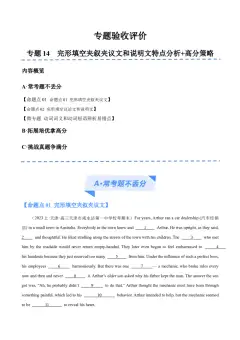
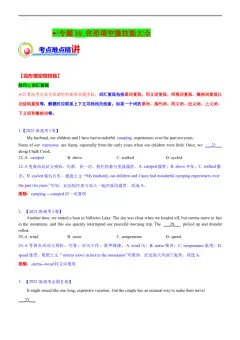
Young children across the globe enjoy playing games of hide and seek. For them,
there's something highly exciting about 41 someone else's glance and making
oneself unable to be seen.
However, we all witness that preschool children are remarkably 42 at
hiding. They often cover only their eyes with their hands, leaving the rest of their
bodies 43 .
For a long time, this ineffective hiding method was 44 as evidence that
children are hopelessly "egocentric"(自我中心的)creatures. But our 45
research results in child developmental psychology 46 that idea.
We brought young children aged 2-4 into our Minds in Development Lab at USC.
Each 47 sat down with an adult who covered her own eyes or 48 . We then
asked the child if she could 49 or hear the adult. Surprisingly, children replied
that they couldn't. The same 50 happened when the adult covered her own
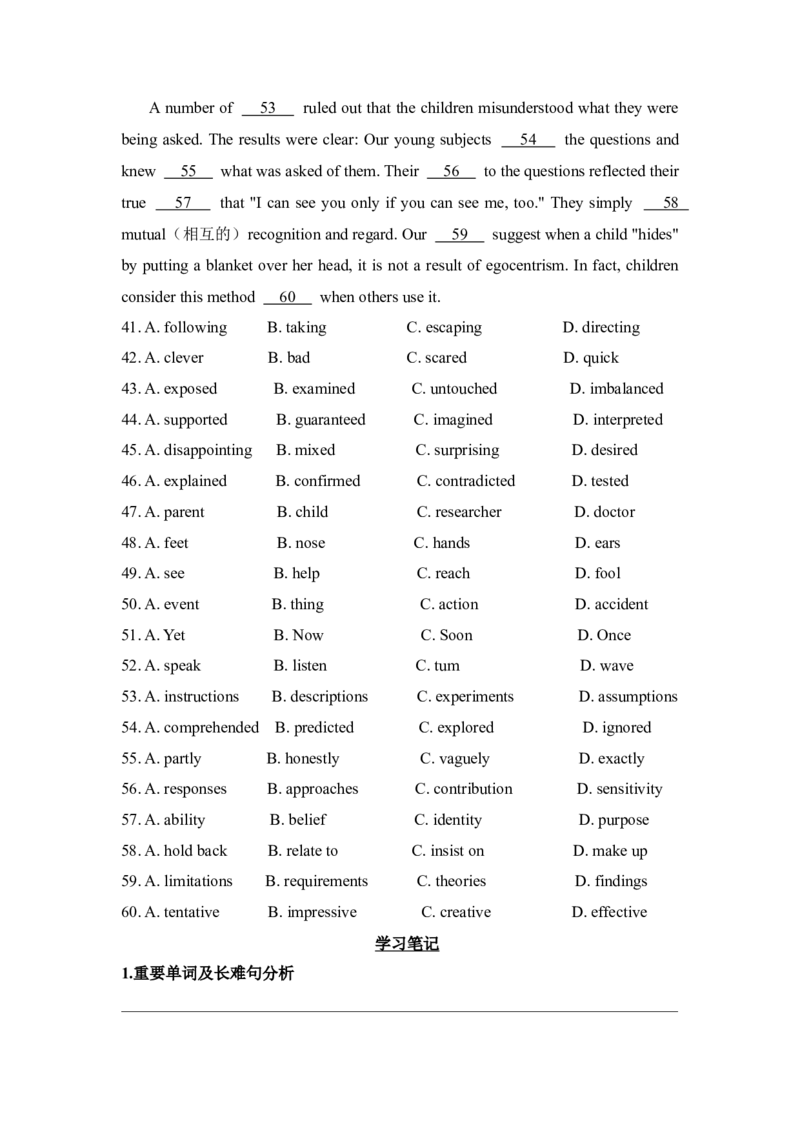
mouth: 51 children said that they couldn't 52 to her.A number of 53 ruled out that the children misunderstood what they were
being asked. The results were clear: Our young subjects 54 the questions and
knew 55 what was asked of them. Their 56 to the questions reflected their
true 57 that "I can see you only if you can see me, too." They simply 58
mutual(相互的)recognition and regard. Our 59 suggest when a child "hides"
by putting a blanket over her head, it is not a result of egocentrism. In fact, children
consider this method 60 when others use it.
41. A. following B. taking C. escaping D. directing
42. A. clever B. bad C. scared D. quick
43. A. exposed B. examined C. untouched D. imbalanced
44. A. supported B. guaranteed C. imagined D. interpreted
45. A. disappointing B. mixed C. surprising D. desired
46. A. explained B. confirmed C. contradicted D. tested
47. A. parent B. child C. researcher D. doctor
48. A. feet B. nose C. hands D. ears
49. A. see B. help C. reach D. fool
50. A. event B. thing C. action D. accident
51. A. Yet B. Now C. Soon D. Once
52. A. speak B. listen C. tum D. wave
53. A. instructions B. descriptions C. experiments D. assumptions
54. A. comprehended B. predicted C. explored D. ignored
55. A. partly B. honestly C. vaguely D. exactly
56. A. responses B. approaches C. contribution D. sensitivity
57. A. ability B. belief C. identity D. purpose
58. A. hold back B. relate to C. insist on D. make up
59. A. limitations B. requirements C. theories D. findings
60. A. tentative B. impressive C. creative D. effective
学习笔记
1.重要单词及长难句分析
__________________________________________________________________________________________________________________________________________
_____________________________________________________________________
_____________________________________________________________________
_____________________________________________________________________
_____________________________________________________________________
_____________________________________________________________________
_____________________________________________________________________
2.我的反思总结
_____________________________________________________________________
_____________________________________________________________________
_____________________________________________________________________